user profile avatar

Seth Major

1x

Finalist

Bio

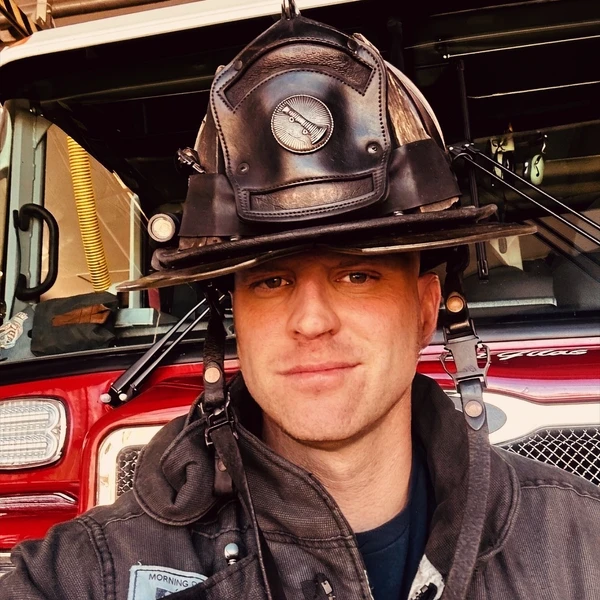
Seth Major is a lieutenant with West Metro Fire Rescue and an experienced fire service instructor with more than 15 years of service in training, leadership, and emergency operations. He serves as an adjunct instructor for West Metro recruit academies, a lead instructor for the Rapid Intervention Team cadre, and an instructor for the Red Rocks Community College firefighter academy. Prior to West Metro, he served with the Wheat Ridge Fire Department, where he developed a reputation for leadership, mentorship, and operational excellence. For the past nine years, Major has instructed nationally in both lecture-based and hands-on settings at FDIC International, the Mile High Firefighters Conference, the Orlando Firefighters Conference, and other regional and national programs. His instruction draws from real-world experience and focuses on residential primary search, RIT operations, firefighter survival, and leadership under pressure. He also serves as West Metro’s MDA coordinator and was recently recognized with the Randy Atkinson Commitment Award for his dedication to supporting the Muscular Dystrophy Association mission. His career honors include the West Metro Fire Life Safety Medal, National Firefighter of the Year, the Ben Franklin Firefighters Silver Medal, and Officer of the Year.

Education

Colorado State University-Global Campus

Bachelor's degree program
2024 - 2028
  • Majors:
    • Homeland Security, Law Enforcement, Firefighting and Related Protective Services, Other
University of Northern Colorado

Bachelor's degree program
2001 - 2003
  • Majors:
    • Political Science and Government

Miscellaneous

  • Desired degree level:

    Master's degree program

  • Graduate schools of interest:

  • Transfer schools of interest:

  • Majors of interest:

    • Homeland Security, Law Enforcement, Firefighting and Related Protective Services, Other
    • Community Organization and Advocacy
  • Not planning to go to medical school
  • Career

    • Dream career field:

      firefighting

    • Dream career goals:

    • Instructor

      Fire Department Instructor Conference
      2017 – Present9 years
    • MDA Fire Department Coordinator

      Mucsular Dystrophy Association
      2011 – Present15 years
    • Committee Member

      Firefighter MAYDAY Survey
      2024 – Present2 years
    • Lieutenant

      West Metro Fire Rescue
      2006 – Present20 years

    Sports

    Baseball

    Varsity
    1997 – 19992 years

    Research

    • Information Science/Studies

      https://firefightermaydaysurvey.com/ — Committee Member
      2024 – Present

    Arts

    • Engine Company Apparel

      Graphic Art
      2012 – 2015

    Public services

    • Volunteering

      Mucsular Dystrophy Association — MDA coordinator
      2011 – Present
    • Volunteering

      Wheat Ridge Fire Department — Firefighter
      2006 – 2011

    Future Interests

    Advocacy

    Volunteering

    Joseph A. Terbrack ALS Memorial Scholarship
    ALS has impacted my life most directly through my work as a career firefighter and as the Muscular Dystrophy Association (MDA) coordinator for West Metro Fire Rescue. In those roles, I’ve met families living with ALS and other neuromuscular diseases, and I’ve seen up close how these conditions slowly take away physical independence while leaving the person fully aware of every change. Responding to their medical emergencies as a firefighter and then seeing them again at MDA events in wheelchairs or with assistive devices, has made the progression of ALS very real to me. It has changed how I think about what “help” means—beyond the immediate emergency—to the long, exhausting journey that families walk every day. As an MDA coordinator, I organize and support fundraising efforts like “Fill the Boot” drives and other events that raise money for families affected by neuromuscular diseases, including ALS. I volunteer my time planning logistics, coordinating crews, and spending hours in the community explaining why these causes matter. Through that work, I’ve met children, adults, and caregivers whose lives are shaped by progressive muscle weakness, respiratory challenges, and constant medical needs. Hearing their stories has taught me that financial help, equipment, and support services are not luxuries—they are what make it possible for families to maintain some dignity and quality of life as the disease advances. ALS, in particular, has shown me how quickly someone can go from independent to fully dependent, and how critical it is that support systems are in place before families reach a breaking point. From these experiences, I’ve learned that service doesn’t end when the call is over and the rig is back in quarters. As a firefighter, I may first meet a family in crisis on their worst day, but as an MDA coordinator, I see the ongoing reality they live with long after we clear the scene. That has given me a deeper sense of responsibility—not just to provide competent emergency care, but to use my position to help connect families with organizations, resources, and communities that can support them over the long haul. It has also taught me that small actions, like a conversation on a street corner or a well-run fundraiser, can add up to very real help: funding research, providing equipment, sending kids to camp, or giving caregivers a bit of relief. Moving forward, I want to keep using my experience as both a firefighter and MDA coordinator to help others facing ALS and related conditions. That means continuing to raise awareness and funds but also pushing within my profession for better understanding of neuromuscular diseases—how they present, what families are dealing with at home, and how we can respond with more empathy and practical support. As I pursue higher education and grow as a leader, I hope to bring this perspective into training, policy, and community programs, so that our response to ALS is not just medically competent, but truly compassionate. My goal is to make sure that when a family living with ALS calls 911, they are met not only by skilled firefighters, but by people who understand a little more about their journey and are committed to standing with them beyond that one moment of crisis.
    Bryent Smothermon PTSD Awareness Scholarship
    Over twenty years as a career firefighter, I’ve learned that service-related PTSD is not abstract—it is personal, cumulative, and often invisible until it becomes impossible to ignore. Years of responding to fatal fires, traumatic medical calls, and near-misses took a quiet toll on me, even as I kept telling myself to “push through” and get ready for the next run. I eventually realized that the hypervigilance, intrusive memories, and emotional exhaustion I was experiencing did not mean I was weak or unfit for the job; they meant I was human, carrying more than most people will ever have to carry. This year, the reality of PTSD became even more painful and concrete when my friend and colleague, Engineer Kyle Bartlett, died by suicide. Losing Kyle was like having the floor drop out from under me and from under my department. He was someone we trusted, respected, and cared about—and his death made it painfully clear that the cost of this work is not only measured in fireground injuries or line-of-duty deaths, but also in the unseen battles our people fight long after the sirens are turned off. His loss forced me to confront my own vulnerability in a new way and pushed me to move from silently tolerating my struggles to actively acknowledging them and seeking healthier ways to cope. Kyle’s death also deeply affected my organization. We are used to honoring those who die in obvious, incident-related circumstances, but losing someone to suicide exposed a different kind of line-of-duty loss—one tied to cumulative trauma, silence, and stigma. It led us to ask hard questions about how many others are struggling in the shadows and whether our culture truly makes it safe to say, “I’m not okay.” In the aftermath, I’ve seen more honest conversations start to happen: people checking on each other more intentionally, admitting when calls have gotten to them, and taking signs of distress more seriously. Through my own experience with PTSD and the loss of a friend, I’ve learned that being affected by what I’ve seen does not make me less of a firefighter or less of a leader. If anything, it has deepened my empathy and strengthened my sense of responsibility. I know now that the person who looks steady on the outside may be fighting a very real battle inside, and that silence can be deadly. Because of that, I try to be more open about my own struggles, to listen without judgment when others share theirs, and to encourage coworkers to seek help—whether through peer support, counseling, or other resources. Going forward, I hope to use my experience to help others in this profession who are suffering from PTSD by being honest about my journey, supporting peer networks, and advocating for a culture that treats mental health with the same seriousness as physical safety. If my twenty years of service, my own battles, and the pain of losing Kyle can help even one firefighter feel less alone, reach out for support, or choose to stay when things feel unbearable, then that suffering will have been used for something larger than myself—and that is how I hope to honor both my career and his memory.
    RonranGlee Literary Scholarship
    In this passage from Marcus Aurelius’ Meditations, the underlying meaning is that the deepest harm comes not just from events themselves but from the judgments and stories we attach to them—and in the fire service, where trauma and stress are constant, failing to tend to those inner judgments contributes to the quiet crisis of firefighter suicide. “Choose not to be harmed—and you won’t feel harmed. Do not feel harmed—and you haven’t been. It is in your power to wipe out, at once, any impression that is disturbing to you. You can immediately regain a calm mind. Things themselves have no power to touch the soul; disturbances arise only from our judgment about them. Remove your judgment, and the disturbance disappears. What’s left is the event itself, which, by itself, is neutral and bearable.” At first glance, this paragraph can sound cold or unrealistic—especially to firefighters who have seen death, suffering, and loss up close. The point is not that fires, fatalities, or maydays are trivial, but that what crushes the soul is often the meaning we attach to those events. Marcus argues that there is a gap between what happens and what we decide it means, and that our long-term mental and moral health depends on how we fill that gap. In the modern fire service, where firefighter suicide remains a heartbreaking reality, this gap is precisely where unaddressed pain, guilt, and isolation can take root. “Things themselves have no power to touch the soul; disturbances arise only from our judgment about them” is not a denial of trauma but a diagnosis of how trauma becomes unbearable. Firefighters witness tragedies they cannot fix: children who do not survive, families losing everything, coworkers injured or killed. Those events are real and heavy. But the lasting wound often comes from judgments like “I failed,” “I should have done more,” or “I’m broken because I can’t stop replaying this.” Left unchallenged and unspoken, these judgments can grow into shame and hopelessness. Marcus’ claim is that if we can learn to separate the tragic event from the belief that it defines our worth, we create space for healing instead of collapse. “It is in your power to wipe out, at once, any impression that is disturbing to you” and “You can immediately regain a calm mind” can sound almost impossible after a bad call. No firefighter simply flips a switch and stops feeling. The deeper message here is about practice and tools: learning, over time, to catch the first wave of destructive self-talk and replace it with something truer and healthier. In a fire service context, that might sound like, “We did everything we could with the information and conditions we had,” or “This hurts because I care, not because I’m weak.” Without that kind of reframing—and without peer support, counseling, and a culture that allows honest conversations—those first impressions can spiral into the kind of darkness that leads some firefighters to believe the only escape is suicide. Marcus’ insistence that we can “regain a calm mind” is not a command to toughen up; it is an argument that inner steadiness is something we must actively cultivate. For a career firefighter with twenty years of service, this means recognizing that mental health is as critical as physical safety. Just as departments have evolved tactics and equipment to reduce line-of-duty deaths, there must also be an evolution in how we talk about and support the invisible injuries that accumulate over years of calls. When the culture says only “shake it off,” it effectively tells firefighters to face their impressions alone. In that isolation, harmful judgments—about being a burden, being weak, or being beyond help—can become deadly. “Remove your judgment, and the disturbance disappears. What’s left is the event itself, which, by itself, is neutral and bearable.” In the context of firefighter suicide, this line reveals both a warning and a hope. The warning is that if we do nothing with our judgments—if we keep them hidden and never examine them—they can turn survivable pain into something that feels unbearable. The hope is that with honest reflection, professional help, and a supportive culture, firefighters can learn to hold even terrible events without letting them declare, “You are worthless” or “You are alone.” Reframing the event does not erase grief, but it can remove the lie that the only way to stop the hurt is to end your own life. Ultimately, Marcus’ passage challenges firefighters and leaders to treat inner judgment as seriously as any hazard on the fireground. A life of service, especially in this profession, exposes people to more loss and trauma than most will ever see. If the only message is “be tough,” then we leave firefighters vulnerable to the silent buildup of destructive judgments that can end in suicide. But if we adopt Marcus’ deeper insight—that we must actively guard how we interpret what we see and experience—we open the door to a different kind of strength: one that includes peer support, counseling, honest debriefs, and a culture where asking for help is seen as an act of courage, not weakness. In that sense, this ancient paragraph is not about pretending calls don’t hurt. It is about insisting that our worth is not determined by the worst things we have seen, and that we have both the right and the responsibility to challenge the internal stories that could otherwise cost us our lives.
    Forever90 Scholarship
    I embody a life of service by consistently choosing roles and actions that put the safety, well-being, and growth of others at the center of what I do. From my earliest days as a volunteer firefighter to my current work as a career firefighter and lieutenant, service has been the guiding principle behind my decisions. Those first five years as a volunteer, responding to emergencies on my own time and without pay, taught me that true service often means sacrificing comfort and convenience so others can get help when they need it most. That mindset has stayed with me throughout my career. Today, I live that same commitment through both emergency response and the way I support my crew and community. On the fireground, service means doing whatever is required—no matter how difficult or dangerous—to protect lives and property. As a lieutenant and instructor, it also means mentoring newer firefighters, designing and delivering training that prepares them for the worst days of their careers, and advocating for their safety and development. I see every training evolution and every conversation about tactics, leadership, or safety as an opportunity to serve the people who stand beside me on calls. My role as the Muscular Dystrophy Association (MDA) coordinator for West Metro Fire Rescue is another key way I embody a life of service. I volunteer my time organizing “Fill the Boot” drives and other fundraising events, coordinating logistics and crews, and spending long hours in the community explaining why this cause matters. Meeting children and families living with muscular diseases, and seeing how the funds we raise help provide care, equipment, and support, has deepened my belief that service extends far beyond the walls of the firehouse. It is about standing with families through long-term struggles, not just responding in a moment of crisis. I also contribute to service-focused initiatives within the fire service, using real incidents and lessons learned to improve training and safety. Treating training as a form of prevention allows me to serve firefighters I may never meet by helping reduce risks and improving outcomes when things go wrong. In all these roles, I strive to lead by example, showing that service is built on consistent, sometimes quiet choices to put others first. My pursuit of higher education is a continuation of this life of service. I want to gain the knowledge and skills to design better training programs, influence policies, and strengthen organizational culture so that firefighters and communities are safer and better supported. With additional education, I plan to expand my impact—helping to create evidence-based programs, mentor future leaders, and improve community risk reduction efforts. In this way, my education will not be just a personal achievement, but a tool I use to serve others more effectively and at a broader scale.
    Michael Rudometkin Memorial Scholarship
    Selflessness, to me, is the quiet decision to put someone else’s safety, comfort, or future ahead of my own, especially when there is no promise of recognition. I have tried to live that out through my work in the fire service, my volunteer efforts in the community, and the example I set at home for my 14-year-old daughter. One powerful example was a house fire where a five-year-old girl was reported trapped in an upstairs bedroom. When my crew arrived, our only priority became finding her and getting her out. I was part of the interior team supporting the search and suppression effort so we could reach her as quickly as possible under heavy smoke and heat. A teammate ultimately located her hidden in a closet and carried her outside to EMS. The public recognition that followed focused on the firefighter who made the physical rescue, which he fully deserved. I never felt the need to correct or add to that story, because the true measure of that day was not whose name was mentioned, but that a little girl was given a chance to live. Putting the outcome above personal credit is a key way I try to embody selflessness. I also practice selflessness through my role as the Muscular Dystrophy Association (MDA) coordinator for West Metro Fire Rescue. I volunteer my time organizing “Fill the Boot” drives and other fundraising efforts, coordinating crews, handling logistics, and spending long hours in the community asking for donations. Much of this happens outside regular work hours, but meeting children and families affected by muscular diseases makes every minute worthwhile. Knowing that the funds we raise help provide care, equipment, and support to those families motivates me to put their needs ahead of my own convenience. These experiences continually remind me that even small sacrifices of time and energy can make a meaningful difference in someone else’s life. They have also deepened my belief that true selflessness is built through repeated choices to show up, not just in emergencies, but in the ongoing struggles people face every day. Being a father has added another layer of meaning to all of this. I know my 14-year-old daughter is watching how I treat people, how I handle recognition, and whether I live the values I talk about. I want her to see that real strength isn’t about attention or titles, but about kindness, service, and standing up for others. When she hears about the calls I run or the time I spend volunteering, my hope is that she understands that helping others is not just part of my job—it is part of who I am, and something she can carry into her own life in whatever path she chooses. Day to day, selflessness shows up in smaller actions: staying late to help a newer firefighter with a skill, trading shifts so a colleague can be with their family or quietly taking on extra tasks after a difficult call. These moments rarely draw attention, but they build trust and show others that they matter. Across all of these examples, the common thread is choosing to act for someone else’s benefit rather than my own—a choice I strive to make consistently in both my personal and professional life, and one I hope my daughter sees and learns from as she grows.
    STLF Memorial Pay It Forward Scholarship
    Leadership and service have been at the center of my journey in the fire service, beginning long before I was hired as a career firefighter. I spent five years as a volunteer firefighter, responding to emergencies on my own time while balancing work, training, and family. Those years taught me that service is not about a paycheck or a title; it is about being the person who shows up when others are in crisis. Volunteering ingrained in me a sense of responsibility, humility, and commitment to my community that still guides how I lead and serve today. One of the primary ways I now give back is through my role as the Muscular Dystrophy Association (MDA) coordinator for West Metro Fire Rescue. In this position, I volunteer my time organizing fundraising events—such as “Fill the Boot” drives—and coordinating crews, logistics, and outreach efforts. I work closely with MDA representatives and spend time in the community sharing why this cause matters. The most impactful part of this work is meeting the children and families affected by muscular diseases. Hearing their stories and seeing their resilience brings purpose to every hour spent planning, fundraising, and advocating. It reminds me that service is not only about responding to emergencies, but also about supporting families who are fighting long, difficult battles every day. I also volunteer as a committee member for the Firefighter Mayday Survey, a project focused on collecting and analyzing real-world firefighter mayday incidents. This work is another form of service, aimed at protecting firefighters themselves. By reviewing cases and discussing trends with other fire service professionals, I help identify patterns in when and why maydays occur and what actions lead to better outcomes. The goal is to translate those lessons into improved training, tactics, and policies that can prevent maydays or improve survivability when they happen. Contributing to this effort allows me to give back to the broader fire service community by helping make the job safer for firefighters everywhere. These experiences—volunteering as a firefighter, serving as an MDA coordinator, and working on the Firefighter Mayday Survey—shape how I define leadership through service. To me, leadership is not about recognition; it is about consistently putting others first and being willing to do the work that often goes unseen. It means staying late to finalize a fundraiser plan, taking extra time to support a family-focused event, or quietly dedicating hours to analyze mayday data so others might have a better chance of going home safely. It also means setting an example for newer firefighters, showing them that our responsibility extends beyond the fireground to the families and communities we serve, and to the safety of our own brothers and sisters in the fire service. Leadership through service is important because it keeps the focus on people rather than on position. My volunteer experiences have reinforced that every act of service—whether it is raising money for a child with a muscular disease or helping improve firefighter safety through data and research—creates a ripple effect of trust, support, and hope. That is the kind of leader I strive to be: someone who leads by showing up, who uses their skills and time to make a difference, and who understands that serving others is both the foundation and the highest expression of leadership.
    Sturz Legacy Scholarship
    In 2016 as a career firefighter with West Metro Fire Rescue, I responded with my crew to a house fire, where a 5-year-old girl was trapped in an upstairs bedroom. When we arrived on scene there were crews already operating, our assignment was to search the structure, locate, and remove the child that was trapped. I was partnered with a senior firefighter on Tower 8, and we were the first two inside of the home, that was about 2/3rds on fire. Within 60 seconds my partner and I located the little girl, who was hiding in the closet and was scared for her life. Thankfully she was still conscious and was crying. We had extremely high heat inside of the home and zero visibility. My partner was able to locate the little girl and get his hands on her. At that time my job to get all three of us out of the home. Afterwards my partner admitted to me that he had tunnel vision, and once he was able to get the girl in his arms, he had no idea where to go to get out of the home. I was disciplined with my duties and was able to shine my flashlight on them both and guide all of us out and get the little girl into an ambulance and get immediate emergency medical care. This was one of the most intense and meaningful calls of my twenty-year career, as the little girl is still alive today. Afterwards this rescue drew a lot of attention, including news coverage and public recognition. A majority of the credit, rightfully so, was given to my partner who had physical contact with Natalie and carried her out of the home. My partners actions were absolutely heroic and deserving of the praise. My contribution was part of the larger team effort of all of the crews that were operating at that fire, but it was not emphasized much in recognition comparatively. Neither was the engine crew who had put out a majority of the fire, which had started outside of the home, cooling the interior space, and ultimately saving Natalie’s life. Dealing with that directly, I chose not to correct the record or push for individual praise. I congratulated the firefighter who made the grab (as we call it in the fire service) and supported the was the story was told to the public. My response was rooted in how I personally view our mission in the fire service and my role in it. Our culture emphasizes team success, and we strive for a culture of mission over ego, with the biggest goal and true reward is a positive outcome. If I had redirected the attention toward myself, would have felt out of line with these core values. In that moment it was far less important that the fact that a little five-year-old girl was given a chance to survive and live a full life with her family. This experience has had a long-lasting impression on me. The positive takeaway was that this call reinforced my belief in humility and constant training to be successful in our duties. It reminds me that our contribution as public servants is rarely publicly recognized, however it is not any less meaningful. The reinforcement of why we train hard, stay in shape, and manage our metal health and clarity deepened my appreciation when things go right. The speed and coordination were only possible from endless hours of drilling and training. Ultimately this experience has made me more consciousnesses about recognition and its impact, not just toward me, but on others. I have had the realization that when credit consistently flows towards the most visible actions, it can unintentionally overshadow those who train hard, provide support, and lead behind the scenes. Over time this can directly affect morale, firefighter development, and growth of our co-workers. This event has taught me that there is a distinct balance between humility and fading into the background. If and when I experience a similar situation again, my reaction would be the same in public. I would continue to support my partners and co-workers who receive this type of recognition and keep the focus on the positive outcome and a life saved. I would not try to shift any spotlight from someone who had a different role on the fireground, especially under this amount of extreme pressure. With the benefit of experience, in the future, I would be more intentional and direct, in a private setting, and share my perspective with a superior. This would not be to shift any spotlight, but to ensure that all involved, who worked on that fire would get credit that they deserved. This is all because firefighting is a team sport, when one of us wins, we all win with a result such as a little girl’s life being saved. Finally, this call reminds of why I chose this profession and why I am constantly continuing my education and maintaining my training. This call underscores the impact that is not measurable, but how I need to continually push myself both physically and academically. I can use similar experiences to grow as a leader and keep my focus on where it belongs: for the people we serve.
    Debra S. Jackson New Horizons Scholarship
    My path to pursuing higher education at this stage in my life has been shaped by nearly two decades in the fire service, the responsibilities of leadership, and a growing recognition that experience alone is not enough to create the impact I want to have. Over the years, I have been privileged to serve as a firefighter, lieutenant, instructor, and community advocate, witnessing people on their best and worst days. These experiences have deepened my sense of purpose, humility, and responsibility. Higher education now feels like the natural next step—less as a departure from the fireground and classroom, and more as a way to sharpen what I have learned and apply it on a broader scale. My personal values have been forged through emergency responses, training grounds, and community events. On the fireground, the stakes are immediate, and decisions must be grounded in preparation, competence, and trust. Participating in critical incidents and life-saving rescues has underscored the importance of courage, accountability, and calm under pressure. Instructing both recruits and seasoned firefighters has reinforced my belief in lifelong learning and the responsibility to pass on hard-earned lessons so others can be safer and more effective. These experiences have solidified core values of service, integrity, and continuous improvement, which are central to my decision to return to school. My career as a lieutenant and instructor has also pushed me to think beyond individual calls and to focus on the systems, culture, and leadership that shape how firefighters operate and how communities are served. Teaching on topics like rapid intervention, primary search, and firefighter survival has shown me that strong leadership, sound policy, and well-designed training can be the difference between success and tragedy. Serving in community roles, such as supporting charitable efforts and outreach, has broadened my understanding of public service. It is not only about responding when the alarm sounds; it is about being present in the community, building trust, and supporting its most vulnerable members. These experiences have shaped my career aspirations toward becoming a leader who can influence training, policy, and culture at an organizational or regional level. Through higher education in areas such as fire and emergency services administration, leadership, and community risk reduction, I hope to learn how to design evidence-based training, build cultures that prioritize safety and accountability, and advocate for resources that support both firefighters and the public. I plan to use my education to strengthen prevention and education efforts, improve how we engage with diverse communities, and help develop programs that not only respond to emergencies but also reduce their likelihood and impact. This scholarship will play a critical role in making these goals achievable. Balancing shift work, family, and academic demands will be challenging, and financial support will reduce a major source of stress. It will allow me to focus more fully on my coursework, research, and community projects, rather than on how to make ends meet while in school. Ultimately, this scholarship is not just an investment in my personal advancement, but in the firefighters, I train, the colleagues I lead, and the community we serve. With this support, I am committed to using my education to strengthen the fire service, uplift my community, and help build safer, more resilient communities for years to come.