user profile avatar

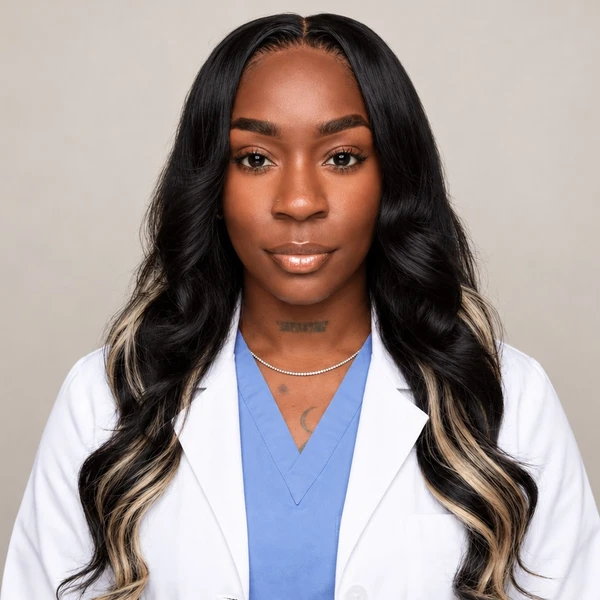
Selena Croskey

1x

Finalist

General information

Hobbies & Interests

  • African American Studies
  • Anatomy
  • Band
  • Travel And Tourism
  • Pharmacy
  • Music
  • Piano
  • Biomedical Sciences
  • Drawing And Illustration
  • Environmental Science and Sustainability
  • Fashion
  • Meditation and Mindfulness
  • Mental Health

Reading

  • Adult Fiction
  • Anthropology
  • Novels
  • Academic
  • Biography
  • Health
  • Leadership
  • Psychology
  • Self-Help
  • Short Stories
  • Spirituality
  • Young Adult

I read books multiple times a week.

Bio

Born and raised in Detroit, Michigan, I am a first-generation medical student at Michigan State University College of Osteopathic Medicine. Growing up in a single-parent household, I learned early that education could create opportunities beyond my circumstances, but also that ambition alone cannot eliminate the barriers many students face. I earned my B.S. in Human Biology with a minor in Pharmacology and Toxicology from Michigan State University. My passion for medicine extends beyond the classroom through research, community outreach, mentorship, and global health initiatives. My experiences providing medical outreach in underserved communities abroad have strengthened my commitment to culturally responsive, compassionate healthcare. As Vice President of the International Osteopathic Medical Association, I help promote cultural awareness and global perspectives in medicine. I am equally passionate about mentoring students from underrepresented backgrounds and helping make careers in healthcare more accessible. Outside of medicine, I enjoy traveling, literature, music, and exploring different cultures. I'm also teaching myself to play the piano. Despite financial challenges and personal loss, I remain committed to my education and the communities that shaped me. My ultimate goal is to practice medicine in Detroit while continuing humanitarian service internationally. I believe the greatest measure of success is not simply what we accomplish for ourselves, but the opportunities we create for others.

Education

Michigan State University

Doctoral degree program (PhD, MD, JD, etc.)

2025 – 2029

Majors:
  • Health Professions and Related Clinical Sciences, Other
Michigan State University

Bachelor's degree program

2020 – 2023

Majors:
  • Human Biology
Minors:
  • Pharmacology and Toxicology

Miscellaneous

Desired degree level:
Doctoral degree program (PhD, MD, JD, etc.)
Graduate schools of interest:
Michigan State University
Majors of interest:
Human Biology
Desired degree modality:
In-Person
Medical school interest:
Yes
English as first language:
Yes
Homeschooled:
No

Career

  • Pharmacy Technician

    Pharmaceuticals · Ascension Hospital

    Jan 2024 – Present

Miscellaneous

Dream career field:
Hospital & Health Care, Medicine, Medical Practice
Dream career goals:
Osteopathic Physician
Work experience:
5 years
Has nursing license:
No
Leadership experience:
Yes

Future Interests

  • Advocacy
  • Politics
  • Volunteering
  • Philanthropy
  • Entrepreneurship
Eden Alaine Memorial Scholarship
There is something difficult about studying the human body, learning how to recognize disease, and preparing for a career dedicated to preserving life while simultaneously experiencing the loss of someone you love. In December 2025, while attending medical school, my father passed away. His death changed not only how I understood grief, but how I understood the profession I had spent years working toward. Before losing my father, death was something I encountered through textbooks, lectures, and clinical discussions. I understood the physiological processes that lead to organ failure and the medical interventions used to prolong life. No amount of scientific knowledge could prepare me for the reality of losing my own parent. The diseases I studied were no longer concepts to understand or diagnoses to recognize. They were reminders that behind every medical condition is a person, a family, and a life that extends far beyond the hospital. One of the most difficult aspects of losing my father was realizing that life around me continued moving forward even when my world felt as though it had stopped. Lectures continued. Examinations approached. Responsibilities accumulated. There was no natural place in the academic calendar for the weight of grief I was carrying. I found myself navigating the expectations of medical school while learning how to exist in a world where my father was no longer present. His passing changed how I thought about the future. So much of pursuing medicine involves imagining what comes next: graduating, becoming a physician, building a career, and celebrating the milestones that once seemed distant. Losing my father meant confronting the reality that someone I had imagined being part of those moments would no longer be there to experience them with me. There is a sadness in working toward a future that looks different from the one you once envisioned. As I continue my education, I understand that grief and determination are not mutually exclusive. There are days when concentrating feels difficult and moments when even ordinary responsibilities require more effort than before. I learned that perseverance does not always mean maintaining the same pace or appearing unaffected. Sometimes it means allowing yourself to acknowledge the loss while continuing to pursue the life you have worked so hard to build. My father's death deepened my understanding of the responsibility physicians carry. Families do not experience illness through laboratory values or medical terminology alone. They experience it through uncertainty, fear, hope, and sometimes profound loss. I recognize more personally how much compassion and clear communication matter during those moments. I want to become the kind of physician who remembers that caring for a patient also means recognizing the people who love them. Although my father will not be physically present for the milestones ahead, his absence has become part of how I understand their significance. I hope to complete medical school, and build a career grounded in both scientific excellence and compassion. These goals remain important to me, I now approach them with a deeper awareness of how fragile life can be. I am learning how to live with the loss of my father. I don't believe grief is something that must be overcome or transformed into a positive experience to have meaning. Some losses simply change us, and we learn to carry them. Losing my father has changed the future I imagined, but it has not taken away my desire to build one. As I continue my journey toward becoming a physician, I carry both the sadness of his absence and the hope that the life I build reflects the love, experiences, and memories that remain.
MedLuxe Representation Matters Scholarship
My goal as a future physician extends beyond practicing medicine. I aspire to become a surgeon who provides excellent clinical care while advocating for patients whose voices and experiences have historically been overlooked. As a first-generation medical student at Michigan State University College of Osteopathic Medicine, my journey has been shaped by my upbringing in Detroit, my experiences serving underserved communities, and my understanding that access to quality healthcare is not equally distributed. I hope to return to Detroit to practice medicine, contributing to a healthcare system that serves the community that raised me. Through my experiences in clinical settings and international medical outreach, I have witnessed how socioeconomic circumstances, language barriers, and limited healthcare resources influence patient outcomes. These experiences have reinforced my commitment to becoming a physician who recognizes the person beyond the diagnosis and understands that effective treatment requires both clinical knowledge and cultural humility. I also hope to pursue academic medicine, participate in research addressing healthcare disparities, and mentor students from backgrounds traditionally underrepresented in medicine. As someone who has benefited from mentorship throughout my educational journey, I recognize how meaningful it can be to encounter someone whose experiences reflect your own, particularly in spaces where you may not have always envisioned yourself belonging. Increasing racial diversity in healthcare is important because representation has implications far beyond visibility. It can influence how patients experience healthcare, how physicians understand the communities they serve, and who feels empowered to pursue a career in medicine. For patients who have experienced discrimination or mistrust within healthcare systems, encountering a physician who understands aspects of their cultural or lived experience may help establish trust and encourage open communication. However, representation alone is not enough. It must be accompanied by a commitment to equitable treatment, cultural humility, and addressing the systemic barriers that contribute to disparities in healthcare. I believe diversity also strengthens medicine by bringing different perspectives into clinical decision-making, research, and leadership. When the medical profession reflects the diversity of the populations it serves, it becomes better positioned to recognize overlooked needs, challenge assumptions, and develop more inclusive approaches to patient care. As a Black woman pursuing a career in medicine, I understand that my presence in this profession carries significance beyond my individual achievements. I want younger students, particularly Black girls who may have never personally known a physician, to see that a career in medicine is attainable. I want my future patients to feel heard, respected, and confident that their concerns will be taken seriously. Ultimately, my goal is not simply to become the representation I once hoped to see, but to use my position to create opportunities for those who follow. To me, representation matters most when it translates into meaningful change: more equitable healthcare, stronger communities, and a medical profession in which both patients and aspiring physicians feel they belong.
Book Lovers Scholarship
If I could choose one book for everyone in the world to read, it would be "To Kill a Mockingbird" by Harper Lee. This novel unpacks themes of racial injustice, moral growth, and empathy, appealing to readers of all backgrounds. Having recently re-read this novel as an adult, it instantly came to mind after reading the prompt. To begin, Lee conveys the power of empathy through the eyes of Scout Finch. Her father, Atticus Finch, advises her to understand others by seeing the world from their perspective: “You never really understand a person until you consider things from his point of view.” This lesson is crucial in our increasingly divided world, fostering understanding and compassion. Furthermore, this novel delves into racial injustice and moral courage. The trial of Tom Robinson, a black man falsely accused of raping a white woman, highlights the deep-seated racism of the American South. Atticus Finch’s defense of Tom, despite knowing the unlikelihood of success, is a profound act of moral courage. This storyline challenges readers to reflect on their own beliefs and actions regarding justice and equality, making it highly relevant today. Scout and her brother Jem’s growth stems from their father's example. They learn about integrity, justice, and human dignity from Atticus, who embodies the principle that true courage is doing what is right, even when it’s difficult. This message is vital for young readers forming their moral frameworks, highlighting the importance of personal integrity. The novel’s themes of empathy, justice, and moral growth resonate universally. Its engaging storytelling makes it suitable for a wide audience. Although I digested it well in high school, reading it again as an adult revealed deeper insights and a renewed appreciation for its lessons. In conclusion, "To Kill a Mockingbird" by Harper Lee would be my choice for everyone in the world to read. Its exploration of empathy, racial injustice, and moral courage provides timeless lessons essential for fostering a more understanding, just, and compassionate world. By encouraging readers to see through others’ eyes and stand up for what is right, this novel can inspire change and promote equity in our world.
Selena Croskey Student Profile | Bold.org