user profile avatar

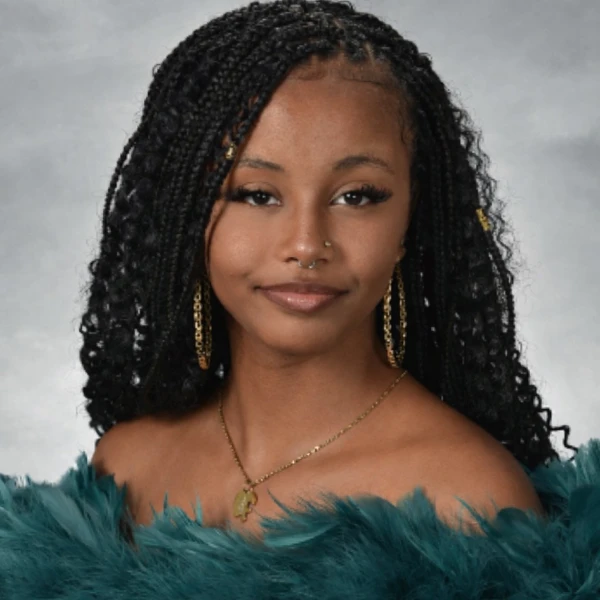
Sehinne Yohannes

1x

Finalist

1x

Winner

Bio

My name is Sehinne Yohannes. I am a senior at San Leandro High School, and I am going to attend Spelman College in the Fall of 2026. I plan to major in Literature, Media, and Writing because of my deep love for poetry. I have been writing and performing slam poetry since my sophomore year; I’m the Vice Youth Poet Laureate of Oakland, California, I’ve won the Brave New Voices National Championship with the Youth Speaks Bay Area team, and I’ve performed at 40+ venues, including festivals, conferences, and other competitions. I want to use this major to become a high school English teacher, and I hope to give students at low-income public schools the same passion for writing and the gateways to opportunities that my English teachers have given me. I also plan to minor in Africana Studies, and join the Spelman Social Justice Fellows program in my senior year of college. I have a passion for social justice and activism that I’ve gained after being a member of the Social Justice Academy of San Leandro (SJA) for three years. With SJA, I’ve volunteered, spearheaded political campaigns, and given back to my community. My dream is to one day come back to the Bay Area and become an SJA educator so I can continue creating future generations of socially and critically conscious young activists!

Education

San Leandro High

High School
2022 - 2026

Miscellaneous

  • Desired degree level:

    Bachelor's degree program

  • Majors of interest:

    • Education, Other
    • English Language and Literature, General
    • Ethnic Studies
  • Not planning to go to medical school
  • Test scores:

    • 1210
      SAT

    Career

    • Dream career field:

      Education

    • Dream career goals:

      High School English Teacher & Author

    • SPOKES Intern

      Youth Speaks
      2025 – Present1 year
    • 1st Grade Camp Counselor

      Lawrence Hall of Science
      2023 – 2023
    • Bridge Journalism Peer Teacher

      YR Media
      2023 – 20241 year
    • Anti-Corporate Extraction Lead

      Youth Vs Apocalypse
      2024 – Present2 years

    Research

    • English Language and Literature, General

      Social Justice Academy of San Leandro — Founder of the S.L.A.M Praxis Project
      2026 – Present

    Arts

    • Youth Speaks Bay Area & Oakland Youth Poet Laureate

      Performance Art
      Oakland Vice Youth Poet Laureate, Youth Speaks Teen Poetry Slam Finalist, Brave New Voices Festival Winner
      2023 – Present

    Public services

    • Advocacy

      Social Justice Academy of San Leandro — Student
      2023 – Present
    • Volunteering

      San Leandro Public Library — Teen Volunteer
      2024 – 2025

    Future Interests

    Advocacy

    Volunteering

    Helping Hand Fund
    Winner
    Success to me means breaking generational curses and taking advantage of the American Dream that I wasn't meant to have access to. I'm from an immigrant Habesha household that reinforced, for all the grandchildren in my family, the idea that we needed to attend an Ivy League and become a lawyer or doctor. After a quick Google search ("jobs that make the most money"), I was committed to becoming an anesthesiologist from sixth grade to my sophomore year of high school. In my sophomore year, I joined the Social Justice Academy at my school, a three-year cohort program based in ethnic studies and social justice. I learned concepts that challenged what we'd been taught in K-12 education like ikigai, the idea of finding intersections between what you're passionate about, good at, and what can make you money. I also learned about community cultural wealth, and how a symptom of capitalism is manipulating people into believing that the wisdom they learn from their communities is inferior to money. The lessons spoke to me; they were different from anything I had heard at home or in my career readiness class at school. For a while, I was angry with the adults in my life for what I felt was trapping me into a life I didn't want. It wasn't until the next year, in my U.S. Hxstory course, that I realized my anger needed to be redirected. I learned about the African Diaspora, and how many Black people were genocided and colonized because of Western imperialism. I realized that a part of that colonization that had successfully influenced the way my family thought was mental, and that they were taught that money is synonymous with success. Ethnic studies taught me that my life is worth more than capitalistic standards of success. I've been able to build my goals around my values and passions; I plan to major in English at Clark Atlanta University, and to become a high school teacher at a school that predominantly serves students of color. I want to do this because teaching is my ikigai; I love writing, education, and giving back to my community. I want to be a part of an education movement that teaches students of color that they are more than what this country wants to use them for, or a predetermined life plan built on colonized mindsets. This scholarship will help me achieve my goal by funding my journey to Atlanta. I am not getting financial help from my family; they look down on the idea of me going to an HBCU because they've been taught that an institution is useless if it's not prestigious in the eyes of future employers, who they automatically assume to be white. They also look down on me for majoring in English because they've never seen someone with an art or teaching career have the amount of affluence they deem acceptable. I understand where they're coming from because I know what they had to go through to assimilate in this country, and to them, what I plan to do uproots everything they've worked for, but I don't plan on changing any of my goals. This scholarship will be a stepping stone towards creating an amazing life for myself by serving my communities and staying true to my values regardless of money, and showing my younger siblings and cousins that they can do the same for themselves, because that is the most radical thing you can do for your people in a country that has taught you that you are not allowed to dream.
    District 27-A2 Lions Diabetes Awareness Scholarship
    My experience with diabetes has shaped who I am today because it has forced me to come to terms with my own anger, and it has shown me that self-love is the only thing that can truly heal me. I was diagnosed with Type 1 diabetes at the age of 15. My diagnosis came at a time when I was incredibly depressed; my family and I were going through a custody battle with my father because of his alcoholism, drug abuse, gambling addiction, and neglect of my three younger sisters and me. The toll of not having a present father after being a "daddy's girl" my whole life sent me spiraling, and I used sugary drinks as an outlet for the things I was going through. I thought that because I was still underweight, it was okay for me to drink more than two sodas a day. I had no idea that I was underweight, or that I craved drinks so often, because I was going through underlying diabetes ketoacidosis. By the time I made it to the emergency room, my blood sugar was at 700 mg/dL. Even after my health was getting back under control, I was still angry. A diagnosis didn't change anything for me but physical symptoms. If anything, it made things worse and put more things for me to stress about on my seemingly never-ending list. I almost immediately got alarm fatigue; I would shut my Dexcom app off as soon as I saw my blood sugar rising past 180 mg/dL, and I wouldn't turn it back on until I had the energy to re-face my reality of having diabetes. Luckily for me, I had (and have) a support system that refused to give up on me. My mother, who is a registered nurse, did her best to explain my diabetes to me in ways that could help me understand that my diagnosis wasn't some kind of sentence or punishment. My endocrinologist, who's seen me break down in tears multiple times in her office from frustration, never treated me any differently because of my mistakes, and continued to give me the best treatment I could've ever asked for. Even my friends would change their whole meal plans for the day to include me as I was getting the hang of my new diet. The kindness I received from the people around me made me realize that I was not only hurting my friends and family emotionally, but also that I was the only one who would feel the physical short- and long-term effects of what I was doing to myself. Type 1 diabetes has already impacted my future because it has taught me that having a future is a privilege, and it continues to teach me that the more love you pour into yourself, the more motivation you have to pour it into the people and things you love. Becoming healthier has given me the energy and motivation to step out of my comfort zone and to live my life to its fullest potential. It's now been exactly two years since I was diagnosed with diabetes, and I have won regional and national poetry competitions. It took me an incredibly long time to see my diagnosis as the wake-up call I now understand it was for me. The journey I took to get to the place I am today, mentally and physically, was necessary, and I would never do it any other way.
    Hearts to Serve, Minds to Teach Scholarship
    I hope that my future students will gain a critical consciousness that they will forever be able to use outside the classroom. Throughout the past three years, I’ve been a part of my school’s Social Justice Academy (SJA). SJA is a cohort-based ethnic studies and social justice-based program for aspiring student activists who want to learn more about history from the perspectives of people of color. My time in SJA has changed my life; I’ve learned more about my culture from my ancestors’ lens rather than from the viewpoint of the people who colonized them, spearheaded two political campaigns, earned the California State Seal of Civic Engagement, and have become actively involved with a multitude of organizations outside of school. I’ve also gained a tight-knit group of friends I consider family in my cohort. Due to my time in SJA, I have gained a critical consciousness, or the ability to reflect on the political environment of my community and the world in general. This ability has become a core value and trait of mine, and it shines through in everything that I do. From my writing to the things I talk about, my homework assignments to my extracurricular activities, it is safe to say that activism is one of the most important aspects of my life. I often wonder about how different my life would be if I had been introduced to this line of thinking earlier. As a young Black girl, I believe that having a role model tell me that the way the world has taught me to look at myself and my people isn’t right would have saved me a lot of self-esteem issues, identity crises, and tears. Now, my mission is to combine two of my greatest passions, social justice and teaching, and be that role model for my future students. Ethnic studies being taught in elementary school classes is often looked down upon, as people often believe that children are “too young” to understand the concepts. However, what people may fail to realize is that ethnic studies in the younger grades doesn’t have to mean having children holding picket signs in the streets; it could be as simple as teaching them to treat everyone with the same amount of respect, or teaching them true history using terms and concepts they can understand rather than introducing them to myths that have been fed to us since the beginning of our educations. My students will know empathy and courage like the back of their hands, and with the introduction to critical consciousness that I will give them, they will always know that their voices matter.
    Fred Rabasca Memorial Scholarship
    I am pursuing a career in elementary education because the beginning matters most. It is not pure luck that I have always enjoyed my time at school throughout my K-12 education; it is because of the teachers who invested time and energy into me and all of my classmates and genuinely wanted to see us succeed. They did so much more for me than any lesson or lecture ever could, and through mentoring littles outside of school, I got to see what my teachers did for me from the other side. Throughout my time in elementary school, I got to experience having amazing teachers from a variety of backgrounds who formed my idea of what a teacher should be. They gave one-on-one attention to every student, regardless of how big their classrooms were, and they handled topics of bullying and prejudice within an undiversified school without making Black and Brown students like me feel like outsiders. Because of the work ethic and passion my teachers had for their jobs, my classmates and I were all “teacher’s pets,” and you couldn’t find one student who hated any of them. Growing up surrounded by brilliant educators made me want to follow in their footsteps, but once I got to middle and high school, I was discouraged from doing so. I was hearing the same thing from classmates, family, and even teachers on campus: “You’re smarter than that.” I took this to heart, and I buried my dreams of becoming a teacher until the summer before my sophomore year. I got to intern at UC Berkeley’s public science center as a first and second-grade camp counselor, and I went into it convinced that I was doing nothing more than gaining some pocket change for the following school year. However, as the days went by, I fell more in love with my job. I saw students fall in love with science, got to teach them kindness, and watch them spread it to their peers, and had experiences with students that I keep close to my heart to this day. I believe that the term “teacher’s pet” should be destigmatized and seen as not a shame towards the student, but a badge of honor towards the teacher. Not once throughout my time in my internship did I see a curious and bright-eyed student as annoying for asking questions or enjoying their learning, but I did feel proud many times that I was able to make them comfortable enough to do so. It takes a lot to make a student fall in love with learning, especially in public education systems that are flawed and disregarded in many aspects. Teaching is and should always be considered a “labor of love,” not a backup plan for people who “aren’t smart enough” for a different job. I want to become an elementary school teacher so I can create a community of passionate and excited students who end up loving school as much as I did, regardless of their backgrounds, because every student deserves a good education from their first classroom to their last.
    Crowned to Lead HBCU Scholarship
    My life shifted the first time someone called me a poet. My class was celebrating the Hassani Bell Day of Remembrance during my sophomore year. Hassani was an activist; he was one of the students at San Francisco State University who went on a hunger strike to protect ethnic studies. He also attended the Social Justice Academy at my school, a cohort-based ethnic studies program I had just joined. He was also an incredible poet. A few seniors came into our academy’s history class to share his story and encourage us to write our own poem about why social justice mattered to us. I had always been a writer. I had been filling journals with short stories and diary entries since elementary school, and my favorite moments of high school were writing essays on topics I cared about. But I had never been given the chance to write creatively. When I got this opportunity, I filled the whole page with poetry. I could feel emotions flowing from my brain to my hand, and the smile on my face grew with every word I wrote. It felt like I finally had a home for all the butterflies in my stomach in a form of writing I never thought I was capable of creating. Looking back, the poem wasn’t that good. Still, when my stoic yet comforting history teacher walked by my desk and saw my page filled with lines about how I was taught to be toxically patriotic growing up, and how social justice helped me find my culture and my personality, he looked at me and said, “Wow. You’re a poet.” I was stunned. The title of “poet” sounded so magical. To me, poets were the cool girls with berets who had the whole room snapping with every line. That one sentence spoke life into a brand-new passion of mine and opened up a world I never thought was possible. I had never considered myself artistic. I could appreciate art, but drawing and painting were never my strengths. I always felt like I had no outlet or value outside of my grades. When I separated from my dad and was diagnosed with diabetes during my first semester of sophomore year, my grades began to drop, and I felt useless. But being told I was good at something that didn’t need to be graded shifted my whole perspective on myself. I can now proudly call myself a poet. I am my city’s vice youth poet laureate, and I have competed in and won regional and national poetry slams. My favorite performance moment was breaking the “nine barrier,” which means being the first person in the slam to have their lowest score above a nine. I did it with a poem about the Bay Area’s transportation system. A kid in the audience came up to me afterward and said, “I never thought a poem about a bus could be interesting, but you did it.” That moment became the biggest highlight of my poetry career. My mission in performing poetry is not to gain money or fame but to encourage other youth to explore art they might love, because it could become a passion. I also make it a point to brighten up every room I walk into. I dare to speak to strangers, and it is one of my favorite things to do. To this day, I still keep my teacher updated about my performances and the drama unfolding in the poetry scene. He was the first one to tell me I was a poet, and today, I believe it.
    Big Picture Scholarship
    I was fifteen and a half, watching Amélie, when I first understood that being a stereotype would never make me happy. It inspired me and showed me why representation matters, even though it didn’t have any. As a young Black girl in America, you're damned if you do, and damned if you don't. If you don’t fit the “loud and angry” caricature, people will twist you until you do. If you do fit it, you’re labeled “unprofessional” or “ghetto.” I’ve always considered myself a weird girl, and I’ve always been proud of being Black, but for the longest time, I didn’t think I was allowed to be both. I had to master code-switching. At the lunch table, I exaggerated my Bay Area accent. In class, I tried on a “professional” voice, which I later realized was just an unconscious mimicry of a white woman. At home, I was too tired to speak at all. By sophomore year, I didn’t know which version of me was real. Movies became my escape. I gravitated toward stories about odd, awkward girls, like Frances Ha and Lady Bird, because they reminded me of myself. But no movie ever held up a mirror to my soul the way Amélie did. I discovered it while scrolling through a Letterboxd list called “A Woman’s Journey into Film.” As a student planning on starting my second year in video production, I thought it would be the perfect guide into cinema. Amélie was the first film on the list, and it changed me. The cinematography alone could inspire anyone for years; the vibrant reds and greens were the perfect complementary color scheme I still try to replicate when I color-grade my own projects. But the story was what moved me most: a socially anxious French girl who loves helping others, slowly building the courage to begin her own love story. Amélie reminded me how to believe in adventures, and how to find happiness in little things. It made me a little nosier, a lot more obsessed with the color red, and infinitely more positive. I recommend it to all my friends, but my Black friends usually raise an eyebrow at me. “Why would I want to watch some French movie about a random white girl? We already have enough English ones with the same storyline,” someone once said. That response haunted me. It pushed me to search for films about quirky girls of color, and I found none. Even Amélie itself had no Black characters! Suddenly, every movie I’d ever seen about a Black girl looked different. Why couldn’t we be whimsical, too? How many Black and Brown girls were hiding parts of themselves, never seeing proof in film that their uniqueness could be celebrated? That question became my mission. In my senior year of video production, I set out to make as many short films as I could about weird girls of color because if I hadn’t seen Amélie, I might still be lost in stereotypes. In the end, Amélie introduced me to myself. Now, I want my films to do the same for the girls who have never seen themselves on screen.
    SnapWell Scholarship
    I was twenty pounds underweight, severely dehydrated, and in a constant state of nausea. It was March 2024, and my second time throwing up at school that week. I was on the way to the emergency room, my leg bouncing anxiously against my mother’s car floor. My doctor had just told me she found ketones in my urine. Twelve hours of no food and four failed IV attempts later, I was diagnosed with Type 1 diabetes. I was in complete disarray. At school, I was known as the girl who always carried a Coca-Cola bottle and the ultimate sweet tooth. How could I give these essential parts of me up? I wasn’t a stranger to the horror stories of diabetes either: amputations, bulky medical devices, comas. I felt like my life had been stolen by a condition I didn’t even cause. For the first month, I mourned the “teenage experience” I thought diabetes had stolen from me. My physical health was a priority in all the wrong ways; I avoided anything without a label or one too many carbs for my liking, starved myself for the sake of stable glucose readings, and obsessed over every fluctuation in my weight, not knowing which version of my body was me and which was a temporary silhoutte reflecting the state of my health. Friends drank sodas and ate candies without a second thought, while I couldn’t enjoy fruit without needing a shot of what my body should have already been making. However, everything shifted a month later. That April, one of my closest friends was hospitalized and diagnosed with a stage 4 glioblastoma. Despite the draining rounds of chemotherapy, she still returned to school, led the varsity cheer team, and fought passionately for marginalized communities as an activist. Her resilience left me in awe. Watching her refuse to let her diagnosis steal her life gave me the reality check I needed: a chronic illness didn’t have to hold me back. I needed to use it as a motivator to push harder for the life I wanted. Although my friend passed away a few weeks ago, her memory drives me to prioritize my health in ways that empower me, not punish me. I’ve worked back toward a healthy weight, regained my stamina almost completely, and have glucose levels that are 70% in range with an A1C of 6.9. More importantly, I’ve learned that protecting my health means protecting my future. Being diagnosed with Type 1 diabetes as a teen has taught me balance, responsibility, and resilience. It forces me to listen to my body and adapt almost daily. Although these were things that stressed me out at a certain point, I no longer see my diagnosis as something that limits me, but as a reminder that my health and my happiness must go hand in hand. My friend showed me that strength is not measured by the hardships you face, but by the courage to live fully alongside them. With her spirit guiding me, I choose to live the same way.