
Hobbies and interests
Violin
Research
Public Speaking
Ice Skating
Computer Science
Reading
Academic
Young Adult
Fantasy
Romance
I read books multiple times per month
Sarah Zhang
1x
Finalist
Sarah Zhang
1x
FinalistBio
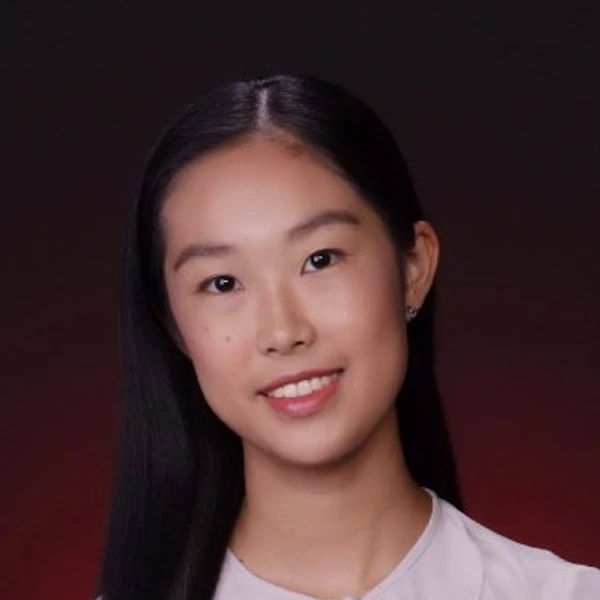
Sarah Zhang is a first-year undergraduate at Harvard University intending to study Chemistry and Economics. Her academic interests center on molecular pharmacology, computational science, and the intersection of scientific innovation and real-world impact. She currently conducts GPCR signaling research at Harvard Medical School in the Kruse lab, where she investigates structural determinants of biased signaling using engineered receptor chimeras. Her previous research includes computational enzymology at Vanderbilt University and cryo-electron microscopy work at Yale University.
Beyond research, Sarah is passionate about applying analytical thinking to broader societal and business challenges. She has worked on data analytics and predictive modeling projects through the Harvard Undergraduate Consulting Group and is particularly interested in the future of AI in healthcare and life sciences. A longtime violinist, debater, and ice skater, she hopes to pursue a career that bridges science, strategy, and innovation.
Education
Harvard College
Bachelor's degree programMajors:
- Economics
- Chemistry
Minors:
- Computer Science
Miscellaneous
Desired degree level:
Doctoral degree program (PhD, MD, JD, etc.)
Graduate schools of interest:
Transfer schools of interest:
Majors of interest:
Career
Dream career field:
Pharmaceuticals
Dream career goals:
Personal assistant
Private individual2025 – 2025Harvard Undergraduate Student Fellow
Harvard Medical School2025 – Present1 yearStudent Mentor
Bravodium2025 – Present1 year
Sports
Figure Skating
2013 – Present13 years
Awards
- USFS Double Gold Medalist
- Nations' Cup Pewter Medal
- US Theater on Ice Nationals Pewter Medal
Research
Pharmacy, Pharmaceutical Sciences, and Administration
Harvard Medical School — Undergraduate researcher2025 – PresentComputational Science
Vanderbilt Department of Chemistry — Student Researcher2024 – 2025Microbiological Sciences and Immunology
Yale School of Medicine — Student Researcher2024 – 2025
Arts
Colburn School of Music
Music2021 – 2025
Public services
Volunteering
California Science Center — Presenter and usher2023 – 2025
Harry B. Anderson Scholarship
Some of my earliest memories are filled with music. In the corner of a softly lit living room, I would watch an elderly woman I loved sit quietly for hours, often unable to remember recent conversations or recognize people around her. Alzheimer’s disease had slowly taken pieces of her memory away. But every so often, ballet music would begin to play. And suddenly, something changed. Her posture straightened. Her hands moved instinctively through familiar positions. She could still remember the dances she had practiced decades earlier, as though the music had unlocked a hidden part of her mind that the disease could not erase.
As a child, I did not understand how someone could forget names and faces, yet still remember movement so precisely. That contradiction stayed with me for years. Over time, it became the foundation of my interest in neuroscience, medicine, and artificial intelligence. Today, I am passionate about exploring how movement can reveal information about cognition, memory, and disease. Specifically, I am interested in how technology can help us better understand the human brain.
I am currently pursuing studies in chemistry and computational science, with the goal of developing AI-driven tools for neurological and movement disorder assessment. In particular, I hope to work on novel video-based systems capable of detecting subtle changes in movement patterns that humans may overlook, enabling earlier diagnosis and more personalized treatment for conditions such as Alzheimer’s disease, Parkinson’s disease, and other neurodegenerative disorders.
What excites me most about STEM is its ability to transform observations into actionable solutions. A simple question like why could someone remember a dance but not a conversation opened the door to neuroscience, machine learning, pharmacology, and human behavior. I realized that diseases are rarely isolated problems. Alzheimer’s is not just about memory loss; it affects identity, emotion, coordination, and independence. Addressing challenges like these requires collaboration across disciplines, which is why I am drawn to combining chemistry, AI, and biomedical research.
At Harvard, I have pursued opportunities that allow me to bridge these fields. I conduct research at Harvard Medical School studying GPCR signaling and receptor pharmacology, where I investigate how structural changes in receptors alter cellular signaling pathways. Through this work, I have gained experience designing experiments, analyzing biological data, and thinking critically about how molecular mechanisms ultimately translate into patient outcomes. At the same time, I have become increasingly interested in computational approaches, particularly how AI can identify patterns in large and complex datasets.
I believe the future of medicine will rely heavily on intelligent systems that augment human clinical judgment rather than replace it. Video-based movement analysis is especially promising because it offers a noninvasive, scalable way to monitor neurological health. Tiny changes in gait, balance, reaction timing, or motor coordination may reveal disease progression years before traditional symptoms become obvious. With advances in computer vision and machine learning, it is now possible to quantify these signals with unprecedented precision. I hope to contribute to this emerging field by helping develop tools that make neurological care more proactive, accessible, and data-driven.
Beyond the technical aspects, I am motivated by the human impact of this work. Watching someone reconnect with memory through movement showed me that science is not only about solving problems on paper. It is about preserving dignity, independence, and quality of life.