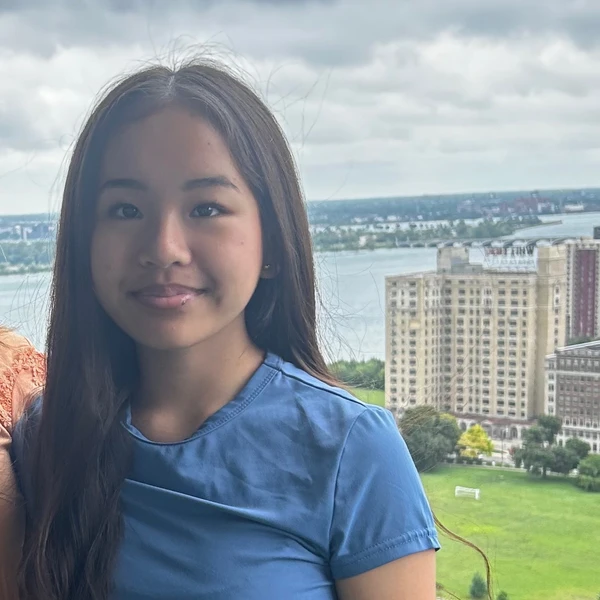
Sarah Thang
1x
Finalist
Sarah Thang
1x
FinalistBio
I am a first generation Burmese American student with plans to pursue a career in medicine. My experiences have motivated me to work hard academically and give back to communities that often face barriers in healthcare and education. i hope to use my future career to make a meaningful difference in people's lives.
Education
East Kentwood High School
High SchoolMiscellaneous
Desired degree level:
Bachelor's degree program
Majors of interest:
- Registered Nursing, Nursing Administration, Nursing Research and Clinical Nursing
- Public Health
- Nutrition Sciences
Career
Dream career field:
Hospital & Health Care
Dream career goals:
Robert F. Lawson Fund for Careers that Care
Growing up, I learned that helping others is one of the most meaningful ways to create positive change. My experiences have shaped me into someone who values compassion, service and perseverance and they have inspired me to pursue a career in healthcare where I can make a lasting difference in people's lives.
Throughout high school, I have worked hard to grow both academically and personally. My academic journey has not been perfect. During my freshman and sophomore years, I faced challenges that affected my grades, but I refused to have let those setbacks define me. Instead, I committed myself to improvement, taking more rigorous courses and pushing myself to succeed. As a result, I have shown significant academic growth and am currently taking multiple AP classes while preparing for college and my future.
Beyond academics, I have developed a strong desire to serve others. I am pursuing opportunities to volunteer in healthcare settings because I want to better understand how medical professionals improve the lives of patients everyday. Whether someone is facing a serious illness, recovering from an injury, or simply seeking reassurance during a difficult time, healthcare workers have the ability to provide both treatment and hope. I want to be part of that mission.
My goal is to build a career in healthcare where I can combine scientific knowledge with compassion. I hope to work directly with patients, helping them navigate challenges and improve their quality of life. In addition to caring for individual patients, I want to contribute to my community by promoting health education and encouraging people to take proactive steps toward healthier lives.
Coming from a low income background has reinforced the importance of opportunity and support. I understand that many individuals face barriers to accessing healthcare, education and other essential resources. This understanding motivates me to advocate for those who may not always have a voice and to help create a healthcare system that serves people with dignity and respect so everyone has a fair chance.
Robert F. Lawson dedicated his life to serving others, both in the military and in his community. His example reminds me that making a positive impact does not end with one accomplishment but is a lifelong commitment. Through my future career in healthcare, I hope to continue that tradition of service by improving lives, supporting my community and helping make the world a healthier and more compassionate place.
VNutrition and Wellness Nursing Scholarship
My interest in healthcare and nursing comes from both my personal experiences and my desire to help others improve their quality of life. Over time, I have learned that nutrition is one of the most important parts of overall health, yet it is often overlooked or misunderstood. Healthy eating habits affect not only physical health, but also mental well being, energy levels, confidence, and long term disease prevention. As someone pursuing a future career in nursing, I hope to educate and support patients in building healthier relationships with food and making sustainable lifestyle choices that improve their overall health.
One reason this topic is especially meaningful to me is because I have personally struggled with an unhealthy relationship with food and eating habits. I have experienced periods of trying to be "healthy" in ways that became harmful, including cycles of restriction, overthinking food, and unhealthy behaviors, along with times of binge eating. Going back and forth between these extremes negatively affected both my physical and mental health. Through these experiences, I learned how damaging unhealthy eating habits and misinformation can be, especially when people feel pressure from social media, unrealistic standards, or a lack of proper education about nutrition.
In addition to my personal experiences, my background as a first generation Burmese American has also shaped my perspective on nutrition and health. As I became older and learned more about Burma and my family's experiences, I realized how serious issues involving food security, malnutrition, and healthcare access still are in many communities there. Many families struggle to consistently access nutritious food, proper healthcare, and health education. Seeing how nutrition and overall health can be affected not only by personal choices but also by financial hardship and limited resources amdde me more aware of how fortunate I am and deepened my desire to help others. It also showed me that improving health is not only about treating illness, but also about education, prevention, and ensuring people have the support they need to make healthier choices.
Although my personal struggles with nutrition were difficult, they helped me better understand the importance of balance, nourishment, and sustainable habits rather than extremes. They also gave me empathy for people who struggle with nutrition related challenges, body image issues, chronic health conditions, or limited access to healthy food. Because I know what it feels like to struggle silently with food and health, I want to become the kind of nurse who supports patients without judgement and helps them feel understood rather than criticized.
In my nursing career, I hope to improve people's nutrition and overall health by focusing on education, prevention, and encouragement. Many people are aware that healthy eating matters, but they may not know where to start or may feel overwhelmed by conflicting advice online. I want to help patients understand that healthy eating does not have to mean perfection or strict diets. Instead, I would encourage balanced and realistic habits such as eating nutritious meals consistently, drinking enough water, reducing heavily processed foods, and learning moderation instead of restriction.
I also want to take a compassionate and individualized approach when educating patients. Every person has different financial situations, cultural backgrounds, schedules, and personal struggles, so health advice should be realistic and adaptable to their lives. Rather than simply telling people what they should or should not eat. I want to work with patients to create achievable goals and healthier routines they can maintain long term. My experiences have shown me how powerful healthy habits can be; I want to use that understanding to help others create healthier and happier futures for themselves.
Learner Math Lover Scholarship
One of the main reasons I love math is because there is always reasoning behind every answer. Unlike subjects where answers can sometimes be based on interpretation or opinion, math has definite solutions that can be proven step by step. I enjoy the feeling of knowing that if I put in enough time, effort, and practice, I can eventually understand and solve a problem correctly. That sense of certainty and logic is what makes math so rewarding to me.
Math has also taught me important life skills beyond the classroom. It strengthens problem solving, critical thinking, and patience. Some problems may seem confusing at first, but math has taught me to stay persistent and break challenges into smaller steps until I find a solution. Over time, I realized that success in math is not just about natural talent, but about discipline, practice, and learning from mistakes. I appreciate that hard work in math usually leads to improvement, which motivates me to continue challenging myself.
Another reason I admire math is because of how important it is in everyday life and in society as a whole. Math serves as the foundation for fields such as medicine, technology, business, engineering, and economics. Many of the advancements people rely on today, including computers, medical research, and financial systems, would not exist without mathematics. As someone interested in pursuing a career in healthcare, I understand how math is essential in areas such as analyzing data, calculating treatments, and solving real world problems that impact people's lives.
Most importantly, math gives me a sense of accomplishment. There is something satisfying about working through a difficult problem, understanding the reasoning behind it, and finally arriving at the correct answer. Math reminds me that progress comes from patience and effort, and that challenges can be overcome with persistence. That is why math continues to be one of the subjects I value and enjoy the most.
Amber D. Hudson Memorial Scholarship
Growing up, I witnessed how health is influenced by much more than medicine alone. In families, including my own, food is deeply connected to culture, comfort, and survival. As I became more interested in healthcare, I also began learning about the strong connection between nutrition and chronic diseases such as heart disease, diabetes, and autoimmune disorders. I realized that while medical treatment is important, prevention and healthy lifestyle choices can significantly improve both the quantity and quality of a person's life. If rewarded this scholarship, I would use my education and future career in healthcare to help patients and their families better understand how nutrition can become a powerful tool for healing and long term wellness.
As a first generation Burmese American student, I have seen how access to health education can vary greatly between families and communities. Many people, especially immigrant families or undeserved populations, may not always have access to reliable information about nutrition or preventive care. In some cases, healthy food options may also feel financially unrealistic or unfamiliar compared to traditional habits and routines. Because of this, I believe education must be practical, compassionate, and culturally understanding rather than judgmental or unrealistic.
If I were educating patients and families, I would focus on making nutrition feel achievable instead of overwhelming. Rather than expecting people to completely change their lifestyles overnight, I would encourage small and sustainable habits that can make a long term difference. For example, I would help families learn how reducing processed foods, increasing fruits and vegetables, drinking more water, and maintaining balanced meals can positively affect energy levels, heart health, inflammation, and overall well being. I would also emphasize the important of consistency and moderation rather than perfection, because many people become discouraged when they feel healthy living is impossible to maintain.
In addition to education, I would want to create a supportive environment where patients feel comfortable asking questions and discussing challenges they face. Many people struggle with maintaining healthy habits because of stress, financial difficulties, limited time, or lack of guidance. Instead of simply telling patients what they should or should not eat, I would listen to their circumstances and help them find realistic solutions that fi their daily lives. I believe healthcare professionals can have a greater impact when they build trust and work alongside patients rather than speaking down to them.
I also hope to use my future career in healthcare to support undeserved communities that may lack access to nutritional education and preventive resources. Growing up, I learned how important it is to understand different cultural background and experiences when helping others. Every family has different traditions, beliefs, and financial situations, and healthcare should respect hose differences while still promoting healthier choices. By combining empathy, education, and evidence based guidance, I hope to help patients feel empowered to take control of their health and improve their quality of life.
Ultimately, I believe nutrition is one of the most overlooked but powerful forms of preventive medicine. While doctors and treatments are essential, educating people about healthy lifestyle choices can prevent suffering before it begins. In the future, I hope to become a healthcare professional who not only treats illness, but also helps patients and families build healthier and longer lives through knowledge, support, and compassionate care.
Scorenavigator Financial Literacy Scholarship
Growing up as a first generation Burmese American student, I did not fully understand how much finances could shape a person's future until I became older and learned more about my family's journey. My parents came to the Untied States struggling to build a stable life and create better opportunities for their children. Although they faced any hardships, they worked tirelessly to provide for our family and ensure that I would have access to opportunities they never had themselves. Watching their sacrifices taught me the important of perseverance, responsibility, and making the mot of every opportunity.
I also grew up with two older brothers who are much older than me and were born in Burma and India, while I was born in the United States. Because of this, I recognize that my upbringing was very different from theirs. They experienced challenges, instability, and sacrifices that I never had to face directly. Even though they went through much more than i did, they never allowed me to carry the same burdens. Instead, my family protected me from many of the struggles they experienced and worked hard to give me a safer and more stable future. Realizing this has made me deeply appreciate of the privileges and opportunities I have been given.
As I got older, I also became more connected to my Burmese identity and learned more about the conditions many people in Burma still face today. When I was younger, I sometimes felt disconnected fro my background because I did not fully understand it. Over time, however, I began learning more about the country's history, economic struggles, and lack of development in many areas. I also became more aware of how many of my relatives back home continue to struggle financially and lack access to educational and career opportunities that many people in the United States often take for granted. learning about these realities changed my perspective and helped me understand how fortunate I am to have the opportunities I do today. Although I was not taught much on finances growing up, my personal experiences motivated me to learn more about budgeting, scholarships, college costs, and financial planning for the future. As someone who hopes to pursue a career in healthcare, I understand that financial literacy is essential not only for achieving personal stability, but also for making responsible decisions throughout college and adulthood. I want to use what I learn to avoid unnecessary debt, support my family in the future, and create opportunities that previous generations in my family did not have access to.
Most importantly, I hope to use both my education and financial knowledge to give back to others. My family's experiences have taught me that financial stability and education can completely change the direction of someone's life across generations. In the future, I hope to use my career in healthcare to support undeserved communities and help people who may feel limited by financial barriers or lack of opportunity. The sacrifices my parents and brothers made have inspired me to work hard, remain grateful for the opportunities I have been given, and use those opportunities to create a meaningful impact for both my family and my community.