Hobbies and interests
Medicine
Neuroscience
Reading
Painting and Studio Art
Drawing And Illustration
Cooking
Singing
Writing
Running
Business And Entrepreneurship
Sociology
Science
Public Health
Health Sciences
Politics and Political Science
Reading
Romance
Adult Fiction
Action
Art
Cultural
Cookbooks
Drama
Horror
Realistic Fiction
Women's Fiction
True Story
I read books daily
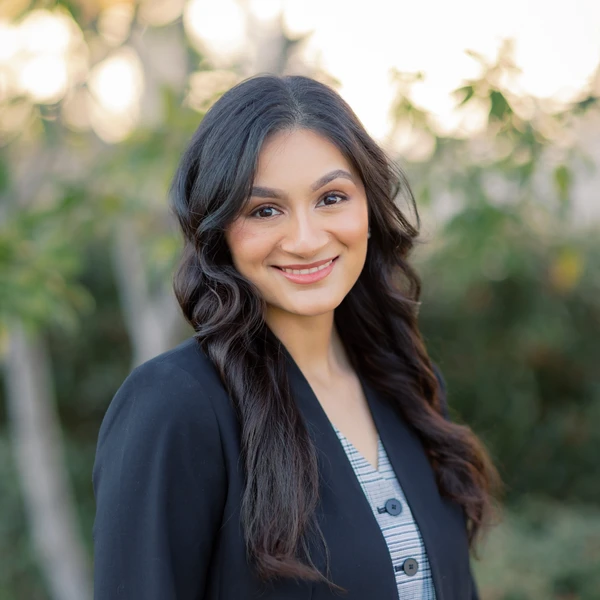
Sarah Ali
1,375
Bold Points1x
Finalist1x
Winner
Sarah Ali
1,375
Bold Points1x
Finalist1x
WinnerBio
My name is Sarah Ali, and I’m an MD/MPH student passionate about advancing health equity and improving access to preventative care in underserved communities. As a first-generation student raised by a single-mother, I learned early the importance of perseverance, empathy, and service.
My journey began at the University of Alabama at Birmingham, where I earned my degree in neuroscience and conducted research on the biological underpinnings of depression. Alongside my academic pursuits, I led community health initiatives, started a nonprofit, and mentored students navigating college and career paths.
Now in medical school, I’m committed to becoming a community-based physician who integrates public health principles into patient care—addressing not only illness but the social and structural barriers that shape health outcomes.
Education
University of Alabama at Birmingham
Master's degree programMajors:
- Public Health
GPA:
4
University of Alabama at Birmingham
Doctoral degree program (PhD, MD, JD, etc.)Majors:
- Medicine
University of Alabama at Birmingham
Bachelor's degree programMajors:
- Psychology, General
- Neurobiology and Neurosciences
GPA:
3.9
Hoover High School
High SchoolGPA:
4
Miscellaneous
Desired degree level:
Doctoral degree program (PhD, MD, JD, etc.)
Graduate schools of interest:
Transfer schools of interest:
Majors of interest:
- Neurobiology and Neurosciences, Other
- Public Health, General
Career
Dream career field:
Hospital & Health Care
Dream career goals:
Surgeon
Research
Neuroscience
University of Alabama at Birmingham — Research Intern2019 – 2020Cell Biology and Anatomy
UAB — Research Assistant2020 – 2020
Arts
Independent
Music2021 – PresentIndependent
DrawingNA2021 – Present
Public services
Volunteering
Ismaili Muslim Volunteer Corp of Alabama — Team Lead2018 – PresentVolunteering
Vijiti Club — Founder & President2019 – PresentAdvocacy
Independent — Workshop Manager, Lead Presenter2019 – 2020Volunteering
Children’s of Alabama — Nursing Ambassador Volunteer2019 – PresentAdvocacy
Independent — Organizer, Community Outreach Coordinator, & Publicity Chair2019 – 2019Volunteering
Early Childhood Development Program — Teacher Assistant2018 – PresentVolunteering
Vijiti — Founder and CEO2019 – Present
Future Interests
Advocacy
Politics
Volunteering
Philanthropy
Entrepreneurship
Kayla Nicole Monk Memorial Scholarship
When I was fourteen, I met a young girl at an orphanage in Mombasa, Kenya, who used paper bags for menstrual care and brushed her teeth with chalk. I remember feeling a deep ache in my chest—not just for her lack of resources, but for the world’s silence around it. That experience led me to create Vijiti, a nonprofit providing hygiene supplies and health education to underserved communities. It was the first time I saw how science, compassion, and leadership could come together to change lives.
That experience guided my decision to pursue STEAM. I earned a degree in neuroscience at the University of Alabama at Birmingham, conducting research on the molecular pathways of depression. This work deepened my understanding of how science can illuminate human suffering and inform interventions. More importantly, it highlighted that discoveries must reach the communities that need them most.
Beyond research, I have dedicated myself to hands-on service that strengthens communities. Traveling across "Sweet Home Alabama" to prick patients' fingers and deliver bitter news, I volunteered at the Spirit of Luke Mobile Clinic, helping patients dispel nutritional misconceptions and adopt practical strategies for managing diabetes/hypertension. I guided patients to read nutrition labels, track sugar and sodium intake, adjust portion sizes, and integrate habits such as walking after meals, choosing healthier snacks, or substituting water for sugary beverages. I felt energized witnessing patients take ownership of their health, asking questions, and applying these changes in their routines. I also extended these sentiments to their children, encouraging intentional changes. Each month, familiar faces joined me to examine the backs of soda bottles, pouring capfuls of Sprite into water to limit sugar intake. Witnessing education spark change across generations deepened my conviction that teaching is a powerful form of care. It can bridge healthcare gaps in underserved communities and empower patients to carry forward their progress.
I also carried this commitment to the Community of Hope Health Clinic, where I worked closely with patients facing multiple barriers to care. From assisting with patient intake to facilitating educational discussions on preventative health, I saw firsthand how addressing social determinants, such as food insecurity, transportation, and health literacy, is just as crucial as medical treatment. Similarly, my work with the Cahaba Valley Health Clinic involved organizing community screenings and fundraisers, reaffirming that sustainable health improvements arise at the intersection of empathy, evidence-based care, and community engagement.
Now, as an MD/MPH student, I am taking the next step in bridging science and service. Medicine allows me to connect with patients one-on-one, while public health equips me to address systemic inequities like poverty, nutrition, and access to care. I envision myself as a primary care physician who integrates community outreach into clinical practice—guiding families in managing chronic illnesses, hosting preventive care workshops, and connecting patients with resources to thrive.
This scholarship would be more than financial support. It would be an investment in a lifelong mission. It would allow me to focus fully on my medical and public health training while continuing to serve underserved communities. From a small orphanage in Kenya to the medical clinics of Alabama, my journey has been guided by one belief: science is most powerful when it serves people. This scholarship would help me continue turning that belief into action—one patient, one community, and one discovery at a time.
WCEJ Thornton Foundation Low-Income Scholarship
WinnerThe strong smell of disinfectant infiltrated my nostrils. The fluorescent lights and white walls pierced my eyes. I looked down at my trembling hands, twisting and turning them as if doing so would hold down the turmoil inside me. Despair roamed the room, expelled on the breath of fearful family members like me who were doing their best to bite down on the pain that brought them here. It was Thanksgiving Day, and instead of counting our blessings at the dinner table, I found myself sitting at my brother's bedside as a long, flat, piercing sound penetrated my ears. My brother had passed away.
I watched as his body vanished into what had been fragmented by a heart attack. The plaques and blockages that accumulated in his heart now seeped into our daily lives. It was as if I was touched by something chronic; something that wasn’t fatal, but still felt like it could be. In search of an outlet to conquer this emotional numbness, I sought to channel my energy into something more restorative.
In December 2018, I volunteered at Cannan Orphanage in Mombasa, Kenya with an international platform called Global Encounters. As a group of 40 people that were selected from a body of Ismaili Muslim students, my connections with the children were acutely intimate. The carefree attitudes and contagious smiles I was greeted with would have never led me to question their compromised quality of life. The children bathed in saltwater, used their fingers to brush their teeth, and cared for their menstrual cycles with cardboard boxes and brown paper bags. As I witnessed their hardships, a growing sense of responsibility stirred within me. I no longer felt numb.
An accumulation of every touching story from Cannan Orphanage resulted in Vijiti, a local and globally-focused nonprofit organization that I founded. Vijiti delivers medical supplies and creates hygiene curriculum for schools to uplift marginalized areas in Africa and Asia. My peers now help the cause through the Vijiti Club at my high school. With the help of our volunteers, Vijiti has served 3,000 care packages on a global scale and has designed a health curriculum for seven schools this past year.
Not only did starting Vijiti give me a sense of control, but for the first time, I realized that I had the power to do something: I could prevent another family from experiencing pain and loss similar to mine. The memory of my brother dying will always be sad and it will always hurt, but experiences like these have shaped me just as much as the joyful ones have. And just as permanently. My life lacked a purpose after my brother’s life was gone, but his death gave life to Vijiti, and Vijiti gave more meaning to my life. And this is how I honor my brother: by making sure his death isn’t a black hole that sucked me in, but instead the spark I needed to be able to burn brighter.