Gender
Female
Ethnicity
Black/African
Hobbies and interests
African American Studies
Reading
Adult Fiction
I read books daily
US CITIZENSHIP
US Citizen
LOW INCOME STUDENT
Yes
FIRST GENERATION STUDENT
Yes
Sandy Avrilien
1x
FinalistSandy Avrilien
1x
FinalistBio
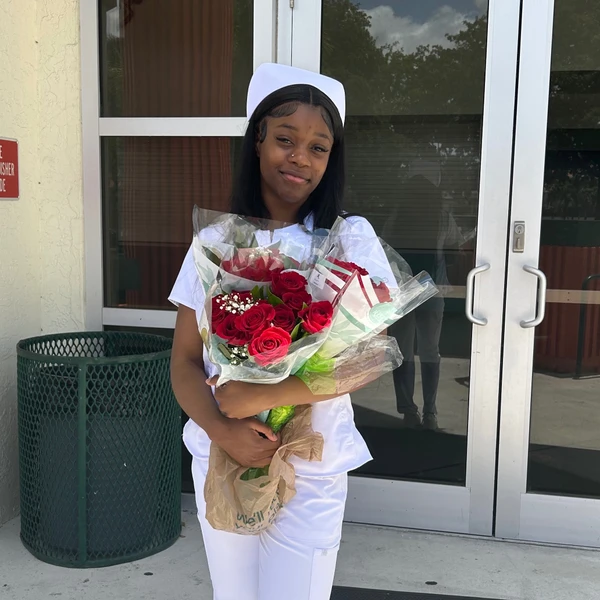
I’m Sandy Avrilien, a recent high school and LPN program graduate determined to transform healthcare outcomes for Black mothers. As a first-generation American and the daughter of a selfless immigrant mother, I carry forward her legacy of perseverance and purpose. I completed my LPN internship at Broward Health and am now preparing for the NCLEX while balancing scholarship applications and long-term goals.
My dream is to become a nurse practitioner specializing in maternal health. I aim to open clinics in underserved communities and lower the maternal mortality rate among Black women. I’ve served as class Vice President, received multiple honor awards from my high school, and graduated in the top 10% of my class. Education has always been a top priority for me as a first-generation student, and I am fortunate to have the opportunity to apply for scholarships to pursue my dream.
Education
Florida Agricultural and Mechanical University
Bachelor's degree programMajors:
- Registered Nursing, Nursing Administration, Nursing Research and Clinical Nursing
Blanche Ely High School
High SchoolMiscellaneous
Desired degree level:
Master's degree program
Graduate schools of interest:
Transfer schools of interest:
Majors of interest:
- Registered Nursing, Nursing Administration, Nursing Research and Clinical Nursing
Career
Dream career field:
Hospital & Health Care
Dream career goals:
maternal nurse practitioner
cashier
target2023 – 20241 year
Sports
Volleyball
Junior Varsity2022 – 20231 year
Volleyball
Junior Varsity2022 – 20231 year
Public services
Volunteering
Broward Health — As a volunteer, I assisted with vital signs, activities of daily living (ADLs), feeding patients, and providing companionship.2024 – 2025Volunteering
Feeding South FL — Volunteer2024 – 2024
Future Interests
Advocacy
Volunteering
Philanthropy
Entrepreneurship
Beacon of Light Scholarship
I picked a career in healthcare to be able to leave a permanent mark in people's lives, especially in those communities that are often invisible and underserved. Coming from a Haitian household, I was given an understanding of the plight many families suffer in accessing quality healthcare. I witnessed barriers of language, cultural misunderstandings, and lack of resources prevent people from obtaining care. This served to compound my awareness and instilled in me a sense of responsibility to be part of the force that works toward change.
My interest sprang from that desire to help. It eventually blossomed into an ardent affection for Nursing, a profession that underlines compassion coupled with knowledge and application. Nurses nonetheless, become that missing link between a patient and the rest of the healthcare team. They provide advocacy, teaching, and competing, all while giving life-saving care. I feel that by becoming a nurse, I will be able to speak for a lot of people who may not be able to speak for themselves in medical settings.
I consider myself to have a big heart for nursing, yet my particular interests are prenatal and maternal health. Sadly, maternal mortality and birth complications remain way too high in many underserved communities, especially among Black women, and I really want to change that. I would like to go into onboarding in prenatal care as an N.P. so proper medical treatment is given to mothers during pregnancy, alongside the education, emotional support, and cultural understanding they deserve.
My education at Florida A&M University powerfully contributes to the work I want to do. Being an HBCU, FAMU is an institution where I am surrounded by fellow students and professors who understand my background and my objectives. It thereby aids me in fortifying my confidence and leadership skills that I will certainly need. The nursing program's emphasis is on clinical excellence and community health, which is perfectly in line with the desire to address root causes of inequities in healthcare, as opposed to just the symptoms.
My long-term vision goes beyond working in a clinic or hospital. I want to create community outreach programs where pregnant women gain prenatal education, nutrition, and early detection of pregnancy complications services. These programs should not just serve as a resource for these women but should also include family participation in creating an environment of support. I believe assessing healthcare from a proactive viewpoint is best, and educating people is one of our strongest tools for preventing poor outcomes.
This work is personal to me. I know what it feels like to have loved ones who are unsure of how to navigate the healthcare system or who don’t feel heard by medical professionals. I know how powerful it is when someone takes the time to explain, to listen, and to treat you as a whole person rather than just a set of symptoms. That is the type of care I want to provide every single day.
Thank you to the contributor of this scholarship for providing a way for students like us to achieve our goals.
Marie Jean Baptiste Memorial Scholarship
I was born and brought up in Broward County, Florida, by two hardworking Haitian parents. Growing up in a Haitian home, we learned important lessons like faith, discipline, and community. My parents instilled the value that in life, nothing is handed to you. One has to work not just for oneself but for other people as well.
Coming from my own experience, I feel putting my heart into helping others is what I stand for. My family can count on me for financial help when times are hard. Sometimes I cover bills, groceries, or school things, not because I am told to, but because in my conscience I should. I do my fair share at home and help my sister with her studies. The family is number one in a Haitian household, and every single person just has to shoulder the responsibility.
In my community, I’ve volunteered at Broward Health on the med-surg floor, providing hands-on support to patients through vitals, feeding, and companionship. I’ve also helped elderly neighbors with errands, offered tutoring to younger kids, and stayed active in community events. What drives me is the belief that small acts can make a lasting difference. I’ve seen how a simple gesture like listening to someone or giving a ride can impact someone’s day.
My volunteering experience has been at Broward Health on med-surg floors, assisting patients through taking vitals, feeding, and accompanying. At the home level, I have been helping elderly neighbors with errands, tutoring young kids, and being active in community affairs. I love the idea of small matters really making a difference. I have seen how a simple listening moment or just giving someone a ride to where they need to go could brighten their day.
That same energy will continue after college. I want to open clinics to care for populations that are underserved, especially Black and Caribbean populations. I know what it is like sitting in for hours in a waiting room or being dismissed by a provider who does not understand your culture. I want to change that. I want the patients to be seen and heard, especially those young girls that look just like me.
The Haitian heritage is a big part of the drive that nurtures my being. Our history has lessons in strength and resilience. We know plenty about suffering, but we also know plenty about victory. That pride runs deep inside me, and I weave it into all that I do. I want to truly be a role model to other Haitian-American youth and tell them that they can make a difference, not just in their homes, but the world as well.
Henry Respert Alzheimer's and Dementia Awareness Scholarship
The morning after my birthday in 2024, everything was eerily silent, the usual chatter somehow muffled. The grandfather went up yonder on the 10th of November, just one day after I turned a year older. From that date, the memory is etched not only because of its timing but also because of the deep meaning he held for me and the profound life lessons I learned while caring for him. In those nearly four years, my grandfather stayed in my house as he fought with Alzheimer’s disease. I saw him lose his grip on names, places, and memories, but all along, I learned what true love, patience, and responsibility are. In the very early stages of the illness, things didn't seem too bad. He continued to go about his daily tasks with the help of his family members. Gradually, though, his awareness started to fade away along with his memory, and he became increasingly demanding of assistance for his very existence: from bathing to changing, using the washroom, and even just walking safely. Sometimes, on a late night, he would trudge around the house, uttering the name of my grandmother or reminiscing about his younger days, or sometimes his days in Haiti. He kept asking about his children, who still lived in Haiti, while being confused about where he was or the year. It was like observing someone living in two timelines: one foot in the past and the other in a present ambience alien to him.
Being the youngest in the family, I had somehow assumed a significant role and taken on more responsibility than I had ever wished for. Both parents were working long hours, and I had to check on my grandfather after school. I remember that my mom had panicked when she saw through the Ring camera that my grandfather had gone outside alone. That scared the hell out of us all. We had, you see, always assumed he would be safe for a couple of hours on his own, but after that day, Grandpa was never without supervision. It was a complete lifestyle change for us; I had to grow up very fast. The emotional pressure was heavy, not just for me individually, but for the whole family. Being the eldest of the siblings, my dad shared a unique bond with my grandfather. They were only 19 years apart in age, and they had always had a powerful relationship. The memory of my father trying to stay composed while his father slowly lost his memory of who he was has stayed with me forever. I had seen silent strength. I noticed that love doesn't fade even when memories do.
There were also moments of warmth and connection. I would sit side by side with my grandfather and hear of his childhood in Haiti. There were tales of days before François Duvalier and of how the world must have felt free and joyful, at least for some time, walking through sugarcane fields with friends, laughing under the glare of a thousand suns. He would come alive in those somber moments. Even at times when he could not remember my name or exactly where he was, those traces of memory created a vivid picture for me of the man he had been—and still was, somewhere deep down.
Through the journey of caring for him, I gained new insights into the elderly, particularly within immigrant families like my own. I never honestly thought about what it meant to get old before this experience. Now I know that getting old comes with its difficulties and that, in many families, particularly ours, it is the kids and grandkids who step in at the critical moment when elders can hardly help themselves. I discovered that caregiving extends beyond physical support—it requires respect, patience, and presence. From my experience, I have come to realize the importance of valuing family and not taking them for granted. When a loved one is faced with a disease that destroys a person's memory, you tend to value every little moment. A smile. A laugh. A story. Any form of connection is a truly valuable gift. Alzheimer's taught me to slow down and be in the moment while valuing time with my family, so each day is precious.
Since my grandfather passed away, I have felt myself change. I have grown more empathetic and mature in this way, taking the time to check on those I love. I have developed an attraction to stories—especially of the older kind—because I realize how fast those stories are lost. His illness taught me how to stand for others even when it's hard. It taught me that when it comes to those you love, sometimes responsibility is not a choice; it's something that you just rise into. Even though he may have forgotten pieces of his life, I will never forget the lessons he left behind. Caregiving for my grandfather through the challenges of Alzheimer’s made me more compassionate, grounded, and aware of the world around me. That experience not only taught me how to help others, but it also made me into the person I am today.
CEW IV Foundation Scholarship Program
Being a member of a purposeful, responsible, and productive community means uplifting others through intentional actions, taking on constant responsibility, and making worthwhile contributions. One must understand that our efforts not only enable ourselves but also others around us to form better futures. These are not necessarily good qualities, but rather a requirement for building stronger, resilient communities.
Purposeful means to serve with life, definitely meant for something. Purpose stems from values, and my purpose is service. I intend to serve the underserved communities, primarily women and children, who are denied access to proper healthcare facilities. Half of my life is already dedicated to this thought: helping underserved communities. Therefore, every decision I make in this life, particularly in terms of education and career, is truly influenced by my desire to help them. I want to be successful not for myself, but for everyone I can touch, so that my success inspires others and brings change to places where it is genuinely needed. Whether volunteering, tutoring, or engaging in extended volunteering, I am purposeful in being conscious about how I spend my free time, applying my talents to make a difference.
Responsibility is about showing up consistently for yourself, your family, and the community. A responsible person is dependable when a need arises, particularly during challenging times. Growing up in a Haitian household, I've had my fair share of learning responsibility. My family has faced financial hardships and an air of uncertainty, so when situations arose, I had opportunities to step in ways that most of my peers probably haven't. From paying bills with my mom to comforting my sister through college stress, being there and being consistent has shown me that we are supposed to be dependable. Those lessons shape my character, molding me into a trustworthy individual. This same level of responsibility will be held by me, as a healthcare provider, always prioritizing needs and upholding the highest standards of care.
Producing is being directly involved in the positive progress of your surrounding environment. Dreaming is never enough; doing is. I will be productive by actively pursuing initiatives in all endeavors in which I am engaged, both academically and in community outreach projects. I want to see initiatives created that respond to the sources of health disparities, such as lack of education, cultural stigma, and poverty. I think productivity means creating long-term solutions, not just temporary fixes. I also hope to mentor other first-generation students like myself, helping them navigate college and their career goals.
In the future, I will embody my values through my involvement with organizations that align with my interests. I will advocate for health equity, use my platform to raise awareness, and act as a demonstration of endurance and purpose. There's a need for everyone to chip in towards building more robust communities; I am committed to doing my part. Having a purpose, being responsible, and being productive are things I will never outgrow.
Crowned to Lead HBCU Scholarship
In high school I was a part of the LPN program and starting nursing at a young age was anything but easy I remember there were times where I would break down and cry about how hard this program was and how excluded I felt from the regular teenage experience like going to work or having time to go out because I was so busy with school and studying the course we’re gonna pressure to succeed with relentless. I often found myself mentally struggling with the weight and expectations of my own doubts. There were moments when quitting and crying to my mom, saying that I didn’t want to do this anymore, felt easier than trying to finish the program. Still, through all of that, there was one person who stood as a constant source of encouragement, my medical magnet coordinator. Dr.Coote-Johnson. If you were to ask anyone who was in the medical program about Dr. Coote, you would hear that she was perceived as mean and strict. She didn’t let you dress out and all of these other things, but to me, Dr. Coote was one of the main reasons I even finished this program. She wasn’t just a coordinator to me. She was a mentor, a cheerleader, and a pillar of faith, full of positive affirmations from the beginning, she believed in us even when we didn’t fully believe in ourselves, she had this habit of calling us a nurse before we even pass our LPN program a small detail, but a powerful affirmation that simple act of naming us as nurses and referring to us every time she saw us was etched in our minds. It made me see myself as someone who could achieve the goal, not just a student barely making it through a program. It was as if she were telling us, 'You belong here.' ''You’re already on the path, and you’re going to make it.''. That mindset was everything when I took my first HESI. I failed by 200 points. I felt defeated, frustrated, and ashamed because I was one of the only people out of the 12 who failed that test, and my confidence plummeted. The temptation to quit was overwhelming. I thought, hey, maybe this program isn’t for me. I shouldn’t be doing this anymore. Let me give up and try to enjoy the rest of my senior year, but I went to speak to Dr. Coote. She told me that to try my best on the second attempt, she went over the areas that I struggled with, so instead of giving up or hiding, I chose to continue to keep pushing due to her words of encouragement, and she reminded me that failure is not final. This experience taught me a critical lesson that support matters. You can’t just go through life by yourself. It’s about having someone who believes in you when you don’t believe in yourself, and that kind of support can make a world of difference between giving up and pushing through it. We were supported by someone who generally cared about our success personally and professionally. Her encouragement helped me grow as a person, a nurse, and a student, building resilience, confidence, and hope. This impact has shaped the way I see my education and my future career. I am determined to be that type of person who supports others in my community. I plan to use my education to build bridges in my community. The idea that my purpose is greater than myself is something I carry with me in whatever I do.
I Can and I Will Scholarship
Historically, mental health for me has been less about crushed moments and more about carrying the weight of life without getting crushed under. Growing up, I felt like I had to hold it all together-for my own sake, for my family, and for those goals I'd been aching to pull off. But what I didn't realize was how much I was under so much emotional pressure until it began manifesting toward my physical being: burnout, anxiety, isolation, feelings of not doing enough-even when I was putting in everything I had.
For most of my adolescent peers, high school was all about freedom. For me, it was all about enrolling into the LPN program-a demanding roadway that forces one to mature quickly. Empty was another feeling I often entertained, while I juggled school, clinicals, and the outright toll of being emotionally stretched so thin. There were nights that I would cry by myself, feeling overwhelmed by the notion of perfection in a place where I did not even feel welcomed. I rarely talked about it because admitting I was struggling was like failing in my eyes.
The silence taught me a terrifying lesson-how to go about my life while drowning mentally.
But over time I began to look at the present moment because I realized it was going to give me something to value. Realizing that I had to be kinder to myself. Spiritually, I had to trust God; He wasn't asking for perfection, just progress. Relationally, I was more intentional. I stopped relying on people to read my mind and began to communicate my boundaries and needs clearly. My friendships became much more honest. My comprehension of love deepened; I began to appreciate consistency over grand gestures, and I started to see clearly that support is not loud-it is simply presence.
My experience with mental health became the foundation for my very purpose. I want to become a maternity and baby nurse practitioner to defend and advocate for women, particularly Black women, who are often marginalized, silenced, or unsupported during some of the most vulnerable times in life. Building a space where mental, physical, and emotional wellness are all taken into consideration is key, whether through consultation, postpartum care, or just being a friend to a mother who feels alone.That mindset shift changed the whole way I viewed nursing. It's more than just treating a symptom of disease; we see whole people, with their stories, struggles, and silent battles. I want to be a nurse who knows when a patient requires findings outside of the realm of physical intervention. Sometimes, it's patience, presence, and attentive ears that are needed.
Rose Browne Memorial Scholarship for Nursing
In high school I was a part of the LPN program and starting nursing at a young age was anything but easy I remember there were times where I would break down and cry about how hard this program was and how excluded I felt from the regular teenage experience like going to work or having time to go out because I was so busy with school and studying the course we’re gonna pressure to succeed with relentless. I often found myself mentally struggling with the weight and expectations of my own doubts. There were moments when quitting and crying to my mom, saying that I didn’t want to do this anymore, felt easier than trying to finish the program. Still, through all of that, there was one person who stood as a constant source of encouragement, my medical magnet coordinator. Dr.Coote-Johnson. If you were to ask anyone who was in the medical program about Dr. Coote, you would hear that she was perceived as mean and strict. She didn’t let you dress out and all of these other things, but to me, Dr. Coote was one of the main reasons I even finished this program. She wasn’t just a coordinator to me. She was a mentor, a cheerleader, and a pillar of faith, full of positive affirmations from the beginning, she believed in us even when we didn’t fully believe in ourselves, she had this habit of calling us a nurse before we even pass our LPN program a small detail, but a powerful affirmation that simple act of naming us as nurses and referring to us every time she saw us. It made me see myself as someone who could achieve the goal, not just a student barely making it through a program. It was as if she were telling us, 'You belong here.' ''You’re already on the path, and you’re going to make it.''. That mindset was everything when I took my first HESI fundamental. I failed by 200 points. I felt defeated, frustrated, and ashamed because I was one of the only people out of the 12 who failed that test, and my confidence plummeted. The temptation to quit was overwhelming. But I went to speak to Dr. Coote. She told me that to try my best on the second attempt, she went over the areas that I struggled with, so instead of giving up or hiding, I chose to continue to keep pushing due to her words of encouragement, and she reminded me that failure is not final. She didn’t let me dwell on that failure. Instead, she told me to keep coming back to share my progress, my wins, and even my struggles. We were supported by someone who generally cared about our success personally and professionally. Her encouragement helped me grow as a person, a nurse, and a student, building resilience, confidence, and hope. This impact has shaped my perspective on education and my future career as a nurse. I hope that others can find their "Dr.Coote".
Charlene K. Howard Chogo Scholarship
My name is Sandy Avrilien, and I’m a first-generation Haitian-American and an incoming freshman at Florida A&M University. From a young age, I was drawn to the world of medicine — whether it was watching “Doc McStuffins” or “Grey’s Anatomy,” I found myself fascinated with the idea of helping people. That passion only deepened over time. During high school, I was enrolled in a Licensed Practical Nursing (LPN) program, which I completed before graduation. I also served as the Senior Class Vice President and graduated in the top 10% of my class — accomplishments that reflect both my leadership and my drive.
How I plan to make a positive impact on the world through my career starts with the communities I come from. I was raised in a predominantly Black neighborhood and attended a historically Black high school. I’ve seen firsthand how systemic issues affect the well-being of minority communities — especially in areas like maternal health and sexual health education. It’s no secret that Black women in the United States are two to three times more likely to die from pregnancy-related complications than white women. These outcomes aren’t about income or fame — even Serena Williams shared her own traumatic experience. The deeper problem lies in how Black women are often dismissed or misdiagnosed during critical moments. This reality motivates me every day.
In school, I noticed how little we’re taught about preventing STDs or unplanned pregnancies. That’s part of the problem: education is lacking, access is limited, and resources are not targeted to our communities. I want to change that. I want to create spaces where education and care are accessible, empathetic, and culturally responsive. My goal is to open mobile clinics across Florida — and eventually the U.S. — that offer prenatal and postpartum services at no cost. These mobile units would provide essential resources such as pregnancy testing, ultrasounds, lactation education, prenatal vitamins, and folic acid supplements to help prevent birth defects like spina bifida.
Beyond mobile clinics, I dream of establishing a brick-and-mortar wellness center — a space that combines STD testing, 3D ultrasounds, group classes, and holistic postpartum recovery services for Black and minority women. I want it to feel like a safe haven — not a place of judgment or fear. A place where women can feel seen, heard, and supported at every stage of pregnancy and beyond.
My commitment isn’t just about professional goals — it’s rooted in personal responsibility. As someone who’s benefited from programs like Feeding South Florida and who volunteered with Broward Health, I’ve learned that community care begins with showing up. Whether it’s distributing food to families or assisting nurses in clinics, I’ve seen how the smallest efforts can make a real difference. That same energy is what I plan to carry into my nursing journey and the future clinics I hope to build.
Tanya C. Harper Memorial SAR Scholarship
My name is Sandy Avrilien. I am a recent graduate of my Licensed Nursing Program, and I am from Pompano Beach, Florida. A bit about myself and how I plan to make a positive impact is that I grew up loving anything medical, from watching Doc McStuffins as a young child to attending a medical magnet middle school and even pursuing a nursing program in high school. I always knew that medicine was what I wanted. Medicine was the field I wanted to pursue. So, how I plan to make a positive impact is focused on Black maternal health, especially for our underserved communities, so our Black and our minority communities. A lot of prenatal care is very heavily pushed in the medical community. A lot of people and a lot of textbooks recommend getting prenatal care before you get pregnant and while you are pregnant. And I know that in underserved communities, many people don't have the money to visit OB/GYNS, especially with the crackdown with the big beautiful bill, and how many people will have to work 80 hours a month to qualify. So we're going to have a lot of people off of Medicaid, which increases the strain on receiving these types of care and potentially removing the possibility of receiving them completely.
What I want to do is open up mobile health clinics. So we would do prenatal checks. We would drive around communities. We'd park and open up clinics where people can come in free of charge, and we can check on their baby. We would do mobile ultrasound clinics, even give out free prenatal vitamins, folic acid, and things of that nature, so that our black babies and our minority babies can thrive. A lot of congenital disabilities are due to an insufficient amount of folic acid or inadequate prenatal care. Afterwards, we would have PPD, postpartum clinics, mobile clinics, where we would go around neighborhoods with expectant moms or moms who are just postpartum moms and just checking on them, checking on mental health. This would take me back to my South Florida community and allow me to do what I like to call 'baby drives,' where we would distribute diapers, bottles, formula, and other essentials to these families. I also intend to open a standalone wellness clinic that provides ultrasounds, lactation support, and postpartum care, creating a space where women can feel safe, heard, and cared for, just beyond the clinical setting. We would also provide classes for mothers and expectant mothers.
Healing Self and Community Scholarship
One way I would start making mental health care more affordable and accessible is by having free mental health programs in schools so that kids can talk to professionals early on without pain, and it still lasts up to at least the graduation age, which is 18. I would also make mental health checkups mandatory for everyone, even if they appear to be okay. So, like regular doctor visits, it'll be required to check the patient's mental health because mental health changes often, and sometimes it is unexpected. And you would have a baseline, allowing you to have a benchmark for it. We would push the government to provide affordable mental health care and run public service announcements to raise awareness. So, basically, in schools, we would probably be able to have sit-downs or little mental health days and things like that. We would also improve mental health benefits in Medicaid, Medicare, and other programs, so people receive more coverage, as billions of people in the United States have Medicaid. We would also create safe, judgment-free spaces where people feel comfortable about their mental health since there is such a negative stigma arou nd it. We want to ensure that people feel comfortable talking about their problems.
Kalia D. Davis Memorial Scholarship
My name is Sandy Avrilien, and I’m a first-generation Haitian-American college student currently attending Florida A&M University. I am majoring in nursing, and my dream is to become a Nurse Practitioner with a focus on prenatal care. I want to be someone who not only helps patients medically, but who also advocates for better access to care—especially for Black and immigrant mothers who are often dismissed, mistreated, or left behind in the healthcare system. I want to make a difference where it’s truly needed.
Growing up, I watched my parents work hard and sacrifice so much just to give my siblings and me a shot at a better life. That’s a big part of why college is so important to me. I’m not just here for myself—I'm here to make them proud and to create a future where I can support them the way they’ve supported me. I know what it feels like to carry pressure and responsibility while still trying to chase your dreams, and I use that feeling as motivation every day.
Being in college has already changed me in so many ways. I’ve learned how to manage my time better, how to stay focused through stress, and how to handle challenges with resilience. One of the most meaningful experiences I’ve had so far was volunteering at Broward Health on a medical-surgical floor. I helped with taking vital signs, feeding patients, and offering simple companionship—just sitting with people when they needed someone there. That experience made me even more sure that nursing is the right path for me. I want to be the kind of nurse who doesn’t just treat people, but makes them feel seen, safe, and cared for.
This scholarship would lift a huge burden off my shoulders. Financial stress is real, and as someone who comes from a low-income background and is currently dealing with the fear of my father possibly being deported, I often find myself trying to balance school, work, and emotional stress all at once. Receiving this scholarship would allow me to focus more on my studies and less on survival. It would mean having the chance to truly breathe and put more energy into growing as a student and future healthcare professional.
I know there’s still so much ahead, but I’m proud of how far I’ve come. I’m determined, I’m learning, and I’m not giving up. Thank you for considering me for this opportunity.
Catrina Celestine Aquilino Memorial Scholarship
Growing up in Broward County, Florida, as a first-generation Haitian-American, I learned early on what it means to work hard, often against steep odds. My parents, like many in our community, navigated a healthcare system that frequently felt alien and unyielding. I witnessed firsthand the struggles—language barriers, financial strain, and the disheartening experience of not being heard or taken seriously. These moments weren't just observations; they were the seeds that planted a profound desire in me: to become the kind of healthcare provider I wished my family had. That desire is now my driving force as I pursue my nursing degree at Florida A&M University.
My long-term vision extends beyond becoming a registered nurse; I aim to be a Nurse Practitioner specializing in prenatal and maternal care. This isn't merely a career path; it's a calling born from a stark reality: Black women in the U.S. are three times more likely to die from pregnancy-related complications. This isn't just a statistic to me; it's a deeply personal issue that touches my mom, my aunties, and the future patients I envision serving. I am fiercely passionate about advocating for Black women, immigrant women, and low-income families—groups too often marginalized. My goal is to be a catalyst for change, not just by delivering medical care, but by truly listening, empowering through education, and championing those who are consistently pushed aside.
Since January, my volunteer work on a med-surg floor at Broward Health has solidified this conviction. I've spent countless hours taking vitals, assisting with daily activities, and offering a steady presence and emotional support to patients who often lacked family nearby. This experience has been profoundly illuminating, teaching me that healing is as much emotional as it is physical. In moments of vulnerability, a kind word, a listening ear, or simply being present can be just as potent as any medication. This hands-on experience has only deepened my certainty that nursing is precisely where I belong.
Beyond the clinical setting, community service has always been an integral part of my life. From organizing school supply drives to assembling care packages for struggling families, giving back has been a constant, even when our own resources were limited. I intend to carry this same spirit of selfless contribution into my professional life, leveraging my knowledge and training to make a tangible difference in the lives of others.
This scholarship would be more than financial relief, though that in itself would be immense as a full-time student. It would be a powerful affirmation—a belief in my potential to truly impact the world of healthcare. I am committed to becoming a provider who fosters trust, upholds the dignity of every patient, and ensures that everyone feels genuinely seen and valued. Through my career in medicine, I aspire to help cultivate a world where compassionate, personalized care is a universal right, regardless of background or circumstance.
Sloane Stephens Doc & Glo Scholarship
I grew up watching my mother give everything she had without ever asking for anything back. She gave time, strength, and love during moments when life felt uncertain. Those quiet acts of sacrifice taught me what it truly means to give. It is not always about money or recognition. Sometimes, it is about holding things together when no one else can.
While still in high school, I completed an LPN program and passed my NCLEX-PN. Nursing is not just a career goal for me. It is my way of giving back. I have always wanted to help others, but the program showed me how I could turn that into action. It gave me the tools to be useful in real life. Moments where someone is scared, hurt, or needs someone to listen.
My first lessons on giving started at home. My dad has a removal order from immigration. That has been a heavy part of my life for as long as I can remember. I watched my mom carry the weight of our family when things got hard. When my dad could not work, she stepped up and kept everything going. She showed me what quiet strength looks like. She gave without asking for anything in return. Her example taught me that giving is not always loud. It is often something you do even when no one sees it.
As I got older, I started to give back in my own way. I helped classmates' study for exams. I volunteered at local health fairs and community events. I translated medical forms for Haitian families who were struggling with language barriers. These were small things, but I saw how much they mattered to the people I helped. It made me want to do more.
The spirit of giving has shaped how I see the world. It has taught me that service is not about having extra. It is about sharing what you have, even when it is not much. When I had clinicals at the hospital, I learned to be present with patients. Sometimes that meant helping with a bedpan. Sometimes it meant sitting with someone who had no family to visit. I learned that being a nurse is not just about medicine. It is about showing people they matter.
My end goal is to become a nurse practitioner and focus on maternal health. I want to improve outcomes for Black women during pregnancy and birth. I have seen how bias and poor care can lead to tragedy. I want to be part of the change. I want to create safe spaces where women feel heard and respected.
Dr. Christine Lawther First in the Family Scholarship
1. What does being the first in your family to obtain a college degree mean to you?
Being a first-generation student means carrying the dreams and sacrifices of my family while creating a path that didn’t exist before. My parents are hardworking immigrants who came to this country with hopes for a better future. They have always done their best to support me and my siblings, but their income mostly goes toward essentials like rent, utilities, and food. I am proud of my dad’s courage to leave everything behind and build a new life, and being first-generation means honoring that by making the most of every opportunity I get.
Growing up, I saw firsthand how hard my parents worked. They didn’t have the chance to go to college or pursue advanced education, so I knew from an early age that I wanted to be the first in my family to break those barriers. Being first-generation means stepping into spaces my parents never had access to—like completing my Licensed Practical Nurse (LPN) program while still in high school. It wasn’t easy juggling clinical hours, classes, and leadership roles like serving as Vice President of my senior class. At times I felt overwhelmed, but I pushed through because I knew my success mattered not just for me but for my whole family.
2. What do you want to pursue in college?
I plan to pursue a Bachelor of Science in Nursing at Florida Agricultural and Mechanical University. I chose this path because I want to become a women’s health nurse practitioner. I’ve seen how the healthcare system often overlooks the needs of Black women, and I want to change that by providing culturally competent care and being a strong advocate for my patients. This passion started during my clinical rotations in OB and maternal health. I realized that Black mothers deserve more than just access to care—they deserve respect, understanding, and someone who will listen.
3. What are your long-term goals?
My long-term goal is to become a board-certified women’s health nurse practitioner and eventually open a maternal health clinic that serves underserved communities. I want to focus on educating, empowering, and protecting Black women during pregnancy and postpartum. I hope to work in both clinical and policy spaces, using my experience to push for changes that lower the maternal mortality rate.
Beyond my career, I want to build generational stability for my family and be an example for my younger siblings and future children. Being first-generation isn’t just about being the first—it’s about making sure I’m not the last. Every exam I pass and every patient I care for moves me one step closer to building a future where young Black girls see nurses who look like them, speak like them, and truly understand them.
Delories Thompson Scholarship
Growing up, I was the kind of kid who always wanted to fix things. I’d patch up the wings of injured butterflies, comfort classmates when they cried, and ask a thousand questions whenever I saw something unfair. But the older I got, the more I realized that not everything can be fixed so easily — especially not when you’re Black in America.
I’ve always known I was Black, but I didn’t always understand what that meant. It wasn’t just about my skin or my hair. It was about the way people looked at me, the assumptions they made before I ever spoke.
To me, being Black means knowing the truth of your history, even when the textbooks leave it out. It means resilience passed down through generations, creativity that can’t be replicated, and a fire that doesn’t burn out.
I plan to become a nurse-midwife. I want to fight for Black mothers, because we’re dying in hospitals that should be keeping us alive. I want to open a clinic where Black women feel safe, listened to, and in control of their own care. I don’t want to just change outcomes — I want to change the experience.
Being Black shaped how I see the world. It made me more aware, more determined, and more grounded in what I want to do with my life. I’m proud of who I am and where I come from, and I know that everything I’ve lived through will help me a nurse and advocate.
Pastor Thomas Rorie Jr. Christian Values Scholarship
My journey into Christianity has been less about a single moment of transformation and more about a series of quiet, personal encounters that opened my heart to the love of Christ. I grew up believing in God—I was taught to pray, to go to church, and to trust in something bigger than myself. But it wasn’t until I faced the weight of real life—disappointment, isolation, pressure, and emotional exhaustion—that my belief turned into a relationship.
During one of the hardest seasons of my life, I found myself crying out to God from a place of complete surrender. It wasn’t a polished prayer or a Sunday sermon—it was me, at the edge of my strength, whispering, “God, I need You.” I wasn’t praying for blessings. I was praying for peace. I was praying to feel seen, heard, and held. And God met me there. Not with fireworks or instant change, but with quiet clarity and comfort. A peace that didn’t make sense in the chaos I was surrounded by.
From that moment, I began to see God differently. He wasn’t just watching from above—He was walking with me. He was protecting me from things I didn’t even know would harm me. He was teaching me patience when I wanted answers. He was reminding me that delay wasn’t denial—it was preparation. And most importantly, He was showing me that my worth wasn’t tied to what I could achieve, but in who I was as His child.
I’ve learned to talk to God like a friend. My prayers are not perfect, but they’re honest. I pray over my goals, my family, my community, and my future. I pray for wisdom, not just success. I’ve learned to thank God not only for open doors but also for the ones He closes—for protecting me from things I didn’t yet understand. I’ve learned that obedience and trust often come before clarity.
My relationship with Christ has completely reshaped how I view my future. I now understand that my purpose isn’t just about what I do, but how I serve. It’s not about climbing a ladder—it’s about lifting others as I climb. And that understanding has led me to pursue nursing as both a career and a calling.
I recently completed my Licensed Practical Nursing (LPN) program and am preparing to sit for the NCLEX to obtain my license. Becoming a nurse was never about the title or financial stability—it was about becoming a vessel of care, compassion, and advocacy for people who need it most. Nursing is how I plan to serve others in a tangible, Christ-like way.
My ultimate goal is to become a registered nurse and specialize in maternal and public health. I’ve been deeply moved by the high maternal mortality rates affecting Black women and the disparities in healthcare outcomes based on race, income, and education. I want to change that. I want to be the kind of nurse who makes patients feel safe, seen, and supported—especially during one of the most vulnerable times in their lives: pregnancy and childbirth.
I plan to pursue my Bachelor of Science in Nursing (BSN) and then move on to earn a Master’s in Nursing or Public Health. Long-term, I hope to open a maternal wellness clinic that provides holistic care—offering not just medical services but also emotional, educational, and spiritual support to women and families in underserved communities.
Receiving the Pastor Thomas Rorie Jr. Christian Values Scholarship would be a blessing that supports me both practically and spiritually. Practically, it would help cover the financial costs of preparing for and taking the NCLEX, continuing my education toward an RN license, and managing school-related expenses like books, lab fees, and certification costs. These are burdens that often weigh heavily on students like me, especially as a first-generation African immigrant navigating higher education with limited financial support.
More importantly, this scholarship would be a confirmation that I am walking in alignment with the calling God placed on my life. It would affirm that I’m not the only one who believes that faith and service can—and should—go hand in hand. Being selected as a recipient of a Christian values scholarship would remind me that God sees my effort, my heart, and my purpose. It would serve as a reminder that I am not alone in this journey—that there is a community that believes in me, prays for me, and supports the vision I carry.
This scholarship would also allow me to remain focused on what truly matters: becoming a nurse who not only treats physical symptoms but brings spiritual comfort. I want to be the kind of healthcare provider who walks into a room and brings peace with her presence. I want to serve as a nurse who is competent, compassionate, and Christ-centered—because I believe healing goes far beyond a prescription.
It would be an honor to carry the legacy of Pastor Thomas Rorie Jr. through my academic and professional journey. His dedication to Christian values and service mirrors the path I am walking, and I would be proud to reflect that same dedication in my nursing career.
My future plans are rooted in three pillars: faith, service, and impact. I want to become a leader in the healthcare field, not for status, but to shift the narrative for those who’ve been neglected or ignored. I want to build a future where women of color are given the same care, concern, and safety as anyone else. I want to show young girls that they, too, can rise—through faith, hard work, and a heart for service.
Eventually, I plan to create mentorship programs for aspiring nurses, offer community-based workshops on maternal health, and partner with churches and faith-based organizations to extend healthcare beyond hospital walls. I believe the church and healthcare are not separate—they are connected through the shared mission of healing.
God has given me this vision, and I believe He will also provide the resources, strength, and community to carry it out. This scholarship is one of those provisions. It’s more than a financial award—it’s an investment in a young woman who is committed to walking in her purpose, honoring God, and changing lives.
My walk with God has shaped every part of who I am—from how I study to how I serve. My career in nursing isn’t just about science—it’s about spirit. It’s about meeting people in their pain and walking with them toward healing. I am determined to use my education, my testimony, and my compassion to reflect God’s love in healthcare and beyond.
Dr. Soronnadi Nnaji Legacy Scholarship
As a first-generation African immigrant, my identity has deeply shaped both my values and my academic path. Growing up in a Haitian household, I was raised with the understanding that education is not only a privilege but also a responsibility. My parents left behind everything they knew to give me the opportunity to succeed, and I carry their sacrifice with me every day. Their courage and perseverance drive my ambition to break barriers and create lasting change—both in my community and in the world of STEM.
Throughout high school and my Licensed Practical Nursing (LPN) program, I’ve balanced rigorous academics with community service. I tutor underclassmen, volunteer at local health fairs, and assist in wellness education programs—particularly those that focus on underserved populations. As someone who’s experienced cultural disconnection and language gaps in healthcare firsthand, I aim to make these systems more accessible and compassionate. Whether it’s helping a classmate understand biology or guiding a community member through health resources, I show up because I know what it’s like to feel unseen and unheard.
Being a first-generation student has come with its challenges—navigating school systems alone, managing financial stress, and often being the only one in the room who looks or sounds like me. But it’s also made me resourceful, adaptable, and relentlessly focused. My passion for STEM, especially in healthcare, comes from a desire to use science to heal and uplift. I want to become a registered nurse, then earn a bachelor's and eventually a master's degree in nursing. My long-term goal is to work in maternal and public health, reducing the disparities that disproportionately affect Black women.
This scholarship would have a profound impact on my education and future career. Financially, it would ease the burden of tuition, books, and certification fees—allowing me to focus fully on my NCLEX preparation and ongoing coursework. Emotionally, it would serve as a reminder that my story matters, and that others believe in my ability to create meaningful change. Being recognized as a scholar from an immigrant background in STEM would inspire me to continue mentoring others like me and pushing against the limitations society often places on us.
I’m not just pursuing a career in healthcare—I’m answering a calling. I want to build a future where young girls who look like me can see someone like them succeeding in science, in leadership, and in advocacy. I want to represent both my heritage and my future with pride, professionalism, and purpose. With the help of this scholarship, I can continue that journey with more confidence and less financial strain.
Community Health Ambassador Scholarship for Nursing Students
I chose this path not just because I love healthcare, but because I know what it feels like to be overlooked. I’ve seen the pain of family members who couldn’t afford care. I’ve witnessed the anxiety on a mother’s face when doctors talk at her, not with her. I’ve felt the weight of statistics that say my life, or the life of someone who looks like me, is at higher risk just because of our skin color. That’s not acceptable. That’s why I’m here.
One of my biggest goals is to earn my Nurse Practitioner license and use my practice to make reproductive and maternal care more accessible. I want to provide prenatal care, postpartum counseling, fertility education, and health screenings in environments where women of color feel safe and respected. I also plan to develop community-based programs that educate teens and young adults about their bodies, their options, and how to advocate for themselves in medical settings. So often, the lack of knowledge leads to silence — and silence leads to suffering. I want to break that cycle.
Increasing racial diversity in healthcare is essential — not just for representation, but for results. Studies have shown that patients often have better outcomes when treated by providers who share their racial or cultural background. But more than that, diverse healthcare professionals bring unique perspectives, lived experiences, and cultural awareness that strengthen the entire system. When a patient walks into a room and sees someone who looks like them, who understands their hair, their language, their fears — that trust matters. That trust can save lives.
We need more nurses, doctors, and providers who reflect the communities they serve. We need voices that challenge the status quo and lead with empathy. We need healthcare workers who aren’t afraid to say, “That’s not right,” and then do the work to fix it. As a Black woman in nursing, I’m not just entering the field, I’m claiming space in it. My ultimate goal is to open maternal health clinics in underserved communities, offer culturally competent care, and build programs that teach young women about their health, rights, and power. I want to lead with compassion but also fight with knowledge — addressing the medical, emotional, and social factors that impact care.
The truth is, nursing isn’t just my career choice, it’s who I’ve always been.
My journey started with the sacrifices of my mother, a Haitian immigrant who gave up everything to give me a shot at something greater. I carry her strength with me every day. I recently completed my LPN program and internship at Broward Health, and I’m preparing to take the NCLEX. Every step I take is for her, for me, and for the women whose lives I’ll one day help save.
Wieland Nurse Appreciation Scholarship
I Am the Daughter of a Dream Deferred
My name is Sandy Avrilien, and I am the daughter of an immigrant who left behind her home, her dreams, and her comfort so I could have a shot at mine. I am not just on the journey to becoming a nurse — I am the journey. I recently graduated from high school and a licensed practical nursing (LPN) program at the same time. That path wasn’t easy. It was sleepless nights, clinical shifts before exams, and pushing past fear with nothing but faith and fire in my chest.
Why nursing? Because I’ve seen too much to stay silent. I’ve seen women who look like me ignored in emergency rooms. I’ve seen pain brushed off because of the color of our skin. I’ve read the statistics: Black women are dying in childbirth at horrifying rates — not because they’re weak, but because the system is. I can’t unsee that. I don’t want to. I want to be part of the reason those numbers go down. I want to be the nurse who walks into a room and makes a mother feel safe again. Heard. Protected.
This dream was born from both love and injustice. My mother — a woman who gave everything — should’ve been a nurse. She had the heart, the intellect, the drive. But life in Haiti, and later in America, didn’t give her the chance. So I carry her dream with me, and I carry it hard. Every step I take is in honor of her sacrifices and in defiance of a world that told her, and girls like me, that we’re too poor, too Black, too tired, or too late.
But here I am.
I've completed my LPN and am preparing for the NCLEX — not just to pass an exam, but to open doors that have been shut for far too long. I plan to continue my education and specialize in women’s health as a nurse practitioner. I want to open maternal care clinics in underserved communities — real clinics, not cold waiting rooms with long delays and short answers. I want to create spaces where young girls are taught to understand their bodies, where mothers are given real postpartum support, and where no one is treated as “less than” based on their zip code or skin tone.
To me, nursing isn’t just about medicine. It’s about advocacy. It’s about presence. It’s about sitting with someone in their most fragile moment and reminding them that they are not alone. It’s about saving lives with your hands and through your heart.
I plan to leave this world better than I found it. Not just with a stethoscope around my neck, but with a legacy in my hands.
I found out about this scholarship through Bold.org.
Sarah F. Watson and James E. Dashiell Scholarship
Charity is about standing with people in their hardest moments, offering more than just material support but also respect, encouragement, and empowerment. It’s about recognizing that none of us succeed alone, and that true strength comes from community.My personal experiences have shown me the impact charity can have. When my family faced financial and emotional challenges during my father’s immigration struggles, we depended on the kindness of others — from community organizations, mentors, and even strangers.
In the future, I plan to give back by combining my career in nursing with community service and advocacy. I want to provide healthcare to underserved populations, especially focusing on maternal health for Black and immigrant women who face systemic barriers. I plan to work in clinics and organizations that prioritize culturally competent care and aim to close the health disparities gap. This form of charity — providing equitable, compassionate care — can transform lives and empower entire communities.
I plan to volunteer regularly in local community centers and global outreach projects, including returning to Haiti to support healthcare initiatives. Haiti has given me my roots and my resilience, and I want to help improve the lives of its people through service. Whether it’s organizing health fairs, leading workshops, or providing direct care, I want to be a consistent presence in places that need support. Charity inspires me to be more than I am and to help others become more, too.
William A. Lewis Scholarship
My father’s immigration journey has shaped not only his life but the lives of everyone in our family — especially mine. When I was in middle school, my dad faced the terrifying threat of a removal order. That moment wasn’t just a legal challenge; it was a turning point that rippled through our family emotionally and financially. My father has always been the pillar of our household — the steady rock who provides emotional support and income. Losing him, or even the threat of losing him, shook everything we knew to be stable.
In 2020, my father lost his job due to immigration complications. Suddenly, the foundation we relied on began to crack. The financial strain was overwhelming, but the emotional toll was even heavier. Watching my family struggle to make ends meet and feeling powerless to fix it hurt in ways I hadn’t understood before. The stress and uncertainty affected my mental health deeply, and I was later diagnosed with major depression.
That period was one of my darkest struggles, but it also became a source of motivation and clarity. I realized that beyond my personal battles, there are countless families like mine caught in the web of immigration challenges — families whose lives are disrupted not by choice, but by circumstance. This realization has fueled my passion for nursing and advocacy. Increasing access to healthcare, especially for communities of color and immigrant families, is essential. It’s not just about treating illness — it’s about building trust, breaking down barriers, and creating a system that sees people’s full humanity. I want to be a nurse who not only heals bodies but also empowers my patients to take control of their health and their lives.
I want to become a nurse not only to heal individuals but to advocate for communities who are marginalized, overlooked, and underserved. My dream is to return to my home country, Haiti, and use my education and experience to make a difference there. Haiti has faced decades of hardship, and I want to be part of the solution — bringing care, education, and hope to people who need it most.
My father’s journey taught me resilience, sacrifice, and the importance of fighting for justice. His strength during our family’s hardest moments inspires me every day. While his immigration struggles once threatened to break us, they instead built a fire inside me — a fire to succeed, to serve, and to give back.
MedLuxe Representation Matters Scholarship
My goals for my medical career go far beyond earning degrees or titles. I want to become a women’s health nurse practitioner and open maternal care clinics in underserved communities where Black and brown women are often dismissed, mistreated, or simply unheard. My ultimate mission is to help lower the Black maternal mortality rate by not only providing high-quality, culturally competent care, but by being the nurse who sees, listens to, and fights for every patient who walks through my doors.
I chose this path not just because I love healthcare, but because I know what it feels like to be overlooked. I’ve seen the pain of family members who couldn’t afford care. I’ve witnessed the anxiety on a mother’s face when doctors talk at her, not with her. I’ve felt the weight of statistics that say my life, or the life of someone who looks like me, is at higher risk just because of our skin color. That’s not acceptable. That’s why I’m here.
One of my biggest goals is to earn my Nurse Practitioner license and use my practice to make reproductive and maternal care more accessible. I want to provide prenatal care, postpartum counseling, fertility education, and health screenings in environments where women of color feel safe and respected. I also plan to develop community-based programs that educate teens and young adults about their bodies, their options, and how to advocate for themselves in medical settings. So often, the lack of knowledge leads to silence — and silence leads to suffering. I want to break that cycle.
Increasing racial diversity in healthcare is essential — not just for representation, but for results. Studies have shown that patients often have better outcomes when treated by providers who share their racial or cultural background. But more than that, diverse healthcare professionals bring unique perspectives, lived experiences, and cultural awareness that strengthen the entire system. When a patient walks into a room and sees someone who looks like them, who understands their hair, their language, their fears — that trust matters. That trust can save lives.
We need more nurses, doctors, and providers who reflect the communities they serve. We need voices that challenge the status quo and lead with empathy. We need healthcare workers who aren’t afraid to say, “That’s not right,” and then do the work to fix it. As a Black woman in nursing, I’m not just entering the field — I’m claiming space in it.
My journey started with the sacrifices of my mother, a Haitian immigrant who gave up everything to give me a shot at something greater. I carry her strength with me every day. I recently completed my LPN program and internship at Broward Health, and I’m preparing to take the NCLEX. Every step I take is for her, for me, and for the women whose lives I’ll one day help save.
Sara Jane Memorial Scholarship
he nursing industry interests me because it is where purpose and power meet. Nurses don’t just take vital signs — they change lives. They advocate for the unheard, show compassion in the darkest moments, and hold the line between life and loss. As a young Black woman raised by an immigrant mother, I’ve seen how systems can fail people like us. I chose nursing because I refuse to be another bystander in a broken system. I want to be the difference someone else prayed for.
One of my proudest accomplishments to date is graduating from high school and completing my Licensed Practical Nurse (LPN) program at the same time — a feat that demanded discipline, faith, and relentless work ethic. While others spent their senior year preparing for prom, I was preparing for patient assessments and pharmacology exams. It wasn’t easy. I sacrificed sleep, social events, and weekends to stay ahead — because I saw the bigger picture. I knew this path wasn’t just about a diploma or a license — it was the beginning of a lifelong mission to serve, heal, and protect.
During my LPN internship at Broward Health, I gained direct experience with patients from various backgrounds. I saw what great nursing looked like — and what gaps still exist. I watched some patients treated with warmth and dignity, and others barely looked in the eye. That fueled my passion even more. I realized I don’t just want to work in healthcare — I want to reshape it. I plan to continue my education and become a women’s health nurse practitioner, specializing in maternal care for Black women, who are statistically more likely to suffer complications — or even death — during pregnancy and childbirth. These aren’t just numbers to me. They’re stories I’ve seen. Real lives that should still be here.
In addition to my clinical experience, I’ve taken on leadership roles — like serving as Vice President of my senior class — and I’ve worked hard to stay grounded in my faith. I pray over my future, my patients, and every opportunity I’m given. I believe God placed this purpose in my heart for a reason. Nursing is how I plan to serve Him — through service to others.
My ultimate goal is to open maternal health clinics in underserved communities, offer culturally competent care, and build programs that teach young women about their health, rights, and power. I want to lead with compassion but also fight with knowledge — addressing the medical, emotional, and social factors that impact care.
The truth is, nursing isn’t just my career choice — it’s who I’ve always been.
Olivia Wilson Memorial Scholarship
My name is Sandy Avrilien, and I am the daughter of an immigrant who left behind her home, her dreams, and her comfort so I could have a shot at mine. I am not just on the journey to becoming a nurse — I am the journey. I recently graduated from high school and a licensed practical nursing (LPN) program at the same time. That path wasn’t easy. It was sleepless nights, clinical shifts before exams, and pushing past fear with nothing but faith and fire in my chest.
Why nursing? Because I’ve seen too much to stay silent. I’ve seen women who look like me ignored in emergency rooms. I’ve seen pain brushed off because of the color of our skin. I’ve read the statistics: Black women are dying in childbirth at horrifying rates — not because they’re weak, but because the system is. I can’t unsee that. I don’t want to. I want to be part of the reason those numbers go down. I want to be the nurse who walks into a room and makes a mother feel safe again. Heard. Protected.
This dream was born from both love and injustice. My mother — a woman who gave everything — should’ve been a nurse. She had the heart, the intellect, the drive. But life in Haiti, and later in America, didn’t give her the chance. So I carry her dream with me, and I carry it hard. Every step I take is in honor of her sacrifices and in defiance of a world that told her, and girls like me, that we’re too poor, too Black, too tired, or too late.
But here I am.
I've completed my LPN and am preparing for the NCLEX — not just to pass an exam, but to open doors that have been shut for far too long. I plan to continue my education and specialize in women’s health as a nurse practitioner. I want to open maternal care clinics in underserved communities — real clinics, not cold waiting rooms with long delays and short answers. I want to create spaces where young girls are taught to understand their bodies, where mothers are given real postpartum support, and where no one is treated as “less than” based on their zip code or skin tone.
To me, nursing isn’t just about medicine. It’s about advocacy. It’s about presence. It’s about sitting with someone in their most fragile moment and reminding them that they are not alone. It’s about saving lives with your hands and through your heart.
I plan to leave this world better than I found it. Not just with a stethoscope around my neck, but with a legacy in my hands. A legacy that says: we don’t just survive — we rise.
Kelly O. Memorial Nursing Scholarship
My name is Sandy Avrilien, and I’m a recent high school and Licensed Practical Nurse (LPN) program graduate who is passionately pursuing a future in nursing. From a young age, I felt drawn to caring for others — not just physically, but emotionally and spiritually. That calling has grown with me, shaped by the women in my life, the stories I’ve witnessed, and the realities I’ve experienced as a Black woman navigating a healthcare system that doesn’t always serve us equally. I don’t just want to be a nurse. I want to be an advocate, a healer, and a voice for those who are often unheard.
What draws me most to nursing is the way it combines science, compassion, and leadership. Nurses are at the frontlines — not only treating symptoms, but comforting patients, guiding families, and fighting for justice behind the scenes. I’ve always admired the strength and heart it takes to be that person. For me, nursing isn’t a job — it’s who I am. It’s how I express my care for the world.
I plan to specialize in maternal and women’s health, specifically focusing on improving outcomes for Black mothers. The statistics are alarming: Black women in the U.S. are three to four times more likely to die from pregnancy-related complications than white women. This isn’t just a crisis — it’s a call to action. I want to become a women’s health nurse practitioner and open community-based maternal clinics that provide high-quality, culturally competent care. My dream is to make these clinics safe havens for education, support, and healing — where every woman is seen, heard, and valued.
To prepare for this journey, I enrolled in a dual-enrollment program and completed my LPN while still in high school — an intense and challenging path that required grit, discipline, and focus. I completed my internship with Broward Health, where I worked directly with patients and gained hands-on clinical experience. That time showed me the true weight and reward of patient care, from bedside communication to time-sensitive decisions. It confirmed that this is exactly where I belong.
Outside of academics, I’ve taken on leadership roles such as class Vice President and have been intentional about growing spiritually and emotionally. I pray nightly for the future I’m building, including the career that will allow me to care for others while honoring the sacrifices my mother made for me. Her journey as an immigrant who gave up everything for her children inspires me every single day.
This next step — college — is not only an investment in my education, but in my purpose. I’m excited to keep learning, to serve with even greater knowledge, and to be part of the next generation of nurses who don’t just treat patients, but transform the system.
Willie Mae Rawls Scholarship
"She’s not supposed to survive."
That’s the chilling reality too many Black mothers face when they walk into a delivery room. It’s not because they’re unhealthy or uneducated — it’s because the system often fails to see their pain, hear their voices, or take their symptoms seriously. I refuse to accept that. That truth fuels my passion, shapes my purpose, and drives every decision I make.
My name is Sandy Avrilien. I’m a first-generation Haitian-American, a recent high school and LPN program graduate, and an aspiring nurse practitioner determined to lower the Black maternal death rate. I’ve seen the gaps in care. I’ve felt the weight of being overlooked. And I know what it means to want better not just for yourself, but for everyone coming after you.
My journey into nursing started with my mother — the strongest woman I know. She left everything behind to give me a chance at a better future. Watching her sacrifice taught me that love is action and that the best way to honor someone’s sacrifices is to build something meaningful with what they gave you. Nursing isn’t just a career path for me — it’s a calling.
Through my studies, I plan to sharpen my skills and expand my knowledge in women’s health, health policy, and community-based care. I want to understand not only how to treat a patient, but how to fight for them — how to push back against injustice, improve systems, and create access where it’s been denied. I’m especially passionate about creating maternal health clinics in underserved areas that offer more than just checkups — they provide education, advocacy, and culturally competent care.
In college, I don’t want to just sit in a classroom. I want to get involved in public health outreach, volunteer at women’s shelters, shadow OB/GYNs, and engage in research on racial disparities in maternal care. Every experience will be another tool in my toolkit — preparing me to serve, to lead, and to change lives.
My long-term goal is to become a board-certified women’s health nurse practitioner, open community-based clinics, and launch programs that teach young girls how to understand and advocate for their own health. I want to be the person I wish existed for so many women — someone who listens, someone who sees them, and someone who shows up for them every single time.
At the heart of everything I do is faith, compassion, and purpose. I believe that God placed this mission on my heart for a reason — and every obstacle I’ve faced has only strengthened my resolve. My story is still being written, but one thing is certain: I plan to leave this world better than I found it.
Not just with degrees or titles, but with impact.
Private (PVT) Henry Walker Minority Scholarship
If given the opportunity, I would work to improve healthcare access and education for women in underserved communities — especially Black mothers. This mission is deeply personal to me because I’ve witnessed how inequality and lack of resources can cost lives. As a future nurse practitioner and someone who grew up watching my mother work tirelessly to provide a better life, I know the impact one person can make. I want to be that person in my community — a healthcare provider, educator, and advocate all in one.
The first step I would take is to establish maternal health clinics that focus on culturally competent care. These clinics would serve women who are often overlooked, dismissed, or misunderstood in traditional healthcare settings. In these spaces, women would be heard and respected. Services would include prenatal care, health screenings, breastfeeding support, postpartum follow-up, and mental health counseling. The goal would be to not only treat but to educate — to help women understand their bodies, advocate for themselves, and feel empowered during one of the most vulnerable times in their lives.
In addition to clinical care, I would launch community workshops for teens and young adults, focusing on reproductive health, nutrition, and wellness. Many young girls, especially in low-income communities, don’t receive comprehensive health education or feel safe asking questions. I want to change that. Education is prevention. Knowledge saves lives. By equipping young women early, we can prevent long-term complications and create healthier families in the future.
Another priority would be outreach. I would work with local schools, churches, and organizations to build trust and raise awareness. This is important because real change doesn’t happen in a clinic alone — it happens through connection. I want people in my community to feel like healthcare isn’t something being done to them but with them. Building trust between providers and the people they serve can break the cycle of fear and neglect that many communities of color face in medical settings.
This work matters to me because I am the product of a community that gave its all with limited resources. I’ve seen how easy it is to fall through the cracks when you don’t have guidance, access, or support. I’ve seen people suffer in silence because they couldn’t afford care or were too afraid to ask for help. I want to change that. I want to be a nurse who not only provides care but who builds systems that work for everyone — not just the privileged few.
Improving my community means saving lives, breaking cycles, and creating hope. It means that one day, a young Black girl won’t have to fight to be heard when she says something’s wrong with her body. She’ll walk into a clinic, see someone who looks like her, and know she’s safe. That’s the future I want to help build — and that’s why this matters.
HBCU STEM Scholarship
College isn’t just the next step in my education — it’s the foundation for the life I’ve always dreamed of building. As a first-generation American and the daughter of an immigrant mother, I carry the weight of sacrifice and the fire of possibility. My mother left behind her own dreams to give me the chance to chase mine. For me, going to college is not just about getting a degree — it’s about honoring her sacrifices, creating generational change, and becoming the kind of nurse who transforms lives, especially for women who look like me.
I graduated from high school and my LPN program at the same time. While others may see that as a challenge, I see it as preparation. I’ve already tasted what it means to work hard, sacrifice social time, and push through exhaustion to stay focused on a bigger goal. My internship at Broward Health opened my eyes to the gaps in care many patients experience, particularly Black mothers. The statistics are heartbreaking — Black women are three to four times more likely to die from pregnancy-related complications than white women. That truth drives me every day. I don’t just want to be a nurse. I want to be the voice in the room when no one else is listening. I want to educate, advocate, and lead in spaces that too often overlook us.
What I hope to gain from college goes far beyond classroom knowledge. I want to grow into a leader — someone who knows how to navigate both the clinical and emotional sides of patient care. I want to connect with professors, mentors, and peers who push me to think critically, act boldly, and dream without limits. I want to be trained in evidence-based care, learn how to run and manage a clinic, and understand the policies that shape healthcare systems so I can one day help change them.
My ultimate goal is to become a nurse practitioner, open maternal health clinics in underserved communities, and create programs that educate young women about their bodies, rights, and options. I believe that healthcare should be equitable, accessible, and culturally competent. And I know that begins with representation. I want to be that representation.
College is also a space where I can continue to grow emotionally and spiritually. I’m grounded in faith and believe God has placed this calling on my life for a reason. I pray for strength, wisdom, and the discipline to stay focused on my goals — even when it’s hard, even when doubt creeps in.
This journey isn’t just for me. It’s for my mother. It’s for the young girls who will see themselves in me. It’s for the future patients whose lives I’ll touch. College is my training ground for all of that. And I’m ready to walk through every door it opens.