Hobbies and interests
Anime
Architecture
Clinical Psychology
Neuroscience
Track and Field
Reading
Fantasy
Action
Science Fiction
Science
I read books multiple times per month
Samyia Woods
1x
Finalist
Samyia Woods
1x
FinalistBio
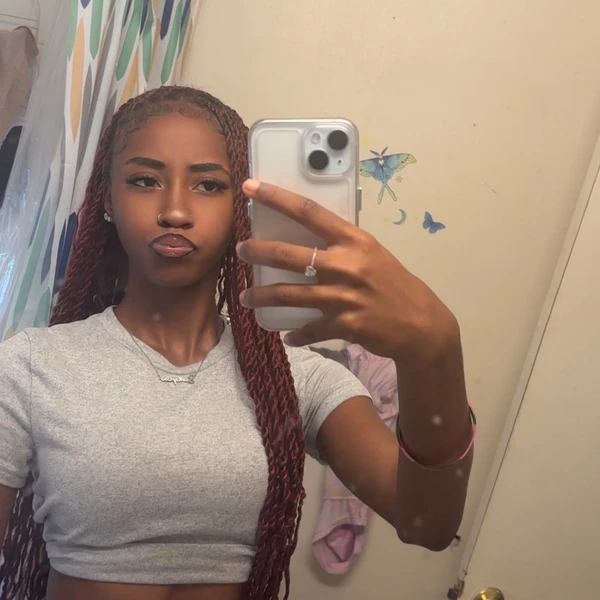
My name is Samyia Woods, and I am a dedicated biology student pursuing a career in the medical field with plans to become a Physician Assistant. I am passionate about understanding the human body, particularly in areas like neurology and psychology, and I am committed to using that knowledge to make a meaningful impact on others’ lives.
As a student-athlete, I have developed discipline, resilience, and strong time management skills that carry into my academic journey. My goal is to continue building my education, gain hands-on clinical experience, and ultimately provide compassionate, high-quality care to diverse communities. I am driven not only by my ambition but by a genuine desire to help others feel seen, heard, and supported in their healthcare experiences.
Education
Richard Bland College
Bachelor's degree programMajors:
- Biology, General
Miscellaneous
Desired degree level:
Doctoral degree program (PhD, MD, JD, etc.)
Graduate schools of interest:
Transfer schools of interest:
Majors of interest:
- Biology, General
- Medicine
Career
Dream career field:
Hospital & Health Care
Dream career goals:
To become a physician assistant
Crew member
Chick Fil a2026 – 2026Crew member
Dunkin donuts2024 – 20251 year
Sports
Track & Field
Varsity2025 – 20261 year
Track & Field
Varsity2021 – 20254 years
Awards
- mvp
Research
Human Biology
Indiana institute of technology — Researcher2025 – 2025
Arts
New horizons
Architecture2023 – 2024
Working Student Scholarship
Balancing part-time work while pursuing a college degree has become a defining aspect of my academic and personal growth. Currently, I work at both Walmart and Hardee’s during the summer, allowing me to save money and take on financial responsibility. During the academic year, I worked at Chick-fil-A while attending a Division II university as a full-time student-athlete. Managing these responsibilities simultaneously has strengthened my discipline, time management, and ability to stay focused in high-pressure environments.
As a student-athlete, my daily schedule was already demanding. My days often began with early morning workouts, followed by classes, team meetings, and afternoon practices. Adding a part-time job required me to be extremely intentional with how I used my time. I learned how to prioritize tasks, stay ahead on assignments, and remain organized despite a constantly changing schedule. Rather than viewing my responsibilities as overwhelming, I began to see them as opportunities to grow and prove my resilience.
One of the most challenging periods I faced was during the academic year while working at Chick-fil-A. At that time, I was balancing a full course load, the physical and mental demands of collegiate athletics, and the expectations of my job. There were moments when I felt exhausted and overwhelmed, especially during weeks filled with exams, competitions, and long work shifts. It often felt like there were not enough hours in the day.
To overcome this challenge, I developed a structured routine that allowed me to stay on track. I began planning my days in advance, setting clear priorities, and breaking larger tasks into smaller, manageable goals. I also learned to communicate effectively with my coaches, professors, and managers whenever I needed support or flexibility. This not only helped reduce stress but also allowed me to maintain strong performance across all areas of my life.
Additionally, I relied on self-discipline and determination to push through difficult moments. Even on days when I felt unmotivated, I reminded myself of my long-term goals and the reasons I started. I became more resilient, learning how to adapt when things did not go as planned and how to maintain a positive mindset under pressure. These experiences taught me that success is not about avoiding challenges, but about how you respond to them.
Overall, balancing work and school has shaped me into a more responsible, focused, and driven individual. It has prepared me not only for academic success but also for the demands of my future career. I am confident that the skills I have developed—time management, perseverance, and adaptability—will continue to guide me as I pursue my goals and overcome future challenges.
Catrina Celestine Aquilino Memorial Scholarship
The human brain has always felt like a universe I could never stop exploring. Every thought, reaction, and emotion rooted in something deeper waiting to be understood. That curiosity is what first drew me toward the medical field, but my purpose was shaped long before I ever stepped into a classroom. Growing up, I witnessed firsthand how unaddressed trauma, lack of support, and limited access to care can impact not just individuals, but entire families. Those experiences gave me a perspective that goes beyond textbooks and sparked my commitment to pursuing a career as a Physician Assistant.
I am currently working toward a degree in biology on the pre-PA track, with a strong interest in neurology and psychology. I am deeply fascinated by how the brain functions, how it processes trauma, influences behavior, and connects physical and mental health. The more I learn, the more I realize how critical it is to treat patients as whole individuals rather than a collection of symptoms. My passion for understanding the brain is not just academic; it is personal. It drives my desire to provide care that acknowledges both the visible and invisible struggles people face.
Through my experiences, I have become especially aware of the disparities that exist within healthcare, particularly for African American women. Many face higher risks in both physical and mental health outcomes, often compounded by systemic barriers, stigma, and a lack of culturally competent care. These realities have shaped my mission. I want to be more than a provider. I want to be an advocate, someone who listens, understands, and creates a space where patients feel safe and respected.
As a future Physician Assistant, I plan to make a positive impact by delivering compassionate, patient-centered care to underserved communities. I want to be intentional in how I connect with patients, taking the time to understand their backgrounds, their fears, and their needs. I am especially passionate about supporting women impacted by domestic violence and substance abuse, as these challenges are often deeply intertwined with both neurological and psychological health. By recognizing these connections, I hope to provide care that not only treats conditions but also supports long-term healing.
Beyond clinical practice, I aim to give back through education and community outreach. I believe that knowledge is a powerful tool, and I want to help individuals better understand their health, recognize early warning signs, and access available resources. Whether it is through local programs, mentorship, or simply meaningful conversations, I want to use my voice and my education to uplift others.
I am driven, curious, and committed to growth—not just for myself, but for the people I will serve. My goal is to create lasting impact by combining science, empathy, and advocacy in everything I do. The same curiosity that draws me to the brain is what pushes me to understand people more deeply, and through my career, I plan to turn that understanding into meaningful change.
Appalachian Region Vocational Scholarship
My decision to pursue a career in healthcare, specifically on the path to becoming a Physician Assistant, is rooted in both personal experience and a deep desire to create meaningful change.
Growing up, I witnessed how gaps in access to care, lack of awareness, and unaddressed trauma can impact not only individuals but entire families. These experiences pushed me to look beyond surface level solutions and toward a career where I could directly support and advocate for others during some of their most vulnerable moments.
What initially drew me into healthcare, and continues to deepen my passion, is my fascination with neurology and psychology. I have always been drawn to understanding the brain—how it functions, how it responds to trauma, and how it shapes behavior, emotions, and decision-making. The more I learn about the brain, the more I want to learn. It is both complex and powerful, and being able to study it feels like unlocking a deeper understanding of people themselves. This curiosity has played a major role in guiding me toward a career where I can combine science, critical thinking, and human connection.
What drew me most to the Physician Assistant profession is the balance it offers between medical expertise and patient-centered care. I am not only interested in diagnosing and treating conditions, but also in understanding the full context of a patient’s life; their environment, their challenges, and the barriers they may face in receiving proper care. I value the ability to build trust with patients, educate them, and be a consistent source of support in their healthcare journey.
Throughout my academic journey as a health science and biology student, I have become increasingly aware of the disparities that exist within the healthcare system, particularly for African American women. Many face higher risks related to both physical and mental health outcomes, often compounded by systemic inequities, stigma, and limited access to quality care. These realities have strengthened my commitment to not only enter the field, but to do so with purpose.
Through my career, I plan to make a difference by providing culturally competent, compassionate care to underserved populations. I want to be a provider who listens attentively, advocates fiercely, and ensures that patients feel seen and respected. I am especially passionate about supporting women who have experienced domestic violence or substance abuse, as these challenges are often deeply connected to both neurological and psychological health. By creating a safe and supportive environment, I hope to help patients regain a sense of control over their health and their lives.
In addition to direct patient care, I aim to use my platform to educate communities about prevention, early intervention, and available resources. Whether through outreach programs, community health initiatives, or simply taking extra time with a patient to ensure they understand their care plan, I believe that small, intentional actions can lead to lasting impact.
Ultimately, my goal is not just to treat symptoms, but to understand the deeper root of them, especially those connected to the brain and lived experiences. My passion for this career comes from a place of curiosity, empathy, and determination. I am committed to using my education and future role as a Physician Assistant to make a difference. One patient, one conversation, and one community at a time.
Linda Hicks Memorial Scholarship
I was around the age of fifteen when I watched my mother fail to escape a domestic relationship. At that age, I did not have the language to fully understand what I was witnessing, but I felt it; the fear, instability, and the quiet strength it took for her to keep going. That experience shaped the way I see the world and planted the foundation for my educational goals.
Growing up in that environment opened my eyes to how deeply domestic violence affects not just individuals, but entire families and communities. I also began to notice how often African American women face these struggles in silence, whether due to lack of resources, stigma, or fear of not being believed. These observations created a sense of responsibility in me to be part of a solution that goes beyond awareness and leads to real change.
My passion lies in pursuing a career in healthcare where I can advocate for and support African American women impacted by domestic violence and substance abuse. I want to be someone who recognizes the signs, listens without judgment, and provides care that is both compassionate and culturally informed. Education is my pathway to gaining the knowledge and skills needed to make that impact.
What I witnessed at fifteen did not break me. It gave me purpose. I am committed to using my experiences to uplift others and contribute to a future where African American women feel safe, supported, and seen.
Lewis Ohana Scholarship
When I think about my future and what it will take to get there, one thing I know for sure is that I can’t do it alone. Receiving this scholarship would mean more than just money for school — it would be a chance to breathe a little, to focus more on learning than surviving, and to take steps toward building a future I’ve worked hard to even imagine for myself.
I plan to pursue a degree in psychology or social work because I’ve always been drawn to understanding people and helping them through their struggles. That’s not just a career interest — it’s personal. Growing up, I faced the kind of challenges that textbooks can’t always explain. I witnessed substance abuse in my household, along with emotional trauma that never got fully addressed. It didn’t just affect the adults — it reached me, in the quiet ways that hurt most. I often had to grow up faster than I should’ve. I became the person who kept it together, who looked out for others even when I didn’t know how to help myself.
Because of that, I’ve always wanted to be someone that people can talk to. Someone who knows what it feels like to carry pain you’re not allowed to speak on. In college, I want to dive into courses like trauma-informed care, abnormal psychology, and counseling techniques, because those are the tools I’ll need to understand and help others heal. I also hope to get involved in programs or internships focused on community mental health, especially those serving Black women and girls.
This scholarship would give me room to focus on those goals. It would ease the financial pressure that’s always in the back of my mind — the worry about how I’m going to pay for books, housing, or if I’ll need to work extra hours just to keep up. I don’t come from a family that can write a check to cover tuition. Every step I’ve taken to get here has taken work, sacrifice, and faith. Getting this support would mean someone believes in me enough to invest in my future — and that means everything.
As far as adversity goes, I don’t think I’ve had the easiest road, but I’m proud of how far I’ve come. There were times when I struggled with my own mental health — anxiety, self-doubt, feeling like I wasn’t enough. There were times when I didn’t know if I’d even make it to graduation. But I did. I pushed through late nights, unstable home situations, and moments where I felt invisible. I stayed focused because deep down, I knew I had a purpose. I may not have had all the answers, but I had determination, and that’s what kept me going.
In five years, I see myself either in graduate school or working directly in my community — maybe at a nonprofit, a school, or a community center. I want to focus on youth and young women, especially those who’ve been impacted by trauma, violence, or unstable home lives. I know what it’s like to grow up needing help but not knowing where to find it. I want to be the bridge between struggle and healing for someone else. I want to show people who feel broken or forgotten that their pain doesn’t define them — that there’s more waiting for them if they can just hold on.
Personally, I want to keep growing, too. I want to be the kind of woman who’s confident, grounded, and still soft enough to care deeply. I want to build a life I don’t need to recover from, and I want to help others do the same. I know the work I want to do won’t always be easy, but it will be meaningful — and that’s what matters to me.
This scholarship would be more than just financial help. It would be a step forward on a path I’ve been walking with intention for a long time. It would mean fewer worries, more focus, and one more reason to keep going — not just for myself, but for every young girl who grew up like me, hoping for something better.
Linda Hicks Memorial Scholarship
Growing up, I didn’t always have the words for what was going on around me—I just knew it didn’t feel right. I’m an African American woman who’s seen what domestic violence and substance abuse do to a home—not just the loud moments, but the quiet ones, too. The ones that leave behind tension in the air, fear in your chest, and a kind of silence you learn to live with. I’ve seen addiction twist people I love into someone I barely recognized, and I’ve watched the way that pain trickles down through generations, especially for women who are expected to just “deal with it.”
What impacted me most wasn’t just the actions, but the aftermath—the confusion, the broken trust, the way nobody really talked about it. For a long time, I thought keeping quiet made me strong. I thought pretending everything was okay was the only way to survive. But deep down, I wanted to break that cycle. I wanted to speak up. I wanted to understand why these things happened in the first place and what could be done to stop it.
That’s one of the reasons I’m going to college. I want to study psychology or social work—something where I can learn how to help others through what I went through. I want to be someone who listens without judgment, who knows how to help, and who actually understands what it feels like to carry that weight in silence. I know what it’s like to need help and not know how to ask for it. I know what it’s like to sit in a classroom pretending everything is fine when your world feels like it’s falling apart.
When it comes to African American women and young girls, I think we often fall through the cracks. We’re expected to be strong, to keep things together, and to bounce back like nothing happened. But that expectation is hurting us. It keeps us from healing. I want to be part of changing that. I want to use my education to help improve the way we care for and communicate with women who’ve been impacted by domestic violence and addiction. That could mean creating better support groups in our communities, becoming a school counselor who sees the signs early, or working in policy to fight for more mental health resources where they’re needed most.
For me, this isn’t just about a degree—it’s about purpose. It’s about turning something painful into something powerful. I may not have come from the easiest background, but I’m determined to use my experiences to help someone else feel seen, heard, and safe. I want to be the kind of support I wish I had when I was younger. And I truly believe education is the first step toward becoming that person.
Joybridge Mental Health & Inclusion Scholarship
Mental health is something I’ve always cared about, even before I fully understood it. Growing up, I noticed how often people—especially in my community—would avoid talking about their feelings or pretend everything was okay when it wasn’t. I didn’t have the words for it at the time, but I could feel the weight people were carrying around silently. That’s what made me want to learn more and eventually help others understand that mental health is just as important as physical health.
As I started exploring psychology in high school, I realized how deep the issue goes. It’s not just about people being “sad” or “stressed.” There are real disorders, traumas, and patterns that affect people’s ability to live healthy lives. What stood out the most to me was how underrepresented certain groups are in mental health spaces—whether it’s people of color, low-income families, or students who come from homes where mental illness is misunderstood or ignored. That’s where my passion for diversity and inclusion comes in. I want to be someone who not only understands the science of psychology but also truly relates to the people I’ll be serving.
My career goal is to become a neuropsychologist and work in a hospital setting. I want to focus on patients with brain injuries, strokes, or neurodegenerative diseases like dementia and Alzheimer’s. These are areas where not enough attention is given to how patients’ mental and emotional well-being connects with their physical condition. I believe neuropsychology gives me the chance to work with people directly, to help them heal in ways that go beyond just medicine. I also hope to create programs that educate families and communities about these illnesses, especially in underserved areas.
One of the biggest experiences that shaped my goals was seeing how someone close to me struggled after a traumatic brain injury. The support wasn’t there. The doctors focused only on physical healing, but mentally, the person was lost. It made me realize how important it is to treat the whole person, not just the symptoms. Academically, taking psychology courses and doing personal research has only fueled my interest. I’m starting college soon, and I plan to major in psychology and eventually earn my doctorate in neuropsychology.
As a Black woman entering this field, I know how rare it is to see people who look like me in psychology. I want to change that. I want to show younger students that this path is open to them too. I hope to mentor other students one day and work with organizations that push for more representation in mental health professions. Diversity in this field isn’t just about race—it’s about different perspectives, life experiences, and ways of understanding people. Inclusion means creating spaces where everyone feels safe to speak up and get help, no matter their background.
In the end, my passion for mental health is about making people feel seen, heard, and understood. I want to help build a future where mental health care is equal, accessible, and human. That’s the kind of impact I hope to make.