Hobbies and interests
Anime
Architecture
Clinical Psychology
Neuroscience
Track and Field
Reading
Fantasy
I read books multiple times per week
Samyia Woods
1x
FinalistSamyia Woods
1x
FinalistBio
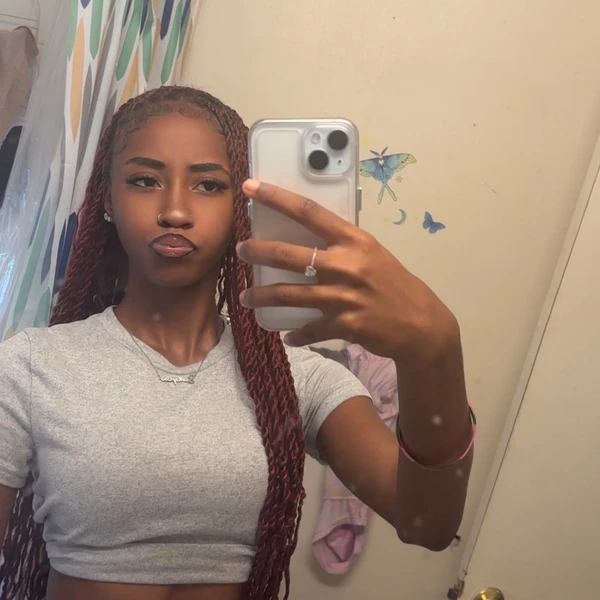
My name is Samiya Woods, and I’m passionate about understanding the human mind and helping others heal. My goal is to become a neuropsychologist and work in a hospital setting with patients who’ve experienced brain injuries, strokes, or neurodegenerative diseases. I’m currently studying psychology at Indiana Tech, where I’m also a student-athlete on the track team. Balancing sports and academics has taught me discipline, resilience, and time management. I believe I’m a strong candidate because I’m driven by purpose, not just passion—I’m committed to making a real impact in people’s lives through both science and compassion.
Education
Indiana Institute of Technology
Bachelor's degree programMajors:
- Psychology, General
Miscellaneous
Desired degree level:
Doctoral degree program (PhD, MD, JD, etc.)
Graduate schools of interest:
Transfer schools of interest:
Majors of interest:
- Psychology, General
Career
Dream career field:
Hospital & Health Care
Dream career goals:
Crew member
Dunkin donuts2024 – 20251 year
Sports
Track & Field
Varsity2021 – 20254 years
Awards
- mvp
Arts
New horizons
Architecture2023 – 2024
Lewis Ohana Scholarship
When I think about my future and what it will take to get there, one thing I know for sure is that I can’t do it alone. Receiving this scholarship would mean more than just money for school — it would be a chance to breathe a little, to focus more on learning than surviving, and to take steps toward building a future I’ve worked hard to even imagine for myself.
I plan to pursue a degree in psychology or social work because I’ve always been drawn to understanding people and helping them through their struggles. That’s not just a career interest — it’s personal. Growing up, I faced the kind of challenges that textbooks can’t always explain. I witnessed substance abuse in my household, along with emotional trauma that never got fully addressed. It didn’t just affect the adults — it reached me, in the quiet ways that hurt most. I often had to grow up faster than I should’ve. I became the person who kept it together, who looked out for others even when I didn’t know how to help myself.
Because of that, I’ve always wanted to be someone that people can talk to. Someone who knows what it feels like to carry pain you’re not allowed to speak on. In college, I want to dive into courses like trauma-informed care, abnormal psychology, and counseling techniques, because those are the tools I’ll need to understand and help others heal. I also hope to get involved in programs or internships focused on community mental health, especially those serving Black women and girls.
This scholarship would give me room to focus on those goals. It would ease the financial pressure that’s always in the back of my mind — the worry about how I’m going to pay for books, housing, or if I’ll need to work extra hours just to keep up. I don’t come from a family that can write a check to cover tuition. Every step I’ve taken to get here has taken work, sacrifice, and faith. Getting this support would mean someone believes in me enough to invest in my future — and that means everything.
As far as adversity goes, I don’t think I’ve had the easiest road, but I’m proud of how far I’ve come. There were times when I struggled with my own mental health — anxiety, self-doubt, feeling like I wasn’t enough. There were times when I didn’t know if I’d even make it to graduation. But I did. I pushed through late nights, unstable home situations, and moments where I felt invisible. I stayed focused because deep down, I knew I had a purpose. I may not have had all the answers, but I had determination, and that’s what kept me going.
In five years, I see myself either in graduate school or working directly in my community — maybe at a nonprofit, a school, or a community center. I want to focus on youth and young women, especially those who’ve been impacted by trauma, violence, or unstable home lives. I know what it’s like to grow up needing help but not knowing where to find it. I want to be the bridge between struggle and healing for someone else. I want to show people who feel broken or forgotten that their pain doesn’t define them — that there’s more waiting for them if they can just hold on.
Personally, I want to keep growing, too. I want to be the kind of woman who’s confident, grounded, and still soft enough to care deeply. I want to build a life I don’t need to recover from, and I want to help others do the same. I know the work I want to do won’t always be easy, but it will be meaningful — and that’s what matters to me.
This scholarship would be more than just financial help. It would be a step forward on a path I’ve been walking with intention for a long time. It would mean fewer worries, more focus, and one more reason to keep going — not just for myself, but for every young girl who grew up like me, hoping for something better.
Linda Hicks Memorial Scholarship
Growing up, I didn’t always have the words for what was going on around me—I just knew it didn’t feel right. I’m an African American woman who’s seen what domestic violence and substance abuse do to a home—not just the loud moments, but the quiet ones, too. The ones that leave behind tension in the air, fear in your chest, and a kind of silence you learn to live with. I’ve seen addiction twist people I love into someone I barely recognized, and I’ve watched the way that pain trickles down through generations, especially for women who are expected to just “deal with it.”
What impacted me most wasn’t just the actions, but the aftermath—the confusion, the broken trust, the way nobody really talked about it. For a long time, I thought keeping quiet made me strong. I thought pretending everything was okay was the only way to survive. But deep down, I wanted to break that cycle. I wanted to speak up. I wanted to understand why these things happened in the first place and what could be done to stop it.
That’s one of the reasons I’m going to college. I want to study psychology or social work—something where I can learn how to help others through what I went through. I want to be someone who listens without judgment, who knows how to help, and who actually understands what it feels like to carry that weight in silence. I know what it’s like to need help and not know how to ask for it. I know what it’s like to sit in a classroom pretending everything is fine when your world feels like it’s falling apart.
When it comes to African American women and young girls, I think we often fall through the cracks. We’re expected to be strong, to keep things together, and to bounce back like nothing happened. But that expectation is hurting us. It keeps us from healing. I want to be part of changing that. I want to use my education to help improve the way we care for and communicate with women who’ve been impacted by domestic violence and addiction. That could mean creating better support groups in our communities, becoming a school counselor who sees the signs early, or working in policy to fight for more mental health resources where they’re needed most.
For me, this isn’t just about a degree—it’s about purpose. It’s about turning something painful into something powerful. I may not have come from the easiest background, but I’m determined to use my experiences to help someone else feel seen, heard, and safe. I want to be the kind of support I wish I had when I was younger. And I truly believe education is the first step toward becoming that person.
Joybridge Mental Health & Inclusion Scholarship
Mental health is something I’ve always cared about, even before I fully understood it. Growing up, I noticed how often people—especially in my community—would avoid talking about their feelings or pretend everything was okay when it wasn’t. I didn’t have the words for it at the time, but I could feel the weight people were carrying around silently. That’s what made me want to learn more and eventually help others understand that mental health is just as important as physical health.
As I started exploring psychology in high school, I realized how deep the issue goes. It’s not just about people being “sad” or “stressed.” There are real disorders, traumas, and patterns that affect people’s ability to live healthy lives. What stood out the most to me was how underrepresented certain groups are in mental health spaces—whether it’s people of color, low-income families, or students who come from homes where mental illness is misunderstood or ignored. That’s where my passion for diversity and inclusion comes in. I want to be someone who not only understands the science of psychology but also truly relates to the people I’ll be serving.
My career goal is to become a neuropsychologist and work in a hospital setting. I want to focus on patients with brain injuries, strokes, or neurodegenerative diseases like dementia and Alzheimer’s. These are areas where not enough attention is given to how patients’ mental and emotional well-being connects with their physical condition. I believe neuropsychology gives me the chance to work with people directly, to help them heal in ways that go beyond just medicine. I also hope to create programs that educate families and communities about these illnesses, especially in underserved areas.
One of the biggest experiences that shaped my goals was seeing how someone close to me struggled after a traumatic brain injury. The support wasn’t there. The doctors focused only on physical healing, but mentally, the person was lost. It made me realize how important it is to treat the whole person, not just the symptoms. Academically, taking psychology courses and doing personal research has only fueled my interest. I’m starting college soon, and I plan to major in psychology and eventually earn my doctorate in neuropsychology.
As a Black woman entering this field, I know how rare it is to see people who look like me in psychology. I want to change that. I want to show younger students that this path is open to them too. I hope to mentor other students one day and work with organizations that push for more representation in mental health professions. Diversity in this field isn’t just about race—it’s about different perspectives, life experiences, and ways of understanding people. Inclusion means creating spaces where everyone feels safe to speak up and get help, no matter their background.
In the end, my passion for mental health is about making people feel seen, heard, and understood. I want to help build a future where mental health care is equal, accessible, and human. That’s the kind of impact I hope to make.