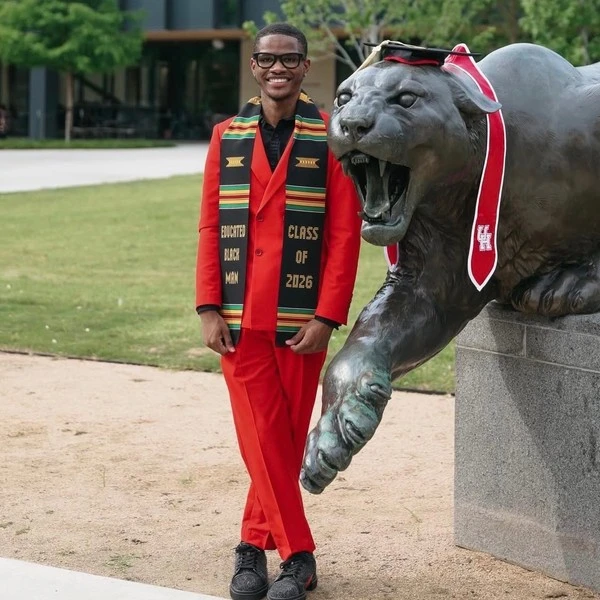
Pursuing a college degree has never been about just earning a diploma for me it has always been about stepping into a life of purpose. As a psychology major, I view my education as the cornerstone of the impact I hope to make in people’s lives. Graduating with a degree in psychology represents more than academic achievement; it symbolizes my commitment to healing, advocating, and empowering others, especially within underserved communities. It marks the beginning of a lifelong mission to be a bridge between mental health knowledge and the people who need it most.
Once I graduate with my degree in psychology, my primary goal is to begin working in the mental health field either as a behavioral health technician, a caseworker, or within a community mental health clinic to gain firsthand experience and build a deeper understanding of client needs. I plan to use this time to immerse myself in environments where mental health care is desperately needed but not always easily accessible. Eventually, I want to pursue a doctoral degree in clinical psychology or a related mental health discipline to become a licensed mental health professional, such as a psychologist or psychiatrist.
I want to specialize in trauma-informed care, with a focus on African American and immigrant communities, particularly because I come from that background myself. The lack of culturally sensitive mental health services often discourages individuals from seeking the help they need. I hope to change that. By combining my academic training with cultural awareness and lived experience, I aim to build therapeutic relationships rooted in trust, empathy, and understanding. I want to be the kind of clinician who not only treats symptoms but also validates stories, identities, and struggles that are often overlooked in mainstream mental health spaces.
In the long term, I hope to open a private practice or community wellness center that serves as a safe space for marginalized populations. This center would offer not only mental health therapy but also workshops, peer support groups, mentorship for youth, and holistic wellness programs. I envision a place where mental health is approached with compassion, cultural humility, and respect where clients don’t feel judged, but embraced.
My career aspirations are deeply tied to advocacy, healing, and education. I aspire to be both a mental health clinician and an agent for change. Mental health stigma especially within Black communities and immigrant households remains a powerful barrier. Too often, emotional distress is minimized or misunderstood, and conversations around mental health are avoided. As a future professional, I want to challenge these norms by educating families and communities about the value of mental wellness, early intervention, and seeking help without shame.
Receiving this scholarship would be a vital investment in these goals. As a full-time student working to support myself financially, balancing academic excellence with life’s responsibilities is challenging. Scholarships like this allow students like me to focus more fully on our studies, reduce financial strain, and invest more energy in meaningful fieldwork, internships, and volunteer opportunities. Without the weight of tuition and textbook costs, I’d be able to spend more time gaining the practical experiences that enrich classroom learning.
This scholarship would also help fund my graduate school preparation. Whether it’s applying for doctoral programs, taking the GRE, attending conferences, or securing mentorship opportunities, every step in the journey requires both time and money. With your support, I’d be able to pursue these milestones with less worry about how to afford them and more focus on performing well.
Additionally, this scholarship would help me contribute more directly to community initiatives. Throughout my time in college, I’ve been passionate about mental health advocacy participating in outreach programs, leading campus discussions, and volunteering with organizations that provide support to youth and families. With financial help, I could deepen these efforts by developing small mental health workshops for local community centers or schools. I strongly believe that education is a two-way street: the more I learn, the more I’m able and eager to give back.
Future Plans and Long-Term Vision
My future plans are centered around growth, service, and sustainability. After earning my bachelor’s degree, I plan to work for 1–2 years in the mental health field, gaining hands-on experience while preparing for graduate school. This step will not only help me gain licensure-required hours (if pursuing a counseling or social work path) but will also sharpen my understanding of real-world challenges within the system. I want to know how to serve not only based on theory but with the clarity that comes from seeing what works and what doesn’t in everyday practice.
Once I’ve earned my doctoral degree or clinical license, I plan to work with nonprofit organizations, schools, and clinics that prioritize access to care. I also want to write and speak about mental health publicly through workshops, community talks, and perhaps even a podcast or book. Too many people suffer in silence. I want to use my voice to break the silence, reduce shame, and build hope. I want to bring therapy to spaces that feel unsafe and turn those same spaces into sanctuaries of healing.
My long-term dream is to open a holistic wellness and mental health center focused on youth and families in underserved areas. This center would combine psychological services with mentoring programs, educational support, and life skills training. We would teach young people not just how to survive, but how to thrive. We would normalize emotional awareness and healing. We would change the narrative about mental health.
At the heart of everything I do will be the belief that mental health is a right, not a privilege. Everyone deserves access to competent, compassionate care regardless of race, income, background, or past trauma. With a degree in psychology and the right support system, I believe I can be one of the people who helps make that vision a reality.
As a first-generation African American woman from an immigrant background, my personal experiences have shaped both my perspective and my passion. I’ve witnessed firsthand how mental health is misunderstood and stigmatized in many households like mine where strength is seen as silence, and resilience is equated with suppression. These dynamics are why I’ve become so committed to creating new narratives.
My cultural background has taught me the importance of family, faith, and perseverance. These values are part of what keep me going through difficult times and motivate me to keep learning and striving. At the same time, I recognize the gaps that exist in how mental and emotional challenges are addressed in our communities. I want to be part of filling that gap not just with clinical tools, but with culturally responsive care that respects and uplifts people’s identities.
Every client I’ll serve in the future represents someone’s mother, father, sibling, or child. That’s how I see them not as a case, but as a human being deserving of dignity and healing. My education is equipping me with the knowledge, and my life is giving me the heart. With both, I intend to serve with purpose.
Graduating with my college degree is the first real step toward building the career and life I’ve envisioned for so long. It is more than a goal it’s a promise I’ve made to myself and my community: to turn my education into a tool for healing. I hope to accomplish a great deal not just in terms of career milestones, but in the number of lives I can touch and the barriers I can help break.
This scholarship is more than financial support it is an affirmation of belief in my dreams. It gives me the space to breathe, the freedom to focus, and the fuel to keep going. With your investment, I can continue to walk in purpose, grow into the professional I know I can be, and create meaningful change in the world around me.
Thank you for considering my application and for believing in the power of education, empathy, and hope.