
Hobbies and interests
Football
Reading
Action
Social Issues
I read books multiple times per month
Samuel Christopher
1x
Finalist
Samuel Christopher
1x
FinalistBio
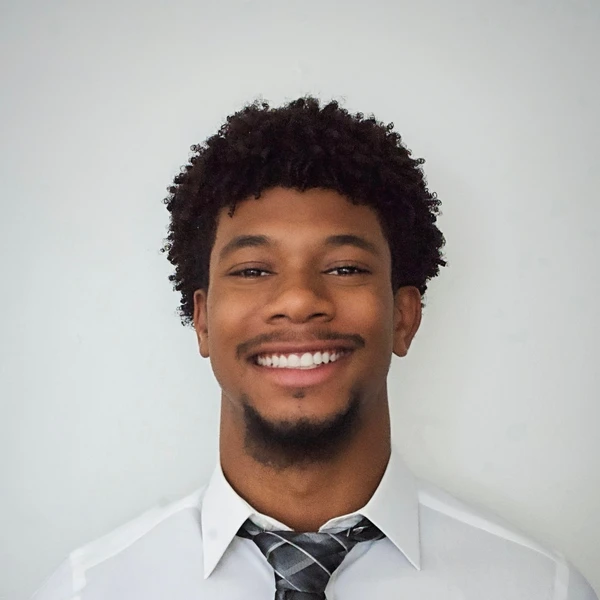
My name is Samuel Christopher, and I am a Biology major and football player at Bates College with aspirations of becoming a physical therapist and entrepreneur. My long-term goal is to open my own physical therapy practice, helping people recover from injuries and improve their quality of life. As an athlete, I have experienced firsthand the physical and mental challenges that come with sports, which has fueled my passion for helping others.
I am also developing an app focused on athlete mental health and team bonding. This mission is deeply personal. During my junior year of high school, our community lost three students to suicide. At the same time, I was facing my own struggles but, like many athletes, kept them to myself. Those experiences showed me how many people suffer in silence and inspired me to create a platform that helps athletes connect, support one another, and access resources before they feel alone.
My journey has been shaped by perseverance. I was not born with the same financial privileges as many of my peers, yet through hard work in the classroom and on the football field, I earned the opportunity to attend Harvard-Westlake on financial aid alongside students from far wealthier backgrounds. After being rejected in seventh grade, I refused to give up and was accepted as a freshman.
What makes me a strong candidate is my resilience, leadership, and commitment to service. Whether through healthcare, athletics, or technology, my goal is to use my experiences to create opportunities, improve lives, and make a lasting impact on the communities I serve.
Education
Bates College
Bachelor's degree programMajors:
- Biological and Biomedical Sciences, Other
Miscellaneous
Desired degree level:
Master's degree program
Graduate schools of interest:
Transfer schools of interest:
Majors of interest:
Career
Dream career field:
Health, Wellness, and Fitness
Dream career goals:
Own a physical therapy practice
Shadowing Physical Therapist
Recharge Physical Therapy2026 – 2026Barista
Simply Wholesome2025 – Present1 year
Sports
Track & Field
Varsity2021 – 20243 years
Football
Varsity2020 – 20244 years
Research
Biological and Biomedical Sciences, Other
Bates College — Student2026 – 2026
Public services
Volunteering
Meals on Wheels — Volunteer2018 – PresentVolunteering
Zooniverse — Volunteering2020 – 2024Volunteering
PayAway — Volunteering2025 – 2025
Zelaya Creativity Scholarship
The fox patiently waited. Every morning, in different parts of the world, his dark brown eyes would blink open on someone's screen. He was never demanding or judgmental about your mistakes. He would simply lie in his digital forest, happily swinging his tail as the glowing fireflies surrounded him. The size of the forest knew no bounds. Every person who downloaded this app shared this realm, but had no clue of the other people who inhabited it as well. Thousands of trails belong to someone carrying a different weight on their shoulders.
One path, there was Noah, a high school senior, staring at his NYU rejection letter. His hand shook with rage and disappointment, ready to hurl his phone across the quad. Then a notification came from the fox saying, " Breathe for two minutes to light your path". He almost ignored it, but instead he closed his eyes. When he opened them, a firefly began to glow.
In Australia, Maya sat alone in her car, exhausted after a twelve-hour shift. She couldn't remember the last time she had eaten. The fox dropped an apple on her trail with a notification saying" Take five minutes to relax". She smiled, and another firefly began to glow.
In Italy, eight-year-old Lily cried, clutching notecards in her hand, dreading her presentation in class tomorrow. She was terrified that everyone was going to laugh at her. Her fox chased a butterfly through the trees until it landed in a stream and told Lily, "Let's practice together". Lily laughed, easing her anxiety. Fireflies grew underwater and illuminated the stream.
Marcus strapped his helmet before his first college football practice. He told himself stretching could wait, water could wait, and everything could wait until after practice. Sp is anxious to do well, throwing everything else out the window. His fox blocked his trail and stayed stubborn, waiting until Marcus finished a breathing exercise and stretched his hamstrings. The fox let Marcus continue down his trail. By the end of the day, the forest was infested with fireflies swarming around.
Children, teachers, students, parents, athletes, and strangers separated by mountains, oceans, skyscrapers, and years were rebuilding the same first with these small acts nobody takes time to notice. However, one morning, the fireflies and foxes disappeared. There were no more notifications; the glowing trails grew dark. People were stuck telling themselves, "It was just an app", but were feeling the effects without it. Noah spent his day spiraling through rejection letters. Maya found herself on the point of starvation after not getting food on her way home. Lily cried herself to sleep. Marcus skipped recovery and didn't perform to his best abilities. The forest seemed drained of the life it once held. The foxes returned the next morning, none of them were rushing, though. Slowly, people are tapping their screens, listening to the foxes. One breath, one stretch, one glass of water, one quiet moment, trivial choices. The fireflies returned, not due to the foxes, though. It was due to them reminding people that they never had to walk alone in the first place. By night, the first had life breathed into it once more. Somewhere within the forest, the foxes held a campfire, watching over the world with a smile on their faces, knowing people were learning that the smallest action could help a person find their way home.
Stephan L. Wolley Memorial Scholarship
If there's one thing my family has taught me, it's that no matter what, we show up for each other. My parents have been divorced for as long as I can remember, but they never let that affect my relationship with either of them. Growing up, my dad wasn't just my father. He was one of my football coaches. Some of my favorite memories are riding home after practice, talking about what I did well and what I needed to improve. At the moment, I hated it because I just wanted him to say I was perfect, but I understand now he just wanted the best for me. My mom was the one who always checked in, wanted to know how school was going, what music I was listening to, what type of clothes I liked, and somehow knew when I just needed someone to listen. Then there is my brother, whom I've always idolized without even knowing. He doesn't even know it, but he's helped to shape me so much because I've always wanted to accomplish everything my brother did and more. They've always supported me in different ways, but they've always been there.
The best example of that was my freshman year at Bates College. My first college football game happened to fall on my birthday against my brother, and both of my parents flew from California to Maine to watch me play. The next year, my immediate family surprised me by making the trip again. Seeing them in the stands reminded me that distance has never stopped my family from showing up. That's just who we are. That support gave me the confidence to chase opportunities that weren't guaranteed. I started in Catholic school before spending years with tutors to earn admission to Harvard-Westlake. Once I got there, I realized competition didn't stop on the football field. I was surrounded by gifted students, celebrity parent students, and students who were born with more opportunities. Instead of being intimidated, I learned to compete in the classroom, too. This mindset pushed me to get stronger, faster, and better as an athlete, and pushed me to work harder academically. That mentality eventually led me to Bates College, where I earned the opportunity to continue playing football while studying biology. Being a student-athlete has taught me how to balance long days of practice, lifting, travel, labs, and coursework. More importantly, it's taught me that success usually comes down to consistency and finding your support group . The people who improve the most are the ones who keep showing up.
This summer, I have been volunteering at a physical therapy clinic to soak in knowledge. This upcoming winter, I'll study abroad in Australia, where I'll study kinesiology and learn about physiotherapy from a different perspective. I want to challenge myself in a new environment and bring those experiences back as I continue working toward becoming a sports physical therapist. As an athlete, I've seen how much of an impact physical therapists have on helping people get back to doing what they love and being in the right mental space. I want to have that same impact on others. When I look back, every opportunity I've had, from Harvard-Westlake to Bates to studying abroad, started with the people who showed up for me first. My family taught me that showing up is about believing in someone before they've accomplished what they're chasing. That's the example they've set for me, and it's the same kind of person I hope to become for others.
RonranGlee Literary Scholarship
"Behold! Human beings living in an underground den, which has a mouth open toward the light and reaching all along the den; here they have been from their childhood, and have their legs and necks chained so that they cannot move, and can only see before them... Behind them a fire is blazing at a distance, and between the fire and the prisoners there is a raised way; and you will see, if you look, a low wall built along the way... and you will see men passing along the wall carrying all sorts of vessels, and statues and figures of animals... which appear over the wall."
Most people who have existed don’t really question what they believe or why they believe it. They just accept what they see or are told and move on. In Plato’s Allegory of the Cave, he shows this through prisoners who have been stuck in a cave their whole lives, watching shadows on a wall. To them, that’s just reality because they know nothing else. Through the cave, the chains, and the shadows, Plato points out how people can end up confusing what they experience first with what is actually true. This is especially prevalent when they’ve never been pushed to think beyond it.
The detail that stands out to me most is not the cave or even the chains. It is the fact that the prisoners have lived there "from their childhood." At first, this detail seems insignificant, but it is actually the foundation of Plato's argument. If the prisoners had been placed in the cave as adults, they would know that another world existed beyond the darkness. They would remember freedom. Instead, Plato specifically places them there as children. Childhood is when people are at their most innocent and first learn how to navigate the world. This is when values, beliefs, and assumptions begin to take shape in our minds. By saying the prisoners have been in the cave since childhood, Plato is suggesting that many of the things people believe are not conclusions they reached themselves. Instead, they are ideas inherited from parents, communities, schools, society, and from life experiences. The prisoners never question the cave because they have never experienced anything else. In the same way, people often accept ideas simply because they have always been present in their lives.
This makes the cave itself a powerful symbol. Most prisons are designed to make people aware that they are imprisoned. The cave functions differently. It does not feel like a prison to those inside it. To the prisoners, it is reality. Plato's choice of a cave rather than a prison cell is important because caves hide things. They block vision. They create darkness. A person standing inside a cave cannot easily see what exists beyond its walls. The cave, therefore, becomes a symbol for limited understanding. Plato is not criticizing people for lacking knowledge. Instead, he is warning readers about the danger of believing they already possess complete knowledge. A person who knows they are ignorant can learn. A person who believes they already understand everything has little reason to seek the truth.
The chains reinforce this idea. Plato writes that the prisoners are chained by both their legs and their necks. This detail matters because the chains do more than prevent movement. They prevent perspective as well. The prisoners cannot even turn their heads. They are forced to look in one direction for their entire lives. The image is extreme, but that is precisely why it is effective. Plato is highlighting how difficult it can be to see beyond a single viewpoint. Sometimes, the strongest chains on people are the mental ones they have developed since birth. Pride, fear, tradition, and social pressure can all function as chains. They keep people from considering new ideas because doing so would require them to look in a different direction than they always have. What makes the passage especially relevant today is that Plato does not portray the prisoners as evil or foolish. They are ordinary people like we are today. In many ways, that is the most unsettling part of the allegory. It is easy to read the passage and imagine that the prisoners represent someone else, when in reality, it reflects humans as a whole. Plato seems to suggest the opposite. Every person is vulnerable to living among shadows. Every person has beliefs they have never fully examined. Every generation inherits assumptions from the generation before it. Some of those assumptions are true. Others are not. The challenge is determining the difference.
Another symbol that deserves attention is the fire. Fire is traditionally associated with light, warmth, and knowledge. Yet Plato deliberately uses it to create confusion. The fire provides enough light to produce shadows, but not enough light to reveal the truth. This distinction reveals one of the deeper meanings of the passage. False understanding is often more dangerous than complete ignorance. A person who knows nothing may search for answers. A person who possesses partial knowledge can become convinced they already have them. The prisoners are not staring into darkness. They are staring at shadows illuminated by a fire. The existence of some light makes the illusion more convincing.Plato strengthens this idea through the image of the puppets. Behind the prisoners stands a wall where figures are carried back and forth like puppets in a performance. The prisoners see only the shadows cast by these objects and assume the shadows represent reality. The symbolism here extends beyond the cave itself. Puppets are controlled by someone else. They do not act independently. By comparing the figures to puppets, Plato introduces the idea that what people believe is often influenced by forces they cannot see. Public opinion, cultural expectations, political leaders, and social institutions all shape the way individuals interpret the world. The prisoners believe they are observing reality directly when, in fact, they are observing a carefully filtered version of it.At its core, the passage is about more than education. It is about humility. Plato's argument requires readers to accept an uncomfortable possibility: that some of their most deeply held beliefs may be shadows rather than truths. Few ideas are more difficult for people to accept. Human beings naturally seek certainty because certainty provides comfort. Yet Plato argues that genuine understanding begins when certainty is questioned. The first step toward wisdom is releasing your ego and recognizing that there may be more beyond the walls of the cave than we currently see.
Ultimately, Plato uses the cave as an extended metaphor for the human condition. The cave represents limited understanding, the chains represent the forces that restrict perspective, the fire represents incomplete knowledge, and the puppets represent the outside influences that shape belief. Together, these symbols support Plato's central argument that ignorance is not simply the absence of knowledge. It is the acceptance of appearances without questioning them. The underlying meaning of the passage is that truth requires effort, curiosity, and the courage to challenge what feels familiar. Plato reminds readers that the greatest barriers to understanding are often the ones they do not realize exist and have been building their whole life.
Bulkthreads.com's "Let's Aim Higher" Scholarship
I want to build an app that helps students and athletes feel less alone and more supported by giving them an outlet to be heard and manage stress and anxiety that often comes with school, sports, and everyday life. This idea truly began during my junior year of high school, where, unfortunately, there were three suicides. I remember each incident so vividly. Each time felt like a different punch to our school's community. It was hard for me to process because these were students who sat in the same classroom, ate in the same quad, and appeared so successful on the exterior. Their deaths forced me to realize the difference between success and well-being at such a young age. Behind the college acceptance letters and the achievements, people were struggling with their own inner battles. It made me wonder how many students felt like they had nobody they could truly talk to.
Around this same time, I found support in the training room. Due to running track and playing football, I spent countless hours with the physical therapist at my school. Our conversation ranged from injuries and school to relationship problems. I am so appreciative to them for giving me an outlet to be heard and seen. Those conversations showed me that sometimes people just need to know someone is willing to listen.I've tried to carry this lesson into my life today at Bates College. Throughout my youth, I had immense pressure put on me to succeed academically and athletically so I would be able to compete with other students. This pressure continued with trying to make my profile look competitive for college. This pressure is now no longer inflicted by others, but by my own doing. This past year, I considered quitting football due to feeling burnt out after fourteen years of playing. My coaches, teammates, friends, and family provided me support and encouragement to bring life back into the game I loved.
These experiences inspired me to build my app. I see a program that combines mental sports performance, wellness, connection, and accountability for students and athletes. Users would be able to create challenges within their teams or friend groups, build habits for stressful moments such as big tests or games, journal their thoughts, access stretches and exercises to manage stress and body pain, and track their sleep. More importantly, the app would give students a place to check in with one another and build meaningful connections through shared goals and experiences, and support their well-being. The goal is to create a space where students feel comfortable reaching out before they feel alone. The people who helped me through difficult moments changed my life. I want to build something that makes those kinds of connections easier to find. By creating a space that encourages healthy habits, meaningful relationships, and open conversations, I hope to help students and athletes build the same support systems that changed my life.
Ethel Hayes Destigmatization of Mental Health Scholarship
I've always compared myself to Natsu from my favorite anime, Fairy Tail. Everyone admired his strength, but few understood what he went through to become strong in the first place. Growing up, I felt the same way. People often see my accomplishments, such as being a first-generation college student at Bates College, a football player, and someone who attended Harvard-Westlake, but they do not always see the pressure and struggles that came before them.
Some of my earliest memories of stress date back to middle school. From sixth through eighth grade, much of my life revolved around getting into Harvard-Westlake. While my friends relaxed on weekends, I studied for entrance exams and pursued opportunities. As a first-generation student and the youngest sibling, chasing academic and personal expectations became routine. Each accomplishment felt less like a milestone and more like maintaining a standard. At Harvard-Westlake, surrounded by peers with far more resources, I pushed myself in every activity, internalizing intense pressure. Tragedies during my junior year deeply affected me: three students at my school died by suicide. Their deaths revealed to me that success and well-being are inseparable, and that everyone is fighting unseen battles. It changed how I thought about mental health. Around that time, I formed an unexpected bond with my school’s physical therapist, whose support and willingness to listen helped me through tough moments. This experience showed me that healthcare is as much about understanding and support as it is about treatment, and inspired me to pursue physical therapy.
When I arrived at Bates College, I carried many of the same habits with me. For most of my life, I believed that showing emotion was a weakness. If I was struggling, I kept it to myself. During my freshman year, that finally started to change. I found teammates and friends who cared about me beyond football. For the first time, I felt comfortable talking about the stress and expectations I had been carrying for years. I remember having conversations where I cried in front of them, something I never would have imagined doing when I was younger. Instead of judging me, they listened. Those moments taught me that being vulnerable does not push people away. It often brings people closer. This past year, many of those pressures caught up to me. For the first time in my life, I seriously thought about quitting football. It was not because I lacked talent or opportunity. I simply felt exhausted. Football had been a major part of my identity for so long that I no longer knew whether I was playing because I loved it or because I felt like I was supposed to. Years of putting pressure on myself academically, athletically, and personally had taken a toll on me. What kept me from walking away was the support system around me. My coaches, teammates, friends, and family all encouraged me to stay. They reminded me why I started playing football in the first place and helped me realize that my worth was not tied to a performance, a grade, or an accomplishment. Their support helped me rediscover my love for the game.
These experiences have shaped my goals, my relationships, and the way I understand the world. They are the reason I want to become a physical therapist. I know firsthand how much of a difference a supportive healthcare professional can make in someone's life. I want to help people recover from injuries, regain confidence, and return to the activities they love. More importantly, I want to create the same sense of trust and support that my physical therapist created for me years ago. My experiences have taught me that every person is carrying struggles that others cannot see. This is why I try to approach people with empathy and understanding. Mental health has taught me that strength is not about carrying everything alone. Sometimes the strongest thing a person can do is ask for help and allow others to be there for them.
Dinakara Rao Memorial Scholarship
I've always compared myself to Natsu from my favorite anime, Fairy Tail. Everybody always seemed impressed by his overwhelming strength, but never truly understood his path to becoming so strong. Born as a curse, his disadvantage, he turned into his strongest weapon. Our paths are quite similar. As a first-generation college student, I have often felt like I was navigating a path without a roadmap. There was never a guidebook at home explaining how to get into competitive schools, build a college resume, or prepare for a professional career. Because of that, I learned early that if I wanted opportunities, I would have to create them for myself.
That mindset began in middle school. From sixth through eighth grade, I spent countless hours studying for entrance exams to earn admission to Harvard-Westlake. While many people only saw the outcome, they did not see the late nights studying, the extra work, and the constant effort to create opportunities for myself. I didn't realize until recently that those years taught me that success is built through hundreds of unseen decisions, sacrifices, and hours of work.
When I arrived at Harvard-Westlake, I quickly realized earning admission was only the beginning. I was surrounded by celebrity children, students whose parents were doctors and lawyers, and people who had access to resources and opportunities I had never experienced. For the first time, it felt like being good was not enough. I had to find a way to become great.
Then COVID hit. Like many students, I struggled academically and began questioning whether I could perform at the level I expected from myself. What got me through was refusing to quit. I worked with tutors, rebuilt my study habits, and learned that asking for help was part of growth. Instead of viewing setbacks as failures, I learned to see them as opportunities to improve. At the same time, football was teaching me the same lesson. My days often began before sunrise with workouts and ended with homework and studying late into the night. Balancing sports and academics taught me discipline, consistency, and resilience. Today, those lessons continue to guide me as a student-athlete at Bates College.
While Harvard-Westlake challenged me academically, it also exposed me to the impact that pressure can have on mental health. Behind the achievements and college acceptances, I saw classmates struggle with stress, anxiety, and self-doubt. Tragically, some lost their lives to suicide. Those experiences showed me that the distinction between success and well-being is not the same thing. That realization is a major reason I am pursuing physical therapy. I want to help people overcome obstacles, regain confidence, and return to the activities that give their lives meaning. Whether helping an athlete recover from injury or someone regain mobility, I hope to support both their physical recovery and personal growth. I am also developing a social wellness app designed to help young people build stronger connections and healthier habits. My experiences showed me how easy it is to feel isolated, even when surrounded by others. Through both physical therapy and innovation, I hope to improve people's well-being and create communities where they feel supported.
Being a first-generation student has taught me resilience, adaptability, and perseverance. Those lessons continue to drive my goal of helping others improve both their physical and mental well-being. So while others may see the accomplishments, I am grateful for the adversity that built them. Like Natsu, I learned to turn my disadvantage into my strength, and that lesson will stay with me throughout my life and career.
Robert F. Lawson Fund for Careers that Care
One thing life has taught me is that talent will get your foot in the door, but hard work is what keeps it open.Growing up in Los Angeles, I was always surrounded by people who seemed to have advantages I did not. Some had access to better resources, better connections, private coaches, or opportunities that had been built for them from the start. I learned early that if I wanted to stand alongside them, I had to find a way to become great.
That mindset started long before college. From sixth through eighth grade, while most kids were focused on getting through middle school, I was spending countless hours studying for entrance exams and preparing for the opportunity to attend a competitive high school. Looking back, those years instilled in me that success is the result of hundreds of small decisions that nobody sees.When I eventually got to Harvard-Westlake, I quickly realized that earning a seat at the table was only the beginning. I was suddenly surrounded by celebrity children, and such accomplished students. It felt like everyone was exceptional at something. The pressure to keep up was intense, and when COVID hit, that pressure only became stronger. Like many students, I struggled academically during that period. For the first time, I found myself questioning whether I could perform at the level I expected from myself.
What got me through was the same lesson I had learned years earlier: keep working. I spent time with tutors, developed better study habits, and learned that asking for help was part of growth. Those experiences changed how I viewed challenges. Instead of seeing setbacks as proof that I was not good enough, I began seeing them as opportunities to improve.
At the same time, football was teaching me many of those same lessons in a different way. Many early mornings spent working out on the field. After practices ended, there were still assignments to complete and tests to prepare for. Balancing sports and school demanded discipline, but it also showed me what I was capable of when I committed myself to a goal. Today, as a student-athlete at Bates College, I still rely on those habits every day.Through all of these experiences, I began to realize success means nearly nothing if you are struggling to enjoy the life you worked so hard to build. At Harvard-Westlake, I saw how pressure, competition, and expectations could affect people's mental health. Some students I knew were quietly battling stress, anxiety, and self-doubt and ultimately committed suicide sadly. Those experiences stayed with me because they showed me that achievement and well-being are not the same thing.
That understanding is what drives my passion today. I plan to become a physical therapist because I want to help people overcome obstacles, regain confidence, and return to their lives. Whether it is an athlete recovering from an injury or someone working to regain mobility, I want to be part of their journey forward and give them a person who will listen and support them.I also hope to create a positive impact through technology. One idea I am currently developing is a social wellness app designed to help communities build stronger connections and healthier habits. My goal is to create something that encourages chemistry, motivates, and supports at a time when many people feel isolated despite being more connected than ever. My journey taught me that growth comes from embracing challenges, staying resilient, and continuing forward when quitting seems easier.
Thomas Griffin Wilson Memorial Scholarship
The quad of my high school felt different after the third student suicide during my junior year. The energy that normally filled the campus was replaced by silence, questions, and grief. I watched classmates try to make sense of something that did not make sense. I watched teachers struggle to find the right words. And while everyone was checking on each other, I was fighting battles of my own that I never talked about.Like many athletes, I thought strength meant keeping everything inside. No matter what I was feeling, I showed up to practice, went to class, and acted like everything was fine. However, witnessing those losses forced me to realize how many people carry pain that nobody else can see. It changed the way I viewed mental health and planted the seed for the impact I hope to make throughout my life.
Today, I am a Biology major and football player at Bates College with the goal of becoming a physical therapist and eventually opening my own practice. Football has taught me much more than how to compete. It has taught me discipline, resilience, and the value of having people who believe in you when things get difficult. Those relationships have shaped who I am. My family taught me perseverance. My coaches taught me accountability. My teammates became a second family, showing me that success is never achieved alone.
My journey has not always been easy. Growing up, I did not have the same financial opportunities as many of the students around me. In seventh grade, I applied to Harvard-Westlake and was rejected. I remember the disappointment, but I also remember making a decision: I would not let one rejection determine my future. Through hard work in the classroom and on the football field, I earned admission as a freshman and attended on financial aid. Similar story in college, where I wasn't accepted by my first choice, but I didn't let this stop me. That experience taught me that setbacks can either become excuses or fuel. I chose to use them as fuel.
The relationships that matter most to me are the ones built on genuine support and shared growth. They are the reason I am developing an app focused on athlete mental health and team bonding. I want to create a space where athletes feel connected, supported, and comfortable asking for help. No student should feel invisible in a crowded hallway, and no athlete should feel alone in a locker room full of teammates.
This scholarship would help me continue pursuing my education while bringing these goals closer to reality. It would allow me to focus on becoming a physical therapist, growing my mental health platform, and serving communities that need support. My experiences have taught me that one conversation, one mentor, or one opportunity can completely change the direction of a person's life. I hope to be that source of support for others and create a ripple effect that extends far beyond myself.