user profile avatar

Sammi Cheung

1x

Finalist

Bio

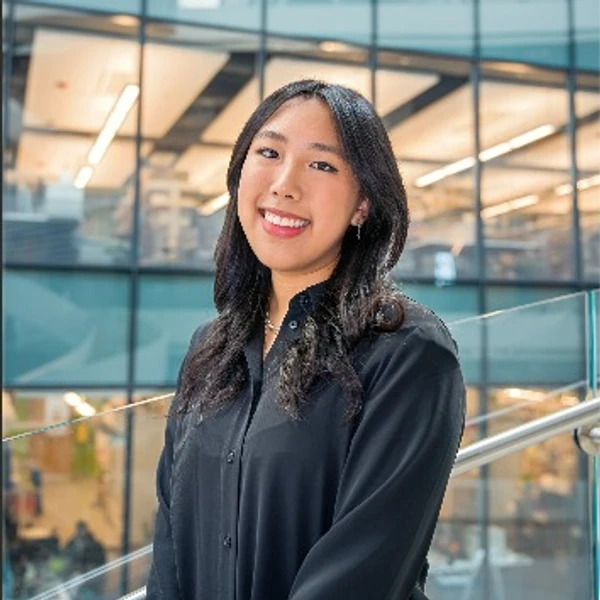
Hi! My name is Sammi, and I am from Plymouth, Massachusetts. I am a first-generation Chinese American, and the first in my family to attend college. I am currently studying Cell and Molecular Biology on the Pre-PA track at Northeastern University. I am a member of the Beta Beta Beta (Tri-Beta) Biological Honor Society Chi Delta Epsilon Chapter. I hope to attend PA school and become a Physician Assistant. My passion for medicine stems from my family's medical history and my dedication to serve underrepresented communities. I hope to create a meaningful impact in the lives of others and make sure everyone is seen. Currently, I am working full-time at Massachusetts Eye and Ear Hospital as an Ophthalmic Technician through Northeastern's co-op program. In this role, I support ophthalmologists by screening patients, assisting with clinical evaluations, and performing diagnostic screenings and imaging. In my free time, I tutor students in courses including Organic Chemistry and Physics through my university's peer tutoring program. Throughout high school, I played for my varsity tennis team and ran several clubs, including National Honor Society, Friends without Borders, and more! I love to explore new cities, try new foods, and work out. I often work at my family's restaurant over the weekend to support the business. Lastly, I enjoy serving my community through volunteer work at the local community action program. A fun fact about me is that I have a twin sister, and together, we co-run a cookie business called Reminisce Cookies.

Education

Northeastern University

Bachelor's degree program
2024 - 2028
  • Majors:
    • Cell/Cellular Biology and Anatomical Sciences
Plymouth North High

High School
2020 - 2024

Miscellaneous

  • Desired degree level:

    Master's degree program

  • Graduate schools of interest:

  • Transfer schools of interest:

  • Majors of interest:

    • Biochemistry, Biophysics and Molecular Biology
  • Not planning to go to medical school
  • Career

    • Dream career field:

      • Medicine
    • Dream career goals:

      Physician Assistant

    • Server, hostess, takeout

      2019 – Present7 years

    Sports

    Karate

    Intramural
    2011 – 202110 years

    Awards

    • Received my black belt at the age of 9

    Tennis

    Varsity
    2020 – 20244 years

    Awards

    • Varsity Letter

    Research

    • Education, General

      Dear Asian Youth - Plymouth — Social Media Coordinator
      2021 – 2024

    Arts

    • High school

      Music
      2020 – 2024

    Public services

    • Volunteering

      Local Hospital — Patient care, organization, cleaning, preparation
      2023 – 2024
    • Volunteering

      World Language Honor Society — Vice President
      2023 – 2025
    • Volunteering

      National Honor Society — Vice President
      2023 – 2025
    • Volunteering

      Quincy Community Action Program — Organizer, stocker, and delivery
      2025 – Present
    • Advocacy

      Dear Asian Youth - Plymouth — Social Media Coordinator
      2022 – 2024

    Future Interests

    Advocacy

    Volunteering

    Philanthropy

    Growing up in the Family Restaurant Business Scholarship
    Growing up in my family’s business shaped me long before I understood how. At twelve, I was serving soups and salads instead of hanging out with friends or attending school events. What once felt like my childhood being stripped away eventually taught me lessons in responsibility, resilience, and empathy. My parents believed they were doing the best for us. They were teaching us responsibility, building a strong work ethic, and developing life skills. As a kid, I found it difficult to understand that. I missed out on school events, social gatherings, and even a crucial part of growing up, which led me to resent the family business. I spent hours after school in the back of the restaurant, doing my homework. Once the clock struck 4:30, I got up to serve customers, clean tables, and wait for the night to end. During COVID-19, business slowed dramatically, and I watched my parents struggle to keep the doors open, sacrificing their health in the process. Seeing their exhaustion as they worked to keep the restaurant alive changed the way I viewed it. The restaurant wasn’t just a place of work. It taught me how to care for others, have compassion, and serve my community. To this day, I continue to learn from these experiences, using them to shape how I approach responsibility, compassion, and my determination as I work toward my goals. My past resentment toward the business has evolved into a sense of purpose, inspiring my desire to work in healthcare where I can support both my family and the communities that shaped who I am. Because of my many years of service in the restaurant industry, I have learned that hard work comes with high rewards. My struggles, frustration, and unavailability that came from the family business have led me to fight for what I want and continue serving people in my community beyond the restaurant. As a Cell and Molecular Biology major at Northeastern University on the Physician Assistant track, I carry these lessons with me. I am drawn to this path as it combines hands-on patient care and the opportunity to build long-term, genuine relationships with people in my community, just as I learned to do with customers in the restaurant. If I could change the restaurant industry, I would change how immigrant restaurant owners and staff are supported and the resources that are available. For example, without accessible and adequate care for immigrants, my parents did not have the opportunity to seek assistance. The burden weighed on their shoulders, and they prioritized keeping the restaurant doors open. Offering accessible health, financial, and business support that is tailored to immigrant needs would relieve the burden and allow them to focus on their health while running a business. I would also change how communication plays a role in immigrant businesses. Language barriers are a major divider between staff and customers. Having a translation system or program would bridge that gap, benefiting both parties and improving the overall flow of service. My healthcare journey didn’t start in a classroom. It began in a restaurant, working alongside my parents. The same hands that served soup and salads as a twelve-year-old are now working toward a future in healthcare. My family gave me everything to make that possible, and I intend to spend my career honoring that sacrifice by supporting communities that need it most.
    Tawkify Meaningful Connections Scholarship
    As a first-generation Asian-American living in a predominantly white community where few people shared my family’s experiences, I often shifted between two worlds. With parents who spoke little English and siblings much older than me, I had to navigate who I was and where I belonged in the world, all on my own. At home, I could be my true self. But outside, I wanted to blend in. I began to lose sight of the real me. To my family, I was too American; to my peers, I was just the Chinese girl, leaving me unsure of where I belonged. It wasn’t until elementary school, when I walked into my ESL teacher’s classroom, that someone finally showed me how to hold both worlds at once. For the first time, I felt included in a community within a world that had often felt isolating. With other children of immigrant parents, we shared the same experiences and understood each other in ways that didn’t need explaining. This wasn’t just a language class, but one that would shape how I viewed and interacted with the world. My teacher’s engagement and passion for learning about our cultures and celebrating them taught me to accept and embrace both sides of my identity. Her mentorship taught me how to interact with people beyond surface level and what we see on the outside. I learned that navigating environments that weren't shaped for people like me didn't define my limitations, but offered an opportunity to grow, expand my abilities, and discover who I am as a person. That lesson extended beyond the classroom and into every connection I made outside of it. Guided by her influence, I became an advocate for other first-generation students in my community. I helped expand a local organization dedicated to amplifying Asian youth voices and participated in a roundtable discussion on cultural awareness and inclusion in the education system. These were the same values that were planted in her lessons years before. Advocating for others who felt invisible became one of the most empowering experiences of my life. I knew exactly what that felt like. It pointed me directly toward a career built on human connection and trust. That purpose brought focus to my education. At Northeastern University, studying Cell and Molecular Biology on the Physician Assistant track, I am working toward a career where that same commitment to human connection and cultural understanding can make a real difference. As a future PA, I want to support patients who navigate the same kinds of gaps I grew up in: immigrant families, underserved communities, and people who need a provider who truly understands what it means to live in between. My teacher was the first person who made me feel truly understood, and I know how much that matters. I hope to practice in communities where families like mine can access the care that they deserve, building long-term relationships with patients who have been overlooked by healthcare systems. For many of these patients, that gap looks like language barriers, cultural division, or simply never having a provider who made them feel seen. My ESL teacher was more than an educator. She was a lifelong mentor and friend who taught me how to fully embrace my identity and pave my own path. Even after retiring, she has continued to show up at milestones, attending events and graduations, a reminder that her investment in us was never just professional. As a PA, I hope to be the same kind of presence for first-generation students navigating the world in between, the way she once was for me.
    Dream BIG, Rise HIGHER Scholarship
    As a first-generation Asian-American living in a predominantly white community where few people shared my family’s experiences, I often shifted between two worlds. With parents who spoke little English and siblings much older than me, I had to navigate who I was and where I belonged in the world, all on my own. At home, I could be my true self. But outside, I wanted to blend in. I began to lose sight of the real me. To my family, I was too American; to my peers, I was just the Chinese girl, leaving me unsure of where I belonged. Over time, I stopped seeing my position as something to overcome and instead started seeing it as something to build on. Learning to exist within that uncertain space taught me to be attentive to people who also feel unseen. It is what led me to help expand a local organization dedicated to amplifying Asian youth voices and to organize a roundtable discussion where first-generation students openly shared their experiences, which were presented to the local district. Hearing students express what it felt like to navigate an education system that offered little support and even less cultural understanding was something I resonated with deeply. Many of us had never said those things out loud, and this roundtable discussion offered the opportunity to do so. Advocating for others who felt invisible became one of the most empowering experiences of my life. I knew exactly what that felt like. It pointed me directly toward a career built on human connection and trust. But there was another force pointing me in that direction: my family. My parents ran a restaurant, and I spent much of my childhood working alongside them rather than doing what many of my friends were doing. During COVID-19, business slowed dramatically, and I watched my parents struggle to keep the doors open, sacrificing their health in the process. Around the same time, other family members were suffering from breast cancer and Alzheimer’s, and I found myself confronted by the fragility of health and how little support the people around me had. Watching my parents struggle not just with illness but with navigating a system that offered little guidance and support for immigrants like them made the gap in care impossible to ignore. I didn’t want to stand by and witness the helplessness. I wanted the knowledge and ability to address it. Becoming a Physician Assistant means building a career where I can genuinely care for people the way my family needed to be cared for. It also means showing up for people like me, who have spent too long feeling unseen. That purpose brought focus to my education. At Northeastern University, while studying Cell and Molecular Biology on the Physician Assistant track, I found a place where my personal experiences and academic goals worked toward the same purpose. Through Northeastern’s experiential co-op program, I have accepted a position at Massachusetts Eye and Ear Hospital, where I will support ophthalmologists specializing in cornea care, working directly with patients through diagnostic screening, imaging, and clinical evaluations. Working within a smaller clinical setting, I hope to build meaningful relationships with colleagues, gaining personalized mentorship that will prepare me to better support patients across diverse backgrounds. Every step of this journey brings me closer to the provider I am determined to become. As a future PA, I want to support patients who navigate the same kinds of gaps I grew up in: immigrant families, underserved communities, and people who need a provider who truly understands what it means to live in between. I know what it’s like to not feel understood. I hope to practice in communities where families like mine can access the care that they deserve, building long-term relationships with patients who have been overlooked by healthcare systems. For many of these patients, that gap looks like language barriers, cultural division, or simply never having a provider who made them feel seen. I also hope to serve as a reminder for first-generation students that feeling out of place doesn’t mean you don’t belong. It can actually be what leads you to your purpose. My healthcare journey didn’t start in a classroom. It began in an unfamiliar space between two cultures, in a restaurant, and in a hospital, sitting at the bedside of my loved ones. Education has provided me with the resources and tools to turn these experiences into something purposeful, and I intend to spend my career doing exactly that: serving the communities that shaped my experiences and the ones still waiting to be seen.
    Eric W. Larson Memorial STEM Scholarship
    Growing up in my family’s restaurant shaped me long before I understood how. At the age of twelve, I was serving soups and salads instead of hanging out with friends or attending school events. At the time, it felt like parts of my childhood were being taken away from me. What I didn’t realize then was that those experiences were teaching me responsibility, resilience, and empathy in ways I would carry with me for the rest of my life. My parents opened the restaurant to support our family, but financial stability was never guaranteed. There were constant pressures, including long hours, unpredictable business, and the responsibility of keeping everything running. As their child, I became part of that responsibility. After school, I would sit in the back doing homework until 4:30, when I would get up to serve customers, clean tables, and help wherever I was needed. I missed out on a big part of my childhood, and for a long time, I resented the restaurant and what it seemed to take away from me. During COVID-19, everything changed. Business slowed dramatically, and I watched my parents struggle to keep the restaurant open. They worked through exhaustion and often put the restaurant before their own health just to make sure we could stay afloat. For the first time, I understood the weight of our financial situation and the sacrifices they had been making all along. The restaurant was no longer just a place where I felt isolated. It was what supported our family. That shift in perspective changed how I approached everything. I began to take more responsibility, not because I had to, but because I wanted to support my family. At the same time, working closely with customers helped me see beyond my own experience. Many of them were going through their own challenges, especially during the pandemic. I learned how to listen, be patient, and show care in small but meaningful ways. Those everyday interactions taught me that service is more than just completing a task. It is about understanding people and being there for them. My interest in healthcare grew from both these experiences and my family’s history with illness. Conditions like breast cancer and Alzheimer’s affected people close to me, and I saw how deeply they impacted not only the individual but the entire family. At the same time, my parents often put their own health aside while focusing on work and supporting others. Watching this made me realize how important it is to have access to care and to prioritize health, even when life feels overwhelming. These experiences led me to become more interested in the science behind health and disease. I wanted to understand what was happening on a deeper level, including how diseases develop, how they affect the body, and how they can be treated or managed. That curiosity is what led me to pursue a major in Cell and Molecular Biology at Northeastern University. Through my studies, I have been able to explore the biological processes behind illness while continuing to think about how that knowledge can be applied to real people and real situations. I am currently on the Physician Assistant track because it allows me to combine what I have learned academically with the type of work I see myself doing in the future. I am drawn to the role because it focuses on direct patient care and building meaningful relationships. It reminds me of the interactions I had in the restaurant, where I got to know people, understand their needs, and make them feel comfortable. I plan to pursue clinical co-op opportunities where I can work closely with patients and continue learning how to provide care in real-world settings. In the future, I hope to work with communities that face challenges similar to the ones my family experienced. Financial stress, long work hours, and limited access to care can make it difficult for people to prioritize their health. I want to be someone who helps bridge that gap by providing not only medical care, but also understanding and support. Whether it is taking the time to listen to a patient or helping them feel more comfortable seeking care, I want to create an environment where people feel respected and heard. As a future Physician Assistant, I hope to carry the same mindset I developed while working in the restaurant. I learned how important it is to treat people with patience and respect, especially during moments when they may be stressed or vulnerable. Patients, like the customers I once served, are often going through difficult situations. Being able to connect with them, even in small ways, can make a meaningful difference in their experience. Looking back, what once felt like a loss of my childhood became one of the most important influences in my life. The challenges my family faced, especially financially, pushed me to grow in ways I did not expect. They taught me how to work hard, support others, and stay committed even when things are uncertain. From serving soups and salads on busy nights to studying the complexities of the human body, my journey has shaped the person I am today. I have learned that service is not defined by where you are, but by how you show up for others. As I continue my path in healthcare, I hope to use both my experiences and my education to make a meaningful impact by supporting individuals and families, just like my own, through care, understanding, and compassion.