user profile avatar

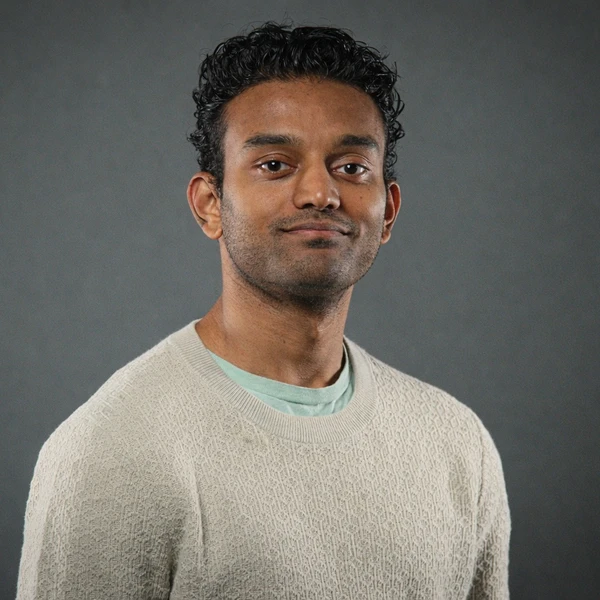
Sameer Khalifa

1x

Finalist

Bio

Howdy! I am a first-generation college graduate pursuing a Master's in Data Science at Merrimack College, with a background spanning biology, business, and information technology. I finished my Biology degree in three years: with intention and without wasted time. My parents arrived in the United States speaking no English, without diplomas, and with nothing to their name. I still remember our first apartment, empty except for what we needed to cook, my parents working twelve to fifteen hour shifts and locking my six-year-old self and younger sister inside because there was no one else take care of us when they worked. I remember my father holding my sick body on the street in the middle of the night, waiting for a stranger to help. That is where I come from. As the first in my family to earn a degree, a core part of my purpose is uplifting my parents and contributing to something as foundational as paying down their mortgage. That responsibility does not burden me; it anchors me. My experience across laboratories, corporate environments, and customer-facing roles has made me highly adaptable. I work with R, Python, and SQL to analyze data, build pipelines, and surface insights that support real decisions. I am drawn to work at the intersection of data, technology, and strategy, and I bring to it both a scientific foundation and a firsthand understanding of what it means to build something from very little. I am especially drawn to applying my technical knowledge in a healthcare setting. I am learning, steadily, to own the space my work has earned me.

Education

Merrimack College

Master's degree program
2026 - 2027
  • Majors:
    • Data Science

University of Massachusetts-Amherst

Bachelor's degree program
2019 - 2023
  • Majors:
    • Biology, General

Burlington High

High School
2014 - 2019

Miscellaneous

  • Desired degree level:

    Master's degree program

  • Graduate schools of interest:

    • Merrimack College
  • Transfer schools of interest:

  • Majors of interest:

  • Not planning to go to medical school
  • Career

    • Dream career field:

      • Information Technology and Services
    • Dream career goals:

      To work in Healthcare

      Sports

      Baseball

      Junior Varsity
      2014 – 20151 year

      Tennis

      Junior Varsity
      2018 – 20191 year

      Dodgeball

      Intramural
      2022 – 20231 year

      Soccer

      Intramural
      2022 – 20231 year

      Public services

      • Volunteering

        Christmas in the City — Volunteer
        2018 – 2019
      • Volunteering

        UMass Disabilities Services — Notetaker
        2019 – 2023

      Future Interests

      Advocacy

      Volunteering

      Philanthropy

      Entrepreneurship

      Champions Of A New Path Scholarship
      I want to answer this question honestly, which means I am not going to tell you I deserve this scholarship because my story is hard. Hard stories are everywhere. I am going to tell you why I deserve it because of what I have done with mine. I am Sameer Khalifa, a first-generation, low-income graduate student pursuing a Master of Science in Data Science at Merrimack College. My parents arrived in the United States from India speaking no English, without high school diplomas, and with nothing to their name. I still remember our first apartment in Burlington, Massachusetts, no furniture, no beds, no television, only enough to cook. My parents worked twelve to fifteen hour shifts, walking to grocery stores before sunrise, locking my six year old self and my younger sister inside that empty apartment because there was simply no one else to watch us. I remember my father carrying my very sick elementary school body to the street in the middle of the night, holding me up, hoping a stranger would stop and take us to a hospital. Someone did. That act of grace from a person who owed us nothing is the earliest and most formative lesson I have received about what it means to show up for someone who needs you, and I have spent my entire life trying to deserve it. Growing up in that environment taught me things that no classroom has since been able to improve upon. I learned that resources are not a prerequisite for excellence, they are simply a convenience that makes excellence easier. I learned that the absence of a safety net does not prevent forward motion, it just makes every step more deliberate. I learned to read systems quickly, to identify the people and processes that could help me and move toward them efficiently, and to ask questions without embarrassment because confusion left unaddressed is far more costly than the momentary discomfort of admitting you do not know something. These are not soft skills. They are the precise, practical tools of someone who has been navigating complexity without a map since childhood, and they are tools I bring into every academic and professional environment I enter. I finished my Biology degree at the University of Massachusetts Amherst in three years, graduating Cum Laude with a 3.9 GPA and minors in both Information Technology and Business. I was named to the Dean's List and received multiple merit scholarships throughout my undergraduate career, including the Clayton Biology Scholarship, the John Blais Scholarship, the Kevin J. Fitzgerald Scholarship, the Cambridge Savings Bank Scholarship, and the John and Abigail Adams Scholarship. I navigated every step of that journey without a blueprint, teaching myself how financial aid worked, what a credit hour meant, and how to turn a system designed for other people into something I could use. I figured it out by showing up to offices and asking questions until something made sense, because there was no one at home who had done it before me and no one to call when I did not understand something. I did all of this while managing a lower lumbar spinal radiculopathy diagnosis I sustained during my senior year of high school, which left me bedridden for a week, ended my participation in tennis, caused a secondary hamstring injury, and required an MRI my family could not afford. I worked through the pain, through the medication, and through AP finals from a chair in the nurse's office because stopping was not an option I had. The doctor told me five to seven years for a full recovery and advised no lifting above forty pounds and little to no physical activity. For a teenager who had just discovered what his body was capable of, that felt like a ceiling being installed. I chose to treat it as a floor instead. I am now pursuing my Master of Science in Data Science at Merrimack College, building technical fluency in R, Python, and SQL across statistical analysis, predictive modeling, pipeline development, and data visualization, working part time while completing my degree because I have always worked and do not know another way. At UMass Amherst I served as a Residential and Academic Peer Mentor for nearly 200 first year students, supporting them through move-in, course registration, academic struggles, and personal crises. I held weekly office hours, conducted one on one meetings, provided crisis referrals, and made myself genuinely available to students who were experiencing their first time away from home in an environment that felt enormous and unfamiliar. Many of these students were first generation, low income, or navigating college without a support system at home. I remembered exactly how that felt and I made it my purpose to make at least one person feel less alone because of me. I served as a Teaching Assistant across three courses simultaneously, including leading exam review sessions for over 300 students and providing individualized feedback to dozens of assigned individuals. In Introduction to Neurobiology I elevated student comprehension through targeted clarification and assumed responsibility for proctoring and grading assignments for a cohort of over 45 students. In Developmental Psychology I led exam review sessions for over 300 students and provided detailed feedback alongside fellow teaching assistants. In Biology I, I helped a professor navigate the shift to remote learning during COVID and built discussion groups tailored to the unique needs of students who were struggling to stay connected to their education from a distance. These were not perfunctory assignments. They were commitments I took seriously because I understood what it meant to be a student who needed someone to show up and find no one there. For two years I logged 135 hours as a notetaker for the University Disability Services office, attending every class session across three courses so that students with physical and learning disabilities could access the same material as their peers. Nobody saw this work and there was no recognition. I did it because I understood what it meant to need someone to quietly show up for you, and I wanted to be that for someone else. That impulse, to give back what was once given to me, is not something I turn on for applications. It is the thread that runs through every decision I have made since I was old enough to make them. Outside of campus I volunteered with Christmas in the City in 2018 and 2019, a Boston based nonprofit serving families experiencing homelessness and poverty entirely through volunteer labor so that every donated dollar reaches the people it is meant for. I showed up because I recognized something in those families. I had been a child in a home where the holidays arrived quietly and left the same way, and I wanted to be part of making that experience different for someone else. I also donated one hundred dollars from my very first paycheck, earned at fifteen bagging groceries at Market Basket, to my local mosque which had fed my family quietly and without condition during the years when we had the least. That donation was not large. But it was the first financial decision I ever made entirely on my own, and I have never been more certain of anything. I want to be direct about something else that belongs in this essay, because I believe honesty is the most compelling argument I can make. After graduating college I went through a significant period of depression. I had worked toward a degree that turned out not to fulfill me, contracted COVID six times in the months that followed, and taken a quality control job that made me physically ill in ways I struggled to explain. The combination broke something open in me that I had not known was fragile. I watched my mother cry and felt nothing. I watched my father try to reach me and could not let him in. I watched my sister observe from across the room as I let go, one by one, of everything I had spent years building. That disconnection was the most disorienting experience of my life, and it taught me something about resilience that achievement alone never could. It taught me that rebuilding is a choice, made quietly and repeatedly, on days when nothing about it feels possible. I made that choice. I am still making it. I am here. The honest answer to what makes me different from other applicants is not my GPA or my service hours or my technical skills, though I am proud of all of them. It is perspective. I have lived inside the gap between having access to opportunity and not having it. I have been the student who needed support and the student who provided it. I have navigated financial pressure, physical injury, academic demands, depression, and personal loss simultaneously and without a safety net, and I have come out the other side not diminished but clarified, with a sharper sense of what I am building and why it matters. I am building toward something larger than my own career. I want to help my parents pay down their mortgage, to give back something foundational to two people who gave everything they had from nothing. I am planning a nonprofit dental outreach organization for underserved communities in cities like Boston and New York, because I grew up without access to basic preventive dental care and have never forgotten what that costs a child's confidence, health, and sense of worth. I intend to use my data science training to run that organization with the same rigor I bring to my academic work, mapping need, tracking impact, and building evidence based cases for sustained funding so that the organization can scale and survive beyond good intentions. I am not competing for this scholarship on the basis of hardship alone. I am competing on the basis of what I have done with it, what I am building because of it, and what I intend to create on the other side of it. Every obstacle I have described in this essay is real. So is every achievement. So is every hour of service, every student I mentored, every class I attended on behalf of someone who could not, every decision I made to keep going when stopping would have been easier and more understandable than anyone would have judged me for. I have earned every step of the path I am on. This scholarship would help me take the next one.
      Elizabeth Schalk Memorial Scholarship
      What Lives Inside the Walls Mental illness does not stay in one person. It moves through a household like weather, reshaping everything inside without anyone knowing how to name what is happening. I grew up in a home already shaped by pressure. My parents arrived in the United States from India speaking no English, without high school diplomas, and with nothing to their name. They worked twelve to fifteen hour shifts, carried financial stress that never fully lifted, and raised two children in a country that made none of it easy. Over time I watched that pressure do what prolonged unaddressed weight does to people who have no outlet and no language for what they are experiencing. Mental illness in my family did not look like textbook descriptions. It looked like silence at the dinner table, anxiety that had lived so long in a body it had become indistinguishable from personality, and depression wearing the costume of exhaustion because exhaustion was more acceptable and easier to explain. My own depression arrived after graduating college. I had worked toward a degree that did not fulfill me, contracted COVID six times in the months that followed, and taken a quality control job that made me physically ill in ways I struggled to explain. The combination broke something open in me that I had not known was fragile. What followed was the most disorienting period of my life. I remember sitting in a room while my mother cried and feeling nothing. Not cruelty, not distance, just nothing, as though the wire connecting me to my own emotions had been quietly cut. I remember my father raising his voice out of worry and frustration and watching it land somewhere outside of me, unable to reach whatever part of me was supposed to respond. I remember my sister watching from across the room as I let go, one by one, of everything I had spent years building, the discipline, the momentum, the version of myself I had worked so hard to become. She watched and I could see in her face that she did not know how to help me, and I did not know how to let her. That disconnection is what depression actually feels like from the inside. Not sadness, exactly. Absence. The removal of the mechanism that makes things matter. When one person in a household is struggling that deeply, everyone adjusts. Everyone learns to read the room before entering it. Everyone carries something they were never meant to carry alone. What I also learned from that season is that mental illness does not erase the people it touches. My parents, who carried the psychological burden of building a life from nothing in a foreign country, are still the most resilient people I know. My sister, who watched me come undone and stayed anyway, is still standing. We are a family that has never had the luxury of stopping, and we have learned, without a roadmap, to carry each other through. I am now pursuing a Master of Science in Data Science at Merrimack College, rebuilding deliberately and with direction. Part of what drives me is the desire to reach a stability my family has never fully had, the kind that gives people room to breathe and, eventually, to heal. Mental illness made everything harder. It also made me more honest, more present, and more committed to building something better than what I inherited. That is not nothing. That is everything.
      Elijah's Helping Hand Scholarship Award
      The Weight Nobody Warned Me About Nobody tells you that you can do everything right and still end up in the dark. I did what I was supposed to do. I was the first person in my family to pursue a college degree, the child of immigrants who had sacrificed everything so that I could have options they never did. I worked hard, graduated Cum Laude with a 3.9 GPA, finished my degree in three years. I crossed the finish line that was supposed to mean something and waited for the feeling that was supposed to follow. It did not come. What came instead was a quality control job that made me physically ill, a body already worn from a spinal injury I had been managing since high school, and COVID, which I contracted six times in the months following graduation. Six times. Each recovery left me slightly less certain that I was moving in the right direction. The degree I had worked toward with everything I had turned out to be a door that opened into a room I did not want to be in. The job I took to build experience made me sick in ways I could not fully explain to people who had not felt it. And underneath all of it, quiet and persistent and impossible to name at first, was depression. Depression is not dramatic. That is the part that catches you off guard. It does not arrive with a crash. It settles. It makes the ordinary feel impossible and the future feel like a hallway with no doors. I woke up some mornings and the simple act of constructing a reason to get out of bed required more than I had available. I had spent my entire life being the person who figured it out, who showed up, who pushed through, and suddenly I was someone who needed help getting through a Tuesday. What pulled me through was not a single moment of clarity. It was accumulation. The walks I started taking alone, just moving through the world without a destination, because motion felt like the closest thing to forward I could manage. The practice of writing things down, small observations, half-formed thoughts, the contents of a mind trying to make sense of itself. The quiet space I built in my home where there was no noise and no obligation and nothing required of me except to breathe and exist. And eventually, slowly, the decision to redirect. To pursue data science, a field that actually lit something up in me. To apply to graduate school. To choose a direction that felt chosen rather than inherited. I think about Elijah, a student whose battle with mental health ended before they had the chance to find that redirection. I think about how close the line is between surviving a dark season and not surviving it, and how much depends on whether someone or something reaches you in time. Whether you feel seen. Whether you believe the hallway eventually opens into something. I believe it does. Not because my story is resolved or because the depression never returns, but because I have learned that it moves. It is not permanent, even when it feels like architecture. To any student carrying something heavy and invisible right now: you are not failing. You are weathering. Those are different things, and knowing the difference kept me here. I am glad it did.
      Redefining Victory Scholarship
      TRAM Resilience Scholarship
      The Cost of Getting Up I was seventeen years old when my body filed its first serious complaint. Two months into a lifting program I had started to strengthen myself and round out my college application, my lower back gave out completely. The diagnosis was lower lumbar spinal radiculopathy, compressed nerves sending pain radiating outward in waves that felt, at their worst, like the structural failure of something load-bearing. I spent a week in bed unable to rise without feeling as though the hinge connecting my upper and lower body was about to give way entirely. Every attempt to stand sent a warning through my spine so severe that I would lower myself back down, wait, and try again an hour later. The timing could not have been worse. AP finals were approaching. I was completing a high school internship. I had joined the tennis team to strengthen my college application. The MRI that confirmed my diagnosis cost five hundred dollars, money my family did not have. My parents, immigrants who had built everything we had through years of twelve to fifteen hour labor shifts, could not absorb that cost. So I worked through the pain, through the medication, through the final weeks of my senior year, because the bill existed whether I acknowledged it or not. My hamstring eventually pulled as a secondary injury. Tennis ended. Running ended. The ordinary physicality of being seventeen ended with it. I spent the second half of my senior year in the nurse's office, applying to colleges and writing scholarship essays from a chair with my back braced against whatever support I could find. The doctor told me five to seven years for a full recovery and advised no lifting above forty pounds and little to no physical activity. For a teenager who had just discovered what his body was capable of, that felt less like medical guidance and more like a ceiling being installed. What the disability gave me, unexpectedly, was clarity about what I could control. When your body becomes unreliable, your mind compensates with a precision it might not have otherwise developed. I channeled everything I could no longer spend physically into my academic work and my service to others. I finished my Biology degree at UMass Amherst in three years with a 3.9 GPA, graduated Cum Laude, mentored nearly 200 first year students as a Peer Mentor, served as a Teaching Assistant across three courses, and volunteered 135 hours through the University Disability Services office, showing up for students whose limitations I understood in a way that was no longer abstract. My disability also deepened my commitment to building systems that serve people who are often overlooked. I am pursuing a Master of Science in Data Science at Merrimack College, and I intend to use that training to build a nonprofit dental outreach organization for underserved communities, because I grew up in a home where basic healthcare felt out of reach and I know firsthand what that costs a person's dignity and sense of possibility. It is now 2026, seven years after that first morning I could not get out of bed. I am back in the gym, moving carefully and deliberately, with the reverence of someone who lost something and does not take its return for granted. The ceiling turned out not to be a ceiling. It was just the floor of the next level.
      Joe Gilroy "Plan Your Work, Work Your Plan" Scholarship
      I have two hundred dollars to my name, twenty thousand dollars in student loan debt, no current employment, and a Master's degree in progress. I am living at my parents' house in Burlington, Massachusetts, and I need a job. That is the honest starting point of my plan, and I am putting it here first because Joe Gilroy kept an index card in his shirt pocket every single day with exactly what needed to get done. This is mine. The goal is simple and urgent. Secure employment in data science, data analytics, or a related technical role within the next sixty to ninety days and use that income to cover my car payment, begin paying down my student loans, contribute to household expenses, and fund the remainder of my Master of Science in Data Science at Merrimack College, expected completion March 2027. I am not starting from zero in any meaningful sense beyond finances. I graduated Cum Laude from the University of Massachusetts Amherst with a 3.9 GPA, completing my Biology degree in three years with minors in Information Technology and Business. I have hands on experience with R, Python, and SQL across statistical analysis, data modeling, pipeline development, and visualization. I have professional experience in pharmaceutical environmental monitoring, corporate sales, and academic instruction. What I do not have is time to waste. The immediate plan covers the first thirty days. I will apply to a minimum of ten targeted positions per day across LinkedIn, Indeed, Glassdoor, and company career pages directly, tracking every application in a structured spreadsheet. Roles I am targeting include Data Analyst, Business Analyst, Junior Data Scientist, and Operations Analyst positions within commuting distance of Burlington or fully remote. Simultaneously I will activate every network connection I have, former professors, past supervisors, UMass alumni in data roles, and LinkedIn connections, because referrals convert at a significantly higher rate than cold applications and cost nothing to pursue. While the job search runs, I will take on part time or contract work immediately to cover my minimum financial obligations. My car payment and minimum loan payment are non-negotiable. Two hundred dollars requires careful management, and I will eliminate all non-essential spending until the first substantive paycheck arrives. Once employed I will allocate income across four priorities in order: car payment and insurance, minimum student loan payments with extra funds directed toward the highest interest balance, contribution to household expenses as repayment to my parents for housing me, and tuition for my remaining graduate coursework. I am also applying to scholarships actively, including this one, because every dollar awarded is a dollar that does not accrue interest. Scholarship applications are not passive hope. They are part of my debt reduction strategy. By March 2027 I will hold a Master of Science in Data Science with at least one year of professional experience in a data role. From that position I will pursue senior analyst roles with compensation that allows me to accelerate loan repayment, help my parents pay down their mortgage, and begin building the nonprofit dental outreach organization I have been planning for underserved communities in cities like Boston and New York. Joe Gilroy planned his work and worked his plan every day with an index card and a pen. I have the same methodology, a clear goal, a detailed plan, and the discipline to execute it one day at a time. Today's card is already written.
      J&Y Law Yahouda Yahoudai Service Scholarship
      I learned early that community is not something you inherit. It is something you build, deliberately and repeatedly, out of the choices you make when showing up would be easier to skip. Growing up in a low-income immigrant household in Burlington, Massachusetts, my family was on the receiving end of community generosity more times than I can count. My local mosque fed us quietly and without condition during the years when we had the very least. Strangers stopped when my father needed help. Teachers invested in me before I had anything to show for it. I absorbed all of that, and I made a decision early that I would spend my life giving it back. The first time I acted on that decision in a concrete way was with my first paycheck, earned at fifteen years old bagging groceries at Market Basket. I set aside one hundred dollars and donated it to my local mosque. It was the first financial choice I ever made entirely on my own, and I have never made one I was more certain of. At the University of Massachusetts Amherst, community service became the backbone of my college experience. For two years I served as a notetaker for the University Disability Services office, logging 135 hours across three courses so that students with physical and learning disabilities could access the same material as their peers. I attended every class session without exception, took thorough and organized notes, and uploaded them promptly because I understood what it meant to navigate an institution that was not designed with you in mind and to need someone to quietly make that navigation easier. As a Residential and Academic Peer Mentor, I supported nearly 200 first year students through one of the most disorienting transitions of their lives. I held weekly office hours, conducted one on one meetings, assisted with course registration, and provided crisis support and referrals when students needed more than I could offer alone. Many of these students were first generation, low income, or navigating college without a support system at home. I remembered exactly how that felt, and I made it my purpose to be the presence I had wished existed when I first arrived. As a Teaching Assistant across three courses, I led exam review sessions for over 300 students, provided individualized feedback, and made myself genuinely available during office hours. During the shift to remote learning during COVID, I helped a professor redesign course delivery and built tailored discussion groups for students who were struggling to stay engaged from a distance. Outside of the university, I volunteered with Christmas in the City in 2018 and 2019, a Boston based nonprofit devoted entirely to bringing joy to families experiencing homelessness and poverty through a 100 percent volunteer force. I showed up because I recognized something in the mission. I had been a child in a home where holidays arrived quietly and left the same way, and I wanted to be part of making that experience different for someone else. Community, for me, has never been a concept. It is the reason I am here, shaped by every person who showed up for my family when we had nothing, and honored by every hour I have given back since. I intend to keep giving for as long as I am able.
      Mad Genius Scholarship
      The Boy Who Cooked With What He Had They called him mad because he never used a recipe. Not because he did not know how. He had memorized every cookbook in the library by the time he was nine, read them the way other children read adventure stories, hunched under a blanket with a flashlight, turning pages slowly, letting the combinations settle into him like sediment. He knew the ratios. He knew the techniques. He knew exactly what you were supposed to do. He just never did it that way. His name was Sami, and he grew up in an apartment with no furniture. This is important. When you have no table, you learn to cook on the floor. When you have no proper pots, you learn which vessels conduct heat and which ones lie to you about it. When the ingredients available are whatever survived the week on a budget that did not forgive mistakes, you learn that creativity is not a choice you make. It is a survival strategy dressed up in a apron. His parents worked before the sun came up and came home after it went down. They left him and his sister with a bag of groceries and the implicit instruction to figure it out. Most children would have made sandwiches. Sami made things that did not have names yet. He discovered early that flavor has no respect for convention. That the thing keeping two ingredients apart was usually just someone's assumption that they did not belong together. He put tamarind in his tomato sauce and watched his sister's eyes go wide. He folded leftover rice into a flatbread dough because they were almost out of flour and the result was something that crackled at the edges and stayed soft in the middle and tasted like it had been invented on purpose. He made a soup from the vegetables that were about to turn, seasoned it with spices his mother had brought from another country in small cloth bags that smelled like a world he had never seen, and it was the best thing anyone in that apartment had ever eaten and it would never exist again because he had made it from what was left and what was left would never be exactly the same. This is what a Mad Genius looks like, not someone who has everything and combines it boldly, but someone who has almost nothing and combines it brilliantly. Someone for whom the constraint is not the obstacle but the condition that makes the invention necessary. Sami grew up. He left the apartment with no furniture and went to a university where people had opinions about how things were supposed to be done. He learned the rules, genuinely learned them, because he believed you had to understand a system before you could responsibly ignore it. He studied biology and learned how cells solve problems. He studied business and learned how organizations make decisions. He studied data and learned how to find the pattern inside the noise. And then he did what he had always done. He combined things that were not supposed to go together and found that the combination was better than either ingredient alone. He built a sacred space in his apartment out of moving blankets and determination because he needed somewhere quiet to think and could not afford soundproofing. He designed a dental outreach organization from scratch because he grew up without access to basic dental care and decided that was a problem he could solve. He wrote code and grew cultures and served food and mentored students and made things that did not have names yet, because that is what you do when you grow up learning that the recipe is just a suggestion and the real cooking happens when you run out of what you were supposed to use. The mad genius is not the person in the pristine lab coat standing over gleaming equipment with unlimited resources and institutional backing. The mad genius is the person in the apartment with the floor as the counter and the almost-expired vegetables and the spices from a small cloth bag that smells like somewhere else, who looks at what is in front of them and asks not what is missing but what is possible.What is possible has always been the better question. Sami is still asking it. He always will be. The soup, by the way, was extraordinary. He made it again the next week with completely different ingredients and it was extraordinary in a completely different way. That is the thing about cooking without a recipe. You never make the same thing twice. You only ever make what the moment gives you. And if you are paying attention, what the moment gives you is always enough. Sometimes it is more than enough. Sometimes it changes everything.
      Sloane Stephens Doc & Glo Scholarship
      My grandparents never went to college. Neither did my parents. I am the first person in my family to earn a degree, and I carry that distinction not as a trophy but as a responsibility. My parents arrived in the United States from India speaking no English, without high school diplomas, and with nothing to their name. I still remember our first apartment in Burlington, Massachusetts, no furniture, no beds, no television, only enough to cook. They worked twelve to fifteen hour shifts, locking my six year old self and my younger sister inside because there was no one else to watch us. I remember my father carrying my very sick body to the street in the middle of the night, holding me up, hoping a stranger would stop and take us to a hospital. Someone did. That act of grace from a stranger who owed us nothing has shaped everything I believe about what it means to show up for people who need you. The impact I want to make is rooted in that memory and in the gaps I lived inside growing up. I am building toward a nonprofit dental outreach organization that distributes supply kits to underserved communities in cities like Boston and New York. Toothbrushes, toothpaste, floss, mouthwash, and basic oral health education delivered directly to families through shelters, schools, food pantries, and community centers. I grew up in a home where basic preventive dental care felt entirely out of reach, and I have never forgotten what that quiet deprivation costs a child's confidence, health, and sense of worth. Oral health is not a cosmetic issue. It is a gateway to overall wellbeing, and it falls disproportionately out of reach for the communities that need it most. I am pursuing a Master of Science in Data Science at Merrimack College, and I intend to use that technical foundation to run this organization with rigor, mapping underserved areas, tracking distribution impact, and building evidence-based cases for sustained funding. Good intentions without good systems rarely scale, and I want to build something that does. The people who inspire me most are the ones who built something from nothing and refused to make that an excuse to stop giving. My parents are at the top of that list. They gave everything they had for a future they could not yet see, and they did it without recognition or reward. Sloane Stephens founded her foundation at twenty years old while competing at the highest levels of her sport, which tells me that impact does not wait for the right moment. It is built in the margins of the life you are already living. I have been building in those margins for years. I mentored nearly 200 first year students at UMass Amherst, volunteered 135 hours through the University Disability Services office, and served as a Teaching Assistant for three courses, all while working part time and financing my own education. Service has never felt optional to me. It has always felt like the natural response to having been helped. My education is not the destination. It is the tool. And I intend to use it to reach back toward the communities that look like the one I came from and say clearly that they are not forgotten and they deserve better. That is the impact I am determined to create.
      Learner Mental Health Empowerment for Health Students Scholarship
      Nobody tells you that financial stress has a sound. It is the particular silence that falls over a household at the end of a month that did not balance. It is the way a parent's face changes when a bill arrives that was not expected. It is the background noise of a childhood spent watching two people work themselves to exhaustion and still come up short, and the way that noise follows you into adulthood whether you invite it or not. I grew up in a low-income immigrant household where mental health was never a vocabulary we had access to. My parents arrived in the United States from India speaking no English, without high school diplomas, and with nothing to their name. They worked twelve to fifteen hour shifts, and the financial pressure they carried was constant, visible, and unspoken. What I absorbed growing up was not a lesson about money management. It was a lesson about what prolonged financial insecurity does to the human mind, to sleep, to relationships, to the ability to be present for the people you love. My father would come home too tired to eat. My mother moved through the household with a quiet efficiency that left no room for rest. The stress did not announce itself. It just lived there, in every room, in every calculation, in every conversation that stopped short of the thing nobody wanted to say out loud. That environment shaped my own relationship with mental health in ways I am still learning to understand. Financial pressure does not stay in the bank account. It migrates. It shows up as anxiety before exams, as difficulty sleeping the night before a bill is due, as the particular kind of exhaustion that comes not from doing too much but from worrying too much for too long. I struggled with depression in high school, compounded by a spinal injury that limited my physical activity and isolated me during a period when I needed connection most. The financial cost of my MRI alone, five hundred dollars my family could not afford, added a layer of stress to an already painful recovery that I carried quietly and largely alone. Mental health matters to me as a student because I have lived the direct translation between financial instability and psychological strain. They are not separate conversations. They are the same conversation, and pretending otherwise leaves students without the full picture of what they are actually managing. The way I advocate for mental health in my community is through honesty and presence. As a Residential and Academic Peer Mentor at UMass Amherst, I supported nearly 200 first year students through transitions that were not just academic but deeply personal. I made it a point to normalize struggle in every conversation I had with students who were overwhelmed, to say directly that needing help is not a weakness and that the pressure they felt was real and shared. I also built a quiet space in my own home designed specifically for stillness and mental decompression, a place with no screens, no noise, and no obligation, which my sister began using regularly and found genuinely restorative. Mental health is not a luxury conversation for students who have extra bandwidth. It is a survival conversation for students who are carrying more than most people can see. I know because I have been carrying it for years.
      New Beginnings Immigrant Scholarship
      My immigrant experience did not begin with a plane ticket or a new beginning. It began with an empty apartment. My parents arrived in the United States from India speaking no English, without high school diplomas, and with nothing to their name. I was six years old. I remember our first home in Burlington, Massachusetts, no furniture, no beds, no television, only enough to cook. My parents worked twelve to fifteen hour shifts, walking to grocery stores before sunrise, locking my younger sister and me inside because there was no one else to watch us. I remember my father carrying my very sick body to the street in the middle of the night, holding me up, hoping a stranger would stop and take us to a hospital. Someone did. That moment crystallized something in me that has never dissolved: the understanding that where you start does not determine where you finish, but the people who show up for you along the way matter enormously. Growing up as the child of immigrants meant growing up fluent in two languages simultaneously, the language of the country we lived in and the language of survival. I learned early how to navigate systems that were not designed with my family in mind, how to ask questions in offices where I did not belong, how to translate not just words but entire worlds for parents who were building something from nothing in real time. That fluency, in complexity, in ambiguity, in the space between cultures, has shaped everything about how I think and work. I became the first person in my family to earn a college degree, finishing my Biology degree at the University of Massachusetts Amherst in three years, graduating Cum Laude with a 3.9 GPA and minors in both Information Technology and Business. I am now pursuing a Master of Science in Data Science at Merrimack College, and the direction I am building toward is specific and intentional. My career aspirations center on the intersection of data, technology, and strategy. I want to work in roles where I can use analytical tools, R, Python, and SQL, to surface insights that support real decisions and improve real outcomes. I am drawn to product analytics, business intelligence, and data science positions where the work connects directly to how organizations understand their users and allocate their resources. I bring to that work not just technical training but a perspective shaped by growing up in a household where resources were scarce and decisions carried real consequences. I understand, in a deeply personal way, what it means to need better information and have none available. Beyond my career, I carry a longer ambition. I want to help my parents pay down their mortgage, to return something stable to two people who gave me everything they had from nothing. And I want to eventually build a nonprofit dental outreach organization that distributes supply kits to underserved communities in cities like Boston and New York, because I grew up in a home where basic preventive care felt out of reach, and I have never forgotten what that costs a child's dignity and confidence. My immigrant experience taught me that starting from nothing is not a disadvantage. It is a specific kind of education that no institution can replicate. I intend to spend the rest of my life proving that.
      Bick First Generation Scholarship
      Being a first-generation student means you are the answer to a question your parents never got to ask for themselves. My parents arrived in the United States from India speaking no English, without high school diplomas, and with nothing to their name. I still remember our first apartment in Burlington, Massachusetts. No furniture, no beds, no television. Only enough to cook. They worked twelve to fifteen hour shifts, walking to grocery stores before sunrise, locking my six year old self and my younger sister inside because there was simply no one else to watch us. I remember my father carrying my very sick body to the street in the middle of the night, holding me up, hoping a stranger would stop and take us to a hospital. Someone did. That moment never left me. It taught me what love looks like when it has nothing left to give except itself. Being first generation means figuring everything out alone. It means standing in a financial aid office not knowing what a credit hour is and staying until you do. It means applying to colleges without anyone at home who has done it before, navigating scholarship applications, tax forms, academic advisors, and career offices entirely by trial and error, and treating every confusing system as a puzzle you are responsible for solving by yourself. It also means carrying people with you. Every exam I passed, every office I walked into, every degree I earned was not just mine. It belonged to two people who worked themselves to exhaustion so that I could have options they never did. That weight does not burden me. It anchors me. I finished my Biology degree at UMass Amherst in three years, graduating Cum Laude with a 3.9 GPA and minors in Information Technology and Business. I mentored nearly 200 first year students, taught alongside professors in three courses, and logged 135 community service hours, all while working part time to help finance my education. I am now pursuing a Master of Science in Data Science at Merrimack College, building the technical skills to use data to improve real decisions for real people. My dreams are specific. I want to work at the intersection of data, technology, and strategy. I want to help my parents pay down their mortgage, to give back something foundational to two people who gave everything they had from nothing. And I want to build a nonprofit dental outreach organization for underserved communities in cities like Boston and New York, because I grew up in a home where basic preventive care felt out of reach, and I have never forgotten what that costs a child's dignity. This scholarship would ease a financial pressure that is real and present, freeing up the energy that stress consumes and redirecting it toward the work I know I am capable of. I am not the first person in my family to struggle. But I intend to be the last.
      Michael Rudometkin Memorial Scholarship
      I did not learn selflessness from a book or a lecture. I learned it from an empty apartment. My parents arrived in the United States from India speaking no English, without high school diplomas, and with nothing to their name. I still remember our first home. No furniture, no beds, no television. Only enough to cook. They worked twelve to fifteen hour shifts, walking to grocery stores before sunrise, locking my six year old self and my younger sister inside because there was no one else to watch us. I remember my father carrying my very sick elementary school body to the street in the middle of the night, holding me up, hoping a stranger would stop and take us to a hospital. Growing up, I knew what it meant to need someone and not have them. That knowledge never left me. It became the quiet engine behind everything I have given back. At the University of Massachusetts Amherst, I logged 135 hours as a Disability Services notetaker across three courses, Developmental Psychology, Cell and Molecular Biology, and Introduction to Neurobiology. The work was simple in description and demanding in practice. Every class, without exception, I took thorough and organized notes and uploaded them promptly so that students with disabilities could access the same material as everyone else. No one saw this work. There was no applause. But I understood in a personal way what it means to navigate a system that was not designed with you in mind, and I wanted to quietly make that navigation easier for someone else. As a Teaching Assistant for three courses, I supported hundreds of students through some of the most challenging material of their academic lives. I led exam review sessions for over 300 students, held office hours, graded assignments with care, and made myself available in the way I wished someone had been available to me when I was figuring everything out alone. During COVID, I helped a professor navigate the shift to remote learning and created discussion groups tailored to students who were struggling to stay connected to their education from a distance. I showed up because I knew what it cost not to have someone show up for you. As a Residential and Academic Peer Mentor, I supported nearly 200 first year students through move-in, course registration, academic struggles, and personal crises. I held weekly office hours, conducted one on one meetings, and referred students to campus resources when what they needed was beyond what I could offer. Many of these students were experiencing their first time away from home, their first encounter with academic pressure, their first brush with the disorientation of a new environment. I remembered my own first steps on that campus, how vast and unfamiliar everything felt, and I made it my mission to make at least one person feel less alone in it. Beyond my campus years, I am working toward building a nonprofit dental outreach organization that distributes supply kits to underserved communities in cities like Boston and New York. I grew up in a home where basic dental care felt out of reach, and I have not forgotten what that quiet deprivation felt like. That organization is not yet built, but the intention behind it has been with me for years, rooted in the same conviction that has guided every hour of service I have given. Selflessness, at its core, is not sacrifice. It is recognition. It is seeing someone who needs what you once needed, and choosing not to look away. That is the only way I know how to live.
      Tawkify Meaningful Connections Scholarship
      I used to think relationships were separate from ambition. That love lived in one pocket and goals lived in another, and the disciplined thing to do was keep them from mixing. A breakup I went through not long ago dismantled that theory completely, and rebuilt me in ways I did not expect. The end of that relationship was devastating in the way that only losing something you genuinely believed in can be. It was not just the absence of a person. It was the absence of a future I had quietly constructed around them, the plans that dissolve without announcement, the version of yourself you built inside that connection that suddenly has nowhere to stand. I went through the motions of my days carrying a weight I could not explain to anyone who had not felt it. And for a while, I let it shrink me. But grief, when you sit with it honestly, has a way of returning you to yourself. I come from a family that taught me what endurance looks like long before I had the language for it. My parents arrived in the United States from India speaking no English, without high school diplomas, and with nothing to their name. I still remember our first apartment. No furniture, no beds, no television. Only enough to cook. My parents worked twelve to fifteen hour shifts, walking to grocery stores before sunrise, locking my six year old self and my younger sister inside that empty apartment because there was simply no one else to watch us. I remember my father carrying my very sick elementary school body out to the street in the middle of the night, holding me up, hoping a stranger would stop and take us to a hospital. These are the people I come from. People who did not have the luxury of staying down. The breakup cracked me open in the same way hard circumstances have always cracked me open, and what came out was clarity. I started asking harder questions about who I was becoming and whether my goals were truly mine or quietly shaped around someone else's presence. I returned to my work with a focus that surprised even me. I leaned into my graduate studies, my technical skills, my long term vision of using data and strategy to build something meaningful. I started taking my nonprofit idea, a dental outreach organization for underserved communities in cities like Boston and New York, more seriously than I ever had before. Heartbreak has a way of making you possessive of your own purpose. Professionally, that experience reshaped how I build connections entirely. I became more intentional, more present, and more honest about what I bring to a relationship and what I need in return. I stopped performing strength and started practicing it. In collaborative work environments, that shift is visible. I listen more carefully. I invest more genuinely. I show up for people the way I wish someone had shown up for me in that season. Relationships, romantic or otherwise, are not distractions from purpose. They are some of its most ruthless teachers. The ones that end badly leave behind something the good ones sometimes cannot, a sharper sense of who you are when no one is watching and nothing external is holding you together. I am still building. But I am building as myself now, and that makes all the difference.
      Ruthie Brown Scholarship
      I did not grow up with a financial safety net. I grew up in an empty apartment. My parents arrived in the United States from India speaking no English, without high school diplomas, and with nothing to their name. I still remember that first apartment. No furniture, no beds, no television. Only enough to cook. My parents would walk to the grocery store before sunrise, work twelve to fifteen hour shifts, and lock my six year old self and my younger sister inside because there was simply no one else to watch us. I remember my father carrying my very sick elementary school body out to the street in the middle of the night, standing there holding me up, hoping a stranger would stop and take us to a hospital. That is where I come from. Debt, for me, is not an abstraction. Financial pressure has been the backdrop of my entire life. So when I took out student loans to fund my education, I did so with clear eyes and a concrete plan. The first part of that plan is working. I have been working since I was fifteen years old, from bagging groceries at Market Basket to conducting environmental monitoring in pharmaceutical cleanrooms to exceeding sales targets in corporate retail. Throughout my undergraduate years I worked part time while carrying a full course load, serving as a teaching assistant, mentoring nearly 200 first year students, and logging 135 community service hours. I graduated in three years with a 3.9 GPA and two minors, not despite working, but alongside it. That same discipline carries into my graduate studies today. I am pursuing my Master of Science in Data Science at Merrimack College part time while working, keeping my current loan burden as manageable as possible by earning while I learn. The second part of the plan is trajectory. I am building technical fluency in R, Python, and SQL, with graduate coursework in predictive modeling, data science, and statistical analysis. I am positioning myself for roles at the intersection of data, technology, and business strategy, fields where compensation reflects the value of the skill set. Every course I complete, every project I finish, every line of code I write is an investment in the earning potential that will allow me to repay what I owe without it defining the rest of my life. The third part is purpose. I am not just managing debt for myself. I am the first person in my family to earn a degree, and I carry the responsibility of that distinction seriously. Part of what I am working toward is helping my parents pay down their mortgage, giving back something stable to two people who gave me everything they had when they had almost nothing. That means I cannot afford to be careless with debt. It means every financial decision I make is measured against a larger picture. Scholarships like this one are a meaningful part of that picture. Every dollar awarded is a dollar that does not accrue interest, a dollar that does not follow me into the career I am building, a dollar that gets redirected toward my family and my future. I do not take that lightly. I am addressing my student loan debt the same way I have addressed every obstacle in my life. By showing up, doing the work, and refusing to let where I started determine where I finish.
      Charles B. Brazelton Memorial Scholarship
      I have small hands- like usually small hands. I noticed this early, the way children notice everything about themselves that seems to invite a comment. Classmates thought it was funny. Teachers thought it was curious. Someone once told me I would never be good at anything that required a firm grip. I filed that away the way I filed away most things that were meant to discourage me, quietly, and kept moving. But hands are funny things. Size has very little to do with what they are capable of carrying. My father's hands carried my sick elementary school body through the cold in the middle of the night, standing on a dark street outside our apartment, holding me up and waiting for a stranger to stop and help. My mother's hands cooked in a home with no furniture, no beds, no television, just enough to survive on, while she and my father worked twelve to fifteen hour shifts and walked to grocery stores because there was no car either. They came from India with no English, no high school diplomas, and no money. What they had were their hands, and they used them for everything. So when I think about my own small hands, I do not think about what they lack. I think about what they have done. These hands have pipetted samples in cleanrooms and corporate laboratories. They have typed thousands of lines of R, Python, and SQL. They have taken careful, thorough notes for students with disabilities for 135 hours across three semesters, written feedback for hundreds of students as a teaching assistant, and filled out financial aid and college application forms that no one in my family had ever seen before, learning the entire process alone, one confusing office visit at a time. These hands finished a biology degree in three years with a 3.9 GPA, added two minors, and are now working through a Master of Science in Data Science while holding down a job and helping my parents toward something as foundational as paying down their mortgage. There is something clarifying about being underestimated early. It teaches you that you will have to prove yourself in rooms that were not built with you in mind. It teaches you to lead with your work, your consistency, and your character, because you never had the luxury of coasting on assumption. My hands are small. But they showed up. They keep showing up. And I am just getting started.
      Christian Fitness Association General Scholarship
      I believe I should be a standout candidate for this scholarship because of the sheer weight of what it took to get here. My parents arrived in the United States from India speaking no English, without high school diplomas, and with almost nothing to their name. I still remember our first apartment. No furniture, no beds, no television. Only enough to cook. I remember my parents walking to the grocery store before sunrise, working twelve to fifteen hour shifts, and locking my six year old self and my younger sister inside that empty apartment because there was simply no one else to watch us. I remember my father carrying my very sick elementary school body out to the street in the middle of the night, standing there holding me up, hoping a stranger would stop and take us to a hospital. That image has never left me. Neither has what it taught me about sacrifice, about love, and about what people will endure for the ones they are responsible for. I am extraordinarily proud of my parents and what they have built from that starting point. Everything I do is shaped by that pride and by an equal determination to honor it. My greatest academic accomplishment is not a GPA or an award, though I am proud of those too. It is simply this: I got a college degree. I know how unremarkable that might sound to some. But I know exactly what it cost. I know the number of visits to the registrar's office when I did not understand how credits worked, the hours spent in the financial aid office trying to decode forms that no one in my family had ever seen before, the trips to my high school guidance counselor's office where I was learning the entire college application process from scratch with no blueprint and no one at home who had done it before me. Every step that most students take for granted was a research project for me. I figured it out slowly and stubbornly, by showing up and asking questions until something made sense. There was no older sibling to call, no parent who could walk me through the FAFSA, no family friend who knew what a credit hour was. Just me, a front desk, and a willingness to look confused for as long as it took. When the University of Massachusetts Amherst offered me the most financial aid, I made the difficult decision to move away from my family, something that does not come lightly when you are first generation and your family is your entire support system. But I went, and I made the most of it. I finished my Biology degree in three years, added minors in both Information Technology and Business, and graduated Cum Laude with a 3.9 GPA. I was named to the Dean's List and received multiple merit scholarships including the Clayton Biology Scholarship, the John Blais Scholarship, and several others that told me institutions were beginning to see what I already believed about myself. Beyond academics, I logged 135 community service hours as a Disability Services notetaker, supporting students who needed someone to show up consistently and carefully for every single class session. I served as a Teaching Assistant for three courses, including leading exam review sessions for over 300 students and providing detailed feedback to dozens of individuals. I was a Residential and Academic Peer Mentor for nearly 200 first year students, many of whom were experiencing the same disorientation I had felt walking onto a college campus for the very first time, not knowing the language of higher education, not knowing who to ask or where to go. I gave that time because I knew what it meant to need someone in your corner, and I wanted to be that for someone else. All of this while working part time to help finance my education and contribute to my family. I am now pursuing a Master of Science in Data Science at Merrimack College, continuing to build on a foundation that I constructed largely alone, one confusing office visit at a time. My technical work centers on R, Python, and SQL, and I am developing the skills to use data to inform strategy, improve products, and support meaningful decisions. Beyond my career, I carry a longer term goal of building a nonprofit dental outreach organization that distributes supply kits to underserved communities in cities like Boston and New York, because I grew up in a home where basic healthcare felt out of reach, and I have not forgotten that. This scholarship would ease a financial pressure that is very real. It would allow me to focus more fully on becoming someone whose story reaches back and makes the path a little clearer for the next student standing where I once stood, with everything to prove and no map to follow.
      Bulkthreads.com's "Let's Aim Higher" Scholarship
      I want to build something I wish had existed when I was a kid. I grew up in an apartment with no furniture and parents who worked fifteen hour shifts just to keep the lights on. Dental care was not a conversation we had. A toothbrush was there when it was there, and a dentist's office was a world that belonged to other people, people with insurance cards and the kind of stability that makes routine feel possible. That gap never left me. I want to build a nonprofit dental outreach organization that curates and distributes dental supply kits to impoverished communities in cities like Boston and New York. Toothbrushes, toothpaste, floss, mouthwash, and basic oral health education, delivered directly to families who need them most through partnerships with shelters, community centers, schools, and food pantries. The vision is not just a supply drop. It is a sustained presence that earns trust over time and eventually expands into mobile dental clinics and preventive care partnerships with local providers. Oral health is not a cosmetic issue. It is a gateway to overall health, to confidence, to the ability to walk into a room without shame. Neglecting it has consequences that compound quietly and devastatingly over years. I also want to use what I am learning in data science to run this organization with rigor, mapping underserved areas, tracking distribution impact, and building the case for funding through evidence rather than sentiment alone. Good intentions without good systems rarely scale, and I want to build something that does. This matters to me because I was that child. I know what it feels like to exist in the part of a city that the rest of the city does not think much about. I know what it means to need something basic and have no clear path to it. Building this would not just serve a community. It would complete something in me, turning the empty apartment and the locked door into the foundation for something that reaches back and says: you are not forgotten, and you deserve care too.
      Treye Knorr Memorial Scholarship
      I am Sameer Khalifa, a first-generation, low-income college graduate born to immigrant parents who arrived in the United States with no English, no high school diploma, and no money. I still remember our first apartment. No furniture, no bed, no television. Just enough to cook. I remember my parents walking to the grocery store before the sun came up, working twelve to fifteen hour shifts, and locking my six-year-old self and my younger sister inside that empty apartment because there was no one else to watch us. I remember my father carrying my very sick body outside in the middle of the night, standing on the street, holding me up, hoping a stranger would stop and take us to a hospital. That image has never left me. Neither has what it taught me about love, about desperation, and about what people will do for the ones they are responsible for. I carry that history into everything. It is why I finished my Bachelor of Science in Biology at the University of Massachusetts Amherst in three years, graduating Cum Laude with a 3.9 GPA and minors in both Information Technology and Business. It is why I am now pursuing a Master of Science in Data Science at Merrimack College part-time while working. And it is why one of my most deeply held goals is to help my parents pay down their mortgage, to give back something stable and lasting to two people who gave me everything they had when they had almost nothing. Anyone who wants to know more about my professional journey is welcome to visit my LinkedIn, where my profile speaks to both where I have been and where I am headed: linkedin.com/in/sameer-gets-it-done. My academic path has been intentionally interdisciplinary. Biology taught me precision and how to ask rigorous questions. Business taught me how organizations make decisions under uncertainty. Information technology taught me how systems are built, and how they fail. My technical work centers on R, Python, and SQL, applied to statistical analysis, data modeling, pipeline development, and visualization. At the graduate level, I am sharpening my ability to use data not just to answer questions, but to support strategy and improve real outcomes. My professional experience has been just as varied. I have worked in cleanrooms and laboratories, in corporate environments, and in customer-facing retail roles since I was fifteen years old. Moving between those worlds has made me adaptable, fast-learning, and deeply comfortable with discomfort. At UMass Amherst, I also gave back as much as I could. I mentored nearly 200 first-year students as a Residential and Academic Peer Mentor, taught alongside professors in three courses, and logged 135 service hours as a Disability Services notetaker. Service has never felt like a choice to me. It has always felt like a response to having been helped. My greatest weakness has been imposter syndrome, the persistent, quiet voice that questions whether I belong in rooms I worked hard to enter. I have sat in classrooms and boardrooms wondering if my presence was a mistake. But I have learned to treat that doubt as information rather than instruction. It tells me where I still need to grow, not whether I should be there. My vision is specific. I want to work at the intersection of data, technology, and strategy, helping organizations make better decisions and build better products. I want to reach a place of stability where I can lift my parents the way they lifted me, and eventually reach back for students who are walking this road without anyone to show them it is possible. This scholarship would ease a burden that is very real. It would allow me to focus more fully on becoming the person my parents stood on that street for.
      Neetu Watumull Scholarship Program Managed by Rupa Shah
      I was born and raised in the United States, but my family’s story begins in India through my mother’s side of the family. My parents were born and raised there before immigrating in 2007 without even graduating high school in India and with no support in the US in hopes of creating a better future for their children and the generations that would follow. Although I grew up here, Indian culture was always a meaningful part of my life. It showed itself in the way my family gathered together, the traditions we held onto, and most importantly, the values I was raised with. I grew up understanding the importance of hard work, humility, education, and sacrifice. I still remember an empty apartment void of furniture, beds, tv, etc. and my parents walking to and from working at grocery stores. I remember my father holding me in his arms outside waiting when I fell sick hoping somebody would stop to take me to the hospital. So many memories push me to help them now in their time of need. Those experiences shaped the way I see opportunity. I learned early on that education is not something to take for granted. For my family, it represents security, growth, and the chance to build a better future. That perspective has stayed with me throughout my academic journey and continues to motivate me every day. I am currently pursuing my Master’s degree in Data Science at Merrimack College as a first generation graduate student. Reaching this point has taken a great deal of persistence. Graduate school has challenged me academically, financially, and personally. I have worked hard to build skills in programming, statistics, and data analysis while balancing school with part time work and other responsibilities. There have been moments of stress and uncertainty, but I continue pushing forward because I know how meaningful this opportunity is for both me and my family. Financially, pursuing graduate school has placed a significant burden on us. My family has always supported me emotionally and encouraged me to continue my education, but our financial resources are limited. The cost of tuition, books, transportation, and everyday expenses has been difficult to manage, especially while trying to maintain strong academic performance. Although I have received some financial aid, there is still a substantial gap that I am responsible for covering myself. Working part time helps, but balancing employment with the demands of a rigorous graduate program can be overwhelming at times. Receiving this scholarship would provide more than financial relief. It would give me the ability to focus more fully on my education and continue building the future my family worked so hard to make possible for me. It would also serve as a reminder that the sacrifices my grandparents made continue to create opportunities for future generations. My goal is to build a successful career in data science, create stability for my family, and use my education to make a meaningful impact in the lives of others.