Hobbies and interests
Dance
Martial Arts
Volleyball
Samara McDonald
1x
Finalist1x
Winner
Samara McDonald
1x
Finalist1x
WinnerBio
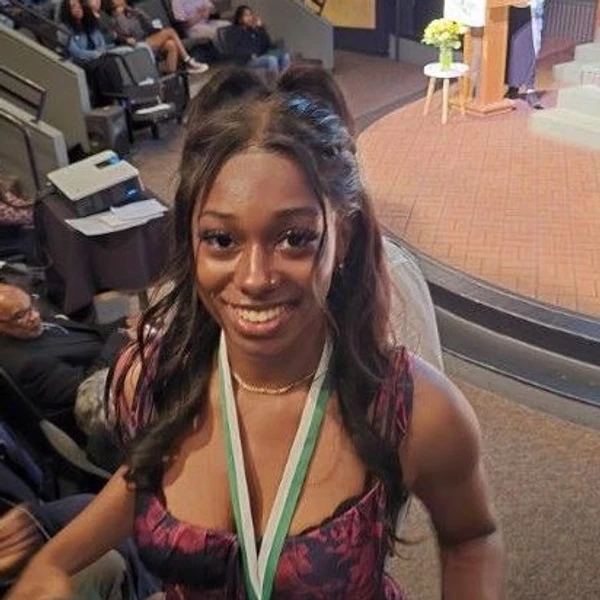
Hello, my name is Samara! I am a Freshman at Howard University, and a psychology major. Psychology’s focus on relationships, theories, the mind, and its interactions with the external world resonates deeply with me. I desire gaining the knowledge to serve as a source of support and security for others, especially those navigating mental health challenges. Witnessing the impacts of mental health firsthand, I’m committed to earning the education necessary to help others grow and heal, to be someone’s lifeline in a difficult time.
Education
Howard University
Bachelor's degree programMajors:
- Psychology, General
Miscellaneous
Desired degree level:
Master's degree program
Graduate schools of interest:
Transfer schools of interest:
Majors of interest:
Career
Dream career field:
Individual & Family Services
Dream career goals:
Summer Camp Staff
Empowering Youth and Families Outreach2022 – 20253 years
Sports
Dancing
Intramural2022 – 20253 years
Awards
- Captain
Volleyball
Varsity2021 – 20254 years
Awards
- Emerald City Confrence Player of The Year
Public services
Advocacy
Washington State Charter Schools Association — Student Advocate2024 – 2025
Future Interests
Advocacy
Philanthropy
Miley Cyrus Fan No-Essay Scholarship
400 Bold Points No-Essay Scholarship
Post Malone Fan No-Essay Scholarship
Kayla Nicole Monk Memorial Scholarship
I’ve always loved horror movies. Scream, The Shining, Halloween, The Craft—they never really scared me because I knew they weren’t realistic. No matter how terrifying they seemed on the screen, I could always turn off the TV and return to my normal life. But during high school, life threw me into a nightmare that I couldn’t switch off. It began when my brother passed away during my 7th-grade year. Soon after, I lost both of my grandparents, then my auntie. Suddenly, I wasn’t just watching horror unfold—I was living it. Now, that nightmare has served as the fuel to my fire for the past 6 years. Horror movies taught me that even in a nightmare, there are ways to survive and grow. The nightmare of grief forced me to face hard truths, and in doing so, I gained valuable life lessons.
Losing my loved ones taught me that life is fragile, and every moment counts. I realized I had to take control of my time and find healthy ways to cope. One of the most important characteristics of people who survive in horror films is the will to survive. I had that will. I began to fill my life with activities that gave me purpose and connection. I took on the role of student ambassador at my school, leading efforts to ensure the school environment was welcoming for all students. I became captain of my volleyball team and a dance teacher in my church's dance ministry. Through these activities, I began to reclaim my life from the nightmare, finding strength in the very places I once felt trapped. Another thing I learned was the importance of human connection. In horror films, there is usually safety in numbers. Splitting up or isolating almost always ends badly. Yet, this was my first inclination when I found myself in my nightmare. Initially, I turned inward to myself, instead of outward to my community, and it only made things feel darker than they already were. Eventually, I realized that I needed others. I joined a dance company, which allowed me to express my feelings in ways words couldn’t. I took up sports—volleyball, basketball, track, and karate—which pushed me to stay active and connect with others. I explored new interests to better understand myself. In doing so, I found that even in this nightmare, I could make progress. I learned to navigate the pain, using my time to build myself back up instead of letting the grief consume me.
Throughout my life journey, I realized that many of the battles I was facing were taking place overwhelmingly in my mind. This eventually led me to discover psychology, a field that resonated with my search for understanding the hidden science behind the conscious and unconscious mind. Psychology helped me to understand how my thoughts, emotions, and actions were all interrelated.
The Mental Health Crisis is a serious global issue that is often overlooked, especially in the black community. Growing up in the diverse city of Seattle, I’ve had the opportunity to connect with people from a variety of backgrounds, each with unique challenges and perspectives on mental health. This exposure has shaped my understanding of the barriers people face when seeking help and accessing resources. My investigative mindset and desire to understand on a deeper level have driven me toward psychology, where I can work to address these barriers head-on.
I know firsthand how life difficulties, such as grief and loss, can affect someone’s functioning in life. I believe that these experiences equipped me with the most determination to aid and lead with empathy for others.
Arnetha V. Bishop Memorial Scholarship
WinnerI’ve always loved horror movies. Scream, The Shining, Halloween, The Craft—they never really scared me because I knew they weren’t realistic. No matter how terrifying they seemed on the screen, I could always turn off the TV and return to my normal life. But during high school, life threw me into a nightmare that I couldn’t switch off. It began when my brother passed away during my 7th-grade year. Soon after, I lost both of my grandparents, then my auntie. Suddenly, I wasn’t just watching horror unfold—I was living it. Now, that nightmare has served as the fuel to my fire for the past 6 years. Horror movies taught me that even in a nightmare, there are ways to survive and grow. The nightmare of grief forced me to face hard truths, and in doing so, I gained valuable life lessons.
Losing my loved ones taught me that life is fragile, and every moment counts. I realized I had to take control of my time and find healthy ways to cope. One of the most important characteristics of people who survive in horror films is the will to survive. I had that will. I began to fill my life with activities that gave me purpose and connection. I took on the role of student ambassador at my school, leading efforts to ensure the school environment was welcoming for all students. I became captain of my volleyball team and a dance teacher in my church's dance ministry. Through these activities, I began to reclaim my life from the nightmare, finding strength in the very places I once felt trapped. Another thing I learned was the importance of human connection. In horror films, there is usually safety in numbers. Splitting up or isolating almost always ends badly. Yet, this was my first inclination when I found myself in my nightmare. Initially, I turned inward to myself, instead of outward to my community, and it only made things feel darker than they already were. Eventually, I realized that I needed others. I joined a dance company, which allowed me to express my feelings in ways words couldn’t. I took up sports—volleyball, basketball, track, and karate—which pushed me to stay active and connect with others. I explored new interests to better understand myself. In doing so, I found that even in this nightmare, I could make progress. I learned to navigate the pain, using my time to build myself back up instead of letting the grief consume me.
Throughout my life journey, I realized that many of the battles I was facing were taking place overwhelmingly in my mind. This eventually led me to discover psychology, a field that resonated with my search for understanding the hidden science behind the conscious and unconscious mind. Psychology helped me to understand how my thoughts, emotions, and actions were all interrelated.
The Mental Health Crisis is a serious global issue that is often overlooked, especially in the black community. Growing up in the diverse city of Seattle, I’ve had the opportunity to connect with people from a variety of backgrounds, each with unique challenges and perspectives on mental health. This exposure has shaped my understanding of the barriers people face when seeking help and accessing resources. My investigative mindset and desire to understand on a deeper level have driven me toward psychology, where I can work to address these barriers head-on.
I know firsthand how life difficulties, such as grief and loss, can affect someone’s functioning in life. I believe that these experiences equipped me with the most determination to aid and lead with empathy for others.