Hobbies and interests
Badminton
Babysitting And Childcare
Community Service And Volunteering
Concerts
Advocacy And Activism
Cheerleading
HOSA
Mental Health
Mentoring
Nursing
Pediatrics
Public Health
Social Media
Social Justice
Spending Time With Friends and Family
Reading
Biography
Science Fiction
Cultural
I read books multiple times per month
Samantha Saechao
1x
Finalist1x
Winner
Samantha Saechao
1x
Finalist1x
WinnerBio
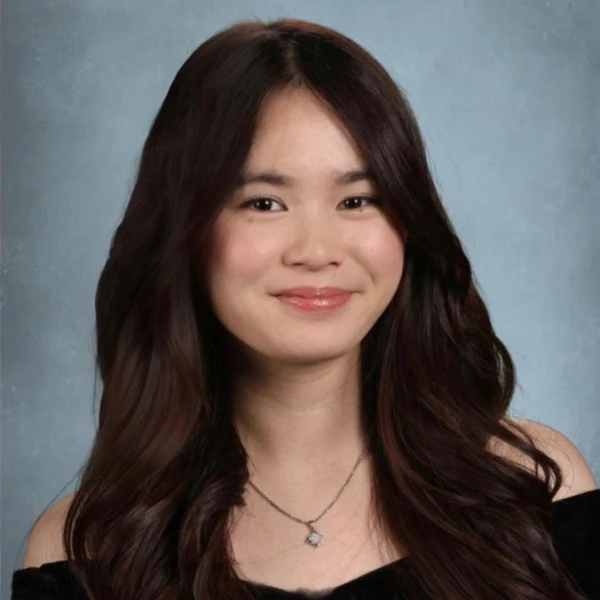
Hello! My name is Samantha and I'm an incoming first year at UCLA pursuing a degree in Public Health
Education
University of California-Los Angeles
Bachelor's degree programMajors:
- Public Health
Richmond High School
High SchoolMiscellaneous
Desired degree level:
Bachelor's degree program
Majors of interest:
- Public Health
Career
Dream career field:
Hospital & Health Care
Dream career goals:
Assistant
Kumon2025 – Present1 year
Sports
Cheerleading
Junior Varsity2024 – 20251 year
Research
Public Health
ABLE — Researcher2025 – 2025
Arts
Richmond High School
Dance2022 – 2023
Public services
Volunteering
Earth Team — Intern2024 – 2026
Peter and Nan Liubenov Student Scholarship
I perceive myself as a positive force in society by using my voice to advocate for those whose voices are often overlooked. As an Iu-Mien American, I have often felt what it means to be a minority within minorities. At Richmond High School, only 3.7% of students identify as Asian, and I am often the only Mien student in the room. Growing up in a predominantly Latinx community, I struggled to find where I belonged. At home, I was sometimes seen as “too American,” while at school, I was often reduced to stereotypes about my race.
One experience that deeply impacted me occurred when a peer pulled back her eyes and referred to someone as a “chinita.” I was shocked not only by the comment itself but by how comfortable she felt making it in front of me. Moments like this reminded me that many people lacked an understanding of Asian cultures and experiences. Reflecting on the microaggressions and backhanded comments I had encountered throughout my life, I realized that remaining silent would only allow these misconceptions to continue. Instead of accepting these experiences as normal, I decided to take action.
After three years of inactivity, I reactivated the Asian Pacific Islander (API) Club at Richmond High School. My goal was not simply to create a club for Asian students, but to build a welcoming and educational space where all students could learn about diverse cultures, histories, and issues affecting API communities. As president, I organized cultural events, facilitated discussions, and encouraged students to share their own experiences and perspectives. Through these efforts, I hoped to challenge stereotypes, increase representation, and create a sense of belonging for students who may have felt overlooked.
What makes me a positive force is my willingness to engage in uncomfortable conversations rather than pretending problems do not exist. Social issues such as racism, discrimination, and cultural misunderstanding cannot be solved if people are afraid to discuss them. I believe meaningful change begins with education, empathy, and open dialogue. By creating opportunities for students to learn from one another, I have helped foster greater understanding within my school community.
The parameters of current social norms have strongly influenced this perspective. Today, society places a greater emphasis on diversity, equity, and inclusion than in previous generations. However, many marginalized communities continue to face barriers to representation and acceptance. These realities have reinforced my belief that individuals have a responsibility to advocate for positive change within their communities.
Looking toward the future, I hope to expand my impact through a career in public health. My experiences growing up in an underserved community have shown me how cultural, linguistic, and socioeconomic barriers can prevent people from accessing essential resources. I want to use my education and experiences to address health disparities, particularly within Southeast Asian communities that are often underrepresented in healthcare conversations.
Ultimately, I view myself as a positive force because I strive to transform challenges into opportunities for change. Whether through leadership, advocacy, or community service, I work to ensure that others feel seen, heard, and valued. By speaking up when it would be easier to remain silent and by creating spaces where difficult conversations can take place, I hope to contribute to a more inclusive and compassionate society both now and in the future.