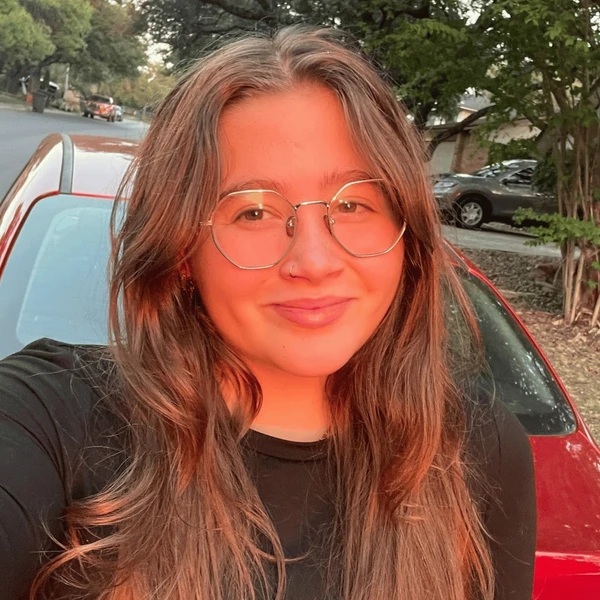
Samantha Mitchell
1x
Finalist1x
Winner
Samantha Mitchell
1x
Finalist1x
WinnerBio
I am someone driven by purpose: I want to use engineering to improve lives, not just build machines. My curiosity is hands-on and human-centered, I combine mechanical and biomedical principles to create solutions that matter, like prosthetics that grow with children. I lead and collaborate in the real world, whether through volunteer work, clubs, or design projects, turning ideas into tangible impact. I am technically capable, intellectually curious, and empathetically motivated, always thinking about how what I create can help people now and in the future. Above all, I seek environments, labs, classrooms, and communities, where I can innovate, learn deeply, and contribute to solutions that make a difference.
Education
John Jay High School
High SchoolMiscellaneous
Desired degree level:
Bachelor's degree program
Majors of interest:
- Mechanical Engineering
- Biomedical/Medical Engineering
Career
Dream career field:
Mechanical or Industrial Engineering
Dream career goals:
Recreation Attendant
Hyatt Hill Country Resort and Spa2024 – 20251 year
Sports
Volleyball
Club2019 – 20245 years
Awards
- Team Captain
- Most Spirited
Research
Electrical and Computer Engineering
Southwest Research Institute — Mentee2025 – Present
Public services
Volunteering
Community Medical Awareness Club — Co-Founder + Vice President2023 – Present
Wicked Fan Scholarship
I became a fan of Wicked the first time I heard Elphaba’s voice soar through “Defying Gravity.” There was something in that mix of power and vulnerability that immediately resonated with me. Elphaba isn’t just a character in a story; she embodies the tension between who the world expects you to be and who you know you can be. Her journey isn’t just about magic; it’s about courage, identity, and refusing to let labels define you. That resonates with me because, like Elphaba, I’ve seen people judged by circumstances beyond their control. My grandfather lost a finger in an accident, and the prosthetics we looked at were far too expensive. Watching him navigate life sparked my determination to design devices that restore function, independence, and dignity without financial barriers.
I love how Wicked shows that every villain has a story, and every hero a struggle. Glinda’s charm and Elphaba’s courage are more than archetypes, they’re lessons in empathy, resilience, and using your strengths for others. That lesson mirrors my experiences with CMAC, the student-led volunteer organization I co-founded, and my work designing therapy devices for children with cerebral palsy. Every prototype I build, every volunteer hour I organize, reflects the same principle: understanding someone’s challenges deeply, and doing whatever I can to help.
The music itself reinforces that message. Songs like “For Good” and “No Good Deed” capture the bittersweet nature of helping others, the cost of standing up for what’s right, and the transformative power of hope. Like Elphaba, I want to use my skills and knowledge to create tangible change, lifting people up rather than letting circumstances hold them back.
I’m a fan of Wicked because it’s more than a musical; it’s a blueprint for the kind of life I want to lead. Courage, empathy, and creativity can coexist, and using them to help others is how you truly leave a mark. Whether designing 3D-printed prosthetics or leading community projects, I strive to defy gravity in my own way, lifting others, challenging assumptions, and building solutions that make the world more accessible and just.
Best Greens Powder Heroes’ Legacy Scholarship
The smell of motor oil and old metal filled my Papa’s garage as he hunched over a vintage plane engine, hands streaked with grime. My Mom crouched at her desk, surrounded by manuals and diagrams, drafting curriculum for the Air Force Weapons School. My other grandpa, a Navy SEAL, would visit, telling stories of missions that demanded focus and adaptability. I loved watching them work, but more than that, their powerful problem solving encouraged my own.
That drive sharpened the day Papa lost part of his finger repairing a neighbor’s roof. At first, he joked about high fives saying, “Give me a 4 ½,” but I saw the frustration behind his smile. Researching prosthetics, I froze at the price tags. Freedom shouldn’t cost so much. In that moment, I realized my purpose: to design prosthetics that restore function and dignity, without financial barriers. More specifically, I plan to 3D print prosthetics that are fully customizable by manipulating different forms of light, reducing costs from thousands of dollars to hundreds. I want devices to be accessible not just to the wealthy, but to anyone who needs them, so that a child, like my Papa once was, doesn’t lose independence because of circumstance.
This goal isn’t just an aspiration, it’s actionable, and I’ve taken steps toward it. At my engineering magnet, I earned certifications in different CAD models, necessary for 3D printing. More recently, I’ve been working on a pediatric therapy device for children with cerebral palsy. Under a Southwest Research Institute mentor, I am designing suspended support over a dance pad that encourages the development of walking gross motor skills. Each prototype teaches me lessons about human behavior, accessibility, and iteration: skills textbooks can’t fully convey. Watching a child smile after completing a difficult movement, gain confidence in therapy, or overcome small daily challenges makes every effort worth it, and reminds me why empathy must guide engineering.
Growing up in a military household taught me discipline, perseverance, and the importance of serving a purpose greater than myself. Engineering is my tool, but people are my purpose. Beyond family, I’ve seen how lack of access affects my broader community through volunteering, outreach, and leading initiatives like CMAC. These experiences reinforce my commitment to equity and human-centered design. Whether designing prosthetics, therapy devices, or organizing projects for children and families, I aim to turn knowledge and skill into tangible solutions that restore independence, dignity, and hope for anyone in need.
Ja-Tek Scholarship Award
“How can I help?”
It’s a simple question, but it’s how I see the world. When someone’s struggling, I don’t want to just offer sympathy, I want to fix it, to make it better. I’ve always been that way, the one who can’t walk past a problem without imagining a solution. Sometimes it’s small, like organizing volunteers to make cards for nursing home residents and sometimes it's bigger, like seeing a child struggle in therapy and thinking, there has to be a better way.
That drive led me to start CMAC, a student-led volunteer organization reconnecting our community after COVID-19 left it fragmented. What began as carving pumpkins with neighbors grew into a network of service, partnering students with local organizations to give back through creativity and connection. Leadership, I’ve learned, is showing up, creating space for others to care, and proving that change comes one small act at a time.
The same belief shapes my passion for engineering. When my grandpa lost part of his finger, prosthetics were far too expensive. I want to design 3D-printed devices that grow with children, making accessibility truly accessible. Every CAD design, every pediatric therapy device I build, is a step toward turning compassion into creation. I am defined by curiosity, empathy, and action. I am defined as someone who is always asking, “How can I help?”
Matthew Hoover Memorial Scholarship
The front of my right shoe is shredded, the fabric frayed into holes on both sides. My big toe pokes through, evidence of six years sprinting, pivoting, and diving across volleyball courts. Every scuff tells a story of 5 a.m. mornings, long tournaments, and relentless practice: a history written in worn-out soles rather than words. Volleyball has been more than a sport; it has been a classroom in teamwork, resilience, and time management.
Balancing volleyball with schoolwork was never easy. Early mornings were routine, waking at 4:45 a.m. for practice before classes began. After school, I juggled homework, club meetings, and tutoring sessions while commuting to evening practices. Long weekends often meant tournaments across the state, with only brief breaks to complete assignments. There were moments when I wondered if sleep, grades, or the next serve mattered more. Over time, I learned to prioritize and organize, breaking tasks into manageable pieces, and using even short pockets of time to stay on top of assignments. I realized that discipline on the court translated directly to discipline in the classroom: both require focus, adaptability, and persistence.
Volleyball also taught me how to communicate and collaborate under pressure. During a fast rally, there’s no time for hesitation; every movement and call must be precise. Those same skills helped me coordinate group projects and labs, keeping teams on track and ensuring all voices were heard. As team captain, I learned leadership was about more than giving directions; it was about lifting others, celebrating growth, and building trust, lessons I carried into study groups, volunteer work, and engineering competitions.
I don’t play volleyball anymore; an ankle ligament injury forced me off the court. But stepping onto a court still brings me peace. Six years of club volleyball shaped me into someone who values teamwork, resilience, and empathy, qualities I carry into academics, volunteering, and engineering projects. The holes in my shoes aren’t just wear and tear but proof of effort, commitment, and growth, and a reminder that some lessons stay with you long after the game ends.
Volleyball taught me that success is rarely individual. It comes from preparation, persistence, and the ability to work together, even when life throws you off balance. Those skills, time management, resilience, and leadership, have carried me through school, volunteer work, and engineering projects, proving that the effort you put in, both on the court and in the classroom, shapes who you become.
InnovateHER Engineering Scholarship
The World Health Organization reports that nearly thirty million people worldwide need prosthetics, yet only one in ten have access. I saw this gap firsthand when my grandpa lost his finger in a work accident. He joked about giving people “high four and a halves," but I saw the frustration behind the humor, struggling to hold a screwdriver, avoiding help. While researching prosthetics for him, I expected engineering to be the challenge. Instead, I found that cost was the true barrier. That realization didn’t just shape my interest in engineering; it shaped how I lead. I began to see leadership as the responsibility to notice inequities and act to close them.
I put that mindset into action through CMAC, the health outreach organization I co-founded. What started as an idea has grown into initiatives that directly serve my community. I led a team that secured a $5,000 grant to build a school garden, creating a sustainable food source while educating students on nutrition and environmental responsibility. More recently, I organized Health Fair, an event with 50 volunteers, 23 partner organizations, games, health screenings, and a food and coat drive distributing 1,250 pounds of produce. Through these experiences, I’ve learned that leadership is not just about organizing projects but about designing them with people in mind. Every decision, from layout to outreach, must consider who might otherwise be left out.
That same leadership approach carries into my engineering work. I want to design 3D-printed, adjustable prosthetics that grow with children; devices built for all, not just those who can afford them. My experiences have shown me that innovation without accessibility fails the very people it is meant to help. In the future, I plan to integrate advances in myoelectric sensors with modular, low-cost materials to create responsive prosthetics that can be widely distributed. Beyond design, I want to ensure these technologies reach communities through partnerships with organizations that prioritize access, providing not just devices but training and support.
Through engineering, I hope to expand the impact I’ve begun through leadership. Just as I’ve worked to strengthen my local community through CMAC, I want to scale that impact globally by addressing disparities in healthcare technology. Leadership taught me to recognize gaps; engineering gives me the tools to solve them. Together, they allow me to move beyond awareness and into action. I may not be able to change the entire system at once, but I can design solutions that restore independence, dignity, and opportunity: one person, one device, and one community at a time.
Julie Adams Memorial Scholarship – Women in STEM
The miter saw stopped buzzing, but the vibrations lingered. My grandpa’s hand, missing its pointer finger, hovered uncertainly over the workbench. He laughed, joking about “high fours and a halves,” but I could see the tension when he tried to hold a fork. While researching prosthetics for him, I assumed the challenge would be engineering. Instead, the real barrier was cost. Watching him navigate life, I realized that design alone wasn’t enough: innovation needs to be accessible. That moment planted a seed: I want to build solutions that restore freedom and dignity through a degree in mechanical engineering, so that no one else's finances would block their access to essential tools or independence.
That seed grew into my work designing a therapy device for children with cerebral palsy. I’ve led the creation of a height-adjustable system with 3D-printed connectors, bungee-based suspension, and LED pressure sensors that provide real-time gait feedback. Essentially, I built a scaled-down version of Dance Dance Revolution as a gamified therapy tool for pediatric rehabilitation. Under the mentorship of an engineer at Southwest Research Institute, I've learned how to test load distribution, material behavior under dynamic stress, and iterative prototyping: essential principles of prosthetic design. Yet more important than technical skills, I discovered a lesson textbooks don’t teach: design only matters if people can access it. Innovation without equity is just privilege with circuitry.
My first prototypes revealed assumptions I hadn’t realized I was making. A walker that tilted unexpectedly when a child shifted his weight taught me to pause, observe, and let real human behavior guide improvements. Each misstep became an opportunity to refine not just the device, but my understanding of what accessibility truly means. Watching children light up as they completed steps correctly, or seeing a smile when a challenging movement became easier, made every iteration worth the effort. Every observation reinforced the importance of designing solutions that respond to the people who actually use them.
Those lessons carried into my work with CMAC, the student-run medical volunteer organization I co-founded. At Health Fair, an event with 50 volunteers, 23 partner organizations, games, health screenings, and a food and coat drive distributing 1,250 pounds of produce, I watched a grandmother in a wheelchair and a mother with five children fill nearly an entire bin of food. I thought I understood accessibility, but seeing them maneuver through crowded tables made me realize I hadn’t considered the human variable. That moment sparked questions I hadn’t asked before: How should devices adapt to different bodies? What assumptions might I be making that could unintentionally exclude people? Through CMAC, I’ve coordinated over 20 service initiatives, partnered with 32 local organizations, and contributed more than 1,700 volunteer hours to my community. Each interaction strengthened my empathy, patience, and ability to solve problems collaboratively, shaping both my engineering projects and my perspective on inclusion and equity.
Through these experiences, I’ve redefined what success means to me. I measure it not in grade points or accolades, but in prototypes tested, lessons learned, and problems solved for real people. Curiosity, persistence, and empathy are inseparable from innovation, especially when serving underserved communities. I’ve learned that asking the right questions, observing the unspoken needs, considering access and inclusion, is as important as designing the mechanism itself. Every volunteer hour, prototype, and failed test has shaped my mindset to prioritize impact over recognition.
This scholarship would allow me to continue developing my skills without being limited by financial constraints. It would provide the resources to expand my work on accessible prosthetics and therapy devices, taking small solutions I’ve tested in my garage and classrooms to a broader, real-world scale. It would allow me to focus on problem-solving, testing new designs, and ensuring that life-changing technologies can reach the people who need them most.
I don’t yet know all the answers, but I am eager to test, fail, and iterate alongside peers and mentors who see design as a process, not a product. I want the tools, mindset, and community to create technologies that restore independence, dignity, and hope. From my grandfather’s missing finger to children navigating therapy, and families facing barriers I hadn’t anticipated, my experiences have taught me that engineering is most powerful when it meets empathy and equity. STEM allows me to ask, “How can I help?” and then answer that question with tangible solutions. My education will equip me to continue this commitment, designing solutions that expand access, empower underserved communities, and strengthen the social fabric through inclusive innovation. The impact of this scholarship would extend far beyond me, it would help transform the way communities' access essential tools, mobility, and independence.
Kelly Smith Memorial Scholarship
WinnerAfter I graduate high school, I plan to pursue a career in biomedical engineering, focusing on assistive and rehabilitation technology. My goal is to design affordable, human-centered devices, prosthetics and therapy tools that help people regain independence and freedom, regardless of their financial situation. I want to develop solutions that evolve with the user, not with pricing models, and that reach communities locally and globally. This career path combines my curiosity, problem-solving skills, and deep empathy, allowing me to turn technical knowledge into tangible impact.
At John Jay Science & Engineering Academy, I’ve built a foundation that directly supports these goals. Courses in Engineering Design, Additive and Subtractive Manufacturing, Project Management, Calculus BC, and Calculus-based Physics taught me the technical principles I need to design, prototype, and test devices. More than formulas or CAD software skills, these classes taught me to approach problems methodically, anticipate failure, and iterate toward solutions, skills I’ve already applied to projects with real-world consequences. Certifications in SolidWorks and AutoCAD allowed me to turn ideas into precise 3D models, which I later tested through physical prototypes. Each course prepared me not just to understand engineering, but to apply it creatively in ways that improve people’s lives.
Technology has been an innovative part of my experience in NISD, shaping both what I create and how I collaborate. Working under a mentor at Southwest Research Institute, I have led the design of a pediatric therapy device for children with cerebral palsy. A system that uses 3D-printed connectors, bungee-based suspension, and LED pressure sensors to provide gait feedback. I’ve conducted iterative testing, analyzed load distributions, and refined device performance, combining engineering rigor with human-centered design. Beyond technical growth, this project taught me that innovation is meaningful only if it is accessible, that innovation without equity is just privilege.
Beyond my classes, I’ve applied technology and leadership through extracurricular projects. I co-founded and led CMAC, a student-run medical volunteer club that has implemented over 20 large-scale service initiatives and coordinated with 32 local organizations, logging more than 1,700 volunteer hours. I also serve as Team Lead for the NASA Hydrology Capstone Program, managing research, data analysis, and communication with NASA scientists. These experiences taught me that technology is most powerful when paired with teamwork, planning, and a drive to solve real problems.
All of these experiences, my courses, projects, and leadership, have reinforced my commitment to designing technology that helps people. Whether improving mobility for a child with cerebral palsy, developing prosthetics for my grandfather, or coordinating a volunteer initiative, I’ve learned to combine technical knowledge with empathy, persistence, and innovation. Technology has been the tool, but the goal has always been meaningful impact. Post-high school, I plan to continue leveraging both, developing devices that restore independence, dignity, and opportunity, and ensuring that my work in engineering makes a meaningful difference in the lives of others.