Hobbies and interests
Cars and Automotive Engineering
Music Production
Music
Reading
Dungeons And Dragons
Driving
Teaching
Swimming
Exercise And Fitness
Nutrition and Health
Samantha Kuenz
1x
Finalist1x
Winner
Samantha Kuenz
1x
Finalist1x
WinnerBio
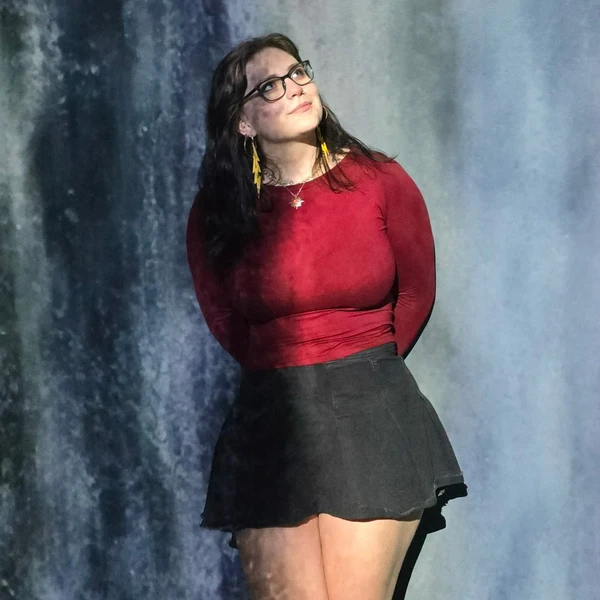
I am an undergraduate student currently studying religion, psychology, and neuroscience at Lewis & Clark College, and transferring to the University of San Diego. Music is my greatest passion, I play guitar and piano, sing, compose, produce, and write lyrics, and sharing that work with the world is my primary goal. If life takes a different path, I plan to pursue medicine, with a focus on somnology or neurology.
Outside of school, I teach swimming to students of all ages and abilities, including neurodivergent and disabled individuals. Watching someone go from fear to independence in the water is one of the most rewarding things I do. I am a strong advocate for accessibility and ADA compliance, shaped in part by growing up with a mother who has been disabled for fourteen years. Mental health awareness and intervention are causes I am deeply committed to, both personally and publicly. I lost my brother to suicide in 2019, and that loss has shaped my advocacy ever since. I am also actively involved in sobriety programs and outreach.
When I am not in the water or the studio, I am reading fantasy, working on cars, or in a Dungeons and Dragons campaign.
Education
Lewis & Clark College
Bachelor's degree programMajors:
- Neurobiology and Neurosciences
Miscellaneous
Desired degree level:
Doctoral degree program (PhD, MD, JD, etc.)
Graduate schools of interest:
Transfer schools of interest:
Majors of interest:
- Neurobiology and Neurosciences
- Music
- Religion/Religious Studies
- Research and Experimental Psychology
Career
Dream career field:
- Medicine
Dream career goals:
Make Music full time, however, if that does not work out, go to med school and become a Somnologist or Neuro surgeon
Team Member
CAVA2023 – 2023Swim Instructor
Jewish Community Center2026 – 2026Swim Instructor
Waterworks Aquatics2023 – 20252 years
Sports
Swimming
Varsity2025 – 20261 year
Research
Psychology, General
Lewis and Clark College — Lead Researcher2026 – 2026
Arts
local Lutheran church
Music2020 – 2020
Public services
Volunteering
Full Circle — volunteer2021 – 2023Volunteering
Portland Peoples Outreach Program — security, volunteer2024 – 2024
Future Interests
Volunteering
Entrepreneurship
Max Bungard Memorial Scholarship
WinnerI have been addicted to many things in life: books, Candy Crush, playing with my papa's white hair. Those things bring me back to a time when my life was complicated yet simple through a child's eyes. Nothing was right, nothing was wrong. However, my most recent addiction had profound and life-changing consequences.
I battled drug addiction from September 2021 to July 2022, using any substance within reach. I am currently 1,382 days sober. Some studies suggest that opioid and narcotic addicts typically only live seven years from the start of their addiction. During that time, I stopped going to school, became a professional liar, and nearly died from overdoses and suicide attempts. I lost all ambition and any hope for a future.
Getting sober was not something I thought I was capable of. Honestly, I did not get sober because I recognized I was destroying my life. I got sober because life was getting boring and I wanted to mix it back up. Getting sober was the new cool. I thank my brain daily for making sobriety sound appealing.
I joined a sobriety group for teenagers and finally felt like I was part of something. I was surrounded by kids who understood me and adults who acted like kids. I found pride in myself and in what we were doing together. The second I walked into that building, I knew I was getting sober and I was doing it that day. In the nine months I was in that group, I never once admitted to myself that my drug use had been a problem.
In February of 2023, I was staying with my aunt Nicole, who is an alcoholic. As a drug addict, I believed we were just alike. We got into the hot tub together. She was drunk and I had no idea. Nicole slipped under the 104 degree water and could not pull herself back up. She hit her head and would not wake up. I genuinely believed she was dead. When she came to, she insisted she was not drunk, called me crazy, then asked me if she was. I stood against the railing, covered in blood that was not my own, and made a silent promise to myself.
That moment changed me in a way nothing else could. I witnessed addiction from the outside for the first time. I felt the helplessness of watching someone you love disappear into it. I felt the anger, the forgiveness, the all-consuming fear that freezes your entire body until there is nothing left but a shell. And in that moment, I finally understood what love actually meant. Love is unconditional, and it is the largest word there is.
Sobriety has placed me in situations I never expected and forced me to rebuild my entire worldview. I accept change now. I accept the hard things and I overcome them. When difficulty returns, and it always does, I am stronger and more equipped to face it without turning to my vices. I welcome that growth because I now understand that the hardest experiences are often the most important ones.
I am dedicated to helping others overcome addiction the way I was helped with mine. I know how impossible recovery can feel from the inside, and how many people genuinely believe they are beyond help. I am passionate about proving them wrong. I want them to see the light at the end of that tunnel and come out the other side as stronger people because of it.
Harry B. Anderson Scholarship
I came to neuroscience through an unconventional path. I began my undergraduate studies focused on religion and psychology, drawn to foundational questions about belief, suffering, and human behavior. Over time, it became clear that those questions were not only philosophical in nature but deeply biological, and that realization directed me toward neuroscience as the field best equipped to address them rigorously.
My interest in the brain is not detached from personal experience. In 2019, I lost my brother to suicide. That loss has been one of the most formative forces in my academic and professional development. It drove an early and sustained interest in the neurological and psychological underpinnings of mental illness, crisis, and intervention. I have also been closely involved in sobriety advocacy and recovery programs, which has given me firsthand exposure to the ways addiction reshapes brain function and the significant barriers people face in accessing effective, neuroscience-informed care. Understanding what goes wrong in the brain, and what conditions make recovery or prevention possible, has shaped the direction of my coursework, my research, and my long-term goals.
At Lewis & Clark College, I am currently conducting a research study examining how social context influences information processing and credibility evaluation. The study compares how individuals assess news reliability, emotional compulsion to share, and conformity effects when reading alone versus in a group setting. This project introduced me to the full arc of empirical research, from study design and IRB compliance through stimulus development, data collection, and academic write-up. It confirmed that research is where I want to spend a significant portion of my career.
My work as a swim instructor has reinforced that interest from a different angle. I teach students across a wide range of ages and abilities, including neurodivergent and disabled individuals. Effective instruction in that context requires a practical understanding of how different brains acquire motor skills, regulate fear responses, and respond to varied learning environments. Watching a student move from avoidance to independence in the water is, in many ways, an observable example of neuroplasticity in action, and it has deepened my appreciation for applied neuroscience outside of traditional clinical or laboratory settings.
My intended field of study is neuroscience, with concentrated interest in somnology, neurology, and the neuroscience of addiction and recovery. Sleep, mental illness, and substance use disorders are interconnected areas of brain function that remain significantly underserved both in research and in clinical care. The mechanisms by which sleep disruption, trauma, and addiction alter neural circuitry and what interventions can meaningfully support recovery represent a research focus I find both scientifically compelling and personally urgent. My goal is to contribute to that body of knowledge, whether through academic research, clinical practice, or both.
I also pursue music seriously, as a composer, producer, guitarist, pianist, vocalist, and lyricist. I do not see this as separate from my scientific interests. Both disciplines require sustained attention to pattern, process, and the interior experience of being human. The capacity to move between them has made me a more integrative and creative thinker, and I believe that is an asset in research as much as anywhere else.
I am transferring to the University of San Diego to pursue these goals with greater focus and depth. I am prepared to do that work.