Hobbies and interests
Advocacy And Activism
Beach
Biotechnology
Volunteering
Reading
Research
Swimming
Classics
Cooking
Exercise And Fitness
Medicine
Community Service And Volunteering
Reading
Academic
Adult Fiction
Classics
Science Fiction
Romance
Fantasy
Folklore
Health
Literature
Realistic Fiction
Psychology
I read books daily
Samantha Borenstein
1x
Finalist
Samantha Borenstein
1x
FinalistBio
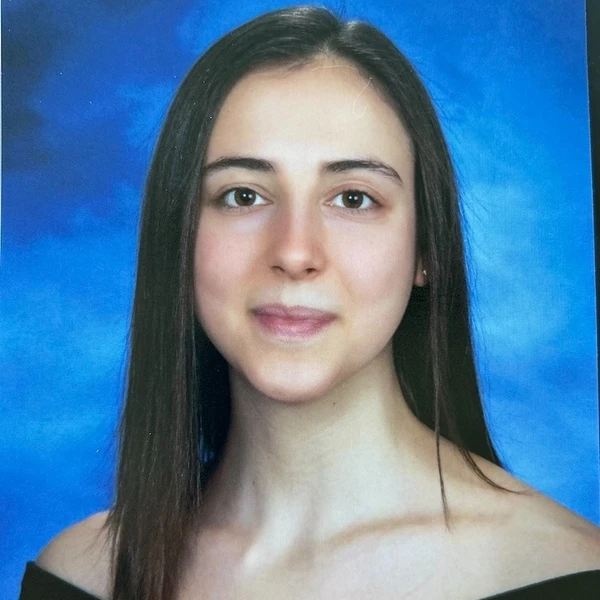
I am a medical student, and will be enrolled starting in August 2026 at Drexel University College of Medicine. I graduated from Princeton University with Honors in 2024, and was awarded Sigma Xi membership for research on hiPSCs with electrotaxis. In school, I wrote for the Princeton Public Health Review, volunteered with Princeton Health Literacy and Equity, and was the captain of the Club Swimming team. Over the last 6 years, I have volunteered thousands of hours as a tutor; I have volunteered for a foundation serving children with rare diseases since 2018; I have shadowed doctors for hundred of hours abroad and in the United States; I also worked for the last 1.5 years as a medical scribe and was a caregiver for a relative from November 2024 to March 2025.
Education
Drexel University
Doctoral degree program (PhD, MD, JD, etc.)Princeton University
Bachelor's degree programMajors:
- Biological/Biosystems Engineering
Howell High School
High SchoolMiscellaneous
Desired degree level:
Doctoral degree program (PhD, MD, JD, etc.)
Graduate schools of interest:
Transfer schools of interest:
Majors of interest:
- Medicine
Career
Dream career field:
Medical Practice
Dream career goals:
Co-Writer, Freelance, Private Project
Barrymor2022 – Present4 yearsSummer Analyst
Starwood Property Trust2024 – 2024Beach Lifeguard
Bradley Beach Lifeguarding2018 – 20224 yearsScribe Technician
CityMD2024 – Present2 years
Sports
Swimming
Club2012 – 202412 years
Research
Biological/Biosystems Engineering
Princeton University — Undergraduate Student Researcher; Senior Thesis Research2023 – 2024
Public services
Volunteering
UPchieve — Volunteer Tutor2020 – 2024Volunteering
Fighting H.A.R.D. — Fundraiser, Advocate, and Volunteer Leader2018 – Present
Future Interests
Advocacy
Volunteering
Philanthropy
Sharra Rainbolt Memorial Scholarship
One week before my college graduation, my father was diagnosed with metastatic lung cancer. What should have been a week of celebration quickly dissolved into fear. Though it was caught relatively early, the specific mutation causing it was particularly aggressive, and thus associated with poorer outcomes.
At his insistence, I moved to Miami for the two-month finance internship I had committed to; even so, I turned to research—not as a student, but as a daughter desperate to help her father live a little longer. I spent hours combing through clinical trial research, treatment protocols, and nutrition studies for cancer patients. I reached out to the rabbi at Princeton’s Chabad House; he connected me with alumni—doctors, researchers, and oncologists—whom I contacted for insight, connections, and referrals. I called my dad each night and took red-eye flights home on weekends when critical scans were scheduled.
When the internship ended, I returned home and began working as a medical scribe. Balancing a fast-paced job with MCAT studying and caregiving responsibilities taught me to remain committed, organized, and focused in unpredictable circumstances. I created color-coded medication logs between patients, folded laundry during Zoom strategy meetings for the Fighting HARD foundation, and reviewed MCAT flashcards beside my dad’s hospital bed. I divided each day into flexible blocks of time—exercising in the morning or after dinner, working, studying while my dad napped—and abandoned the schedule altogether when emergencies sent him to the ER.
After multiple hospitalizations and failed treatments, my dad passed away in March of 2025, less than a year after his diagnosis. In the final months of his life, my role shifted to that of a caregiver. I found small ways to ease his pain—cutting his food, adjusting pillows, and simply being present. Caring for him taught me what it truly means to show up for someone, to pour your soul into a cause that matters, and which is entirely unselfish.
The emotional whiplash of celebrating a successful patient procedure one moment and calling an ambulance for my dad the next strengthened my performance and steadiness under pressure. As someone who enjoys structure and routine, embracing uncertainty meant redefining my understanding of responsibility and care; it is not just reliably completing tasks, but also being a steady presence when things are tough, and showing up when nothing goes to plan. Despite exhaustion and grief, I never considered giving up or stepping away. I learned to pivot between tasks and roles without losing my sense of purpose.
Cancer had shaped my family long before my dad's diagnosis. My uncle and both of my maternal grandparents died from cancer when I was a child. While these losses are deeply felt, I was too young to fully understand the reality of illness, or the true devastation that cancer can cause. Walking alongside my father during his diagnosis and treatment gave me a far more intimate understanding of what patients and their families endure. Ultimately, these lessons will guide me through the unpredictable reality of a career in medicine, and help me provide care to diverse patients while remaining present and reliable.
Women in Healthcare Scholarship
Medicine is, to me, the highest form of commitment to others — an intricate balance of science and compassion. I have always been drawn to it, not only because of the intellectual vigor it demands and my passion for learning, but also because it offers an opportunity to aid others in their most vulnerable and meaningful moments. Physicians have a unique role: they translate complex information with empathy, offer reassurance in times of uncertainty, and advocate fiercely for the well-being of their patients. This kind of service, rooted in trust and long-term care, is the kind of impact I hope to make in my own life.
My most meaningful contributions to my community have come through my work with the Fighting H.A.R.D. Foundation, which supports children with rare diseases and chronic illnesses. Starting in high school and continuing through college, I have been involved in assembling care packages, leading volunteer teams, organizing fundraisers, and managing social media outreach. After my father passed away in March of 2025, my family and I launched a fundraising campaign in his honor, using social media and word of mouth to raise awareness and funds alike, funds which amounted to over 38,000 dollars. It was one of our most successful efforts, allowing us to help families afford medical devices, groceries, hospital bills, and more.
The impact extended far beyond financial assistance. For me, each interaction with the Fighting HARD families taught me how to listen deeply, advocate effectively, and meet people where they are—socioeconomically, emotionally, and culturally. At first, my engagement with the foundation was emotionally difficult. Many of the children are severely ill, and live lives that look remarkably different from mine. But being even a small part of their stories became one of the most rewarding and formative experiences of my life. I learned how to approach delicate situations with grace, and how true service means showing up without ego or expectation. These moments solidified my desire to pursue medicine, not as a career of prestige, but as one grounded in presence, humility, and long-term commitment to care.
This commitment to service extends into every part of my life. I volunteer as a tutor for underprivileged students, supporting them in English, mathematics, science, history, SAT prep, and college admissions. I was devoted to the Princeton Health Literacy and Equity Club, and contributed to the Princeton Public Health Review, both of which advanced important discussions around wellness and healthcare disparities. I also served as a caretaker for both my grandmother and my father through their battles with terminal lung cancer. These experiences taught me how to communicate across differences, delegate responsibilities, and act with purpose. They strengthened my emotional resilience and deepened my capacity for empathy and patience.
Service is not something I view as separate from medicine; it is the very heart of it. To be a physician is to walk alongside others during some of the most vulnerable and transformative moments of their lives. Whether I am assembling a care package, comforting a grieving parent, or one day placing a stethoscope on a patient’s chest, my motivation remains the same: to offer care that is thoughtful, equitable, and human.
Issa Foundation HealthCare Scholarship
In the summer of 2022, I participated in a virtual internship with a clinical psychologist in India, where I observed and transcribed tele-health sessions with patients from underserved communities in rural and urban Maharashtra. One group of patients stood out to me: men who had recently lost their jobs. Many were experiencing depression, anxiety, and—in many cases—homelessness. Their emotional struggles made it harder to reenter the workforce, which only deepened the cycle of despair.
What surprised me most was not their suffering, but how cultural stigma around mental health shaped their ability to seek help. Within their communities, admitting to depression or anxiety was seen as weakness, and counseling—regardless of the need for it—was often dismissed as unnecessary or shameful, making care feel inaccessible. To address this, the psychologist partnered with a career advisor and reframed the counseling sessions as “career advising with additional resources”. In practice, these sessions combined professional guidance with mental health support—including substance abuse discussion groups and meditation workshops—while avoiding the label of therapy. This approach gave patients access to crucial care in a way that preserved their dignity, reduced fear of judgment, and allowed them to begin rebuilding their lives.
Watching these men begin to heal challenged my assumptions about healthcare. I had generally imagined therapy as a straightforward process: a patient seeks help, meets a counselor, and begins treatment. This experience taught me that medicine is never one-size-fits-all, that stigma, cultural values, and resource limitations can make care inaccessible in ways I had never considered.
True healing requires more than medical knowledge; it requires adaptability and cultural humility. I came to understand that one of the most important aspects of care is whether it meets patients where they are, whether physicians offer advice and treatment on terms that a patient can accept. I also realized just how fortunate I was to grow up in a supportive, inclusive community. Many people do not have that privilege, and it reinforced my commitment to building bridges for patients who might otherwise be left behind.
As a future physician, I will carry this lesson forward; I will listen carefully to patients’ lived experiences, recognize how culture influences their health decisions, and adapt my approach so care is not only clinically sound but also accessible and respectful. Medicine is more than just treating disease—it requires understanding the person behind the illness. By approaching medicine with empathy and cultural awareness and adaptability, I hope to serve diverse patients with the dignity and compassion they deserve.