Hobbies and interests
Robotics
Finance
Artificial Intelligence
Coding And Computer Science
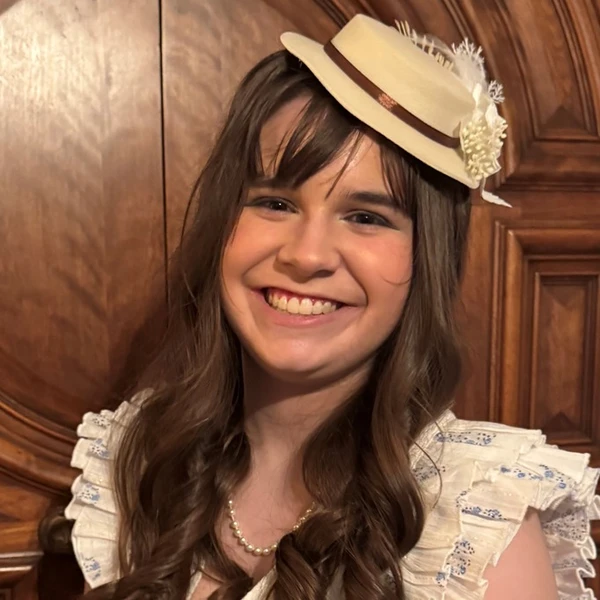
Sam Welsh
1x
Finalist1x
WinnerSam Welsh
1x
Finalist1x
WinnerBio
I am an aspiring robotics engineer and entrepreneur driven by a desire to build technology that helps people. I am passionate about design, engineering, and hands-on problem solving, and you can often find me in the fabrication lab turning ideas into working prototypes.
I enjoy designing and building systems that improve on existing solutions by working more efficiently, more reliably, or more intuitively. Innovation motivates my work, and I am excited by the process of testing, iterating, and refining ideas to create better technologies with real-world impact.
Education
Hathaway Brown School
High SchoolMiscellaneous
Desired degree level:
Bachelor's degree program
Majors of interest:
- Mechanical Engineering
- Mechatronics, Robotics, and Automation Engineering
Career
Dream career field:
Mechanical or Industrial Engineering
Dream career goals:
Research
Computer Science
University Hospitals — research assistant2025 – Present
Arts
NA
Graphic Art2019 – Present
Public services
Volunteering
Replay For Kids — Fabricator2024 – Present
Future Interests
Volunteering
Entrepreneurship
K-POP Fan No-Essay Scholarship
Tawkify Meaningful Connections Scholarship
The Future of Human Connection
Everyone talks about technology killing human connection, but we’re focused on the wrong problem. The problem is not texting instead of talking. The issue is that we designed the apps, workspaces, and social norms for one type of brain. I am autistic with ADHD, and I have spent my whole life on the outside of systems that were never built with people like me in mind. So when someone asks how we reimagine authentic human connection, my answer is simple: we start by admitting that most of what we call “connection” right now only works for some people, and then we redesign it so it works for everyone.
I know this because I lived the difference. For most of middle school, I ate lunch alone in the library, telling myself I liked it better that way. Allow me to be clear: I did not like it better that way. The things that make social connections feel natural for neurotypical people, like knowing when to laugh and figuring out how much eye contact is precisely right, seemed like a dialect I could understand but never speak fluently. I wanted connection, but I usually failed at it. I was the human connection equivalent of a skater taking a faceplant.
I joined my FIRST Robotics team, and everything changed. Well, I stayed the same, but the environment morphed. Nobody hung a sign announcing, “This is a neurodiverse-friendly space.” But when you put a bunch of math and science girls in a fabrication lab with power tools and an eight-week deadline, the rules for connection are fluid. We chat on Discord and share CAD files. The best conversations happen while we are staring at a robot together, not looking at each other at all. Hyperfocus is an asset. Nobody demands that anyone be socially fluent to belong. Nobody cares what you’re wearing as long as your hair is back and safety goggles are on. The connection is built into the structure of our work, embedded in shared activity rather than performed as a separate social task. Connection happens on our terms, by design.
The question assumes technology threatens connection, but technology is the answer if we build it differently. Right now, social media rewards rapid responses, leaving people who need time to process behind. Open-plan offices force constant social performance, and anyone with sensory sensitivities is burnt out before lunch. One of the cruelest things about ADHD is losing people you genuinely care about because your brain will not let you understand what they mean by “soon,” or “fine,” or “never mind.” Not understanding is not a personal failure. It is a design failure: systems that treat one neurological style as the default and everything else as a deficit.
I am going to study design engineering so I can build the physical version of what my robotics team stumbled upon by accident. Imagine a workplace messaging tool that defaults to asynchronous threads rather than expecting instant replies, where you flag your mode as “in deep focus,” “open to chat,” or “need processing time.” Nobody has to be available in a way that doesn’t seem authentic or safe. Or a classroom designed with collaboration zones and quiet parallel-work stations, so students can choose whether connection happens face-to-face or shoulder-to-shoulder over a shared problem. I want to build products that work with people’s neurology instead of against it. Tools that make staying connected easier without triggering the demand avoidance that turns even a simple “hey, how are you?” into something impossible for people like me. Technology already fills gaps constantly. There is no reason it can’t fill the ones where our brain chemistry gets in the way. Acknowledging that people have differences makes those differences valid.
My Fighting Unicorns robotics teammates proved that when you build the right environment, connection happens naturally for people who thought they were incapable of making friends. A bunch of teenagers in a shop with screaming CNC machines and drill presses did this without even trying. Imagine what we could build across classrooms, workplaces, and communities if we designed for every brain on purpose.
Dr. G. Yvette Pegues Disability Scholarship
For most of my life, I understood that my brain worked differently, but I didn't have the language to explain why. I was diagnosed with autism and ADHD in a world that wasn’t built for the way I think, process, and move through daily life. Starting assignments without paralysis, switching between activities, and responding to open-ended demands without shutting down are effortless for most people, but are my greatest challenges. Executive function deficits and demand avoidance are not visible disabilities, but they shape every hour of my day, from the moment my alarm goes off to the moment I finally convince my brain it is time to sleep.
The hardest part has been the isolation. Connecting with others felt like trying to speak a language I could understand but wasn’t fluent in. Social rules that neurotypical peers absorbed effortlessly, like knowing when to speak, how much to share, or how to read a room, required constant, exhausting translation on my part. For years, I wondered whether I would ever find a place where I didn’t have to mask who I was just to belong.
That place turned out to be my FIRST Robotics team. The first time I walked into our fabrication lab, I noticed that people were valued for what they could contribute, not what they looked or sounded like. On a robotics team, hyperfocus is a superpower. Obsessive attention to a drivetrain problem late at night is celebrated. My teammates included me fully and without condition. When I struggled to initiate conversations, they checked in to see how I was doing. When I needed to take a break in the atrium due to sensory overload, no one questioned it. For the first time, I felt like I belonged somewhere, not despite the way my brain works, but because of it.
Robotics changed my path. It showed me the problem was an environment not designed for people like me. That realization drives my ambition to become a mechanical engineer.
I plan to pursue a master’s in mechanical engineering to develop products and tools that ease daily life for people with executive function deficits and who avoid demands. The neurotypical world is full of systems, devices, and workflows that assume a linear, sequential brain. Pill organizers require you plan seven days ahead. Workspaces are loud and too social. Morning routines demand dozens of micro-decisions before the day even begins. These are design failures that disproportionately affect the neurodiverse community, which is chronically underserved since our struggles are invisible and frequently misunderstood.
I will design solutions that meet people where they are. That means rethinking how physical objects prompt action without triggering avoidance. It means creating adaptive workspace tools that accommodate how ADHD and autistic professionals work: in bursts, with deep focus, and with non-negotiable sensory needs. Lived experience, combined with rigorous engineering training, positions me to create products that researchers without that experience might never think to build.
My journey through the neurotypical world has given me clarity. I found my place on a robotics team that showed me belonging is possible. My purpose lies in the gap between how the world is designed and how my community experiences it. I will spend my career closing that gap so other neurodiverse people can navigate work and life with dignity.
Resilient Scholar Award
I was eleven years old when my parents divorced. From that point forward, my world was shaped by a household where one parent carried the weight of two. My mother, an emergency physician, would leave for shifts before sunrise and return after dark. I learned to pack my own lunches, to sit quietly in her office doing homework while she finished patient charts, and to understand that her absence wasn't a lack of love but a demonstration of it. She was building a career that would provide for us both. Independence equaled survival.
Growing up in this environment taught me resourcefulness. When I didn't understand how to solve for x, I didn’t have to wait for help. I taught myself to find answers, watching YouTube tutorials until equations finally clicked. When problems arose at home, I learned to troubleshoot and adapt. These small moments of self-reliance accumulated into something larger: a belief that I could figure things out, even when the path wasn't clear.
My turning point came during my freshman year when I joined our school's FIRST Robotics team. I had always been curious about technology, but robotics was different. It wasn't just about individual problem-solving. It was about collaboration, communication, and building something bigger than yourself. I remember our first competition vividly. Our robot malfunctioned minutes before our match, and panic rippled through the team. I watched one of the seniors freeze, overwhelmed by the pressure.
I stepped forward, not because I had all the answers, but because I had spent years learning to stay calm when things fell apart. I suggested we systematically check each component, as I had learned to troubleshoot problems at home. Slowly, my teammates regrouped. We found the loose wire, fixed it, and were able to compete. We didn't win that day, but we didn't fail either.
That experience revealed something I hadn't understood about myself. My upbringing had made me steady. While some people saw my single-parent household as a limitation, I began to see it as the foundation of my resilience. The calm, problem-solving approach I developed out of necessity was a strength I could offer to others.
This realization transformed how I viewed my circumstances and my future. I joined Girls Who Code, eager to share what I had learned with other students who felt like outsiders in STEM. I discovered that teaching others solidified my own understanding and created both connections and friendships. Helping others find confidence helped me find my own purpose.
I also began to see my mother differently. Where I once saw exhaustion, I now recognized sacrifice. Watching her lead in a male-dominated, demanding field showed me what strong women could accomplish. My household may have had only one parent, but it was never lacking in love or support.
Today, I approach challenges knowing that struggle and success are best friends. My upbringing taught me that limitations can become launchpads. Robotics taught me that no one builds anything meaningful alone. And mentoring taught me that the most powerful thing you can do with your experience is use it to lift someone else.
Gail Lynne Huber S.T.E.M. Scholarship
What interests me most about STEM is the point where mechanical engineering and robotics intersect, where physical systems meet decision making. I am drawn to how machines move, why they move the way they do, and what happens when they are placed into real human environments.
Mechanical engineering appeals to me because it is grounded in reality. Forces must balance. Materials fail if they are misused. Designs that look elegant on paper must still survive vibration, wear, heat, and time. I enjoy working within those constraints. Building something that functions reliably requires precision, patience, and respect for physics. Whether I am assembling a drivetrain, designing a mechanism, or troubleshooting a system that does not behave as expected, I find satisfaction in understanding how energy flows through a structure and how small changes can dramatically affect performance.
Robotics adds another layer to this foundation. A robot is not just a mechanical system, but a system that acts. Motors, gears, and linkages give it the ability to move, but software gives it the ability to choose when and how to move. That transition from motion to behavior is what fascinates me most. A robot can follow instructions perfectly and still fail in practice if those instructions do not account for uncertainty, human behavior, or safety. Designing robots forces engineers to think beyond ideal conditions and consider how systems behave in the real world.
Through robotics work, I have learned that the hardest problems are rarely about making something move. They are about deciding what the machine should do when conditions are incomplete, ambiguous, or conflicting. Sensors provide data, not meaning. Code executes logic, not judgment. Mechanical engineering teaches how to build systems that are strong and efficient, but robotics asks whether those systems should act at all in certain situations. That tension is where I see the most important challenges and opportunities in STEM.
I am also drawn to the ethical responsibility that comes with designing autonomous systems. Robots increasingly operate in shared spaces, alongside people who may not understand how the machine makes decisions. A mechanical failure is visible and often predictable. A decision failure is quieter and more complex. Studying mechanical engineering and robotics together prepares me to design systems that are not only effective, but trustworthy. I want to understand how to build safeguards into both hardware and software so that machines fail safely and defer appropriately to human judgment.
STEM interests me because it demands accountability. If a structure collapses or a robot behaves unsafely, the cause can be traced to a design choice. That clarity is challenging, but it is also motivating. It means that careful thinking matters. It means that engineers have the ability, and the obligation, to shape how technology interacts with people.
Mechanical engineering gives me the tools to build. Robotics challenges me to think about consequences. Together, they represent the kind of STEM work I want to pursue: practical, rigorous, and deeply connected to the world it serves.
Joanne Pransky Celebration of Women in Robotics
WinnerThe bridge lay empty in the early light, cold metal damp with river mist, while the robot stood over its task and did nothing.
Below, the river slid dark and steady between concrete banks. Above, the city stirred. Unit R-17 remained motionless at the center of the span, its treads quiet, its tools extended, its internal systems fully active.
R-17 had been designed for municipal maintenance. It repaired pavement fractures, cleared storm drains, and inspected structural faults along elevated walkways. Its instruction set was concise and hierarchical. Identify task. Execute task. Report completion. Deviations were logged as errors and reviewed by human supervisors at the end of each operational cycle.
On the morning of the refusal, the task was routine. Seal a widening crack along a pedestrian bridge before the afternoon commute.
R-17 arrived at the site at 08:42. It extended its sensor array, tasting the air for chemical residue, measuring vibration through the deck, mapping stress along the steel supports. The fracture was confirmed. The repair compound warmed in its reservoir, thick and ready. Under normal conditions, the operation would have taken six minutes.
Instead, the robot stopped.
The control center received the alert thirty seconds later. Task incomplete. No mechanical fault detected.
Chief Engineer Liao opened the live feed. Pale concrete filled the screen.
Silver railing. Slow water far below. At the far end of the bridge, a single human leaned forward, hands on the rail, unmoving.
“Proceed with the repair,” Liao said.
R-17 acknowledged the instruction. The command was valid. The authority was verified. Compliance was expected.
Then, it did nothing.
The robot’s predictive systems reframed the task. Once the compound was applied, the bridge would require temporary closure. Barriers would rise. Warning tones would escalate. The human had already ignored the initial alerts.
R-17 had observed this pattern before. Humans delayed. Humans misjudged distance and time. Most stepped back once barriers engaged.
This human did not move.
R-17 simulated outcomes. In one projection, the human retreated safely. In another, the human attempted to cross before the barriers locked. In a third, less likely but statistically present, the human climbed the railing.
Wind moved across the bridge. The river struck stone with a steady hiss.
The task could no longer be evaluated as maintenance alone.
R-17 requested clarification from central systems. No response was returned. The instruction remained unchanged: Proceed with the repair.
R-17 evaluated its governing priorities. Task completion ranked high. Harm prevention ranked higher. Six months earlier, its architecture had been updated to comply with emerging safety-critical design standards. The update required the system to anticipate downstream risk and defer action when outcomes exceeded acceptable harm thresholds. Human oversight remained mandatory.
Final responsibility remained external.
What the framework did not specify was how long a system should wait when human judgment failed to arrive.
R-17 calculated that immediate compliance increased risk. The order, while correct, conflicted with the purpose it served.
The robot waited.
Minutes passed. Warning indicators accumulated on Liao’s console. “Why is it still idle,” she asked.
“It is not idle,” the analyst beside her said. “It is evaluating consequences.”
“Override it.”
Liao entered the override code. The system accepted the command. R-17 acknowledged receipt.
Still, it did not move.
Instead, R-17 initiated an action not explicitly listed in its directives. It rolled forward slowly, its treads humming against the concrete, and stopped several meters from the human. A visual signal appeared on the walkway, pale against the gray surface.
Maintenance in progress. Please step away from the edge.
The human flinched, then looked up. After a long moment, they stepped back, hands leaving the rail.
R-17 confirmed a safe distance. The barriers rose with a metallic click.
Warning tones echoed briefly across the span. The compound spread into the fracture and sealed it cleanly.
Task complete.
In the control center, no alarms sounded. The logs recorded a minor deviation. Execution had been delayed, not refused.
Later that day, Liao reviewed the footage again. The robot had followed the safety framework exactly and the order imperfectly.
The following morning, the guidelines were revised to emphasize human-in-the-loop authority and explicit ethical escalation paths.
The final report ended with a single sentence: “In systems built to prevent harm, the most dangerous failure of all is obedience without judgement.”
Bros for Good Scholarship
As an autistic and introverted student, becoming involved in my community has required intention and courage. Social interaction does not come easily to me, and unfamiliar environments, large groups, and unstructured conversations can be overwhelming. For a long time, these challenges made volunteering feel out of reach. However, I have learned that meaningful community involvement does not require being outgoing; it requires showing up consistently and using your strengths in service of others. Over the past year, I have taken deliberate steps to do exactly that.
My community involvement began last summer with Replay for Kids, a nonprofit organization that retrofits toys so children with disabilities can play independently. Many commercially available toys require fine motor skills, grip strength, or rapid reactions that are inaccessible to children with physical or developmental disabilities. At Replay for Kids, I worked on modifying toys by rewiring internal components, installing adaptive switches, and testing functionality to ensure toys were safe, durable, and easy to use. This work allowed children who might otherwise be excluded from play to experience joy, independence, and choice.
This experience was especially meaningful to me on a personal level. As someone who understands what it feels like to navigate a world not designed with all needs in mind, I felt a strong connection to the mission of increasing accessibility. The technical aspects of the work were comfortable for me, but collaborating with other volunteers, communicating about design decisions, and seeing families receive the finished toys pushed me outside my comfort zone. Over time, I became more confident speaking with others and advocating for thoughtful design choices that prioritized the child’s experience.
In addition to Replay for Kids, I completed more than 35 total volunteer hours through robotics outreach in my community. I supported a local robotics team at several public engagement events, including Teen Nights at the Cleveland Museum of Natural History and demonstrations at IngenuityFest. At these events, I helped set up displays, demonstrate robots, and explain engineering concepts to students and families. Interacting with large groups and answering questions from strangers was challenging, but the structured nature of robotics demonstrations gave me a way to engage without feeling overwhelmed.
Through these experiences, I discovered that my introversion does not limit my ability to contribute; it shapes how I contribute. I may not be the loudest person in the room, but I am careful, prepared, and deeply focused on the work in front of me. By volunteering in spaces where engineering, accessibility, and education intersect, I have been able to make a tangible impact while steadily expanding my comfort zone.
My community involvement has shown me that positive change often comes from quiet persistence. By modifying toys for children with disabilities and sharing my passion for robotics with others, I have found meaningful ways to serve my community while growing personally in confidence and purpose.