Hobbies and interests
Drawing And Illustration
Reading
Academic
I read books multiple times per week
Aysia Carty
2x
Nominee1x
Finalist
Aysia Carty
2x
Nominee1x
FinalistBio
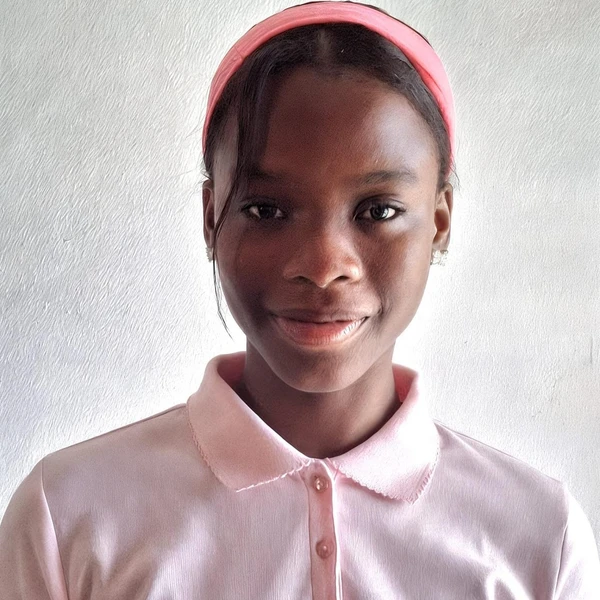
My name is Aysia, and I am an 11th grader at Ivanna Eurdora Kean High School. I aspire to become an anatomic pathologist, and I am committed to achieving this goal. Additionally, I have a strong passion for helping those around me succeed as well. I believe that we can all achieve our dreams together, and I am dedicated to making healthcare not only affordable but also easy to access.
Education
Ivanna Eudora Kean High School
High SchoolMiscellaneous
Desired degree level:
Doctoral degree program (PhD, MD, JD, etc.)
Majors of interest:
- Biology, General
- Biochemistry, Biophysics and Molecular Biology
- Microbiological Sciences and Immunology
- Neurobiology and Neurosciences
- Genetics
- Physiology, Pathology and Related Sciences
- Chemistry
- Cell/Cellular Biology and Anatomical Sciences
- Clinical/Medical Laboratory Science/Research and Allied Professions
- Biotechnology
Career
Dream career field:
Medical Practice
Dream career goals:
Anatomic Pathology
Sports
Cheerleading
Varsity2023 – Present3 years
Public services
Volunteering
Department of Health — set ups, and take downs2024 – Present
Women in Healthcare Scholarship
My grandmother spent her career as a nurse giving care to others. Then the day came when she needed care herself, and the system she had devoted her life to failed her. The treatment available in St Thomas was not working. The cost was high, and the results were minimal. Neighbors and the community around her were dying from conditions that batter access to medicine in the Virgin Islands could have treated. So she packed her life and moved to the mainland United States, leaving behind everything familiar, just to have a chance at healing. A woman who spent decades caring for patients ended up navigating a healthcare system that was too expensive, too inaccessible, and too far from home.
I watched all of this from St. Thomas, and I made a decision. I was not going to be someone who witnesses that kind of gap and does nothing about it.I am a senior at Ivanna Eudora Kean High School with a 4.0 GPA, and I have spent the last three years building toward a career in medicine with intention. I interned at the U.S. Virgin Islands Department of Health three summers in a row. I traveled to Boston for the Congress of Future Doctors. I joined the Science National Honor Society, served as president of FBLA, and have been a consistent presence in every science and leadership program available to me on this island. Every one of those steps was shaped by the same question my grandmother's story planted in me: why does where you are born determine whether you survive?
I intend to become an anatomic pathologist. It is the branch of medicine where diagnosis begins, where tissue tells the story of what is happening inside a patient's body before anyone else can see it. I chose this path because I am drawn to precision, to the idea that a careful and trained eye can find what others miss and that finding it early changes everything. In a place like St. Thomas, where specialist care is scarce and patients are often sent to the mainland for answers, a skilled local pathologist is not just valuable. She is necessary. As a woman of color pursuing one of the most demanding specialties in medicine, I understand that I will enter rooms where I am underrepresented. I also understand that my presence in those rooms matters. The patients who will one day depend on my work deserve a physician who knows what it means to live in a community where healthcare is a privilege rather than a guarantee. My grandmother taught me that without ever saying it directly. She taught me by example, first by dedicating her life to nursing, and then by having to leave her home just to stay alive.
This scholarship would directly fund my path toward becoming the kind of healthcare my island has always needed. I am not pursuing medicine to leave St. Thomas behind. I am pursuing it so I can come back better equipped to serve the people who raised me, and to make sure that the next woman who spends her life caring for others does not have to choose between her home and her health.
Ethel Hayes Destigmatization of Mental Health Scholarship
The morning that my twin sister left home for the States, I sat on the edge of my bed and stared at the wall for a long time. I did not cry right away. I just sat there to understand how the person who had been beside me for my entire life could suddenly be on the other side of the county. When the tears finally came, they did not stop for weeks. I grew up in St. Thomas, U.S Virgin Islands, in a household of eight. My mother, my grandmother, my twin, my siblings, and I shared not just a home but every struggle that came with it. For three years, my mother was without work. I watched her carry that weight quietly, the way many women in our community do, without complaint and without asking for help. I learned early that in my world, you push through. You do not talk about what hurts. You keep moving.
But silence had a cost. My older sister was diagnosed with depression and bipolar disorder, and for a long time, I did not fully understand what that truly meant. What I did understand was that she was suffering, and that people around her did not always know how to reach her. I watched her fight battles that were invisible to most people, battles that did not show up in her report card or a resume, battles that our community did not have the language to name. Watching her taught me that mental health is not a weakness of character. It is a medical reality, and pretending otherwise leaves people to suffer alone. When my twin moved away to pursue to starting of her future basketball career, I was not prepared for what her absence would do to me. I stopped eating the way I should. I cried more than I ever had. There was a grief in it that I did not know how to even start to explain because nobody had left, not really, and yet everything felt so different. For the first time in my life, I recognized what it felt like to genuinely struggle emotionally and to not have the words for it. I understood, in a small way, what my sister must have been carrying for years.
What pulled me through was not silence. It was allowing myself to feel it, talking to the people I trusted, and eventually visiting my twin so I could see with my own eyes that she was okay. That experience changed how I saw emotional pain. It is not something to outrun. It has to be met. I am now an incoming senior with a 4.0 (97.1) GPA who intends to become an anatomic pathologist. I have interned at the Department of Health, traveled to Boston for the Congress of Future Doctors, and held leadership positions in nearly every organization I have joined. None of that happened in spite of the hardship I have lived through. It happened because of what that hardship taught me about persistence, about showing up, and about the importance of caring for the whole person, not just the parts the world can see.
If I receive this scholarship, it will not remove a financial barrier that has already derailed two of my older sisters' educational paths. It will allow me to enter medicine as someone who already understands what it means to struggle quietly, to watch a loved one fight an invisible illness, and to come out on the other side with more compassion than I started with. I will carry that into every patient interaction, every diagnosis, and every oncersation I have the privilege of being in. Mental health will not be a topic I tiptoe around. It will be one I walk toward directly, because I know what it costs when we do not.