
Hobbies and interests
Tennis
Running
Guitar
Research
Community Service And Volunteering
Reading
Science Fiction
Christianity
Economics
Health
Science
I read books multiple times per week
Sae Komatsu
1x
Finalist
Sae Komatsu
1x
FinalistBio
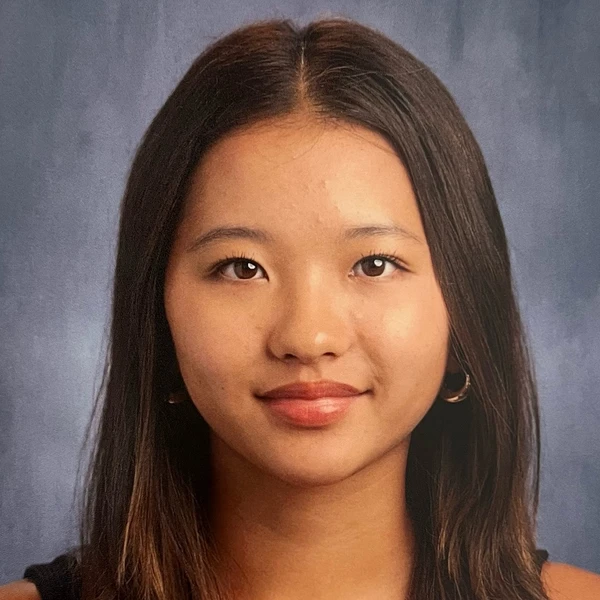
Incoming Japanese-Taiwanese UCLA student majoring in neuroscience from Seattle, WA. Passionate about advancing patient care through innovation and advocacy, while holding an interest in economics and biomedical engineering. Beyond academics, I am involved in sports leadership positions with multiple state recognitions, hospital service, independent research, and visual art, with a strong appreciation for the connection between science, creativity, and human connection.
Education
University of California-Los Angeles
Bachelor's degree programMajors:
- Neurobiology and Neurosciences
The Overlake School
High SchoolMiscellaneous
Desired degree level:
Doctoral degree program (PhD, MD, JD, etc.)
Graduate schools of interest:
Transfer schools of interest:
Majors of interest:
- Neurobiology and Neurosciences
- Mathematical Economics
- Biomedical/Medical Engineering
Career
Dream career field:
Biotechnology
Dream career goals:
Deliver customer service by preparing beverages, handling cash register, and setting up/cleaning
Tous Les Jours2025 – 20261 year
Sports
Cross-Country Running
Varsity2022 – 20253 years
Awards
- WIAA 1a State Runner-Up 2022
- 5k School Record Holder
- 2023 Districts 7th Place
- 2026 Districts 7th Place
Tennis
Varsity2023 – 20263 years
Awards
- 2024 WIAA 1A State Champions
- 2025 WIAA 1A State Champions
- 2026 WIAA 1A State Champions
Research
Neurobiology and Neurosciences
Seattle Science Foundation — Research Intern2024 – 2024Biological and Biomedical Sciences, Other
Ritsuno Clinic — Clincial and Research Assistant2025 – 2026
Public services
Volunteering
Overlake School — Taught creative expression through visual arts (photography & painting) and introductory robotics; Taught foundational algebra and math skills2023 – 2024Volunteering
Think Neuro — Developed curriculum on the nervous system (Doctor Discovery Program) and equity-driven kits; conducted targeted outreach at underserved schools throughout the US2024 – 2025Volunteering
Fundacion Aldeaz de Paz, Dominican Republic — Administered first aid and intramuscular injections; Facilitated communication with patients & English-speaking volunteers; guided patients through intake questions and symptom reporting2024 – 2024Advocacy
Blood Cancer United — Build partnerships by presenting goals/strategies to stakeholders (extended family, local businesses & national executives (e.g. Pokémon International); highlight beneficiaries' stories for donor engagement2024 – 2026Volunteering
Swedish Medical Center Cherry Hill Campus — Assisted with direct patient care tasks in the Neurotelemetry department and guided visitors in the lobby2024 – 2025
Future Interests
Advocacy
Volunteering
Entrepreneurship
Bio-Rad Washington Scholarship
A major scientific and engineering advancement I expect to emerge in the near future is high-bandwidth brain–computer interfaces (BCIs), such as the direction being developed by companies like Neuralink. While current systems can record only limited neural activity, the next generation will likely focus on dramatically increasing the number of stable recording sites while making long-term implantation in brain tissue safer and more reliable.
The central challenge is not simply accessing neural signals, but maintaining a stable interface with the brain over time. When a device is implanted, the brain recognizes it as foreign and activates immune responses involving microglia and astrocytes. These cells can surround the implant and form a dense barrier of tissue, often called a glial scar. This process increases electrical resistance at the interface and gradually reduces signal quality. A major breakthrough will come from minimizing this response through softer, more flexible electrode designs that better match the physical properties of brain tissue, as well as surface coatings that reduce protein buildup and immune cell activation.
On the neural side, these devices aim to record electrical activity produced when neurons communicate through rapid changes in membrane voltage. These signals arise from the movement of ions such as sodium and potassium across neuronal membranes, creating action potentials. In large networks, patterns of firing across populations of neurons encode movement, intention, and potentially more complex cognitive states. The next major step will be improving how these overlapping signals are interpreted. Advances in computational decoding, particularly machine learning models trained on large-scale neural datasets, may allow real-time translation of neural activity into precise motor or communicative output.
If these challenges are addressed, the medical impact could be transformative. BCIs could restore communication and movement for individuals with spinal cord injuries, amyotrophic lateral sclerosis, or stroke by bypassing damaged neural pathways. For patients who have lost the ability to speak or move, neural signals could be directly translated into text, speech, or robotic control, restoring forms of independence that are currently inaccessible. In rehabilitation settings, BCIs could also enhance recovery by reinforcing neural plasticity through feedback-driven training, strengthening the brain’s ability to reorganize after injury.
Beyond clinical applications, the global societal impact would be substantial. In healthcare, BCIs could redefine neurorehabilitation by enabling continuous interaction between neural activity and external devices, improving both diagnosis and treatment of neurological disorders. However, they would also raise new ethical and societal questions. If neural signals can be decoded with high accuracy, issues of cognitive privacy, data ownership, and mental autonomy become critical. The ability to interpret or potentially influence neural activity would require entirely new frameworks for consent and protection.
At the same time, the technology could significantly improve accessibility for individuals with severe physical disabilities, allowing them to interact with computers, communication systems, and assistive devices using only their thoughts. This could expand independence and quality of life for millions of people worldwide.
Overall, I believe brain–computer interfaces represent a convergence of neuroscience, engineering, and computation that will fundamentally change how humans interact with technology. If developed responsibly, they have the potential not only to treat neurological disease, but to redefine the boundary between the brain and external systems in ways that reshape medicine and society globally.
Rose Ifebigh Memorial Scholarship
My academic interests in neuroscience and biomedical science are centered on one goal: understanding how biological systems are connected across the brain and body, and how that understanding can be translated into treatments that improve both health and quality of life.
My interest began at a local hospital, where EEG monitoring showed me how precisely neural activity reflects dysfunction in the brain. That experience sparked a deeper curiosity about neuroscience—not only how the brain regulates sensation and behavior, but how neural signaling connects to broader physiological systems. Through a systematic review of human-induced pluripotent stem cell–derived oligodendrocyte progenitor cells, I learned how regenerative approaches aim to repair neural damage in conditions like multiple sclerosis, with experimental models showing remyelination and functional recovery. At the same time, I began to see a consistent pattern in biomedical science: even when mechanisms are understood, translation into accessible treatment is limited.
That idea became more tangible while shadowing in a neuroengineering lab, where I tested cerebral artery stent prototypes in vascular models for aneurysm intervention. I was drawn to how engineering can be applied to neurological and vascular systems, but also realized that clinical impact depends on whether treatments can be refined and distributed at scale.
This connection between neuroscience and real-world treatment became personal when I began exploring dermatology through a biomedical lens. My own experience with acne led me to think more critically about skin biology and how small molecular changes affect inflammation and healing. More importantly, it shaped how I view dermatological conditions as tied to confidence and identity. During a clinical internship in Japan, I observed patients with atopic dermatitis receiving the only consistently effective treatment available in that setting. Although I did not share their condition, I understood the emotional weight of visible skin disease—the way chronic symptoms affect how someone presents themselves, and how meaningful it is when treatment restores confidence.
What stood out to me scientifically was that this treatment relies on first-generation antihistamines, which target allergic pathways in atopic dermatitis but also act on the central nervous system, causing sedative neurological effects. These effects limit refinement and pharmaceutical investment, making many of these compounds less viable outside specific contexts. As a result, despite atopic dermatitis affecting roughly 200 million people worldwide, therapeutic advancement remains uneven and geographically concentrated. This intersection of neuroscience and dermatology clarified my academic direction: I want to study how neurological signaling and pharmacology intersect in systemic conditions, and how that knowledge can improve treatment design.
I am particularly interested in approaches such as biased signaling, which selectively target inflammatory pathways while minimizing neurological side effects. To me, this reflects the kind of interdisciplinary thinking I want to pursue—where neuroscience informs improvements in treatments for conditions that affect both the physical body and the mind.
Beyond research, I have seen how education strengthens impact. Through a digital health science internship, I helped teach neuroscience concepts to middle school students, reinforcing that scientific literacy empowers individuals to better understand their health. My involvement in a student-led blood cancer organization further showed how community advocacy and fundraising directly support medical progress and patient care.
My academic and career goals are currently focused on working at the intersection of neuroscience and dermatology, to advance biomedical understanding of conditions like atopic dermatitis while making treatments more accessible.
Receiving this scholarship would allow me to pursue rigorous study and research without financial limitation. More importantly, it would support my goal of contributing to a healthcare system where advances in neuroscience and dermatology are translated into treatments that restore both health and confidence for patients worldwide.
Hines Scholarship
Going to college, for me, means entering a space where curiosity is refined into purpose—where the questions I have about diseases and healing can be explored with depth, rigor, and real-world impact. It represents not just academic advancement, but the beginning of my responsibility to turn interest into contribution.
My academic interests began at a local hospital, where EEG monitoring showed me how precisely neural activity can reflect dysfunction in the brain. That experience led me to a deeper fascination with neurological disease, from demyelination in multiple sclerosis to disrupted signaling pathways that impair basic function. Through a systematic review on human induced pluripotent stem cell–derived oligodendrocyte progenitor cells, I learned how research is actively working toward repairing neural damage, with experimental models showing meaningful remyelination and functional recovery. At the same time, I began to understand that scientific progress alone is not enough if it does not translate into accessible care.
That idea became clearer while shadowing in a neuroengineering lab, where I tested cerebral artery stent prototypes in vascular models for aneurysm intervention. I was drawn to the precision of engineering applied to medicine, but also to the reality that even promising innovations depend on successful translation into clinical practice and equitable access for patients.
My understanding of healthcare also became personal through my experience with acne. What began as frustration with ineffective treatments became a way of thinking more scientifically about skin biology and molecular interactions. More importantly, it shaped how I understand visible conditions as deeply tied to confidence and identity. During a clinical internship in Japan, I observed patients with atopic dermatitis receiving the only consistently effective treatment available in that setting. Although I did not share their condition, I related to the emotional weight of visible skin disease and the transformation that occurs when symptoms become manageable again. Seeing patients regain comfort in their own skin reframed healing for me as something that extends beyond physical recovery into emotional restoration.
At the same time, I learned that this treatment remains limited in global availability, despite atopic dermatitis affecting roughly 200 million people worldwide. That disparity reinforced my desire to pursue a future in which scientific advances are not only developed, but made accessible. I am particularly interested in approaches such as biased signaling, which aim to target disease pathways more precisely while minimizing side effects, reflecting my belief that innovation in healthcare should prioritize both effectiveness and accessibility.
To me, college is where I hope to develop the tools to pursue this work seriously through rigorous study in the biological sciences, exposure to interdisciplinary thinking, and opportunities to engage in research that connects laboratory discovery with patient care. I also see it as a place to continue growing as someone who values communication and education, whether through leadership or outreach.
Ultimately, what I am trying to accomplish through college is to prepare myself to contribute meaningfully to healthcare—not only by advancing scientific understanding of disease, but by helping ensure that the benefits of that understanding reach the patients whose lives depend on it, restoring not only health, but confidence and dignity as well.
Our Destiny Our Future Scholarship
I chose to pursue a degree in healthcare because I am drawn to the space where scientific discovery directly reshapes human experience.
My interest began at a local hospital, where EEG monitoring showed me how precisely neural activity can reflect dysfunction in the brain. That experience sparked a deeper curiosity about how biological systems fail and how they can be repaired, from neurological disorders involving disrupted signaling to conditions like multiple sclerosis, where damage to myelin impairs basic function. Through a systematic review on human induced pluripotent stem cell–derived oligodendrocyte progenitor cells, I learned how research is actively working toward repairing that damage, with experimental models showing meaningful remyelination and functional recovery. At the same time, I began to recognize a gap that exists beyond the science itself: even when promising therapies exist, they do not always reach the people who need them.
That gap became more tangible while shadowing in a neuroengineering lab, where I tested cerebral artery stent prototypes in vascular models for aneurysm treatment. I was inspired by the precision of engineering applied to medicine, but also aware that clinical impact depends not only on innovation, but on whether those innovations can be safely and widely implemented in real patients.
My perspective on healthcare also became personal through my experience with acne. What began as frustration with ineffective treatments became a way of thinking more scientifically about skin biology and molecular interactions. More importantly, it shaped how I understand visible conditions—not just as medical issues, but as experiences that affect confidence and how someone moves through the world. During a clinical internship in Japan, I observed patients with atopic dermatitis receiving the only consistently effective treatment available in that setting. Although I did not share their condition, I deeply related to the emotional impact of visible skin disease and the way effective treatment can restore comfort in one’s own identity. Watching patients regain that sense of confidence reframed healthcare for me as something that extends beyond treating symptoms to restoring how people see themselves.
At the same time, I became aware that this treatment remains limited in global availability, despite atopic dermatitis affecting roughly 200 million people worldwide. That disparity reinforced my desire to enter healthcare not only as a provider or researcher, but as someone committed to improving access and expanding the reach of effective treatments. I am especially interested in approaches like biased signaling, which aim to target disease pathways while minimizing side effects, reflecting my belief that healthcare should strive for both precision and accessibility.
As a woman in healthcare, I hope to contribute to a field that has historically underrepresented women in leadership and research by actively shaping spaces that are more inclusive, collaborative, and patient-centered. Through my experiences in education outreach and a student-led blood cancer organization, I have seen how communication, empathy, and organization can directly expand the impact of science beyond traditional academic spaces. I want to bring those same values into healthcare—helping patients feel heard while also contributing to systems that make care more equitable.
Ultimately, I am pursuing healthcare because I want to be part of a field where science becomes human—where research, treatment, and education come together to not only improve outcomes, but restore confidence and access to care for patients worldwide.
Women in Healthcare Scholarship
I chose to pursue a degree in healthcare because I am drawn to the space where scientific discovery directly reshapes human experience—where understanding disease is inseparable from restoring quality of life, confidence, and dignity.
My interest began at a local hospital, where EEG monitoring showed me how precisely neural activity can reflect dysfunction in the brain. That experience sparked a deeper curiosity about how biological systems fail and how they can be repaired, from neurological disorders involving disrupted signaling to conditions like multiple sclerosis, where damage to myelin impairs basic function. Through a systematic review on human induced pluripotent stem cell–derived oligodendrocyte progenitor cells, I learned how research is actively working toward repairing that damage, with experimental models showing meaningful remyelination and functional recovery. At the same time, I began to recognize a gap that exists beyond the science itself: even when promising therapies exist, they do not always reach the people who need them.
That gap became more tangible while shadowing in a neuroengineering lab, where I tested cerebral artery stent prototypes in vascular models for aneurysm treatment. I was inspired by the precision of engineering applied to medicine, but also aware that clinical impact depends not only on innovation, but on whether those innovations can be safely and widely implemented in real patients.
My perspective on healthcare also became personal through my experience with acne. What began as frustration with ineffective treatments became a way of thinking more scientifically about skin biology and molecular interactions. More importantly, it shaped how I understand visible conditions—not just as medical issues, but as experiences that affect confidence and how someone moves through the world. During a clinical internship in Japan, I observed patients with atopic dermatitis receiving the only consistently effective treatment available in that setting. Although I did not share their condition, I deeply related to the emotional impact of visible skin disease and the way effective treatment can restore comfort in one’s own identity. Watching patients regain that sense of confidence reframed healthcare for me as something that extends beyond treating symptoms to restoring how people see themselves.
At the same time, I became aware that this treatment remains limited in global availability, despite atopic dermatitis affecting roughly 200 million people worldwide. That disparity reinforced my desire to enter healthcare not only as a provider or researcher, but as someone committed to improving access and expanding the reach of effective treatments. I am especially interested in approaches like biased signaling, which aim to target disease pathways while minimizing side effects, reflecting my belief that healthcare should strive for both precision and accessibility.
As a woman in healthcare, I hope to contribute to a field that has historically underrepresented women in leadership and research by actively shaping spaces that are more inclusive, collaborative, and patient-centered. Through my experiences in education outreach and a student-led blood cancer organization, I have seen how communication, empathy, and organization can directly expand the impact of science beyond traditional academic spaces. I want to bring those same values into healthcare—helping patients feel heard while also contributing to systems that make care more equitable.
Ultimately, I am pursuing healthcare because I want to be part of a field where science becomes human again—where research, treatment, and education come together to not only improve outcomes, but restore confidence, dignity, and access to care for patients worldwide.
Zachary Scheppat Memorial Science Scholarship
I hope to shape a career in research science and science education that bridges a gap I have seen repeatedly: scientific progress often advances faster than its ability to reach and meaningfully impact the people who need it most.
My interest in the brain began at a local hospital, where EEG monitoring revealed how precisely neural activity can reflect dysfunction. That early exposure grew into a deeper fascination with neurological disease mechanisms, from demyelination in multiple sclerosis to disrupted signaling pathways in degenerative disorders. Through a systematic review of human-induced pluripotent stem cell–derived oligodendrocyte progenitor cells, I saw how emerging therapies can restore function by remyelinating damaged neurons, with differentiation efficiencies ranging from 45% to 78% in experimental models. Yet even as these advances show promise, their translation into accessible treatments remains limited.
That gap became more tangible while shadowing in a neuroengineering lab, where I tested cerebral artery stent prototypes in silicone vascular models for aneurysm intervention. I was drawn not only to the precision of engineering applied to biology, but also to the realization that innovation only matters if it can reliably reach patients in clinical settings.
I began to understand this more personally through my own experience with acne. What started as frustration with ineffective treatments became a way of thinking scientifically about skin biology and molecular interactions. More importantly, it shaped how I view visible conditions and their emotional weight. During a clinical internship in Japan, I observed patients with atopic dermatitis receiving the only consistently effective treatment available in that setting. Although I did not share their condition, I related to the impact of visible skin disease—the way it affects confidence, identity, and willingness to engage with the world. Seeing patients regain comfort in their own skin reframed healing for me as something that extends beyond physical symptoms into emotional restoration.
However, I also learned that this treatment remains limited in global availability, despite atopic dermatitis affecting roughly 200 million people worldwide. That imbalance between need and access clarified the kind of impact I want to have: advancing therapies that are not only effective, but scalable and accessible beyond isolated clinical settings. I am particularly interested in approaches such as biased signaling, which aim to target disease pathways while minimizing side effects, reflecting a broader goal of precision in treatment without unnecessary compromise.
Alongside research, I have seen how knowledge itself can be a form of access. Through a digital health science internship, I helped design and teach neuroscience lessons to middle school students with limited exposure to advanced science education. My involvement in a student-led blood cancer organization further showed me how scientific progress depends on community support, fundraising, and advocacy that sustains research beyond the lab.
Ultimately, I hope to build a career where research and education work together to close the distance between discovery and lived experience. As a scientist, I want to contribute to developing therapies for neurological and immunological diseases that are not only innovative, but truly accessible. As an educator, I want to ensure that scientific knowledge reaches beyond academic spaces so that patients and communities can better understand and benefit from it.
Forever90 Scholarship
I first understood what service truly meant not in a classroom or lab, but in a hospital room where I could not fix anything on my own. Standing beside patients and families in moments of uncertainty, I realized that service is not defined by grand gestures—it is defined by responsibility and the willingness to act when someone is vulnerable. Since then, I have tried to build a life rooted in that understanding, using research, education, and leadership as ways to serve others with both empathy and action.
My experiences in medicine and research have especially shaped how I hope to serve in the future. As a research intern at the Seattle Science Foundation, I conducted a systematic review on stem cell therapies for progressive multiple sclerosis, studying how iPSC-derived oligodendrocyte precursor cells could potentially restore myelin and improve neurological function. I also gained exposure to neurosurgical techniques and scientific communication, learning how research decisions ultimately connect to patient outcomes. Later, at UCLA-affiliated research labs, I studied healthcare disparities, healthcare quality, and neurovascular devices for aneurysm treatment. These experiences showed me that scientific discovery is not abstract; it is deeply tied to human lives, and its greatest value is realized when it is used to reduce suffering and expand access to care.
Direct clinical and community service reinforced this perspective. As a volunteer at Swedish Medical Center’s Neurotelemetry department, I assisted with patient care tasks such as transporting patients, restocking supplies, and supporting families navigating the hospital environment. I learned that small actions—offering directions, staying patient during stressful moments, or simply listening—can meaningfully ease fear and confusion. In the Dominican Republic, I worked in underserved community clinics alongside medical staff, helping with intake questions, first aid, and communication between patients and English-speaking volunteers. These experiences taught me that effective service in healthcare requires cultural humility and the ability to meet people where they are, especially when systems of care are limited.
Beyond clinical settings, I have worked to serve my community through leadership and education. As co-leader of Blood Cancer United, I helped raise over $20,000 for patient support and research by organizing campaigns, coordinating a 5K community run, building partnerships, and sharing patient stories to encourage donor engagement. Through Think Neuro, tutoring programs, museum camps, and children’s ministry at my church, I have supported younger students by making education more accessible and engaging, especially in STEM subjects. Teaching children in both academic and community settings has shown me that service is not only about addressing immediate needs, but also about building confidence and long-term opportunity.
Across all of these experiences, I have learned that service is most meaningful when it is consistent and intentional. Whether supporting patients, mentoring students, or organizing community events, I have seen that impact comes from showing up repeatedly and using whatever skills I have to uplift others. Service is not a single role I play, but a responsibility I carry in every environment I enter.
My education will allow me to continue expanding this commitment. I hope to pursue neuroscience and medicine so I can contribute to treatments for neurological disease while providing compassionate patient care. I also hope to address inequities in healthcare and education by mentoring future students and expanding access to scientific opportunity. Ultimately, I aim to use my education not for personal achievement alone, but as a tool to strengthen communities and serve those who need it most.