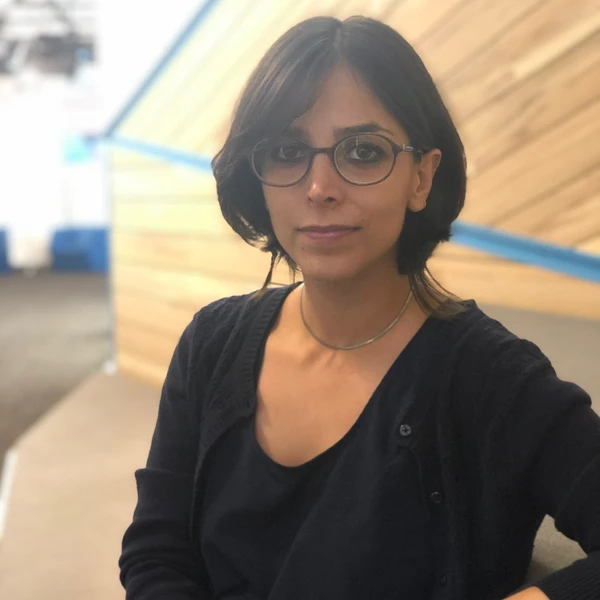
user profile avatar

Saba Yazdanian

1x

Finalist

General information

Hobbies & Interests

  • Clinical Psychology
  • Psychology
  • Human Rights
  • Politics and Political Science
  • Meditation and Mindfulness
  • Psychiatry
  • Media Studies
  • Social Work
  • Social Sciences
  • Social Justice
  • Sociology
  • Acting And Theater
  • Yoga
  • Teaching
  • Botany

Reading

  • Psychology
  • Humanities
  • Politics
  • Spirituality
  • Philosophy
  • Art
  • Contemporary

I read books multiple times a week.

Bio

I am an incoming Master of Social Work student at Hunter College in New York with a passion for mental health, human behavior, and community service. As an immigrant, I have experienced the challenges of adapting to a new country, language, and culture, which inspired me to pursue a career supporting others through life’s transitions. My background includes teaching yoga to adults, teaching Farsi to children, volunteering in meditation communities, and working with diverse populations. I am committed to promoting emotional well-being, social justice, and meaningful human connection, and I hope to build a career as a clinical social worker serving individuals and families from diverse backgrounds.

Education

CUNY Hunter College

Master's degree program

2026 – 2028

Majors:
  • Mental and Social Health Services and Allied Professions
  • Clinical, Counseling and Applied Psychology
  • Psychology, General
  • Social Work
GPA3.7 GPA

CUNY Hunter College

Bachelor's degree program

2017 – 2020

Majors:
  • Film/Video and Photographic Arts
GPA3.7 GPA

Miscellaneous

Desired degree level:
Master's degree program
Graduate schools of interest:
CUNY Hunter College
Majors of interest:
Mental and Social Health Services and Allied Professions, Clinical, Counseling and Applied Psychology, Social Work, Research and Experimental Psychology, Visual and Performing Arts, Other, Film/Video and Photographic Arts, Arts, Entertainment, and Media Management, Psychology, General, Psychology, Other
Desired degree modality:
Full-Time
Medical school interest:
No

Career

Miscellaneous

Dream career field:
Mental Health Care
Dream career goals:
Trauma Therapy
Work experience:
8 years
Has nursing license:
No

Military

Branch of interest:
Not interested
Samantha Kolesnik Survivor Justice Scholarship: Fighting Rape by Deception
Consent is only meaningful when it is informed and freely given. When someone deliberately lies about a fact that is fundamental to another person’s decision to have sex, they are not obtaining genuine consent—they are manipulating it. In my view, this is not simply deception or a private dispute. It is a violation of a person’s bodily autonomy. As a future clinical social worker, I hope to work with survivors of trauma and interpersonal violence. I have learned through my own study of psychology, human behavior, and meditation that trauma is not defined only by physical force. Psychological manipulation, betrayal, and coercion can leave wounds that affect a person’s sense of safety, trust, and identity for years. When the legal system fails to recognize these experiences, survivors may experience a second injury: the feeling that what happened to them does not matter. If I were presenting testimony before a state legislative committee, my central argument would be simple: consent obtained through intentional deception about a material fact is not informed consent. Our laws already recognize that fraud can invalidate agreements in areas such as contracts, medicine, and finance. We understand that a person’s agreement is not meaningful when it is based on deliberate misrepresentation. The same principle should apply when the decision concerns one’s own body. Recognizing rape by fraud or rape by deception does not mean criminalizing every lie told in a relationship. The law can define these offenses narrowly by focusing on intentional deception about material facts that directly determine a person’s willingness to engage in sexual activity. This creates accountability for predatory conduct while avoiding overbroad interpretations. Beyond legislation, I believe communities need better education about consent. Many people still think of consent as a simple “yes” or “no,” but genuine consent also requires honesty, respect, and autonomy. As a social worker, I hope to contribute to public education, collaborate with advocacy organizations, and support survivors in navigating both the mental health and legal systems. Mental health professionals can also help policymakers understand the long-term psychological effects of coercion and deception, ensuring that laws are informed not only by legal theory but also by trauma research. Justice should evolve as our understanding of harm evolves. Recognizing rape by fraud and rape by deception would affirm an essential principle: every person has the right to make informed decisions about their own body. Protecting that right strengthens trust in the legal system, supports survivors, and reinforces the fundamental value of human dignity.
Learner Mental Health Empowerment for Health Students Scholarship
Mental health is important to me because it shapes how people experience every part of life: their relationships, education, work, sense of belonging, and ability to hope for the future. I believe that when people have access to emotional support and feel understood, they are better able to overcome challenges and build meaningful lives. This belief is what led me to pursue a Master of Social Work at Hunter College, where I hope to become a clinical social worker dedicated to helping individuals and families improve their mental well-being. Growing up in Iran and later immigrating to New York gave me a unique perspective on the emotional challenges that many people experience. Building a new life in a different country meant adapting to a new language, culture, and social environment while navigating uncertainty and financial pressures. Those experiences helped me understand how stress, isolation, and major life transitions can affect mental health. They also taught me the importance of empathy, community, and having someone who listens without judgment. For many years, I have been drawn to activities that promote emotional well-being. I taught yoga to adults, where I saw how movement, breathing, and mindfulness could help people manage stress and reconnect with themselves. I also taught Farsi to children, creating a welcoming environment where they could learn while maintaining a connection to their language and culture. In addition, I have volunteered extensively in meditation communities, serving in leadership roles that involved organizing courses and supporting participants from diverse backgrounds. These experiences reinforced my belief that healing often begins when people feel safe, respected, and genuinely heard. I have also developed a deep interest in psychology, psychoanalysis, and human behavior. I enjoy understanding why people think, feel, and relate to others the way they do. Over time, I realized that I wanted to move beyond studying human stories through film and instead work directly with people during some of the most important moments of their lives. Social work allows me to combine intellectual curiosity with compassionate service, and I cannot imagine a more meaningful career. To me, advocating for mental health means helping reduce stigma and making support more accessible. Every conversation that encourages someone to seek help, every welcoming environment that reduces shame, and every act of compassionate listening contributes to a healthier community. I hope to work with immigrants and other underserved populations, providing culturally sensitive care while helping people recognize their own strengths and resilience. Receiving this scholarship would reduce the financial burden of graduate school and allow me to devote more time to my education, clinical training, and community service. More importantly, it would support my goal of becoming a therapist who empowers others to heal, grow, and build lives grounded in hope, dignity, and meaningful human connection. I hope that throughout my career I can help create communities where seeking mental health support is viewed not as a weakness, but as an act of courage and self-respect.
Saba Yazdanian Student Profile | Bold.org