Hobbies and interests
Aerospace
Badminton
Beading
Bowling
Billiards
Cheerleading
Coding And Computer Science
Engineering
Foreign Languages
Geography
Jewelry Making
Lacrosse
Modeling
National Honor Society (NHS)
Music
Mythology
Pickleball
Robotics
Roller Skating
Sleeping
Softball
Shooting
Shopping And Thrifting
Spanish
Sports
STEM
Student Council or Student Government
Volleyball
YouTube
Crocheting
Reading
Adult Fiction
Chick Lit
Folk Tales
Short Stories
Sports and Games
I read books multiple times per week
Shaunah Boone
1x
FinalistShaunah Boone
1x
FinalistBio
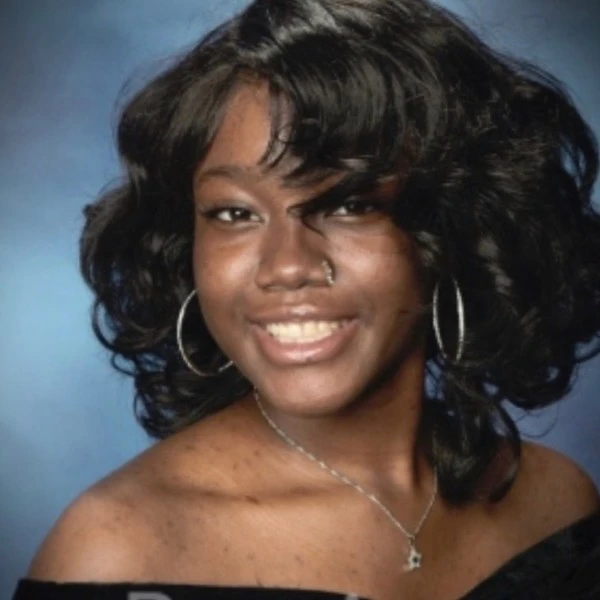
Hi! My name is Shaunah Boone, and I am a high school student from Washington, D.C. with a deep passion for engineering and technology!
Inspired by Hidden Figures, I plan to pursue mechanical and aerospace engineering with a focus on systems design and applied problem solving. I balance a rigorous academic course load with leadership in engineering programs and student government while maintaining a top GPA in my class.
After earning my degree, I plan to gain industry experience in aerospace and defense to sharpen my technical skills and professional confidence, and then launch my own technology startup focused on innovative, scalable engineering solutions! Through internships, research, and community service, I am committed to using STEM to create impact and expand opportunity!
Education
Dunbar Hs
High SchoolMiscellaneous
Desired degree level:
Doctoral degree program (PhD, MD, JD, etc.)
Majors of interest:
- Architectural Engineering
- Biochemical Engineering
- Computer Science
- Engineering Mechanics
- Mathematics and Computer Science
- Mechatronics, Robotics, and Automation Engineering
- Entrepreneurial and Small Business Operations
Career
Dream career field:
Aviation & Aerospace
Dream career goals:
To become the first to do something in aerospace / Gain good industry experience before becoming a tech startup founder
Engineering Intern
Raytheon Technologies2025 – 2025
Sports
Bowling
Club2022 – Present4 years
Awards
- Citywide Champions
Volleyball
Club2021 – Present5 years
Awards
- Most Valuable Player
- Best Attitude
- Best Defensive Player of the Year
Cheerleading
Club2021 – 20232 years
Awards
- Championship Champions, Citywide Champions
Research
Aerospace, Aeronautical, and Astronautical/Space Engineering
Massachusetts Institute of Technology — Independent Student Researcher2025 – 2026
Arts
Massachusetts Institute of Technology
Architecture2025 – 2026
Future Interests
Advocacy
Volunteering
Philanthropy
Entrepreneurship
Learner Calculus Scholarship
Growing up, math was never easy for me, but it became especially difficult because of the teachers I had. One of my earliest experiences left a lasting impression. I had a teacher who told me I was too smart for her to teach anything and then proceeded to ignore me in class. She often marked my work wrong for no clear reason, which made me feel frustrated and invisible. Instead of encouraging me, she made me doubt my abilities. For a long time, I thought maybe I was just not cut out for math, and I carried that feeling with me.
Despite that rocky start, I kept pushing forward. I moved on to a teacher who taught me algebra 2 and pre-calculus, and that completely changed my experience. She explained concepts in ways that made sense, encouraged me to ask questions, and genuinely helped me understand the logic behind the formulas. For the first time, I felt confident in my abilities. I realized that math was not inherently impossible, and that having a teacher who believed in me made all the difference.
Now, I am attempting calculus, which has been a mix of excitement and frustration. My current teacher is in her first year teaching, and I have struggled to grasp the material because her explanations are unclear and the class lacks structure. I even had to drop the course recently because I could not keep up despite my effort. This experience has been discouraging, but it has also taught me the value of perseverance and self-advocacy. I am now self-studying calculus with the help of my community. Friends, mentors, and online resources are guiding me, and I am finding ways to understand concepts on my own. I am not giving up. I am paving a path for myself, learning to take control of my education even when circumstances are difficult.
These experiences have shaped my perspective on calculus and its importance in the STEM field. Calculus is more than just a set of equations; it is a language that describes change, relationships, and patterns in the world around us. It is a tool that allows scientists and engineers to model real-world problems, from designing structures to predicting data trends. Experiencing both supportive and ineffective teaching has shown me that calculus is not just about memorizing formulas, but about learning how to think critically and solve complex problems.
Calculus is essential for STEM because it trains students to analyze and understand dynamic systems. In engineering, it is used to calculate forces, optimize structures, and design efficient systems. In computer science, calculus underlies algorithms and machine learning models. In the sciences, it explains motion, chemical reactions, and population growth. Without calculus, these fields would be limited in their ability to innovate and solve real problems.
Even though my path to calculus has been bumpy, I am determined to continue. Overcoming difficult experiences with teachers has made me resilient and taught me the value of persistence. It has also reinforced why calculus matters: it equips students with the tools to approach challenges methodically, think critically, and solve problems creatively. With the support of my community and my own dedication, I am turning obstacles into opportunities and laying the groundwork for success in STEM.
Ojeda Multi-County Youth Scholarship
Growing up in the inner city taught me the importance of using my voice. I learned early that I could not always rely on others to advocate for me, and if I stayed silent, opportunities could easily pass me by. Speaking up became a tool for survival and for creating change in my own life. What is ironic is that in many inner-city communities, people are told to speak up but also warned not to stand out, which can feel contradictory and even a little funny. Navigating this tension taught me how to assert myself thoughtfully and strategically while still staying connected to my community.
One of the biggest challenges I faced was the lack of academic resources in my schools. Our libraries were small and outdated, and advanced classes were often full or unavailable. I quickly realized that if I wanted to succeed, I needed to take initiative. I began using online resources, attending free community programs, and seeking guidance from teachers and mentors outside of school. I learned to advocate for myself by asking for help, requesting access to materials, and finding ways to supplement my education. This determination allowed me to maintain a strong GPA and prepare for college even when resources were scarce.
Another challenge was balancing academics with extracurricular activities and part-time work. I joined sports teams, clubs, and volunteer programs to develop leadership skills and build experience. At times it was overwhelming, but these experiences taught me time management, discipline, and resilience. Playing on the tennis team helped me learn focus and perseverance while volunteering with youth programs taught me the value of giving back to the community. Each responsibility pushed me to grow stronger and more organized.
Growing up in the inner city also meant learning to navigate financial challenges. Many families in my community struggled to cover basic necessities, and I knew college could easily feel out of reach without planning. I researched scholarships, completed applications, and sought out every opportunity to reduce the financial burden on my family. Learning to navigate these systems early gave me confidence and a sense of control over my future.
Despite these obstacles, I have maintained a positive outlook and a strong commitment to my goals. Each challenge became a lesson in resilience and self-reliance. I have learned that perseverance and creativity are essential when resources are limited. I am proud of the work I have done to advocate for myself, pursue leadership opportunities, and contribute to my community. These experiences have shaped my ambition and prepared me for the demands of higher education.
This scholarship would help me cover tuition and books, ensuring that financial barriers do not prevent me from reaching my goals. I am determined to be the first in my family to graduate from college, and I want to use my education to give back to the community that shaped me. Growing up in the inner city has taught me the value of perseverance, self-advocacy, and hope. I am ready to take the next step and turn the challenges I have faced into opportunities for growth, success, and contribution.
Love Island Fan Scholarship
Challenge Name: Mirror, Mirror…
Description:
Mirror, Mirror… is a Love Island challenge designed to test emotional intelligence, communication, and connection — without speaking. Islanders are paired with their partners and navigate a mirrored maze while silently acting out emotions and scenarios drawn from challenge cards, such as “You just found out your partner flirted with someone else” or “You’re hiding a secret from your partner.”
The partner on the “truth podium” must guess the emotions and intentions using only facial expressions and body language. Hidden mirrors and cameras introduce chaos, giving Islanders subtle cues about others’ reactions. Occasional “mirror swaps” switch roles mid-challenge, forcing participants to read someone they’re not currently partnered with.
Scoring:
-Accuracy: Correctly guessing the emotion/intent = 10 points
-Creativity: Expressiveness of the acting partner = 5 points
-Stealth Bonus: Noticing subtle cues from hidden mirrors = 5 points
Reward:
-The winning pair receives a private, romantic sunset date.
-The pair with the lowest points must re-couple for 24 hours under secret conditions, creating drama and tension.
Why It Works:
This challenge promotes romance and strategy. Misreads and hidden cameras create tension and silent acting encourages true connection. Creative expression tests both emotional intelligence and performance skills while keeping the high-stakes drama Love Island fans love🔥👀.
Harvest Scholarship for Women Dreamers
Some say the stars are just holes poked into the floors of heaven to guide you home. Some say they are just balls of gas burning endlessly in the vastness of space. But to me, the stars have always felt like whispers from the universe, reminding me of the impossible things I can reach if I try.
I was seven years old when I first looked through a telescope I had received for Christmas. A single star shone back at me, and for the first time, I understood what it meant to dream big. I wanted to know what held stars up, why some shone brighter than others, and most of all, how I could reach them. That spark, curiosity, wonder, and a refusal to settle for limits, has driven me ever since.
My “Pie in the Sky” goal is to build a technology company focused on aerospace innovation and sustainability. I want to create solutions that make space exploration safer, cleaner, and more accessible. I don’t just want to study the stars; I want to help humanity reach them responsibly. It is ambitious, and at times it feels just out of reach, but it is a dream I cannot ignore.
I have already begun taking steps toward this goal. I completed a hands-on engineering internship with RTX, where I led a passion project focused on mitigating space debris. I conducted research, iterated designs, and presented my findings, gaining firsthand experience in industry problem solving. I also mentor students of all ages through the Greater Washington Urban League, teaching coding in Scratch and helping young learners design their own games. These experiences have shown me the power of community and collaboration and how sharing knowledge multiplies impact.
To reach my goal, I plan to pursue dual degrees in aerospace engineering and robotics, gain industry experience, and continue building projects that merge creativity and technical expertise. I aim to create mentorship programs that support young women in STEM, ensuring that the next generation sees themselves in spaces where they are underrepresented. I know that achieving this dream will require persistence, courage, and the ability to learn from failures. But I also know that the first step is daring to say it out loud.
The Harvest Scholarship represents more than financial support; it represents the belief that bold dreams deserve attention, care, and action. With this support, I will continue reaching for the stars while helping others see the sky is within their reach too. Every step I take, every program I build, and every student I mentor is a way of turning what feels just out of reach into something real. I want to live a life that proves a seven-year-old girl, staring at a star, that dreaming boldly is always worth it.
Learner Mental Health Empowerment for Health Students Scholarship
Mental health has been a constant presence in my life, both personally and in the community around me. I have misophonia, a condition that makes certain sounds such as chewing, pen clicks, and squeaks trigger intense reactions. Navigating school and social settings with this challenge has taught me resilience, self-awareness, and empathy for others whose struggles are invisible. Growing up in low-income schools, I saw firsthand how students coped with stress, hunger, and anxiety without access to support. Mental health challenges were often ignored or hidden because that was all people knew.
My mother, a marriage and family therapist, shaped how I view mental health as both personal and communal. Watching her conduct therapy sessions and guide families taught me the importance of listening, creating safe spaces, and normalizing difficult conversations. These lessons became more concrete during my first dual enrollment class, positive psychology, where I studied experiments on behavior and reinforcement.
We explored Pavlov and his classical conditioning experiments with dogs, and other studies that examined positive reinforcement and negative reinforcement in humans. Learning about how these psychological principles translate into real-world human behavior gave me a deeper understanding of mental health, coping strategies, and motivation.
In school, I began advocating for mental health among peers. In STEM and robotics programs, I encouraged team check-ins and supported classmates dealing with stress or burnout. In debate and student government, I suggested workshops and peer mentorship programs to help students balance academic and personal demands. I also mentor younger students, modeling healthy coping strategies, emphasizing that self-care is not weakness, and sharing ways to seek professional support.
Beyond school, I work to normalize mental health discussions in my community. I use social media to share practical strategies for managing stress and anxiety, and I host small conversations with peers to reduce stigma. I strive to make mental wellness accessible, showing others that seeking help and speaking openly are signs of strength.
Through these efforts, I have learned that mental health advocacy is about both individual resilience and collective care. It allows students to pursue goals, develop creativity, and take risks without being hindered by untreated challenges. By fostering awareness, support, and open dialogue, I hope to create a community where young people, especially those from under-resourced backgrounds, feel seen, heard, and empowered to succeed.
Mental health is essential to me because it is the foundation for learning, growth, and ambition. My goal is to continue advocating, mentoring, and creating spaces where students know they are not alone. By sharing my story and supporting others, I hope to show that even those who face mental health challenges can thrive academically, personally, and professionally.
Zedikiah Randolph Memorial Scholarship
The first time I saw Hidden Figures, Mary Jackson’s determination struck me harder than any classroom lesson ever could. Watching her navigate barriers that seemed insurmountable made me realize that engineering isn’t just about machines. It is about solving real problems, challenging limits, and creating opportunities for those around you.
Growing up in Washington, D.C., I saw firsthand how access and resources shaped who got to thrive. Only about 26 percent of people born and raised in D.C. go on to earn a post‑secondary degree, revealing the hurdles many face just to stay in the academic pipeline. That reality fueled my curiosity and pushed me to seek solutions that extend beyond individual success.
From coding robotics in middle school to leading STEM projects in high school, I have focused on applying knowledge to create tangible impact, not just personal achievement. That drive to transform curiosity into innovation, combined with a commitment to my community, is what shapes my ambition to design technology that expands possibilities, inspires others, and leaves a lasting mark.
Through middle and high school, I have pursued hands‑on experiences that reinforced this mission. Participating in robotics and engineering programs, volunteering in community STEM initiatives, and taking leadership roles in debate and student government have taught me the value of teamwork, advocacy, and persistence. Athletics and arts gave me lessons in discipline, resilience, and creativity, showing me how collaboration strengthens communities and transforms individual ambition into collective impact.
For example, leading a robotics project at my school not only improved my technical problem‑solving skills but also allowed younger students to see that complex concepts can be accessible. Mentoring peers through coding sessions and presenting our projects to local youth highlighted how sharing knowledge can directly empower others, reinforcing my belief that education is most powerful when it is communal. While around 24 percent of the U.S. workforce is currently employed in STEM occupations, many more students express interest early on, yet lack sustained pathways into those careers. Recognizing that gap motivates me to bridge it for others.
These experiences have also taught me the importance of perseverance in the face of systemic challenges. Growing up in an environment where resources were often limited, I had to create my own opportunities, ask for guidance, and push myself beyond comfort zones. Each obstacle, whether technical, social, or personal, became a lesson in problem‑solving, initiative, and leadership. I learned that success is not simply a product of individual talent but of consistent effort, adaptability, and the ability to lift others as you climb.
In the aerospace and engineering fields overall, Black representation remains low. Only about 7 percent of the STEM workforce identifies as Black, which shows how underrepresented young Black women are in areas like aerospace. That statistic is not a barrier but a call to action. I aim to make my story widely known so that young students, especially Black girls like me, can see that success in STEM is attainable. By sharing my experiences, mentoring others, and creating visible pathways to opportunity, I hope to provide guidance, encouragement, and a clear example of what is possible.
My goal is not just to build STEM solutions but to cultivate a ripple effect where young innovators see themselves in my journey and are inspired to create their own. Too many people dream of something better but never see it reflected in the world around them. I want to change that by showing what can happen when curiosity meets opportunity, and determination drives action.
Sammy Meckley Memorial Scholarship
From a young age, I wanted to be part of something that gave me purpose. For the first ten years of my life, I was an only child in a household where yelling was common. I was shy, small for my age, and often bullied for my quiet nature and physical features. Making friends felt difficult because I did not share the same interests as my peers. I enjoyed quiet, creative hobbies like crafting rubber band bracelets and playing with slime, but I never caught on to the latest trends.
I was often the friend people would ask to hold the camera for TikTok dances instead of including me in the routines, a small reminder that I felt unseen.
Sports became my first avenue to connect with others and contribute to a community. I started with dance, which I had been doing since I was two. While it gave me discipline and focus, the friendships were limited by distance and circumstance.
In fifth and sixth grade, I joined DC Scores, a soccer program, where I learned how teamwork and encouragement could lift others while giving me confidence. In seventh grade, I joined the cheerleading team, taking a risk to put myself out there. Sports gave me conversation starters, a sense of belonging, and a chance to be different in positive ways. Every time I saw a teammate improve, no matter how small, it reminded me that dedication and patience can shape both individuals and the group as a whole.
Volleyball became a defining part of my journey, teaching me communication, strategy, and empathy. I became someone teammates could rely on, whether for support during practice, encouragement in matches, or helping newer players feel included. My involvement created ripples beyond myself. Small gestures built trust and a sense of shared purpose among peers.
Looking back, each activity shaped who I am and how I interact with my community. Dance and cheer taught me collaboration and presence, soccer taught me persistence and leadership, and volleyball taught me teamwork under pressure. Being part of these activities taught me that leadership is not about being the loudest or the fastest, but about noticing who needs support and quietly helping them succeed.
Through them, I learned that extracurriculars are not only about personal growth. They are about fostering community, helping others feel supported, and using skills to lift those around you. The lessons I have carried forward will guide me in continuing to contribute to every community I join while valuing the relationships and opportunities I encounter along the way.
Joanne Pransky Celebration of Women in Robotics
The city liked its robots.
Smooth limbs, polished joints, bright exteriors that gleamed under neon lights. They glided through streets and buildings like embodiments of perfection, admired, untouchable. Rumors whispered about them. Children stared. Officials nodded approvingly. Yet, no one spoke of the humans behind the creations or the true cost of flawless automation.
Eve slogged through the streets every day, dragging her feet along cracked pavement. Barely seventeen, barely able to afford breakfast, her battered sneakers hinted at a life of hardship. Her apartment reeked of mildew and fried noodles. Hunger was a constant shadow, hope a distant memory, sleep a rare luxury.
Then, one unremarkable night, everything changed. She followed a faint lead: temp jobs, small favors, a chance for warmth and security. Invitations to the city’s elite circles were rare, and when one appeared, she seized it. She stepped into a world of glass tables and muted whispers, where cologne and unspoken authority filled the air. Everyone seemed untouched by time or trouble.
Suddenly, chaos erupted.
Pain hit first, sharp, relentless, radiating from her lower body. A cold metallic grip seized her limbs, dragging her into darkness. Panic surged. She struggled to move, to scream, but her voice was silenced.
When her vision cleared, she saw her legs had vanished, not torn apart but replaced. Chrome, composites, cold against her skin. She tested them carefully. Every movement, every step, reminded her she’d lost control. She wasn’t broken, she was measured.
Questions stormed her mind. Why her? Why now? The stories from impoverished districts weren’t rumors, they were truths. Women like her were chosen for experiments, their bodies repurposed under the guise of progress. The city’s elites called it innovation, researchers called it development. But Eve saw beneath the veneer: exploitation, utter disregard for human life.
She was no longer fully human. No blood flowed through her calves, yet sensors and servos transmitted data to hidden servers. Every step was monitored, every reflex calculated. Her fate had been sealed before she realized she had a choice.
Determined, Eve pushed her limits, discovering what she could control and what could control her. Survival became her sole mission. No heroics, no forgiveness, only vigilance and vengeance.
Reflections became her mirrors. She studied her new limbs and body, searching for herself amid cold metal and circuitry. Neither human nor machine, she was something in-between, crafted by those who had stolen everything from her.
Beneath her simmering anger, she remembered every calculating smile and hidden dagger behind civility. Forgiveness was impossible, only observation, planning, and the promise of justice remained.
She mapped the city in her mind: networks, back doors, hidden spaces where the experiments had taken place. She learned the sensors, tested her new legs, memorized escape routes to confront her captors.
The city’s façade stayed silent. News outlets spun sanitized stories of accidents and breakthroughs. Investors moved on, unaware that Eve, their newest experiment, was already plotting her next move. Robotics was sold as progress, but Eve knew its true price. She was living proof.
She would not be a victim again. Patience, caution, and remembrance were her weapons. When the moment came, those who treated her as a lab rat would learn some debts are unforgivable and some mistakes never fade.
She slipped into the shadows, a silent force burning with defiance, and the city never saw her coming.
Resilient Scholar Award
Growing up in a single-parent household taught me independence early. My mom worked tirelessly to keep our family stable, and watching her carry that responsibility shaped how I learned to move through the world. There was never an expectation that things would fall into place. When something needed attention, I learned to step forward and take responsibility.
We were fortunate to have my grandmother’s emotional support, but in practice, it was often my mom, my sister, my grandmother, and me working together to stay afloat. Daily life required constant coordination. Decisions about school drop-offs, schedules, and responsibilities changed from day to day. That level of shared responsibility was necessary, but it also created tension. When survival requires multiple adults to fill roles meant for a single person, conflict becomes unavoidable. Living in that environment taught me adaptability and accountability while forcing me to communicate clearly even under pressure.
Financial strain was a constant reality. College was always the goal, but never something I assumed would be easily accessible. I became aware early on that opportunity depends on advocacy. Waiting for someone else to speak on my behalf often led nowhere, so I learned to do it myself. Whether navigating academic programs or seeking enrichment opportunities, I realized that self-advocacy was not optional but essential.
A realization that reshaped how I viewed myself came through my involvement in advanced STEM programs. I was often one of the few students from my background in those spaces, and at first I questioned whether I belonged. Over time, I understood that my perspective was not a limitation. I brought resilience shaped by real constraints and creativity formed through problem-solving without excess. Completing challenging projects while balancing academics and family responsibilities showed me that discipline and perseverance were skills I already possessed.
One accomplishment that reflects this growth is my decision to pursue an early graduation pathway. This choice required long-term planning and personal accountability. Taking on heavier academic demands while remaining active in leadership and service confirmed that I can maintain focus even when circumstances are demanding.
Growing up in a single-parent household also taught me empathy. I understand how systems affect people differently and how small changes can have a lasting impact. This perspective shapes my aspiration to pursue engineering as a tool for meaningful change rather than a purely technical pursuit.
My upbringing taught me resilience and initiative. I am proud of the strength I have developed and confident in my ability to continue pushing forward. This scholarship would support not only my education, but also the determination it has taken to pursue higher education despite challenges.