Hobbies and interests
Music
Community Service And Volunteering
Art
Legos
Gaming
Dungeons And Dragons
Reading
Fantasy
I read books multiple times per month
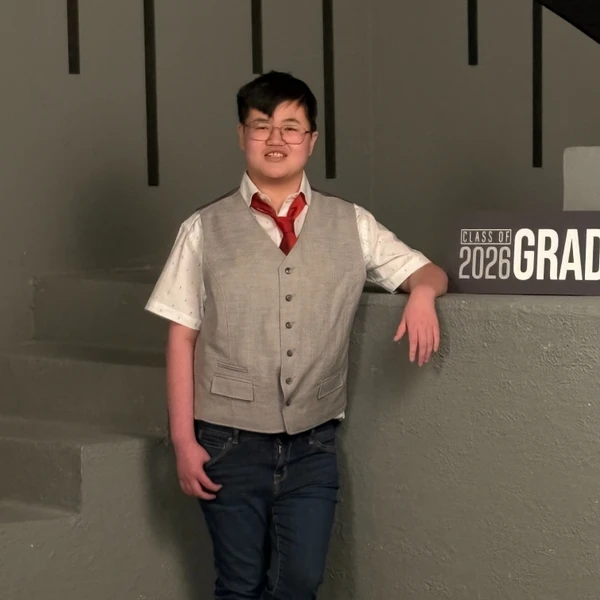
Ryen Jennings
2x
Finalist1x
WinnerRyen Jennings
2x
Finalist1x
WinnerBio
I have always wanted to be a scientist. After I had multiple strokes while awaiting a heart transplant when I was in middle school, I developed a passion for the brain and neuroscience. By chance I took psychology last year and found it fascinating. I want to study the brain and help find better ways to help people who have suffered strokes.
Education
James Madison High School
High SchoolMiscellaneous
Desired degree level:
Bachelor's degree program
Majors of interest:
- Neurobiology and Neurosciences
Career
Dream career field:
Research
Dream career goals:
I want to work in neuroscience labs as a Neuroscientist or Neuropsychologist
Arts
Art Club
Drawing2024 – Present
Public services
Volunteering
Interact — Participant2024 – Present
Future Interests
Advocacy
Volunteering
Philanthropy
Heather Lynn Scott McDaniel Memorial Scholarship
For most of my life, I have known what it feels like to be different. Some of that came from being born with a severe congenital heart defect in China and being adopted as a medically fragile child. Much of it came from navigating childhood after multiple open heart surgeries, strokes, and a heart transplant. I assumed these experiences explained why I often felt out of place. I did not realize that another challenge was still waiting to be named until I reached high school.
My freshman year was one of the hardest periods in my life. I struggled to make and keep friends and felt disconnected from many typical high school experiences. I did not enjoy football games, pep rallies, or dances, and I often felt overwhelmed in my advanced classes. After difficult tests or writing assignments, I sometimes had intense emotional breakdowns that I did not understand. I ate the same foods every day, followed strict routines, and became anxious in loud or unpredictable environments. All of this made me fear that something was wrong with me.
During a follow up neuropsychology appointment that winter, I talked with my neuropsychologist, Dr. Pliego, about what I was experiencing. Because I had suffered several strokes in middle school while waiting for my heart transplant, I assumed my struggles were connected to that. She asked if I wanted to be evaluated for autism. The word frightened me because of the stereotypes I had seen and heard, but I wanted answers. In January, during a Zoom call, she told me that I had Autism Spectrum Disorder and gave me resources to help me understand myself better.
Even though the diagnosis scared me at first, it became one of the most important turning points in my life. It gave me a clear explanation for what I was feeling and showed me that I was not broken. I learned strategies to help me stay organized, manage my sensory needs, and advocate for myself. I discovered that asking for extra processing time or meeting with teachers for support did not make me less capable. These tools helped me grow not only as a student but also as a person who could move through challenges with clarity and confidence.
As I adjusted, school became a place where I could succeed instead of fear falling behind. I came within less of a point of the top ten percent of my class, took on more rigorous courses, and learned to stop comparing myself to who I used to be before my strokes. My adversities shaped me into someone who is determined, empathetic, and willing to work hard even when the path is difficult. I embraced self-advocacy and began speaking openly about my autism when it felt right. Once I understood myself, I stopped feeling ashamed and started feeling strong.
The adversities I faced taught me that I can overcome difficult challenges and still reach my goals. I am now a senior who feels confident in my abilities and in the future I am working toward. I plan to study neuroscience so I can help others who have experienced brain injuries or strokes. It means a lot to apply for a scholarship created in memory of someone who devoted her life to helping others learn. The kindness and strength that Heather shared with her students is something I hope to reflect in my own future by supporting people through their hardest moments, just as my medical and educational teams supported me.
James Gabriel Memorial Scholarship
The greatest driving force in my life has been the combination of my medical experiences and the constant support of my mom. I was born with a congenital heart defect in China and did not receive any medical care until I was adopted at eighteen months old. Six weeks after arriving in Texas, I had my first open heart surgery. When I was three, I had another surgery that did not go as planned, and I struggled a lot with my health afterward. Even at a young age, I wanted to be like other kids, and that desire to experience life fully became a strong motivator for me.
As I grew older, my curiosity about the world also grew. I became fascinated with science because every day felt like a new challenge, and I wanted to understand what was happening inside of my body. When I entered sixth grade, my life took another dramatic turn. I went into full heart failure and suffered a two hour cardiac arrest that led me to being on ECMO. My doctors took a chance and placed an LVAD to keep me alive along enough to hope for a heart transplant. I spent most of middle school in the hospital, far away from home and the people I knew.
The moment that changed me the most came while I was waiting for a transplant. My LVAD was failing, although I did not know it at the time. I only knew that I felt worse every day and could sense how close I was to dying. I was angry, scared, and frustrated because I wanted to live and I felt like time was slipping away from me. That experience forced me to look at life differently. It taught me how much I wanted to fight for my future and how strong my will to live truly was. When I finally received my heart transplant after several strokes, I knew I had been given a rare chance to start again.
Through all of this, my mom was my consistent source of strength. She stayed by my side, encourage me, and reminded me that my life had purpose. Along with her, my medical team became a group of people who believed in me even during the hardest moments. Their dedication helped guide me through fear and uncertainty.
These experiences shaped me into someone who works hard, sets big goals, and refuses to give up easily. They motivated me to choose neuroscience because I want to help people who have faced strokes or other brain injuries. I know what if feels like to fight for our life, and I hope to make that fight easier for others, including older adults who face long recoveries.
I do not take life for granted because I understand how quickly everything can change. My medical journey, my mom's love, and my determination have become the driving forces behind everything I do. They push me to be resilient, to learn from challenges, and to pursue a future where I can use my experiences to help others. I want to continue working hard so I can build a meaningful career in neuroscience and honor the second chance I was given.
Johnna's Legacy Memorial Scholarship
Growing up, my life has always been different from most kids my age. I spent a lot of time in hospitals instead of classrooms and often had to recover from procedures when others were out playing or going to school events. Missing school so often made it hard to keep up academically and even harder to make friends. I was the kid who was always out sick or returning after another surgery, and that kind of schedule can make you feel invisible.
Living with a chronic medical condition has shaped me in ways that are hard to explain. It has taught me patience, even when progress feels slow, and strength, even when I felt completely worn out. There were times when I wanted to give up, especially when it felt like everyone else’s life was moving forward while mine was standing still. But every challenge has shown me that I am stronger and more capable than I ever realized.
What inspires me to keep going is the belief that my experiences can help someone else feel less alone. Over time, I found a community of people who understood what it meant to face surgeries, therapy, and uncertainty. I started mentoring younger patients, answering their questions, and just listening when they needed someone who “got it.” Helping others through what I once went through motivates me more than anything. It reminds me that the hard parts of my journey can be used for something good.
Even though I have faced medical setbacks and learning challenges, I’ve learned how to adapt and keep moving forward. I’ve become more organized, more self-aware, and more determined. School has never been easy for me, but I take pride in how hard I work. I know that my mind works differently, and instead of seeing that as a weakness, I’ve learned to view it as a strength. It gives me a different way of understanding the world and the people in it.
In the future, I want to study the brain and behavior so I can help others who face differences like mine. I want to understand why the brain works the way it does and how we can use that knowledge to improve people’s lives. My goal is to turn my challenges into purpose and to show that your circumstances do not define your potential.
Most of all, I want to empower others to see their differences as part of what makes them powerful. I want to remind them that progress is still progress, even if it looks slower or takes longer than expected. My journey has not been easy, but it has made me empathetic, curious, and determined to make a difference. If I can use what I’ve learned to help others feel seen, supported, and capable, then everything I’ve been through will have been worth it.
Sola Family Scholarship
On June 7, 2009, my mom adopted me from China as a single parent. She knew I had a serious congenital heart defect, but that didn't stop her. She faced everything that came with strength, grace, and unconditional love. Even when I gave her the chicken pox and struggled to attach to hear, she never gave up on me. Six weeks after we came home, I had my first open-heart surgery. My mom was with me every step of the way, and that's when our bond truly formed. We have been inseparable since.
Growing up with my mom taught me what love, sacrifice, and perseverance really look like. She has always been my biggest supporter. Even though she worked full-time as a middle school librarian, she still made time for me. She went on field trips, helped with homework, and read bedtime stories even when she was exhausted from a long day. She answered my endless questions about the world and always encouraged my curiosity.
When I was little, she fostered my love of science. For my first grade birthday party, she threw a Dontello (Teenage Mutant Ninja Turtles) science party. She learned a bunch of science experiments just so my friends and I could have fun. She did the food, cupcakes, pinata, and experiments all by herself. I still remember how amazing it was. Even though science was not her strength, she made it happen because she knew it mattered to me. That's the kind of mom she is.
She has always sacrificed her own wants to make sure I had what I needed. She made sure I had good clothes and shoes before she bought anything for herself. She saved money so I could meet my childhood idols like Yo Gabba Gabba, The Fresh Beat Band, and the Wild Kratts. She even dressed up with me for Halloween. We were Ninja Turtles one year, Slash and Axl Rose from Guns N' Roses, and Ash and Pikachu another year. My mom always made life fun.
As I got older, she gave me space to make my own decisions. She doesn't judge me or say, "I told you so" when something doesn't work out. She listens to me talk about school, friends, and my special interests, even when I go on long tangents about things like Dungeons & Dragons. Having autism means I sometimes struggle to think outside of the box but she helps me see things from new angles. She reminds me to believe in myself, especially when I doubt my own abilities
When I told her I wanted to change my name from Grace to Ryen, she didn't get upset. Instead she supported me completely. She made a plan, helped me try out the name, and when I was sure, she went through the entire legal process herself because she couldn't afford a lawyer. That moment showed me what unconditional support looks like.
She even retired early so she could spend more time with me during my last two years of high school. She took me to visit colleges, helped me plan my future, and encouraged me every step of the way. She is proud of me for getting into the college I wanted. We share music, travel when we can, and love trying new restaurants together.
My mom has shown me what it means to be strong, selfless and loving. Growing up with her taught me to face challenges with courage and gratitude. Because of her, I know how to care deeply, work hard, and never give up, no matter what life brings.
Kayla Nicole Monk Memorial Scholarship
When I heard about the Kayla Nicole Monk Memorial Scholarship, I immediately felt a connection. Like Kayla, I was born with a severe congenital heart defect. Mine was called Double Outlet, Right Ventricle and my Heterotaxy made things even more complicated. I had several open-heart surgeries, including a Fontan, but when that failed in fifth grade, I needed a heart pump. In 2021, I received a heart transplant that saved my life. Living through all of thi8s has shaped who I am, how I see the world, and what I want to do with my future.
Because of everything I've been through, I plan to study neuroscience, which is part of STEAM. I want to understand how the brain and body connect, especially when it comes to behavior, cognition, and emotion. After spending so much of my life in hospitals, I've seen how much science and medicine depend on curiosity, innovation, and compassion. I want to contribute to that world, not as a patient, but as a researcher who can help others facing challenges like mine. My goal is to earn a Ph.D. and focus on the behavioral side of neuroscience so I can make a lasting impact in both research and patient understanding.
My journey has also given me empathy and resilience. I know what it feels like to be scared, hopeful and determined all at once. Those experiences taught me to work hard even when things are uncertain. They also inspired me to mentor other young patients who are going through transplants or complex medical conditions. Sharing my story and encouraging others gives me a sense of purpose and helps me see that challenges can make a difference in some else's life.
This scholarship would mean more than just financial support. It would represent hope and a shared story between two young women who faced heart conditions with courage. My mom is a single parent and a retired educator, and we've faced the realities of major medical expenses alongside the dream of college. Every bit of help makes it possible for me to focus on my education without constant worry about finances.
I know the path to a Ph.D. will take years of study, research, and commitment, but I'm ready for that. My heart transplant gave me a second chance at life, and I intend to use it fully. Receiving the Kayla Nicole Monk Memorial Scholarship would help me continue that journey and honor the spirit of someone, who like me, faced extraordinary challenges with strength and determination.
Laurette Scholarship
I have always felt different from others, but I really never knew why. I thought it might be because I was a medically fragile child or because I was adopted by a single parent from another country. During my freshman year of high school, I finally found the answer. I was struggling to make and keep friends, and I wasn't interested in football games, pep rallies, or dances. Loud noises made me anxious, and I often felt overwhelmed after a difficult test or assignment. When my neuropsychologist suggested testing for autism, I was nervous. The word, "autism" scared me because of how people sometimes misunderstand it.
In January of my freshman year, I learned that I do have Autism Spectrum Disorder. At first, I didn't want that label. I was afraid people would treat me differently. Over time, though, I realized that my diagnosis helped me understand myself better. It gave me tools to manage challenges and build confidence. I learned that I need visual reminders, extra processing time, and sometimes tutoring or quiet space, and that needing those things doesn't make me less of a student.
Since then, I have grown up a lot. I have learned to ask for help, to speak up for myself, and to laugh at my quirks instead of hiding them. I cam close to the top ten percent of my class and found pride in my progress. Autism is only one part of me, but it does not define who I am. It helps me understand myself and how I learn best. These lessons will guide me in college as I work toward becoming a neuroscientist and helping others understand the brain.
Ray Aplin Memorial Scholarship
WinnerI will never forget the day my neuropsychologist told me that I was not “dumb,” but that my brain was simply rewiring itself after my strokes. That one sentence changed how I saw myself and gave me hope that recovery was possible. It also sparked my interest in studying the brain, which has become my greatest educational goal.
My goal is to earn a Ph.D in Neuroscience or Neuropsychology. I became interested in studying the brain because of my own experiences. I suffered a traumatic brain injury (TBI) after having multiple strokes while waiting for my heart transplant. During my recovery, I worked closely with a neuropsychologist who was instrumental in helping me understand how my brain had been affected. She explained what was happening inside my brain and showed me strategies that made learning and daily tasks easier. Her support and encouragement motivated me to want to do the same for others. I want to help people recover from strokes or other brain injuries and through research, contribute to preventing or reducing their effects in the future.
Although I love school, it has not always been easy. Reading is difficult for me, so I have adapted by becoming more of an auditory learner. I rely on technology to have the computer read text aloud, and my teachers provide accommodations such as extra time and enlarged print. These tools allow me to continue learning at a high level. Over time, I have learned how to advocate for myself , ask for what I need, and communicate openly with my teachers. These skills have been essential to my success and have also taught me how to be resilient and flexible in the face of challenges.
Another important step has been working with my service dog, who supports me in daily life. Because my strokes revealed my autism, I sometimes get overwhelmed easily. Before, when that happened, I would call my mom to calm me down and help me reset. Now, my dog grounds me in those moments, and I have not had to call her once. This change has been life-changing for both of us. Having my service dog by my side allows me to stay calm, present and handle challenges on my own. This is one of the clearest examples of what independence means to me: finding ways to manage difficulties without relying on others, while still knowing I am supported.
My education will not only prepare me for a meaningful career but also sustain my independence. A Ph.D in Neuroscience or Neuropsychology will give me the knowledge and training to make a difference in the lives of others through clinical work and research. It will also provide me with the tools I need to be self-sufficient. Having a stable career where I can use my experiences to guide and inspire others will allow me to live independently and contribute to society in a meaningful way.
Pursuing this path combines my personal journey, my passion for understanding the brain, and my determination to live fully and independently. I want to show others who face challenges like mine that recovery and success are possible, and I believe that with this education, I will be able to make that vision a reality.