Hobbies and interests
4-H
Advocacy And Activism
American Sign Language (ASL)
Art
Babysitting And Childcare
Business And Entrepreneurship
Child Development
Clinical Psychology
Coffee
Community Service And Volunteering
Archery
Counseling And Therapy
Crocheting
Horseback Riding
Jewelry Making
Meditation and Mindfulness
Mental Health
Music
Psychology
Tattooing
Reading
Psychology
Fantasy
Self-Help
I read books multiple times per month
Annabelle Ryder
1x
Finalist
Annabelle Ryder
1x
FinalistBio
I am a psychology student transferring to the University of West Florida to finish my college career. My main focus is on adolescent mental health and neurodivergent advocacy. As someone who is neurodivergent and navigates through mental health bumps, I believe my experiences have given me a deeper understanding of the many barriers that individuals face. My experiences have also strengthened my commitment to creating meaningful, and accessible support systems for those individuals.
So far throughout my college career, I have continued to pursue opportunities that build leadership, resilience, and my passion for helping others. I have remained engaged in community-based roles, including co-leading a 4-H group and co-directing community drives. I also run a small creative business, where I sell handmade crafts, which has allowed me to develop independence, discipline, and a sense of purpose during difficult periods.
My long-term goal is to become a licensed therapist with certifications in Play Therapy and a Certified Peer Specialist. I am especially passionate about reducing stigma and ensuring that individuals who feel overlooked or misunderstood have a place where they are supported and valued.
My academic and personal experiences have taught me persistence, self-awareness, and compassion, which are qualities that I will continue to carry forward as I work toward making a tangible impact in my community.
Education
Florida State University
Bachelor's degree programMajors:
- Psychology, General
Miscellaneous
Desired degree level:
Master's degree program
Graduate schools of interest:
Transfer schools of interest:
Majors of interest:
Career
Dream career field:
Mental Health Care
Dream career goals:
I want to become an advocate for the youth, especially the neurodivergent youth, in my rural hometown by creating a safe space for them to hang out and learn about themselves.
Nanny
Private Family2023 – 20241 yearCashier
Brickyard Market2022 – 20231 yearFounder & Creator
Krafting Cactus2024 – Present2 years
Sports
Equestrian
Club2021 – Present5 years
Archery
Club2018 – Present8 years
Public services
Volunteering
Truth Church — Co-Director/Coordinator2021 – PresentVolunteering
Triple H Ranch — Assistant2018 – Present
Future Interests
Advocacy
Volunteering
Entrepreneurship
Forever90 Scholarship
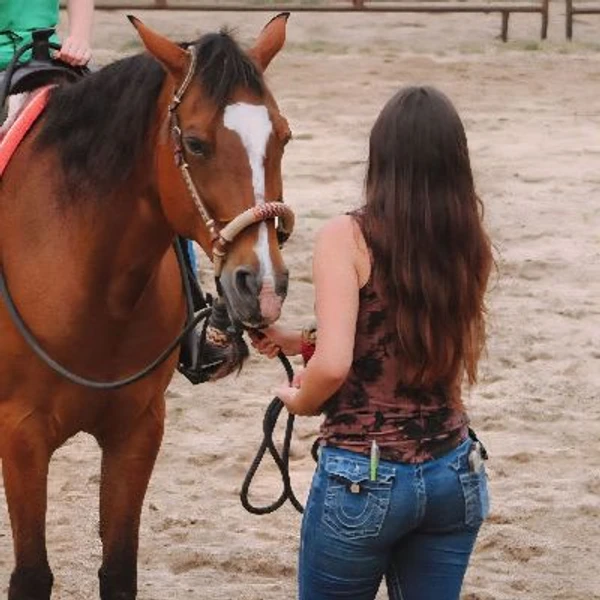
Through my work with Triple H Ranch and Blazing Hooves 4-H, I have assisted children with special needs in therapeutic horseback activities, helping create an environment where they can engage, build confidence, and experience enjoyment in a supportive setting. In addition to working directly with participants, I have supported event logistics, ensuring that both families and volunteers are able to navigate these programs smoothly.
Alongside this work, I have taken on a leadership role within my local church community, helping coordinate Back-to-School drives, Christmas toy distributions, and monthly food assistance programs. These initiatives serve over 50 families annually, providing essential resources to those experiencing financial hardship. My role involves organizing donations, coordinating volunteers, and helping ensure that distributions run efficiently and respectfully.
Through these experiences, I have had the opportunity to support a wide range of individuals, including children with disabilities and families facing economic challenges. While the impact of these efforts is visible in the resources provided and experiences created, the most meaningful aspect has been understanding the realities behind those needs. I have seen how access to small forms of support, whether therapeutic activities or basic necessities, can significantly affect quality of life.
One important realization I have had through community service is that many people express a willingness to help, but fewer are prepared for the consistent effort required to make a sustained impact. These experiences have also helped me better understand my own strengths. I am most effective in roles that require coordination, observation, and adaptability. I value creating systems that allow others to succeed, rather than seeking recognition for individual contributions. This has reinforced my preference for working behind the scenes, focusing on organization, structure, and follow-through. I have found that meaningful impact often depends less on visibility and more on reliability.
Overall, my community service has not only allowed me to support others but has also clarified the kind of work I want to pursue long-term. It has reinforced my commitment to building accessible, consistent support systems, particularly for individuals who are often overlooked or underserved. I will use my education to build a nonprofit community center that provides a safe space for neurodivergent and at-risk youth. I am also in the middle of building an online platform where I am using my own lived experiences of mental health challenges, researched tricks/tools, and voices of other neurodivergent individuals, to spread awareness and acceptance of the neurodivergent community and individuals struggling with mental health challenges.
Future Nonprofit Leaders Award
My long-term vision involves establishing a nonprofit community center dedicated to supporting neurodivergent and at-risk adolescents in my rural town. This vision has been developing in my mind and Canva for a few years now. This center will function as a holistic support system to address gaps that currently exist in access to mental health care, speech and language services, and developmentally appropriate resources. In many rural communities, these services are either unavailable, financially inaccessible, unadvertised, or not informed by neurodivergent perspectives. My goal is to create a space that directly responds to those unmet needs.
The center will offer a multidisciplinary approach that combines mental health counseling, speech-language support, sensory-based interventions, life skill-building, and creative expression programs. A central feature will be a sensory-friendly environment designed to support emotional regulation and reduce overstimulation. In addition, the center will provide family resources and education, recognizing that long-term success requires support systems that extend beyond the individual.
The need for this type of establishment is evident. Rural communities often face limited access to specialized care, long waitlists, and a shortage of providers who understand neurodivergence. At the same time, there has been a significant increase in diagnoses related to ADHD, autism, anxiety, speech delays, and FASD, as well as a rise in adolescent mental health concerns following the COVID-19 pandemic. Families are actively seeking environments that are both supportive and non-judgmental and have found that these environments are scarce.
What differentiates this center is its foundation in lived experience and its commitment to a trauma-informed, neurodivergent-led approach. Rather than offering isolated services, the center will integrate multiple forms of support into a cohesive system. It will also emphasize creativity and flexibility, which will allow individuals to engage in ways that align with their needs and strengths.
My role in building and operating this center will be both strategic and hands-on. I plan to lead its development through research, grant writing, and community outreach, while also remaining actively involved in program design and implementation. With a background in psychology and future training in social work, on top of being neurodivergent myself, I aim to ensure that services are both evidence-based and practically effective. This center represents more than a professional goal, but rather a response to a systemic gap. By creating accessible, comprehensive support within a rural setting, I hope to build a community where adolescents are not only supported but understood.