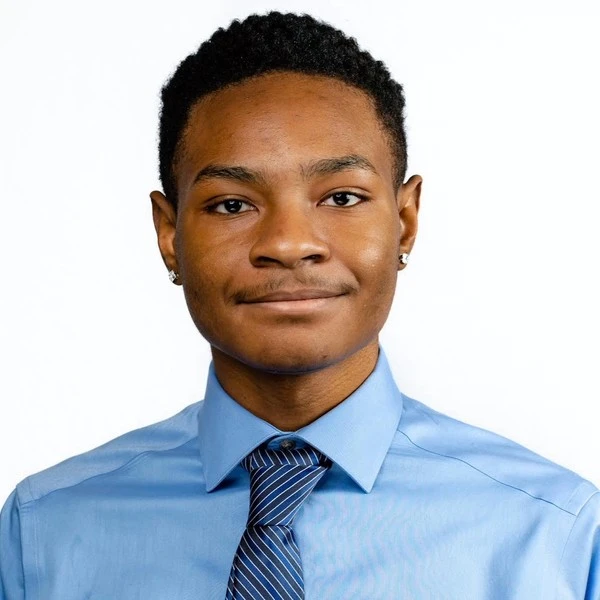
user profile avatar

Ryan Johnson

1x

Finalist

1x

Winner

Bio

I'm an Environmental Science student with a passion for farming, sustainable land use, and ecological restoration. I believe in the power of hands-on, community-based approaches to address food insecurity and ecological degradation. Working on a small scale farm taught me not only the mechanics of growing food, but the importance of creating systems that are regenerative, accessible, and rooted in local knowledge. My experiences range from soil analysis and forest ecology research to urban ecological restoration with projects like the Wild Mile in Chicago. These opportunities have allowed me to explore how past land use, trust, and cooperation influence the health of ecosystems and communities alike. At the core of my work is a desire to build reliable systems where people can grow their own food, restore their landscapes, and participate in shaping a sustainable future. Whether in the field, the lab, or the community, I approach environmental challenges with curiosity, care, and a commitment to long-term impact.

Education

Trinity College

Bachelor's degree program
2023 - 2027
  • Majors:
    • Economics
    • Geography and Environmental Studies

King College Prep High School

High School
2019 - 2023

Miscellaneous

  • Desired degree level:

    Doctoral degree program (PhD, MD, JD, etc.)

  • Graduate schools of interest:

  • Transfer schools of interest:

  • Majors of interest:

    • Botany/Plant Biology
    • Environmental Geosciences
    • Economics
    • Agricultural and Food Products Processing
    • International Agriculture
  • Not planning to go to medical school
  • Career

    • Dream career field:

      • Environmental Services
    • Dream career goals:

    • Data Scientist

      MAPScorps
      2023 – 20241 year
    • Financial Intern

      Rapunzl
      2022 – 20231 year
    • Grower's Apprentice

      Urban Growers Collective
      2024 – 20251 year
    • Environmental Technician

      Urban Rivers
      2024 – 20251 year
    • closing expert

      Target
      2022 – 20253 years

    Sports

    Track & Field

    Club
    2019 – 20234 years

    Volleyball

    Club
    2019 – 20223 years

    Research

    • Geography and Environmental Studies

      Missouri Botanical Garden — REU student
      2026 – Present
    • Geography and Environmental Studies

      Trinity College — Research Assistant
      2025 – 2026

    Arts

    • After School Matters

      Music
      2020 – 2022

    Public services

    • Volunteering

      Levo — Volunteer
      2023 – Present
    • Volunteering

      For the Children — tutor
      2021 – 2022
    • Volunteering

      Bellevue Baptist church — Camp counselor
      2020 – 2021

    Future Interests

    Advocacy

    Volunteering

    Philanthropy

    Entrepreneurship

    WCEJ Thornton Foundation Low-Income Scholarship
    Winner
    Higher education represents more than academic achievement for me. It is a pathway toward stability, opportunity, and the ability to create meaningful change in communities that are often shaped by environmental and economic inequality. Coming from a low-income background, I have seen how financial limitations can narrow the choices available to students long before they even reach college. Attending higher education will not only expand my knowledge in economics and environmental science, but also equip me with the tools to address the structural challenges that shape access to resources, opportunity, and environmental health. My academic interests are rooted in both lived experience and hands-on learning. Through my work and coursework in environmental science, including experiences with organizations such as Urban Rivers, I have seen how environmental restoration and community engagement are deeply connected. Working in ecological restoration and education efforts showed me that environmental issues are not isolated scientific problems. They are also social and economic issues that affect how communities grow, thrive, and sustain themselves over time. Higher education will allow me to build a stronger foundation in understanding these systems. Studying economics alongside environmental science will help me better analyze how policy, resource distribution, and development decisions impact both people and ecosystems. I want to learn how to evaluate and design solutions that are not only environmentally sustainable but also socially and economically accessible. Without formal education, it would be difficult to gain the technical knowledge and analytical training needed to contribute effectively in these fields. At the same time, my experiences outside the classroom have shaped how I plan to create a positive impact. Working in environmental and agricultural settings, including internships on farms where I learned irrigation and sustainable practices, taught me the importance of practical, hands-on solutions. These experiences showed me that change does not happen in theory alone. It happens when knowledge is applied in real communities, when people collaborate, and when solutions are adapted to the needs of the environment and the people who depend on it. One of my long term goals is to work in sustainability, conservation, or environmental policy, with a focus on bridging the gap between scientific research and community implementation. Many environmental challenges, such as water access, land use, and food systems, are closely tied to economic inequality. I hope to contribute to solutions that recognize these connections and prioritize fairness alongside efficiency. Whether through policy work, research, or community based programs, I want to help create systems that make environmental and economic stability more accessible. Higher education will also provide me with the opportunity to develop professionally and personally through mentorship, research, and collaboration. I want to learn from professors and peers who are working on real world problems, and I want to contribute my own perspective shaped by my background and experiences. Being able to engage with diverse ideas and approaches will help me grow into someone capable of thinking critically and acting responsibly in complex situations. Ultimately, I see higher education as a bridge between where I am now and the kind of impact I hope to make in the future. It will give me the knowledge, skills, and credibility needed to turn my interests into meaningful action. More importantly, it will allow me to use my experiences with environmental work and economic hardship to help build systems that support others facing similar barriers. My goal is not only to succeed personally, but to contribute to communities in a way that promotes long term opportunity, sustainability, and equity.
    Carlos F. Garcia Muentes Scholarship
    My own life is a story of resilience, self-denial, and encouragement. Their fight with adversity and victory has significantly influenced my worldview and what I am prepared to do professionally. I was brought up in an environment where hard work, perseverance, and firm beliefs in learning and serving came through loud and clear. These have been the guiding pillars of who I am and will keep pushing my dreams forward. My parents did not have the same privileges that I currently enjoy. They worked long hours to allow me to go to school, engage in extracurricular activities, and chase my dreams. My mother was in the medical industry, at times working night shifts to care for our family. Despite feeling exhausted, she always found time to help me with my homework and discuss my dreams. Her life's lesson learned was that real success is not measured by funds or titles but by the effort we put and the positive difference we create in individuals' lives. My father has also been a source of strength throughout my life. He was an earthly man, with calloused hands, who fixed things, solved problems, and never grumbled. He taught me the importance of patience and perseverance. His belief in me, when I didn't believe in myself, kept me grounded. He told me over and over that anything worth doing wouldn't be easy, but it would be worth it. Most surprising to me about my family is the extent to which they lived in community. I saw them helping neighbors, serving at our church, and supporting others in difficult times. It shaped my own view of leadership as service rather than authority. It also fueled my passion for wanting to serve and work toward solutions that affect whole communities. Because of them, I long to have a career that encompasses service and effect. These are my interests in environmental science, public policy, and education because they enable me to tackle real-world problems and improve lives. I want to specialize in sustainability and community development, especially in disadvantaged neighborhoods. Everyone needs access to clean air, green spaces, and functioning infrastructure. I want to help build systems that make cities more livable, equitable, and climate-resilient. My own personal family's history has also taught me the importance of empathy. I know what it is like to dream about a better life and to be met with disappointments that seem unjust or impossible to overcome. That empathy keeps me going, even when things get tough. It keeps me focused on why I want to offer opportunities to others, just as my parents worked hard to offer me an opportunity. In every decision I make concerning school, internships, and the future, I carry my family's history with me. Their sacrifices, their love, and their unwavering belief in me have shaped not just what I wish to do, but who I wish to become. I wish to be a person who connects, solves problems, and inspires others to recognize what is possible. I wish to honor their legacy by forging my own with intention and heart. Ultimately, my family has not only shaped what I believe and would wish to become. They have also shown me a purpose to work, to stay hopeful, and to use what I know to contribute. That is the kind of legacy I would like to bequeath.
    Xavier M. Monroe Heart of Gold Memorial Scholarship
    One of the most significant obstacles I have faced was navigating the transition to college as a first generation student. My parents, while supportive, had no firsthand experience with higher education. I entered college determined to succeed, but I quickly realized I was underprepared for the unspoken expectations that came with being a full time student. In my first semester, I struggled to find balance. I was working part time to help cover costs, joining extracurriculars to build my resume, and trying to stay afloat academically. I did not feel like I belonged in the classroom, especially when I looked around and saw few people who looked like me. I kept quiet during discussions, even when I had something to say. I missed opportunities because I was too unsure of how to ask for help. The academic pressure mounted, and my grades suffered. I felt like I was failing the very people who had sacrificed so much to help me get here. It was a lonely, overwhelming feeling. But in that low point, I had to make a decision. I could continue trying to navigate college silently and alone, or I could ask for support, admit I was struggling, and find tools to rebuild. That was when I began visiting office hours regularly and going to tutoring sessions. I reached out to a professor I admired and explained my situation. She encouraged me and helped me understand that I had earned my place on campus. I also joined a student group for first generation students of color, where I met others who had experienced the same sense of isolation. Their stories gave me strength and showed me that success was not about avoiding obstacles but learning how to move through them. Through that experience, I learned how to advocate for myself. I became more confident asking questions, seeking resources, and building relationships. I learned that being a first generation student was not a disadvantage. It was a mark of resilience, creativity, and drive. I had already overcome more than many of my peers to get where I was. That challenge taught me not just how to navigate college but how to face difficulty with persistence. It reminded me that no matter how far behind I may feel, I can catch up. I can learn, adapt, and grow. And now, I try to give that same support to others. I volunteer with a mentorship group for incoming students and offer the kind of advice I wish I had received. Because no one should have to go through it alone.
    Your Dream Music Scholarship
    The song that has the most important message to me is called "Come as you are" by Nirvana. This song is about relationships from business relationships to romantic ones. The lyrics suggest that the writer wants people to be their authentic selves because the writer does not have time to learn the person. The song's message was important to me because of how true it was and the fact that it could be applied to a lot of situations. An example could be a job interview, the interviewer asks you a bunch of questions to try and get to know you and to see if a candidate would fit into the company; they already have the type of person they are looking for, and they're saying come as you are so they can know if you fit. However, the potential prospect knows this and has well-thought-out answers to present a more idealistic version of themselves. Another example can be found in friendships or romantic relationships where the other person wants you to act a certain way and mold you into what they think you should be like instead of what you are.
    Sloane Stephens Doc & Glo Scholarship
    The quality I value most in myself is my adaptability. I value this quality the most because it allows me to thrive in any situation I'm in at the time and helps avoid the stress people who aren't as adaptable would go through if they were in the same situation. Another reason is that I am more open to new or different things and opinions. Adaptability helps me avoid the stress that can come with change. Avoiding stress in any facet of life is very important to me because of the many cons that are associated with it. When put under stress some short-term effects include anxiety, loss of concentration, and being more prone to mistakes, while the long-term effects compromise my health. So by being adaptable I will be able to improve my quality of life due to my improved mental health. The stress-reducing aspect of adaptability will help me in my life when there are very important decisions I need to make that require me to be fully concentrated on them and have a clear, rational state of mind to decide on them. Adaptability allows me to be more open-minded. The world isn't only changing physically, but also mentally; the multiple different viewpoints and opinions the world offers are something that should be taken into account when you're living in it and interacting with it. Adaptability allows me to take in these different opinions and incorporate the ones I deem to make more sense into my thought processes. It helps me realize that my thinking before might not always be the "best" way of thinking for the time or place. This aspect of adaptability will help me in my life in a lot of ways from when there is a cultural shift to new studies being put out on different topics; I will be able to assess the new information and change with the times. Creating a balance of not being too far behind in terms of world views while also not blindly believing or following the current thing just because it was current. This quality is a very useful one to have especially for the upcoming years as I will be going off to college soon. The college I'm going to will be a completely different environment than what I am used to being in, being in a different state and all, it will be a big change for me. I hope that I receive this scholarship because I believe that I will succeed thanks to this quality. A common quote says "It is not the strongest of the species that survives, nor the most intelligent; it is the one most adaptable to change."