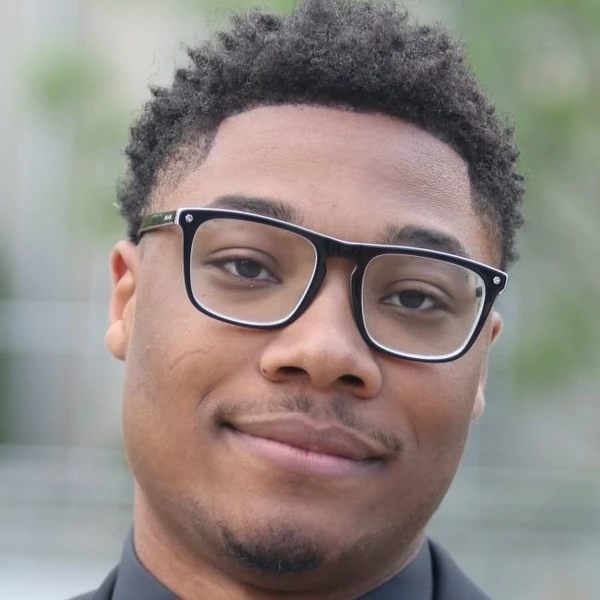
user profile avatar

Ryan Fraser

1x

Finalist

Bio

I am a motivated and resilient student who has taken a non-linear but purposeful path through my education. My academic journey has been shaped by growth, self-reflection, and a strong desire to build a meaningful future for myself and my community. Rather than following a straight path, I have learned to adapt, reassess my goals, and persist through challenges—qualities that continue to define who I am as a student and individual. My interests lie at the intersection of education, policy, and social impact. I am particularly drawn to understanding how systems affect people’s opportunities and well-being, which has motivated my academic focus and long-term career goals. I am eager to apply what I learn in practical ways, whether through community involvement, leadership, or future professional work that prioritizes equity and positive change. Outside the classroom, I have gained valuable experience through volunteering and work with youth programs and basketball camps. These experiences taught me responsibility, teamwork, and the importance of mentorship. Working with young people reinforced my belief that guidance and access to opportunities can profoundly shape someone’s confidence and future direction.

Education

University of Toledo

Bachelor's degree program
2024 - 2028
  • Majors:
    • Mathematics and Statistics, Other

Miscellaneous

  • Desired degree level:

    Master's degree program

  • Graduate schools of interest:

  • Transfer schools of interest:

  • Majors of interest:

  • Not planning to go to medical school
  • Career

    • Dream career field:

      Accounting

    • Dream career goals:

    • Basketball Instructor

      YMCA
      2022 – Present4 years

    Sports

    Basketball

    Club
    2024 – Present2 years

    Awards

    • Mvp
    • Athlete of the year

    Research

    • Accounting and Computer Science

      Microsoft — Data analyst
      2024 – Present

    Arts

    • Disney

      Animation
      2024 – 2026

    Public services

    • Volunteering

      Atlanta Kappa league — Worker
      2023 – Present
    For the One Scholarship
    Growing up in foster care was one of the most challenging experiences of my life. It was not just about moving from place to place—it was the constant feeling of instability, uncertainty, and not always knowing where I truly belonged. While other students could focus fully on school and building their futures, I often had to focus on adjusting to new environments, new people, and new expectations. That instability made it difficult to find consistency, both academically and emotionally. One of the biggest challenges I faced was the lack of a stable support system. In foster care, you don’t always have someone consistently checking in on your school progress, helping you with assignments, or encouraging you when things get difficult. There were times when I had to rely entirely on myself to stay motivated. Moving between homes also meant adjusting to different routines and sometimes even different schools, which made it harder to keep up with coursework and maintain strong grades. It often felt like I was starting over while everyone else was moving forward. Emotionally, foster care also had a significant impact on my education. It is hard to focus in class when you are dealing with feelings of uncertainty or stress about your living situation. There were moments when I felt isolated or disconnected from my peers because my experiences were so different from theirs. It was not always easy to open up or ask for help, and at times I struggled silently while trying to keep up with expectations. Despite these challenges, I have worked hard to stay committed to my education. I learned early on that if I wanted a different future, I would have to stay focused even when things were difficult. Over time, I developed resilience, independence, and a strong sense of responsibility for my own success. I began to see education not just as a requirement, but as an opportunity—a way to create stability and open doors that were not always available to me growing up. Pursuing higher education is important to me because it represents both personal growth and a pathway to a better future. My goal is to build a stable and meaningful career, likely in a field such as public policy, healthcare, or a related area where I can make a real impact. I want to be in a position where I can not only support myself financially but also help others who may be facing similar challenges. My experiences have given me a deeper understanding of how systems can fail people, and I want to be part of creating solutions that provide better support and opportunities. Furthering my education will give me the knowledge, skills, and opportunities I need to achieve these goals. It will allow me to gain practical experience, connect with mentors, and build a foundation for long-term success. More importantly, it will give me the ability to turn my challenges into something meaningful. Everything I have been through has shaped who I am today—resilient, determined, and motivated to succeed. Although foster care made my journey more difficult, it also made me stronger. It taught me how to adapt, how to persevere, and how to keep moving forward even when things felt uncertain. I am proud of how far I have come, and I am committed to continuing my education so that I can build a future defined not by my circumstances but by my determination and goals.
    Max Bungard Memorial Scholarship
    My experience with drug addiction was one of the most difficult and defining challenges of my life. At one point, it felt like it had taken everything from me—my focus, my motivation, my sense of direction, and even parts of my identity. What started as a way to cope with stress and pressure gradually turned into something that controlled my decisions and distanced me from the person I wanted to be. I lost time, opportunities, and relationships, and there were moments where it felt like I had no control over my future. Coming from a single-parent household, I already carried a strong sense of responsibility to succeed and create a better life for myself and my family. But addiction made that goal feel out of reach. It affected my academic performance, my mental health, and my confidence. I struggled with feeling stuck and ashamed, knowing I had potential but not living up to it. That internal conflict was one of the hardest parts—I knew who I wanted to become, but I couldn’t see a clear path to get there. However, reaching that low point also became a turning point. I realized that if I continued down that path, I would lose even more—not just opportunities, but the future I had always envisioned for myself. Making the decision to change was not easy, and the process of recovery has required discipline, honesty, and persistence. I had to take accountability for my actions and rebuild my life step by step. That meant distancing myself from negative influences, developing healthier habits, and learning better ways to cope with stress and challenges. One of the biggest lessons I have learned through this experience is resilience. Recovery is not a single moment but a continuous process. There were setbacks and moments of doubt, but each step forward reminded me that change is possible. I began to rebuild my confidence by setting small, achievable goals and following through with them. Over time, those small victories added up and helped me regain a sense of control over my life. This journey has also taught me the importance of self-awareness and mental strength. I have learned to recognize my triggers, manage my emotions more effectively, and seek support when needed instead of trying to handle everything on my own. These are skills that will stay with me for the rest of my life and will play a major role in my future success, both personally and professionally. Looking ahead, my goals are focused on continuing my education and building a stable, meaningful career. I want to prove to myself—and to others—that my past does not define my future. I am especially motivated to pursue a path where I can make a positive impact, whether that is through public policy, healthcare, or community-focused work. My experiences have given me a deeper understanding of how easily people can fall through the cracks and how important it is to have support systems in place. I also hope to use my story to help others who may be struggling with similar challenges. Addiction can be isolating, and many people feel like they are alone or beyond help. I want to be an example that recovery is possible and that setbacks do not have to be permanent. Whether through mentorship, advocacy, or simply sharing my experiences, I hope to contribute to breaking the stigma around addiction and encouraging others to seek help. Because addiction does not define me.
    SigaLa Education Scholarship
    I chose my field of study because I want to build a career that is both meaningful and impactful, particularly in areas like public policy, healthcare, and the pharmaceutical field. Growing up in a single-parent household, I saw firsthand how access to resources, healthcare, and financial stability can shape a person’s quality of life. These experiences pushed me to think beyond myself and consider how systems can be improved to better support individuals and families who face similar challenges. I am driven by the desire to be part of that change—to contribute to solutions that make essential services more equitable and accessible. In the short term, my goal is to successfully complete my undergraduate degree while maintaining strong academic performance. I want to gain practical experience through internships, volunteer work, or entry-level roles that expose me to real-world applications of my studies. Building relevant skills such as communication, critical thinking, and problem-solving is also a priority, as these will prepare me for both graduate studies and the workforce. Additionally, I aim to develop a professional network of mentors and peers who can guide and support my growth. In the long term, I plan to establish a stable and fulfilling career in a field where I can influence policy, contribute to healthcare systems, or work within the pharmaceutical industry. I want to be in a position where I can advocate for underserved communities and help address systemic inequalities. Financial stability is also an important goal for me—not only to support myself but to give back to my family and provide a level of security that I did not always have growing up. Ultimately, I hope to create a life where my work has both personal and societal value. Being a Black student in this field has had a significant impact on my perspective and career goals. Representation matters, and I am aware that Black professionals are often underrepresented in areas like healthcare, policy, and science. This reality has motivated me to push forward, not only for my own success but also to contribute to greater diversity in these spaces. At times, being an underrepresented minority can come with challenges, such as feeling overlooked or having to work harder to prove oneself. However, it has also strengthened my resilience, determination, and sense of purpose. I carry with me the understanding that my presence in this field can inspire others who share similar backgrounds and show that these paths are attainable. Coming from a single-parent household has also shaped my journey. My parent has worked hard to support me, often making sacrifices to ensure I had opportunities to succeed. This has instilled in me a strong work ethic and a deep appreciation for education. However, it has also meant that financial limitations are a constant concern. Balancing school with financial responsibilities can be stressful, and it sometimes creates barriers to fully focusing on my academic and professional development. This scholarship would significantly ease that burden. Financial support would allow me to dedicate more time to my studies and less time worrying about how to cover expenses such as tuition, books, and daily living costs. It would also open up opportunities for me to pursue internships or volunteer experiences that may not be financially compensated but are critical for career development. More importantly, this scholarship would serve as an investment in my future, enabling me to continue working toward my goals without being held back by financial constraints. Overall, my background, experiences, and identity have shaped both my field of study and my ambitions. I am committed to using my education.
    Adrin Ohaekwe Memorial Scholarship
    My career goals center on building a meaningful and stable future where I can both support myself and contribute to society. I am particularly interested in pursuing a career connected to public policy, healthcare, or the pharmaceutical field. These areas appeal to me because they allow for a balance between practical impact and intellectual challenge. I want a career where I can help improve people’s lives, whether that is through shaping policies that make healthcare more accessible or working within systems that develop and distribute treatments. At the same time, I value financial stability and growth, so I am motivated to choose a path that offers long-term security and opportunities for advancement. In working toward these goals, I have realized that success requires more than just academic knowledge. It requires discipline, strategic thinking, patience, and the ability to adapt—skills that I have been developing through playing chess. Chess is more than just a game; it is a mental exercise that reflects real-life decision-making and long-term planning. One of the most important lessons I have learned from chess is the importance of thinking ahead. In chess, every move has consequences, and strong players are constantly planning several steps into the future. This has taught me to approach my career with a long-term mindset. Instead of focusing only on immediate results, I have learned to think about where my current choices will lead me in the future. For example, choosing a major, building relevant skills, and gaining experience are like positioning pieces on a chessboard—they set up opportunities later on. This ability to plan ahead will help me make smarter decisions about my education and career path. Another key lesson from chess is adaptability. No matter how well you plan, your opponent will always respond in ways you cannot fully predict. In many games, I have had to adjust my strategy after unexpected moves or mistakes. This has taught me to stay calm under pressure and to remain flexible when things do not go as planned. In a career context, this is extremely valuable. Industries change, job markets shift, and challenges arise. Being able to adapt and adjust my approach will allow me to stay resilient and continue moving forward even when faced with setbacks. Chess has also taught me the value of patience and persistence. Winning a game often requires careful buildup rather than immediate success. There have been times when I lost games because I rushed or became impatient, which showed me the importance of staying focused and trusting the process. Similarly, achieving my career goals will not happen overnight. It will require years of effort, learning, and gradual improvement. Chess has helped me develop the mindset to stay committed even when progress feels slow. Lastly, chess has strengthened my ability to think critically and analyze situations. Each position on the board requires evaluating multiple possibilities and choosing the best course of action. This skill directly applies to careers in public policy or healthcare, where decisions can have significant consequences. Being able to assess situations carefully and make informed choices will help me contribute effectively in these fields. Overall, chess has played an important role in shaping the way I think and approach challenges. The skills I have developed—strategic planning, adaptability, patience, and critical thinking—will be essential in helping me achieve my career goals. As I continue to grow both academically and personally, I am confident that these lessons will guide me toward a successful and impactful future.
    Beyond The Ride Scholarship
    Losing a sibling changes everything in ways that are hard to explain to people who haven’t experienced it. It’s not just the loss of a person, but the loss of a shared past, inside jokes, and a future you always assumed they would be part of. My sibling was someone who understood me without needing explanations, and that kind of connection is impossible to replace. After their passing, life didn’t stop—but it felt like it should have. I had to keep going to school, talking to people, and acting like things were normal, even though nothing felt normal anymore. At the same time, I watched the people around me, especially my family, struggle with their own grief. In a way, it made me grow up faster. I learned how to be strong not just for myself, but for others too. What I wish more people understood about sibling loss is how quiet it can be. It’s not always openly talked about, but it stays with you in everyday moments—in things that remind you of them, or in milestones where you wish they were there. It’s a kind of grief that doesn’t really go away; it just becomes something you learn to carry. What has helped me keep going is holding onto the love I have for them. I try to live in a way that would make them proud, and to carry their memory with me in how I treat others and how I move through life. Even though they’re no longer here, they’re still a part of who I am becoming.
    Joseph A. Terbrack ALS Memorial Scholarship
    Living with or being closely affected by Amyotrophic Lateral Sclerosis (ALS) has had a profound impact on my life, shaping not only how I view health and time, but also how I understand strength, empathy, and purpose. ALS is a progressive neurodegenerative disease that gradually takes away a person’s ability to move, speak, and eventually breathe. Watching this process unfold—whether directly or through someone close to me—has been both heartbreaking and transformative. One of the most immediate impacts ALS has had on my life is the way it changed my understanding of control. Before, I often assumed that with enough effort and planning, most things in life could be managed. ALS challenged that belief. It showed me that some circumstances are unpredictable and beyond anyone’s control. This realization was difficult at first, but it ultimately taught me to focus on what I can control: my mindset, my actions, and how I show up for others. ALS also deepened my sense of empathy. Seeing someone lose their physical abilities while remaining mentally aware is an incredibly emotional experience. It forces you to truly listen, to be patient, and to find new ways to communicate and connect. I learned that support is not always about fixing a problem—sometimes it’s about simply being present. Small acts, like spending time together, offering encouragement, or helping with daily tasks, became meaningful in ways I hadn’t fully appreciated before. Another important lesson ALS has taught me is the value of resilience. Despite the progression of the disease, I have seen strength in its purest form—people continuing to face each day with courage, even when the odds are against them. That kind of resilience is not about ignoring pain or difficulty, but about choosing to keep going anyway. It inspired me to approach my own challenges with a stronger mindset. When I face obstacles in school or life, I remind myself that perseverance matters, even when progress feels slow. ALS has also reshaped my perspective on time. It made me realize how important it is to appreciate the present moment rather than constantly focusing on the future. Time is not something to take for granted. This awareness has influenced how I prioritize my life, encouraging me to invest more in relationships, meaningful experiences, and personal growth. From this experience, I have also learned the importance of advocacy and awareness. Diseases like ALS often do not receive the attention or resources they deserve, despite their devastating impact. This has motivated me to think about how I can contribute, even in small ways, to raising awareness and supporting those affected. Whether through volunteering, fundraising, or simply educating others, I want to be part of a broader effort to make a difference. Looking forward, I want to carry these lessons into my future and use them to help others. I am drawn to paths where I can support individuals facing challenges, whether that is through community work, healthcare, or roles that involve helping people navigate difficult circumstances. My experience has shown me that even small actions can have a meaningful impact on someone’s life. More importantly, I want to approach life with intention. ALS has taught me not to take things for granted and to recognize the importance of compassion. Moving forward, I aim to be someone who not only strives for personal success but also contributes to the well-being of others. I want to use my experiences to connect with people, support them, and be a source of strength when they need it most. Ultimately, ALS has changed my life in ways I never expected. While it brought challenges.
    Strong Leaders of Tomorrow Scholarship
    What makes me a leader is not a title or position, but the way I approach responsibility, challenges, and the people around me. Leadership, to me, is about influence, accountability, and the ability to bring out the best in others while continuing to grow myself. One of the most important qualities I bring to leadership is responsibility. I don’t wait for someone else to step up when something needs to be done. Whether it’s in academic settings, group projects, or everyday situations, I naturally take initiative and ensure that tasks are organized and completed effectively. I understand that leadership requires consistency and follow-through, not just ideas. When I commit to something, I take ownership of the outcome, both successes and failures. This sense of accountability builds trust with others and creates a reliable environment where people feel confident working together. Another key aspect of my leadership is my ability to communicate and connect with others. I make an effort to listen, not just speak. Understanding different perspectives allows me to make better decisions and create an inclusive environment where everyone feels valued. I recognize that each person brings unique strengths, and part of being a leader is knowing how to bring those strengths together toward a common goal. Instead of trying to control everything, I focus on collaboration and ensuring that everyone has a voice. My experiences have also shaped my resilience, which plays a major role in how I lead. I’ve faced challenges that required me to adapt, stay focused, and keep moving forward even when things were uncertain. Because of this, I’m able to stay calm under pressure and help others do the same. When problems arise, I don’t panic or avoid them—I look for solutions. This mindset helps create stability within a team, especially during difficult situations. People are more willing to stay motivated when they see someone who remains steady and determined. I also lead by example. I believe that actions carry more weight than words, so I try to demonstrate the work ethic, attitude, and discipline I expect from others. Whether it’s meeting deadlines, staying organized, or putting in extra effort, I hold myself to a high standard. This naturally encourages others to do the same without feeling forced. Leadership is not about demanding respect; it’s about earning it through consistency and integrity. Empathy is another quality that defines my leadership. I understand that people are not just contributors to a task—they have their own challenges, pressures, and experiences. Taking the time to recognize this allows me to support others more effectively. Whether someone is struggling academically or personally, I try to be approachable and understanding. This creates a stronger sense of trust and connection, which ultimately improves teamwork and performance. At the same time, I am always working on improving myself. I don’t see leadership as something fixed; it’s something that evolves. I actively reflect on my actions, learn from mistakes, and seek ways to become better. Being open to feedback allows me to grow and adapt, which is essential in any leadership role. I’m not afraid to admit when I don’t have all the answers, and I see that as a strength rather than a weakness. Ultimately, what makes me a leader is my mindset. I focus on responsibility, communication, resilience, and continuous growth. I aim to create positive impact, not just complete tasks. Leadership is about guiding others while also pushing yourself to improve, and that is a standard I hold myself to in everything I do.
    New Beginnings Immigrant Scholarship
    My immigrant experience has been one of transition, adaptation, and growth. Moving to a new country meant leaving behind familiarity—language, culture, routines, and sometimes even a sense of identity—and stepping into an environment where everything felt uncertain. While that transition came with challenges, it also shaped my perspective, work ethic, and long-term goals in ways that continue to influence my career aspirations. One of the most immediate challenges was adjusting to a new cultural and social environment. Simple things, like communication styles, classroom expectations, and social norms, required time to understand. There were moments when I felt out of place or struggled to fully express myself, especially early on. However, those experiences pushed me to become more adaptable and open-minded. I learned how to observe, listen carefully, and gradually build confidence in unfamiliar situations. Over time, what once felt uncomfortable became an opportunity to grow. Education played a central role in my transition. As an immigrant student, I quickly realized that academic success would open doors and create stability for my future. This motivated me to take my studies seriously and develop strong discipline. At times, I had to work harder than others to fully grasp concepts, especially when navigating differences in educational systems or expectations. However, this challenge strengthened my persistence and ability to overcome obstacles. I learned that setbacks are not permanent—they are part of the learning process. Another important aspect of my immigrant experience has been witnessing the sacrifices made by my family. Moving to a new country often comes with financial and emotional challenges, and seeing those sacrifices firsthand has been a constant source of motivation. It has instilled in me a deep sense of responsibility to make the most of the opportunities I’ve been given. I carry that with me in everything I do, especially when it comes to planning my future. These experiences have directly shaped my career aspirations. I aim to build a career that not only provides stability and growth for myself but also allows me to create meaningful impact. Because I understand what it feels like to navigate unfamiliar systems and challenges, I am drawn to paths where I can help others facing similar obstacles. Whether that means working in a field that involves problem-solving, supporting communities, or contributing to systems that improve access and opportunity, I want my work to have purpose beyond personal success. My journey has also made me value continuous learning. Adapting to a new country required me to constantly learn—new systems, new expectations, and new ways of thinking. As a result, I’ve developed a mindset that embraces growth and improvement. In my career, I want to continue building knowledge and skills, staying flexible in a constantly changing world. I’m not afraid of challenges because I’ve already experienced what it means to start over and rebuild. Additionally, my background has given me a unique perspective that I see as a strength. Being exposed to different cultures and ways of thinking allows me to approach problems with a broader mindset. I can connect with diverse groups of people and understand different viewpoints, which is an important skill in almost any professional field. This ability to adapt and relate to others will be a valuable asset as I move forward in my career. Ultimately, my immigrant experience has shaped both who I am and who I aspire to become. It has taught me resilience, adaptability, and the importance of hard work. These qualities drive my ambition to succeed and to build a career that reflects not only my personal goals but also the values and lessons that have guided
    Learner Online Learning Innovator Scholarship for Veterans
    To deepen my understanding of the subjects I’m studying, I rely on a variety of online platforms, tools, and digital resources that support both learning and application. These resources have become essential in helping me move beyond passive learning and toward actively engaging with material in a way that strengthens my critical thinking and problem-solving skills. One of the primary tools I use is online learning platforms that provide structured explanations and practice problems. These platforms help break down complex concepts into manageable sections, often using videos, step-by-step walkthroughs, and interactive exercises. This is especially useful when I encounter difficult topics in lectures, as I can revisit the material at my own pace and reinforce my understanding through repetition and practice. In addition to structured platforms, I frequently use video-based resources to gain different perspectives on the same topic. Sometimes, hearing a concept explained in a new way makes it easier to understand. These videos often include real-world examples, which help bridge the gap between theory and application. Being able to pause, rewind, and rewatch content allows me to fully grasp ideas before moving forward, which is something traditional classroom settings don’t always allow. Another important resource I use is online forums and discussion boards. These spaces allow students and learners from around the world to ask questions, share insights, and explain concepts to one another. When I’m stuck on a problem or unsure about a concept, I can often find detailed explanations from others who have faced similar challenges. Reading through different approaches to the same problem not only helps me find solutions but also exposes me to new ways of thinking. Digital note-taking tools have also played a major role in my learning process. Instead of simply copying information, I actively organize and summarize key ideas in a way that makes sense to me. I often revisit and refine my notes, adding examples or connections between topics. This process helps reinforce my memory and ensures that I truly understand the material rather than just memorizing it. Practice and self-testing tools are another essential part of how I learn. Many online resources offer quizzes, flashcards, and mock exams that simulate real testing conditions. These tools allow me to assess my understanding and identify areas where I need improvement. By regularly testing myself, I can track my progress and adjust my study strategies accordingly. What makes these online platforms especially valuable is how they help me apply my knowledge, not just learn it. For example, interactive problem-solving tools require me to actively work through questions rather than passively read solutions. This strengthens my ability to think critically and apply concepts in new situations. Similarly, discussion forums encourage me to articulate my understanding clearly when helping others, which reinforces my own learning. Additionally, many of these resources emphasize real-world applications. Whether through case studies, examples, or scenario-based questions, they push me to think about how theoretical concepts operate outside of the classroom. This has helped me develop a more practical understanding of my subjects and prepared me to use my knowledge in real-life situations. Overall, these online platforms, tools, and resources have transformed the way I learn. They provide flexibility, allow for deeper engagement, and encourage active participation in the learning process. By using them consistently, I’ve been able to not only improve my understanding of the material but also develop the skills needed to apply that knowledge effectively.
    Sola Family Scholarship
    Growing up with a single mother shaped nearly every part of who I am today. It wasn’t always easy, but it gave me a perspective on responsibility, resilience, and love that I don’t think I would have developed any other way. From a young age, I became aware that my mom carried a lot on her shoulders. She wasn’t just a parent—she was the provider, the problem-solver, the emotional support, and the decision-maker all at once. Watching her balance work, bills, and raising me taught me what real strength looks like. It wasn’t loud or flashy; it was quiet persistence—getting up early, staying up late, and always finding a way to make things work, even when things were tough. Because of that, I matured earlier than a lot of people my age. I understood that things weren’t always handed to you and that if you wanted something, you had to work for it. Whether it was helping out around the house, managing my own responsibilities, or being mindful of money, I learned independence quickly. There wasn’t always someone else to fall back on, so I had to learn how to rely on myself while still supporting my mom in whatever ways I could. At the same time, growing up in that environment deepened my sense of empathy. Seeing my mom struggle at times—whether emotionally, financially, or physically—made me more aware of what other people might be going through behind the scenes. It taught me not to judge others too quickly because you never really know their situation. That perspective has helped me build stronger, more meaningful relationships because I value understanding and patience. There were definitely challenges. There were moments when I felt like I was missing out, especially when I compared my situation to others who had two parents at home. Sometimes it felt unfair, and there were times when things got overwhelming. But those challenges also built resilience. Instead of breaking me, they pushed me to become stronger and more determined to create a better future for myself. One of the biggest things my mom taught me was the value of sacrifice. She put my needs before her own countless times, and that didn’t go unnoticed. It inspired me to develop a strong work ethic and a sense of responsibility not just for myself, but for the people I care about. I learned that success isn’t just about personal achievement—it’s also about being able to give back and support others. Her influence also shaped my mindset toward adversity. I don’t give up easily because I’ve seen firsthand what it looks like to keep going when things are difficult. That mindset carries into everything I do—school, work, and personal goals. I approach challenges with the belief that there’s always a way through, even if it takes time and effort. Most importantly, growing up with a single mother taught me the true meaning of unconditional love. Despite everything she had to handle, she always made sure I felt supported and cared for. That kind of love created a strong foundation for who I am today. It showed me the importance of being present for others and reminded me that even in difficult situations, love can be a constant source of strength. Overall, my experience didn’t just shape me—it strengthened me. It taught me independence, resilience, empathy, and responsibility. While it came with challenges, it also gave me the tools and mindset to overcome obstacles and keep moving forward. And for that, I’m grateful.
    Ruthie Brown Scholarship
    Managing student loan debt is something I take very seriously, and I approach it with both a practical plan and a long-term mindset. I understand that taking on debt for education is an investment in my future, but it is also a responsibility that requires discipline, planning, and informed decision-making. Because of this, I have already begun taking steps to minimize and manage my current and future student loan obligations. One of the primary ways I am addressing my student loan debt is by being proactive about financial planning during my education. I make an effort to budget carefully, tracking my expenses and prioritizing essential costs such as tuition, books, and living expenses. By limiting unnecessary spending and maintaining a disciplined budget, I am able to reduce the amount I need to borrow in the first place. I have also been mindful about choosing cost-effective options when it comes to textbooks, housing, and daily expenses. In addition, I actively seek out financial support opportunities such as scholarships, bursaries, and grants. These forms of funding are especially important because they reduce the need for loans altogether. I regularly apply for scholarships and continue to look for new opportunities that align with my academic background and personal experiences. Receiving financial support through awards not only eases the financial burden but also allows me to focus more on my academic success rather than financial stress. Another important part of my plan is maintaining part-time employment while studying. Working during school has helped me contribute to my own expenses and build financial independence. It has also taught me valuable time management skills, as I balance work responsibilities with academic commitments. The income I earn helps cover smaller expenses, which reduces my reliance on borrowed money over time. Looking toward the future, I plan to manage my student loan repayment strategically after graduation. This includes understanding the repayment terms of my loans, such as interest rates, grace periods, and available repayment plans. I intend to begin making payments as soon as possible, even if they are small at first, to reduce the overall interest that accumulates. I also plan to prioritize paying off higher-interest loans more aggressively while maintaining minimum payments on others. I am also exploring career paths that offer financial stability and growth, particularly in fields related to public policy, healthcare, or law. My goal is to secure employment that not only aligns with my interests and values but also provides a steady income that allows me to manage my financial obligations responsibly. In the long term, I hope to increase my earning potential through continued education and professional development, which will further support my ability to repay my loans efficiently. Another key part of my approach is financial literacy. I have taken time to educate myself on topics such as budgeting, credit management, and loan repayment strategies. Understanding how interest works and how different repayment plans impact long-term costs has helped me make more informed decisions. This knowledge will continue to guide me as I navigate my financial responsibilities after graduation. Ultimately, my approach to student loan debt is rooted in responsibility, preparation, and long-term planning. I am committed to minimizing my debt as much as possible while in school and managing it effectively once I graduate. While student loans can feel overwhelming, I view them as a manageable challenge with the right strategies in place. By staying disciplined, seeking out resources, and making informed financial decisions, I am confident in my ability to address my student loan debt and build a stable financial future.
    Second Chance Youth Scholarship
    A second chance, to me, is more than just an opportunity—it is a responsibility. It means being trusted to grow beyond your past, to take accountability for your mistakes, and to prove, through your actions, that you are capable of change. My experience with the juvenile justice system was one of the most difficult periods of my life, but it ultimately became a turning point that reshaped my values, my mindset, and my future. During that time, I was struggling with direction, environment, and decision-making. I made choices that did not reflect who I truly wanted to be. Being involved in the system forced me to confront the consequences of my actions in a way I never had before. It was not just about punishment—it was about reflection. I began to understand how my actions affected not only myself but also my family, my community, and my future opportunities. What I learned most from that experience was accountability and self-awareness. I realized that while I could not change my past, I had full control over my future. I also learned the importance of discipline, structure, and surrounding myself with the right influences. Those lessons became the foundation for the person I am today. Since then, I have taken intentional steps toward positive change. I committed myself to my education, understanding that it is one of the most powerful tools for transformation. As a student pursuing studies connected to public policy and health, I have worked to improve my academic performance and stay focused on long-term goals. I have also made conscious efforts to distance myself from negative environments and instead build relationships that support growth, accountability, and success. Beyond academics, I have focused on personal development. This includes improving my time management, setting clear goals, and maintaining a mindset centered on growth rather than setbacks. I have learned to view challenges as opportunities to improve rather than excuses to give up. Each step forward, no matter how small, represents a commitment to becoming a better version of myself. This opportunity would play a critical role in helping me continue that progress. Financial barriers are one of the biggest challenges I face in pursuing higher education. If awarded, I would use the funds to support tuition costs, educational materials, and other academic expenses. This support would allow me to focus more fully on my studies without the constant stress of financial strain. It would also bring me one step closer to achieving my long-term goals in fields related to policy, healthcare, or law—areas where I can make a meaningful difference. My educational goal is to complete my degree and build a career that allows me to contribute to systems that directly impact people’s lives, particularly those who come from disadvantaged backgrounds. I am especially interested in understanding how policies affect access to healthcare, justice, and social support systems. My experiences have given me a unique perspective that I believe can be valuable in shaping more equitable and compassionate systems. In the future, I hope to “pay it forward” by working with youth who are facing similar challenges to those I once experienced. I want to be someone who can relate to them—not just from a place of theory, but from lived experience. Whether through mentorship programs, community outreach, or policy work, my goal is to help young people see that their circumstances do not define them. Everyone deserves the chance to rewrite their story. I also hope to advocate for changes within the juvenile justice system itself. Too often, young people are defined by their mistakes rather than supported in their growth. I want to contribute to a system that emphasizes rehabilitation, education, and opportunity rather than punishment alone. A second chance is not something I take lightly. It is something I have worked for, learned from, and continue to earn every day. My past does not define me, but it has shaped me into someone who is more determined, more self-aware, and more motivated to succeed. With the right support and opportunities, I am committed to building a future that reflects not where I started, but where I am capable of going.
    Lost Dreams Awaken Scholarship
    Recovery, to me, means growth, healing, and the ability to move forward after experiencing hardship. It is not simply about returning to the way things were before a difficult experience, but about learning from those moments and becoming stronger because of them. Recovery is a process that requires patience, resilience, and the willingness to keep moving forward even when progress feels slow. Life presents many challenges that can affect us emotionally, mentally, and physically. Whether someone is recovering from loss, personal struggles, setbacks, or difficult experiences, recovery often involves learning how to rebuild confidence and find balance again. For me, recovery means acknowledging the challenges we face while refusing to let those experiences define our future. It is about recognizing pain or struggle but choosing to grow beyond it. Recovery also involves support and connection. No one truly heals alone. Family, friends, mentors, and communities often play a critical role in helping people regain strength and hope. Having people who listen, encourage, and believe in you can make a meaningful difference during the recovery process. Most importantly, recovery represents resilience. It shows that even after facing adversity, people can continue to pursue their goals and live meaningful lives. Recovery is not always a straight path, but each step forward demonstrates strength and determination. To me, recovery means turning difficult experiences into motivation for growth. It is about learning, healing, and continuing to move forward with a renewed sense of purpose and strength.
    Tawkify Meaningful Connections Scholarship
    One of the most meaningful relationships in my life is the relationship I share with my girlfriend. She has had a significant impact on my personal growth, the way I approach challenges, and how I build connections with others. While relationships often begin with shared interests and companionship, over time ours has grown into something deeper—one built on mutual support, understanding, and encouragement. Through this relationship, I have learned important lessons about communication, patience, and the importance of supporting the people who matter most. When we first started dating, I was already balancing many responsibilities in my life. As a university student, a college athlete, and someone involved in leadership roles, my schedule can often be demanding and stressful. Despite this, my girlfriend has always been incredibly supportive of my goals and ambitions. She understands the level of commitment required to pursue higher education while competing in athletics, and she has consistently encouraged me to stay focused and motivated. Her belief in me has helped strengthen my confidence and reminded me that having someone who genuinely supports your goals can make a major difference. One of the most valuable lessons I have learned through this relationship is the importance of communication. Strong relationships require honesty, openness, and the willingness to listen to one another. My girlfriend has helped me become more thoughtful in the way I communicate and more aware of how important it is to understand another person’s perspective. Learning to communicate effectively has not only strengthened our relationship but has also influenced the way I interact with friends, teammates, and classmates. Another important aspect of our relationship is the support we provide each other during difficult times. Life is full of challenges, and having someone who stands beside you during those moments can make a tremendous difference. Whether it is the stress of exams, the pressure of competition, or personal struggles, my girlfriend has always been someone I can rely on. Her encouragement during challenging periods has reminded me that no one has to face difficulties alone. At the same time, our relationship has also taught me the importance of being that source of support for someone else. Through our relationship, I have also gained a deeper understanding of empathy and patience. Everyone faces different challenges, and relationships require the ability to understand and respect each other’s experiences. Being able to listen, support, and show compassion has strengthened the bond we share. These qualities have also influenced how I approach other relationships in my life. Whether I am working with teammates, helping students as an International Student Ambassador, or supporting friends, I try to approach those interactions with the same empathy and understanding that I have learned through my relationship. My girlfriend has also encouraged me to maintain balance in my life. With the demands of academics, athletics, and leadership responsibilities, it can sometimes be easy to focus only on achievements and goals. She has reminded me that personal well-being, meaningful relationships, and taking time to appreciate life are just as important as success. Because of her influence, I have become more mindful about maintaining balance and making time for the people and experiences that matter most. This relationship has also strengthened my sense of responsibility and commitment. Being in a meaningful relationship requires trust, reliability, and respect. Learning to prioritize those qualities has helped me grow not only as a partner but also as a friend, teammate, and leader. I have come to understand that strong connections are built through consistency, honesty, and genuine care for others. Overall, the relationship I share with my girlfriend has played a meaningful role in shaping the person I am today. She has supported me through challenges, encouraged me to pursue my goals, and helped me grow in ways that extend beyond our relationship. The lessons I have learned—communication, empathy, patience, and support—have influenced how I build connections with others and how I approach relationships in every area of my life. As I continue pursuing my education and future goals, the values I have learned through this relationship will continue to guide me. Meaningful connections have the power to shape who we are and how we interact with the world around us. Through my relationship with my girlfriend, I have learned that supporting others, communicating openly, and showing genuine care are the foundations of strong and lasting relationships
    Hazel Joy Memorial Scholarship
    Losing my brother was one of the most difficult experiences of my life. A sibling is often one of the first friends a person has, someone who grows up beside you and shares many of the same memories, challenges, and milestones. My brother was someone I looked up to and someone who always had a strong presence in my life. His loss created a deep sense of grief in my family and changed the way I view life, relationships, and the importance of perseverance. Growing up, my brother and I shared many moments together that helped shape who I am today. Like many siblings, we spent time competing, supporting each other, and learning from one another. Whether it was through sports, school, or everyday life, he always encouraged me to push myself and do my best. He had a way of motivating me, even in small ways, and those moments remain some of my most meaningful memories. When someone who has played such a significant role in your life is suddenly gone, it leaves a space that can never truly be filled. The loss of my brother was not only difficult for me but also for my entire family. Grief affects everyone differently, and navigating that experience together was one of the hardest things we had to face. There were moments of sadness, confusion, and reflection as we tried to adjust to life without him. Losing someone so close made me realize how fragile life can be and how important it is to value the time we have with the people we love. Although losing my brother brought immense pain, it also shaped my perspective on life in ways that continue to influence me today. His memory motivates me to live with purpose and determination. I often think about the kind of person he was and the support he showed me when we were growing up. Remembering that encouragement pushes me to work harder and to continue pursuing my goals, even during challenging times. In many ways, I feel that I carry a part of his spirit with me as I move forward in life. The experience of loss has also taught me resilience. Grieving someone you love is a process that does not happen overnight. There are moments when memories bring comfort and moments when they bring sadness. Over time, I have learned that healing does not mean forgetting. Instead, it means learning how to carry those memories in a way that allows you to continue growing while honoring the person you lost. This perspective has helped me become stronger emotionally and more understanding of others who may be going through their own struggles. Another important lesson I have learned through this experience is the value of empathy. After losing my brother, I became more aware of how many people around me are quietly dealing with their own forms of grief and hardship. This realization has made me more compassionate and more willing to support others who may be facing difficult times. Sometimes the most important thing you can offer someone is simply understanding and kindness. Today, I strive to honor my brother by living a life that reflects the values he encouraged in me—hard work, determination, and support for others. His loss changed my life in profound ways, but it also strengthened my sense of purpose. I want to continue pursuing my education, my goals, and my passions while remembering the impact he had on my life. Although the pain of losing my brother will always be part of my story
    Christian Fitness Association General Scholarship
    Pursuing higher education has always represented opportunity, growth, and the chance to build a meaningful future. However, the rising cost of college has made it increasingly difficult for many students to access these opportunities. Tuition, textbooks, housing, and other fees create financial barriers that can make achieving a degree feel out of reach. Despite these challenges, I have remained committed to my education and personal development. As a student at the University of Toronto balancing academics, athletics, and leadership responsibilities, I have worked hard to make the most of every opportunity available to me. My academic dedication, athletic accomplishments, leadership experiences, and perseverance are the reasons I believe I should be considered for this scholarship. Attending the University of Toronto has been both a rewarding and challenging experience. The academic environment pushes students to think critically, work diligently, and stay committed to continuous learning. While pursuing my studies, I have also had to balance the demanding schedule of being a college athlete. Managing coursework, practices, competitions, and travel requires discipline, organization, and strong time-management skills. Through these responsibilities, I have learned how to stay focused under pressure and remain committed to achieving my goals. My academic journey has taught me that success is not only about intelligence but also about perseverance, consistency, and the willingness to work hard even when challenges arise. Athletics has played a major role in shaping who I am today. As a college athlete, I have had the privilege of competing at a high level and representing both my team and my university. My dedication to my sport has led to the achievement of winning multiple national and state championships. While these accomplishments are something I am proud of, the lessons I have gained through athletics are even more meaningful. Sports have taught me the importance of teamwork, resilience, and discipline. Training for competitions requires consistent effort and the ability to push through moments of fatigue and self-doubt. These experiences have strengthened my mental toughness and prepared me to approach challenges in all areas of my life with determination. In addition to athletics and academics, I am proud to serve as an International Student Ambassador. In this role, I help support international students as they transition into life at university. Moving to a new country and academic system can be overwhelming, and I strive to make that transition easier for others by providing guidance and encouragement. Whether answering questions about campus life, sharing resources, or simply being someone students can talk to, I aim to help them feel welcomed and supported. This experience has allowed me to develop leadership and communication skills while also reinforcing my passion for helping others succeed. Being an International Student Ambassador has also shown me the importance of building inclusive communities. Students from different cultural backgrounds bring valuable perspectives and experiences that enrich the university environment. By helping international students adjust and feel connected, I contribute to creating a more welcoming and supportive campus. This role has strengthened my understanding that leadership is not just about personal success but also about helping others reach their potential. While I am proud of the accomplishments I have achieved so far, my educational journey has not been without financial challenges. Growing up in a single-parent household, I witnessed firsthand the sacrifices my mother made to support our family and provide me with opportunities. Her dedication and work ethic have always inspired me to push myself and strive for success. She taught me the value of perseverance and the importance of taking advantage of every opportunity for growth. Seeing her commitment motivated me to pursue higher education and work hard to achieve my goals. The cost of college continues to present challenges for many students, including myself. Expenses such as tuition, textbooks, housing, and daily living costs add up quickly. Scholarships like this one help reduce these financial barriers and allow students to focus more fully on their academic and personal development. Receiving this scholarship would allow me to dedicate more time and energy to my studies, athletics, and leadership responsibilities without the constant stress of financial limitations. Looking toward the future, my goal is to use my education to build a career where I can make a meaningful impact. The experiences I have gained through academics, athletics, and leadership roles have shaped my values and ambitions. I hope to continue developing my skills while contributing positively to my community. Whether through mentorship, leadership, or professional work, I want to use my education to help create opportunities for others and support individuals who are working toward their own goals. Ultimately, what defines my journey is perseverance and dedication. Balancing academics, competitive athletics, and leadership roles has required discipline and determination, but these experiences have shaped me into a stronger and more focused individual. Each challenge I have faced has helped me grow and prepared me for future success. Being considered for this scholarship would not only support my continued education but also reinforce the belief that hard work and commitment can open doors to meaningful opportunities. I am determined to continue striving for excellence, representing my university with pride, and using the opportunities I receive to positively impact the lives of others.
    Curtis Holloway Memorial Scholarship
    My mother has been the most important source of support in my educational journey. Growing up in a single-parent household after losing a parent meant that many responsibilities fell on her shoulders. Despite the challenges she faced, she always made my education a priority and encouraged me to pursue my goals with determination and confidence. Her sacrifices, resilience, and constant encouragement have shaped the person I am today, and they continue to motivate me as I work toward my dreams. Raising a child on her own was not easy for my mother. She had to balance work, financial responsibilities, and parenting, often putting my needs before her own. Even during difficult times, she never allowed those challenges to limit the opportunities she wanted for me. She constantly reminded me that education was one of the most powerful tools I could have for building a better future. Because of her, I learned at an early age that success is not simply about talent but about effort, discipline, and perseverance. My mother’s support was not only financial or practical, but also emotional. She always believed in my potential, even during moments when I doubted myself. Whether it was encouraging me to focus on my studies, supporting my athletic goals, or reminding me to stay committed during difficult periods in school, she was always there to guide me. Knowing that she believed in me gave me the confidence to pursue opportunities that I might have otherwise been afraid to take. One of the ways I honor my mother’s support is through the effort I put into my education and personal development. As a student at the University of Toronto, I work hard to balance academics, athletics, and leadership opportunities. I strive to represent the values she taught me—hard work, humility, and resilience. Every achievement I reach, whether academically or through extracurricular activities, is something I see as a reflection of the sacrifices she made to help me get there. Growing up in a single-parent household also taught me important life lessons that continue to shape my approach to success. Watching my mother handle responsibilities on her own showed me what true strength looks like. She demonstrated that obstacles can be overcome with persistence and determination. Because of her example, I learned how to stay focused during difficult moments and continue moving forward even when things feel challenging. Her support has also motivated me to pursue higher education and long-term goals that will allow me to create opportunities not only for myself but also for others. I want to use my education to build a meaningful career and contribute positively to my community. My mother always encouraged me to think beyond my own success and consider how my achievements could help uplift others. That perspective continues to guide my ambitions today. As I work toward my goals, I plan to build on the foundation my mother created for me. I honor her sacrifices by staying committed to my education, seeking opportunities for growth, and striving to make a positive impact wherever I can. I also hope to reach a point in my life where I can support her the way she supported me, ensuring that her sacrifices and hard work are recognized and appreciated. Ultimately, my mother’s support has been instrumental in shaping who I am. Growing up in a single-parent household after losing a parent came with challenges, but it also gave me a powerful role model who showed me the value of resilience, determination, and unconditional support. Everything I strive to achieve in my education and future career
    Patricia Lindsey Jackson Foundation - Eva Mae Jackson Scholarship of Education
    Faith plays an important role in my life by providing guidance, motivation, and a sense of purpose. It shapes the way I approach challenges, the way I treat others, and the goals I set for myself. Throughout my academic journey, faith has helped me stay focused, remain resilient during difficult moments, and continue striving toward higher education and a meaningful career. Alongside my faith, the encouragement of my family—especially my aunt—has also been a major influence in motivating me to pursue my education and work toward a better future. For me, faith is not only about religious belief but also about having hope and trust that perseverance and hard work will lead to growth. During stressful academic periods, such as preparing for exams, completing large assignments, or balancing school with personal responsibilities, faith has helped me remain grounded. It reminds me that challenges are part of the process of growth and that setbacks do not define my potential. Instead, they are opportunities to learn and improve. Because of this perspective, I try to approach my studies with patience, determination, and gratitude for the opportunities I have been given. Faith has also influenced the way I view education itself. I believe that knowledge and education are powerful tools that allow individuals to create positive change in their communities. My faith encourages me to use my abilities not only for personal success but also to help others. This belief motivates me to take my education seriously and to pursue a path where I can make a meaningful contribution to society. I want my academic achievements to be used in ways that benefit others, whether that means helping people directly, contributing to policy decisions, or supporting initiatives that improve public health and well-being. Another way faith has impacted my academic goals is by teaching me discipline and perseverance. Education is not always easy, and there are times when the workload or pressure can feel overwhelming. During those moments, faith reminds me to stay patient and continue moving forward. It helps me maintain a long-term perspective, understanding that the effort I put into my education today will open doors in the future. This mindset has helped me stay committed to completing my degree and pursuing opportunities that will allow me to grow both academically and personally. In addition to faith, my family has been one of the biggest sources of encouragement in my pursuit of higher education. My aunt, in particular, has had a strong influence on me. Watching her face cancer with courage and determination showed me what true strength looks like. Even during difficult periods in her life, she continued to encourage me to stay focused on my goals and take advantage of the educational opportunities available to me. Her resilience reminded me that education is something valuable that should never be taken for granted. My family as a whole has always emphasized the importance of education as a pathway to stability, opportunity, and personal growth. Their belief in my abilities has pushed me to aim higher and continue pursuing my academic goals even when things feel challenging. Knowing that they are proud of my efforts motivates me to work harder and stay committed to my studies. As I look toward the future, my faith and the support of my family continue to shape my goals. I want to use my education to build a career where I can contribute to my community and help improve the lives of others. Faith gives me the confidence to believe that with dedication, hard work, and perseverance, I can achieve those goals. Instagram: @ryan_c_fraser
    Sharra Rainbolt Memorial Scholarship
    Cancer has touched my family in a deeply personal way through my aunt. Watching someone you love go through such a difficult illness changes the way you see life, health, and the people around you. My aunt’s experience with cancer affected our family emotionally, but it also brought us closer together and taught me important lessons about resilience, empathy, and the importance of supporting others during challenging times. When my aunt was diagnosed with cancer, it was a shock to everyone in my family. She had always been someone who brought positivity and warmth into every room, so hearing that she was facing such a serious illness felt overwhelming. At first, there was a lot of fear and uncertainty. None of us fully understood what the journey ahead would look like, and the possibility of losing someone we loved was difficult to process. However, my aunt approached her diagnosis with incredible strength. Even during the hardest moments, she remained determined to fight the disease and maintain hope. Throughout her treatment, I saw firsthand how cancer affects not just the person diagnosed, but the entire family. There were hospital visits, long days of treatment, and moments when the physical and emotional toll became very visible. Watching her go through chemotherapy and the side effects that came with it was difficult. It made me realize how physically and mentally demanding cancer treatment can be. At the same time, I also saw the importance of emotional support. Family members constantly checked in on her, helped with daily tasks, and did everything possible to make her feel loved and supported. One of the biggest lessons I learned from this experience is the importance of resilience. My aunt showed remarkable courage throughout her treatment. Even when she felt exhausted or discouraged, she continued to push forward. Her strength inspired everyone around her. It taught me that resilience is not about pretending everything is okay, but about continuing to move forward even when things are difficult. Another important lesson I learned was the value of empathy and compassion. Before my aunt’s diagnosis, cancer was something I had only heard about in the news or in statistics. Seeing how it affects someone close to me made it real in a way I had never experienced before. I began to better understand the emotional struggles that patients and their families go through. This experience helped me become more compassionate toward people who are dealing with serious illnesses or other personal challenges. My aunt’s experience also made me more aware of the importance of healthcare and medical research. Cancer treatment requires advanced medical care, dedicated healthcare professionals, and continuous scientific progress. Watching doctors, nurses, and specialists support my aunt showed me how important their roles are in helping patients fight life-threatening diseases. It strengthened my appreciation for the work that people in healthcare and scientific research do every day. Most importantly, this experience taught me not to take time with loved ones for granted. Illness has a way of reminding people how precious life is and how important relationships are. My family began spending more time together, checking in on one another more often, and appreciating the small moments that we might have overlooked before. Although cancer brought many challenges to my family, it also brought important lessons. Through my aunt’s experience, I learned about resilience, empathy, the importance of strong support systems, and the value of healthcare. These lessons have shaped the way I see the world and have motivated me to care more deeply about the well-being of others.
    Sandra West ALS Foundation Scholarship
    Amyotrophic Lateral Sclerosis (ALS) has had a significant impact on my life and my educational journey. Watching someone close to me face a progressive illness has shown me how quickly life can change and how important resilience, patience, and support systems truly are. ALS gradually affects a person’s ability to move, speak, and perform everyday tasks, and witnessing those changes firsthand has given me a deeper understanding of strength and perseverance. Balancing school while supporting a loved one affected by ALS has not always been easy. There have been moments when the emotional weight of the situation made focusing on academics difficult. Medical appointments, caregiving responsibilities, and the uncertainty that comes with a serious illness can create stress and distractions. However, these challenges have also strengthened my determination to continue pursuing my education. Instead of discouraging me, they have motivated me to make the most of the opportunities I have and to stay focused on my long-term goals. These experiences have shaped how I approach both life and education. They have taught me empathy, responsibility, and resilience. I have learned how important it is to support others and to remain determined even when circumstances are difficult. My educational journey is not only about earning a degree but also about developing the skills and perspective necessary to contribute positively to my community and help others facing challenges. Pursuing higher education comes with significant financial responsibilities, including tuition, textbooks, transportation, and other living expenses. When a family is also dealing with the financial and emotional strain of ALS, these costs can become even more difficult to manage. Medical treatments, specialized equipment, and caregiving needs often create additional financial pressure for families affected by the disease. This scholarship would help reduce some of that burden and allow me to focus more fully on my studies. Financial support would help cover important academic expenses and reduce the stress that comes with balancing school costs and family responsibilities. With that support, I would be able to dedicate more time and energy toward my coursework, academic development, and future career goals. Beyond financial assistance, receiving this scholarship would also mean a great deal personally. It would represent recognition of the challenges families affected by ALS face and show that there are organizations and communities that care about supporting students in these situations. That encouragement would motivate me to continue working hard and to make the most of my education. Through my experience with ALS, I have become more aware of the importance of organizations and communities that support individuals and families affected by the disease. I try to contribute by raising awareness and supporting initiatives that bring attention to the challenges ALS patients and their families experience. Raising awareness can take many forms, including sharing information about ALS, participating in community conversations, and supporting fundraising efforts that help fund research and patient support services. Even small actions can help increase understanding and encourage more people to support ALS research and advocacy. Being connected to ALS-related efforts has reinforced my belief in the importance of community involvement and service. These experiences have shown me how powerful collective support can be for families dealing with serious illness. As I continue my education, I hope to remain involved in efforts that raise awareness, support research, and help improve the quality of life for people affected by ALS.
    TOMORROW X TOGETHER (TXT) MOA Scholarship
    1 When did you find TXT? I first found Tomorrow X Together (TXT) a few years ago while exploring new K-pop music online. At the time, I was looking for groups that had a unique sound and meaningful concepts, and TXT immediately stood out. Their music felt different from other artists I had listened to before because it combined strong storytelling with diverse musical styles. After hearing a few songs and watching some of their performances, I became more interested in their albums, concepts, and the messages they share through their music. 2 What do you think is one of the most important characteristics of a MOA? One of the most important characteristics of a MOA is support. Fans are not only there to enjoy the music but also to support the members and each other. Being a MOA means encouraging positivity, celebrating the group’s achievements, and helping create a welcoming community for new fans. I think another important trait is loyalty, because supporting an artist through different eras, concepts, and challenges shows genuine appreciation for their work and growth. 3 Do you have a TXT bias, and if so, why did you choose them? Yes, my bias is Yeonjun. I chose him because of his strong stage presence and versatility. He is a talented performer who can rap, sing, and dance at a very high level. Beyond his skills, I also admire his confidence and charisma on stage. Watching his performances made me appreciate how much effort and dedication he puts into his craft. 4 Who is your ult bias, if any, of any group? My ultimate bias is still Yeonjun. His personality, talent, and work ethic make him someone I really respect. He shows that hard work and passion can help someone stand out, which is something that motivates me in my own life as well. 5 What is your favorite TXT song, and why? My favorite TXT song is 0X1=LOVESONG (I Know I Love You). I like this song because of its emotional intensity and powerful lyrics. The combination of rock elements with K-pop makes it sound unique, and the message about strong emotions and connection really stands out. It is a song that feels both energetic and meaningful. 6 Have you had a chance to see TXT live in concert before? I have not had the opportunity to see Tomorrow X Together live in concert yet, but I would love to in the future. Watching their live performances online shows how energetic and engaging their concerts are. Seeing them perform live would definitely be an unforgettable experience. 7 What was your favorite album concept, and why? One of my favorite concepts is from the album The Chaos Chapter: Freeze. I like this concept because it explores themes of youth, emotions, and finding connection during difficult times. The visuals, music, and storytelling all work together to create a strong and memorable atmosphere. 8 How are you currently paying for school? I am currently paying for school through a combination of personal savings, financial support, and scholarships. Managing education costs can be challenging, so I try to plan carefully and look for opportunities that help reduce financial pressure. 9 How will the scholarship help you? What gaps can it fill? This scholarship would help reduce the financial stress that comes with paying for tuition, books, and other educational expenses. It would allow me to focus more on my studies and academic goals rather than worrying as much about financial barriers. It would also help fill the gap between available financial aid and the actual cost of attending university. 10 How has TXT influenced you for good? Tomorrow X Together has influenced me in a positive way by encouraging perseverance and self-confidence. Their music often focuses on themes like growth, youth, and overcoming challenges. Listening to their songs reminds me that personal struggles are a normal part of growing and that continuing to move forward is important. 11 How will you use your education to do good in the world? Through my education in public policy, I hope to work on solutions that address social and economic challenges. I want to contribute to policies that improve opportunities for people
    Learner Math Lover Scholarship
    I love math because it provides a logical way to understand and solve problems. Unlike many other subjects, math has clear structures and rules that help explain how things work. There is something satisfying about starting with a question, working through a series of steps, and eventually arriving at a correct solution. The process requires patience, focus, and critical thinking, and when everything comes together, it creates a strong sense of accomplishment. One of the things I appreciate most about math is its consistency. Mathematical principles apply across many different situations, which makes it a powerful tool for understanding the world. Whether it is used in economics, science, engineering, or public policy, math helps people analyze information and make better decisions. I enjoy the idea that the same formulas and methods can be applied to a wide variety of real-world problems. This universality makes math both practical and intellectually engaging. Another reason I enjoy math is that it challenges the way I think. Solving a complex problem often requires breaking it down into smaller pieces and approaching it from different angles. Sometimes the first method does not work, so it requires trying new strategies and thinking creatively. This process helps build problem-solving skills and teaches persistence. Over time, working through difficult problems improves both logical reasoning and confidence. Math also plays an important role in understanding patterns and relationships. Many mathematical concepts reveal hidden connections that might not be obvious at first. For example, statistics and data analysis can help identify trends in society, economics, or public behavior. This is especially interesting to me because it connects math to real-world issues. Being able to analyze data allows people to better understand problems and develop informed solutions. In addition, math encourages precision and clarity. Every step in a mathematical solution must make sense and follow logically from the previous one. This attention to detail is an important skill that can be applied outside the classroom as well. Learning to organize information clearly and justify conclusions is valuable in many areas of life, including academic research and professional work. Overall, I love math because it combines logic, challenge, and real-world usefulness. It strengthens analytical thinking and helps develop the ability to approach problems in a structured way. Math is more than just numbers and equations; it is a way of thinking that can be applied to many different fields and situations.
    Julie Holloway Bryant Memorial Scholarship
    I am currently an undergraduate student at the University of Toronto Scarborough studying Public Policy. My academic interests focus on understanding how governments design and implement policies that shape economic opportunity, social welfare, and community development. Growing up and pursuing my education in a diverse environment has made me especially interested in how policy affects different groups of people and how inclusive decision-making can improve outcomes for society as a whole. I am motivated by the idea that effective public policy can help address inequality, improve access to resources, and create stronger communities. Throughout my time in university, I have developed strong analytical and research skills that allow me to examine social issues from multiple perspectives. Courses in economics, political science, and policy analysis have taught me how to interpret data, evaluate policy effectiveness, and think critically about complex social problems. I am particularly interested in how governments balance economic growth with social equity, and how evidence-based policy can lead to better decision-making. Beyond academics, I also value collaboration and leadership, and I enjoy working with others to discuss ideas, solve problems, and learn from different perspectives. After graduation, I hope to pursue a career related to public policy, government, or policy research. My goal is to contribute to organizations that work on developing and evaluating policies that improve people’s lives. I am particularly interested in areas such as economic policy, social programs, and public sector innovation. In the long term, I hope to gain experience working in government institutions, policy think tanks, or research organizations where I can help analyze policy challenges and propose practical solutions. I also plan to continue learning and developing professionally, potentially through graduate studies in public policy or a related field. English is my first language. However, living and studying in a multicultural society like Canada has allowed me to interact with many people who speak multiple languages and come from different cultural backgrounds. Being bilingual—or even multilingual—can offer many important advantages in both academic and professional settings. One major benefit is the ability to communicate with a wider range of people. In policy work especially, communication is extremely important because policymakers must understand the needs of diverse communities. Being able to speak more than one language can help build trust, reduce misunderstandings, and improve collaboration between different groups. Another advantage of bilingualism is cognitive flexibility. Research often shows that people who speak multiple languages develop strong problem-solving skills and are better at adapting to new situations. Switching between languages requires mental flexibility and awareness of different cultural contexts. These skills can also translate into professional environments where individuals must navigate complex situations and communicate ideas clearly to different audiences. Despite these benefits, being bilingual can also present challenges. One common challenge is balancing fluency in both languages, especially when one language is used more frequently than the other. People may feel more confident expressing complex ideas in one language while struggling to find the right words in another. This can sometimes lead to frustration or difficulty fully expressing thoughts in academic or professional settings. Another challenge can occur in educational environments where instruction is primarily in one language. Students who learned another language first may initially find it difficult to adjust to technical vocabulary or academic writing conventions in a second language. However, with time and practice, many bilingual individuals develop strong language skills and even gain an advantage because they can approach problems from multiple cultural and linguistic perspectives.
    RonranGlee Literary Scholarship
    The statement “the unexamined life is not worth living,” attributed to Socrates in Plato’s Apology, expresses a profound philosophical claim about the nature of human existence. Socrates is not merely suggesting that reflection is useful or intellectually interesting; rather, he is asserting that the act of examining one’s life is fundamental to living meaningfully. The underlying meaning of this statement is that human beings must actively question their beliefs, values, and actions in order to live with purpose, integrity, and wisdom. Without this process of reflection, life becomes a passive experience guided by habit, social pressure, and unchallenged assumptions rather than deliberate thought. To understand the depth of Socrates’ claim, it is important to consider the context in which the statement appears. In Plato’s Apology, Socrates is defending himself during a trial in Athens where he has been accused of corrupting the youth and challenging the traditional beliefs of the city. Rather than apologizing or abandoning his philosophical activity to save himself, Socrates argues that his practice of questioning people about their beliefs is actually a service to society. His mission is to encourage individuals to examine their assumptions about justice, virtue, knowledge, and the good life. When Socrates declares that an unexamined life is not worth living, he is emphasizing that self-reflection is essential to human dignity and moral responsibility. At the center of Socrates’ argument is the belief that human beings possess the unique capacity for rational thought. Unlike other forms of life, humans are able to reflect on their choices, question their motivations, and evaluate whether their actions align with their values. Socrates believes that failing to use this capacity is a waste of the potential that defines human existence. If individuals move through life simply following customs, pursuing pleasure, or accepting conventional wisdom without reflection, they are not truly exercising their humanity. Instead, they are living mechanically, guided by external influences rather than conscious understanding. Socrates’ emphasis on examination also reflects his commitment to intellectual humility. Throughout Plato’s dialogues, Socrates repeatedly demonstrates that many individuals who claim to possess knowledge actually hold beliefs that are inconsistent or poorly reasoned. Through a method of questioning now known as the Socratic method, he exposes contradictions in people’s arguments and reveals the limits of their understanding. This process does not aim to embarrass others but to encourage deeper thinking. For Socrates, recognizing one’s ignorance is the first step toward genuine wisdom. The examined life therefore involves an ongoing process of questioning and learning rather than the assumption that one already possesses complete knowledge. Another important dimension of Socrates’ statement concerns moral responsibility. Socrates believes that ethical behavior cannot be separated from self-examination. Individuals who fail to reflect on their beliefs and motivations may unknowingly act unjustly or harm others while believing they are doing the right thing. By contrast, a person who regularly examines their actions is more likely to develop moral awareness and accountability. Reflection allows individuals to ask critical questions: Are my actions fair? Am I living according to the values I claim to hold? Am I contributing positively to my community? These questions create the possibility of ethical growth and improvement. Socrates’ claim also challenges the tendency for people to prioritize material success or social status over personal understanding. In many societies, individuals are encouraged to pursue wealth, recognition, or power as measures of success. Socrates argues that these external achievements are meaningless if they are not accompanied by reflection on how one lives. A person may accumulate wealth or prestige while still living an unexamined life if they never question whether their pursuits align with deeper values. Socrates suggests that genuine fulfillment comes not from external accomplishments but from the continuous effort to understand oneself and live according to reasoned principles. Furthermore, Socrates’ statement implies that self-examination is not a one-time event but an ongoing process. Human beliefs and circumstances change over time, and new experiences constantly challenge existing perspectives. The examined life therefore requires continuous reflection and willingness to revise one’s views. This process demands intellectual courage because questioning one’s beliefs can be uncomfortable. It may reveal inconsistencies or force individuals to reconsider assumptions they have long taken for granted. However, Socrates views this discomfort as a necessary part of growth rather than something to avoid. Another aspect of Socrates’ philosophy is the connection between self-examination and freedom. When individuals fail to examine their lives, they often become unconsciously shaped by social expectations, cultural norms, and external pressures. They may adopt beliefs simply because they are widely accepted rather than because they have critically evaluated them. By engaging in reflection, individuals gain the ability to distinguish between beliefs they genuinely endorse and those they have passively inherited. In this sense, self-examination allows people to exercise intellectual independence and take ownership of their values. The importance of Socrates’ idea extends beyond individual development and also has implications for society as a whole. A community in which citizens actively examine their beliefs and actions is more likely to promote justice and accountability. When individuals question authority, challenge unjust practices, and engage in thoughtful dialogue, societies become more capable of addressing ethical and political problems. Socrates’ questioning of Athenian leaders illustrates this principle. Although his methods made him unpopular among some members of the city, his goal was to encourage a culture in which truth and ethical reflection were valued more than unquestioned tradition. In modern contexts, Socrates’ statement remains deeply relevant. Many people live in environments where information is abundant, yet genuine reflection can be rare. Social media, fast-paced lifestyles, and constant distractions often encourage quick reactions rather than thoughtful consideration. Socrates’ philosophy reminds us that understanding ourselves and our beliefs requires deliberate effort. It involves taking time to question assumptions, engage with complex ideas, and evaluate the direction of our lives. The examined life also encourages empathy and understanding toward others. When individuals reflect on their own beliefs and limitations, they may become more open to different perspectives. Recognizing that one’s knowledge is incomplete creates space for dialogue and learning from others. This openness can strengthen communities by promoting respectful discussion rather than rigid adherence to unquestioned opinions. Ultimately, Socrates’ claim that the unexamined life is not worth living expresses a vision of human existence grounded in awareness, responsibility, and intellectual curiosity. It challenges individuals to resist passive acceptance of beliefs and instead pursue a life guided by thoughtful reflection. By examining our values, questioning our assumptions, and striving to align our actions with reasoned principles, we cultivate a deeper understanding of ourselves and our place in the world. In this way, Socrates’ statement is not simply a philosophical slogan but a call to action. It invites each person to participate in the ongoing process of self-inquiry that defines philosophical thinking. Living an examined life requires courage, humility, and commitment to truth, but it also offers the possibility of a life that is more meaningful, intentional, and ethically grounded.
    Brent Gordon Foundation Scholarship
    My father played an important role in shaping the person I am today. He was someone who believed strongly in perseverance, responsibility, and the importance of working hard for the future you want. Even in small everyday moments, he taught me lessons about discipline, resilience, and how to approach challenges with determination. His presence in my life helped build the foundation of my values, and many of the choices I make today are influenced by what he showed me through his actions and character. Losing my father was one of the most difficult experiences I have faced. When someone who has been a source of guidance and stability is suddenly gone, it creates a profound sense of loss and uncertainty. In the time following his passing, I struggled with the emotional weight of that absence. Grief can make it difficult to concentrate, to stay motivated, and to maintain the same sense of direction you once had. There were moments when it felt like the support system I relied on had been taken away, and learning to move forward without that presence was incredibly challenging. At the same time, the experience also forced me to grow in ways I had not expected. Losing my father made me reflect more deeply on the values he instilled in me and the kind of person he hoped I would become. Rather than allowing the loss to define my future in a negative way, I began to see it as a reason to carry forward the lessons he taught me. His belief in hard work and perseverance became even more meaningful during moments when I questioned whether I could continue pushing toward my goals. The impact of his loss has also shaped the way I view education and opportunity. I understand more clearly now that time and opportunities should not be taken for granted. My father always encouraged me to focus on my education and to pursue goals that would allow me to build a stable and meaningful life. Even though he is no longer here, that encouragement continues to influence my decisions. When I face challenges in my academic journey, I often think about the determination he demonstrated throughout his life and try to approach my own obstacles with that same mindset. Grief is not something that disappears completely, but over time it has transformed into motivation. I want to honor my father’s memory by pursuing my education seriously and by striving to build a future that reflects the values he believed in. His influence continues to guide me, even in his absence, reminding me that perseverance and integrity are essential in overcoming life’s difficulties. The loss of my father has also deepened my sense of empathy for others who are navigating their own hardships. Many people carry invisible burdens while trying to pursue their goals, and experiencing loss has made me more aware of the importance of compassion and support within communities. Moving forward, I want to use my experiences not only as personal motivation but also as a way to better understand and support those around me. Although losing my father has been one of the most painful chapters of my life, it has also strengthened my commitment to moving forward with purpose. His lessons, values, and encouragement continue to influence my journey, and I strive every day to make choices that would make him proud
    Trudgers Fund
    Growing up, I did not always have the tools or support systems to handle stress, uncertainty, and personal challenges in healthy ways. Like many people, I experienced periods in my life where coping became difficult and I struggled with choices that were not in my best interest. Addiction, in many ways, can begin as a way to escape pressure or emotional difficulty, but over time it can start to take control of your life. For me, that period was marked by feeling stuck, losing focus on my long-term goals, and drifting away from the person I wanted to become. At the time, it was hard to recognize how much those habits were affecting my life. Addiction often develops gradually, and what begins as something occasional can slowly become something that interferes with your responsibilities, relationships, and ambitions. I began to notice that it was impacting my motivation, my academic focus, and the discipline I needed to pursue my goals. The realization that my actions were holding me back was difficult, but it was also the moment when I knew something needed to change. Choosing to pursue sobriety was not a single decision but a process that required accountability, self-reflection, and support. I had to confront the reality that if I wanted a different future, I needed to change the habits and environments that were preventing me from moving forward. That process required patience and persistence. There were moments when progress felt slow, but over time I began to rebuild the structure and discipline in my life that addiction had taken away. Since becoming sober, my life has changed in meaningful ways. I have been able to refocus on my education, my goals, and the kind of future I want to build. Sobriety has given me clarity and a renewed sense of responsibility. Instead of feeling like my circumstances were controlling my path, I began to feel empowered to make decisions that aligned with my long-term aspirations. My academic performance, motivation, and overall outlook improved as I rebuilt healthy routines and surrounded myself with more supportive influences. One of the most important lessons I have learned from this experience is that setbacks do not define a person’s future. Growth often comes from recognizing mistakes and choosing to move forward with greater awareness and determination. My journey has given me empathy for others who are facing similar struggles. Addiction can make people feel isolated or judged, but many individuals are simply looking for guidance, understanding, and opportunities to rebuild their lives. As I continue my education, I want to use what I learn to help others who may be facing similar challenges. I am pursuing my degree with the goal of contributing to systems and programs that support individuals in recovery and provide access to resources that promote stability and opportunity. Education, policy, and community programs can play an important role in helping people regain control of their lives and move toward a healthier future. My experience with addiction has taught me resilience, accountability, and the importance of community support. It has shown me how powerful change can be when someone chooses to take responsibility for their future. Through my education, I hope to contribute to initiatives that help people overcome barriers, rebuild confidence, and pursue meaningful lives beyond addiction.
    Lotus Scholarship
    Growing up in a single-parent household taught me resilience, discipline, and the value of perseverance from a young age. My mother worked extremely hard to provide stability and opportunity for our family, often balancing multiple responsibilities while still encouraging me to focus on my education and future. Watching her navigate challenges with determination showed me that success is not defined by the obstacles we face, but by how we respond to them. Her work ethic and sacrifices motivated me to push through difficulties rather than allow them to limit my goals. Coming from a low-income background also meant that I had to become resourceful. There were times when financial pressure and uncertainty made pursuing higher education feel overwhelming. However, instead of letting those circumstances discourage me, I used them as motivation to work harder and stay focused on long-term opportunities. These experiences shaped my mindset and helped me develop the perseverance necessary to continue pursuing my education even when the path has not been easy. I am currently working toward a degree in public policy because I want to better understand how systems and institutions influence economic opportunity and social mobility. My goal is to use my education to contribute to policies and initiatives that reduce barriers for individuals who face circumstances similar to my own. I believe that everyone deserves access to the resources and opportunities that allow them to build stable and fulfilling lives. Beyond my academic goals, I try to support others around me by sharing information and guidance with peers who may be navigating similar challenges. Whether it is helping classmates understand academic requirements or encouraging them to apply for opportunities they may not feel confident pursuing, I believe small acts of support can create meaningful change.
    7023 Minority Scholarship
    One of the causes that is most important to me is expanding access to education and opportunity for students who may feel limited by financial or systemic barriers. As a student pursuing a degree in public policy, I have become increasingly aware of how access to information, mentorship, and resources can significantly shape a person’s academic and professional path. Many students are capable and motivated, yet they struggle not because they lack ability, but because they lack guidance on how to navigate complicated systems such as university applications, course requirements, financial aid, or career opportunities. Because of this, I try to support my peers whenever I can by sharing information and helping them better understand the systems we are navigating together. Whether it is explaining course requirements, discussing scholarship opportunities, or helping someone plan their academic schedule, I believe that providing clarity can make a meaningful difference. Something as simple as sharing knowledge or encouraging someone who is unsure of their abilities can help them feel more confident and capable of pursuing their goals. Education has the power to transform lives, and I believe that making educational opportunities more accessible strengthens not only individuals but also the communities they belong to. The person who has inspired my commitment to perseverance and education the most is my mother. She is my hero because of her strength, resilience, and the sacrifices she has made to give me opportunities that she did not always have herself. Throughout my life, my mother has faced many challenges, yet she has always continued moving forward with determination and optimism. She worked hard to provide stability and constantly reminded me that education is one of the most powerful tools I can use to shape my future. What I admire most about my mother is not just her work ethic, but her mindset. Even during difficult times, she never allowed challenges to define our future. Instead, she encouraged me to think beyond immediate obstacles and focus on long-term goals. Whenever I doubted myself or felt overwhelmed, she reminded me that resilience is built through perseverance and that success often comes from consistent effort rather than instant results. Her belief in me gave me the confidence to pursue higher education and aim for opportunities that once seemed distant. The values she instilled in me—hard work, discipline, and determination—continue to guide me in everything I do. Receiving this scholarship would play an important role in helping me achieve my educational goals. As a public policy student, I am committed to developing the knowledge and analytical skills necessary to understand how government policies and institutions influence economic opportunity, education, and social mobility. However, pursuing higher education can come with financial challenges that make it difficult for students to fully focus on their academic development. This scholarship would reduce some of those financial pressures and allow me to dedicate more time and energy to my studies. Instead of worrying about financial constraints, I would be able to focus more on academic growth, research opportunities, and experiences that strengthen my understanding of policy and governance. It would also support my goal of pursuing opportunities such as internships, research projects, and potentially studying abroad, which would expose me to new perspectives and deepen my understanding of global policy systems. Most importantly, this scholarship would represent an investment not only in my education but also in my future contributions to society. I hope to use my degree to work in public policy and contribute to creating systems that expand opportunity and reduce barriers for others. By supporting my education today, this scholarship would help me.
    Forever90 Scholarship
    Service, to me, is not episodic volunteerism or symbolic gestures; it is a sustained commitment to improving the conditions in which others live and make choices. I embody a life of service by approaching my education, relationships, and career ambitions with the explicit intention of expanding access, clarity, and opportunity for those around me. In my academic life, service begins with responsibility. As a public policy student, I recognize that the material I study—governance structures, economic incentives, institutional reform—directly affects people’s lived experiences. I approach my coursework not as a personal hurdle to clear, but as preparation for stewardship. Mastery matters because poor analysis can translate into flawed policy, and flawed policy can produce real harm. By holding myself to high analytical standards, I am already serving future communities who may be affected by the decisions I help shape. Service also appears in smaller, daily actions. I make a deliberate effort to support peers who may be struggling with academic transitions or bureaucratic uncertainty. University systems can be opaque, especially for students navigating financial pressures or cross-border complexities. When I share application strategies, clarify program requirements, or walk someone through course planning, I am reducing informational asymmetry. Access to accurate information is a form of empowerment. Many barriers are not intellectual but procedural, and helping someone navigate those procedures can meaningfully shift their trajectory. Resilience has shaped my understanding of service. During periods when balancing academic rigor with external responsibilities felt overwhelming, I learned the importance of structured discipline and strategic adaptation. Rather than internalizing difficulty as failure, I treated it as a systems problem: What variable can I adjust? Time management? Study methodology? Mentorship frequency? That mindset—diagnosing challenges rather than retreating from them—has informed how I support others. When peers face obstacles, I encourage problem-solving over resignation. Service, in this sense, is not rescuing others but equipping them with frameworks for agency. Looking forward, I intend to use my education in public policy to serve at the structural level. Individual acts of kindness matter, but institutional design determines scale. I am particularly interested in economic and social policy—areas that influence mobility, access to capital, and equitable distribution of public goods. By contributing to policy research, advisory roles, or governmental analysis, I aim to design or refine systems that reduce friction for those attempting to build stable lives. This could involve evaluating the efficiency of social benefit delivery, improving regulatory clarity for small businesses, or contributing to data-driven education reform initiatives. Studying abroad will further strengthen my capacity to serve. Exposure to different governance models and policy cultures will broaden my comparative understanding. Observing how another country structures welfare policy, debates fiscal trade-offs, or integrates public feedback will deepen my analytical toolkit. Service in a globalized world requires cross-cultural literacy. Policies increasingly operate within interconnected economic and political ecosystems. By studying abroad, I will not only expand my academic perspective but also cultivate adaptability, humility, and global awareness—qualities essential for ethical public leadership. Ultimately, embodying a life of service means aligning ambition with contribution. I do not seek education solely for personal advancement; I seek it as preparation for responsibility. Knowledge confers power, and power requires accountability. I intend to use my training to make institutions more transparent, more efficient, and more responsive to the people they are meant to serve. Service is not defined by scale alone. It is defined by intentionality. Whether mentoring one student or influencing policy that affects thousands, my goal remains consistent: to leverage education as a tool for expanding opportunity and strengthening the systems that shape collective well-being.
    Our Destiny Our Future Scholarship
    Impact, in my view, is not measured by visibility but by structural durability. I do not aspire merely to help individuals in isolated moments; I want to influence the systems that determine opportunity at scale. My plan to make a positive impact on the world is grounded in public policy, institutional design, and evidence-based reform. As a public policy student, I am particularly interested in how governments allocate resources, regulate markets, and construct social safety nets. Policy decisions are not abstract—they shape educational access, economic mobility, healthcare outcomes, and civic participation. Too often, public discourse reduces complex trade-offs to slogans. I want to contribute rigorous analysis to those conversations. My goal is to work at the intersection of economic policy and governance, where I can apply quantitative reasoning and comparative analysis to craft solutions that are both efficient and equitable. One area where I intend to focus is economic mobility. Many individuals are capable and ambitious but constrained by structural barriers: underfunded schools, limited access to capital, unstable labor markets, or inefficient bureaucratic processes. I want to contribute to reforms that reduce friction within these systems. For example, streamlining public benefit delivery through digital infrastructure can reduce administrative burden and improve uptake. Reforming regulatory frameworks can encourage entrepreneurship while maintaining consumer protection. These are not dramatic changes, but incremental improvements in institutional performance compound over time. My approach to impact is analytical before it is ideological. I believe durable reform requires understanding incentives, behavioral responses, and unintended consequences. Policies that are well-intentioned but poorly designed can exacerbate the very problems they aim to solve. That is why I prioritize empirical literacy—being able to interpret data, assess causal claims, and evaluate program effectiveness. Whether through graduate study, research roles, or policy advisory positions, I intend to develop the technical competence necessary to operate at a high level of public decision-making. However, impact is not limited to formal institutions. Leadership also manifests in everyday interactions. I aim to mentor students who, like me, may initially feel uncertain navigating complex academic or professional systems. During my academic journey, I learned that access to clear information and honest guidance can significantly alter someone’s trajectory. I plan to provide that clarity for others—demystifying application processes, explaining academic pathways, and encouraging disciplined goal-setting. Empowerment often begins with practical knowledge. Studying abroad, particularly in the United Kingdom, will further refine this mission. Exposure to different governance structures and policy traditions will strengthen my comparative perspective. Observing how parliamentary systems debate fiscal policy, manage welfare states, and respond to economic shocks will deepen my understanding of institutional variation. This international exposure will equip me to think beyond a single national framework and contribute to global policy conversations. Ultimately, making a positive impact requires both competence and character. Competence ensures that one’s contributions are technically sound; character ensures they are guided by integrity. I intend to cultivate both. I want to be someone who approaches problems with intellectual humility, who listens before prescribing solutions, and who is willing to revise conclusions when evidence demands it. I do not expect to change the world overnight. Structural change is gradual. But I do believe that through sustained effort—refining policy, mentoring others, and contributing to institutions that outlast individual careers—I can help expand opportunity for people who currently feel confined to survival. My ambition is not only to succeed personally, but to participate in building systems where more individuals can imagine, pursue, and achieve lives defined by possibility rather than limitation.
    Travel Not to Escape Study Abroad Scholarship
    Many people learn how to survive before they ever learn how to dream. For much of my life, survival meant adapting quickly, staying disciplined, and carrying responsibility without complaint. As a student navigating academic pressure, financial constraints, and the uncertainty that comes with being a U.S. citizen studying in Canada, I learned early that stability is something you build deliberately. There were semesters when balancing coursework with outside responsibilities felt overwhelming. Instead of withdrawing, I became methodical. I built structured schedules, sought mentorship from professors during office hours, and treated time as my most valuable asset. Resourcefulness, for me, meant understanding that asking precise questions and pursuing clarity is not weakness but strategy. One particularly difficult period came during my transition into my program. I initially struggled to adjust to the rigor and independence required at the university level. Rather than seeing this as evidence that I did not belong, I reframed it as data: my study methods were insufficient for the demands placed upon me. I began refining how I learned—shifting from passive review to active recall, building comparative policy charts, and forming small study groups where we challenged each other’s reasoning rather than just sharing notes. That shift required resilience. It also required hope—the belief that effort applied strategically would yield results. My academic performance improved, but more importantly, I began to see myself not just as someone enduring university, but as someone shaping an intellectual trajectory. Studying public policy has shown me how systems determine who merely survives and who has the opportunity to thrive. I am pursuing a degree in public policy because I want to understand institutional design, economic trade-offs, and governance structures at a granular level. I am particularly interested in comparative policy analysis—how different nations address social welfare, fiscal responsibility, and regulatory reform. This is precisely why studying abroad represents more than travel; it represents intellectual expansion. I am currently in the application stage of my study abroad process. I have completed preliminary advising meetings and am finalizing my course selections and documentation. I plan to study in the United Kingdom, ideally at a partner institution known for strong programs in political economy and governance. Immersing myself in a different policy environment—one shaped by parliamentary traditions, distinct welfare frameworks, and post-Brexit economic realities—would allow me to examine governance not as abstraction but as lived reality. Studying abroad would help me move from surviving to creating in several ways. First, it would challenge my assumptions. Exposure to different institutional norms and classroom discourse would force me to interrogate my own frameworks of understanding. Second, it would cultivate independence. Living abroad requires logistical planning, cultural adaptability, and self-reliance. Those are not merely life skills; they are leadership competencies. Third, it would expand my professional imagination. Engaging with peers from multiple countries would deepen my understanding of global interdependence and potentially open pathways toward international policy work. Survival teaches endurance. Creation requires vision. I no longer want to simply navigate systems; I want to help design better ones. Studying abroad represents a deliberate step toward that goal. It is an investment in perspective, confidence, and intellectual breadth. Through this experience, I hope to return not only with academic credit, but with a more expansive sense of what is possible—equipped not just to persist within existing structures, but to contribute meaningfully to shaping them.
    Byte into STEM Scholarship
    I am a student shaped by responsibility, transition, and leadership in environments that demand both independence and accountability. My experiences—academically and personally—have reinforced a core belief: opportunity only matters if it is shared. The values that guide me today—discipline, service, and integrity—were not developed in isolation. They were forged through challenge, adaptation, and a consistent willingness to step into roles that required more of me than was comfortable. As a university student pursuing public policy, I have come to understand that systems shape outcomes long before individual effort enters the equation. Observing disparities in access to education, financial stability, and institutional support sparked my interest in policy. I became increasingly aware that many obstacles faced by marginalized communities are not the result of individual failure, but structural design. That realization shifted my ambitions from personal achievement to systemic impact. I no longer saw education as merely a credential; I saw it as preparation to influence decision-making frameworks that affect thousands of lives. Leadership has been central to my development. Serving in residence life, I have organized programming that supports student transition, particularly for international students adjusting to new academic and cultural environments. In those spaces, leadership meant more than coordination—it meant attentiveness. I learned how to read a room, how to recognize when someone felt excluded, and how to create environments where participation felt safe. These experiences strengthened my communication skills, but more importantly, they reinforced my belief that leadership is service-oriented. Authority without empathy is ineffective. Mentorship has also played a defining role in my journey. I have both benefited from mentors and sought to become one. Guiding peers through academic uncertainty, sharing strategies for time management, and encouraging involvement in campus life has shown me the multiplier effect of support. When someone feels seen and equipped, their trajectory changes. I am driven by the idea that small interventions—encouragement, information, structure—can alter long-term outcomes. Challenges have equally shaped me. Balancing academic rigor with leadership responsibilities required discipline and sacrifice. There were moments when setbacks tested my confidence. However, those experiences taught resilience. They forced me to evaluate my priorities, refine my time management, and maintain focus under pressure. Most importantly, they reinforced that growth often occurs in discomfort. My passion for public policy is rooted in impact at scale. Unlike individual service roles, policy operates upstream. It determines funding formulas, eligibility criteria, regulatory frameworks, and institutional incentives. It shapes who receives opportunity and who does not. I am particularly interested in education policy and economic mobility because they serve as foundational pillars of equity. When education systems are equitable and economic pathways are accessible, communities strengthen generationally. The degree I am pursuing equips me with analytical tools to translate passion into effective action. Courses in economics, governance, and quantitative analysis provide the technical literacy required to evaluate policy outcomes. Understanding data, cost-benefit analysis, and institutional design ensures that my advocacy is evidence-based rather than rhetorical. I want to engage policy debates with credibility, precision, and strategic awareness. Beyond technical skills, my program exposes me to diverse perspectives. Policy does not exist in abstraction; it is shaped by competing interests and lived experiences. Learning within a diverse academic environment prepares me to navigate complexity without oversimplifying it. It teaches negotiation, coalition-building, and critical thinking—skills essential for meaningful reform. I plan to use my education to contribute in three ways. First, by working in roles that influence public-sector reform, particularly in education access and resource allocation.
    Sgt. Albert Dono Ware Memorial Scholarship
    Sgt. Albert Dono Ware’s legacy—rooted in service, sacrifice, and bravery—represents more than military valor. It reflects a disciplined commitment to community, responsibility beyond self-interest, and moral courage under pressure. These values have deeply shaped my personal journey and continue to inform my vision for addressing the structural and policy challenges facing the African diaspora in the United States. Service, to me, has never meant passive participation. It has meant intentional engagement—showing up even when recognition is not guaranteed. As a university student and resident leader, I have consistently placed myself in positions where I am responsible for the well-being and development of others. Whether organizing programming for international students adjusting to a new country or mentoring peers navigating academic systems, I have learned that service requires attentiveness. It demands that we identify gaps—social, institutional, or structural—and intervene with purpose. Service is not charity; it is accountability to one’s community. Sacrifice, however, is the harder discipline. Sacrifice requires delayed gratification and a willingness to endure discomfort for long-term outcomes. As a student balancing academic demands with leadership commitments, I have often had to prioritize collective goals over personal convenience. But beyond time management, sacrifice has also meant confronting uncomfortable truths about inequity. It has required me to invest energy in understanding systemic barriers—particularly those affecting marginalized communities within the African diaspora—rather than retreating into individual success narratives. Sacrifice is the refusal to accept that personal advancement alone is sufficient. Bravery, in my experience, is not theatrical. It is steady. It is the courage to speak when silence is easier, to question institutions while still working within them, and to advocate for reform without disengaging from dialogue. Bravery has shaped how I approach policy discussions, community organizing, and academic inquiry. It has required intellectual courage: the willingness to analyze uncomfortable data about racial wealth gaps, educational disparities, and criminal justice inequities without becoming paralyzed by their scale. These three values—service, sacrifice, and bravery—directly inform how I understand the current challenges facing the African diaspora in the United States. The African diaspora is not monolithic; it includes African Americans with generational roots in the United States, recent African and Caribbean immigrants, and individuals navigating complex intersections of race, nationality, and class. Yet across this diversity, persistent challenges remain: racial wealth inequality, educational inequity, overrepresentation in the criminal justice system, healthcare disparities, and underrepresentation in policymaking spaces. One of the most critical policy reforms needed is targeted wealth-building infrastructure. The racial wealth gap is not accidental; it is historically produced through redlining, exclusion from federal housing programs, labor discrimination, and unequal access to capital. Addressing this requires more than generic anti-poverty programs. Policy reforms should prioritize: Down payment assistance programs specifically designed for first-generation homeowners in historically marginalized communities. Expansion of community development financial institutions (CDFIs) to provide accessible credit. Student loan relief and reform that disproportionately benefits borrowers from underrepresented communities. Federal and state-level support for minority-owned small businesses. Wealth is not only about income—it is about intergenerational stability. Without asset-building mechanisms, economic vulnerability persists across generations. A second critical reform area is education equity. Schools serving predominantly Black and diaspora communities often receive less funding due to property tax–based financing structures. Reform must include: State-level equalization of school funding formulas. Universal access to early childhood education. Investment in culturally responsive curricula that reflect the histories of the African diaspora. Stronger pipelines into STEM, public policy, and healthcare professions. Education is both a mobility engine and a civic preparation tool. Service-oriented leadership emerges when students see themselves reflected in institutional narratives and leadership spaces. Third, criminal justice reform remains urgent. Disparities in policing, sentencing, and incarceration undermine both community stability and economic mobility. Evidence-based reforms include: Sentencing reform for non-violent offenses. Expanded diversion programs and restorative justice initiatives. Increased transparency and accountability in policing practices. Reentry support programs that focus on employment and housing stability. Bravery in this context means confronting deeply entrenched systems while centering community safety—not abandoning it. Healthcare equity also requires structural attention. The COVID-19 pandemic revealed stark racial disparities in access and outcomes. Policy responses should include: Expansion of Medicaid in remaining states. Investment in community-based health clinics. Increased recruitment of healthcare providers from underrepresented backgrounds. Data transparency on racial health outcomes to guide targeted interventions. However, policy reform alone is insufficient without coordinated stakeholder engagement. Federal and state governments must drive legislative reform, but local governments play an equally important implementation role. School boards, city councils, and county commissions directly influence education funding, housing policy, and community services. Private sector stakeholders must also be involved. Financial institutions, corporations, and philanthropic foundations shape capital distribution. Corporate commitments to supplier diversity, equitable hiring practices, and community reinvestment must move beyond performative statements toward measurable benchmarks. Educational institutions—including universities—serve as both research hubs and talent pipelines. They should partner with community organizations to translate research into practice while ensuring access pathways for underrepresented students. Faith-based organizations and grassroots community groups are essential. Historically, they have served as stabilizing forces within African diaspora communities. Their proximity to lived realities allows them to identify emerging needs faster than large institutions. Finally, youth voices must be included. Sustainable reform requires intergenerational dialogue. Young leaders bring digital fluency, policy awareness, and a willingness to question inherited systems. Excluding them undermines long-term change. My vision is not limited to policy drafting; it is rooted in leadership cultivation. Service means creating pathways for others to lead. Sacrifice means investing in long-term institutional reform rather than short-term recognition. Bravery means sustaining engagement even when progress is incremental. Sgt. Albert Dono Ware’s legacy challenges us to consider what we are willing to give for collective advancement. In my academic and leadership journey, I strive to embody that ethos—not in symbolic gestures, but in sustained commitment to equity-driven reform. The African diaspora’s challenges are complex and historically layered, but they are not insurmountable. Through targeted wealth-building policy, equitable education reform, criminal justice transformation, healthcare expansion, and multi-stakeholder collaboration, structural progress is achievable.
    Candi L. Oree Leadership Scholarship
    Growing up with autism has fundamentally shaped how I understand the world, how I relate to others, and how I envision my future. Autism has influenced not only the challenges I have faced, but also the strengths I have developed—particularly in analytical thinking, resilience, and leadership. Rather than defining me by limitation, it has sharpened my awareness of systems, communication, and inclusion. From a young age, I recognized that I processed information differently. Social environments that seemed intuitive to others often required conscious effort for me. Reading nonverbal cues, navigating group dynamics, and adapting to sudden changes were skills I had to intentionally develop. This early self-awareness cultivated a strong sense of observation. I became highly attuned to patterns—both in academic subjects and in social interactions. While some situations were overwhelming, they also trained me to think strategically about communication and problem-solving. Academically, autism strengthened my capacity for focus and deep work. When I engage with material that interests me—particularly in public policy and social systems—I immerse myself fully. I am drawn to understanding how institutions function, how incentives shape behavior, and how structural barriers affect marginalized communities. My experience navigating environments that were not always designed for neurodivergent individuals has heightened my sensitivity to systemic inequities. It has made inclusion not just an abstract value, but a lived reality. Autism has also reshaped my beliefs about leadership. Early on, I assumed leadership required charisma and effortless social fluency. Over time, I realized effective leadership is grounded in clarity, integrity, and accountability. In group projects and organizational roles, I have leaned into structured communication and preparation. I focus on ensuring that expectations are explicit, responsibilities are defined, and every team member understands the objective. Because I know what it feels like to be misunderstood, I prioritize creating environments where others feel heard. One leadership experience that stands out was serving in a coordinating role for a student initiative. I was responsible for organizing meetings, delegating tasks, and keeping the team aligned with deadlines. At first, I was concerned that my direct communication style might be misinterpreted. Instead, it became a strength. Team members appreciated the clarity and consistency I brought. I learned that leadership is not about conforming to one personality type; it is about leveraging your strengths while remaining open to growth. My relationships have also been shaped by autism. I tend to value depth over breadth in friendships. Rather than seeking wide social circles, I build meaningful, loyal connections. Because social interaction has required conscious effort, I approach relationships with intentionality. I listen carefully, I reflect before responding, and I aim to communicate honestly. This has strengthened my ability to build trust—an essential skill in both personal and professional contexts. In terms of career aspirations, my experience with autism has directly influenced my interest in public policy. Policies determine access—access to education, healthcare, employment, and civic participation. As someone who has benefited from support systems while also recognizing their gaps, I am motivated to contribute to policy frameworks that better reflect neurodiversity. I want to be involved in designing systems that accommodate difference rather than penalize it. Autism has taught me adaptability, perseverance, and self-advocacy. It has required me to understand my needs and communicate them effectively. These skills are directly transferable to leadership and policy work. Rather than viewing disability through a deficit-based lens, I see it as a dimension of diversity that demands structural awareness and intentional inclusion. Ultimately, my experience with autism has strengthened my conviction that effective leadership and meaningful policy must be rooted in empathy, clarity, and systemic understanding.
    Lippey Family Scholarship
    One of the most defining challenges in my life has been learning to succeed academically while managing a learning difference. For a long time, I measured myself against how easily others seemed to absorb information, complete assignments, or perform on exams. When concepts took me longer to understand or when I needed to review material multiple times, I initially saw that as a weakness. It was frustrating and, at times, discouraging. However, over time, this challenge became one of the greatest sources of my personal growth. Early in my academic journey, I noticed that traditional study methods did not work well for me. Reading once and memorizing quickly — strategies that worked for some of my peers — were not effective in my case. I would spend hours studying but still feel behind. At first, I responded with self-doubt. I questioned whether I was capable of pursuing a rigorous academic path at all. The turning point came when I stopped trying to force myself into methods that did not fit how I learn and instead began to study how I learn best. That shift — from comparison to self-understanding — changed everything. I started developing structured, personalized strategies: breaking material into smaller segments, using repetition schedules, turning concepts into diagrams and flowcharts, teaching material out loud to myself, and practicing active recall instead of passive review. I also began using academic supports available to me, such as tutoring resources and office hours. Asking for help was difficult at first because I felt it meant I was falling short, but I eventually realized that using support systems is a form of strength and responsibility, not weakness. Managing a learning difference also strengthened my discipline. Because learning did not come effortlessly, I built consistency and routine. I plan my study time carefully, start assignments earlier, and build in extra review cycles. This structure improved not only my academic performance but also my time management and accountability. I became more patient with complex material and more persistent when facing difficult problems. Instead of giving up when something did not click immediately, I learned to approach it from another angle and keep working until it made sense. This challenge also changed how I view others. Struggling personally made me more empathetic and aware that intelligence and potential are not always reflected in speed. People learn differently, and talent shows up in different forms. Because of my experience, I am more willing to support classmates, share study strategies, and encourage others who feel discouraged. What once felt isolating has helped me become more collaborative and understanding. Most importantly, this experience reshaped my confidence. My confidence today is not based on things being easy — it is based on knowing that I can adapt and persist. I learned that growth is not about removing difficulty but about developing better tools to meet it. My learning difference did not lower my goals; it changed how I reach them. It taught me self-advocacy, resilience, and strategic thinking — skills that extend far beyond the classroom. Looking back, what first felt like a limitation became a training ground for personal development. It pushed me to understand myself, build systems, and develop perseverance. I now approach new challenges with a problem-solving mindset instead of immediate doubt. That growth continues to shape how I study, how I work, and how I plan my future. Rather than defining me by restriction, this challenge has defined me by resilience and continuous improvement.
    Stephan L. Daniels Lift As We Climb Scholarship
    want to pursue a career in STEM because I am driven by problem-solving, evidence-based thinking, and the opportunity to create practical solutions that improve people’s lives. STEM is not just a collection of technical subjects to me — it is a framework for understanding complex systems and turning knowledge into measurable impact. I am especially drawn to the way STEM fields combine analytical reasoning, technology, and data to address real-world challenges in health, infrastructure, and social systems. I want a career where my work produces outcomes that can be tested, improved, and scaled to benefit communities, not just individuals. My academic path has centered on building analytical and technical skills that connect science and data with public and health-focused applications. I am motivated by questions like: How can we use data to make better decisions? How can technology reduce inequality in access to services? How can research guide smarter policy and program design? A STEM degree gives me the training to approach these questions with rigor instead of assumption. It teaches structured thinking, quantitative evaluation, and methodological discipline — all of which are necessary to design solutions that actually work. I am pursuing this path because I want my future work to be grounded in proof, transparency, and measurable results. I also want to pursue STEM because it encourages innovation with accountability. In many areas that affect daily life — healthcare delivery, public systems, resource allocation — decisions are often made without enough technical evaluation. That gap can lead to inefficiency and unequal outcomes. With a STEM education, I will be equipped to analyze systems, interpret data, and recommend improvements based on evidence rather than opinion. I see that as both a professional goal and a responsibility. Technical knowledge should not exist in isolation; it should be used to strengthen how communities function. Using my degree to uplift the community is central to my long-term goals. I plan to apply my STEM training in roles that evaluate and improve programs that serve the public. This includes using data analysis, research methods, and technological tools to help organizations and institutions operate more effectively and reach more people. For example, better data modeling and evaluation can help identify where services are falling short, which populations are underserved, and which interventions produce the strongest outcomes. When decisions are guided by strong technical analysis, resources can be directed more fairly and efficiently. I want to be part of that process. Community uplift also means accessibility and knowledge-sharing. I plan to contribute not only through technical work but also through mentorship and education. Many students from underrepresented or financially constrained backgrounds feel that STEM paths are out of reach. I want to help change that by mentoring, tutoring, and participating in outreach efforts that make technical education feel more approachable and achievable. Representation, guidance, and practical support can change someone’s trajectory, and I intend to give back in those ways as my career develops. Another way I plan to uplift the community is by supporting evidence-based decision culture within organizations. Many community-serving institutions collect data but lack the technical capacity to fully use it. With my STEM training, I can help translate raw information into actionable insight. That means turning numbers into strategy and research into implementation. Even incremental improvements in efficiency and targeting can expand how many people receive help and how well services perform. Receiving this scholarship is important because it directly supports my ability to continue on.
    Emerging Leaders in STEM Scholarship
    My interest in the STEM field comes from a desire to understand how systems work and how evidence-based solutions can improve real people’s lives. I have always been drawn to subjects that combine logic, data, and problem-solving with practical impact. Rather than seeing science and technology as abstract topics, I see them as tools that shape healthcare, infrastructure, and public decision-making. Studying in a STEM discipline allows me to build strong analytical skills while working toward solutions that are measurable, scalable, and socially meaningful. I am especially interested in how data, technology, and scientific research can be applied to health and policy environments to improve outcomes, efficiency, and access. What motivates me most about STEM is that it turns curiosity into action. It is not only about discovering what is true, but also about applying that truth to solve problems. Whether analyzing trends, evaluating programs, or designing better systems, STEM provides structured methods for making informed decisions. I value that process because it reduces guesswork and increases accountability. I am pursuing this field so I can contribute to work that is grounded in evidence and produces tangible benefits. I want my career to sit at the intersection of technical knowledge and public good — where research, data analysis, and innovation support better services and stronger communities. The impact I hope to make is centered on improving how health and social systems serve people. Many communities face gaps in access, quality, and efficiency, often because decisions are made without enough technical insight or data-driven evaluation. I want to help change that by contributing strong analytical skills and scientific thinking to real-world challenges. My goal is to work on projects and policies that use data and technology to expand access, improve delivery, and measure results honestly. Even small improvements in system design can affect thousands of lives, and that scale of impact is what draws me to this path. I want to be part of building smarter, fairer systems that operate on evidence rather than assumption. My journey toward this field has not been without adversity. One of the biggest challenges I have faced is balancing academic ambition with financial and personal pressure. Higher education is demanding, and pursuing a rigorous STEM-focused path requires time, energy, and resources. There have been periods where financial stress and workload made it difficult to focus fully or take advantage of opportunities such as unpaid internships, extra certifications, or research roles that would strengthen my experience. Managing these pressures has required discipline, careful planning, and sacrifice. I have learned how to prioritize, manage time tightly, and stay committed even when progress felt slow. I have also faced moments of uncertainty about my direction and capabilities. STEM fields can be competitive and intellectually demanding, and there were times when I questioned whether I was prepared enough or capable enough to continue at the level required. Instead of stepping back, I responded by strengthening my study habits, seeking help when needed, and treating difficulty as a training process rather than a stopping point. These experiences built resilience and humility. They taught me that persistence and structure often matter more than natural confidence. Another adversity has been navigating complex academic and career choices without a clear roadmap. Being among the first in my circle to pursue this specific interdisciplinary STEM path meant I often had to research options, certifications, and career strategies on my own. While challenging, this developed independence and initiative. I learned how to ask better questions, evaluate information, and make strategic decisions — skills that directly support success in STEM environments.
    Pastor Thomas Rorie Jr. Christian Values Scholarship
    My journey into Christianity has been deeply personal and shaped through both struggle and growth rather than simple routine or inheritance. I did not fully understand faith at first — it was something I was around, but not something I truly lived. Over time, through challenges, uncertainty, and moments where I felt overwhelmed about my future, I began searching for deeper meaning and stability. I found myself drawn toward prayer, Scripture, and honest reflection. In those moments, I came to understand that faith is not just about rules or identity — it is about relationship, surrender, and transformation. Finding the Lord gave me a sense of direction and accountability. It reshaped how I see hardship, teaching me that difficulty can develop character and perseverance. My relationship with God continues to grow through daily effort — through prayer, learning, self-discipline, and trying to live with humility and compassion toward others. Christianity has become the moral and spiritual anchor that guides my decisions, my goals, and how I treat people in everyday life. Faith has also influenced how I approach education and responsibility. I see my academic journey as more than personal advancement — I see it as preparation for service. My career aspirations focus on building a path where I can contribute to public and health policy and work in areas that improve people’s quality of life. I am motivated by the idea that good systems, ethical leadership, and informed decision-making can positively affect entire communities. I want to be part of work that strengthens access, fairness, and opportunity. My long-term goal is to work in policy analysis, program development, or institutional leadership where I can combine research, strategy, and compassion. My faith encourages me to pursue excellence not for status, but for stewardship — to use my abilities responsibly and to create impact that extends beyond myself. Throughout my education, I have worked to build both academic strength and practical skills. I actively seek opportunities to grow through coursework, certifications, leadership experiences, and service involvement. I believe strongly in discipline, preparation, and continuous learning. However, pursuing higher education comes with real financial pressure. Balancing tuition, living costs, and academic demands can be stressful and sometimes limiting when it comes to taking unpaid internships, research roles, or service opportunities that would strengthen my development. Receiving this scholarship would ease that burden and allow me to focus more fully on academic excellence and professional preparation. It would give me greater flexibility to pursue internships, additional training, and community work that aligns with both my career goals and my Christian values. This scholarship would not only support my financial needs — it would also represent encouragement and affirmation of the path I am pursuing. Support like this creates momentum. It allows students like me to invest time where it matters most: studying deeply, gaining hands-on experience, building networks, and contributing to the community. With reduced financial strain, I would be able to dedicate more time to academic projects, policy research, and volunteer initiatives related to health and social well-being. I would also continue pursuing professional certifications that strengthen my qualifications and practical knowledge. I see education as a tool that multiplies impact, and this scholarship would directly increase my ability to use that tool well. Looking ahead, my future plans include completing my degree with strong academic performance, gaining practical experience through placements and internships, and continuing to grow as both a professional and a person of faith. I want to contribute to organizations and institutions that value integrity, evidence-based decision making, and human dignity. I also plan to remain involved in mentorship and service, helping guide younger students and peers who may be navigating uncertainty the way I once did. My faith teaches me that leadership includes service, and success includes lifting others. This scholarship would help turn these plans into reality by providing the stability and resources necessary to stay focused and perform at my highest level. I am committed to using every opportunity responsibly and faithfully. My goal is not only to succeed personally, but to create value for others through my work, my leadership, and my character. Receiving this scholarship would be a meaningful step forward in that mission, and I would approach it with gratitude, discipline, and purpose.
    Simon Strong Scholarship
    Adversity is often imagined as a single dramatic event, but for me, it arrived quietly and persistently through uncertainty, financial pressure, and the responsibility of navigating higher education largely on my own. As an international student pursuing my education abroad, I faced challenges that extended far beyond the classroom. Limited access to government financial aid, unfamiliar academic systems, and constant pressure to find solutions quickly forced me to grow faster than I expected—but they also shaped who I am today. One of the most significant adversities I faced was financing my education. Unlike many of my peers, I was ineligible for most government loans and financial support programs due to my international status. Deadlines loomed, tuition balances remained unresolved, and the reality that my education could be interrupted was overwhelming. There were moments when effort alone did not feel like enough, and I questioned whether persistence would be rewarded. Instead of giving up, I shifted my mindset from frustration to problem-solving. I researched scholarships relentlessly, reached out to advisors, explored private funding options, and worked to strengthen my academic and professional profile. I pursued certifications in areas such as technology, AI tools, and project management to make myself more competitive and adaptable. While the process was exhausting and often discouraging, it taught me how to advocate for myself and take ownership of my future when no clear path existed. This adversity reshaped how I approach challenges. I learned that resilience is not simply pushing forward blindly, but adjusting strategies when obstacles arise. Being forced to navigate complex systems independently sharpened my organizational skills, discipline, and emotional endurance. I became more resourceful, more self-aware, and more confident in my ability to solve problems under pressure. These qualities now influence how I approach academics, teamwork, and leadership. The experience also changed how I view success. I no longer measure it solely by outcomes, but by consistency, adaptability, and integrity throughout the process. Adversity taught me patience with myself and empathy for others whose struggles may not be immediately visible. It reinforced my belief that education is not just about knowledge, but about perseverance and growth. If I could offer advice to someone facing similar circumstances, it would be this: do not internalize obstacles as personal failures. Systems are not always designed to support everyone equally, but that does not diminish your worth or potential. Ask questions, seek help without shame, and remember that persistence compounds over time. Even when progress feels slow, every step forward matters. Most importantly, trust that adversity can refine you rather than define you. The challenges I faced did not weaken my ambition—they strengthened it. They taught me how to remain focused during uncertainty and how to keep moving forward even when the path is unclear. Those lessons will stay with me far beyond my education and into every challenge I face in the future.
    Goths Belong in STEM Scholarship
    In many STEM spaces, there is an unspoken expectation of what a “typical” student looks like, sounds like, and even dresses like. My journey has been shaped by existing outside of that mold. As an international student navigating multiple cultures while pursuing a STEM education, I have learned that my alternative identity is not something to hide, but a perspective that strengthens how I think, solve problems, and contribute to the field. Coming from a background that bridges the United States, the Bahamas, and now Canada, I entered STEM without the traditional safety nets many students rely on. Access to funding, mentorship, and institutional familiarity was limited, and I often had to learn systems on my own while keeping up academically. At the same time, I balanced my identity as a student-athlete, which further challenged assumptions about who “belongs” in technical and analytical spaces. Too often, I encountered the idea that athletic commitment and intellectual rigor could not coexist. Rather than internalizing that narrative, I chose to redefine it. This alternative presentation shaped how I approached STEM learning. Athletics taught me discipline, resilience, and the ability to perform under pressure—skills that translated directly into problem-solving, project planning, and data-driven thinking. When coursework became overwhelming or resources felt inaccessible, I relied on the same persistence that carried me through demanding training schedules and competitive environments. Instead of viewing my path as fragmented, I began to see it as interdisciplinary, which is increasingly essential in modern STEM fields. One of the biggest challenges I faced was visibility. Being different sometimes meant being underestimated or overlooked. I learned to advocate for myself, ask precise questions, and seek out certifications and technical skills—such as AI tools, Excel, and project management—to strengthen my foundation beyond the classroom. This proactive approach allowed me to turn gaps in formal support into opportunities for self-directed growth. Over time, I became more confident not only in my technical abilities, but also in my voice within STEM spaces. My alternative identity has also shaped how I think about impact. Having navigated systems not designed with me in mind, I am deeply aware of the importance of accessibility, clarity, and ethical responsibility in technology. I am drawn to STEM not only for innovation, but for its potential to remove barriers—whether through smarter systems, inclusive design, or data-driven decision-making that considers real human contexts. Looking ahead, I see myself contributing to the future of STEM as someone who bridges disciplines and perspectives. I want to work at the intersection of technology, organization, and people—using analytical tools to solve complex problems while keeping equity and usability at the forefront. My experiences have shown me that progress does not come from a single “type” of thinker, but from teams that value diverse paths and presentations. Ultimately, my journey in STEM has been shaped by learning to stand confidently in my difference. What once felt like an obstacle has become a source of strength. I bring adaptability, persistence, and a global perspective to my work, and I am committed to using those qualities to help build a STEM future that is innovative, inclusive, and impactful.
    Dr. G. Yvette Pegues Disability Scholarship
    Navigating life as a neurodivergent individual has shaped how I understand struggle, resilience, and the importance of inclusive systems. While my disability experience is not always visible, it has deeply influenced the way I move through education, relationships, and the world. I have learned early on that many environments are not designed with neurodiverse minds in mind, and this reality has required me to constantly adapt, advocate for myself, and persevere even when support felt limited. In academic settings, I have often had to work harder to process information, manage stress, and meet expectations that assume everyone learns and functions the same way. Tasks that appear simple on the surface—such as organizing workloads, focusing for long periods, or navigating high-pressure environments—can be significantly more challenging when your brain processes information differently. There were moments when I felt misunderstood or labeled as careless or unmotivated, when in reality I was doing everything I could to keep up. These experiences were frustrating and, at times, isolating, but they also taught me perseverance and self-awareness. Living with a neurodiverse disability has also heightened my empathy for others who are underserved or overlooked. I understand what it feels like to need support but hesitate to ask for it, fearing judgment or being seen as a burden. I know the emotional toll of feeling like systems are not built for you, whether that system is education, healthcare, or social services. This understanding has shaped my desire to be someone who listens carefully, responds with compassion, and advocates for more accessible and equitable structures. My education is a crucial part of how I plan to turn these experiences into impact. Through my studies, I am gaining the analytical, technical, and interpersonal skills necessary to work within systems that directly affect people’s lives. I am particularly interested in fields that intersect with health, policy, and technology, where decisions can either widen or close gaps for underserved communities. Education gives me the tools to not only understand these systems but to challenge them when they fail to serve everyone fairly. I plan to use my education to support underserved communities by advocating for policies and practices that recognize diverse needs, especially for individuals with disabilities and neurodivergent experiences. This includes promoting accessibility, inclusive design, and mental health awareness in professional and community settings. I want to help create environments where people do not have to fight to be understood or accommodated, but instead are met with systems that assume diversity as the norm rather than the exception. Ultimately, my neurodiverse experience is not just a challenge I have had to overcome—it is a perspective that drives my purpose. It has taught me resilience, patience, and the importance of meeting people where they are. This scholarship would allow me to continue my education with greater stability and focus, bringing me closer to a future where I can give back by uplifting voices that are too often unheard. I am committed to using what I learn not only for personal success, but to help build a more inclusive and equitable world for others like me.
    Nabi Nicole Grant Memorial Scholarship
    Faith has been the quiet anchor that has carried me through some of the most difficult moments of my life. There was a period when everything felt uncertain—emotionally, mentally, and spiritually. I was carrying the weight of personal loss, academic pressure, and self-doubt all at once. It felt as though no matter how hard I tried, I could not regain control. During that time, my faith became more than a belief system; it became the foundation that allowed me to keep moving forward when I felt overwhelmed. One of the biggest challenges I faced was learning how to cope with grief and anxiety while still showing up for my responsibilities. Losing loved ones deeply affected me, and I struggled with feelings of helplessness and confusion. I questioned why things happened the way they did and whether I was strong enough to endure them. There were moments when I felt isolated, even when surrounded by people who cared about me. In those moments, I turned to prayer—not because I had all the answers, but because I needed something steady to hold onto. Through prayer, I learned how to be honest with my emotions. I stopped trying to appear strong all the time and instead allowed myself to express fear, sadness, and doubt. My faith reminded me that it was okay to struggle and that vulnerability did not mean failure. This shift in perspective helped me release the pressure I placed on myself to have everything figured out. Instead, I focused on taking things one step at a time, trusting that even small efforts mattered. Faith also gave me discipline and hope when my motivation wavered. On days when I felt mentally exhausted or discouraged, I reminded myself that perseverance had a purpose. I began to see challenges not as signs that I should give up, but as opportunities to grow. Scripture and reflection encouraged me to keep working toward my goals, even when progress felt slow. Over time, this mindset helped me rebuild my confidence and develop resilience that extended beyond the immediate challenge. Another way my faith helped me overcome obstacles was by shaping how I treated myself and others. It taught me patience, empathy, and forgiveness—especially self-forgiveness. I learned not to define myself by my setbacks, but by my willingness to learn from them. Faith helped me understand that growth is rarely linear and that grace is an essential part of becoming better. This understanding allowed me to approach both my academic journey and personal relationships with greater compassion and intention. As I reflect on that difficult period, I realize that faith did not remove the challenges I faced—it helped me endure them. It gave me strength when I felt weak, clarity when I felt lost, and hope when I felt discouraged. Because of this experience, I am more grounded and intentional about my future. I carry a deeper sense of purpose and a commitment to using my education to serve others with integrity and empathy. Receiving this scholarship would not only support my academic goals, but it would also affirm the values that faith has instilled in me: perseverance, humility, and service. I hope to continue growing into someone who leads with compassion and resilience, and who uses education as a tool to uplift others. My faith taught me that even in the hardest moments, there is meaning to be found—and that belief continues to guide me forward.
    Enders Scholarship
    Loss has been one of the most defining forces in my life. Losing loved ones to drugs did not happen as a single moment of grief, but as a series of realizations—each one heavy in its own way. There was the shock, then confusion, then an overwhelming sense of helplessness. Addiction is a complicated and painful disease, and knowing that the people I loved were fighting something so powerful left me with emotions that were difficult to name at first. I felt sadness, anger, guilt, and at times even frustration—not at them, but at the reality that love alone was not enough to save them. Grief taught me that loss is not linear. Some days I felt strong and grounded, while other days the weight of their absence felt unbearable. I had to learn how to sit with uncomfortable emotions instead of running from them. Over time, I realized that my grief was also a reflection of how deeply I cared. Rather than trying to erase that pain, I learned to let it shape me into someone more compassionate, patient, and aware of how fragile life truly is. Through this experience, I learned a great deal about myself. I learned that I am resilient, even when I don’t feel like it. I learned that vulnerability is not weakness, and that asking for help does not mean I am failing. Most importantly, I learned that I want my life to stand for something meaningful. Losing loved ones to drugs showed me the importance of mental health, access to education, and strong support systems—things that can truly change the trajectory of someone’s life. To cope with my emotions, I turned to journaling and meditation. Journaling gave me a private space to release thoughts I didn’t know how to say out loud. Writing helped me process grief, track my healing, and reflect on my growth over time. Meditation helped me slow down when my thoughts felt overwhelming. Even just a few minutes of mindfulness taught me how to sit with my emotions instead of letting them control me. Together, these practices helped me develop emotional awareness and a sense of inner stability during some of the hardest moments of my life. My desire to continue my education is deeply connected to these experiences. College represents more than a degree to me—it represents opportunity, understanding, and the ability to create change. I want to learn how systems work, how policy and healthcare intersect, and how education can be used as a tool for prevention and empowerment. I believe that education gives people choices, and choices can save lives. By continuing my education, I hope to honor my loved ones by building a future rooted in purpose, service, and impact. The biggest influences in my life are my family, who showed me strength even in the face of loss, and the people I admire who openly advocate for mental health awareness and addiction recovery. Many of these individuals are people I have never met, but their honesty and courage inspired me to face my own pain and transform it into motivation. Their work reminded me that change is possible, even after tragedy. Although loss has shaped me, it does not define me. What defines me is how I choose to grow from it—by seeking education, practicing self-reflection, and committing to a life that values compassion, resilience, and hope.
    Eden Alaine Memorial Scholarship
    Losing my aunt to cancer was one of the most painful experiences of my life, and it fundamentally changed who I am. Her absence is something I still feel every day—not just in moments of grief, but in the quiet spaces where her presence used to exist. She was more than a family member; she was a source of warmth, strength, and unconditional love. Her loss taught me lessons about love, fragility, and resilience that I carry with me in everything I do. My aunt had a way of making people feel seen. No matter how busy or tired she was, she always found time to listen. She remembered small details, checked in without being asked, and showed her care through actions rather than words. When she was diagnosed with cancer, the reality of illness felt distant at first—like something that happened to other families. Watching someone so full of life slowly become consumed by disease shattered that illusion. It forced me to confront how quickly life can change, and how little control we sometimes have over the things we love most. As her illness progressed, I witnessed a kind of strength I had never seen before. Even as her body weakened, her spirit remained remarkably intact. She faced pain with courage and uncertainty with grace. There were moments when fear filled the room, moments when hope felt fragile, and moments when silence said more than words ever could. Sitting beside her, I learned that love is not always loud or dramatic—it is often quiet, patient, and deeply painful. Her death left a void that words cannot fully describe. Grief did not arrive all at once; it came in waves. It showed up in unexpected places—during family gatherings, in familiar routines, and in memories that once brought comfort but now brought tears. Losing her changed the way I understand time. I learned that there is never “enough” time, and that the things we put off—expressing love, showing appreciation, being present—matter more than we realize. This loss reshaped my outlook on life. I became more aware of the emotional weight people carry and more sensitive to suffering that is not always visible. It taught me empathy in its rawest form. I learned to be gentler with others and with myself, recognizing that everyone is fighting battles we may never fully see. Grief matured me in ways I never asked for but deeply needed. My aunt’s passing also gave me a stronger sense of purpose. Watching her navigate illness highlighted the importance of compassion, support, and dignity in moments of vulnerability. It made me more intentional about how I show up for the people I love and more determined to live a life that honors her memory. I strive to carry forward her kindness, her resilience, and her unwavering care for others. Although cancer took my aunt’s life, it did not take the impact she had on me. Her love continues to shape my values, my strength, and my sense of humanity. Through loss, she taught me how precious life is—and how powerful love remains, even after goodbye.
    James T. Godwin Memorial Scholarship
    One of the most important figures in my life is my uncle, a military veteran whose influence has shaped my character and outlook in ways I continue to discover. Growing up, I did not fully understand the weight of his service, but I sensed it in his discipline, his calm demeanor, and the quiet respect he showed toward others. He never portrayed himself as a hero, yet his actions consistently reflected strength, responsibility, and integrity. Some of my fondest memories with my uncle come from ordinary moments rather than grand stories of service. He believed that how you handle small tasks reveals who you are. Whether we were working on a project around the house or preparing for a family event, he insisted on doing things thoroughly and correctly. If I rushed or became careless, he would stop me and remind me to slow down. “If it’s worth doing, it’s worth doing right,” he would say. At the time, I thought he was simply being strict, but as I grew older, I realized this mindset was rooted in his military experience, where precision and accountability could make all the difference. Despite his structured nature, my uncle also had a remarkable sense of humor. He often shared lighthearted stories about the camaraderie he experienced during his service, emphasizing how laughter helped people cope with stress and uncertainty. These moments showed me a side of military life that is not always visible—the deep bonds formed between people who rely on one another in challenging situations. Through his stories, I learned that resilience is not just about endurance, but also about connection and mutual support. What my uncle taught me most profoundly was the meaning of service. For him, service did not end when his uniform came off. He carried that sense of duty into everyday life, whether it was helping a neighbor, supporting family members, or quietly stepping up when something needed to be done. He believed that leadership was not about recognition or authority, but about responsibility and consistency. Watching him live by this principle shaped my understanding of what it means to contribute meaningfully to a community. My uncle also taught me the importance of integrity. He often said that character is defined by what you do when no one is watching. He lived by this belief, holding himself to high standards even when it would have been easier not to. His example encouraged me to take ownership of my actions and to approach challenges with honesty and determination. As I reflect on his influence, I realize that my uncle’s military service extended far beyond his time in uniform. It shaped the values he passed down—discipline, humility, resilience, and service to others. These lessons continue to guide how I approach my education, relationships, and future goals. Through his quiet strength and steady example, my uncle taught me that true impact is not always loud or visible, but lasting and deeply meaningful.
    JobTest Career Coach Scholarship for Law Students
    My desired career path is centered on working at the intersection of health, policy, and data to improve access to care and reduce systemic inequities. I aspire to build a career in health policy and administration, where evidence-based decision-making can directly shape public outcomes. This goal is deeply informed by my academic interests, lived experiences, and growing skill set in analysis, communication, and advocacy. My academic journey has been intentionally structured to support this path. As a student studying statistics and health policy, I have developed a strong foundation in quantitative reasoning and critical analysis. These skills are essential in policy-driven environments where data informs funding decisions, program evaluations, and long-term planning. I have taken steps to strengthen my technical abilities through coursework focused on data analysis, problem-solving, and applied research, while also seeking opportunities to build professional skills such as communication and collaboration. Beyond coursework, I have been proactive in exploring practical learning opportunities that align with my goals. I have researched certifications and supplemental training that enhance employability and real-world impact, particularly in data literacy, policy analysis, and administrative systems. These efforts reflect my understanding that modern policy work requires both academic knowledge and applied skills. I plan to continue pursuing internships, research roles, and mentorship opportunities that allow me to engage directly with policy processes and public-sector challenges. My personal experiences have also shaped my career aspirations. Navigating mental health challenges and observing disparities in access to resources have made me acutely aware of how policies affect individuals beyond statistics. These experiences strengthened my commitment to creating systems that are compassionate, inclusive, and responsive. They have also fostered empathy, resilience, and a strong sense of responsibility—qualities that are essential in public-facing professions. Looking ahead, I envision using my education to positively impact my future profession by advocating for policies that prioritize equity, prevention, and sustainability. I aim to contribute to teams that design, evaluate, and implement health initiatives that are informed by both data and lived experience. Whether working in government, nonprofit organizations, or health institutions, I hope to help bridge the gap between policy intentions and real-world outcomes. Ultimately, my career goal is not only to succeed professionally but to contribute meaningfully to public well-being. By combining analytical skills with a deep commitment to social impact, I intend to help shape policies that improve lives and strengthen communities. My education is the foundation of this journey, and I am committed to using it with purpose, integrity, and long-term vision.
    Rev. and Mrs. E B Dunbar Scholarship
    Pursuing higher education has not been a linear or effortless journey for me. One of the most significant obstacles I have faced has been navigating academic pressure alongside personal and mental health challenges. Entering postsecondary education, I quickly realized that success required more than intelligence or motivation—it demanded resilience, adaptability, and a willingness to ask for help. Balancing coursework, financial responsibilities, and personal well-being often felt overwhelming, especially during periods when mental health struggles affected my focus and confidence. Another challenge has been learning to navigate higher education as a first-year student still discovering how academic systems truly work. Understanding degree requirements, managing rigorous workloads, and advocating for myself in unfamiliar institutional spaces required a steep learning curve. At times, I felt behind peers who seemed more prepared or confident, which tested my self-belief. However, these moments also pushed me to develop essential skills such as time management, self-advocacy, and persistence. Rather than allowing setbacks to define me, I learned to see them as opportunities for growth. Financial concerns have also influenced my educational journey. The cost of tuition, textbooks, and living expenses added pressure to succeed while being mindful of long-term sustainability. This reality forced me to be intentional about my academic choices and future goals, reinforcing the importance of education not only as personal achievement but as a tool for creating stability and impact. Despite these obstacles, my challenges have strengthened my sense of purpose. They have shaped my desire to use education as a means of service rather than solely personal advancement. I have come to understand how systemic barriers—whether related to mental health, access to resources, or financial strain—can limit opportunities for many students. This awareness motivates me to give back to my community in meaningful and tangible ways. In the future, I plan to use my education to advocate for greater access to resources and support systems, particularly for students and individuals who may feel overlooked or underserved. Whether through community outreach, policy-related work, or mentorship, I want to help create pathways that make higher education more accessible and inclusive. I hope to support others in navigating academic systems, encouraging them to persist even when the path feels uncertain. Ultimately, the obstacles I have faced have taught me resilience, empathy, and responsibility. Higher education has become more than a personal goal—it is a platform through which I can uplift others. By using my education to inform, advocate, and support my community, I aim to turn my challenges into opportunities for collective growth and positive change.
    Elijah's Helping Hand Scholarship Award
    I can say Mental health has had a significant impact on how I see myself, relate to others, and understand the world around me. Experiencing anxiety and periods of emotional struggle taught me early on that mental health is not separate from daily life—it affects how we think, act, and connect with others, even when it is not visible on the surface. There were times when managing my mental health felt overwhelming. Tasks that seemed simple to others required careful planning and energy, and internal pressure often made me feel isolated despite being surrounded by people. One of the hardest parts was learning how easily mental health struggles can be hidden. I often felt expected to perform normally while internally navigating fear, stress, and self-doubt. This experience made me more aware of how society tends to underestimate the seriousness of mental health challenges. Over time, these struggles reshaped my relationships. I learned the value of vulnerability and honest communication. Opening up to trusted people helped me realize that many others were facing similar battles in silence. This realization deepened my empathy and changed how I support others. I now listen more carefully, avoid quick judgments, and try to create spaces where people feel safe expressing their struggles without fear of stigma. Mental health challenges also influenced how I define success. I used to believe that productivity and achievement were the only measures of worth. However, learning to care for my mental well-being taught me that balance, rest, and self-compassion are essential for long-term growth. Progress does not always mean moving quickly; sometimes it means pausing, reflecting, and choosing healthier paths forward. Most importantly, my experiences with mental health have shaped my goals and values. They have motivated me to advocate for greater awareness, understanding, and access to mental health resources. I have seen how lack of education and support can prevent people from seeking help, and I want to be part of the effort to reduce stigma and encourage open conversations. Whether through education, policy, or everyday interactions, I hope to contribute to environments that prioritize mental well-being. While mental health struggles have been challenging, they have also fostered resilience, empathy, and self-awareness. They taught me that strength includes asking for help and that healing is not linear. These experiences continue to shape who I am and how I move forward, guiding me to live with greater compassion for myself and others.
    Second Chance Scholarship
    I want to make a change in my life because I have learned that growth does not happen by remaining comfortable or passive—it happens when you consciously choose direction, responsibility, and purpose. For me, this desire for change comes from reflecting on my experiences with academic pressure, personal loss, and mental health challenges. These moments forced me to confront who I was becoming and who I wanted to be. I realized that I no longer wanted to simply move through life reacting to circumstances; I wanted to actively build a future grounded in impact, resilience, and service to others. One of the most important changes I decided to make was shifting how I defined success. In the past, I equated success with grades alone, often at the expense of balance and well-being. Over time, I learned that sustainable success requires self-awareness, discipline, and a sense of purpose beyond individual achievement. This realization motivated me to pursue an academic path that aligns with my values—one that combines analytical thinking with a commitment to improving people’s lives. My interest in health, policy, and systems-level change reflects my belief that meaningful progress comes from addressing root causes rather than surface symptoms. To move closer to my goals, I have taken several intentional steps. Academically, I have committed myself to developing strong foundational skills in areas such as data analysis, problem-solving, and critical thinking, recognizing that these tools are essential for creating informed, evidence-based solutions. I have also explored certifications and technical skills outside of my formal coursework to better understand how knowledge can be applied in real-world contexts. Personally, I have worked to improve my time management, communication, and self-advocacy skills—qualities that are just as important as academic performance. Equally important has been my effort to grow emotionally and socially. I have learned to ask for help when needed, reflect on setbacks rather than internalize them as failures, and stay open to learning from others’ experiences. These steps have helped me become more resilient and more intentional about the direction of my life. Each small improvement has reinforced my belief that change is not about perfection, but about consistent effort and self-reflection. This scholarship would play a critical role in helping me continue this journey. Financial support would relieve the pressure of balancing academic responsibilities with financial stress, allowing me to focus more fully on my studies and professional development. It would provide me with the stability to pursue opportunities such as additional coursework, certifications, or involvement in initiatives aligned with my goals. More than financial assistance, this scholarship represents trust and belief in my potential—something that would motivate me to continue striving for excellence and impact. I strongly believe that opportunities gain their true value when they are shared. Paying this scholarship forward is an important part of my vision for the future. I plan to support others by mentoring students who may feel overwhelmed or uncertain about their academic paths, particularly those navigating personal or mental health challenges. I also hope to contribute to initiatives that improve access to resources, education, and support systems, ensuring that fewer people feel isolated or overlooked. Making a change in my life has been about choosing growth, responsibility, and purpose. The steps I have taken reflect my commitment to becoming someone who not only benefits from opportunity, but creates it for others. With the support of this scholarship, I will continue building a future rooted in resilience, service, and meaningful contribution—and I am committed to paying that support forward wherever I can
    Ethel Hayes Destigmatization of Mental Health Scholarship
    My experience with mental health has profoundly shaped who I am today, influencing not only my goals and relationships but also the way I understand the world around me. It has challenged my assumptions, reshaped my values, and forced me to develop resilience, empathy, and self-awareness. What once felt like an obstacle has ultimately become a source of clarity and purpose, guiding how I live my life and the future I hope to build. For much of my life, I believed strength meant silence. I thought success required pushing through exhaustion, ignoring emotional distress, and meeting expectations at all costs. When I began to experience anxiety, burnout, and periods of emotional heaviness, I initially saw them as personal failures rather than signals that something needed attention. I struggled internally, often believing that others had everything figured out while I was falling behind. This mindset not only affected my academic confidence but also distorted how I saw myself in comparison to others. Living with these challenges taught me that mental health is not separate from daily life—it affects how we think, learn, connect, and plan for the future. I learned firsthand how difficult it can be to focus, communicate, or stay motivated when mental well-being is compromised. Over time, however, I began to understand that acknowledging mental health struggles is not a weakness, but an act of self-respect. Seeking support, practicing self-reflection, and learning healthier coping strategies marked a turning point in how I approached both my personal and academic life. These experiences have had a lasting impact on my goals. I am no longer motivated solely by achievement or external validation. Instead, I am driven by a desire to create stability, meaning, and positive impact—both for myself and for others. My interest in fields related to health, policy, and systems-level change is deeply connected to my understanding that individual well-being is shaped by broader structures. Mental health is influenced not only by personal circumstances, but by access to resources, supportive environments, and informed policies. I want to pursue a path that contributes to solutions rather than perpetuating systems that overlook human needs. My relationships have also been shaped by my mental health journey. I have become more intentional about how I communicate and more mindful of how others may be feeling beneath the surface. Experiencing emotional difficulty myself has taught me the value of listening without judgment and offering support without trying to “fix” someone. I now understand that presence can be more powerful than advice. This has strengthened my relationships, allowing for deeper trust and honesty. At the same time, I have learned the importance of boundaries. Mental health challenges taught me that constantly prioritizing others at the expense of myself is unsustainable. I have become more comfortable advocating for my needs, whether that means asking for help, taking breaks, or saying no when necessary. These skills have helped me build healthier relationships based on mutual respect rather than obligation. Perhaps the most significant change has been in how I understand the world. I no longer view success, productivity, or resilience in simplistic terms. I recognize that people’s behaviors often reflect unseen struggles, and that compassion is essential in a world where many are silently coping with stress, trauma, or uncertainty. This perspective has made me more patient, less judgmental, and more open to different experiences and viewpoints. My experience with mental health has also taught me that progress is rarely linear. Growth involves setbacks, reflection, and perseverance. I have learned to measure success not by perfection, but by consistency and effort. This mindset has allowed me to approach challenges with greater flexibility and self-compassion, rather than fear of failure. Ultimately, my mental health journey has shaped me into someone who values balance, empathy, and purpose. It has influenced my academic and career goals by grounding them in a desire to improve quality of life and advocate for systems that support well-being. It has deepened my relationships by teaching me how to connect authentically and communicate openly. And it has transformed my understanding of the world, reminding me that behind every achievement or struggle is a human being deserving of dignity and care. Rather than defining me by limitation, my experience with mental health has strengthened my sense of direction. It has taught me how to navigate uncertainty, how to support others, and how to move forward with intention. These lessons continue to guide me as I pursue my education and work toward a future rooted in understanding, resilience, and meaningful impact.
    Brooks Martin Memorial Scholarship
    One of the most significant losses I have experienced was the death of my aunt after a long battle with cancer. Her passing was the first time I truly understood how fragile life is and how deeply loss can reshape a person. She was not only a family member, but a source of warmth, guidance, and quiet strength in my life. Losing her changed the way I see time, relationships, and my own responsibilities toward others. My aunt faced her illness with remarkable courage. Even during her hardest days, she remained focused on the people around her rather than her own pain. She listened, encouraged, and reminded us to appreciate the present moment. As her health declined, I struggled to accept what was happening. Cancer felt unfair and cruel, and I found myself wishing I could do something—anything—to change the outcome. When she passed away, the grief was overwhelming. It felt as though a constant source of stability and reassurance had been taken from my life. In the months that followed, I learned that grief is not just sadness; it is also disorientation. I questioned how life could continue normally after such a loss. I became more aware of how easily we assume we have unlimited time with the people we love. This realization forced me to confront my own priorities. I could no longer take moments, conversations, or opportunities for granted. Over time, however, my grief began to shape me in unexpected ways. My aunt’s strength became something I wanted to carry forward rather than lose. I started approaching challenges with greater resilience, reminding myself that discomfort and hardship are part of being human. When academic pressure or uncertainty about the future felt overwhelming, I thought about the perseverance she showed and how she continued to care for others even while suffering. Her example taught me that strength is not about avoiding hardship, but about responding to it with compassion and determination. This loss has also influenced the way I treat people. I am more patient, more empathetic, and more willing to listen. I understand now that many individuals are carrying invisible struggles, just as my aunt did. This awareness has shaped my outlook on both my education and future career goals. I want to pursue a path that allows me to contribute meaningfully to society, particularly in ways that improve people’s well-being and quality of life. Whether through health policy, advocacy, or community-focused work, I am motivated by the belief that systems should support people during their most vulnerable moments. Losing my aunt taught me that life’s value is measured not by its length, but by its impact. Her kindness, resilience, and selflessness continue to influence how I live my life. I strive to honor her memory by working hard, staying grounded, and using my voice to make a positive difference. While her absence will always be felt, the lessons she left behind have become a guiding force in my personal growth and aspirations. This experience has shaped me into someone who is more purposeful, grateful, and committed to using my education to serve others. In this way, my aunt’s legacy lives on through the choices I make and the future I am working to build.
    Dream BIG, Rise HIGHER Scholarship
    Education has always been more than a requirement or a series of classes for me—it has been a guiding force, a lens through which I understand the world, and a pathway toward shaping the person I want to become. From an early age, I was aware that education has the power to open doors, transform communities, and empower individuals to realize their full potential. This awareness has profoundly shaped my goals, my values, and my vision for the future, even as I navigated challenges that tested my resolve and shaped my character. Growing up, I faced obstacles that often made academic achievement feel like an uphill climb. Balancing personal responsibilities, adjusting to new environments, and sometimes confronting self-doubt were constant tests of determination. At times, I questioned whether I could meet expectations or whether I truly belonged in spaces that demanded excellence. Yet, every challenge became an opportunity to learn resilience. Each late night of study, every extra hour spent mastering a difficult concept, and every moment of seeking help instead of giving up reinforced a lesson that has become central to my identity: education is not only about absorbing information but also about cultivating perseverance, critical thinking, and self-belief. One of the most profound ways education has shaped my goals is by exposing me to new perspectives and expanding my understanding of the world. Through my studies in statistics and health policy, I have gained insight into how data and research can influence public decisions, create more equitable systems, and improve individual lives. Learning about disparities in health outcomes and the structural barriers that prevent people from accessing care has inspired me to pursue a career focused on meaningful social impact. Education has given me the tools to analyze problems, propose solutions, and advocate for change—skills that I hope to apply in ways that go beyond personal success and reach communities that are often underserved or overlooked. The challenges I have overcome in pursuit of education have also shaped how I view opportunity and responsibility. There were moments when academic demands coincided with personal difficulties, forcing me to confront both my limits and my potential. At times, financial constraints and limited resources made it difficult to fully immerse myself in educational opportunities. Yet, these obstacles taught me adaptability, resourcefulness, and the importance of seeking support when necessary. I learned to view setbacks not as failures, but as lessons in resilience and problem-solving. This mindset has strengthened my determination to achieve my goals and has fueled a deep appreciation for every opportunity to learn and grow. Education has not only shaped my goals but has also influenced my relationships and sense of community. Through collaborative projects, group discussions, and volunteering experiences, I have discovered the value of listening, empathy, and teamwork. Understanding diverse perspectives has taught me that solutions to complex problems require both knowledge and compassion. These experiences have reinforced my desire to use my education to serve others, whether through creating policies that improve health outcomes, developing programs that address mental health disparities, or mentoring younger students who face challenges similar to those I once encountered. Education, for me, is a platform for impact, a way to bridge understanding and action. As I look toward the future, I see education as a means of empowerment—not just for myself, but for the communities I hope to serve. I aim to leverage my academic foundation in statistics and health policy to address systemic issues in healthcare and social services. By applying analytical skills to real-world problems, I hope to influence policy decisions that improve access, equity, and quality of care. Additionally, I am committed to advocating for mental health awareness and resources, recognizing the profound effect that education, awareness, and support can have on individual lives. My ultimate goal is to contribute to a society where education is not merely a stepping stone to a career, but a tool for positive change, social equity, and collective well-being. Beyond professional aspirations, education has instilled in me a sense of personal responsibility to continue learning and growing. It has taught me that knowledge alone is not enough; how we apply that knowledge, how we engage with others, and how we persist in the face of challenges ultimately defines our impact. This perspective has motivated me to pursue opportunities that stretch my abilities, whether through research, internships, or community involvement. I strive to approach every experience with curiosity, diligence, and a commitment to using my skills in ways that make a meaningful difference. Receiving this scholarship would not only provide tangible support for my academic journey but would also affirm the value of perseverance and the importance of education as a tool for transformation. It would enable me to pursue opportunities that expand my knowledge, develop my skills, and engage in projects that address pressing social challenges. Most importantly, it would allow me to continue a path of learning that is both deeply personal and socially impactful—transforming obstacles into growth, curiosity into action, and education into a force for positive change. In conclusion, education has shaped my goals by giving me clarity, purpose, and direction. It has taught me resilience in the face of challenges, empathy in the face of diversity, and responsibility in the face of opportunity. The lessons I have learned through education extend far beyond the classroom; they guide how I approach relationships, decisions, and my vision for the future. I hope to use the skills, knowledge, and values I have gained to create opportunities for myself and others, to advocate for systems that promote equity and well-being, and to inspire positive change in the communities I serve. Education is more than a personal achievement—it is a lifelong commitment to learning, growing, and contributing to a better world. Through continued dedication, hard work, and a passion for service, I aim to honor the opportunities I have been given and use my education as a foundation for meaningful impact.
    Arthur and Elana Panos Scholarship
    Faith has played a steady and grounding role in my life, especially during moments of uncertainty, pressure, and self-doubt. While my relationship with God has grown and evolved over time, it has consistently provided me with strength, direction, and a sense of purpose beyond my immediate circumstances. My faith has shaped how I view challenges, how I treat others, and how I envision my future, both personally and professionally. Throughout my life, I have faced moments where I felt overwhelmed—by academic expectations, personal responsibilities, or questions about my path forward. During these times, my faith reminded me that I am not defined solely by my achievements or setbacks. Prayer and reflection became ways for me to regain clarity and peace, allowing me to step back and trust that God’s plan often unfolds gradually rather than all at once. This trust helped me remain resilient, patient, and hopeful even when outcomes were uncertain. My faith has also influenced my values. It has taught me the importance of compassion, humility, and service. I believe that every individual has inherent worth, and this belief guides how I interact with others. Faith has encouraged me to listen more carefully, to offer support without judgment, and to act with integrity even when it is difficult. These lessons have shaped my character and strengthened my relationships, teaching me that kindness and understanding can have a lasting impact. As a student, my faith has motivated me to approach education not just as a means to personal success, but as a responsibility. I view my academic opportunities as blessings—tools that I can use to serve others and contribute meaningfully to society. This perspective has helped me stay disciplined and focused, even when coursework becomes challenging. Rather than seeing obstacles as signs of failure, my faith has taught me to see them as opportunities for growth and perseverance. Looking toward my career, I believe my faith will continue to guide and support me. I aspire to work in a field connected to health and public service, where decisions can directly affect people’s lives. In such a career, faith will assist me by grounding my work in ethical responsibility and empathy. It reminds me that behind every policy, data point, or professional decision is a human being deserving of dignity and care. My faith encourages me to lead with integrity and to prioritize the well-being of others, especially those who may not always have a voice. Additionally, faith provides me with resilience in the face of challenges that are inevitable in any career. When setbacks occur, I trust that perseverance, prayer, and reflection will help me navigate them with grace rather than discouragement. My belief in God gives me confidence that my efforts have meaning, even when progress feels slow or recognition is absent. Ultimately, my faith inspires me to pursue a career that aligns with service, justice, and compassion. I hope to use my education and future profession to make a positive impact by helping others, improving systems, and contributing to a more equitable and caring society. Receiving this scholarship would not only support my academic journey but would also affirm my commitment to using my gifts responsibly and faithfully. God and my personal faith have been a source of guidance, strength, and purpose in my life. As I move forward, I am confident that my faith will continue to shape my actions, sustain my perseverance, and guide me toward a career rooted in service and meaningful impact.
    Autumn Davis Memorial Scholarship
    My experience with mental health has shaped not only how I understand myself, but also how I relate to others and envision my future career. While my journey has not been defined by a single moment, it has been shaped by years of witnessing how mental health challenges—often invisible—can influence confidence, relationships, academic performance, and a person’s sense of worth. These experiences have taught me empathy, resilience, and the importance of using both my voice and education to advocate for meaningful change. Growing up, I became aware that mental health struggles are often misunderstood or minimized, particularly in environments where strength is equated with silence. I saw how people around me learned to hide their emotions out of fear of being judged or perceived as weak. This deeply influenced my beliefs. I came to understand that mental health is not a personal failure, but a fundamental part of overall well-being that deserves the same attention and care as physical health. This realization challenged me to reject stigma and instead embrace openness, compassion, and education. These beliefs have shaped my relationships as well. I strive to be someone who listens without judgment and supports others without trying to “fix” them. Experiencing mental health challenges—both personally and through people close to me—has made me more patient, emotionally aware, and intentional in how I communicate. I have learned that simply being present can be powerful. As a result, I value honest conversations and mutual support, and I aim to create spaces where others feel safe expressing themselves. These qualities have strengthened my friendships, improved my teamwork skills, and reinforced my desire to work in a field centered on care and advocacy. Academically and professionally, my experiences have directly influenced my career aspirations. As a student studying statistics and health policy, I am particularly interested in how data, research, and policy can be used to improve mental health systems. I am motivated by the idea that behind every statistic is a real person whose life could be changed by better access to care, early intervention, or informed policy decisions. I want to contribute to a future where mental health resources are accessible, equitable, and culturally responsive. I plan to make a positive impact on the world by pursuing a career in mental health that bridges research, policy, and advocacy. Whether through analyzing health data, shaping public policy, or supporting programs that improve mental health outcomes, my goal is to help reduce barriers to care and amplify voices that are often overlooked. I am especially passionate about addressing mental health disparities among students and marginalized communities, where stigma and lack of resources can prevent individuals from seeking help. Receiving this scholarship would allow me to continue my education with greater focus and purpose. It would support my academic journey while enabling me to pursue opportunities—such as research, internships, and community involvement—that align with my commitment to mental health advocacy. More importantly, it would bring me one step closer to a career dedicated to creating systems that treat mental health with the seriousness, dignity, and compassion it deserves. My experiences have taught me that mental health awareness can save lives, strengthen communities, and empower individuals. Through education, empathy, and action, I am determined to be part of that change.
    Hearts on Sleeves, Minds in College Scholarship
    One of the most defining moments in my journey occurred during my first year in an academic setting where I often felt unseen and unsure of whether my voice truly mattered. As one of the few Black students in the room, I carried an unspoken pressure—to represent more than just myself—while also battling self-doubt about whether my perspective would be valued. This tension came to a head during a class discussion that challenged how I viewed communication and confidence. The discussion centered on a topic that directly affected communities like mine, yet the conversation lacked those perspectives. I remember having a clear thought I wanted to share, but hesitation took over. I worried about saying the “wrong” thing, being misunderstood, or standing out in a way that invited judgment. My heart raced as I debated whether to speak. In that moment, I chose silence. As the discussion moved on, I felt a deep sense of frustration—not just because my voice went unheard, but because I silenced myself. After class, that feeling stayed with me. I realized that my silence did not protect me; instead, it reinforced the absence of perspectives that deserved to be present. I felt disappointed in myself, but that discomfort became a turning point. It forced me to confront the fear that had been holding me back and reflect on why I had allowed it to do so. Shortly after, I faced a similar situation—this time during a group project. A decision was being made that I believed would negatively affect the outcome. I felt the same hesitation, but I remembered how it felt to stay silent before. This time, I spoke up. My voice shook slightly, but I clearly explained my perspective and offered an alternative solution. To my surprise, my input was not dismissed—it was respected. The group adjusted its approach, and the project improved because of that conversation. That moment reshaped how I view communication. I learned that confidence is not the absence of fear, but the willingness to speak despite it. I also learned that my voice carries value, even when it challenges the status quo. Speaking up does not require perfection—it requires honesty and courage. This experience has shaped how I engage in academic and personal spaces today. I am more intentional about participating in discussions, advocating for myself, and encouraging others to share their perspectives. I understand now that silence can unintentionally maintain systems that exclude diverse voices, while speaking up can open doors to understanding and progress. Looking forward, I hope to use my voice to create meaningful impact in my community and beyond. Through my education and future career, I want to advocate for equity, mental health awareness, and inclusive policies that reflect lived experiences often overlooked. I aim to speak with purpose—not just for myself, but for those who may feel unheard or uncertain about their place at the table. My journey with finding my voice has taught me that growth begins at the edge of discomfort. Every time I choose to speak with intention and confidence, I build not only my own strength, but also space for others to do the same. This scholarship would support my continued growth as a leader who understands the power of voice—and the responsibility that comes with using it.
    ADHDAdvisor Scholarship for Health Students
    Mental health is deeply important to me because I have seen how often people struggle in silence. As a student, I have learned that emotional challenges do not disappear simply because someone appears strong or successful. This understanding has shaped the way I support others and the way I envision my future career. I help others with their mental health by being present, attentive, and nonjudgmental. Within my school and personal community, I make it a priority to check in on friends and peers, especially during stressful periods such as exams or major life transitions. Sometimes support does not mean having all the answers; it means listening, validating feelings, and reminding someone that they are not alone. I encourage open conversations about stress, anxiety, and burnout, helping normalize discussions around mental health that are often avoided or minimized. I also support others by promoting balance and healthy coping strategies. Whether it is reminding peers to take breaks, encouraging them to seek academic accommodations when needed, or sharing mental health resources available through school, I try to create an environment where self-care is seen as essential rather than optional. By being open about my own challenges and growth, I help reduce stigma and show that seeking help is a sign of strength, not weakness. Looking ahead, I plan to use my studies and future career to emotionally support others on a larger scale. Through my education, I aim to develop the skills needed to understand how systemic pressures—such as academic stress, financial insecurity, and inequality—affect mental well-being. I want to work in spaces where I can advocate for policies, programs, or practices that prioritize mental health, particularly for students and underserved communities. In my future profession, I hope to foster environments that value empathy, accessibility, and prevention. Whether through research, policy, or community-based work, I want to contribute to systems that provide emotional support before individuals reach a breaking point. I also plan to continue mentoring and supporting others, especially those who may not see themselves represented or supported in academic or professional settings. Mental health support begins with care, understanding, and action. By continuing to lead with empathy and using my education to create meaningful change, I hope to positively impact the emotional well-being of those around me now and in the future.
    Bulkthreads.com's "Let's Aim Higher" Scholarship
    The most important thing I want to build is a future where my education becomes a tool for impact rather than just personal success. I am working to build a life defined by resilience, service, and meaningful contribution—one where my experiences, skills, and values come together to uplift both myself and my community. As a student, I am building a foundation of knowledge and discipline. Higher education has challenged me to think critically, manage my time responsibly, and persist through difficulty. Each course I complete strengthens not only my academic ability but also my confidence in navigating complex problems. I see this foundation as the groundwork for long-term stability and opportunity, especially as someone from an underrepresented background. By committing myself to my education, I am building access—to careers, leadership roles, and spaces where my voice can help shape decisions that matter. Beyond academics, I want to build a commitment to equity and representation. I am deeply aware that many communities lack access to resources, mentorship, and opportunity. I hope to build pathways that make these resources more accessible, whether through advocacy, data-driven policy work, or community engagement. Representation matters, and I want my presence in professional spaces to challenge limitations placed on people who look like me. Building this commitment means holding myself accountable to integrity, compassion, and responsibility. I am also focused on building resilience. The journey toward my goals has not been without obstacles, but each challenge has taught me how to adapt and grow. Resilience allows me to turn setbacks into lessons and uncertainty into motivation. This quality will not only support my personal success but also enable me to support others during difficult moments. In the future, I hope to build relationships rooted in trust and collaboration. Progress is rarely achieved alone, and I want to work alongside individuals and communities who share a commitment to positive change. By building strong connections, I can contribute to solutions that are inclusive, sustainable, and impactful. This scholarship would help me continue building toward a future defined by purpose rather than limitation. It would reduce financial barriers and allow me to focus more fully on my education and community involvement. Ultimately, what I am building is not just a career, but a life of contribution—one that reflects growth, responsibility, and a commitment to creating opportunity for others.
    Learner Calculus Scholarship
    Calculus is important in the STEM field because it provides the mathematical language needed to understand change, model complex systems, and solve real-world problems. At its core, calculus allows scientists, engineers, and researchers to move beyond static numbers and analyze how variables interact over time. In a world driven by innovation, data, and technology, calculus is not simply an academic requirement—it is a foundational tool that makes modern STEM advancements possible. One of the most important contributions of calculus to STEM is its ability to describe change. Concepts such as rates of change, accumulation, and optimization are essential across disciplines. In physics, calculus is used to model motion, energy, and forces. In engineering, it helps design structures, circuits, and systems that are both efficient and safe. In biology and medicine, calculus supports the modeling of population growth, the spread of disease, and the behavior of biological systems. Without calculus, many of these fields would lack the precision needed to make accurate predictions or informed decisions. Calculus also plays a critical role in problem-solving and innovation. Many challenges in STEM involve finding optimal solutions—minimizing waste, maximizing efficiency, or predicting outcomes under changing conditions. Optimization techniques from calculus allow engineers to design more sustainable technologies, researchers to analyze large data sets, and scientists to refine experimental models. These applications demonstrate how calculus directly contributes to progress, sustainability, and technological advancement. From a student perspective, learning calculus develops more than computational skills; it strengthens critical thinking and analytical reasoning. Calculus teaches students how to approach complex problems step by step, identify relationships between variables, and think logically under pressure. These skills are essential not only in STEM careers but also in leadership, research, and policy-driven decision-making. The discipline required to master calculus mirrors the persistence needed to succeed in STEM fields. In the era of data and technology, calculus is also deeply connected to emerging fields such as data science, artificial intelligence, and public health analytics. Algorithms used in machine learning rely heavily on calculus concepts like gradients and optimization. In statistics and health-related fields, calculus supports modeling trends, analyzing risk, and interpreting large-scale data. As STEM continues to evolve, calculus remains at the core of innovation, enabling professionals to adapt and respond to new challenges. Beyond its technical importance, calculus represents access and opportunity. STEM fields are increasingly shaping the future of society, influencing everything from healthcare to climate policy. Ensuring that students from diverse backgrounds can succeed in calculus is essential for creating a more inclusive and equitable STEM workforce. Mastering calculus allows students to participate fully in these fields, contribute diverse perspectives, and help shape solutions that reflect the needs of all communities. For me, studying calculus has reinforced the idea that complex problems can be understood and solved with persistence and structure. While challenging, calculus has strengthened my confidence and resilience as a STEM student. Each concept learned represents progress—not just academically, but personally—affirming my ability to succeed in rigorous environments. This scholarship would support my continued growth in STEM by allowing me to focus on developing the mathematical foundation necessary for my future career. Calculus is not just a requirement on my academic path; it is a gateway to understanding the world through a scientific lens. By investing in students committed to mastering foundational STEM skills, this scholarship helps build a future driven by innovation, critical thinking, and meaningful impact.
    Learner Mental Health Empowerment for Health Students Scholarship
    Mental health is important to me as a student because it directly affects how I learn, grow, and show up for myself and others. Academic success is often measured by grades and achievements, but mental well-being is what allows those achievements to be possible in the first place. As a university student navigating academic pressure, financial stress, and uncertainty about the future, I have learned that prioritizing mental health is not a weakness—it is a necessity. Like many students, I have experienced moments of overwhelm, self-doubt, and exhaustion. Balancing coursework, deadlines, and personal responsibilities can be mentally draining, especially in environments where productivity is valued more than well-being. During these moments, I realized that ignoring mental health does not make challenges disappear; it only makes them harder to manage. When my mental health suffered, so did my focus, motivation, and confidence. Recognizing this connection helped me understand that caring for my mental health is essential to sustaining both academic performance and personal growth. Mental health is also important to me because of how deeply it impacts students from underrepresented and marginalized communities. Many students face additional stressors such as financial insecurity, family responsibilities, or the pressure of being the first in their family to pursue higher education. These challenges are often invisible but profoundly affect mental well-being. Seeing peers struggle in silence reinforced my belief that mental health deserves the same attention and seriousness as physical health. In my community, I advocate for mental health primarily by creating spaces where open and honest conversations are encouraged. Whether within my school community or at home, I make an effort to check in on others and normalize discussing stress, anxiety, and emotional well-being. Sometimes advocacy looks like sharing resources or encouraging someone to seek support, but often it simply means listening without judgment. I have learned that feeling heard can make a significant difference for someone who feels overwhelmed or isolated. Within my academic environment, I advocate by challenging the stigma surrounding mental health. I openly acknowledge when I am struggling and encourage others to do the same, helping to dismantle the idea that students must always appear strong or unaffected. By modeling vulnerability and balance, I hope to show that seeking help is a sign of self-awareness and strength, not failure. I also promote healthy study habits, reminding peers that rest, boundaries, and self-care are essential components of long-term success. At home, mental health advocacy takes the form of empathy and communication. I encourage conversations about emotional well-being and stress management, emphasizing the importance of supporting one another during difficult times. These conversations have helped foster understanding and patience, strengthening relationships and reinforcing the idea that mental health should never be ignored or minimized. Looking ahead, I plan to continue advocating for mental health by integrating it into my academic and professional life. I want to support initiatives that promote accessible mental health resources, inclusive support systems, and policies that recognize the emotional realities students face. My goal is to contribute to environments where mental health is prioritized, supported, and respected. This scholarship would allow me to focus more fully on my education while maintaining balance and well-being. More importantly, it would support my commitment to fostering a culture where mental health is valued. By investing in students who understand the importance of mental well-being, this opportunity helps create a future where success is defined not only by achievement, but by resilience, compassion, and care for oneself and others.
    Kim Moon Bae Underrepresented Students Scholarship
    As a Black student, my identity has profoundly shaped my academic journey, my worldview, and my aspirations for the future. Being part of an underrepresented minority population has meant navigating systems that were not always designed with people like me in mind. While this reality has presented challenges, it has also instilled in me resilience, determination, and a deep sense of responsibility to create change for those who come after me. Growing up, I became aware early on that access to opportunity is not equally distributed. In academic spaces, I often felt the pressure of being one of the few—aware that my performance might be unconsciously used to define others who share my identity. This awareness fueled both self-doubt and motivation. I learned to work harder not because I lacked ability, but because I understood that excellence was often the only way to counter lowered expectations. Over time, I transformed that pressure into purpose. Being Black has shaped how I approach education. I do not view success as an individual achievement alone, but as something deeply connected to representation and collective progress. Each milestone I reach challenges stereotypes and affirms that Black excellence exists across all fields, including those where we remain underrepresented. My presence in higher education is not accidental—it is the result of perseverance, community support, and the sacrifices of those who came before me. At times, the challenges were not overt but subtle: limited access to mentorship, feelings of isolation, or navigating academic environments where my cultural experiences were rarely reflected in the curriculum. These moments tested my confidence, but they also strengthened my adaptability and self-awareness. I learned to advocate for myself, seek out support, and build confidence in my voice. These skills will continue to serve me long after graduation. My identity has also shaped my future goals. As a Black student, I am deeply aware of disparities that exist in education, health, and economic opportunity. These inequities are not abstract—they are lived realities for many in my community. This awareness motivates me to pursue a career path where I can contribute to systemic change, whether through policy, research, or advocacy. I want to be part of the solution, using my education to address the structural barriers that disproportionately affect marginalized communities. Looking ahead, I plan to use my experiences to uplift others. Representation matters, especially for younger Black students who may struggle to see themselves reflected in academic or professional spaces. I hope to mentor, support, and advocate for those navigating similar paths, helping them recognize that their identity is a strength rather than a limitation. My success will always be tied to a larger mission: expanding access, opportunity, and equity. This scholarship would have a meaningful impact on my path by easing financial barriers that disproportionately affect students from underrepresented backgrounds. More than that, it would affirm that my story, my identity, and my aspirations are valued. I am committed to honoring this opportunity by continuing to strive for excellence and using my education to make a lasting difference. Being Black has shaped not only where I come from, but where I am going. It has given me resilience, purpose, and a commitment to creating spaces where future generations do not have to fight as hard simply to belong.
    Future Green Leaders Scholarship
    Sustainability must be a priority in my field because environmental health and human health are inseparably connected. As a student pursuing studies in statistics and health policy, I have come to understand that climate change, pollution, and resource depletion are not only environmental issues—they are public health crises. Communities already facing economic and social inequities are often the most affected by environmental degradation, making sustainability a matter of justice, prevention, and long-term policy responsibility. Health systems around the world are under increasing strain from climate-related challenges. Rising temperatures contribute to heat-related illnesses, respiratory conditions are worsened by air pollution, and extreme weather events disrupt access to healthcare services. Without sustainable policies, these impacts will intensify, leading to higher healthcare costs, overwhelmed systems, and preventable loss of life. In health policy, sustainability is essential to ensuring that public health infrastructure can endure and adapt while protecting vulnerable populations. Statistics plays a crucial role in this effort. Data allows us to identify patterns, predict outcomes, and design evidence-based policies that reduce environmental harm while improving health outcomes. Without accurate data analysis, sustainability efforts risk being inefficient or misdirected. My field has the responsibility to transform raw data into actionable insights that inform climate-conscious health policies, resource allocation, and long-term planning. In the future, I see myself contributing to sustainability by using data to support policies that reduce environmental impact and promote healthier communities. I hope to work in public health research, policy analysis, or government agencies where I can analyze environmental and health data to guide decision-making. By identifying correlations between pollution exposure and health outcomes, for example, I can help advocate for stricter environmental regulations and cleaner infrastructure investments. I am particularly interested in how sustainable policies can reduce healthcare disparities. Low-income and marginalized communities are often located near industrial sites, highways, or areas with limited access to green spaces. Through my profession, I aim to use statistical evidence to highlight these inequities and support policies that prioritize clean air, safe water, and sustainable urban planning. Sustainability should not be a privilege—it should be a standard that protects everyone equally. Additionally, I hope to contribute to the development of preventive health strategies. Sustainable practices such as reducing emissions, promoting renewable energy, and improving waste management directly reduce the burden on healthcare systems by preventing disease before it occurs. By supporting policies that focus on prevention rather than reaction, I can help reduce both environmental damage and long-term healthcare costs. On a personal level, this scholarship would allow me to continue building the skills necessary to make a meaningful impact. It would enable me to focus on my education, gain research experience, and pursue opportunities that align with sustainability-driven public health work. I am committed to applying what I learn not only in professional settings, but also in community initiatives and advocacy efforts that promote environmental responsibility. Sustainability is not optional in my field—it is essential for the future of public health. By combining data-driven analysis with compassionate policy design, I hope to contribute to solutions that protect both the planet and the people who depend on it. This scholarship would be an important step in helping me reach that goal and empowering me to create lasting, positive change.
    Jim Maxwell Memorial Scholarship
    This opportunity is deeply meaningful to me because it represents more than financial support—it is an affirmation of perseverance, purpose, and faith. My journey to higher education has not been linear or easy, but throughout every challenge, my faith has been the constant force grounding me, strengthening me, and guiding me forward when the path felt uncertain. Growing up, I learned early that success is not guaranteed by talent alone. It is built through resilience, discipline, and belief—belief not only in oneself, but in something greater. My faith has shaped the way I view hardship: not as a sign of failure, but as a test of character. When academic pressure, financial stress, and self-doubt threatened to overwhelm me, faith reminded me that setbacks do not define my worth or limit my future. Instead, they refine me. One of the greatest challenges I have faced has been navigating higher education as a first-year university student while balancing financial constraints and high academic expectations. Transitioning into demanding coursework required resilience and self-belief, especially during moments when I questioned whether I truly belonged in such competitive spaces. During those times, my faith served as a source of clarity and calm. It reminded me that my journey has purpose, and that perseverance paired with trust would lead me forward. Faith also taught me discipline. It encouraged me to remain committed even when results were not immediate and effort felt invisible. I learned to show up consistently—to study harder, to ask for help when needed, and to remain hopeful even when progress felt slow. These lessons transformed challenges into milestones. Every exam passed, every semester completed, and every small victory became proof that unwavering faith, paired with action, leads to growth. My triumphs may not always be measured in awards or titles, but in the strength I have built along the way. I am proud of my ability to persist, to adapt, and to continue striving for excellence despite obstacles. Each success reinforces my belief that faith does not remove difficulty—it equips us to face it with courage and purpose. Looking ahead, I plan to continue using my faith as a guiding force in both my academic and professional journey. As I pursue my education, I aim to remain grounded in integrity, service, and compassion. Faith reminds me that success is not solely about personal achievement, but about how one uplifts others along the way. I hope to use my education to contribute meaningfully to my community, advocate for equity, and work toward solutions that improve lives beyond my own. This scholarship would ease a significant financial burden and allow me to focus more fully on my studies and personal development. More importantly, it would reaffirm that faith, perseverance, and purpose are recognized and valued. I am committed to honoring this opportunity by continuing to work hard, lead with humility, and trust in the journey ahead. With faith as my foundation, I am confident that I can reach even greater heights—not only for myself, but for the communities I hope to serve. Thank you for considering my story and for investing in students whose journeys are guided by resilience, purpose, and unwavering faith.
    Learner Tutoring Innovators of Color in STEM Scholarship
    I chose to pursue a degree in STEM because it sits at the intersection of problem-solving, innovation, and real-world impact. From an early age, I was drawn to understanding how systems work—whether analyzing patterns in data, questioning why outcomes differ across communities, or exploring how science and technology can improve quality of life. STEM offers the tools to not only ask meaningful questions but to answer them with evidence, precision, and creativity. For me, choosing STEM is not just an academic decision; it is a commitment to using knowledge to create equitable solutions and lasting change. As a person of color, my experiences have deeply shaped how I view STEM and why I believe representation matters. Growing up, I rarely saw people who looked like me reflected in technical fields, leadership roles, or research spaces. This absence made it clear that many voices—especially those from marginalized communities—are missing from conversations that directly affect our lives. I chose STEM because I want to help change that narrative. I want to be part of a generation that ensures innovation is inclusive and that solutions are informed by diverse lived experiences. My academic path has strengthened my appreciation for the power of STEM to influence society. Through coursework in mathematics, statistics, and data analysis, I have learned how quantitative thinking can reveal patterns that are not immediately visible. Data can expose inequities, guide smarter decisions, and support policies that improve lives. STEM equips me with the ability to approach complex issues—such as health disparities, access to resources, and systemic inefficiencies—with rigor and clarity rather than assumptions. This is especially important for communities of color, who are often disproportionately affected by flawed systems and underrepresented in the data that shapes decision-making. I hope to have an impact in the STEM field by using my skills to advocate for equity, access, and accountability. Representation in STEM is not only about visibility; it is about influence. When people of color are involved in research, innovation, and decision-making, the outcomes are more comprehensive and fair. I aim to contribute to STEM work that prioritizes community-centered solutions, ethical data use, and inclusive design. Whether through research, policy analysis, or applied technology, I want my work to serve real people and address real needs. In addition to contributing through my career, I hope to uplift others by serving as a mentor and role model. I want younger students of color to see STEM as a space where they belong and can thrive. By sharing my journey, offering guidance, and supporting outreach initiatives, I aim to help dismantle the barriers—both visible and invisible—that discourage underrepresented students from pursuing STEM paths. Representation matters not only at the highest levels but at every stage of the pipeline. Ultimately, I chose STEM because it empowers me to turn curiosity into impact and challenges into solutions. As a person of color, I carry both responsibility and opportunity: the responsibility to challenge inequities and the opportunity to help shape a more inclusive future. Through dedication, integrity, and service, I hope to leave a meaningful mark on the STEM field—one that reflects diversity, promotes equity, and creates positive change for generations to come.
    Raise Me Up to DO GOOD Scholarship
    Growing up in a single-parent household with my mom has shaped who I am and the goals I have for my future in ways I could never have imagined. My mom has always been my role model—balancing work, school responsibilities, and family life with incredible strength and determination. I will never forget a moment from my childhood when our car broke down, and we had no money to fix it. Instead of giving up or panicking, my mom calmly explained the situation to me, taught me how to help prioritize bills, and even encouraged me to help brainstorm solutions. That moment, and countless others like it, taught me resilience, problem-solving, and the importance of facing challenges with composure. It was a lesson in perseverance that I carry into every aspect of my life. Being raised by my mom meant that I had to take on responsibilities early. From helping with household chores to assisting with my younger siblings and managing my own schoolwork, I learned the value of accountability, time management, and self-motivation. These skills have allowed me to excel academically while staying actively involved in my community and extracurricular activities. More importantly, they have instilled in me a sense of empathy and understanding for people facing difficulties, which has motivated me to want to make a positive impact on the world. I understand that life is not always easy, but even small acts of guidance, encouragement, or support can make a profound difference for someone struggling to find their way. One of the most important lessons my mom has taught me is the power of perseverance and selflessness. Despite her long hours at work and the challenges of raising a family on her own, she never complained and always prioritized our well-being. Seeing her dedication inspired me to think beyond myself and consider how I could use my talents to help others. While I may not yet know exactly what career I will pursue, I am certain that I want to use my future to make a meaningful impact. Whether it is through mentoring, volunteering, advocating for underserved communities, or creating programs that support youth development, I hope to help others overcome obstacles and reach their full potential. Being raised in a single-parent household has also taught me that challenges can be opportunities for growth. I have learned to approach difficulties with resilience and creativity, skills that will guide me in my personal, academic, and professional life. My mom’s example has shown me that strength, compassion, and determination are the foundations of a purposeful life. I want to honor her sacrifices by building a future where I can lift others up, provide guidance, and contribute positively to my community and beyond. Receiving this scholarship would allow me to focus fully on my education and personal development while preparing to make a meaningful impact in the lives of others. My mom’s perseverance has inspired me to dream big, and I am committed to creating a future where I can use my skills, experiences, and compassion to help people—just as she has always done for me.
    Robert F. Lawson Fund for Careers that Care
    My name is Ryan Fraser, and I am passionate about using data, research, and critical thinking to create meaningful change in healthcare systems. From a young age, I have been fascinated by how policies affect people’s lives, particularly when it comes to access to care, quality of services, and health equity. This interest has grown into a clear career goal: to become a Health Policy Analyst, someone who bridges the gap between data-driven insights and real-world healthcare solutions. I aspire to use my education, analytical skills, and commitment to public service to positively impact communities and improve the systems that shape people’s health outcomes. Throughout my academic journey, I have focused on building the skills necessary for a career in health policy. I have taken courses in statistics, economics, and public health, learning how to analyze data, interpret trends, and evaluate the effectiveness of policies. These experiences have shown me the importance of evidence-based decision-making, as policies that are not informed by data can unintentionally harm the communities they are meant to serve. My coursework has also taught me to think critically about the social, economic, and political factors that influence health outcomes, reinforcing my belief that effective policy requires a holistic understanding of people’s lives and challenges. In addition to academics, I have sought out experiences that allow me to give back and develop leadership skills. Volunteering in community health programs, mentoring younger students, and participating in research projects have all taught me how to collaborate with diverse groups, communicate complex information clearly, and advocate for positive change. These experiences have strengthened my understanding of the importance of equity in health care and the role that thoughtful, informed policy can play in improving access and outcomes for underserved populations. I have seen firsthand how small changes in policy or community programs can have significant impacts on people’s lives, and this motivates me to pursue a career where I can contribute to systemic improvements. As a future Health Policy Analyst, I plan to make a positive impact by focusing on policies that improve access to care, reduce disparities, and promote preventive health measures. I aim to work with government agencies, nonprofits, and healthcare organizations to analyze data, evaluate programs, and develop solutions that are both practical and equitable. By combining quantitative analysis with an understanding of social context, I hope to propose policies that not only address immediate healthcare challenges but also create long-term improvements in population health. For example, analyzing the effectiveness of community-based health programs or assessing the impact of insurance reforms could lead to recommendations that directly improve health outcomes and reduce inequities. I am also committed to using my career to educate and empower others. I believe that policy is most effective when it is transparent, understandable, and accessible to the communities it affects. By communicating research findings and policy recommendations clearly, I hope to help individuals, communities, and decision-makers make informed choices about their health and well-being. I envision a future where data-driven policies guide healthcare decisions, reduce systemic inequalities, and create opportunities for all individuals to access the care they need. Receiving this scholarship would allow me to focus fully on my studies and professional development, providing the financial support needed to participate in research projects, internships, and programs that enhance my skills as a Health Policy Analyst. It would enable me to dedicate my time and energy to building expertise that I can use to improve healthcare systems and advocate for meaningful change. Ultimately, my goal is to leave a lasting impact
    Let Your Light Shine Scholarship
    I believe that a meaningful legacy is built not just through personal achievements but through the positive impact we leave on the people and communities around us. From a young age, I have been inspired by individuals who use their skills, vision, and resources to create opportunities for others while striving for excellence themselves. My goal is to create a lasting legacy by combining my passion for entrepreneurship, innovation, and community development to build a business that empowers, inspires, and uplifts others. From my experiences as a student and athlete, I have learned the value of discipline, perseverance, and leadership. Playing basketball at the University of Toronto has taught me how to work collaboratively, inspire teammates, and maintain resilience in challenging situations. These lessons extend beyond sports—they inform how I approach academic and professional endeavors and guide how I hope to run a business in the future. I aim to create a business that is not solely profit-driven but also purpose-driven, one that contributes to societal improvement while offering sustainable opportunities for growth, mentorship, and empowerment. The type of business I envision is a community-focused enterprise that merges innovation with social impact. I am particularly interested in leveraging technology and data-driven solutions to address real-world problems, such as improving access to education, supporting youth programs, or providing resources for underserved communities. For example, I hope to develop a platform or organization that connects young people with mentorship, educational support, and career-building opportunities, particularly in areas where access to resources is limited. By combining a practical business model with a mission of service, I want my enterprise to create meaningful, measurable change while inspiring others to pursue their own goals with confidence. Shining my light, for me, is about leveraging my skills, experiences, and personal values to inspire and empower others. I do this by mentoring younger students, volunteering in my community, and actively participating in programs that encourage growth, teamwork, and personal development. I strive to lead by example, demonstrating the value of hard work, integrity, and empathy. Whether it is through coaching, academic support, or simply being a source of encouragement, I aim to motivate others to pursue their passions and believe in their abilities. My approach emphasizes collaboration, inclusivity, and celebrating the achievements of others while striving for excellence in my own pursuits. Creating a legacy also involves thinking long-term, ensuring that the initiatives I begin today will continue to have an impact well into the future. I plan to achieve this by designing business models and community programs that are scalable, sustainable, and adaptable, so they can grow and evolve with the needs of the communities they serve. Additionally, I hope to foster a culture of mentorship and knowledge-sharing within my future business, enabling employees, clients, and community members to contribute to and benefit from a shared vision of growth and empowerment. Receiving this scholarship would allow me to continue pursuing my education and personal development while equipping me with the resources, skills, and confidence to build a business that reflects my values. It would enable me to focus on learning, gaining hands-on experience, and refining my vision for a company that leaves a positive mark on the world. My ultimate goal is to create a legacy rooted in innovation, service, and empowerment—one that inspires future generations to dream bigger, work harder, and shine their light in ways that uplift others. In the end, a true legacy is not measured solely by wealth or recognition but by the lives we touch and the opportunities we create. By combining purpose, skill, and compassion, I aim to inspire
    Shanique Gravely Scholarship
    The person who has had the most profound impact on my life is my aunt, who passed away from pancreatic cancer. Watching her struggle with this devastating illness shaped not only my understanding of life and mortality but also instilled in me values of resilience, compassion, and purpose. Her journey, though deeply painful for our family, inspired me to reflect on what it means to support others, live with intention, and make a meaningful difference in the lives of those around me. My aunt was more than a family member; she was a mentor, a friend, and a source of inspiration. She lived with incredible grace, humor, and kindness, even as she faced immense challenges. When she was diagnosed, I remember the shock and fear that swept through our family, but I also remember her unwavering strength and determination. She refused to let the disease define her, continuing to care for others, engage with family, and share her wisdom and love despite the pain and uncertainty. Witnessing her courage in the face of such adversity made me reevaluate how I approach challenges in my own life and inspired me to adopt a mindset of perseverance and gratitude. During her illness, I spent significant time by her side, helping with daily tasks, running errands, and simply offering companionship. These moments taught me the importance of empathy, patience, and attentive presence. I realized that support is not always about solving problems; often, it is about being there, listening, and showing care. I witnessed firsthand how small acts—holding her hand, sharing a laugh, or helping her complete simple tasks—could provide comfort and dignity even in the most difficult circumstances. This understanding has shaped how I interact with others in my community and how I prioritize giving back. Her passing was an incredibly difficult moment in my life, but it became a catalyst for personal growth. It prompted me to consider how I want to live my life, the impact I want to have on others, and how I can channel grief into meaningful action. I became more committed to supporting my family, volunteering, and seeking ways to contribute to causes that improve lives and alleviate suffering. In particular, her struggle ignited an interest in health, wellness, and education, motivating me to learn more about how I can make a tangible difference for those facing illness or adversity. In the long term, I plan to honor her legacy by using the lessons I learned from her strength to positively impact my community. Whether through volunteer work, mentorship, or supporting healthcare and wellness initiatives, I want to be someone who provides encouragement, care, and opportunities for others to thrive. Her life and her courage have shown me that even small acts of kindness and presence can have a profound effect on those around us. I strive to emulate her resilience and compassion in my daily life, both in my personal relationships and my broader community involvement. Receiving this scholarship would allow me to continue pursuing my education and personal development while dedicating time and resources to giving back, just as my aunt gave to others even in her most difficult moments. Her life has taught me the value of compassion, resilience, and purposeful action, and I hope to carry her legacy forward by making a positive impact in the lives of those around me. My aunt’s journey with pancreatic cancer changed the way I view challenges, strengthened my commitment to helping others, and inspired me to live a life of empathy, courage, and meaningful contribution.
    Priscilla Shireen Luke Scholarship
    Giving back to my community has always been a priority in my life. From a young age, I recognized the importance of using my time, skills, and energy to help others, and this mindset has guided both my academic and personal pursuits. Currently, I give back through volunteering, mentoring, and being an active member of my community, focusing on areas where I can have the greatest impact, particularly with youth and education. One of the main ways I give back is through youth mentorship programs and sports. I have volunteered as a coach and mentor for local basketball teams, helping young athletes develop not only their athletic skills but also critical life skills such as discipline, teamwork, and perseverance. Sports provide an excellent platform for teaching these values, as they require dedication, resilience, and collaboration. Through coaching, I encourage young people to set goals, work hard, and support one another, fostering a sense of community and belonging. I take pride in seeing my mentees grow in confidence, develop leadership skills, and achieve both personal and team goals. In addition to sports, I dedicate time to academic support and community service initiatives. I have tutored younger students in subjects ranging from mathematics to literacy, helping them build skills, confidence, and a love for learning. By volunteering in schools and community centers, I aim to bridge educational gaps and provide opportunities that some students might not otherwise have access to. These experiences have reinforced my belief that giving back is not just about immediate assistance—it is about empowering others to reach their full potential and equipping them with tools to succeed independently. Looking toward the future, I plan to expand the impact of my efforts on a larger scale. My goal is to pursue a career that allows me to positively influence communities through education, mentorship, and leadership initiatives. I am particularly passionate about creating programs that provide underserved youth with access to resources, guidance, and opportunities for growth. Whether through developing after-school programs, community workshops, or mentorship initiatives, I plan to focus on empowering individuals to overcome obstacles and reach their potential. Additionally, I want to use my skills and education to address systemic challenges in society. By combining practical experience with research and innovative solutions, I hope to design initiatives that tackle issues such as educational inequity, youth unemployment, and limited access to extracurricular activities. I envision creating programs that integrate sports, education, and mentorship to help young people develop academically, socially, and emotionally, preparing them to contribute positively to their communities. Giving back and making a positive impact is not limited to local communities. I also plan to use my future career and personal initiatives to inspire global change by promoting values such as empathy, collaboration, and service. Whether through advocacy, partnerships with nonprofit organizations, or international volunteer programs, I aim to help others gain access to education, mentorship, and opportunities that enable them to thrive. Receiving this scholarship would empower me to further these goals by providing the resources and support necessary to dedicate more time and effort to community initiatives. It would allow me to focus on education, mentoring programs, and projects that give back to both my local community and beyond. More importantly, this scholarship would serve as recognition of my commitment to service and inspire me to continue making meaningful contributions. Ultimately, giving back is about creating lasting change, fostering growth, and empowering people.
    Stephan L. Wolley Memorial Scholarship
    My name is Ryan Fraser, and I am a dedicated student-athlete at the University of Toronto, where I am pursuing my academic goals while also playing basketball at the university level. Balancing academics and athletics has taught me discipline, time management, and perseverance—skills that have shaped my personal growth and will continue to guide me throughout my life. Being part of a team has shown me the value of collaboration, leadership, and supporting others, while my studies have reinforced my commitment to learning, problem-solving, and long-term planning. These experiences have helped me develop a strong sense of responsibility, both on and off the court. I come from a close-knit family that has always emphasized hard work, integrity, and the importance of supporting one another. My parents have been incredible role models, teaching me the value of education, resilience, and personal accountability. Growing up, family dinners were not just about sharing meals—they were opportunities to share experiences, discuss challenges, and learn from one another. This foundation of support and encouragement has motivated me to pursue my passions, push beyond my limits, and remain focused on my goals. I have also learned from my siblings and extended family the importance of mentorship and teamwork, as we often collaborated on projects, helped each other with schoolwork, and encouraged one another in extracurricular activities. This environment nurtured my ability to work well with others and to value both individual effort and collective success. In high school, I balanced my academics with my involvement in basketball and other extracurricular activities. Playing basketball taught me not only physical skills but also critical life skills such as leadership, resilience, and adaptability. Being on a team requires commitment, communication, and the ability to motivate and support teammates, and I have carried these lessons into my academic and community endeavors. Additionally, volunteering and mentoring younger athletes allowed me to contribute positively to my community while developing empathy, patience, and teaching skills. These experiences reinforced my belief that success is not just measured by personal achievement but by the positive impact one can have on others. At the University of Toronto, I continue to apply these lessons as a student-athlete, striving for excellence both academically and on the basketball court. Managing coursework alongside rigorous training and competitions requires careful planning, discipline, and dedication. I have learned to set priorities, work efficiently, and maintain a strong focus on both short-term and long-term goals. This balance has strengthened my resilience, adaptability, and problem-solving abilities—skills that I know will serve me well in my future career and personal endeavors. Looking forward, my future plans include completing my degree while continuing to develop as both a student and an athlete. Beyond university, I aspire to pursue a career that allows me to make a meaningful contribution to my community, whether through mentorship, youth programs, or initiatives that promote health, teamwork, and personal growth. I am particularly passionate about using my experiences in sports and academics to inspire younger generations, helping them recognize the importance of discipline, teamwork, and pursuing their goals with determination. I also hope to remain involved in basketball, whether through coaching, community programs, or initiatives that encourage young athletes to develop not only their skills but also their character and confidence. Receiving this scholarship would greatly support me in achieving these goals by alleviating financial stress, allowing me to focus fully on my studies, athletic commitments, and community involvement. It would empower me to continue striving for excellence, expanding my opportunities, and making a positive impact both within the University of Toronto and beyond.
    Jimmie “DC” Sullivan Memorial Scholarship
    From a young age, I have understood the power of sports to shape character, build confidence, and foster community. Growing up as a student-athlete, I experienced firsthand how participating in sports like [your sport, e.g., basketball, track, soccer] taught me discipline, resilience, and teamwork. These lessons extended far beyond the playing field, influencing my approach to academics, volunteer work, and everyday life. Over time, I realized that sports are not just a personal endeavor—they are a powerful tool for mentorship and community development. This realization inspired me to dedicate myself to making a positive impact in my community through youth sports. Throughout high school and beyond, I have actively sought opportunities to mentor younger athletes. I have volunteered as a coach and assistant for local youth teams, helping children develop fundamental skills while also emphasizing the importance of perseverance, teamwork, and sportsmanship. One of the most rewarding aspects of this work is seeing young athletes grow not only in their abilities but also in confidence and self-discipline. By creating an environment where they feel supported and encouraged, I aim to teach them that effort and dedication often matter more than innate talent. This approach mirrors the lessons I learned as a student-athlete and allows me to pass them on to the next generation. In addition to technical skills, I prioritize teaching life skills through sports. I believe that youth sports provide a unique platform to instill values such as leadership, communication, and accountability. For example, I encourage team members to set goals, celebrate collective achievements, and reflect on challenges, creating a culture where personal growth and collaboration are just as important as winning games. By emphasizing these values, I aim to equip young athletes with the tools they need to succeed both on and off the field, fostering responsible and resilient individuals who contribute positively to their communities. Beyond coaching, I am committed to expanding access to sports programs for underserved youth. Many children face barriers such as lack of resources, equipment, or opportunities to participate in organized activities. I strive to create inclusive programs that welcome athletes from diverse backgrounds, ensuring that every child has the chance to experience the benefits of sports. By promoting equity and accessibility, I hope to make youth sports a platform for empowerment, personal growth, and community connection. Sports can bridge differences, foster friendships, and cultivate a sense of belonging, and I am passionate about making these experiences available to as many young people as possible. Looking ahead, I plan to continue leveraging youth sports as a vehicle for positive community impact. My goal is to develop programs that combine athletic skill development with mentorship, academic support, and leadership opportunities. I envision creating partnerships with local schools, community centers, and nonprofit organizations to offer holistic programs that encourage personal growth while promoting healthy lifestyles. By mentoring young athletes and fostering inclusive, supportive environments, I hope to instill values that will carry into adulthood and inspire them to give back to their own communities. Receiving this scholarship would allow me to dedicate even more time and resources to youth sports initiatives in my community. It would provide support for training, equipment, and program development, enabling me to expand the reach and effectiveness of my mentoring efforts. More importantly, it would empower me to continue pursuing my vision of creating opportunities, fostering resilience, and building a stronger, more connected community through sports. Ultimately, my commitment to youth sports stems from the belief that athletics are a powerful force for personal growth and community transformation. By teaching skills, values, and confidence through sports.
    Mark A. Jefferson Teaching Scholarship
    From a young age, I have been passionate about learning and helping others grow. Whether it was tutoring classmates, volunteering with youth programs, or mentoring younger students in my community, I realized early on that education is one of the most powerful tools for creating positive change. The ability to inspire curiosity, build confidence, and provide guidance to others is a responsibility I take seriously, and it has shaped my decision to pursue a career as an educator. I aspire to be more than a teacher; I aim to be a mentor, advocate, and source of encouragement for my students, empowering them to reach their full potential and pursue their goals with confidence. Throughout my academic journey, I have worked hard to excel not only in my studies but also in extracurricular activities that emphasize leadership, teamwork, and service. Balancing a strong GPA with sports, volunteer work, and community projects has taught me discipline, time management, and perseverance—qualities that are essential for a successful educator. Being an athlete in [your sport, e.g., basketball, track, or another sport] helped me understand the value of teamwork, resilience, and supporting peers through challenges. These experiences translate directly into teaching, where fostering collaboration, encouraging effort, and celebrating growth are just as important as delivering lessons. In addition to academics and athletics, I have dedicated significant time to volunteering and community involvement. I have tutored younger students, organized learning activities for local youth programs, and supported initiatives that promote access to education and resources. These experiences have deepened my understanding of the diverse challenges students face and the importance of creating inclusive, supportive learning environments. I have learned that every student is unique, and effective educators must adapt their teaching strategies to meet individual needs while fostering a sense of belonging and confidence in all students. As a future educator, my goal is to create classrooms where students feel empowered, respected, and motivated to succeed. I plan to use innovative teaching methods, data-driven approaches, and a strong focus on social-emotional learning to help students not only master academic content but also develop critical thinking, resilience, and leadership skills. Beyond the classroom, I hope to engage with parents, colleagues, and the community to create a network of support that encourages learning and growth. By fostering positive relationships, promoting equity, and inspiring students to believe in their potential, I aim to prepare them for both academic success and meaningful contributions to society. I am particularly passionate about addressing educational inequities and supporting students from underserved communities. Many students face barriers that extend beyond the classroom, including limited access to resources, mentorship, and opportunities for growth. I plan to use my career to advocate for these students, develop programs that expand access to learning, and create environments where all students have the tools and encouragement they need to thrive. I believe that education is a pathway not only to personal success but also to social change, and I am committed to using my skills and knowledge to make a meaningful difference. Receiving this scholarship would allow me to focus more fully on my studies and community involvement, while investing in opportunities that enhance my preparation as an educator. It would help cover educational expenses and provide the freedom to engage in experiences such as tutoring programs, professional development, and volunteering initiatives that directly benefit my future students. Most importantly, it would support my mission to inspire, educate, and empower the next generation of learners. Ultimately, I see a successful career in education as one where I can ignite curiosity, build confidence, and inspire others
    Kalia D. Davis Memorial Scholarship
    I am a dedicated and motivated student who strives for excellence in every aspect of my life, whether it is academics, athletics, or community service. Throughout high school, I worked hard to maintain a strong GPA while balancing sports, volunteering, and other extracurricular activities, because I believe that discipline, perseverance, and time management are essential not only for personal growth but also for contributing meaningfully to the community. Like Kalia D. Davis, I have learned the importance of working hard, encouraging others, and using my talents to make a positive impact on those around me. Sports have played a significant role in shaping who I am today. Participating in [track, basketball, or whichever sport you played] taught me the value of teamwork, resilience, and dedication. I have experienced firsthand how consistent effort, even in small moments of practice, can lead to improvement and success. Beyond personal achievement, sports have allowed me to support my teammates, celebrate their successes, and develop leadership skills that I now carry into other areas of my life. I understand that sports are not just about winning—they are about building character, fostering perseverance, and creating bonds that last a lifetime. In addition to athletics, I have been deeply committed to volunteering and community service. I have dedicated my time to [examples: tutoring younger students, coaching youth sports, volunteering at local shelters, participating in community cleanups, etc.]. Through these experiences, I have seen how small acts of service can create meaningful change. Whether it is helping someone gain confidence, providing support during challenging times, or contributing to a larger project that benefits the community, I strive to make a difference in every interaction. These experiences have taught me the importance of empathy, collaboration, and consistent effort in making a lasting impact. Academically, I take pride in challenging myself and maintaining high standards in my studies. I am currently pursuing [your intended major/field of study], a path that aligns with my long-term goals of contributing meaningfully to society while growing both personally and professionally. Balancing schoolwork with athletics and volunteer commitments has reinforced my time management skills, focus, and ability to prioritize tasks—skills I know will continue to serve me throughout college and beyond. Maintaining a strong GPA is not just about grades for me; it reflects my commitment to excellence, discipline, and the determination to reach my full potential. Receiving the Kalia D. Davis Scholarship would be instrumental in helping me achieve my educational and personal goals. This scholarship would alleviate financial stress, allowing me to focus more fully on my studies, athletics, and community service without distraction. It would enable me to invest in opportunities that enhance my learning and growth, whether through academic resources, leadership programs, or extracurricular involvement. More importantly, this scholarship would honor the memory of Kalia D. Davis by supporting a student who embodies her values of hard work, kindness, ambition, and dedication. It would serve as both recognition of my efforts and inspiration to continue striving for excellence in all areas of life. Like Kalia, I believe that living with purpose, encouraging others, and striving for excellence are the foundations of a meaningful life. I aim to continue making a difference through sports, academics, and community involvement, while fostering positive connections and supporting those around me. This scholarship would empower me to carry forward a legacy of dedication, service, and impact, ensuring that I can continue living, loving, laughing, learning, and building a meaningful legacy—just as Kalia did.
    Schlosser Healthcare Risk Equilibrium Scholarship
    One healthcare problem I am passionate about solving is predicting and managing chronic-disease costs to improve both patient outcomes and system efficiency. Chronic diseases, such as diabetes, hypertension, and heart disease, account for a significant portion of healthcare expenditures, yet existing models often fail to accurately capture the complex interactions between patient behaviors, comorbidities, and treatment pathways. This leads to inefficient allocation of resources, inconsistent care, and preventable financial burdens on patients and insurers alike. I aim to apply iterative risk propagation and eigenvector methods, inspired by Mario Schlosser’s Healthcare Risk Equilibrium Theorem, to model these complex interactions and improve both prediction and management of chronic-disease costs. The first step in my approach is to represent patients, healthcare interventions, and risk factors as a network graph, where nodes represent patients or treatment states, and edges encode probabilistic transitions influenced by comorbidities, lifestyle factors, and treatment adherence. Iterative risk propagation allows me to model how a risk factor in one node—such as poor blood sugar control in a diabetic patient—can influence connected nodes over time, effectively simulating cascading effects throughout the healthcare system. Mathematically, if R(t) is a vector representing the risk profile of all patients at time t, and M is the adjacency matrix encoding interactions and correlations between patients or conditions, the iterative propagation can be written as: R(t+1) = α * M * R(t) + (1-α) * R0 where R0 is the baseline risk vector, and α is a damping factor controlling propagation strength. Iterating this equation allows the model to converge to a stable risk equilibrium, highlighting patients or clusters with disproportionately high expected costs, enabling targeted interventions. Eigenvector methods complement this approach by identifying central nodes in the risk network, analogous to PageRank in web graphs. Patients or interventions with high eigenvector centrality are those whose risk profiles influence the system the most, even indirectly. Prioritizing these nodes can maximize the efficiency of preventative care or resource allocation. For example, a patient with multiple comorbidities whose health outcomes strongly affect predicted costs in connected clusters might be flagged for more intensive monitoring or intervention. Mathematically, if v is the principal eigenvector of M, then v_i indicates the relative influence of node i on the overall risk network: M * v = λ_max * v where λ_max is the largest eigenvalue of M. Nodes with high v_i values represent leverage points in the network for effective intervention. In practice, I have begun applying these methods to synthetic datasets simulating diabetic patient populations, coded in Python using NumPy and NetworkX. A simplified snippet of the iterative propagation looks like this: import numpy as np import networkx as nx # Create adjacency matrix M and baseline risk R0 M = nx.to_numpy_array(G) # G is a NetworkX graph R0 = np.random.rand(len(M)) alpha = 0.85 R = R0.copy() for _ in range(50): # iterate until equilibrium R = alpha * M.dot(R) + (1 - alpha) * R0 # Identify central nodes eigvals, eigvecs = np.linalg.eig(M) principal = eigvecs[:, np.argmax(eigvals.real)] This approach allows me to predict high-cost clusters, prioritize interventions, and simulate policy changes before implementing them in real populations. I envision scaling this model to include real electronic health records and cost data to optimize chronic-disease management, reduce preventable hospitalizations, and ensure insurance resources are allocated fairly. Here’s my “Mario tribute”: Here’s a graph-theory fix I stole from Mario’s brain, without his permission, for the good of humanity. Using iterative risk propagation and eigenvector centrality, I hope to bring predictive precision to chronic-disease management, demonstrating that mathematics and network theory can be practical tools for improving healthcare systems and patient lives.
    Mohamed Magdi Taha Memorial Scholarship
    I consider myself an “up-stander” because I strive to speak out when I see injustice, support others when they are overlooked, and take meaningful action to create positive change in my community. For me, being an up-stander is not about seeking recognition—it is about using my voice, my skills, and my energy to make a difference, no matter the scale. Whether it is in school, volunteer activities, or everyday life, I try to advocate for fairness, inclusivity, and opportunity. I believe that even small acts—encouraging someone, offering guidance, or standing by a peer—can have transformative effects, just as Mohamed Magdi Taha recognized the power of seemingly small gestures. Currently, I contribute to my community in several ways. I volunteer with youth programs and basketball camps, mentoring younger students and encouraging them to develop both skills and confidence. Through these experiences, I have seen how guidance, attention, and support can help others realize their potential. Whether it is helping a student overcome a challenge or organizing activities that foster teamwork, I aim to create a supportive environment where everyone feels valued and capable. These experiences have reinforced my belief in the importance of taking action, speaking up, and ensuring that voices—especially those often unheard—are recognized and respected. Being an up-stander also involves identifying opportunities for systemic change, not just individual acts. I am passionate about addressing challenges in my community through education, mentorship, and advocacy. I believe that positive change comes when people collaborate, share knowledge, and empower each other. For example, I have worked to encourage inclusivity in youth programs by ensuring every participant feels welcomed and supported, regardless of skill level or background. By creating an environment of fairness and encouragement, I help foster a sense of belonging and community pride. Looking ahead, I plan to use my voice to advocate for larger-scale community impact, combining my skills, education, and leadership with the goal of building more inclusive and supportive spaces. Whether through mentorship programs, volunteering, or initiatives that address inequalities in education or access to resources, I hope to provide opportunities that empower others. I aim to create environments where people feel safe to express themselves, pursue their goals, and grow without fear of exclusion or judgment. By amplifying voices, supporting those in need, and leading by example, I hope to inspire others to act as up-standers in their own communities. Ultimately, being an up-stander means recognizing that every action, no matter how small, contributes to a stronger, more connected community. Just as Mohamed Magdi Taha used his voice and compassion to advocate for change, I plan to continue using mine to build a community rooted in support, fairness, and opportunity. I am committed to speaking out when I see injustice, supporting others in realizing their potential, and contributing to initiatives that foster inclusion and growth. Through consistent effort, compassion, and leadership, I aim to create positive change in my community and encourage others to do the same, ensuring that together, we can make a meaningful difference in the lives of those around us.
    Jessie Koci Future Entrepreneurs Scholarship
    I am currently pursuing a major in Statistics, a field I chose because it allows me to combine analytical thinking with practical problem-solving to create meaningful change. I have always been fascinated by how data can reveal patterns, inform decisions, and improve outcomes in every aspect of life—from healthcare and education to business and social policy. Studying statistics gives me the tools to analyze challenges objectively, make data-driven decisions, and develop solutions that can have a measurable impact on individuals, communities, and society as a whole. I chose this field not only because it aligns with my intellectual interests but also because it provides a foundation for an entrepreneurial career where evidence-based solutions can address real-world problems. I have planned an entrepreneurial career because it allows me to turn insights into action. I am drawn to entrepreneurship not just as a way to build a business, but as a means of creating opportunities and solving meaningful problems through innovative approaches. With a background in statistics, I can identify trends, forecast outcomes, and develop data-driven strategies that give ventures a strong foundation for success. I want to create businesses or initiatives that provide value, whether through products, services, or insights that improve efficiency, accessibility, or quality of life for communities. Entrepreneurship excites me because it combines creativity, strategy, and action in a way that can directly benefit others while also allowing me to pursue my passions. I believe I will succeed in my business endeavors because I approach challenges with preparation, resilience, and adaptability—qualities that many aspiring entrepreneurs overlook. Many ventures fail due to a lack of planning, understanding of the market, or persistence in the face of obstacles, and I am determined to address these pitfalls. My approach is grounded in research, strategy, and evidence-based decision-making. I value continuous learning, seeking guidance from mentors, analyzing trends, and applying lessons from both successes and failures. I also prioritize empathy and understanding the needs of the people my ventures serve, ensuring that my work creates tangible benefits for others. By combining analytical skills with creativity, persistence, and adaptability, I am confident that I can turn ideas into impactful, sustainable ventures. To me, a successful life is measured not only by career achievements or financial stability but also by the ability to create a positive, measurable impact on others while growing personally and professionally. Success involves balancing ambition with purpose, continuously developing skills, and using my knowledge to improve systems, opportunities, and outcomes for the community. It is about creating solutions that empower others, fostering growth in myself and those around me, and leaving a lasting positive influence on society. In my view, a fulfilling life combines personal achievement with meaningful contribution, where both my career and my actions outside of work reflect integrity, creativity, and service. Ultimately, I plan to use my education in statistics and my entrepreneurial career to address real-world problems, empower communities, and demonstrate the value of data-driven solutions. Whether through innovative business ventures, mentorship, or community projects, I aim to turn insights into action and create opportunities that improve lives. I am committed to continuous learning, applying knowledge strategically, and giving back to my community in meaningful ways. By combining passion, analytical skills, and persistence, I aim to build a successful career and a life that leaves a measurable, positive mark on the world.
    Trees for Tuition Scholarship Fund
    From a young age, I have been motivated by the idea that even small actions can create meaningful change. This belief has guided both my personal and academic journey and continues to shape my vision for how I can contribute to my community and the world after college. I have always been drawn to opportunities that allow me to support, empower, and inspire others, whether through volunteer work, leadership roles, or simply by being a reliable source of encouragement for those around me. Currently, I am actively involved in volunteering with youth programs and basketball camps. These experiences have taught me the importance of mentorship, teamwork, and patience. Working with young people has allowed me to see firsthand how guidance and support can help someone develop confidence, discover new skills, and overcome challenges. It has been incredibly rewarding to witness the growth of the individuals I mentor and to know that my efforts, no matter how small, are helping shape a more positive future for them. These experiences have strengthened my commitment to community service and inspired me to find ways to continue making a difference on a larger scale after college. Academically, I have focused my studies on areas that will allow me to contribute meaningfully to society. I am particularly interested in understanding systems that affect people’s access to opportunities and well-being, including education, social programs, and community development. Through research projects, internships, and coursework, I have sought to explore practical ways to address inequalities and create programs that can empower individuals and communities. I plan to continue building on this foundation after college, using my knowledge and skills to design initiatives or contribute to organizations that focus on social improvement, equity, and sustainable change. Looking ahead, I envision combining my passion for mentorship and community development with professional opportunities that enable tangible impact. Whether through working in public policy, nonprofit organizations, or community-centered projects, I aim to develop programs that provide resources, education, and support to individuals who face barriers to success. My goal is to create systems where people are equipped not only to meet immediate challenges but also to thrive long-term, building self-sufficiency and resilience. I believe that sustainable change comes from empowering people with knowledge, opportunities, and guidance, and I hope to contribute to initiatives that embody these principles. Additionally, I plan to remain actively engaged in my local community. I believe that meaningful change requires consistent involvement, whether that means volunteering, mentoring, or collaborating with others to create accessible programs and resources. By continuing to dedicate time, energy, and skills to my community, I can help foster an environment where individuals feel supported and encouraged to reach their full potential. I also hope to inspire others to contribute to their communities, creating a ripple effect of positive action and collective impact. Ultimately, my commitment to making the world a better place is guided by empathy, service, and the belief that meaningful change begins with understanding the needs of others. Through my passions, career, and continued community engagement, I aim to leave a lasting impact on those around me, helping to create a society where opportunities, support, and encouragement are available to everyone. I am dedicated to contributing both in my immediate community and beyond, ensuring that my education and experiences translate into real-world solutions that improve lives and inspire positive change.