Hobbies and interests
Carpentry
Reading
Action
Adventure
Business
Classics
Economics
I read books multiple times per week
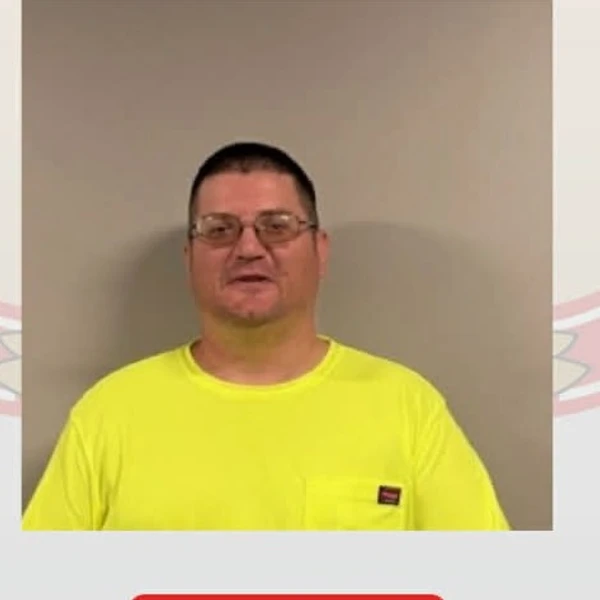
Richard Sheetz
1x
Finalist
Richard Sheetz
1x
FinalistBio
My life goal is to achieve my PsyD in clinical Psychology. I've taken care of my family and others and have done psychology work so I figured I might as well get a degree in it. I've helped family undergoing Alzheimer's disease.
Education
SUNY College at Brockport
Bachelor's degree programMajors:
- Psychology, General
Everest University - Melbourne
Bachelor's degree programMajors:
- Criminology
Miscellaneous
Desired degree level:
Doctoral degree program (PhD, MD, JD, etc.)
Graduate schools of interest:
Transfer schools of interest:
Majors of interest:
- Psychology, Other
Career
Dream career field:
psychology
Dream career goals:
Admirals Aid
United States Navy2005 – 20072 years2nd year apprentice Diver / Welder / Scaffolder in nuke plants
276 carpenters union2023 – 20263 years
Sports
Cross-Country Running
Varsity2001 – 20043 years
Research
Construction Trades, Other
276 carpenters union — 2nd year apprentice Diver / Welder / Scaffolder in nuke plants2023 – Present
Arts
276 carpenters union
Metalwork2023 – Present
Public services
Advocacy
276 carpenters union — 2nd year apprentice Diver / Welder / Scaffolder in nuke plants2023 – Present
Future Interests
Advocacy
Volunteering
Philanthropy
Entrepreneurship
John Acuña Memorial Scholarship
From the Flight Deck to a Future in Psychology
My name is Richard Sheetz, and I served in the United States Navy as an E3 aboard the USS Ronald Reagan, CVN-76. On the flight deck and below, I learned discipline, accountability, and what it means to depend on the person next to you when the stakes are real. Those lessons didn’t end with my enlistment. They’re the foundation for my current and future education goals: to become a licensed psychologist and use that training to serve people who are often overlooked — veterans, at-risk youth, and individuals struggling with mental health.
My military service directly shaped these goals. In the Navy I saw how stress, sleep deprivation, long deployments, and trauma impact mental health long after the uniform comes off. I watched shipmates self-medicate, withdraw, or push through pain because asking for help felt like weakness. I also experienced it myself. The structure of military life kept me steady, but transitioning out showed me how quickly that structure disappears. That gap is where I want to work. My experience taught me that competence and compassion have to go together, and that listening saves lives as much as any technical skill we mastered on the ship.
As a veteran, I’ve faced challenges that have impacted my ability to achieve these goals. The GI Bill helps, but balancing full-time classes, VA appointments, and work to cover living costs is a strain. There’s also the mental shift from a team environment where your role is clear to a college campus where you’re older than most classmates and feel out of place. Some days, navigating paperwork for benefits is harder than any watch I stood. And like many vets, I carry invisible weight — moments from service that surface without warning. Those challenges haven’t stopped me; they’ve clarified why licensed psychologists are so necessary. We need clinicians who understand military culture, who don’t flinch at what we’ve seen, and who can bridge the civilian-military divide.
Psychologists can give back by being active in the community — not just in an office. That means running free groups at churches for Gold Star families, volunteering at vet centers to provide crisis support, and offering educational advisement for transitioning service members who don’t know how to turn military training into college credit. A license is more than a credential; it’s permission to go deeper and do more.
I stay involved now by tutoring math at local high schools through a Navy outreach program, volunteering evenings at a homeless shelter where many guests are veterans, and mentoring younger sailors leaving the service. Service didn’t end when I left the Reagan. It just changed uniforms. My goal as a future psychologist is to keep showing up — for my community, for my fellow vets, and for anyone who thinks they have to carry it alone. If you decide to sponsor my college journey I can help those who need it by becoming a psychologist at University of Brockport. Thank you for your time and support.
STLF Memorial Pay It Forward Scholarship
Leadership Through Service: Teaching, Listening, and Showing Up
The most meaningful volunteering event I organized was “Math & Mentorship Day,” a partnership between my Navy unit and three local high schools in Great Lakes Illinois through my boot camp. I noticed many students were struggling with algebra and geometry, but the bigger issue wasn’t the formulas — it was confidence. A lot of kids assumed they were “bad at math” because no one had time to sit with them one-on-one. So, I worked with my command and school counselors to set up a monthly program where sailors volunteered their off-duty hours to tutor, run problem-solving workshops, and just talk with students about school and life. I even won an award for helping. It wasn't about the award. I am a public servant even though I'm no longer in the service, my job is to help those who need it.
My role was to coordinate the event, but the real work happened at the tables. I spent Saturdays at the high school library breaking down equations step by step, using examples from real Navy jobs — navigation, logistics, budgeting — to show how math actually matters outside a textbook. More often than not, a student would come for help with quadratics and stay to talk about stress at home, college fears, or not knowing what comes after graduation. I learned quickly that listening was just as important as teaching. Sometimes a kid didn’t need a tutor; they needed an adult who wasn’t grading them to say, “That sounds hard. You’re handling a lot.” We connected students with school counselors when needed, and I made sure every kid left with at least one resource, whether it was a practice sheet or a number for tutoring support.
Beyond the schools, I’ve given back by volunteering at homeless shelters near base. On holidays and some weekday evenings, I prep meals, sort donations, and help with intake. The work is unglamorous, but the conversations matter. I’ve met veterans, single parents, and teenagers who aged out of foster care. I can’t fix their housing situation in one shift, but I can offer dignity: eye contact, a name remembered, and time without judgment. Those interactions reinforced what I first saw in the high schools — people don’t just need services; they need to be seen.
This is where leadership through service becomes important. Leadership isn’t a rank or a title. It’s responsibility. It’s noticing a gap and deciding you’ll help fill it, even if it’s inconvenient. In the Navy we’re taught “ship, shipmate, self.” Volunteering lives that out. Organizing Math & Mentorship Day required planning, accountability, and follow-through — the same skills we use on duty. But it also required humility. The goal wasn’t to look good; it was to leave a student or a shelter guest slightly better than I found them.
Service has taught me that you lead best when you serve first. Teaching math gave students tools. Listening gave them space. Showing up at the shelter gave people respect. My plan is to carry that model into my future career as a psychologist: lead by serving and serve by listening. If you choose to sponsor my education through University Brockport, I will be able to do so much more via pursue a career in psychology as a psychologist to help those in need. Thank you for your time, and patience.
Ethel Hayes Destigmatization of Mental Health Scholarship
How Mental Health Has Shaped My Goals, Relationships, and Understanding of the World
My experience with mental health started as survival and grew into purpose. Anxiety hit me hard in high school — sleepless nights before tests, panic in crowded hallways, the sense that I was failing even when my grades said otherwise. I was an A+ student, but my parents threw me out as a kid, because I wanted to join the military. Imagine sleeping at park not knowing if you'd wake up the next day or what am I going to eat today. Therapy in high school through our school counselor taught me language for what I felt and tools to manage it: breathing techniques, cognitive reframing, and the simple power of naming a feeling out loud. That process didn’t just help me cope. It changed how I see people. I learned that behavior is often communication, that anger can be grief in disguise, and that most of us are doing the best we can with the skills we have.
That understanding reshaped my goals. I no longer want a career just for stability or status. I want to become a psychologist because I know firsthand how one skilled, compassionate professional can interrupt a downward spiral. My own therapist didn’t “fix” me — she gave me the tools to fix myself. I want to do that for others, especially those who don’t have access or don’t believe they deserve help.
It’s also changed my relationships. I listen differently now. When a friend withdraws, I don’t take it personally; I check in. When my mom is short-tempered, I ask about her stress instead of matching her tone. I’ve learned boundaries are a form of care, for myself and others. Vulnerability stopped being weakness and became the foundation of real trust.
For the past two years I’ve volunteered at the downtown homeless shelter. I serve meals, hand out blankets, and mostly, I sit and talk. I’ve met veterans with PTSD, teens who aged out of foster care, and mothers battling depression while trying to keep their kids in school. I can offer empathy, resources, and a consistent presence. But I’ve hit a roadblock: I’m not a licensed psychologist. When someone describes suicidal thoughts, severe trauma, or psychosis, my role ends at calling the crisis team or giving them a hotline number. I see the gap between what they need and what I’m qualified to give. It’s frustrating to watch someone open up, only to realize I can’t go further without risking harm or overstepping ethical lines.
That roadblock is why education is my next step. I need graduate training to diagnose, to provide evidence-based therapy, and to legally and ethically serve the people I already care about. My goal is to return to settings like that shelter, but as a clinician who can do more than listen — someone who can treat.
Mental health taught me that healing is possible and that it’s also work. My understanding of the world now is this: compassion matters, but compassion plus competence saves lives. I plan to bring both to my future career. If you choose to sponsor my education to achieving this goal of becoming a psychologist at University Brockport, I can help those who truly need it. Thank you for your time and patience.
Special Needs Advocacy Inc. Kathleen Lehman Memorial Scholarship
About Me and My Plan to Serve Those with Special Needs
I’ve always been drawn to people who communicate differently, learn differently, and experience the world differently. Growing up, my little sister Ericha, who has autism and is nonverbal, taught me that connection doesn’t require spoken words. Playing alongside her, learning his gestures, and celebrating her small victories showed me patience and the power of being truly present. Those moments shaped me. They’re why I’m pursuing psychology, and why I want to dedicate my career to serving individuals with special needs and their families.
As an aspiring psychologist, I plan to make a positive social impact in three concrete ways. First, through direct clinical support. I want to specialize in neurodevelopmental assessments and behavioral therapy for children and adults with autism, Down syndrome, ADHD, and intellectual disabilities. Too many families wait months for a diagnosis or leave appointments with more confusion than clarity. My goal is to provide assessments that are thorough but accessible — explaining results in plain language, outlining next steps, and making sure parents leave feeling equipped, not overwhelmed. Therapy isn’t just about reducing behaviors; it’s about increasing quality of life. I want to help clients build communication skills, self-advocacy, and confidence so they can participate fully in school, work, and community life.
Second, through family-centered care. A diagnosis affects the entire household. Siblings feel overlooked, parents face burnout, and financial strain is real. I plan to run support groups and parent-training workshops that teach practical strategies for daily challenges, from meltdowns to IEP meetings. I’ve seen how one educated, supported parent can change the trajectory for a child. I want to be a resource that strengthens the whole family system, not just the individual client.
Third, through advocacy and education. Stigma is still a barrier. In high school I volunteered with Best Buddies, and I saw how quickly attitudes shifted when peers spent real time with students in special education. As a psychologist, I intend to partner with schools and employers to create inclusive environments. That means training teachers on sensory-friendly classrooms, consulting with businesses on hiring practices, and speaking publicly to dismantle misconceptions. Impact scales when systems change.
My growth so far has come from listening more than talking. Working at a summer camp for kids with disabilities taught me that expertise starts with humility. My goals are to earn my doctorate, become licensed, and eventually open a practice that integrates therapy, family support, and community outreach under one roof.
The impact I hope to have is simple: that individuals with special needs feel understood, families feel supported, and communities feel responsible for inclusion. Everyone deserves to be seen for their strengths. My career will be about making sure they are. If you choose to sponsor and assist my education with this award through this scholarship at University Brockport, I'd be most grateful.
Max Bungard Memorial Scholarship
Choosing My Own Path
I’ve never used drugs. I’ve never drank alcohol. That’s not because I haven’t had the chance — it’s because I made a decision early that my future was worth more than a moment of fitting in. Sticking to that choice hasn’t always been easy, especially when it meant standing apart from friends I cared about.
High school was where peer pressure hit hardest. Some of my closest friends started experimenting freshman year. At first, it was drinking at parties, then drugs on weekends, and for a few, it escalated to pills and worse. I got the invitations: “Just try it once,” “Don’t be boring,” “Nobody will know.” Saying no the first time was awkward. Saying no the tenth time was isolating. I lost friends because I wouldn’t go along. I was called judgmental when I wasn’t — I was just scared for them, and for me. The hardest part was watching people I grew up with change. The jokes stopped. The reliability disappeared. One friend overdosed sophomore year and survived; another dropped out. I spent a lot of nights wondering if I could have said something different, done something more, without compromising my own boundaries.
Those years taught me three things. First, “no” is a complete sentence, but it’s stronger when you have a reason. My reason was my goals: I want to go to college, I want a clear head, and I want to be someone my little cousins can look up to. Second, I learned you can care about people without following them. I still checked on those friends, gave rides home, and listened when they were ready to talk. Setting boundaries isn’t the same as abandoning people. Third, I learned to build a different circle. I found teammates, classmates, and mentors who respected my choices and had ambitions of their own. That community made the pressure quieter.
Moving forward, I plan to keep that clarity. My goal is to study psychology and eventually work in addiction prevention and counseling. I know what it looks like from the outside — the excuses, the spiral, the loneliness on both sides. I want to use that perspective to help teens who feel trapped between their friends and their future. I hope to start peer-education programs where “just say no” is replaced with real conversations about stress, mental health, and how to handle pressure without losing yourself.
I haven’t used drugs or alcohol, and I’m proud of that. But I’m prouder of the growth that came from the challenges around me. I’ve learned that integrity is choosing your values when it costs you something. My impact, I hope, will be showing others that you can stay clean, keep your friends’ humanity in view, and still build a life you don’t want to escape from. If you choose to sponsor my education with this award / scholarship, it will help me advance my education at University Brockport, so I can be an advocate for those who need help and or assistance with their drug and alcohol addiction. Thank you for your time and patience.
Sharra Rainbolt Memorial Scholarship
What Cancer Taught Me About Loss, Hope, and Living
Cancer reshaped my family in ways I still feel every day. I’ve watched it bring us to the edge of grief and then pull us back, and I’ve watched it take someone we couldn’t afford to lose. Both experiences taught me different truths about fear, resilience, and what it means to keep going.
When my little brother was 10, he was diagnosed with Huskins Lafora. I was 14 and suddenly learned what a hospital sounds like at 3 a.m. — monitors beeping, nurses whispering, the ice machine down the hall. I watched him lose his hair, his energy, and his appetite, but never his jokes. There were nights in the PICU when his fever spiked, and doctors spoke in low voices outside his room. I remember standing in the hallway, thinking I was about to lose my best friend. But he made it. After months of chemo, spinal taps, and blood transfusions, he rang the bell. That was almost 20 ish years ago. He’s 36 now, back to stealing my hoodies and beating me in Mario Kart. From him I learned that hope is not naive. It’s work. It’s showing up for appointments, celebrating a good blood count, and believing tomorrow can be better even when today is awful.
My dad didn’t get that tomorrow. He was diagnosed with bone cancer and the doctor promised radiation would treat it. He lied he wanted the insurance money. When dad did the chemo, it helped the cancer spread like wildfire. He was gone in a month after the first chemo session. When we reported him to DORA they just laughed in my face about it. Years after my I watched close friends go back into remission. It moved fast. One month he was coaching my baseball team; three months later he couldn’t climb the stairs. I watched the strongest man I knew become frail, measured in pill schedules and pain levels. We tried clinical trials, dietary changes, anything that might buy time. It didn’t. He died at home last winter, with his mom holding one hand and me holding the other. From him I learned that love doesn’t prevent loss, and that unfairness doesn’t care how much you’ve already endured.
So, what have I learned through this? First, that grief and gratitude can exist at the same time. I’m grateful my brother lived, and I’m heartbroken my dad didn’t. Second, I’ve learned to pay attention. Cancer strips away the illusion that we have unlimited time. Now I call my mom on whenever I can, and I don’t postpone the things that matter. Third, I’ve learned to speak up. At school I volunteer with the Cancer Support Club, running drives for care packages and talking to other students who have sick parents. Silence makes cancer lonelier than it needs to be.
Cancer took my dad and nearly took my brother. It gave me a clarity I didn’t ask for: life is fragile, and the people in it are the point. I carry that into every class, every friendship, every plan I make for the future. I hope you can find it within yourself to fund my future in university. I plan to be a psychologist to help those who are hurting. From personal experience I can help. Thank you for your time and patience.
Learner Mental Health Empowerment for Health Students Scholarship
Why Mental Health Matters to Me and How I Advocate for It
Mental health is important to me as a student because it’s the foundation for everything I try to do. When my mental health is steady, I can focus in class, manage stress from deadlines, and still have energy for friends, family, and the things I care about. When it isn’t, even small tasks feel heavy, and my ability to learn or contribute drops fast. School demands a lot: grades, sports, college plans, social pressure. If I ignore my mental state, burnout comes quickly and takes longer to recover from. Prioritizing mental health means I can show up as a better student, teammate, and son without running on empty.
Personally, I learned this after a stretch in sophomore year when I tried to power through anxiety about tests and family expectations. My sleep suffered, my grades slipped, and I withdrew from people. Reaching out to my school counselor and building small daily habits — 10 minutes of exercise, limiting late-night scrolling, and talking openly with two close friends — made a real difference. That experience showed me mental health isn’t a side issue. It directly impacts academic performance, relationships, and the ability to handle setbacks. As students, we’re expected to perform, but we can’t perform well from a place of constant stress.
Because of that, I try to advocate for mental health in my school and home communities in practical ways. At school, I helped start “No-Stigma Tuesdays” with our wellness club. Once a month, we use homeroom to share a short resource or coping skill, like box breathing before tests or how to ask a teacher for an extension when you’re overwhelmed. We also put QR codes for the counseling center and 988 on bathroom stalls — private spots where people can scan without judgment. I make it a point to check in with teammates after tough games or exams. A simple “You good?” goes further than people think.
At home, advocacy looks like modeling boundaries. I talk with my parents about workload and sleep, and we agreed on “phone-free dinners” so we actually talk instead of doomscrolling. When my younger sister started stressing about middle school, I showed her how I use a planner to break big assignments into pieces so they feel less impossible.
Mental health matters because it’s not separate from success — it is success. Advocating doesn’t require a grand gesture. It’s normalizing the conversation, sharing resources, and creating small pockets of support where people feel safe. If we do that consistently, school and home become places where we don’t just survive the semester, but actually grow through it.
Star Farm Scholarship for LGBTQ+ Students
I'm a straight student who feels like I can do a lot for the LGBTQ+ community by providing psychological services I hear they claim they don't have access to. That is if I can pay for university which is why I'm applying to your scholarship. My university at Brockport is an ally friendly university, yet it's not a free university which is why once again I'm applying for this scholarship to help fellow classmates and future clients who need my help. My finical circumstances are bleak. I'm a 2nd year in the 276 carpenters' union and barely making any money. Kids at panda express are making more than me. I feel like I'm doing seasonal jobs every 2 weeks just to get laid off and told I was an amazing employee. Then have to pound the pavement to find another carpentry job or beg for one. If I'm allowed to become a psychologist, I can become permanently employed by a university health department, or hospital health department to help those who need it. I will be able to provide services at a church or homeless shelter for free for the homeless who need it. Right now, in Rochester, New York unless they have insurance or some form of payment, I've seen people turned away. I feel like I can help those who need someone to talk too. What is stopping me? This magical thing called a BA, MA and PsyD. Right now, I'm signed up for Brockport University. They tell me each semester the cost is roughly $7k a semester. The amount you're offering will more than pay for me to go to this university for my BA and MA degree. How would me getting a degree help these individuals? It will help by allowing me to reduce their stress with treatment plans I can help them identify and use coping mechanisms to combat the prejudice, stigma and internalize shame. Also, with therapy I can help their family by showing them they need to accept their child to prevent what is known in psychology as suicidal prevention and identification via support networks, improving family dynamics, and promote civic empowerment. But, if I'm not a psychologist I can only do so much for friends and those I see at the homeless shelters. Also, I'm not a psychologist yet, so my hands are tied legally to help. I'm asking for your assistance in helping me fund my education so I can be an advocate for those who need someone to talk to. Thank you kindly for your time and patience.
WCEJ Thornton Foundation Low-Income Scholarship
The question is how will attending higher education help achieve a positive impact in the future. It will help me achieve my goal of becoming a PsyD. If I can achieve this goal, I can help those who might be suffering from a mental issue. I'm currently volunteering at a homeless shelter to do this currently. But I can only do so much because I don't have the proper credentials and I am not licensed or a doctor. If you choose to sponsor me as your candidate I promise you won't regret it. My goal is to help others. I have chosen Brockport University for their Psychology BA and MA programs in Clinical Psychology. Their program is listed in the U.S. News & World Report for "Best Colleges". It's down the road from me by 20 minutes from my apartment. This would help me greatly in my goal to help. Why? Because I can get my BA and MA from the same university. The total amount you're offering in this scholarship will help me with my entire undergrad and master's program in psychology. Each time I turn on the TV, I see someone on the news complaining we don't have enough people in psychology to help people who have mental illness. I'm stepping up to help. I need your help with the scholarship. What have I done to save? I'm a second year in the 276 carpenters' union. Yet people at McDonalds earn more than I do flipping burgers. It barely covers the rent, food and I need to come up with tuition. Before this what did I do? I was an English teacher in Japan for a few years. I barely made a dime. I was underpaid, but that's not why I did it. I did it to help the students. When the Wuhan Virus broke out almost everyone lost their jobs and thus their work visas. This is a dream career I've had since like forever. I got into one of the hardest schools to get into. I need your help. I served my country honorably and now I'm asking for your help to help me get to the finish line so I can help others and put a stop to the issues of those who can't afford counseling, or access it, because I'll be able to provide it for free at a church because I'll have the certification. I'll be able to help people in hospitals. I'd be able to go find jobs that they would qualify for so when they leave, I can have them fill out the job resume and turn it in for them. So, when they get out, they have a job waiting for them. I've seen so many healthcare professionals only do it for the pay. I'm doing it to help the community. Not just tap their watch and say that's all the time we have for today. We need to help our community heal. I hope you'll assist me in achieving this dream.
Adrin Ohaekwe Memorial Scholarship
When I was younger the first time, I touched a chess board was in the 3rd grade. My parents bought me a book order, and it was how to play chess. The book was 12 pages with pictures telling me how to pieces moved. It had a small magnetic chess set. By the time I completed the third grade I had taken 3rd in the state of Arizona. Each school I attended I helped set up a chess team and club at the campus. When I was in middle school in Colorado, I helped set up one of my last clubs. I took 4th in state. I used what I learned from playing in tournaments and helped others. I volunteered time at homeless centers and talked to them and played chess with them to see what I could do to help them. Be if it was help them go get a job resume and be a reference so they could land a job. I taught people in my union hall how to play chess. Not everyone is so receptive how to play. I have noticed since moving to New York people play at parks and it's highly competitive. By being competitive I have landed a spot in Brockport University in their BA psychology program. Yet I need help paying for school. I was told y'all have a scholarship that will help me. Uni Brockport has a BA and a MA program in Clinical Psychology. University of Albany has a PsyD in Clinical Psychology. Their program at University of Albany if I get in once you complete it has a master's they give you in Education Psychology. The best way to help kids is through games. I need this scholarship to help achieve this goal. How may you ask? Playing chess provides full mental workout by engaging multiple areas of the brain, including the hippocampus for memory and the prefrontal cortex for planning. It stimulates neuroplasticity, building new neural connections. This enhances conative functions like problem-solving, spatial reasoning and critical thinking. Examples are this guy in front of me is trying to use the 4-move checkmate. I need to recognize what he's doing and play pieces in accordance to derail his goal. This will also help me when I get older because I'm using my brain, so I'll retain my memory longer. Why's that important. Well, most chess players don't suffer Alzheimer's disease so in the end it's worth funding my college. I hope you choose to do so. Thank you for your time.
Henry Respert Alzheimer's and Dementia Awareness Scholarship
clinical psychology addresses Alzheimer’s disease through non-pharmacological, evidence-based interventions. By focusing on diagnostic evaluations, behavioral management, and cognitive stimulation, I believe I can help patients maintain their independence and manage neuropsychiatric symptoms, while simultaneously offering vital emotional support and coping strategies for caregivers. While a definitive cure for Alzheimer's disease (AD) remains elusive, clinical psychology provides essential tools to slow functional decline and dramatically improve the quality of life for both patients and their families. The integration of psychological principles into AD management is multifaceted, targeting the cognitive, emotional, and behavioral symptoms of the disease. The first crucial step in the psychological approach is a comprehensive neuropsychological evaluation. Clinical psychologists which I hope to become, utilizes standardized testing to assess cognitive domains such as memory, attention, and executive function. This assessment is vital for distinguishing between Alzheimer's disease and other conditions like depression, which can mimic early-stage dementia. An accurate diagnosis allows clinicians to map the patient’s current capabilities and tailor interventions to their specific stage of cognitive impairment. Once the disease is identified, psychologists employ targeted non-pharmacological therapies. A cornerstone of this care is Cognitive Stimulation Therapy (CST). Unlike traditional cognitive training, which often frustrates patients with repeated failures on difficult tasks, CST is an evidence-based group program that focuses on general stimulation for thinking, concentration, and memory in a social and enjoyable setting. Activities like reminiscence therapy, music therapy, and reality orientation allow patients to engage with their past, which can improve mood, boost confidence, and foster a sense of purpose. Beyond cognition, clinical psychology is instrumental in managing the behavioral and psychological symptoms of dementia, such as aggression, wandering, and agitation. Psychologists often work with caregivers to identify the environmental triggers or physical discomforts—such as unaddressed pain or sensory issues—that lead to these behaviors. By implementing behavioral strategies like task simplification, daily structuring, and redirecting focus, caregivers can handle these challenges more effectively, often reducing the reliance on antipsychotic medications. Finally, the psychological burden on caregivers is profound. Clinical psychologists provide psychoeducation and individual or group therapy to help families understand the progression of Alzheimer’s disease. Techniques like Cognitive Behavioral Therapy (CBT) are adapted to equip caregivers with stress-management skills, reduce symptoms of depression, and prevent burnout. By supporting the support network, psychologists ensure that the person with Alzheimer’s remains in a stable, empathetic, and understanding environment, ultimately maximizing their well-being and dignity throughout the progression of the illness.