user profile avatar

Rosh Morrow

1x

Finalist

Bio

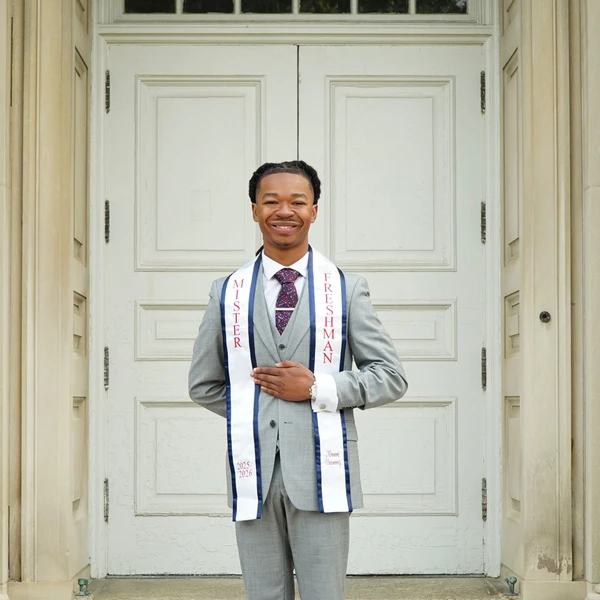
I am Rosh Israel Morrow, a freshman Biology major from the suburbs of Chicago, Illinois, proudly serving as Mister Freshman 2025–2026 at THEE Illustrious Howard University, Mister NAACP, and Public Policy Chair of the Collegiate 100 at Howard University. With aspirations of becoming a reconstructive plastic surgeon, I aim to merge science, service, and leadership to restore not only physical form, but confidence and dignity within underserved communities. My leadership extends beyond titles, rooted in advocacy, policy, and intentional action—whether amplifying student voices, shaping campus initiatives, or advancing conversations that impact our communities. Grounded in faith, purpose, and discipline, I move with clarity in every space I enter. To me, Howard is more than an institution—it is a living legacy of Black excellence, power, and progress. Through every role I hold, I remain committed to serving as both a voice and a vessel: uplifting my peers, expanding opportunity, and building pathways for those who will come after me.

Education

Howard University

Bachelor's degree program
2025 - 2025
  • Majors:
    • Biological and Biomedical Sciences, Other
  • Minors:
    • Chemistry

Oswego East High School

High School
2021 - 2025

Miscellaneous

  • Desired degree level:

    Doctoral degree program (PhD, MD, JD, etc.)

  • Graduate schools of interest:

  • Transfer schools of interest:

  • Majors of interest:

    • Drama/Theatre Arts and Stagecraft
    • Biological and Biomedical Sciences, Other
  • Planning to go to medical school
  • Career

    • Dream career field:

      Medicine

    • Dream career goals:

    • Shift manager

      McDonald’s
      2022 – Present4 years

    Sports

    Track & Field

    Varsity
    2021 – Present5 years

    Arts

    • Oswego East Acting

      Acting
      2023 – 2023

    Public services

    • Volunteering

      St Anthony WW Spiritual Temple — Laborer , Cook and Server at soup kitchens, creative team , Event Committee
      2019 – Present

    Future Interests

    Advocacy

    Volunteering

    Philanthropy

    Entrepreneurship

    SigaLa Education Scholarship
    My mother's passing changed the trajectory of my life. In one of the most difficult seasons I have ever faced, I learned firsthand how fragile life can be and how important compassionate healthcare professionals are to patients and families. While grief could have easily discouraged me, it instead became the foundation of my purpose. It strengthened my desire to pursue a career in medicine and dedicate my life to serving others during their most vulnerable moments. I chose to study Biology on the pre-med track because I have always been fascinated by the human body and the science behind healing. However, my passion extends beyond academics. Medicine combines everything that inspires me: scientific discovery, problem-solving, service, and the opportunity to make a lasting impact on people's lives. Every biology course I take brings me one step closer to understanding how I can improve patient outcomes and contribute to a healthier future for my community. My short-term goals are to maintain strong academic performance, gain hands-on clinical experience, participate in research opportunities, and prepare for medical school. I am committed to developing both the scientific knowledge and interpersonal skills necessary to become an effective physician. In the long term, I aspire to become a surgeon who provides exceptional care while addressing healthcare disparities that disproportionately affect underserved populations. I want to advocate for equitable healthcare access and help bridge the gaps that leave many communities without adequate medical resources. As a Black man pursuing a career in medicine, I recognize that I am part of a group that remains underrepresented in the healthcare field. This reality has profoundly shaped my career goals. Representation matters because patients deserve to see healthcare professionals who understand their experiences and can build trust within their communities. Being an underrepresented minority motivates me to succeed not only for myself but also for the young students who may one day see my journey and believe that they can follow a similar path. I hope to serve as both a physician and a mentor, encouraging future generations of minority students to pursue careers in STEM and healthcare. Receiving this scholarship would significantly reduce the financial burden associated with higher education. Since the loss of my mother, my family has faced financial challenges that have made paying for tuition, textbooks, housing, and other educational expenses increasingly difficult. Rather than worrying about how I will cover these costs, this scholarship would allow me to focus more fully on my studies, professional development, and community involvement. It would provide crucial support as I work toward earning a medical degree and achieving my goal of serving others through medicine. More than financial assistance, this scholarship would be an investment in my future and in the positive impact I hope to make in the lives of countless patients and families.
    7023 Minority Scholarship
    Growing up on the West Side of Chicago taught me that where you begin does not have to determine where you end. I was raised in a community filled with resilience, faith, and people who were willing to help one another despite limited resources. At the same time, I witnessed disparities in education, healthcare, and opportunity that affected many families around me. Those experiences shaped my desire to pursue a career where I could directly improve people’s lives and help create opportunities for others. Today, I am a Biology major at Howard University on the pre-medical track, working toward my goal of becoming a physician. My passion for medicine was strengthened when my mother was diagnosed with cancer during my sophomore year of high school. Watching her navigate treatments, uncertainty, and pain showed me the profound impact healthcare professionals can have on a patient and their family. I learned that medicine is about more than treating illness; it is about restoring hope during some of the most difficult moments of a person’s life. That realization inspired me to pursue a career where I can combine science, compassion, and service to help others heal. One cause that is especially important to me is expanding opportunities for underserved communities, particularly in education and healthcare. Too often, young people from communities like mine are told what they cannot achieve rather than being shown what is possible. Because of this, I have dedicated much of my time to mentorship and youth development. Whether working with younger students, supporting community service initiatives through my church, or helping new college students navigate their transition to higher education, I believe that investing in people creates lasting change. Someone once invested in me, and I feel a responsibility to do the same for others. Through my studies, I hope to address healthcare disparities that continue to impact marginalized communities. As a future physician, I want to provide quality care while also serving as a mentor and advocate for young people interested in healthcare careers. Representation matters. Many students have never met a Black physician, researcher, or surgeon. I want to be an example that excellence is possible regardless of where someone comes from. If awarded this scholarship, it would help me continue pursuing my education while reducing the financial burden placed on my family. Following the loss of my mother, my family has faced significant financial challenges while continuing to support my educational goals. This scholarship would allow me to focus more fully on my studies, research opportunities, service commitments, and professional development rather than worrying about how to cover educational expenses. Ultimately, my goal is not simply to earn a degree. My goal is to use my education to create opportunities, improve health outcomes, and inspire others to pursue their own dreams. Through medicine, mentorship, and service, I hope to leave my community stronger than I found it and create a positive impact that extends far beyond myself.
    Byte into STEM Scholarship
    Some of the most important lessons in my life did not come from a classroom. They came from hospital rooms, church pews, community centers, and the streets of the neighborhood that raised me. I grew up on the West Side of Chicago, where I saw both the strength of community and the reality of inequality. I watched families support one another through hardships, but I also saw how access to opportunities, healthcare, and resources could differ depending on where someone lived. Those experiences planted a question in my mind at a young age: Why do some communities have to fight harder for the same opportunities others take for granted? That question became deeply personal when my mother was diagnosed with cancer during my sophomore year of high school. As I watched her navigate treatments, appointments, and uncertainty, I gained a new understanding of what healthcare truly means. Medicine was no longer just science; it was hope. It was the doctor who explained difficult news with compassion. It was the medical team that treated my mother as a person, not just a patient. Even after losing her in 2024, the lessons from her journey continue to guide me. Her strength taught me resilience. Her faith taught me perseverance. Her life taught me that caring for people is one of the highest callings a person can pursue. Those experiences are what drive my passion for medicine today. I am pursuing a degree in Biology because I want to become a physician who serves communities that are often overlooked. I am particularly interested in reconstructive plastic surgery because it represents restoration in its fullest sense. It is not simply about changing appearances; it is about helping people reclaim confidence, dignity, and a sense of normalcy after trauma, illness, or injury. I am drawn to a field where healing extends beyond the physical and helps restore a person’s quality of life. My commitment to service comes from the belief that success means little if it only benefits yourself. Throughout my life, I have sought opportunities to invest in others because I understand how transformative encouragement and mentorship can be. Many of the opportunities I have received were made possible because someone believed in me first. That has inspired me to become the type of leader who opens doors rather than simply walks through them. The education I am pursuing at Howard University will provide more than scientific knowledge; it will prepare me to address real problems affecting real people. Howard’s legacy of producing leaders who serve their communities aligns with my own purpose. Through my studies, I will gain the skills necessary to provide high-quality medical care while also learning how research, advocacy, and community engagement can work together to improve health outcomes. My goal is not simply to earn a degree or build a successful career. My goal is to create a legacy of service. I want to become a physician who helps patients heal, a mentor who helps students see possibilities for their future, and an advocate who works to reduce the disparities that continue to affect underserved communities. Every challenge I have faced has strengthened my commitment to that mission, and every opportunity I receive brings me one step closer to fulfilling it.
    AROC AI/ML Scholarship
    The first time I wrote a functioning Java program, I realized that coding was more than just a technical skill—it was a way to solve problems. As a Biology major on the pre-med track, I am passionate about improving lives through healthcare, but my exposure to programming and information systems showed me that technology can be just as transformative. Artificial intelligence and machine learning are redefining how we approach medicine, research, and social challenges, and I want to be part of that change. My hands-on experience with technology began through coursework in Java programming and information systems. Learning Java taught me how to think logically, break complex problems into manageable pieces, and create solutions through code. Through information systems studies, I gained a greater understanding of how technology, data, and people interact to support decision-making and improve efficiency. These experiences strengthened my interest in the growing role of artificial intelligence and machine learning across industries, especially healthcare. As I learned more about AI, I became fascinated by its potential to analyze large amounts of data and uncover patterns that humans might overlook. In medicine, machine learning can assist with early disease detection, predict health outcomes, and help healthcare providers make more informed decisions. For someone pursuing a career as a physician, these possibilities are exciting because they have the potential to save lives and expand access to quality care. My interest in AI is also personal. As an African American student in STEM, I recognize the importance of diversity in the development of emerging technologies. AI systems are only as effective as the data and perspectives that shape them. When underrepresented communities are excluded from the design process, technology can unintentionally reinforce existing disparities. I believe diverse voices are essential to creating fair, accurate, and impactful innovations. In the future, I hope to combine my background in biology, healthcare, and technology to address health inequities that disproportionately affect underserved communities. I envision using AI-driven tools to improve patient outcomes, enhance medical research, and increase access to healthcare resources. Whether that means collaborating on predictive healthcare models, supporting medical innovation, or helping bridge the gap between medicine and technology, I want my work to create meaningful change. Artificial intelligence is not simply the future of technology—it is becoming the future of healthcare. By continuing to build my technical skills while pursuing a career in medicine, I hope to contribute to a world where innovation is both inclusive and impactful. My goal is to ensure that the benefits of AI reach every community, especially those that have historically been overlooked, and to use technology as a force for equity, opportunity, and better health outcomes for all.
    William A. Lewis Scholarship
    Pursuing higher education has required me to overcome grief, pressure, and moments of uncertainty that tested both my motivation and my confidence. One of the greatest obstacles I have faced was losing my mother while trying to stay focused on my education and future goals. Her passing changed every part of my life emotionally, mentally, and financially. There were moments when balancing school, responsibilities, and grief felt overwhelming, and continuing forward did not always feel possible. However, that experience ultimately strengthened my determination to succeed and shaped the reason I chose to pursue a career in STEM. As an African American student pursuing a future in healthcare and surgery, I understand the importance of resilience and representation in STEM fields. After losing my mother, I struggled with staying motivated academically because I was carrying emotional pain while still trying to plan for college and my future career. Watching doctors and healthcare professionals care for patients and families during vulnerable moments made me realize the kind of impact medicine can have beyond treatment alone. I began to see healthcare not only as a scientific field, but also as a field built on compassion, leadership, and service. That realization gave me renewed purpose during one of the hardest times in my life. The people who helped me overcome this obstacle were my family members, mentors, teachers, and the community around me who reminded me not to give up on my goals. Their encouragement helped me continue pushing forward even during moments when I doubted myself. Some teachers recognized my potential before I fully recognized it in myself and consistently reminded me that my circumstances did not define my future. Their support taught me the importance of having mentors who believe in students, especially students from underrepresented backgrounds pursuing STEM careers. My faith also became a source of strength during this time. It helped me remain focused on long-term goals instead of allowing temporary setbacks to define my future. Rather than letting grief stop my progress, I decided to use it as motivation to build a career dedicated to helping others through medicine. Every challenge I faced strengthened my desire to become someone who can provide comfort, healing, and hope to families facing difficult situations of their own. I plan to use my STEM education to uplift underserved communities by increasing access to compassionate healthcare and becoming a role model for younger students interested in medicine. Representation in STEM matters because many students never pursue careers in science or healthcare simply because they do not see people who look like them in those spaces. I want to help change that by mentoring students, encouraging diversity in medicine, and showing others that adversity does not have to limit success. Although losing my mother was one of the hardest obstacles I have ever faced, it gave me a deeper understanding of perseverance, empathy, and purpose. It transformed my pain into motivation and strengthened my commitment to pursuing higher education and a future in healthcare. Through STEM, I hope to create meaningful change not only for myself, but also for the communities and families I will serve throughout my career.
    Stephan L. Daniels Lift As We Climb Scholarship
    STEM is more than a career path to me—it is a way to create lasting change in people’s lives. I want to pursue a career in healthcare, specifically surgery, because I have seen firsthand how deeply health can affect a person, a family, and an entire community. My experiences have taught me that medicine is not only about science and technology, but also about compassion, resilience, and service. Through STEM, I hope to combine those values to make healthcare more accessible, supportive, and impactful for underserved communities. Growing up as an African American student interested in STEM, I became aware of how underrepresented Black professionals are in healthcare and science-related fields. Representation matters because patients often feel more understood and comfortable when they see people who share similar backgrounds and experiences. It also matters because diverse perspectives lead to stronger innovation, better problem-solving, and more equitable care. I want to help change the statistics by becoming part of the next generation of Black medical professionals who inspire others to pursue STEM careers without feeling limited by barriers or stereotypes. One of the biggest influences on my career path was the passing of my mother. Losing someone so important to me changed the way I view life and healthcare. During that difficult time, I saw the difference compassionate medical professionals can make for patients and families facing pain and uncertainty. That experience strengthened my desire to pursue surgery because I want to be someone who provides hope, healing, and reassurance during life’s hardest moments. It also motivated me to work harder academically and stay focused on building a future where I can truly help others. I am drawn to STEM because it constantly evolves and challenges people to improve lives through innovation. Whether through advancements in surgical techniques, medical technology, or patient care, STEM has the power to solve problems that affect millions of people every day. I want to contribute to that progress while also ensuring that underserved communities are not left behind. Too often, minority communities face disparities in healthcare access, education, and trust in the medical system. I hope to use my degree to advocate for equitable healthcare and encourage preventative care, education, and community outreach programs that support long-term wellness. Beyond my future career, I also hope to uplift my community by mentoring younger students who are interested in STEM. Many students never pursue careers in science or medicine because they do not see people like themselves succeeding in those fields. I want to show younger generations that success in STEM is possible regardless of background or obstacles. By sharing my experiences and giving back through mentorship and service, I hope to inspire confidence and open doors for others. Pursuing a STEM degree is not just about personal achievement for me. It is about using education, resilience, and compassion to create opportunities, improve healthcare outcomes, and positively impact the lives of others. Through medicine and service, I hope to uplift my community and help build a future where everyone has the support and care they deserve.
    Natalie Joy Poremski Scholarship
    My faith shapes the way I see every human life—with dignity, purpose, and value from the very beginning to the very end. Being Pro-Life is not only a belief I hold, but something I try to live out daily through compassion, service, and the way I treat others. I believe supporting life means more than holding an opinion; it means being willing to care for people during their most vulnerable moments, offering kindness without judgment, and helping create a world where both mothers and children are supported. In my day-to-day life, I live out my faith by trying to serve others with empathy and patience. Whether it is helping classmates, supporting friends through difficult situations, or volunteering my time when I can, I believe small actions reflect larger values. My faith has taught me that every person deserves love, care, and the opportunity to thrive. It has also taught me perseverance during difficult seasons of my life. After experiencing the loss of my mother, I gained a deeper understanding of both the fragility and sacredness of life. That experience strengthened my faith and inspired me to pursue a future where I can help preserve and protect life through medicine. Because of this, I plan to pursue a career in healthcare, specifically surgery. I want to dedicate my life to helping patients heal physically and emotionally during some of the hardest moments they will ever face. My faith motivates me to approach medicine not just as a profession, but as a calling centered on compassion, ethics, and service. I believe healthcare professionals have the unique responsibility to defend the value of every human life, regardless of age, background, or circumstance. Through my education, I hope to create meaningful change by advocating for compassionate healthcare, supporting mothers and families, and ensuring patients are treated with dignity at every stage of life. I want to use both my voice and my career to promote resources, education, and medical care that empower people to choose life and feel supported in doing so. I also hope to mentor and encourage others entering healthcare to lead with both skill and humanity. My faith has given me direction, purpose, and the desire to serve others selflessly. As I continue my education and work toward a career in surgery, I hope to become someone who not only saves lives, but also reminds people that every life has value and deserves to be protected.
    Junie Project Scholarship
    My journey toward a career in medicine did not begin as a clear, polished vision. It began with curiosity, was shaped by experience, and was ultimately defined by loss and purpose. Growing up, I was drawn to science. I was fascinated by how the body functions and how systems work together to sustain life. Initially, my interest in medicine was rooted in that curiosity and a general desire to help others. However, that perspective shifted in a way I could never have anticipated. At the end of my sophomore year, my mother was diagnosed with lymphatic and bone cancer. In that moment, medicine became personal. I was no longer observing healthcare from a distance. I was immersed in it. I witnessed the complexity of treatment, the emotional toll of illness, and the importance of compassionate care. I saw how providers who took the time to connect with patients made a difference far beyond clinical outcomes. When my mother passed away in May 2024, that experience did not deter me from medicine. It clarified my purpose within it. I understood that I did not just want to treat conditions. I wanted to restore dignity in moments when people feel most vulnerable. That realization led me to pursue a path toward becoming a reconstructive plastic surgeon, a field that aligns with my desire to restore both physical form and a sense of identity for patients who have experienced trauma or illness. Attending Howard University has further shaped my goals, values, and sense of purpose. As an HBCU, Howard is more than an institution. It is a space that affirms identity, cultivates leadership, and challenges students to see themselves as agents of change. Being surrounded by Black excellence has reinforced my belief that representation in medicine is not optional, it is necessary. At Howard, I have also grown as a leader and advocate. Serving as Mister Freshman, I have worked to build community, uplift student voices, and create spaces where individuals feel supported. These experiences have strengthened my ability to lead with empathy and intention, qualities that are essential in medicine. Healthcare is not just about knowledge. It is about connection, trust, and understanding. Despite my passion and commitment, the path to becoming a physician is both academically rigorous and financially demanding. This scholarship would provide critical support as I continue my undergraduate education and prepare for the next stages of my journey. It would allow me to focus more fully on my studies, research opportunities, and community engagement without the constant burden of financial strain. More importantly, receiving The Junie Project Scholarship would position me to contribute to bridging the diversity gap in medicine. African Americans remain underrepresented in the physician workforce, a disparity that directly impacts patient outcomes and trust in healthcare systems. As a future Black physician, I aim to serve communities that have historically been overlooked and underserved, providing care that is both culturally competent and compassionate. My journey into medicine has been shaped by both adversity and opportunity. It has taught me resilience, empathy, and the importance of purpose-driven work. With the support of this scholarship, I will continue to grow into a physician who not only treats illness, but restores confidence, dignity, and hope. This is not just a career path for me. It is a commitment to serve, to lead, and to make a lasting impact.
    Sharra Rainbolt Memorial Scholarship
    Cancer did not just affect my family. It changed the rhythm of our lives, the way we understood time, and the way we understood each other. At the end of my sophomore year, my mother was diagnosed with lymphatic and bone cancer. Up until that point, my life moved in a way that felt predictable. School, leadership, family, and faith all had their place. But cancer does not ask for permission before it disrupts everything. Suddenly, doctor visits replaced normal routines. Conversations became heavier. Time, something I had once taken for granted, became the most valuable thing we had. Watching my mother navigate her diagnosis was one of the most difficult experiences of my life, but it was also one of the most formative. I saw firsthand the physical toll cancer takes, but what impacted me most was the emotional and mental weight it carried. There were moments of uncertainty, fear, and exhaustion. Yet, through all of it, my mother remained strong in ways I am still learning to understand. She did not allow her condition to define how she treated others. Even while battling cancer, she continued to pour into me, offering encouragement, guidance, and love. That experience reshaped my understanding of strength. I used to think strength meant having control or having answers. Cancer taught me that strength often looks like showing up when you do not have either. It looks like choosing faith in the face of uncertainty. It looks like continuing to care for others even when you are the one in need. When my mother passed away in May 2024, the impact of cancer did not end. It lingered in the silence, in the absence, and in the responsibility I now carry. Losing her forced me to grow in ways I was not prepared for. I had to learn how to navigate grief while continuing to pursue my goals. I had to learn how to lead while still healing. And I had to learn how to move forward without the person who had always been my foundation. Through this experience, I gained a deeper sense of purpose. Cancer exposed me to the realities of healthcare beyond what any textbook could teach. I saw the difference between treatment and care. I saw how compassion, patience, and presence can impact not just a patient, but an entire family. That understanding is what led me to pursue a career in healthcare, specifically as a reconstructive plastic surgeon. I want to be part of a field that restores more than physical form. I want to restore confidence, dignity, and a sense of identity to individuals who have experienced trauma or illness. Cancer also taught me the importance of resilience. Not the kind that ignores pain, but the kind that acknowledges it and keeps going anyway. There were moments where it would have been easy to lose focus, to allow grief to take over. Instead, I chose to continue. Not because it was easy, but because I understood what was at stake. My family’s experience with cancer has left a permanent mark on my life, but it has also given me direction. It has taught me how to value time, how to lead with empathy, and how to pursue my goals with intention. It has shown me that even in the face of loss, there is still purpose to be found. And that is what I carry with me as I move forward.
    Sgt. Albert Dono Ware Memorial Scholarship
    Service, sacrifice, and bravery are often spoken about as ideals. For me, they have been lived, witnessed, and, at times, required. My understanding of these values did not begin in a classroom or through history alone. It began at home, through the example of my mother and the community that raised me. My mother taught me that service is not about recognition, it is about responsibility. She showed me what it looks like to give to others even when you are pouring from a limited cup. When she was diagnosed with lymphatic and bone cancer, I watched her continue to embody that same spirit. Even as her strength declined, her care for others never did. When she passed in May 2024, I was left with more than grief. I was left with a standard. That standard has shaped how I move through the world. As a student at Howard University, I have committed myself to service that is both visible and impactful. Serving as Mister Freshman, I have worked to create spaces where students feel seen, heard, and supported. My leadership is not rooted in title, but in the belief that access, opportunity, and community should not be privileges, but expectations. Bravery, for me, has not always looked like bold, public moments. Often, it has been quiet. It has been the decision to keep showing up academically while navigating personal loss. It has been the willingness to advocate for others in spaces where their voices are often overlooked. It has been the commitment to pursue a path in healthcare, knowing the years of discipline, sacrifice, and financial strain it demands. These values directly shape how I understand the challenges faced by the African diaspora in the United States. Systemic inequities in healthcare, education, and economic opportunity continue to impact our communities at disproportionate rates. In healthcare specifically, African Americans face higher mortality rates, limited access to quality care, and a longstanding mistrust of medical institutions rooted in historical injustices. These are not abstract issues. They are lived realities. My vision for addressing these challenges begins with both community-centered action and policy reform. One of the most critical areas for change is healthcare equity. This includes expanding access to affordable, high-quality care in underserved communities, increasing the number of Black healthcare professionals, and implementing policies that hold institutions accountable for disparities in treatment and outcomes. Representation matters, but so does structural change. In addition, investment in preventative care and community health education is essential. Too often, healthcare is reactive rather than proactive. By building programs that educate communities about early detection, nutrition, and overall wellness, we can begin to reduce the long-term impact of chronic conditions that disproportionately affect the African diaspora. Beyond healthcare, educational equity remains a cornerstone of long-term change. Schools in predominantly Black communities must be adequately funded, resourced, and supported. This includes access to advanced coursework, mentorship programs, and pathways to higher education. My own journey has shown me the power of mentorship and exposure. Without it, potential remains untapped. Driving this level of change requires collaboration among key stakeholders. Policymakers must be willing to enact and enforce legislation that prioritizes equity. Healthcare institutions must commit to transparency and accountability. Educational systems must invest in underserved communities with intention. Community organizations and faith-based institutions must continue to serve as trusted anchors, bridging gaps between systems and the people they are meant to serve. And perhaps most importantly, young leaders must be empowered to take active roles in shaping the future of their communities. As I pursue a career as a reconstructive plastic surgeon, I see my role as both a practitioner and an advocate. I want to serve communities that have historically been overlooked, providing care that restores not only physical form, but dignity and confidence. At the same time, I want to contribute to broader efforts that address the systemic barriers that create disparities in the first place. Sgt. Albert Dono Ware’s legacy is one of commitment to something greater than oneself. That same commitment is what drives me. Service, sacrifice, and bravery are not distant ideals in my life. They are daily decisions. They are reflected in how I lead, how I serve, and how I envision change. I am not simply preparing for a career. I am preparing to be part of a generation that refuses to accept inequity as the status quo, and that works, collectively and intentionally, to build something better.
    Tawkify Meaningful Connections Scholarship
    Option 1: Relationships & Impact The most meaningful relationship in my life is the one I still carry, even though I can no longer physically hold it, my relationship with my mother. Before she passed, my mother taught me that connection is not just about being present, it is about being intentional. She had a way of making people feel seen without saying much at all. Whether it was through a conversation, a gesture, or simply her presence, she understood that relationships are built in the small moments that most people overlook. As a child, I did not fully recognize the depth of that gift. I just knew that people were drawn to her, and that wherever she went, there was a sense of warmth and belonging. When she was diagnosed with lymphatic and bone cancer, our relationship took on a different kind of depth. Roles began to shift. Conversations became more meaningful. Time became more intentional. I learned what it meant to sit with someone in both strength and vulnerability. I learned that connection is not always about fixing a problem, but about showing up when there is no solution. And when she passed in May 2024, I was left with more than grief. I was left with a blueprint for how to love, lead, and connect with others. That blueprint shapes every relationship I build today. At Howard University, I have had the opportunity to serve as Mister Freshman, a role that requires more than visibility. It requires connection. It requires the ability to listen, to understand, and to create spaces where people feel valued. I approach that responsibility the same way my mother approached relationships, with intention. I do not just interact with people, I invest in them. Whether I am mentoring a student, planning an event, or simply checking in on someone who seems out of place, I try to create the kind of environment that my mother created for others. Losing her also taught me something that continues to guide the way I connect with people. Tomorrow is not promised. That truth has made me more present, more aware, and more willing to engage deeply with others. I no longer take relationships lightly, because I understand how quickly they can change. That understanding has made me more compassionate, more patient, and more intentional in the way I communicate and build trust. As I pursue a career in healthcare, specifically as a future reconstructive plastic surgeon, relationships will remain at the center of my work. Medicine is often viewed through a clinical lens, but at its core, it is deeply relational. Patients are not just cases, they are people with stories, fears, and hopes. The ability to restore someone physically means little if you cannot connect with them emotionally. The kind of care I aspire to provide is rooted in trust, empathy, and understanding, all of which are built through meaningful relationships. The relationship I had with my mother did not end when she passed. It evolved into something that continues to guide me. I honor her not just in memory, but in the way I show up for others. In every conversation, every leadership role, and every space I enter, I strive to reflect the kind of connection she gave so freely. That is the impact of a meaningful relationship. It does not just shape who you are in the moment. It shapes how you move through the world long after it is gone.
    Curtis Holloway Memorial Scholarship
    The person who has supported me most in my educational journey is my mother. Even in her absence, she remains the foundation of everything I am working toward. Before she passed, my mother instilled in me values that continue to guide me daily: faith, discipline, compassion, and the understanding that success is never just about you. She taught me to care deeply for others, to give even when it is not convenient, and to carry myself with purpose. When she was diagnosed with lymphatic and bone cancer at the end of my sophomore year, I watched her embody those values in a way that words could never fully capture. She faced each day with strength, even when her body was weakening. She continued to pour into me, even when she was the one in need. When she passed in May 2024, I lost more than a parent. I lost my first teacher, my greatest encourager, and my sense of normalcy. But I did not lose what she gave me. Her support did not end with her life. It transformed into something I carry. It shaped the way I approach my education, my leadership, and my future. As a student at Howard University, I strive for excellence not just because I want to succeed, but because I understand what it represents. Every class I attend, every leadership role I take on, and every goal I set is done with the awareness that I am continuing something she started in me. Serving as Mister Freshman has allowed me to pour into others the way she poured into me, creating spaces where students feel seen, supported, and valued. Growing up after her passing required me to develop a level of independence and resilience that I might not have otherwise gained so early. There were moments where the weight of loss could have easily shifted my focus away from my goals. Instead, it sharpened it. It forced me to understand why I was pursuing education in the first place. It is not just about personal advancement. It is about impact. I honor my mother through action. I honor her by continuing to pursue my goal of becoming a reconstructive plastic surgeon, a career rooted in restoring dignity and confidence to those who have experienced trauma or loss. I honor her by staying committed, even when it is difficult. And I honor her by refusing to let her sacrifices be in vain. As I move forward, I will build on her support by expanding the impact she had on me to others. I plan to use my education not only to succeed professionally, but to serve communities that are often overlooked and underserved. I want to be the kind of physician who understands that healing goes beyond the physical, because I have lived through a form of healing that had nothing to do with medicine and everything to do with love, support, and resilience. Her support has been instrumental because it gave me a foundation that loss could not take away. As a child who has lost a parent, there is a void that never fully closes. But within that void, there is also clarity. I know who I am because of her. I know what I am capable of because of her. And I know that everything I am striving toward is a reflection of what she believed I could become. I carry her with me in every step forward.
    Jeune-Mondestin Scholarship
    My name is Rosh Morrow, and my path into healthcare was not shaped by a single moment, but by a series of experiences that forced me to understand what it truly means to care for others. Growing up, I was always drawn to science. I was curious about how the body works, how systems interact, and how small changes can have lasting effects. At first, my interest in healthcare was rooted in that curiosity. I wanted to become a doctor because I enjoyed learning and because I knew it was a way to help people. But over time, that reason evolved into something much deeper. At the end of my sophomore year, my mother was diagnosed with lymphatic and bone cancer. What followed was a period of my life that reshaped my understanding of healthcare entirely. I was no longer observing from a distance. I was living through doctor visits, treatments, and the emotional weight that comes with uncertainty. I saw the difference between providers who simply treated a condition and those who treated a person. I witnessed how compassion, patience, and presence could impact not just a patient, but an entire family. When my mother passed away in May 2024, that experience did not push me away from healthcare. It pulled me closer. It made me realize that medicine is not only about extending life, but about preserving dignity, especially in moments when people feel most vulnerable. That realization is what solidified my decision to pursue a career in health science. I am currently a student at Howard University, studying biology on a pre-medical track. My goal is to become a reconstructive plastic surgeon. For many, plastic surgery is associated with aesthetics, but for me, it represents restoration. It is about helping individuals regain a sense of identity after trauma, illness, or loss. It is about giving people the opportunity to feel whole again, both physically and emotionally. Beyond the classroom, I have committed myself to leadership and service. As Mister Freshman, I have worked to build community among my peers, ensuring that students feel supported and represented. I understand that healthcare does not begin in a hospital. It begins in communities, in conversations, and in the way we show up for one another. These experiences have taught me that being a healthcare professional is not just about knowledge, but about empathy and responsibility. The difference I want to make is rooted in both skill and compassion. I want to provide care that goes beyond procedures and diagnoses. I want to be the kind of physician who listens, who understands, and who recognizes the humanity in every patient. I want to serve communities that are often overlooked, where access to quality care is limited and where trust in the healthcare system has been broken. My journey into healthcare has been shaped by loss, but it is driven by purpose. Every step I take is a continuation of what I have learned, both in and out of the classroom. I am committed to becoming a physician who not only treats conditions, but restores confidence, dignity, and hope.
    Grand Oaks Enterprises LLC Scholarship
    My name is Rosh Israel Morrow, a freshman biology major with minors in chemistry and Spanish at Howard University, proudly representing Chicago, Illinois. My journey to this point has been shaped by leadership, service, and resilience—values instilled in me by my family and strengthened through my experiences in my community. Growing up between the city of Chicago and the suburbs of Oswego, I was constantly reminded that opportunity is not always evenly distributed. Witnessing those disparities early in life cultivated both a sense of responsibility and a commitment to create change. One of the most defining moments of my life came during my sophomore year of high school when my mother was diagnosed with lymphatic and bone cancer. Her strength during that battle, and her passing in 2024, profoundly reshaped my understanding of purpose. In the face of loss, I discovered clarity. I became even more determined to pursue a career in medicine—specifically reconstructive plastic surgery—not simply as a profession, but as a vehicle for restoring dignity, confidence, and healing to people who need it most. Her perseverance taught me that compassion and resilience must walk hand in hand with ambition. Attending a Historically Black College or University means far more to me than simply pursuing a degree. Howard University represents a legacy of excellence, advocacy, and intellectual empowerment within the Black community. At an HBCU, education is not just about acquiring knowledge; it is about understanding the responsibility that comes with it. Howard is a place where history, culture, and scholarship converge to remind students that we are the continuation of a long lineage of thinkers, leaders, and changemakers. Walking the same campus where figures like Thurgood Marshall and Toni Morrison once studied reminds me daily that excellence is not optional—it is expected. Being at an HBCU also means learning in an environment that affirms identity while challenging us to lead. It is a place where students are encouraged not only to succeed individually, but to uplift the communities that shaped them. This mission resonates deeply with my own experiences. Throughout my life, I have sought to create spaces for mentorship and empowerment, whether through founding initiatives in high school, leading service organizations, or working with younger students. These experiences have reinforced my belief that leadership is most meaningful when it creates opportunities for others. My choice to study biology is grounded both in passion and in purpose. Healthcare disparities remain a significant challenge in many Black and underserved communities. According to the Association of American Medical Colleges, Black physicians make up only a small percentage of the medical workforce in the United States, despite the critical need for culturally competent healthcare providers. By pursuing medicine, I aim to be part of the solution. Through reconstructive surgery, I hope to help patients regain not only physical function but also confidence and quality of life. However, my impact will not stop in the operating room. I plan to use my education to advocate for health awareness, preventative care, and accessible medical resources in underserved communities. Growing up, I witnessed how limited healthcare access can affect families in profound ways. These experiences motivate me to ensure that the next generation has greater access to information, resources, and opportunities. My success will always be tied to the success of the communities that raised me. For my family, my education represents more than personal achievement—it represents generational progress and the fulfillment of sacrifices made before me. For my community, it represents the possibility that someone who grew up in the same neighborhoods and classrooms can return equipped with knowledge and resources to make a tangible difference. At this moment in time, the need for compassionate leadership and equitable healthcare has never been greater. The knowledge I gain at Howard University will not exist in isolation; it will serve as a tool for transformation. Whether through mentorship, community outreach, or medical practice, I intend to use my education to bridge gaps, uplift others, and create lasting impact. My journey to Howard has been shaped by perseverance, guided by purpose, and fueled by the belief that education is one of the most powerful tools for change. By investing in my education, this scholarship would not simply support a student—it would support a future physician, community advocate, and leader committed to using knowledge in service of others.
    Delories Thompson Scholarship
    In the future, I aspire to become a reconstructive plastic surgeon who not only restores physical form but also inspires confidence and community. I’ve always wanted to merge science, service, and social impact—using my platform to increase representation in a field where Black people make up less than two percent of surgeons. My goal is to build a private practice that reinvests in underserved communities, creating opportunities for future generations of Black doctors and entrepreneurs. I chose to attend an HBCU because I wanted to be immersed in a predominantly Black community—a place that celebrates our brilliance rather than tolerates it. Entering a profession that is largely white, I knew that I needed to be grounded in a space that affirms my identity before stepping into one that might question it. Attending Howard University felt like an act of restoration. The idea of spending my parents’ hard-earned Black money at a white institution that would have denied education to my grandparents felt unjust. Supporting an HBCU means recycling our resources back into the same community that has been systematically set back financially since slavery. Being Black means legacy, innovation, and resistance—it’s carrying the weight of history with the strength to shape the future. My education at Howard is not just about earning a degree; it’s about fulfilling a mission—to heal, uplift, and honor the generations that made this opportunity possible.
    Maxwell Tuan Nguyen Memorial Scholarship
    What inspired me to pursue a career in the medical field was watching my mother’s battle with cancer. Growing up, my mom was the epitome of strength and resilience. She was the one who taught me the value of perseverance, the importance of community, and how to stand tall in the face of adversity. Her courage in the face of illness inspired me deeply, especially as I became more involved in her care. As I watched my mother endure the physical and emotional toll of cancer, I also saw how the medical professionals who treated her had a profound impact not only on her physical health but on our entire family’s well-being. Throughout my mother’s illness, I was exposed to the realities of healthcare in a way I never had been before. Cancer, as it took hold of her body, also fractured the sense of normalcy in our lives. I became her primary caregiver, managing her appointments, handling her medications, and supporting her emotionally as she navigated the grueling treatments. In those moments, I saw firsthand how the work of doctors, nurses, and healthcare professionals could offer both healing and hope. They did more than administer treatments—they listened, offered comfort, and provided a support system that made our burdens more bearable. This experience ignited a passion in me to enter the medical field—not just to become a doctor or a nurse, but to be someone who could offer both technical expertise and compassion during times of crisis. I realized that the medical field is not only about science and technology but about serving people during their most vulnerable moments. My mom’s battle with cancer taught me that healing isn’t just about fixing the body; it’s also about addressing the emotional and psychological challenges that come with illness. It made me want to be a part of that process, to help people in both ways. As I continue my education and move forward in my career, I plan on focusing on oncology or palliative care. I want to specialize in supporting patients and families through cancer treatment, offering not only medical expertise but emotional support as well. Too often, the emotional side of illness is overlooked in favor of physical treatments. But my experience with my mother showed me that mental and emotional health are just as vital to a patient’s recovery. In my career, I want to advocate for more holistic approaches to care, ensuring that patients receive not only the best medical treatments but also the mental, emotional, and social support they need. One of the most powerful lessons I learned from my mother was how to navigate hardship with grace. She fought her battle with cancer with incredible dignity, never letting her illness define her. That same determination will guide me as I pursue my career in healthcare. I am committed to making a difference in the lives of patients and families dealing with illness, just as the healthcare professionals who cared for my mother made a difference in ours. Ultimately, my goal is to provide compassionate, patient-centered care, to treat the whole person—not just the disease—and to offer families the same hope and support that my mother and I received. I want to make a difference not only through my medical skills but through my ability to listen, to empathize, and to guide others through their own moments of struggle. Through my career, I hope to honor my mother’s legacy by making a positive impact in the lives of those who need it most.
    Kyla Jo Burridge Memorial Scholarship for Brain Cancer Awareness and Support
    Everywhere I go, I carry my quilt with me. Not a blanket like Linus, but a quilt that represents my life. When I was young, my mother shared stories of the ancestors—enslaved African Americans seeking freedom through any means necessary. These ancestors used quilts as symbols of hope, signaling safe havens on the Underground Railroad. At first, I saw these stories as distant and irrelevant. But as I grew older and faced personal challenges, I began to understand that my mother’s lessons of resilience—embodied in the quilt—were woven into my own life. My quilt, at first, was a beautiful tapestry—stitched together from lessons, trials, and triumphs. But then, life shattered it. When cancer took my mother’s life, everything fell apart. I quickly became the caretaker of the one who had always nurtured me, all while balancing school, extracurriculars, relationships, and my faith. Cancer transformed our lives in ways I couldn’t have imagined. It wasn’t just the loss of my mother, but the loss of everything I had known as normal. As my mother declined, I realized how crucial it was to raise awareness about the disease and its impact on families. In the months following her diagnosis, I became involved in local efforts to support cancer patients and their families. I volunteered at support centers and participated in fundraising events aimed at increasing awareness and research funding for brain cancer. Through these experiences, I connected with others who were facing similar battles, and I became more determined to advocate for those affected by the disease. Sharing my story with local schools and community organizations helped educate others about the emotional and physical toll of cancer. These efforts gave me a sense of purpose and deepened my empathy for those living with cancer. These advocacy efforts have shaped my personal growth by teaching me resilience and compassion. I learned that, even in the face of overwhelming grief, we can create positive change by supporting one another. My involvement in cancer awareness work helped me understand that while we cannot control the impact of the disease, we can control the way we show up for others, offering hope and comfort in times of hardship. Receiving this scholarship will help me achieve my educational and career goals related to brain cancer awareness and support. I plan to pursue a degree in public health, focusing on cancer research, patient advocacy, and community outreach. This scholarship will allow me to attend a university where I can gain the knowledge and skills to advocate for brain cancer patients and their families. I want to explore the psychological impact of cancer and develop programs that offer both emotional and practical support to those affected. With my education, I envision working with healthcare organizations or nonprofits to improve cancer care and create better resources for patients and families. I am passionate about raising awareness, advocating for mental health support, and ensuring that families facing brain cancer are not left behind in the conversation about treatment. My experiences, both personal and through advocacy, have shown me the importance of community and the need for a more comprehensive approach to cancer care. The skills and knowledge I gain from this scholarship will enable me to make a meaningful contribution to the fight against brain cancer. Like the quilt I carry, I believe that each piece of my journey—the pain, the healing, and the lessons—can contribute to a larger, stronger movement toward awareness, support, and change
    Simon Strong Scholarship
    Everywhere I go, I carry my quilt with me. Not a blanket like Linus, but a quilt that represents my life. When I was young, my mother told me stories of the ancestors—enslaved African Americans seeking freedom by any means. These stories seemed distant, as if they were from another world, one that didn’t touch my own. But as I grew older, I began to see that the lessons of resilience woven into these stories were more relevant than I had ever realized. My mother often ended those stories with a simple phrase: “Suck it up and be a soldier.” That phrase became my anchor, especially when I encountered the storms of life. My quilt, at first, was a beautiful tapestry—stitched together from lessons, triumphs, and experiences. Each tile represented something that had shaped me. But then, life tore my quilt apart. When cancer took my mother’s life, it shattered everything. In less than a year, I went from receiving life lessons from her to caring for her, balancing school, work, relationships, and my faith, all while watching the person who had been my guide and strength fade away. The quilt I had so carefully woven became a collection of torn, broken pieces. Cancer, the disease that slowly took my mother’s health, felt like a shadow that crept into our lives and darkened everything. The agony of watching her decline was unbearable, but I also learned that grief didn’t have the luxury of waiting. Just hours after my mother passed, I had an A.P. test to take. I had no time to grieve, no space to process the loss. But my mother’s voice echoed in my mind: “Suck it up and be a soldier.” In that moment, I realized that I couldn’t let grief consume me. If I let the pain dictate my every move, I risked losing the very parts of me that had been shaped by my experiences. So, I stitched the pieces of my life back together, one step at a time. I didn’t deny the pain, but I refused to let it define me. I knew that to honor my mother, I had to keep moving forward, even if it meant taking tiny steps. Each tile of my quilt, though frayed and worn, was a memory, a lesson, and a piece of me. Grief would always be a part of my story, but it wouldn’t be the whole story. If you’re facing a similar challenge, here’s what I’ve learned: Life can tear your world apart in an instant, and when it does, it’s easy to feel like you’re losing everything. But even in the darkest times, you have the strength to rebuild. Acknowledge the pain, but don’t let it be the only thing you carry. Your quilt may be frayed, but it can still be beautiful, because each piece adds something unique. Take it one day at a time, one step at a time, and trust that over time, you will weave something stronger, something more resilient. And even when it feels like you’re falling apart, know that your quilt will be just as beautiful and meaningful, patchwork and all.
    Suarez-Valverio Scholarship