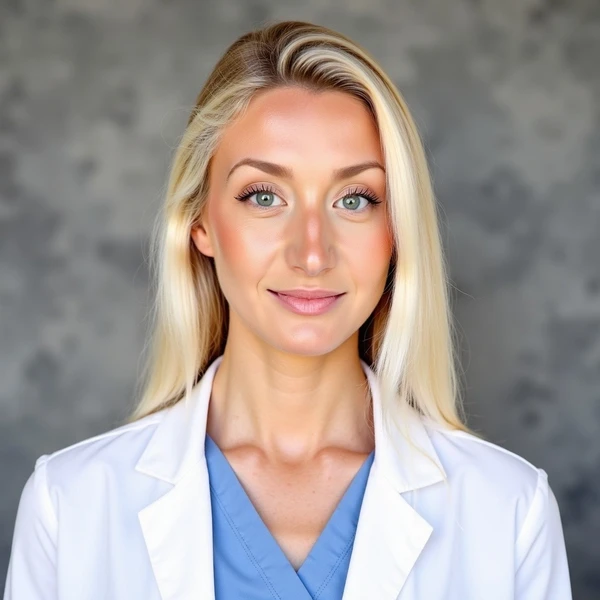
Hobbies and interests
Fishing
Hiking And Backpacking
Chemistry
Child Development
Community Service And Volunteering
Writing
Reading
History
Anthropology
Classics
Literature
Environment
I read books daily
Rose Richmann
2x
Finalist1x
WinnerRose Richmann
2x
Finalist1x
WinnerBio
I am a Family Nurse Practitioner serving my own rural community while pursuing my Doctor of Nursing Practice degree. As a low-income student, relate to the realities of poverty, instability, and the barriers that make higher education feel out of reach. Before becoming a clinician, there were times where I lived out of my car, navigated all that comes with addiction, and then rebuilt my life through recovery, grit, and the belief that my future could be different if I worked for it.
These experiences shaped my values: I believe fiercely in the power of education, the dignity of hard work, and the responsibility to give back to the communities that raised us. I bring this perspective into my practice every day — caring for patients who often face the same obstacles I once did.
Today, I am committed to advancing rural healthcare, advocating for vulnerable populations, and using my doctoral education to expand access, equity, and compassionate primary care. My journey has been difficult, but it has made me resilient, grounded, and deeply motivated to continue learning so I can serve others with integrity and empathy.
Education
University of Michigan-Flint
Doctoral degree program (PhD, MD, JD, etc.)Majors:
- Registered Nursing, Nursing Administration, Nursing Research and Clinical Nursing
Northern Michigan University
Bachelor's degree programMajors:
- Registered Nursing, Nursing Administration, Nursing Research and Clinical Nursing
Miscellaneous
Desired degree level:
Doctoral degree program (PhD, MD, JD, etc.)
Graduate schools of interest:
Transfer schools of interest:
Majors of interest:
Career
Dream career field:
Medicine
Dream career goals:
Sports
Cross-Country Running
2006 – 20104 years
Research
Medicine
Memorial Healthcare Owasso — Researcher2023 – Present
Public services
Volunteering
Global Medical Brigades — Field Volunteer2011 – 2011Volunteering
Global Medical Brigades — Field Volunteer2010 – 2010
Women in Healthcare Scholarship
There are people in healthcare who know medicine, and there are people who know what it feels like to be on the outside of it.
I chose this path because I have felt that cold.
Not the kind of cold you fix with a blanket, but the kind that settles in when you are poor, sick, struggling, or dismissed. The kind of cold that comes when the system meant to help you feels like a locked door. I have seen how easily people fall through the cracks when no one is listening closely enough.
That experience changed the way I look at medicine.
Healthcare is not only about diagnosing disease or prescribing treatment. It is about deciding who gets heard. It is about deciding who matters enough to fight for.
Women know something about that fight.
For generations, women in healthcare have had to push through closed doors—first to be educated, then to be respected, and still today to be listened to in rooms where decisions are made. But that struggle has also given women a particular strength in medicine: we notice the quiet things. We hear the stories that patients are sometimes afraid to speak out loud. We know how it feels when someone talks over you.
That perspective matters.
I am pursuing a career in healthcare because I want to practice medicine differently.
I want to care for the people who are easiest for the system to overlook because I know how quickly someone can become one of them.
Addiction has a way of erasing a person in the eyes of the world. A woman struggling with substance use is often seen first as a problem instead of a patient. Her pain becomes suspect. Her symptoms become inconvenient. Her story becomes something people try to move past as quickly as possible.
I know that world. I know how cold it is to sit in a room where people stop seeing you as someone worth helping.
Recovery gave me my life back, but it also gave me something else: the ability to recognize the people who are silently slipping through the cracks of healthcare. The woman whose chronic pain is dismissed as anxiety. The mother afraid to admit she is struggling because she fears judgment or worse, losing her children. The patient whose addiction overshadows every other medical concern she brings to the table.
Women’s health issues are still too often minimized or misunderstood. Pain is normalized. Symptoms are brushed aside. Concerns are labeled emotional rather than medical. For many women—especially those navigating addiction, poverty, or rural healthcare deserts—being truly heard by a provider is rare.
My goal as a healthcare provider is simple in theory but radical in practice: no one who walks into my care will be written off. Not the woman in recovery. Not the patient whose chart has grown thick with unanswered problems. Not the person who has already been told “everything looks normal” when she knows something is wrong.
Women have always held communities together, often quietly and without recognition. When women step into healthcare leadership and patient care, we bring that same instinct with us—the instinct to notice what others miss and to fight for answers when something does not add up.
I want to be the kind of provider who notices.
Because sometimes the difference between someone continuing to suffer and someone finally getting help is simply this: one person in the room decides to listen.
I know how cold it is out there.
And I intend to spend my career making sure fewer people have to feel it.
Autumn Davis Memorial Scholarship
Mental health has shaped my beliefs, my relationships, and my career in ways I did not fully understand until I began to heal. Long before I worked in healthcare or had the language to describe what I was experiencing, mental illness was already present in my life. It showed up quietly—as persistent depression, anxiety, and eventually addiction—woven into daily functioning while remaining largely unspoken. Like many people, I learned how to appear capable on the outside while privately struggling to stay afloat.
For years, my relationship with mental health was defined by silence. I believed strength meant enduring discomfort without asking for help. When I finally did reach out, I was often met with rushed encounters, fragmented care, or systems that felt difficult to navigate when I was already exhausted. That experience reshaped my beliefs early on: mental illness is not only about symptoms, but about access, understanding, and whether someone feels safe enough to be honest. The absence of those things can be just as damaging as the illness itself.
Mental health challenges also altered my relationships. Those closest to me wanted to help but often didn’t know where to start or how. Fear, misunderstanding, and guilt entered the space between us. I learned firsthand that mental illness does not exist in isolation; it affects families, partnerships, and communities, often leaving people unsure where responsibility ends and compassion begins. That awareness deepened my belief that care must extend beyond the individual and include education, support, and resources for those surrounding them.
Recovery did not erase my past, but it did reframe it. Healing taught me that progress is rarely linear and that stability is built through consistency, connection, and being truly seen. Someone took the time to listen to me without judgment. Someone treated my mental health as something worth addressing fully, not minimizing or postponing. That experience changed the trajectory of my life and, ultimately, my career goals.
Today, I am a Nurse Practitioner pursuing advanced education with the intention of further integrating mental health into primary care. My experiences have shaped how I practice and how I view responsibility in healthcare. I know that most patients are carrying more than what appears on a problem list. I understand how easy it is to dismiss symptoms or normalize suffering when no one asks deeper questions. Because of this, I make it a priority to create space for conversations about mood, coping, stress, and support—especially for patients who may never have been asked before.
Mental health is important to me as a clinician and as someone who has lived the consequences of being overlooked. I advocate for mental health through everyday actions: slowing down in exam rooms, validating experiences, connecting patients with resources, and treating mental health as inseparable from physical health. I also advocate by continuing my education, so I can better address gaps in care and help shape systems that are more responsive and humane.
My goal is simple but deeply personal: to ensure fewer people feel alone while struggling. Mental illness no longer defines me, but it continues to guide my work, my values, and my commitment to being the kind of provider I once needed. Through my career, I hope to help change not only outcomes, but experiences—so that seeking help feels possible, and healing feels within reach.
Jessica Dahl Nurses with Chutzpah Scholarship
WinnerI did not come to nursing through a straight or predictable path. I came to it the way many people come to faith—through desperation, humility, and the realization that I could not survive on my own strength anymore. Addiction stripped my life down to its barest truths. It exposed my limits, my fear, and my need for something greater than myself. In that unraveling, I found both God and my calling.
Chutzpah is often described as courage or boldness, but to me it also means standing upright after being brought to your knees. Recovery demanded a kind of nerve I didn’t know I possessed. It required me to face myself honestly, to speak when silence felt safer, and to trust that showing up—day after day—mattered even when progress felt invisible. That same courage is what led me into nursing. I had learned, through recovery, how to sit with discomfort, how to stay steady in chaos, and how to speak up when something wasn’t right. Those skills didn’t come from textbooks. They came from lived experience and faith rebuilt one day at a time.
My faith did not arrive as certainty; it arrived as surrender. In recovery, I learned to ask for help—first from people, then from God. I learned that strength does not mean doing everything alone, and that humility can coexist with confidence. Nursing reflects those lessons every day. It requires decisiveness paired with compassion, confidence anchored in accountability, and the courage to advocate for patients even when it is uncomfortable. Faith gave me the grounding to trust my judgment while remaining open to learning and correction.
Today, I serve my own rural community as a Family Nurse Practitioner while pursuing my Doctor of Nursing Practice degree. Many of my patients carry stories of loss, addiction, mental illness, and poverty that mirror my own past. When I walk into an exam room, I don’t see diagnoses alone—I see people who deserve dignity, honesty, and care that meets them where they are. My faith reminds me that every person has inherent worth, even when they feel forgotten by the system. That belief shapes the way I practice, the way I listen, and the way I speak up when something isn’t right.
Choosing nursing was an act of audacity. Continuing my education despite financial strain, long hours, and lingering self-doubt takes nerve. But faith has taught me that fear does not mean stop—it means proceed with integrity. I believe deeply that I was given a second chance not just to survive, but to serve. Nursing allows me to do that with both skill and heart.
Chutzpah, for me, is the courage to claim this calling fully. It is trusting that my voice matters, that my experiences hold value, and that my faith—born in brokenness—can guide me to care for others with clarity, strength, and compassion.
Travis Ely Collegiate Angler Memorial Scholarship
I grew up fishing Lake Michigan. My Dad had me in the playpen on the boat before I could walk. Two-stroke and cold morning air will forever be my favorite smell. Through every phase of my life—steady years and broken ones alike—fishing has remained the place I return to when I need grounding, honesty, and perspective.
On the water, character shows up in quiet ways. It’s releasing the 26 inch female walleye and handling fish correctly. It's taking your trash home. It’s respecting limits, conditions, and the fact that the lake doesn’t owe you anything. Fishing has taught me patience and humility—lessons I had to learn the hard way in life. You can do everything “right” and still come home empty-handed. You can also show up tired, discouraged, or distracted and still be rewarded for persistence. That balance mirrors recovery from addiction for me. When I was rebuilding my life, fishing gave me a place where effort mattered more than perfection, and where showing up consistently was enough.
Sportsmanship, to me, is about how you treat people when there’s nothing to gain, when no one is looking. On the water, that means helping another person when their motor won’t turn over, sharing a pattern when someone’s struggling, or celebrating someone else’s success without resentment. I learned early that fishing isn’t about proving superiority—it’s about shared respect for the sport and for each other. That mindset carries into my community as well. Whether I’m caring for patients, working alongside colleagues, or mentoring others, I try to lead with fairness, generosity, and quiet encouragement rather than ego.
Work ethic is where fishing and my professional life intersect most clearly. Good anglers don’t rely on luck—they study conditions, biology, learn from failure, and keep showing up. That same discipline carried me through years of instability, addiction, recovery, and eventually into a career in healthcare. Today, I serve my own rural community as a Family Nurse Practitioner while pursuing my doctoral degree. I work long hours, take on responsibility, and stay committed because I know what it feels like when someone doesn’t.
What Travis Ely represented—a love for fishing paired with humility, dedication, and service—matters deeply to me. Fishing has never been just a hobby; it’s been an actual lifeline. It gave me something steady when everything else in this life felt uncertain. It reminded me who I was capable of being when I forgot.
Priscilla Shireen Luke Scholarship
Service has never been something I viewed as separate from my life or career; it is woven into how I understand responsibility, purpose, and healing. I give because I know what it feels like to need help and not know where to turn—and because someone once showed up for me when I was struggling to survive. That understanding shapes how I serve others today and how I plan to continue serving in the future.
One of the most formative service experiences of my life was volunteering with Global Medical Brigades in Honduras, where I served on two medical missions. Those trips changed me in ways that classroom learning never could. In rural Honduran communities, I saw families walk hours for basic medical care. I treated patients who had never seen a healthcare provider before and others who rationed medication because they could not afford follow-up care. Language barriers, limited resources, and poverty were constant—but so was resilience. Those experiences stripped healthcare down to its core: listening, problem-solving, and showing up with humility. I returned home with a deeper understanding of global inequities and a renewed commitment to serve vulnerable populations wherever I practice.
Today, I give back primarily through my work as a Family Nurse Practitioner in a rural community, where access to care is often limited by geography, finances, stigma, and understaffing. As a low-income student who once navigated addiction before rebuilding my life through recovery, I recognize these barriers intimately. Many of my patients face the same instability I once did—housing insecurity, untreated mental health conditions, and a sense that the system was never built for them. I bring that lived experience into every exam room. I listen closely. I ask questions others may avoid. I connect patients to resources, advocate on their behalf, and work to ensure they feel seen rather than dismissed.
Service, for me, is not episodic—it is daily, relational, and sustained. It means meeting patients where they are and honoring their dignity, even when circumstances are complex or progress is slow. It also means mentoring students, collaborating with community partners, and using my voice within healthcare systems to push for equity and access.
As I continue pursuing my Doctor of Nursing Practice, my goal is to expand the reach of compassionate, community-based care. I plan to advocate for integrated primary and behavioral healthcare, strengthen rural health infrastructure, and remain engaged in global service efforts that emphasize sustainability and partnership rather than short-term aid. My experiences with Global Medical Brigades taught me that meaningful service requires listening first—and that lesson continues to guide my work locally.
Priscilla Shireen Luke’s legacy of service resonates deeply with me. Like her, I believe hope is spread not through grand gestures, but through consistent, selfless action. My journey has not been easy, but it has made me resilient, grounded, and deeply committed to lifting others. I intend to spend my career honoring that responsibility—serving with empathy, integrity, and an unwavering belief in the potential of every person I encounter.
Elizabeth Schalk Memorial Scholarship
Mental illness has shaped my life quietly and persistently, long before I had language for it. It has shown up as depression, anxiety, addiction, and the heavy silence that often surrounds all three. For years, mental illness was something endured rather than addressed—something carried privately while life continued on the surface. That silence affected not only me, but everyone close to me, altering relationships, communication, and the way help was sought or avoided.
Before recovery, I lived in a constant state of emotional exhaustion. I functioned, worked, and met expectations, but inside I was unraveling. Depression distorted my sense of worth, and addiction became both a coping mechanism and a consequence. The most painful part was not the illness itself, but the hopelessness that came with trying to find help. I did not know how to ask for support, and when I did, the system often felt fragmented and inaccessible. Appointments were rushed. Resources were limited. Mental health felt like an afterthought rather than a priority.
Mental illness also shaped my family dynamics. There was love, but there was also confusion, fear, and a sense of helplessness—watching someone struggle without knowing how to intervene or where to turn. I learned early that mental illness does not belong to one person alone; it ripples outward, affecting everyone in its path. Families suffer quietly, often blaming themselves or one another, while the real issue remains unnamed.
Recovery changed my life, but it did not erase my history. Instead, it gave it meaning. I learned that healing is not linear and that stability is built through connection, honesty, and sustained support. Someone took the time to listen to me without judgment. Someone believed I was worth helping even when I did not believe it myself. That experience reshaped how I see my responsibility to others.
Today, as a Nurse Practitioner, I carry those lessons into every exam room. I understand that most patients are struggling with something deeper than what initially brings them in. I know how easy it is to minimize symptoms, to avoid difficult conversations, or to believe suffering is just part of life. I also know how powerful it can be when a provider slows down, asks the right questions, and creates space for honesty. I strive to be the help I once searched for—the person who notices, who listens, and who connects patients to the resources they need without shame.
Mental illness no longer defines me, but it continues to guide me. It has taught me empathy, patience, and the importance of showing up consistently for others. It has influenced my career path and my commitment to integrating mental health care into primary care settings, where early recognition and support can change outcomes for individuals and families alike.
Elizabeth Schalk’s story reflects a truth I know well: mental illness is not a personal failure, and those who live with it deserve dignity, understanding, and sustained care. I carry that belief forward in my work, my education, and my daily life, committed to ensuring fewer people feel as alone as I once did.
Deanna Ellis Memorial Scholarship
Substance abuse did not just interrupt my life; it reshaped it. It altered the way I see people, the way I understand suffering, and the way I define responsibility to others. My experience with addiction is not a chapter I have closed, but a reality that continues to inform how I live, work, and care for those around me.
Addiction stripped my life down to its most basic truths. It exposed how quickly stability can unravel and how easy it is to become invisible while still showing up every day. At my lowest point, I lost trust in myself and strained relationships with people who loved me deeply. I learned firsthand how shame isolates, how fear keeps people silent, and how difficult it is to ask for help when you believe you should already know better. Recovery forced me to rebuild those relationships slowly, with honesty and accountability, and it taught me that trust is restored through consistent action—not words.
One of the most important lessons recovery gave me is this: the antidote to addiction is not willpower alone, but connection. I learned early on that when I am struggling—when I feel disconnected, overwhelmed, or quietly slipping—the most effective way back is to help someone else. Not in grand gestures, but in simple acts: listening, showing up, offering support without expectation. Giving to others steadies me. It reminds me that my pain has purpose if it can be used to ease someone else’s burden.
This belief now anchors my relationships and my career aspirations. I am drawn to people who are hurting, often before they have words for it. I notice what goes unsaid. I understand that relapse, resistance, and anger are often expressions of fear rather than failure. Because I have lived it, I do not see addiction as a moral flaw or a lack of motivation. I see it as a human response to pain—and I believe deeply in recovery as a lifelong, shared responsibility.
My professional path reflects that belief. Working in healthcare has reinforced how frequently substance use disorders are misunderstood, minimized, or treated as secondary problems rather than central ones. I have seen how easily people fall through the cracks when systems focus on symptoms instead of stories. My goal is to be the kind of provider who offers safety instead of judgment, consistency instead of conditional support, and hope grounded in reality rather than platitudes.
Addiction changed the trajectory of my life by clarifying what matters. It taught me that healing is not something we achieve alone and that the most meaningful way to stay sober is to pass the gift forward. Helping others is not separate from my recovery—it is my recovery. And it is the lens through which I will continue to serve, advocate, and give, long after this scholarship and this degree are behind me.
ADHDAdvisor Scholarship for Health Students
Mental health is central to my career. I know what it feels like to function on the outside while struggling internally, to show up to responsibilities while quietly trying to survive. That personal experience is what allows me to recognize the same struggle in others—especially in patients who come into the exam room believing their problem is purely physical, when often there is something deeper asking to be seen.
In primary care, I’ve learned that most people don’t come in and say they’re anxious, depressed, or overwhelmed. They talk about fatigue, pain, headaches, insomnia. They apologize for crying. They minimize their stress. I’ve made it a point to slow down in those moments—to ask how they are coping, who supports them, and whether they feel safe talking about what’s going on in their lives. Sometimes that means connecting someone with counseling or community resources. Sometimes it simply means being the first person who listens without judgment. I don’t underestimate how powerful that can be, because I know what it meant when someone finally did that for me.
Supporting mental health hasn’t just been something I do for patients; it’s something I practice with colleagues and peers as well. Healthcare can be isolating, especially when the expectation is to stay strong at all costs. I try to be honest about my own experiences so others feel less alone in theirs. Creating space for real conversations—about burnout, grief, or fear—has become just as important to me as any clinical skill.
My studies and future career are a continuation of that same commitment. I plan to pursue advanced training that allows me to integrate mental health care directly into primary care settings, where so many gaps exist. Too often, patients are told to wait months for help or navigate systems they don’t have the energy or resources to manage. I want to be part of changing that reality by addressing mental health at the first point of contact.
I help others with their mental health because I understand how invisible the struggle can be. I plan to continue advocating for mental well-being by treating the whole person—mind and body—because no one should have to suffer quietly, believing they are alone.
Lost Dreams Awaken Scholarship
Recovery is the moment my life split into “before” and “after.” My “before” ended in 2020, when I was arrested in my scrubs and walked—cuffed—through the ER of the same hospital where I had been caring for patients just 36 hours earlier. Shame gutted me. But it also forced me to decide whether I was going to keep destroying myself or try, for the first time, to build something different.
In the beginning, recovery was mostly survival. It was trembling in meetings, apologizing for no reason, learning how to sit with myself without reaching for something to numb my exposed nerves. Some days, the only goal I could manage was simply not drinking. I tried to believe people when they told me I wasn’t past saving. The 12 steps gave me structure. Service work gave me purpose. Slowly, life began to open its hands again.
Today, recovery is the center of everything I do. It’s why I show up for patients the way I do—as a Family Nurse Practitioner, and now as a doctoral student—especially those who remind me of the person I used to be. It’s the reason I can sit across from someone in pain and understand them without judgment. Recovery is not just abstinence; it is the will to live, to tell the truth, to be useful, and to keep choosing a better path even on the days when it would be easier not to.
It gave me my future. Now I try to honor it.
Community Health Ambassador Scholarship for Nursing Students
I didn’t grow up dreaming of becoming a nurse. In fact, there were long stretches of my life when I couldn’t imagine a future at all. For years, survival was the only goal I could hold onto. I’ve slept in my car. I’ve woken up shaking and hungry, unsure which problem to face first. I’ve traded food for whiskey more times than I like to admit. Addiction hollowed me out, and the consequences were real—legal troubles, broken relationships, a life that felt like it was collapsing all around me.
But even in the hardest moments, I remember kindness from strangers. Those small gestures planted something in me—a quiet belief that connection can be life-saving. Back then, I didn’t have a name for the feeling. Now I do. It was the beginning of what would eventually lead me to nursing.
Nursing wasn’t a dramatic calling. It started as a place where I could anchor myself, where science met humanity in a way that made sense to me. It felt like somewhere I could stand without slipping back into the life I fought so hard to leave. But as I moved deeper into the field, something shifted. I began to see that nursing wasn’t just a job. It was a way to repay the world for every act of grace that kept me going when I didn’t think I deserved it.
My recovery taught me how to rebuild myself one decision at a time. The 12 steps became the architecture of my new life—steady, honest, rooted in service. Those steps led me back to school, into clinical practice, and eventually into my role as a Family Nurse Practitioner in the same rural community that raised me.
In rural healthcare, the challenges are everywhere but rarely spoken aloud. Patients ration medication because they can’t afford refills. Families delay care because the nearest clinic is an hour away. People struggling with addiction walk into exam rooms with their eyes down, bracing for judgment. I recognize the look because I once wore it myself.
The people I care for deserve better. They deserve a provider who understands the weight they carry and refuses to let them face it alone. They deserve someone who sees their humanity before their diagnosis. They deserve access, respect, and a system that doesn’t break them further.
My goal is to build programs that strengthen addiction recovery resources, improve chronic disease management, and expand accessible primary care in rural communities. I want to use my education to close the gaps I once fell through. I want to make sure that the people who come after me don’t have to fight the same battles without support.
Nursing gives me a way to turn my past into purpose. My suffering taught me how fragile people can be. My recovery taught me how resilient they can become. My career gives me the privilege of standing at that intersection every day.
This scholarship would ease a financial burden that weighs heavily while I balance clinical work, shifts as a cardiac nurse, and demanding doctoral coursework. But more than that, it would help me continue moving toward the future I’m determined to build—one where compassion is not optional, where rural patients are not overlooked, and where no one feels like their story disqualifies them from worthy care.
I want to be kind and steady enough to hold someone’s hope for them on the days they can’t hold it themselves. Nursing gives me the chance to do that. And that is why I’m here—still learning, still growing, still committed to serving the place that saved me.
Ella's Gift
There are chapters of my life that I still have trouble talking about without my voice catching a little. Not because I’m ashamed anymore, but because I remember exactly how it felt to live in those moments—hungry, exhausted, scared, and so lost I wasn’t sure there was anything left in me worth saving. I’ve traded food for whiskey. I’ve slept in the back of my Honda CRV for weeks at a time. I’ve been handcuffed, arrested, and forced to look straight at the consequences of the life I was living. Addiction tore through everything I had, and then it took more.
But even in the middle of all that chaos, there were people who showed me small, quiet acts of kindness. A warm meal. A ride. A conversation where someone spoke to me like I still had worth. I never forgot those moments. They’re the reason that, today, all I want to be is that same kind presence for someone else—especially when the world feels hopeless.
My recovery wasn’t sudden or dramatic. It was slow, almost stubborn in the way it unfolded. One small decision at a time. One meeting at a time. One day at a time. The 12 steps became the structure I rebuilt my life on. They grounded me when everything felt like it could slip through my fingers. Giving myself to others, being of service, and reaching back to help the person behind me became the backbone of my sobriety—and it still is.
Those steps eventually led me to a completely different life, one I never imagined I could hold. Today, I am a Family Nurse Practitioner caring for the same rural community that raised me, and I’m pursuing my Doctor of Nursing Practice degree to better serve patients who often face the same barriers I once did. I work full-time as a clinician, pick up shifts as a cardiac nurse on the floor, and dedicate every spare hour to the education I once thought was out of reach.
People often assume rural healthcare is quiet, but it’s full of battles most will never see. Patients who can’t afford gas to make it to their appointments. Families juggling chronic illness with unstable housing. Individuals caught in the grip of addiction but terrified to say it out loud. When I walk into an exam room, I don’t just see patients—I see reflections of my own history. That connection shapes the way I practice, and it fuels my determination to keep pushing forward in my education.
My decision to pursue advanced education wasn’t a single moment of clarity. It grew slowly as I clawed my way back from the bottom. I learned to value education in a way only someone who has nearly lost everything can. When I study, when I read, when I care for patients, I do it with the memory of who I used to be sitting right beside me. My work is a promise to the younger version of myself who wasn’t sure she would make it.
But pursuing this degree while working two demanding jobs comes at a cost. Tuition doesn’t care how tired I am or how much my community needs me. As a low-income student, every semester is a puzzle of bills, loans, long shifts, and late nights. This scholarship wouldn’t just help financially—it would lift a weight that has been sitting on my shoulders for years. It would allow me to breathe a little deeper, to focus more fully on my patients and my studies without constantly calculating what else I need to sacrifice to keep going.
My future goals are clear: expand access to rural care, build stronger addiction treatment and recovery resources, and create systems where people don’t fall through the cracks. I want to make healthcare kinder. More human. More accessible. My past was messy, painful, and heavy—but it gave me a kind of grit and empathy that no textbook could ever teach.
I’m not trying to become someone new. I’m just trying to become someone useful—someone steady, someone compassionate, someone who shows up the way others once showed up for me. Education gave me the chance to rebuild my life, and now I’m committed to using that life to help others rebuild theirs.
Skin, Bones, Hearts & Private Parts Scholarship for Nurse Practitioners, Physician Assistants, and Registered Nurse Students
My motivation for pursuing advanced education didn’t arrive all at once. It grew steadily, over years of trying to hold my life together and survive on hope. Long before I became a Family Nurse Practitioner in my own rural community where I was raised, there were periods when the future felt impossibly far away. I spent nights parked under streetlights, sleeping in my Honda CRV, telling myself that if I could get through one more day without giving up, things would change. Recovery from addiction taught me to rebuild myself one small decision at a time. That slow rebuilding is what led me back to school, back into healthcare, back to my purpose, and eventually into the work I do now.
Today, I care for patients whose struggles feel painfully familiar. Rural healthcare is full of quiet, unseen battles—people working multiple jobs just to keep the lights on, families living with untreated chronic illness because they don’t have reliable transportation, individuals wrestling with addiction who are terrified to ask for help. When I step into an exam room, I don’t see “cases.” I see pieces of my own story reflected back at me. That connection drives me to pursue my Doctor of Nursing Practice degree. I want the clinical depth, the leadership training, and the broader perspective that advanced education brings, because the people I serve deserve a system that works for them—not one that leaves them behind.
My motivation is also shaped by the belief that education is both a privilege and a responsibility. I value learning in a way that can only come from knowing what it feels like to have your life reduced to pure survival. When I read, study, or engage with research, I do it knowing I once had nothing—no one, no stability, no real plan—only grit and a fragile sense of possibility. Every step I’ve taken since then has been an act of reclaiming a future I once doubted I’d reach.
This scholarship would make a significant difference for me. Balancing full-time clinical work, work as a floor cardiac nurse, and doctoral coursework is exhausting, but what makes it even heavier is the financial strain. Tuition costs don’t pause just because the work is meaningful. Bills don’t shrink because the readings are long, or because rural patients need you, or because you’re trying to take the next step in your career. As a low-income student, each semester forces difficult decisions about what I can afford, what I have to postpone, and how much more I can stretch myself without breaking. Financial support would ease that pressure and allow me to concentrate on what matters most—my patients and my education.
More importantly, this scholarship would bring me closer to the future I’m working toward: expanding access, building programs for vulnerable populations, strengthening addiction treatment resources, and ensuring that rural communities receive the kind of compassionate, competent primary care they deserve. My past has been messy and complicated, but it is also the reason I am so determined to keep going. Education gave me the chance to rewrite my life, and now I’m trying to use that second chance to make sure other people have one too.