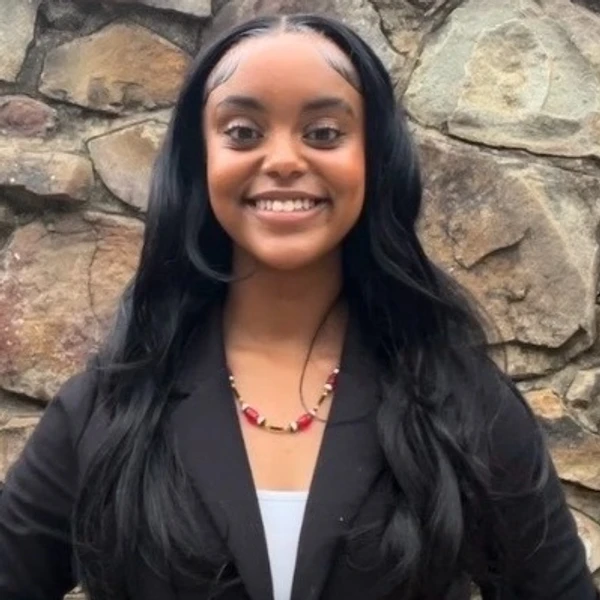
Roofie (Roof-eh) Konshie
1x
FinalistRoofie (Roof-eh) Konshie
1x
FinalistBio
I’m Roofie Konshie, a first-generation Ethiopian American student at Pomona College studying Economics and Politics. I grew up in Arkansas, which shaped my passion for advocacy, equity, and community development. My experiences include leading mental health campaigns, working in a criminal courtroom, serving as a camp counselor at a summer camp for children with special needs, supporting education outreach through museum programming, and participating in corporate market research projects. I’ve worked in many different spaces, but what connects them all is my love for helping people and making a meaningful impact.
Education
Pomona College
Bachelor's degree programMajors:
- Economics
Miscellaneous
Desired degree level:
Master's degree program
Graduate schools of interest:
Transfer schools of interest:
Majors of interest:
Career
Dream career field:
Market Research
Dream career goals:
I want to open a non profit.
Consumer Behavior Analyst
Beats By Dre2025 – 2025
Sports
Volleyball
Junior Varsity2022 – 20231 year
Research
Anthropology
Pomona College — Researcher and Founder2025 – Present
Public services
Volunteering
Mayors Youth Coucil — Lead Volunteer2020 – 2024
Cyrilla Olapeju Sanni Scholarship Fund
Before I understood the value of education, my parents walked 20 miles under the scorching Ethiopian sun to reach it, on empty stomachs with full hearts. They were just kids, but they trekked. They were just kids, but they walked 20 miles without a grain of rice or a drop of water in their stomachs. They were just kids, but they understood how important education was.
When I was three, Ethiopia had become unsafe and hard to live in, so my family moved to the United States. But those years were still tough. Even after coming to America, my parents still searched for food, water, and a sense of safety. We did not have much but had each other, which meant everything. My parents left their families and everything familiar to give me and my siblings a chance they never had. My dad worked over forty hours a week as a caregiver, and my mom took any job she could find, like Jimmy John’s, Best Western, or caregiving. My parents did not have the luxury to receive an education in the United States, but they cheered each of their children through it.
We lived in an impoverished area in Arkansas. My family moved to this state because they knew people there, but a few months later, those people moved away. Living in Arkansas was a trial for an African family. We constantly felt isolated and alone, but this sacrifice was worth it because my family wanted me and my siblings to pursue our education. At this point, my parents had already sacrificed their old lives, family, comfort, and now a safe place for the chance to give us a future.
I was just a kid, but I experienced people mocking my name. I was just a kid, but I witnessed my parents grab food from their plates and put it on mine. I was just a kid, but I watched my parents fight to give me and my siblings a seat next to other children.
My siblings and I navigated the challenges of the Arkansas education system. Despite being one of the lowest-ranked systems in the United States, this did not deter us. Throughout high school, I worked a job, was enrolled in every AP class my school offered, and involved myself in debate, Girls State, and everything my school offered.
While my siblings were in college, I saw my parents scrape for pennies and work overtime to pay the gaps in tuition. I worked throughout high school to afford my extracurriculars.
Today, I am using my education to give back. Through Pomona’s undergraduate research program, I am studying the economic integration of Ethiopian immigrants in the United States. I am interviewing immigrants across income levels and cities like Portland, DC, and New York, learning about the barriers they face in employment and the community structures that support them. My goal is to develop a digital platform with language tools, legal resources, job support, and culturally specific directories. One day, I hope to expand this platform into a nonprofit that serves not only Ethiopian immigrants but also African immigrants.
As the child of Ethiopian immigrants, I feel a responsibility to ensure others do not face the same isolation we did. Education means so much to me and my family. Just like my parents once walked 20 miles for an education, I now walk into every opportunity knowing I carry their strength with me. With every step I take in my education, I carry my family’s story, and I hope to make room for many more.
Dr. Soronnadi Nnaji Legacy Scholarship
I am a proud first-generation Ethiopian American, raised in Arkansas by parents who came to the United States with little but the hope that their children would thrive. My parents fled a country torn by political unrest and economic instability, bringing with them the strength of a culture rooted in resilience, family, and education. That foundation has shaped every part of who I am, how I learn, how I lead, and how I give back.
Growing up in a state where I often felt invisible, I understood early on the importance of representation and community support. I did not meet another Ethiopian my age until college. My family had no access to local Ethiopian cultural centers, and few resources spoke to our experience. So, I began to look for ways to create space not just for myself, but for others like me.
One of the most meaningful ways I have contributed to my community was through my work on the North Little Rock Mayor’s Youth Council, where I completed over 300 hours of service and led a mental health awareness campaign targeted toward communities of color. I noticed that conversations around mental health were often stigmatized, particularly in African immigrant households. By creating events and social media materials that made these topics more accessible, we helped normalize seeking support among youth who had never seen mental health care as an option.
I also served as a counselor at a camp for children with special needs, worked with students applying to college through Matriculate, and interned in a district courtroom, where I saw firsthand how language and cultural barriers can limit access to justice for immigrants. These experiences deepened my understanding of how systems often overlook the communities I come from, and they made me even more determined to be part of the change.
As a student at Pomona College studying Economics, I have taken this passion further through independent research. This summer, I am studying the economic integration of Ethiopian immigrants in the United States. I am conducting interviews across cities with large Ethiopian populations to understand the employment barriers they face and the resources that help them succeed. This work is both academic and deeply personal. It stems from watching my parents work long hours in low-paying jobs, not because they lacked ability, but because they lacked access to tools designed for them.
My long-term goal is to create a digital platform and nonprofit that offers Ethiopian and African immigrants AI-supported job assistance, language help in Amharic and Afaan Oromo, legal resources, and directories for culturally relevant services. I want to make sure that the next generation of immigrants has more support than my family ever did.
Receiving the Dr. Soronnadi Nnaji Legacy Scholarship would support more than just my education. It would directly support the continuation of this work. As someone passionate about STEM and data-driven change, I plan to use my background in economics and technology to design community-rooted solutions that uplift African immigrant populations. The scholarship would allow me to deepen my STEM education without financial burden and continue building tools that reflect the realities of underserved communities.
My Ethiopian heritage has taught me the value of sacrifice, the power of community, and the importance of never forgetting where you come from. I hope to carry those lessons forward in every space I enter and to leave the door open wider for those coming next.
Edward Dorsey, Jr. and Audrey Dorsey Memorial Scholarship
I am the daughter of Ethiopian immigrants who arrived in the United States with no connections, no community, and no safety net. We settled in Arkansas, where we were often the only Black family in many spaces. I did not meet another Ethiopian my age until college. Despite these challenges, my parents worked tirelessly to provide for us, my dad as a hospital aide and my mom working multiple jobs wherever she could. They taught me that opportunity is not given, but created. That lesson has shaped every step of my educational journey.
Today, I am studying Economics and Politics at Pomona College, with the goal of using my education to create practical, data-informed solutions that empower Black people, especially Black immigrants, in business and beyond. I believe deeply in access, visibility, and self-determination. For too long, Black entrepreneurs and professionals have navigated systems not built for us. I want to change that.
My focus is on economic empowerment through technology and community-rooted resources. This summer, I am conducting independent research on the economic integration of Ethiopian immigrants in the United States. I am interviewing immigrants across three major cities—Portland, Washington DC, and New York—to understand how they find work, navigate language barriers, and access opportunity. Through this research, I am building a foundation for a digital platform that will connect Black immigrants with employment resources, legal assistance, financial literacy tools, and culturally competent support systems.
Approximately 4.6 million Black people in the United States are immigrants, yet their unique challenges are often overlooked in conversations about equity. This platform will center the needs of Black immigrant entrepreneurs and workers, who often face compounded challenges including racial bias, lack of generational wealth, and limited professional networks. By providing accessible tools and information, I aim to close those gaps and help people build thriving careers and businesses, no matter where they start.
In the business world, access to capital, mentorship, and market information often determines success. That is why I plan to use my economics training to analyze systemic disparities and develop new models that support Black business growth, whether through targeted microloans, mentorship programs, or localized business hubs. I want to build networks that uplift Black excellence and create pathways where there were none before.
My education also equips me with the political lens to advocate for inclusive economic policies. I understand that entrepreneurship does not exist in a vacuum. It is shaped by policy, regulation, and institutional access. By combining my policy knowledge with business insights, I hope to be part of a generation that builds equitable economic ecosystems that empower Black business leaders.
Representation also matters. I am one of only three students from my graduating class in Arkansas to attend college out of state. I was the only Black student in many of my AP classes, in debate, and at Girls State. Still, I showed up. I led. I succeeded. I want Black students who come after me to see that they belong in boardrooms, start-ups, and research labs. They belong everywhere decisions are made.
Long term, I want to turn my research and platform into a nonprofit that not only supports Ethiopian immigrants but expands to serve the broader African and Black diasporic communities. The goal is not just access. It is ownership, leadership, and lasting impact.
I believe business can be a tool for justice. With my education, I intend to use it that way.
FLIK Hospitality Group’s Entrepreneurial Council Scholarship
I grew up in a state where, according to the census, I did not exist.
When I was three, my family fled Ethiopia and came to Arkansas, hoping this new place would bring us the peace we had been searching for. We had no community, no one who spoke our language, and no support. My dad worked over forty hours a week as a hospital aide, and my mom took whatever jobs she could find, from sandwich shops to nursing homes, doing everything she could to support us. They left behind everything so my siblings and I could have a chance to follow our dreams.
I was just a kid, but I saw everything. I saw my name mocked, my parents’ accents ridiculed, and their plates emptied so we could eat. I saw how hard they fought to give us a seat at a table that was never meant for us. We struggled, but their resilience shaped me. It made me ask: what if the systems had been designed with us in mind?
As I grew older, that question became a mission. This summer, I am conducting research on the economic integration of Ethiopian immigrants in the United States. I am traveling to Portland, DC, and New York to interview people across income levels, from rideshare drivers to civil servants. My goal is to understand the barriers they face and the tools that help them succeed.
From this, I am building a digital platform designed to support immigrant wellness through technology. This platform will provide AI powered language assistance in Amharic and Afaan Oromo, connect users with job listings, legal aid, and mental health resources, and map culturally specific services and community hubs. I want to reduce the stress, fear, and confusion that immigrants often face by offering a tool that speaks their language, both literally and culturally.
Technology can be a great equalizer, especially for vulnerable populations. In the next five years, I plan to expand this platform into a nonprofit that serves African immigrants across the country and eventually globally. By leveraging accessible technology, I want to create infrastructure that supports people not only economically but emotionally, because wellness is more than healthcare. It is knowing you are not alone in a system that was not built for you.
I study economics and politics to understand the structures that create inequality and how to dismantle them. Economics teaches me to analyze labor markets and income gaps. Politics shows me how systems are formed and whom they serve. But neither field means anything without real people at the center. That is why my approach to social justice and environmental impact is community rooted. I believe the best change comes from listening first.
My long term goal is to build something scalable and sustainable. A multilingual, mobile first nonprofit that evolves based on feedback, adapts to different communities, and continues to center the voices of those often left out. Ethiopia is facing political violence, economic instability, and displacement. More immigrants will come, and I want to ensure they arrive to support, not silence.
By merging technology and wellness, I hope to create a positive impact that extends far beyond my local community. Because I may have grown up in a place where the census said I did not exist, but I am working every day to make sure that others like me are seen, supported, and empowered to thrive.
I Can and I Will Scholarship
Before I understood the value of education, my parents walked 20 miles under the scorching Ethiopian sun to reach it, on empty stomachs with full hearts. They were just kids, but they trekked without food or water because they believed knowledge was worth the struggle.
When I was three, Ethiopia had become unsafe, so my family moved to the United States. But even in America, my parents still searched for food, water, and safety. We did not have much, but we had each other. My dad worked over forty hours a week as a caregiver, and my mom took any job she could find, at sandwich shops, motels, or nursing homes. They never got the chance to pursue education here, but they cheered each of their children through it.
We lived in an impoverished area in Arkansas. My parents moved there because they initially knew people, but soon those connections left. Living in Arkansas as an African immigrant family was isolating. There were no community centers, no familiar faces, and few people who understood us. But to my parents, that sacrifice was worth it if it meant their kids could thrive in school.
I was just a kid, but I saw everything. I saw my name mispronounced. I saw my parents mocked for their accents. I saw them skip meals so we could eat. I saw them fight for my siblings and me to have a seat next to other children. That pressure to succeed and to not let their sacrifices be in vain weighed heavily on me.
The silence in our home around mental health was deafening. My parents did not have the space or language to talk about depression, anxiety, or burnout. We pushed forward because we had no other choice. I often felt like I could not speak about what I was going through, because we were supposed to be the lucky ones. We had made it to America. But I have learned that survival is not the same as well-being. That silence shaped me. It made me recognize how vital it is to make mental health part of the conversation, especially in immigrant communities. Today, I want to create spaces where people like my parents and siblings do not have to suffer quietly. I want my future work to include culturally sensitive mental health resources that meet people where they are.
Despite the challenges, I pushed through. I enrolled in every AP class my school offered, worked a job, joined debate, Girls State, teen court, and earned statewide awards. My brother went to Notre Dame, my sister to Carleton, and I now attend Pomona College. For my service and leadership, I was honored as an Arkansas Traveler Ambassador. Education became our family’s legacy and my purpose.
Now, through Pomona’s undergraduate research program, I am studying the economic integration of Ethiopian immigrants in the United States. I am interviewing people across income levels in Portland, DC, and New York to understand employment barriers and the community structures that support success. I am building a digital platform to connect immigrants to job resources, legal support, language tools, and mental health services. I hope to grow it into a nonprofit serving not only Ethiopian immigrants but African immigrants across the United States.
My parents walked for education. I am walking forward to build something others can walk toward with dignity, support, and healing.
Douglass M. Hamilton Memorial Scholarship
Before I understood the value of education, my parents walked 20 miles under the scorching Ethiopian sun to reach it, on empty stomachs with full hearts. They were just kids, but they trekked. They were just kids, but they walked 20 miles without a grain of rice or a drop of water in their stomachs. They were just kids, but they understood how important education was.
When I was three, Ethiopia had become unsafe and hard to live in, so my family moved to the United States. But those years were still tough. Even after coming to America, my parents still searched for food, water, and a sense of safety. We didn’t have much but had each other, which meant everything. My parents left their families and everything familiar to give me and my siblings a chance they never had. My dad worked over forty hours a week as a caregiver, and my mom took any job she could find, like Jimmy John’s, Best Western, or caregiving. My parents did not have the luxury to receive an education in the United States but they cheered each of their children through it.
We lived in an impoverished area in Arkansas. My family moved to this state because they knew people here, but a few months later, they moved away again. Living in Arkansas was a trial for an African family. We constantly felt isolated and alone as a family, but this sacrifice was nothing because my family wanted me and my siblings to pursue our education. At this point, my parents sacrificed their old lives, family, comfortability, and now a safe place for education.
I was just a kid but experienced people mock my name. I was just a kid but I witnessed my parents grab food from their plate and put it on mine. I was just a kid but I watched my parents fight to give me and my siblings a seat next to other children.
My siblings and I navigated the challenges of the Arkansas education system. Despite being one of the lowest-ranked in the United States, this did not deter us. Throughout high school, I worked a job, was enrolled in every AP class my school offered, and involved myself in debate, teen court, Girls State, and everything my school offered.
My siblings and I fought through the Arkansas education system and made it out. My brother attended Notre Dame University, my sister attended Carleton College, and I now attend Pomona College. While my siblings were in college, I saw my parents scrape for pennies and work overtime to pay the gaps in my siblings’ tuition. I worked throughout my high school years to afford my extracurriculars.
Today, I am using my education to give back. Through Pomona’s undergraduate research program, I am studying the economic integration of Ethiopian immigrants in the United States. I am interviewing immigrants across income levels and cities like Portland, DC, and New York, learning about the barriers they face in employment and the community structures that support them. My goal is to develop a digital platform with language tools, legal resources, job support, and culturally specific directories. One day, I hope to expand this platform into a nonprofit that serves not only Ethiopian immigrants but also African immigrants.
Education means so much to me and my family. Just like my parents once walked 20 miles for an education, I now walk into every opportunity knowing I carry their strength with me.
Gladys Ruth Legacy “Service“ Memorial Scholarship
I am different because I carry two worlds with me. As an Ethiopian immigrant raised in Arkansas, I learned early on what it meant to exist in between. Between cultures, between expectations, and often between spaces where I did not fully belong. I was raised in a home that spoke Amharic and held on to traditions, but outside, I was surrounded by people who often did not understand where I came from. I did not grow up with a large immigrant community, and most days, I felt like my family was the only one navigating everything alone.
I was also one of the few Black girls in many of the rooms I entered. Whether it was the classroom, debate tournaments, or leadership events like Girls State, I rarely saw people who looked like me. But I never let that stop me. I competed and excelled. I became a state award-winning debater, I held leadership positions, and I was one of only three students in my senior class to go out of state for college. For my service and leadership, I was honored as an Arkansas Traveler Ambassador, an award given to those who have made a lasting impact on the state. I took every opportunity as a chance to represent not just myself, but my community, and to leave the door open for someone else to walk through.
I am proud to be a Black woman reaching for my dreams and creating space in places where I do not always see others who look like me. Even when I do not know who is watching, I try to carry myself with purpose and integrity. I believe that simply being present, confident, and true to who I am can make a difference. Sometimes, someone younger is watching quietly, wondering if they will ever belong. I want my presence to answer that question for them: yes, you do.
I have come to realize that visibility itself is a form of leadership. By being visible in academic spaces, leadership roles, and now through my research, I hope to show others that they are not alone. My research on Ethiopian immigrants in the United States is deeply personal, but it is also about building tools that help others feel seen, supported, and understood. I am developing a digital platform to connect immigrants with culturally specific resources, one that I hope will grow into a nonprofit serving African immigrant communities across the country.
My uniqueness is not just in my background, but in the way I use it to move forward with intention. I carry my parents’ sacrifices, my community’s stories, and my own dreams with me in everything I do. I hope that by showing up fully and without apology, I motivate others to do the same. I may never know who is watching, but I hope they feel a little more courageous because they saw me try.
Ethel Hayes Destigmatization of Mental Health Scholarship
I used to think mental health only mattered when something was visibly wrong. But over time, I learned that some of the deepest struggles are the ones no one talks about.
Mental health has shaped the way I see people, care for others, and imagine the future. Growing up in an immigrant family, I witnessed the emotional weight my parents carried as they left their home country, worked long hours in unfamiliar jobs, and constantly sacrificed for our survival. We didn’t use the words "mental health," but I saw it in the quiet moments—the exhaustion, the silence, and the resilience.
Living in an impoverished area in Arkansas, I also saw how isolation and stigma around mental health affected our community. But even through the struggle, my parents showed kindness, strength, and endless love. That taught me that mental health is not always visible, but it shapes every part of how people live and connect with the world.
These experiences made me more patient, empathetic, and driven to help others. I have carried those lessons into my relationships and into the work I want to do. Whether through research, advocacy, or policy, I want to help create systems where people do not have to choose between survival and well-being, and where mental health is recognized as an essential part of life.