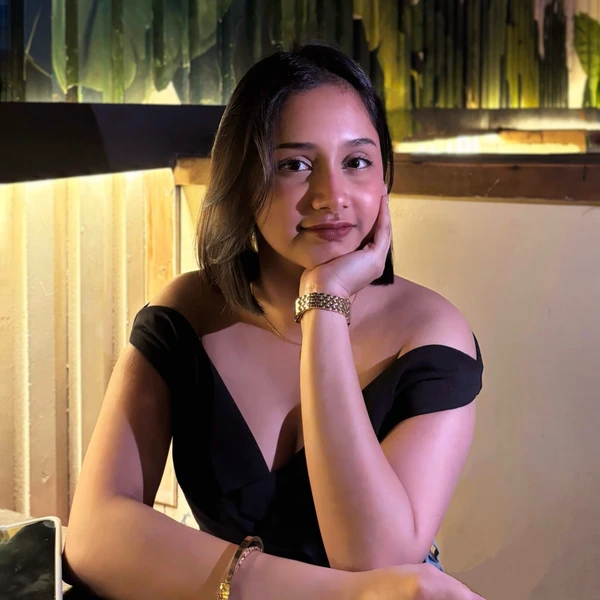
Breaking Traditions, Building Dreams: My Journey as a Non-Traditional Student
I don’t come from a world where success was guaranteed. I come from Vadodara, India—where dreams are big, but the path to realizing them can be unpaved, uncertain, and often lonely. My name is Riya, and I’m a first-generation graduate student pursuing an MBA in Information Systems at San Diego State University. My path to education has been anything but conventional—but every detour, every struggle, and every small triumph has shaped me into the woman I am today: someone deeply committed to kindness, perseverance, and lifting others as I climb.
My story is not defined by a perfect academic record or a linear career path. Instead, it is defined by a quiet strength I developed through navigating unfamiliar systems, making difficult choices, and starting over—again and again. Moving to a new country as an immigrant student was not just about chasing opportunities; it was about learning how to survive when everything felt unfamiliar: the culture, the language nuances, the unspoken social cues, and even the food.
Back home, I was the “responsible one” in the family—the girl who helped her mom through job loss, who looked after her younger siblings, and who never dared to dream too big because reality demanded too much. But when I received my acceptance letter for SDSU’s MBA program, I knew I had to take the leap. It meant leaving behind everything familiar. It meant living alone in a country where I had no family, no safety net—just the fire in my belly to make it work.
In those first few months, I faced more challenges than I could count. I struggled to find housing I could afford. I worked part-time jobs while juggling coursework. I navigated culture shock, self-doubt, and isolation. There were nights when I’d cry quietly in bed, unsure if I had made a mistake. But in the morning, I’d get up and keep going—not because it was easy, but because I had come too far to give up.
One particular memory stands out. A classmate of mine—an international student from another country—was struggling with a tech assignment we had been given. He was on the verge of dropping the course. I could see the same overwhelmed look in his eyes that I had seen in the mirror weeks before. I sat with him for three hours that day. Not just to walk him through the assignment, but to remind him that he wasn’t alone. He passed that class—and I gained something more valuable than a grade: the realization that even when I felt small and uncertain, I could still be a source of strength for someone else.
That’s the kind of leadership I believe in. The quiet, behind-the-scenes type. The kind that doesn’t need a spotlight but shows up consistently—with empathy, compassion, and an open heart. Andrea Worden’s legacy reflects those values deeply. From what I’ve read, she saw people for who they were beyond titles and degrees—and that’s exactly the kind of impact I hope to have too.
Perseverance hasn’t always looked glamorous for me. It has looked like saying no to weekend outings so I could send a bit more money home. It has looked like walking in the rain to my part-time job because I couldn’t afford a ride-share. It has looked like speaking up in class even when I was terrified of my accent being misunderstood. And kindness? That’s been my anchor. It’s in the extra five minutes I spend helping someone else feel seen. It’s in the handwritten note I left for a classmate who was going through a tough time. It’s in the way I remind myself to treat every setback as a lesson, not a loss.
I often think about the girl I used to be—timid, unsure, afraid to take up space. She wouldn’t recognize the person I’ve become. Today, I am assertive in meetings, confident in presentations, and most importantly, I believe that my voice matters. The systems weren’t built for people like me—but I’m learning how to thrive anyway. And I’m committed to holding the door open for those who come after me.
My ultimate goal is to use technology to create systems that are inclusive, accessible, and human-centered. I want to work at the intersection of innovation and empathy—designing platforms that don’t just automate tasks but make life easier for people who are too often left out of tech solutions: immigrants, seniors, people with disabilities, and the economically disadvantaged. Technology should not be a privilege. It should be a bridge.
Andrea Worden’s story moved me because it reminded me that you don’t need to be loud to lead. You don’t need to follow the “normal” path to be successful. What you need is heart. And I have that in abundance. My journey is still unfolding, but everything I’ve faced so far has prepared me to walk into the future with courage, compassion, and clarity.
To me, being a non-traditional student means being a trailblazer. It means asking for directions in a language you’re still learning. It means working twice as hard to get half as far—and still showing up with a smile. It means knowing that even though you started late or from a different place, you still belong.
If I could meet Andrea, I think she’d understand me. Not just my resume, but my resilience. Not just my ambition, but the intention behind it. And that thought alone gives me strength on days when I falter.
This scholarship would not just support my education—it would validate my journey. It would remind me that being different is not a disadvantage. It’s my story. And like Andrea’s, I hope it leaves a legacy of light for others to follow.