Hobbies and interests
Tennis
Robotics
Coding And Computer Science
Reading
Action
Design
Humor
I read books multiple times per week
Rita Taylor
1x
Nominee1x
Finalist
Rita Taylor
1x
Nominee1x
FinalistBio
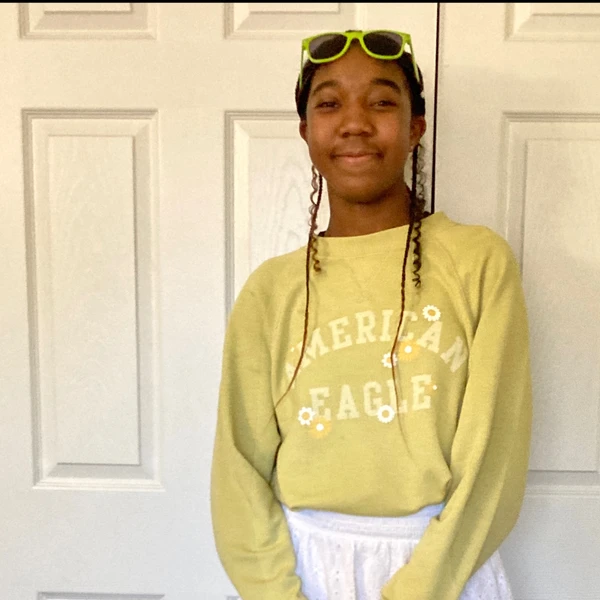
I have always been fascinated by the world of STEM (Science, Technology, Engineering, and Mathematics) from a young age, thanks to the encouragement and support of her parents and teachers. Iam determined to break barriers in STEM fields and inspire other underrepresented minorities to follow their passion in science and technology. I look up to accomplished African American scientists and engineers like Mae Jemison, the first African American woman in space, and Lonnie Johnson, the inventor of the Super Soaker water gun. Their stories inspire me to persevere and make my mark in the STEM world.
Education
Collegiate School
High SchoolMiscellaneous
Desired degree level:
Master's degree program
Majors of interest:
- Drafting/Design Engineering Technologies/Technicians
- Architectural Engineering
- Design and Applied Arts
- Pre-Architecture Studies
- Computational Science
- Computer and Information Sciences, General
- Electrical and Computer Engineering
Career
Dream career field:
Technology
Dream career goals:
Opening my own engineering company
Tennis instructor
Ace Academy2020 – Present6 years
Sports
Mixed Martial Arts
Club2022 – Present4 years
Tennis
Varsity2012 – Present14 years
Awards
- All 1st team 2021 All second team 2022
Research
Visual and Performing Arts, General
ID Tec — Student2021 – Present
Arts
- Animation2019 – Present
Public services
Volunteering
Ace Tennis Academy — Tennis instructor2020 – Present
Future Interests
Advocacy
Volunteering
Philanthropy
Entrepreneurship
Sloane Stephens Doc & Glo Scholarship
The difference I want to create in the world is allowing others to know their obstacles will not define their future. Dyslexia taught me that life isn't always going to be easy when you want to succeed, but with encouragement and perseverance anything can be achieved. I know what it is like to struggle and that is why I want to use my education to open doors for others and help create an environment where everyone feels welcome and supported.
I want to major in Computer Science because I love working through problems and seeing how technology can better people’s lives. There are many things I want to accomplish using my degree, but my number one goal is to create technology that will help students learn. Whether they learn differently or not, education should not be a challenge because of obstacles like reading. I understand what it feels like to have to try twice as hard as your classmates just to understand what is going on.
Tennis has been another powerful influence on who I am becoming. Not only has it helped me learn about science and technology, but it has also taught me discipline, patience, leadership, and how to never give up after a loss. Every time I step onto the court, I know that I must be prepared to win. I hope to continue my tennis career in college and become a leader that many younger players will look up to. I’ve already begun volunteering by teaching children how to play tennis. Kids that who may not have the opportunity to learn such a great sport light up when they accomplish something new. Volunteering has taught me that you never know who you are impacting through small gestures of kindness.
My family, coaches, teachers, and mentors are my biggest inspirations. They all have pushed me to never give up on my dreams, even when I was struggling with finding my passion. My mom has always been my rock and she reminded me to always move forward no matter how tough life got. She showed me what it meant to be strong and never give up. My teachers and coaches pushed me to believe in myself and know that dyslexia would not limit what I can achieve. They inspire me to be that motivation for others when they feel like they can’t go on.
I hope to one day mentor children who are interested in STEM subjects and encourage more young girls and underprivileged students to turn to technology. I want them to know that their environment, learning differences, or obstacles do not define their future. I hope to continue growing my community by volunteering through tennis, church, and local children programs. There is always room for positive change and I know volunteering will allow me to reach those who need help the most.
My dream is to take my education, put a passion for technology and my love for tennis and create something that will benefit others. I hope to help build life changing technology, inspire future generations, and leave my community better than I found it. If I can impact one person to know they can achieve their dreams, then I will know I made my difference.
Bick First Generation Scholarship
Being a first generation student means entering into a journey that no one in my family has been before. While that is exhilarating, it can also be intimidating. There are no guides at home for filling out college applications, financial aid, or what to expect when living on campus. Growing up, I learned to figure things out on my own, ask questions when I don’t understand, and speak up for myself. First-gen is more than a label, it symbolizes determination, strength, and the ability to blaze a trail for my family.
The biggest obstacle I have overcome is dyslexia. I often took longer to read and process information than others which led me to feel dumb sometimes. Rather than embracing that label, I worked harder, asked for help, and found strategies that allowed me to thrive. I realized that obstacles don’t dictate your future, how you choose to overcome them will.
One of my passions is tennis. Through tennis I have learned discipline, leadership, and how to focus when under pressure. As a team captain and student athlete I understand what it takes to be successful. Putting in the work everyday and striving to be better. I have taken those skills and transferred them to every aspect of my life. Whether it is my grades or volunteer work. I volunteer at my local community center teaching tennis to kids who may not otherwise have the opportunity. For me tennis has been a huge confidence builder and I love helping others find that same confidence through sport.
This fall I will be attending the University of Mary Washington studying Computer Science and playing on the women’s tennis team. I hope to one day use technology to better people’s lives and create solutions to real world problems. Technology is my passion and I hope to build a career in the tech industry. All while being a role model for other students who may have learning differences or are first-gen like me.
Receiving this scholarship would take some of the stress off college being so expensive. It would allow me to focus on my studies, tennis, and what I want to do after graduation. Most of all, it would be going to a young girl who will not let setbacks stop her from achieving her goals. I am a first generation college student that hopes to create a legacy for generations of my family to come.
YOU GOT IT GIRL SCHOLARSHIP
I have always known that to be a “You Got It Girl” is to remain strong-willed, brave, and confident even through the times when you may feel like you don’t. As a Black female student athlete with dreams of going into STEM I have always tried balancing school work, sports, leadership, and giving back. My proudest achievement so far has to be signing my commitment to play collegiate tennis at the University of Mary Washington this fall of 2026. It has taken me years of hard work, discipline, and perseverance to get this opportunity and I know that it will take me just as much to reach my goals on and off the court!
Playing tennis has been one of my biggest passions for the past few years. Through tennis I have learned to be accountable for my actions and mentally tough. I have learned that while other sports can pull your weight if you slack, tennis is a sport I have to trust my preparation and go out there and compete with pressure by myself. I have been recognized as a varsity athlete and a leader on my team all while continuing to work on my game and help my teammates better themselves. Every practice and match I have played has helped shape me as a player and person and has only fuelled my desire to play at the collegiate level.
Something that I have had to overcome is dyslexia. Sometimes it took me longer to process and understand information I was reading or writing. Instead of seeing that as a limit, I used it as motivation to push myself. I asked for help when I needed it, created better study habits and learned how to advocate for myself. What use to hold me back and make me feel dumb is now what motivates me to never give up. It taught me resilience and that nobody’s definition of success should dictate how you view yours.
My role model is my mom. She is always showing me how to be strong, self-sacrificing and persevere through anything while still shooting for your dreams. She motivates me every day to keep my head up when times are tough and continue to work for what I want.
I would appreciate the Scholarship because I am going to be a collegiate tennis player. There are many different expenses that come with playing college sports. Not only is there equipment you have to purchase but also if you want to better yourself you have to travel to tournaments, invest in training, and more. On top of sport related expenses there are books and cost of education to consider. Any type of help I can receive would take some stress off and allow me to focus on what I need to do to better myself as a student athlete. I plan on continuing my education by studying something in STEM while playing tennis at the collegiate level. Any type of help matters.
I will represent young women who look up to me and want to better themselves by breaking barriers just as I am doing. Being a student athlete is all about leading by example. Showing others that no matter your situation you can persevere through anything. I will help others by showing them what I have learned through tennis can be applied to life. I will continue to work hard and give back to my community while excelling in my studies and on the court.
Hines Scholarship
College means opportunity. College means becoming what people may not expect me to be. College means growth and discovering what I’m truly capable of doing. College means dreaming and doing whatever it takes to achieve my dreams. I am a black female who loves STEM and going to college means I will be able to better understand my passion and use my knowledge to create. College will not just be about being in the classroom for me. It will be about finding who I am and what I want to do with my talents.
I believe that going to college will allow me to better myself as a student and as a person. I have learned many lessons while living with dyslexia. I know how to be patient with myself and others. I know how to push through when something doesn’t come easy to me. There were times in middle school where I thought I couldn’t do anything right. Instead of giving up I pushed myself twice as hard and eventually I overcame my struggle. I can ask for help when I need it and I can adapt to any situation that is thrown at me. College will give me the opportunity to become a better problem solver and allow me to challenge myself.
I want to major in computer science because I love technology. I believe technology can change lives and make people’s lives easier. Technology is not just about coding, it’s about being creative and finding solutions to real world problems. What better way to combine my passions than by creating my own apps and software? My dream is to one day create AI assisted software and learning tools to help students who may have learning disabilities like me. There are so many ways to learn and understand things some just may take longer than others. I want to create software that helps people understand information in ways that are best for them and prove that just because you learn differently doesn’t mean you can’t succeed.
I also hope to continue to better myself as a leader and as a servant. Volunteering at food banks, tutoring my peers in elementary school, and picking up trash around my neighborhood has taught me to give back. When I go to college I hope to continue to take advantage of service opportunities and encourage my peers to do the same. I also hope to continue playing tennis. Tennis has taught me discipline, how to focus, and given me confidence. I know these traits will help me excel in college on and off the court.
College is a chance for me to build my future and remain grounded. It’s an opportunity to grow and learn from my mistakes. College will allow me to thrive and push my boundaries. I’m not just trying to get a degree I’m trying to become someone who will create their own opportunities and help others along the way.
StatusGator Women in Tech Scholarship
My inspiration to pursue technology didn’t come from school. In fact, it came from a place of anger and spite. Growing up with dyslexia always made me feel like the world was not made for people like me. Reading was difficult and took me longer. Instructions were never easy to follow and small tasks became daunting. However, I always wondered what if technology could make my life easier?
I remember the first time I used technology to help me with reading and writing assignments. With text-to-speech and predictive exercises, I no longer had to worry about not keeping up with my classmates or being able to articulate my ideas. Technology was the first time in my life where I felt empowered and motivated to learn. Everything clicked for me and I wanted to learn more about how technology can help people like me.
Ever since that day, I fell in love with computer science and all things technology. My drive to create new tools and software that can make learning more accessible for students with learning differences has grown. My goal is to use AI to create tools that will assist students who think differently. Whether it be through improving accessibility, creating empowering programs, or increasing comprehension. I want to use my knowledge to better develop AI to meet the needs of students.
Like any dyslexic student, school was very difficult for me. College courses that had a heavy focus on reading or fast processing tended to be my biggest obstacles. I’ve had my fair share of self doubt where I questioned if I truly belonged in the technology industry. However, having dyslexia has also allowed me to learn how to become resilient. I know how to problem solve and think outside the box to get to where I need to be. Growing up with dyslexia has allowed me to understand the importance of technology for students like me.
What motivates me to continue forward with technology is the endless opportunities to grow. With AI, we can revolutionize the way people learn and make life more accessible for people with disabilities. I’m particularly interested in seeing how AI can be used to better education, mental health, and communication.
I want to use technology to make a difference. My dream is that one day students with learning differences will not feel limited by their learning style, but empowered by the different tools that technology has to offer. Technology has given me the opportunity to find my passion, and I want to do the same for others.
Janisse Berry Memorial Scholarship
Struggling For Something Greater Than Yourself
I never truly understood what it meant to strive for something greater than myself until I was out on a tennis court. I was in the middle of a match that went to three sets. I was the captain of my high school team and we were tied up against our opponent. My body felt fatigued, I was annoyed at how the game was going, and I felt overwhelmed. I remember looking at the scoreboard thinking to myself that I did not know if I could finish strong. Right when I felt myself losing hope, I looked over at my team on the bench hyping me up. It clicked; although we wanted to win the match badly, it was about more than that. It was about not giving up, leading your team, and doing your best when it feels like you are about to hit your limit.
I pushed through those last couple of games and ended up winning the match. Although it felt great to bring the match home, what I learned after was even more valuable. I realized that things will not always be easy when you want something. You learn and grow during the times when you are your lowest. Tennis has taught me discipline, how to focus, and what to do when obstacles come your way. I started to apply these lessons to my life outside of tennis. I wanted to bring the same mentality I had on the court to my school work.
After that day, I decided to start treating education like I did tennis. If I wanted to better my serve or backhand, I would need to put in hours of practice. Any complex skill is going to take time and effort to learn. I knew that if I wanted to better myself, higher education was the place to do it. I want to challenge myself and learn more about the world around me. My dream is to one day use my knowledge to help better society. By majoring in computer science with a concentration in cybersecurity, I hope to learn as much as I can about technology that is constantly changing. I know that if I can tackle tennis, I can tackle anything that comes my way when I am at college.
I took that same mentality with me into my classroom. Whenever I am struggling with a task or beginning to feel frustrated, I think back to those long tennis matches. I tell myself there is no quitting, to dig deep, and figure out how to win. That attitude has allowed me to want to continue moving forward and reach my goals of attending college. I want to learn as much as I can about computer science and cybersecurity to give me the best opportunity to help people and organizations.
My dream is to one day work for the NASA or help prevent cyberattacks on life-saving systems. I know that without playing tennis I would not have the same drive to achieve my goals. It taught me how to work with a team and push through when I want to give up. I believe that higher education will allow me to take these values and help me make a difference in the world. That tennis match helped me realize that once I overcome a challenge, I am never the same. I grow every time I get pushed to my limits, and that is what drives me every day.
Byte into STEM Scholarship
No one told me that growing up in Richmond would make me resilient. As a Black high school senior with dyslexia, school has never come easy for me. I’ve always had to study and work longer than my classmates to keep up. I grew frustrated at times, but those struggles built my work ethic, taught me patience, and allowed me to realize that barriers aren’t stop signs, they’re opportunities to train. Dyslexia did not limit me, it taught me how to adapt and advocate for myself and walk forward with confidence.
Leadership through Tennis. Service through empathy.
I have learned many valuable lessons on the tennis court. As a team captain, I learned that leading by example does not always mean being the best player on the court. It means showing up with a positive attitude and encouraging your teammates when they are losing a match. It means putting in extra practice for the people who may not make the varsity team. Serving has taught me to be a leader that others can count on. It has taught me how to be accountable to my team and how to work together as a unit. Whenever I am faced with a difficult task in school or in life, I think about how I stay calm and focused on the court.
To serve others is something I strive to do every day. I have volunteered at a local community center teaching tennis to children with autism. During those two hours, I learned more about patience than I ever thought possible. I watched children I was working with struggle to make eye contact or hit the ball over the net, but as soon as they did I knew how important my job was. Helping them make those small victories makes me want to continue to help those who might not have a voice.
I chose computer science because I love finding solutions to problems. There is technology everywhere; hospitals, government agencies, stores. I am fascinated by how all of these systems work together and how they can be protected from cyber threats. I hope to one day work in cybersecurity and artificial intelligence, perhaps for a company like NASA. The thought of helping to create systems that need to be innovative and hack-proof excites me every day.
By earning a bachelor’s degree in computer science, I will learn how to take my curiosity and turn it into skill. I will learn how to create better systems that not only work properly, but protect user’s privacy. Through classes on programming, network security, and artificial intelligence I will have the technical skills I need. I hope to take advantage of any internship and research opportunities I am able to find so I can experience what it’s like to work in the computer science field. To me education is a stepping stone that will allow me to better serve others.
My career goals include mentoring young children, specifically black children and kids with learning differences who are interested in STEM. I want them to see me and know that your barriers do not limit you. I want to use my leadership skills and ability to empathize with others to help make an impact. Whether that be protecting others’ digital information, helping develop life changing technology, or opening doors for those who thought no one would let them in.
Our Destiny Our Future Scholarship
I was raised in Richmond and grew up learning that your beginning does not dictate your end. As a Black high school senior with dyslexia, there have been times where others may not have believed in me or what I was capable of accomplishing. What others may have perceived as setbacks, I allowed to shape and refine me. I hope to serve and create positive change by merging my passions of computer science, cybersecurity, and artificial intelligence with my drive to serve and represent others like me.
Technology is the foundational building block of almost every industry in our world. Hospitals, banks, schools you name it, there is code running it. However, people that look like me are not often represented in the spaces where these programs are created. With a computer science degree and concentration in cybersecurity, I can help prevent cyberattacks on critical systems that would put families at risk. I hope to one day work for a government agency such as NASA developing cutting edge technologies to help better our world. Technologies that push the boundaries of what we thought was possible for humanity. Serving communities by protecting private data, developing cybersecurity strategies, and creating artificial intelligence are just a few ways I can use my degree to serve others.
My service will not stop at my career. I want to help lift as I climb by creating more opportunities for those who come after me. Through tennis I have learned that leadership comes in many forms. It is not about being the loudest voice in the room, but allowing every voice to be heard. While volunteering, I spent time teaching tennis to kids with autism. Not only was it a learning experience for them, I learned how important patience and positive reinforcement was. In the future, I hope to mentor students who look up to me. Especially Black students and students with learning disabilities who are interested in STEM fields. Seeing people that look like you succeed is powerful and allows young students to understand their potential.
In addition to mentoring the next generation of STEM students, I want to push for ethical technology. As our world advances into the age of AI, we must prioritize creating systems that operate on values of fairness, transparency, and accountability. I want to help lead the change that pushes AI to reduce bias in our society. Technological innovations should help create equality, not give certain groups more advantage than others.
Service and impact mean creating opportunity. Impact means protecting others and dedicating my career to building safe and secure systems. To me, it means taking my weaknesses and learning how to use them as strengths. It means using my education to better myself and others around me. Our world won’t change from just words, it takes action.
Jessie Koci Future Entrepreneurs Scholarship
I want to major in Computer Science because I’ve always had a passion for creating technology that solves real problems. From a young age, I always felt that traditional classrooms weren’t made for students like me. As a dyslexic kid, reading was very difficult and sometimes I felt like I had to work twice as hard as everyone else. However, once I was introduced to coding, my whole perspective changed. Coding was like reading a new language, but one made of logic and patterns rather than paragraphs. Suddenly, I realized that my differences were unique advantages that could be utilized. With Computer Science, I can think outside the box to creatively solve problems, break down large tasks into small steps, and help create resources that will help students with learning differences.
I decided to take an entrepreneurial route because I want to create something of my own. I want to start my own technology company that creates online learning platforms for students with disabilities. Ever since I was little, I knew that I wanted to start a business that served a purpose. There are so many students out there with Dyslexia who feel unseen by our education system. I know how frustrating it can feel to struggle with something so many other people your age excel at with ease. Being an entrepreneur allows me to be one step ahead when creating my products. I know that I will build my brand with empathy and an understanding of what it’s like to learn differently.
I will be successful in my business because I have learned what it takes to never give up. Growing up playing competitive tennis has taught me discipline, time management, and what it takes to be resilient. Sometimes in tennis you lose a match. It’s hard, but you learn from that match. You tweak your game plan and come back stronger and more determined than before. I like to tell myself that when I’m facing obstacles in life. There are many businesses that don’t succeed because of fear, poor preparation, and not trying long enough. But my dyslexia has taught me to expect failure and learn from it. My brain had to learn how to be patient with myself and work harder when I didn’t understand something. That’s how I will approach my journey in entrepreneurship.
To me, a successful life is creating a business that allows me to help others while not losing touch of my faith, values, and desire to serve others. Building a business that creates opportunities for those who feel like they don’t have any. Mentoring young students who feel like they aren’t smart enough and showing them that obstacles don’t define your outcome. A successful life to me is being able to look at my business and see my values.
Rick Levin Memorial Scholarship
Special Education impacted every part of my development as a student and influenced how I view myself. I struggled with dyslexia growing up, so school felt like an endless game of catch up. I used to sit in class wishing I could finish work at the same pace as my peers. By the time they were onto question number two, I was still trying to finish reading the first paragraph. It was discouraging at times, but my experience in Special Education became one of the defining moments of my life.
In Special Ed., my teachers saw past my disability. They taught me in a way that I could understand by breaking down lessons, provided me with techniques to help me better understand what I was reading, and taught me that just because I was a slow reader did not mean I wasn’t intelligent. I was given more time on assignments and tests which allowed me to comprehend at my own pace. My teachers provided me with support, but more than that, they helped build my confidence one step at a time. I went from seeing myself as “behind” everyone else to capable.
What really stuck with me from my time in Special Education was learning how to advocate for myself. I knew how to ask questions if I did not understand something and felt comfortable asking for additional support. I also learned how to use certain tools and technology to help me become a better student. Those lessons have been just as valuable as any others I’ve learned. Thanks to my experience in Special Ed, college doesn’t scare me because I know it’s an opportunity that I can attain. I plan to study computer science because I love problem-solving and logic. My time in Special Ed showed me that I am capable of learning and excelling in an environment that doesn’t come to me naturally as long as I’m willing to put in the work.
I think growing up with dyslexia has made me who I am today. It taught me to have patience with myself and given me resilience. Not being able to read at the same speed as my classmates is a challenge I’ve grown used to. When I was younger and reading took me twice as long as my peers, I learned that I could either give up or push through. There were times where I doubted my ability to keep up when we had to take a standardized test or were on a time constraint for an assignment. But every time I faced a challenge like that, I grew more determined.
I also realized through my experience in Special Ed that everyone is fighting a battle that you know about. This allowed me to grow a huge capacity for empathy and wanting to help others. Whether I’m tutoring my classmates, mentoring up-and-coming young scholars, or volunteering in my community, I try to be that encouragement for others that my teachers were for me.
My experience with tennis has had similarities to my academic career. Learning how to play and grow as a tennis player does not happen overnight. I have lost more matches than I care to count, felt like my backhand was never going to get better, and had to push myself to workout when I thought I was exhausted. But like my dyslexia taught me, any time I faced adversity on the tennis court, I learned that if you want to grow you must be persistent. You improve by showing up, even on your worst days.
Now when I think about the challenges I faced growing up, I no longer view them as obstacles. I view them as my preparation. Special Ed taught me more than just how to succeed in school; it taught me how to have the right mindset when facing challenges. It taught me discipline, how to know myself, and confidence. My journey with dyslexia and Special Ed has inspired me to want to continue my education in college not only to earn a degree but to prove to myself that I can be successful in places that once intimidated me.
I never let my difficulties define me. If anything, they have pushed me to go farther. They allowed me to develop a strong work ethic, empathy for others, and the drive to always want more. As I continue my journey into college and become certified to become a computer programmer, I will remember what my Special Education teachers told me: struggle and challenges are not stopping points, but opportunities for growth.
Tawkify Meaningful Connections Scholarship
Raised in a world of smartphones, social media I have witnessed the wonder and danger of technology firsthand. As someone who wants to major in computer science, I understand technology’s power. However, my disability has taught me you can’t replace authentic connection with something as fleeting as a screen. Technology should be used to enhance real relationships, not create distance between people. We can preserve human connection by using technology with intention, leading with empathy, and designing collaborative systems.
I have dyslexia. Growing up with a learning disability has informed my understanding of what connection truly is. I have felt out of place before walking into a classroom. That feeling of not quite understanding or keeping up would sometimes follow me throughout the school day. Heavy reading components and fast-paced classrooms were difficult for me. I felt like I couldn’t connect with others like I should at my age. What helped me feel connected were the teachers and mentors who looked at me and saw more than just a student with poor grades. The educators who remembered my name, patiently worked with me, made eye contact when we talked, encouraged me, and truly believed in me. Whenever I struggled with my dyslexia, they reminded me that real connection is rooted in meaningful presence. Someone who listens to you and encourages you feels better than any phone notification.
However, technology has played a major role in my ability to connect with others. Text-to-speech software, coding websites, and online learning platforms have allowed me to thrive in school and beyond. I have built friendships and work with others on projects. I have learned from incredible developers all over the world and utilized resources I may not have had access to if not for technology. Technology allows me to create and establish connections with others, enhancing my human experience. We can use technology to our advantage if we remember to use it with intention.
Empathy is how we will maintain real connection in a digital world. In my field of computer science, I recognize the importance of ethical and human-centered design. We should be programming platforms that allow for meaningful interaction rather than endless scrolling. There are many ways we can use technology to build collaborative relationships. Digital spaces can be redesigned to foster mentorship and provide support. We can create interest based online communities that allow people to build real relationships with others who have similar goals. Whether that be coding, online tutoring, or virtual church communities, we can come together to encourage one another, rather than exist next to each other distracted by our screens.
Beyond technology, we can preserve connection by simply showing up for each other. I have personally had to learn how to put my phone down when I’m spending time with my family. My fondest memories are from around the dinner table talking with my siblings, laughing with my team at tennis practice, and serving with my church at local events. These are all simple things but they are real moments. We do not have to have our phonesped to feel connected. Showing up and being present with others is enough to strengthen our shared experience.
Technology can even enhance human connection if used for good. There are many opportunities to blend technological skills with service. Virtual mentorship programs, online tutoring, and community-based tech workshops are just a few ways we can use technology to service humanity. When I graduate college, I hope to work with students and teach them about computer science. I want to use technology to create a program that not only introduces underrepresented students to coding, but also encourages them along the way. Serving and impacting others in real-life allows technology to become a bridge rather than barrier between people.
Technology does not have to threaten real connection. The future is not about choosing between screens or relationships. Rather, it is about how we design tech and how we live. If we lead with empathy and use technology with intention and service in mind, we can enhance the connections around us. There is no doubt in my mind that we can innovate without losing humanity.
Christian Fitness Association General Scholarship
Growing up I have always known that if something was meant for me it would not always be easy. Through my faith, perseverance, and continuous grind I believe that I am destined for greatness. I am a Black high school senior who plans to major in Computer Science. I believe I should receive this scholarship because of my academic achievements and dedication to extracurricular activities as well as my story.
Through school I have continuously pushed myself to be better than I was the day before. I was born with dyslexia which made school more challenging for me. Reading took longer than my classmates and I often needed extra time on tests. I could have allowed my dyslexia to limit my perspective on learning but I choose to learn how I learn best. I studied and created systems that accommodated my dyslexia. I used text to speech programs, took color coded notes, used tricks to help me remember things, and created schedules that allowed me to learn at my own pace. The harder I worked the better my grades became and little by little I grew more confident in my ability to understand difficult concepts. Earning my spot as a graduating senior who is ready for college has been one of my proudest accomplishments. It wasn’t something I was able to brag about but those who know me know how much I had to work twice as hard as my classmates to get here.
Studying computer science started out as a hobby but turned into my passion. Ever since I was little I was fascinated by how we could use technology to better our world. There is something empowering about coding and building your own computers. With dyslexia I sometimes struggle with reading heavy courses but computer science allows me to think logically, creatively, and strategically. I love taking things apart and seeing how they work. Breaking down a problem step by step and creating your own fix line by line is such a rewarding experience. I have taught myself the basics of programming and logical thinking through online tutorials and school work. What I love most about computer science is that my dyslexia will not slow me down in this field. Computer science allowed me to find a passion where my “weakness” can be my greatest strength.
I played tennis which allowed me to grow not only in discipline but as a leader. Tennis taught me how to be resilient and have mental strength. Every game you play you are not only pushing your body but your mind. You learn quickly how to stay calm and collected when your favorite shot keeps missing or you lose a match. I learned how to take defeat and use it to better my game the next time. I also learned how to be humble through my wins. I applied the same tactics to my studies. There were times where I would fail at something I didn’t understand. Instead of giving up I learned how to take a step back, clear my mind, and try again.
I have served my community through church, volunteering, and mentoring youth. I believe great leaders are able to lift up those around them. I have always been open about my dyslexia and love when younger students come to me for advice. There are children like me who are scared they are not smart enough to learn certain subjects. I am here to tell them it’s okay not to learn the same as your classmates. What makes you different makes you unique. Diversity is what helps our world innovate and computer science lacks enough black students. I hope to use my education to reach my community and help close the digital divide.
One of my biggest struggles in school was my dyslexia. I use to get very frustrated and felt as if I was not “smart enough” to learn. I watched as my classmates would finish assignments in minutes while I’m still trying to finish mine. What helped me overcome this was changing my mindset. I could not compare my progress to others. I asked my teachers for help, spoke up about my needs, and learned to use all the resources I had. Most of all I stopped telling myself that dyslexia was holding me back and learned how to embrace my story.
I overcame this obstacle by working twice as hard as my peers. Not only did my grades get better but I also learned how to advocate for myself. I became great at time management and staying disciplined when I needed to. I feel that these are qualities that will help me throughout college and my career. Obstacles will always be a part of life but my story has taught me how to push through them.
If awarded this scholarship, I would be able to continue my grind without any distractions. My parents have done everything they can to ensure I have what I need to succeed but there’s only so much they can do. I promise to make the most of my opportunity at [school name]. I will continue to serve my community and be a voice for my people. Please give me the opportunity to show you what I am capable of.
Simon Strong Scholarship
We all struggle. But for the longest time I believed my struggle was what made me different from everyone else. As a Black teenager with dyslexia I have never excelled at school. When my classmates would breeze through their assignments and read without difficulty I had to take my time just to comprehend what I was reading. I felt insecure reading out loud in class and taking longer than others to complete tests. There were times where I questioned if college was really for me, or if I could even become a computer scientist like I wanted to be.
I faced many adversities growing up with dyslexia but one that sticks out to me was during my sophomore year of high school. My grades began to drop as I found it difficult to keep up with the increasing amount of reading and writing required of me. I grew angry and discouraged as I tried my best but always fell short. It wasn’t until I started to reach out for help that I began to see my grades climb. I started meeting with teachers after school, tapped into tutoring resources, and learned new ways of studying that catered to how my brain works. I also learned how to advocate for myself and ask for accommodations to show what I knew rather than be defined by how quickly I could read a passage or write an essay.
Not only were my grades changing for the better, but so was my mentality. I no longer felt less than because I had dyslexia, I understood that while I learned differently, I was still smart. My adversity taught me to be patient with myself and others. It taught me to fight for what I wanted and to work harder when faced with challenges. It also allowed me to understand the struggle that other people may be facing that you may not immediately know about.
If I could tell the all students facing adversity one thing it would be please do not compare your timing to everyone else’s. Ask for help when you need it. It’s okay not to know something and it’s okay to reach out for assistance. Learn what works for you and what doesn’t. Lastly struggling doesn’t mean you’re failing, it means you are growing.
As I begin my journey to college I plan on using my adversity as fuel to keep me going. I know that I will be faced with challenges in the future but I’ve learned how to overcome them and that’s what will make me successful.
Emerging Leaders in STEM Scholarship
I want to study computer science because I like problem-solving and understanding how things work. Our world revolves around technology these days, and I want to help design useful programs and tools that will benefit others. The more I learned about computers and how to code, the more excited I became about how technology can solve real-life problems. Not just problems with computers but help people communicate better and help businesses run more smoothly.
My path toward computer science has been challenging at times. I have dyslexia, which made learning and reading at a young age difficult for me. There were times in school where I took longer to process information than other students, and I often felt discouraged or inferior. Homework assignments took me longer, and balancing sports with school work was difficult sometimes. However, learning to cope with dyslexia also taught me many skills that have helped me. I became very persistent and patient with reading and learning new things. I also had to learn to ask for help when I needed it and find what works best for me. For example, I break things down into small steps and keep organized.
Rather than giving up, I used my disability as fuel to push me and work harder than those around me. What I learned was that when I struggled in one area, I was developing other skills such as problem-solving and thinking outside the box. Problem-solving directly correlates with computer science because you have to think of different ways to program a solution. After struggling through my academics, I now have the drive to succeed in college and my future career.
I hope to one day come up with ways to help others through technology. I would love to design a tool or computer program that would help others learn or those who have disabilities like me. There are so many ways to use computers and technology to help better our communities and allow others to have more opportunities.
I believe that once you face a setback you have the choice to let that be your strong suit. Dyslexia made me who I am today. It challenged me, but it also allowed me to build an amazing work ethic. My passion for computers and technology drives me to want to better myself so I can one day help others. I’m a firm believer of paying it forward.
Williams Foundation Trailblazer Scholarship
One of my favorite innovation examples was a tutoring and mentoring program I started with friends at my school. There were many students who needed more support than our teachers could reasonably give in class time but did not have the resources to get outside help. Some students’ parents worked multiple jobs, some could not afford tutors, and others may have had learning disabilities like me. Dyslexia made it difficult for me to ask for help sometimes, but I knew students like me were falling behind or losing confidence.
Together with some friends and a teacher, we started holding study halls after school once a week. We offered our time to help with homework, test review, and basic study skills. Students were always welcome to drop by and we did our best to make it welcoming and not feel like school. I tried to help students with their math and science homework and passed along some of the tricks I learned to keep organized and ask for help when I didn’t understand something.
Students came to us for all sorts of subjects, and we realized that some didn’t have access to a computer or internet at home. Assignments would take them hours to complete on their phone if they could even get online! We worked with other school staff to establish when students could use the computer lab and how to plan school time to complete these kinds of assignments.
Simple actions like walking a student through how to set up a study schedule or sitting down to explain an assignment that someone didn’t understand helped build these students’ confidence. Maybe tutoring didn’t seem very innovative to some, but thinking of ways to fill a need that wasn’t being addressed excites me. If you can start small and give something consistently, you can find people you can help. It also inspired me to continue helping others after I graduate. Whether I volunteer, find a career that allows me to do so, or even tutor kids in math and science, I hope to find ways to give back to underprivileged communities and help others with access to education and technology.
Students helping students is one of the most impactful things I’ve been a part of, and it felt incredible to see how far you can go when you take the initiative to help yourself. I’m a firm believer of paying it forward.
Ruthie Brown Scholarship
Preparing for how to pay for college is one of the biggest challenges I have faced thus far in life. Growing up in a single-parent home and with dyslexia has taught me many lessons that I will apply to paying for college. While I know I will need to take out loans in order to achieve my dreams, I also know that I need to plan and work as hard as I can to lessen my debt after graduation.
Due to my dyslexia I have always taken longer to complete school assignments. From a young age, I have learned to be patient with myself and push through when a task seems difficult. That is why I plan to approach college and how to pay for it with the same mindset. I will not rely on student loans alone to get me through school. Instead, I am filling out every scholarship and grant application I can find to decrease the amount I will need to borrow. Although it takes me longer to write my scholarship essays, I know that each scholarship I win is an investment in my future and less debt.
In addition to applying for scholarships, I plan to hold down a job while I am in college. I know that any job I can find will most likely be tied to my major and pay minimum wage, but every little bit counts. If I work on weekends or a few hours every day after classes, I can use my earnings to pay for personal expenses and school supplies. Although I know working and attending school will be difficult, learning how to cope with my dyslexia has already taught me how to manage my time and when to ask for help. I hope to find internships that tie into my major of computer science so I can spend my summer earning money and gaining experience in my field.
Finally, I plan to major in a science that will allow me to find a career in technology. Technology is one of the fields with the highest job prospects and can allow me to begin earning an income as soon as graduation. The sooner I can begin working, the sooner I can start paying off my loans. I am also trying to educate myself on budgeting and being financially responsible. If I can learn to make smart money decisions now, I will set myself up for success and limit my spending in college.
I know that life has given me some obstacles, but I want those obstacles to push me to give back to others. Once I graduate college, I want to have a stable career that can allow me to provide for my family. In addition to giving them the world, I want to help students who have been affected by dyslexia as I have. By finding scholarships, working while in school, selecting a career that will allow me to find employment after graduation, and being smart about my spending, I know I can conquer student loan debt. I’m a big believer in paying it forward.
Lotus Scholarship
I grew up in a single parent, low income home. When I was younger my mother became unemployed and that was my first real encounter with how life can change in an instant. It also made me understand what it takes to persist through times of uncertainty. I watched my mother work multiple jobs just to provide for us. Because of her I have learned qualities such as perseverance, being responsible, and just knowing how to push through. Rather than my home life bringing me down, it allowed me to push harder in school and think about my future and creating better opportunities for myself.
My background is what drives me to want to go into a STEM field and create technology that will allow for students that come from underserved communities to have better access to education and resources. I want students that come from where I come from to know that their background does not limit them.
I try to better myself every day by continuing to keep my grades up, engaging in different STEM programs, and applying for scholarships to help me further my education. I also like to help out my classmates if I can. I understand the feeling of not doing well in school and I think everyone could use a little encouragement.
I have learned through my life experiences that hard times can make you stronger. I will use my education to help others and better the communities that need it most.
Stephan L. Daniels Lift As We Climb Scholarship
STEM means opportunity. It means representation. It means actually being able to create solutions to real problems that people I look like or come from face.
I grew up learning that school was difficult for me. I was a student diagnosed with dyslexia. There were times in school where I thought I wouldn’t be able to pass certain classes. Math and science were the worst. I thought I just wasn’t smart enough. But I had amazing teachers who encouraged me and told me to never give up. I realized everyone learns in different ways. Some may take longer than others but that doesn’t mean you will not learn. That is one of many reasons I want to go into a STEM field.
I want to focus on computer science and technology because technology is everywhere. It controls so many aspects of our lives. But I come from a community where we do not always have access to the latest resources, tools, or opportunities. I want to help provide that for my community. I have never seen many people that look like me or came from where I came from become tech professional. I want to be that person for young students when they grow up. I want them to see me and know they have a place in STEM too.
With my degree in STEM, I hope to create or enhance technology that can help those with disabilities and those in marginalized communities. Maybe create a learning tool or app that helped students who learn differently than their peers. Students who may have gave up because they thought they could not understand when there was just a different way for them. Technology should allow us to all succeed, not fail.
I want to start at the bottom. Volunteering and mentoring at local schools. Helping to create programs for students who may not even know these careers are an option for them. When young people are able to look at someone from their same background and see success, you change their perspective of their future.
To me going into a STEM career is about more than bettering myself. I want to be able to use my education to better my community and help others after me. I was always taught to pay it forward. When young people are able to see people who look like them succeed, you begin to change what they think they can do.
Sunshine Legall Scholarship
From a young age I have always wanted to work with technology to better people’s lives and provide opportunities for those whom society may have left behind. As I continue to develop a passion for computer science and engineering in high school, my goal is to major in computer science with a specialization in robotics and AI. Ultimately, I want to work alongside doctors and create smart technology (robotic assistants) to help prevent human errors and save lives. I hope to one day use technology to make everything around us simpler, efficient, and most importantly more humane.
To achieve my academic goals I will continue to work hard in all my math, science, and computer programming classes even if I don’t understand the material. I have learned that sometimes you will not always grow at the speed you want to but turning that curiosity into knowledge can be very rewarding. These challenges have helped shape my work ethic and allowed me to grow as an individual by knowing that your growth is not measured by how fast you learn something new but by how long you are willing to try. To become a strong professional and leader I want to use my knowledge and passion to build technology that everyone can use and understand regardless of their ability.
Helping out at my local community has helped shape these goals. I have spent a lot of time volunteering my time to help tutor and mentor and being a part of my school and local community STEM programs. I have had the opportunity to help others feel more comfortable about a subject they may have once found scary. Whether it was helping someone understand how to code or helping out with school functions and sports games, I have come to realize how rewarding it is to help better someone’s day. Through these times I was reminded that you do not always need to go far in life to make a difference. All you need to is help one person at a time.
Helping others has taught me that I want to continue growing my knowledge and want to share that with those around me. I have realized that the more I learn, the more I want to teach. I feel that my successes are not complete until everyone around me can succeed as well. These are the reasons why I hope to one day merge my passion and desire to help into a career. I hope to learn how to use technology not only to benefit myself but to better my community and help motivate the next generation. We all can make a difference, and it starts with kindness, effort, and giving back.
Joieful Connections Scholarship
I would like to study computer science as I’m interested in computer graphics and different types of data and technology that make life more accessible for people. I am interested in computer science because it allows me to think both logically and creatively. There are infinite opportunities to create products and programs that allow people to complete tasks more efficiently. To me computer science means creating accessible technology that eliminates barriers for all people.
Something I learned at a young age is that learning comes in different forms for everyone. Learning how to navigate school with dyslexia allowed me to learn resilience, adaptability, and how to find different ways to process information. Though I often struggled with reading intensive courses, I always excelled in computer related classes. Writing code and understanding the structure and patterns of systems came easier to me. Computer science helped me realize my strengths and allow me to gain confidence in my differences.
Computer science means a great deal to me because it creates the opportunity for equity. There are many different technologies out there that allow students to learn and access information in non-traditional ways. Text to speech software, smart punctuation, and even sites that customize learning for students are all examples of computer science helping people. I want to continue to learn about technology that allows all people to feel included and use computer science to help me design technology with accessibility in mind. By studying computer science I hope to gain the skills necessary to program software that will help students, people with dyslexia, and underserved communities.
My dream is to use my education and passion for accessibility to better my community. Whether that be through integrating technology into local schools or working with nonprofit programs. I hope to one day work in a position that allows me to help students learn using methods that work for how their brain processes information. I would love to see less focus on one learning style and more focus on creating products that adapt to people. I hope to touch the lives of real people by using my knowledge to create change.
As I look towards the future, I hope to help shape an industry focused on growing empathetic developers. Through my experiences and studies of computer science, I hope to help others feel empowered by technology. I hope to prove that thinking different is not only acceptable but important to pay it forward.
Zedikiah Randolph Memorial Scholarship
Ever since I was little I have always felt as if I had to work twice as hard to prove myself. School was difficult for me because I was diagnosed with dyslexia. I was able to grasp concepts quickly but when it came to reading assignments and timed tests, I always felt as if I was falling behind my peers. As I grew older, I realized that my struggles allowed me to develop some unique strengths. I became resilient, I developed my creative thinking skills, and learned to thrive when thinking outside of the box. These qualities played a big role in pushing me towards computer science.
One of the reasons I decided to go into computer science was because it was the first time in school that I felt in control. When I write code, I am not judged on how fast I can read or memorize information. I am judged on my problem-solving skills which is something I thrive on. There is something satisfying about writing code and seeing it come to life. Even when you mess up, it’s all part of the fun because there is no limit to how creative you can be. Another reason technology became my passion was due to the accessibility it provided me. Using tools like text-to speech and other accommodation software helped me learn and grow with more confidence. I want to use technology to help open doors for others like me.
Community involvement and outreach is very important to me. I want to help mentor students so that others don’t feel lost or displaced like I once did. Students who may have learning differences or who may learn differently than what is typically accepted are often left out or placed at a disadvantage. Students shy away from STEM because they don’t see people that look like them or learn like them before they even start. I want these students to be able to look at me and know that they have a place in this field of study too. If someone who struggled in school their whole life can do it, so can you!
Representation of students of color with learning differences in my degree program, like many others, is roughly an estimated single-digit percentage nationwide. Knowing that I was part of such a small group was difficult at times. But it also drives me to push through and continue working because I know I am helping pave the way for more people to join the major.
I know that if I can be vocal and open about my story. If I can be here for that one student who is feeling the same self-doubt I used to struggle with, then I am making a difference. I hope to help shape the future generation by inspiring them to never give up on their passions. I want to help others find their love for technology and know that they have people they can reach out to when they need support and pay it forward.
Dylan's Journey Memorial Scholarship
Growing up with a learning disability like dyslexia, has defined me as a student and as a person. As a child, I remember how nerve wracking it was for me to read aloud in class. No matter how much effort I put into studying, I never felt like traditional learning methods worked for me. This sometimes made me feel like a disappointment. But it did not, and does not, stop me from having the passion to learn. Dyslexia made me want to learn more and be a better student. It made me realize that my brain just functions differently. And with time, support, and a lot of hard work, I found the strategies that work best for me and allowed me to succeed. Dyslexia taught me the skills of perseverance, self-advocacy, and confidence. These skills have become part of who I am as a student and as a person.
The passion to continue my education was made possible because of my experiences with dyslexia. I plan on attending college and majoring in a STEM field. I am interested in either engineering or computer science because it allows me to be more creative. I love to use critical thinking and problem solving skills to design unique solutions that make life easier for others. Dyslexia has helped me to become a stronger critical thinker and to use my spatial reasoning skills more. I am looking forward to attending college and furthering my education in a STEM field to reach my goals as an individual. I am inspired by the thought of being able to empower other students with LDs, especially young girls of color, to know that because there are challenges and struggles in life, doesn’t mean that they can’t achieve their goals in life. To me, Education means independence, opportunities, and making changes that have impacts on others.
I believe I am an excellent candidate for this scholarship because I will never let my learning disability limit my potential. Instead, I use it to drive me to push harder and further than I would have without it. I also strive to give back to my community by volunteering at local food banks, tutoring younger kids at my church, and attending local community events such as neighborhood clean ups. My involvement in these extra activities has allowed me to learn about service, leadership, and empathy. I know what it is like to struggle and fall behind and that makes me want to help others achieve more than I was able to. I feel like this scholarship will not only help me further reduce the financial stress of a higher education, but it will also allow me to be more focused on my studies and personal growth. Furthermore, I believe this scholarship would be a sign of hope for other students like me. Hope that there are people out there who believe that students like me who learn differently can also dream just as big. With more support and opportunities, I will be able to further use my education to not only be innovative but to also inspire and advocate for more inclusion in STEM and other fields.
Ryan Stripling “Words Create Worlds” Scholarship for Young Writers
Writing has always been more than just an assignment or a test for me. It is the space where my thoughts slow down, my voice becomes clear, and my experiences take on new meaning. I have always been an expressive person, but writing has helped me find the tools to share those ideas with the world. As a student who has faced dyslexia and other learning obstacles, writing became the way I could translate frustration into expression. While I have often been slowed down by a text, the written word has always been an open door for me. On the page, I can make time for my thoughts to fully take shape, for me to edit and review them until they best represent who I am.
I think what I love the most about writing is the feeling that it has the power to change small moments into something meaningful. I am frequently drawn to topics and themes in my writing about being a female student in STEM, an athlete, and a community volunteer because I want those stories to have a space to exist. I know the power that writing has to bring different aspects of my life together in a single cohesive statement. I want to use writing to bring together my passions for engineering and technology with my creative, more expressive side. Whether it be through scholarship essays, personal reflection, or persuasive writing, I view writing as a powerful way to cross boundaries between logic and emotion, between data and humanity. I want to use writing as a tool to have more confidence to speak for myself and for others who might be afraid to make themselves heard.
Writing has taught me many skills over the years. The most important for me is that writing is a discipline. Not every draft comes out perfect the first time, and neither does growth. By having to edit and rework ideas over time, I have learned patience and perseverance, tools I will use in all areas of my life. Every essay completed feels like a small victory, a reminder that my voice matters and that my story is worth telling.I plan to continue writing for fun and for use as a professional tool. I would love to be involved in writing-centered clubs or campus publications, as well as take relevant courses to continue to build both my technical and creative writing skills. As a student interested in STEM and business, I know that clear communication is a vital skill, and I want to improve on it any way I can. I would like to write clear and comprehensive research papers that make my thoughts on complex ideas accessible to everyone as well as more personal essays that can help share the human impact of technological or business ideas.
College will present new challenges and struggles, and I know that writing will continue to be a space for me to slow down and reflect. It will help me process new experiences, set and reach goals, and connect with my purpose. Writing is not just an activity for me; it is a part of who I am, and it will continue to help me as I grow into a more confident, more thoughtful, and more impactful leader.
Women in STEM Scholarship
In my life, I have learned that knowledge is power. Knowledge is confidence. Knowledge is possibility. A scholarship with the goal of building a community of women who are empowered by knowledge, driven by curiosity, and eager to give back to the field of STEM resonates with me both for where I am in my journey as well as where I hope to one day go.
I have always been a curious person, which is why pursuing my education and a career in STEM was the right path for me, despite the difficulty I have sometimes felt on that journey. As a Black female student with dyslexia, learning has not always been easy or have looked the same for me as it did for other students. I often had to ask more questions and ask teachers to explain things differently than they may have for other students in order for me to really understand and internalize what they were teaching. At one point, I used to view this as a weakness. It was not until I was a junior in high school that I realized that my dyslexia was actually one of my biggest strengths. Dyslexia taught me how to be persistent, to look at problems from different angles, to solve problems creatively, and to not be afraid to speak up for myself and ask for help. Skills I knew I needed in STEM, as so much of the innovation in those fields depends on looking at problems and solutions from new and innovative ways.
Over time, I fell in love with STEM not only for its innovativeness but also because of how closely it can be tied to real-world impact. Technology is not about the code, equations, or machinery alone; it is so much more than that. It is about the people behind the code, about how we can use what we know to make the world a better place.
Outside of school, I try to find ways to be of service to my local community as well. I volunteer at food banks, tutor younger students at my church, and participate in my church’s clean-up programs in the local neighborhoods. These programs have taught me that knowledge comes with the responsibility to share and to give back. Knowledge is best when used to multiply itself. Success is best when shared. I want to one day be able to use STEM to mentor young girls, especially young girls of color who may not yet see women that look like them in STEM fields to know that their curiosity should be in those places as well.
For me, this scholarship would represent more than just financial support but also a sense of belonging. I would be eager to continue the work of pushing back against the stereotypes and limitations placed on women in STEM fields if I were to become part of a community of women who are driven by curiosity, knowledge, and a drive to give back to STEM. With the support of this scholarship, I will be able to further hone the skills I need to truly have a meaningful impact in my future STEM career.
I am ready to learn. I am ready to lead. I am ready to give back. By investing in me, this scholarship would help to build not just my future but also the futures of the communities I hope to one day serve through STEM.
Learner Tutoring Innovators of Color in STEM Scholarship
I decided to get a degree in STEM because I see a unique intersection of problem-solving, creativity, and impact. I have always been a curious person, wondering how things work and how technology can be leveraged to make our lives better. As I got older, my curiosity turned into purpose, and I started to notice how people who look like me are not as present in STEM spaces. As a person of color, STEM is more than a career to me. It is a platform to create change.
As I navigated my dyslexia, I learned to be resilient and found alternative ways to learn, think, and solve problems. There were many instances where reading-intensive classes and exercises were especially difficult, and STEM was a reprieve because I could rely on logic, pattern recognition, and hands-on learning. Instead of discouraging me, my learning difference drove me to work harder and prove that diverse thinkers have a place in technical spaces. Dyslexia also helped me realize that technology and innovation need to be inclusive, and how we design products and services must center the needs of everyone.
I am drawn to areas such as information technology, artificial intelligence, and software development because I see the potential for using technology to break down barriers and create opportunity for others. I have been able to explore these fields through various STEM clubs, personal projects, and learning opportunities where I gained exposure to coding, automation, and digital tools. These experiences further strengthened my belief that STEM is not just about pushing the boundaries of innovation but also about considering who will benefit from it.
Being a Black woman in STEM means that I am a contributor and a potential role model to the next generation. I am well aware that representation matters, and I want younger students like me to see people who look like them can be successful in STEM. I am also interested in how to use STEM to make a difference and improve the world around us. I hope to design products, solutions, and technology that address real-world problems, particularly in the areas of education and accessibility, so that students like me with learning differences or limited resources can have equal opportunities.
I plan to use STEM to bridge gaps, build inclusive solutions, and shape a better future for everyone. I know it will not be an easy path, but I am committed to pursuing my passion for STEM and driving meaningful change with the skills and knowledge I will gain.
Marcia Bick Scholarship
Success has always been something I have had to work hard for, so I have never taken it for granted. Financial need, dyslexia, and lack of access have been constant challenges throughout my life, but early on I understood that the effort I put into my future would matter more than any other circumstance. I believe students from disadvantaged backgrounds deserve scholarships and grants because we have already shown we can overcome adversity and achieve our goals, and with the right opportunities we can do even more.
The hardest academic challenge I overcame was dyslexia. Reading and writing take me much longer and require more concentration, and for years I struggled to keep up with assignments and tests. I could have given up and made excuses, but instead I dedicated myself to getting better. I stayed after school for extra help, worked with tutors, and developed strategies to study effectively and still be successful. My improvement was not the result of natural ability but of focus and discipline. Every report card is the result of hours of unseen hard work.
Tennis has also played a big role in my commitment to success. The game requires so much concentration, consistency, and perseverance especially when you are behind or tired. I trained even when I didn’t have the best resources or my motivation was challenged. Tennis has taught me how to overcome setbacks, how to stay mentally strong, and how to trust the process. These lessons have translated to how I approach my studies and my goals.
My effort shows in how I am able to balance academics, sports, and personal challenges without losing motivation for the future. I am determined to attend college and build a career in STEM to give me the opportunity to create and provide for others the kind of opportunities I wish I had growing up.
I would put this grant to work immediately by continuing to invest in my education and personal growth rather than being stressed or limited by factors beyond my control. It would support a student who has already demonstrated resilience, discipline, and determination and who is committed to making the most of opportunities to achieve long-term success. With god anything is possible.
Jimmie “DC” Sullivan Memorial Scholarship
I am a high school student who has learned through life and sports to never give up, to be disciplined, and to be a leader. Being raised in a single parent, low income home I developed a certain mindset growing up. I quickly learned that life is not going to be easy, and getting comfortable is not going to lead to success, but consistency, work, and believing in yourself will. Sports for me was an outlet where I knew I could come to be myself, focus, grow, and be better every day even when the world around me felt like it was crumbling.
Sports allowed me to learn accountability and team work. Being on a team with people around my age showed me how to communicate, lead with humility, and have discipline to push through adversity when I felt like I wanted to quit. These life lessons transcended sports and applied to the classroom and personal life. When I was younger sports was a constant and gave me something to work for and strive to be better every day, while life around me at times lacked those resources. Being a student athlete from an underprivileged background also taught me that there are people that care and want to see you succeed.
One of my proudest achievements so far is becoming a Lindsey Vonn Foundation Ambassador. This has been a big goal of mine to become a leader and serve others. As an Ambassador I can show young people especially young girls and students from low income or underrepresented backgrounds that they can make a difference and be anything they want. The foundation’s values of confidence, resiliency, and empowerment is something that I am passionate about and something that I feel I can give back through my story.
In my community I hope to encourage students, spread positivity, and show young people how sports are a way to grow and build life changing opportunities. I would like to help create access to youth sports for children that may not be able to otherwise because of financial obstacles. In addition to this I would like to mentor younger athletes by giving back some of the wisdom that I have gained in my life to help them stay disciplined and know that their circumstances do not define their potential. Sports are such a great way to keep students engaged in school, build confidence, and create access to higher education and leadership opportunities.
In order to work toward these goals I plan to remain active in sports, stay focused in school, volunteer in the community, and be a leader and mentor for the younger students in my church and community programs. I want to be a model to show youth that sports can change lives and build confidence, character, and a belief in what is possible just like it did for me.
Kristinspiration Scholarship
Education is a huge part of who I am because it is where I find freedom, voice, and possibility. Growing up as a Black female student, I realized early that education was more than grades or diplomas. It was a ticket to opportunities that prior generations had to struggle for, sacrifice for, and battle for. My education was my way of honoring their sacrifice and building a future with purpose.
As a student with dyslexia, my educational experience has not always been straightforward or easy. I have had to work twice as hard to process information and advocate for myself in spaces that were not designed for people like me to learn. But instead of breaking me, these experiences have only made me stronger and formed the way I look at the world. Education has taught me to be persistent, to be creative, to believe in myself, and to embrace the learning process, mistakes and all. I have seen firsthand that education is not about being perfect, it’s about progress, and that growth often comes from overcoming challenges.
My faith and my involvement in church have also shaped the way I view education. Education, to me, is a responsibility just as much as a privilege. By tutoring younger students at church or volunteering in my community, I have seen how access to education can transform a person’s confidence, open up doors, and create hope. These experiences fuel my desire to not only gain knowledge for personal success, but to use it to lift up others around me.
The legacy I hope to leave with education is one of impact, access, and representation. I want to be remembered as someone who used education to break down barriers and build up others. Through a career in STEM, and specifically technology and computer science, I want to be a part of creating and sharing resources that serve diverse learners, in particular students from immigrant and underserved backgrounds. I want young Black girls and students who learn differently to see themselves represented in innovation and leadership.
At the end of the day, the legacy I hope to leave is one of empowerment. I want my education to mean more than just my own success, but to translate into mentorship, opportunity, and lasting impact. I want to see others open doors for themselves, and continue the cycle of empowering as many people as I can to lift entire communities forward.
David Foster Memorial Scholarship
One teacher who has been a mentor to me is Mrs. Pitassi in Academic Services. The first time I met Mrs. Pitassi, I knew I was meeting someone that would help me believe in myself. As a dyslexic student, school has been a challenge for me. I found it difficult to finish reading materials, sometimes I found it hard to organise my thoughts when completing written assignments or even projects. Before I met Mrs. Pitassi, I often felt discouraged and frustrated, as I thought that maybe I will not make it in the mainstream because of my learning differences.
Mrs. Pitassi was my savior. She was patient with me and found the learning style that best suits me. She took time to sit with me and guide me. Whether it was helping me read a text passage, making sure I have the right tools to stay organised or giving me tips on how to study effectively, she made me feel supported and cared for. The thing that set Mrs. Pitassi apart from other teachers was her never ending patience and positivity. I never felt “less than” because of my struggles in school, instead, she celebrated all of my milestones and pushed me to work harder.
A specific experience that comes to mind is when I was struggling with a research project. I was so overwhelmed, I thought I couldn’t complete it on time. Mrs. Pitassi took the time to sit with me, she showed me how to break my ideas into smaller steps, and most importantly how to tackle one task at a time. With her help, I not only submitted the project on time, but it also turned out to be my best work yet! That experience taught me that obstacles are not failures, but rather learning and growth opportunities.
Thanks to Mrs. Pitassi, I now face school and life with a different mindset. I learned the importance of asking for help, being patient with myself, and always making use of the resources and strategies to help me overcome challenges. She has helped me gain confidence in my capabilities, and shown me that my dyslexia does not define who I am, it is just one part of me.
Mrs. Pitassi is not just a mentor, but she has also taught me about resilience, self-advocacy, and persistence. Because of her, I now approach challenges with determination and perseverance whether it’s in my classes, on the tennis court, or even in my community service. She has truly transformed the way I see myself and how I live my life, and I am eternally grateful for her mentorship and support.
Individualized Education Pathway Scholarship
My IEP has been part of my educational experience for as long as I can remember. From early on, I understood that I was different from many other students. I took longer to read assignments, experienced more stress and anxiety with tests, and had to work harder to process written information. There were times when I felt self-conscious or defeated when I compared myself to other students who seemed to pick things up so much more quickly. I even had moments when I worried that my learning disability was defining who I was as a student and not just explaining how my brain worked differently.
In time, I learned that having an IEP wasn't a crutch but a tool. Accommodations like extended time and different learning strategies allowed me to demonstrate my knowledge more accurately. Most importantly, it taught me to advocate for myself. Self-advocacy was uncomfortable at first, but over time, I gained confidence and a sense of responsibility. I developed a rapport with my teachers, asked questions, and found study methods that suited my learning style. I discovered that breaking tasks into smaller steps, using visual cues, and giving myself extra time were strengths, not weaknesses.
Managing my academics along with my tennis was another challenge. Balancing practices, competitions, and schoolwork required me to be disciplined and practice good time management. There were nights when I had to study longer than others, and mornings when I struggled with exhaustion. Tennis, though, taught me about persistence and mental toughness. A loss in a match was not a failure, but an opportunity to learn and grow. That same perspective, I applied to the classroom. Setbacks were part of the journey, not a reason to give up.
I am motivated to continue my education because I want to show myself and others that learning disabilities do not define potential. I have goals to go to college and study computer science and engineering. Fields where problem-solving and creativity are just as important as reading speed. I am motivated by the belief that my experiences have given me a unique perspective and the ability to design solutions for those who think and learn differently.
My IEP taught me resilience, self-awareness, and determination. It showed me that success is not about being perfect, but about moving forward in the face of adversity. It's those lessons that continue to drive me every day to keep learning, growing, and striving toward a future where my differences are my biggest strengths.
Lyndsey Scott Coding+ Scholarship
My interest in computer science stems from a deep rooted curiosity to understand how we can harness technology to create and find practical solutions to real problems, especially for populations that are traditionally underserved. I am intrigued by the problem solving aspect of computer science that unites logical and mathematical principles with creativity to have an impact. In pursuit of this passion, I intend to major in computer science in order to become a software developer who prioritizes making software accessible and inclusive for people who learn and think differently. Growing up with dyslexia has been a lesson in understanding that one solution or practice is not one size fits-all for all types of minds. I believe that we can create better, more innovative technology that is centered around the users if we challenge ourselves to consider how it can work in new ways for everyone.
One of my most significant non-computer science goals is to play college tennis. Tennis has influenced and trained me in ways I could not have imagined. Through constantly competing with high-level players, tennis has built my sense of discipline, time management, and mental toughness like no other area of my life. As I have learned to juggle my tennis schedule and rigorous academics, I have learned what it means to focus during high-pressure situations and how to pick myself back up after a setback. My goal is not only to keep pushing as a tennis player but also to develop as a leader on and off the court by representing my school with integrity and continuing to grow athletically.
Accompanying my computer science goals are non computer science aspirations that focus on mentorship and service. I hope to be able to encourage younger students, particularly young girls and young students with learning differences, to feel they have a place in STEM and athletics. Tutoring children and teens at my church and volunteering with young students in my community has shown me the impact that mentorship and representation can have. I hope to be a person others can look to and say, “If she can do it, so can I.”
Ideally, I would like to combine my computer science and tennis goals by creating solutions and resources for both student-athletes and learners with disabilities. This may look like an app that helps student-athletes balance training schedules and academic responsibilities and toolsets that provide accessible and special education support to students who are balancing multiple time-intensive and energy draining activities. I would also like to partner with athletic programs and organizations to implement STEM-based technology to improve athletic performance and injury prevention and to develop mental resilience. Overall, my goals are united by a common purpose. I want to grow and develop myself in all areas of my life while also making a positive impact on others around me. Computer science gives me the technical skills to create tangible solutions, tennis pushes me to pursue my goals relentlessly and with purpose, and my desire to serve others gives my work meaning. By integrating these areas of my life, I would like to demonstrate to others that you can be successful academically and athletically; in fact, both can be leveraged together to have a larger impact.
Aserina Hill Memorial Scholarship
As a student who has learned to balance academics, athletics, and service while attending school with dyslexia, I challenge myself through STEM-focused coursework. I enjoy problem solving and understanding how technology can be used to improve the world around us. Although schoolwork has not always been easy for me, I have developed good study habits and have learned to be resilient and determined in my pursuit of education. I have been forced to work harder and to become my own advocate, skills that have prepared me well for life after high school.
Outside of academics, tennis has been a large part of my life. The sport has taught me discipline, time management, and mental toughness. Practicing, playing, and recovering from matches have taught me that I do not need to be perfect to improve—consistent and purposeful effort is enough. Tennis has also made it easier to stay motivated in school, reminding me that success requires a balance of dedication and hard work. Through athletics, I have learned how to handle pressure, how to respond to disappointment, and how to push myself out of my comfort zone.
Volunteering and getting involved in my community is something I prioritize. I work at local food banks, tutor younger students at my church, and help with neighborhood clean-up. Helping others has given me a strong sense of empathy and taught me valuable leadership skills, as I have learned that even small efforts can have a real impact on a community. Tutoring younger students has been one of the most fulfilling volunteer experiences, as I see myself in them—students who need support, patience, and someone to believe in them.
In college, I hope to study computer science or engineering with the goal of making technology accessible to people of all abilities. I would like to create software or hardware that can be used by individuals who learn differently, with a particular focus on students with disabilities who face educational and opportunity gaps. I want to combine my passion for STEM with my desire to help others in order to make a meaningful impact on underserved communities.
If I could start my own charity, it would focus on supporting students who face learning differences or disabilities. The goal of the organization would be to help middle and high school students who struggle academically due to a disability but have high potential. Volunteers could tutor students in needed areas, work with students on study strategies, provide mentorship, and host confidence-building and STEM-focused workshops. I would raise money to sponsor scholarships supporting students that learn different from other kids.The overall goal would be to create a safe and encouraging space for students to learn and grow and feel comfortable.
No Limits Athletic Scholarship
I have been told for as long as I can remember that I am not a quick learner. This is a frustrating and discouraging message to hear when you are a student with dyslexia. I think that is why the part of the scholarship prompt that really speaks to me is that winners are defined by their perseverance rather than speed. I want this scholarship because for many students like me, it is difficult to find an adult that truly sees the amount of effort we put into our education or one that would invest in a future that is unknown. I would like this scholarship to continue working towards my goals without the added stress of figuring out how to pay for school. This would give me more time to focus on my academics and athletics without having to constantly be preoccupied with money.
In academics I plan on studying computer science and engineering. The logic and problem-solving required of computer science allows me to think outside of the box and work through challenges in my own way. Dyslexia has taught me to be an exceptional student when it comes to time-management, being adaptable, and having perseverance. I spend many more hours than the average student studying, memorizing information, and using strategies that are most helpful to my learning. I would use the funds from this scholarship to pay for tuition, any required resources, and assistive tools that have proven to help with my success. This includes tutoring, online courses, and assistive technology.
In athletics, tennis has become a driving factor of who I am. As I matured in the sport I noticed that having dyslexia had no power on the court. It was my will to succeed that counted. Tennis has taught me discipline, mental toughness, and how to pick yourself back up after losing or feeling defeated. I have lost matches, and many days I felt like I was not making progress but each of those moments only grew my confidence and belief in myself. Athletics was sometimes difficult to balance with academics but tennis gave me a routine and a structure. I was very focused and determined when it came to the game because I loved it so much. This motivated me to be better in my academics as well.
It may be surprising that a disability would lead to what I think are some of my main dreams but in a way, it has. In the field, I want to continue to compete and grow as an athlete. As I succeed in the game, I hope to help encourage others with learning disabilities. In the classroom, I hope to become one of the best students I can possibly be in STEM classes and be an example to show other people that students with disabilities can and do belong in academic environments such as this. In the future I would love to create technology that is accessible and inclusive, taking into consideration that people may think and learn differently.
I hope to continue to show people that while there may be challenges in my education journey there are no limits to my potential.
Koehler Family Trades and Engineering Scholarship
My desire to earn a STEM degree in the fields of engineering and computer science did not start with a single pivotal moment, but through a compilation of experiences that have influenced my attitude towards problem solving. From an early age, I learned that nothing comes easy. There were things I wanted and had to work hard for, times when I had to be patient, flexible and resilient in order to reach my goals. To this day, these lessons continue to resonate and drive me forward. Instead of disheartening me, these challenges inspired me to wonder more about how things work and how I can apply technology to overcome everyday problems.
The road to academic success has not always been linear, as a woman and dyslexic student. Reading and processing information required more effort and there were times when I felt inadequate. However, with every struggle I became more resilient and learned the importance of self-advocacy. I learned how to ask for help, how to work smarter and how to channel failures into motivation. As I matured, I began to realize that learning differently does not mean learning less; it simply means viewing the problem from a different perspective. This revelation not only boosted my confidence, but also sparked my curiosity about engineering, where out of the box thinking and creativity are valued just as much as technical expertise.
Growing up, service and community were values instilled in me at an early age. Whether it be volunteering at food banks, tutoring younger students in my church, or picking up litter in my neighborhood, these activities taught me the value of service and giving back. As I matured, these experiences helped me see that an education was not only a means for personal success, but an opportunity to use knowledge and skills to better the lives of others. I want to earn a degree that will allow me to use technology to create inclusive, accessible and impactful solutions that serve the needs of those in our often forgotten communities.
Finally, throughout my life I have learned that perseverance is more important than perfection. Tennis taught me this lesson in a way that still resonates with me today. It taught me discipline, focus and grit and how to continue pushing forward, even when I did not see results. Through this sport and my passion for technology, I knew I wanted to continue to explore and learn more, leading me to my decision to pursue a STEM degree. It is not only the opportunities and achievements that drive me forward, but the person I want to become – a person that uses challenges as inspiration for innovation and education.
Nicholas Hamlin Tennis Memorial Scholarship
Tennis has been a part of my life for as long as I can remember, but I didn’t always understand how much the sport would teach me, challenge me, and shape who I am. Tennis has always been my mirror, teaching me about my weaknesses, strengths, and who I have become. The classroom and the court were the places I learned discipline, confidence, and resilience—qualities that continue to shape my character and future.
One of the most important things tennis has taught me is to expect the unexpected. I used to expect to improve day by day, but there are days where my serve is on point and days when nothing seems to go in the right court. Tennis has taught me to keep coming back for more despite these fluctuations. The early morning practices, challenging losses, and long rallies taught me how to stay focused, even when things were difficult. This has translated into my life as a student, as tennis has taught me to persevere through hard situations—especially when juggling with dyslexia. Tennis showed me that, when things get difficult, all I have to do is slow down, recalibrate my shot, and swing hard.
Tennis also taught me to handle pressure, because sometimes I was the only Black girl on the court and all eyes were on me. On those days tennis taught me to trust myself, trust the work I had put in, and use that confidence to quiet the noise. I had to learn to find my voice and stand on my own two feet, which was difficult at times, but taught me to always stay confident and trust in my abilities. Tennis showed me how important it is for me to create space for myself as a young Black female athlete, in a sport where there are not that many athletes who look like me. It showed me that I have the responsibility to be a role model for younger girls—especially girls of color who have the dream of stepping on the court one day, but don’t see a place for themselves just yet.Tennis has also played a crucial role in shaping the future I’m working towards. The sport inspired me to take a path less traveled by me and my family and go into computer science and engineering with the same drive I show on the court. The problem-solving skills, discipline, and tenacity tennis instilled in me are tools I will continue to use as I design and build new technology and as I continue my tennis journey. Tennis not only shaped my future, it gave me the grit to chase it.
Patrick B. Moore Memorial Scholarship
Ever since I was a little girl, I have always been a problem solver at heart with a love for creativity and technology. I have always been naturally curious to learn how things work and how they can work better. However, what I have learned over my academic career is that the knowledge is not what I was meant to pour myself into; I am made to help others to pour into themselves. As a Black female student with dyslexia, I know firsthand how instrumental mentorship, guidance, and encouragement can be in someone’s life. My goal with my future education is to figure out how I can pour into the lives of other students so they do not have to face the same hardships and closed doors that I did.
I want to make use of my future education in computer science and engineering to create tools, programs, and initiatives that make learning more accessible and exciting for students with similar learning profiles. I want to create AI-assisted programs that students can use to get additional assistance and support when needed with learning material and more personalized methods to help them learn. I want to pour into the lives of students not just with technology and innovation, but also with one-on-one mentorship and tutoring, programs to build confidence and resilience, and as much encouragement and support to develop a love of learning and believing in their own ability as I can. I have experienced first-hand how meaningful it is to have an invested adult in your life to believe in you, push you, and open doors and resources when the mountain seems too high to climb. I want to do that for as many people as I can.
I will also aim to take an active role in my community by creating STEM workshops, coding clubs, and mentorship programs for younger students, especially girls and underrepresented students in the field. By giving young students access to spaces where their curiosity is encouraged, questions are valued, and unique learning profiles are supported, I will be able to provide others with the skills, confidence, and resources they otherwise may not have been given. There will be no greater fulfillment to me than seeing a student’s eyes light up in the moment they finally grasp a concept or a thought they could not do something is actually doing it.
Helping others and making a positive impact on the world is what I am most passionate about. I believe with all of my heart that my future education is not just for my own personal development but for learning how to best use it to pour into the lives of others. By being able to support, encourage, and uplift students and my community with the knowledge, time, and energy I have, I will be able to help change as many lives as I can. Education has a unique and powerful ability to change lives, and I want to be a source of that change for others.
Bright Lights Scholarship
Ever since I was a kid, I have been enamored with technology and the way things work. I was often to be found tinkering with various devices and machines, and enjoyed taking them apart and putting them back together. I also loved puzzles and games that challenged me to think and problem-solve. From a young age, I found out that this was my passion, and that I wanted to continue building, designing, and creating new products and solutions for others. This is why I am determined to receive my degree in computer science or engineering, and one day create AI-assisted design tools that will make life simpler and more fair for others. In particular, I want to design tools to help people with learning differences to do better in school. I struggle with dyslexia myself, but because of my education, I had access to tutoring and resources to help me learn in new ways that worked for me. I want to do the same for others with learning differences, and take my passion for creating and helping people together.
In order to work toward these goals, I need to get my degree, and this is where the scholarship comes in. Paying for college tuition and expenses is a major hurdle, but the availability of this scholarship will help me work towards my future goals and dreams. With the financial barrier removed, I can put more time and energy into my studies, research, and extracurricular activities. This scholarship will also allow me to attend the specialized STEM programs, purchase necessary learning tools, and pursue hands-on internships and experiences. All of these will contribute to the knowledge and skillset I will need to reach the levels of success I need to be successful in a field such as this.
I also plan to use my education and background to lift up those around me. I have always known that my dyslexia and need for guidance were preventable, and I know others who were lucky enough to find mentorship and support to change their lives. I plan to continue that cycle and build programs to help bring younger students, especially girls and students of color, into STEM fields. Through mentorship and sharing my experiences and struggles, I hope to open their eyes and help them to learn in ways that work for them, so they can do the same for others in turn.
In short, this scholarship is the first step toward me being able to change people’s lives for the better and give back to the world and community around me. The scholarship will remove barriers to my education, allow me to pursue my dreams to their full potential, and be of use in many ways to others around me. It will allow me to design and make accessible learning tools and help people with learning differences like me find tools that work for them. In addition, I will be able to work to support my family and continue the upward mobility in life they have provided for me. I am deeply honored for the opportunity to apply and be considered for this scholarship.
Rev. and Mrs. E B Dunbar Scholarship
The journey to where I am today as a higher education student has not been very smooth sailing. As a dyslexic child, it was a frustrating experience trying to pace my classmates through subjects that required a lot of reading and I found myself questioning my intelligence every time I struggled in school. At one point in my life, I felt disheartened while in class and felt I was too slow to be in STEM. I had so many thoughts running through my head: what if I don’t make it? What if I can’t do this? However, I did not allow those negative thoughts to have any place in my life. I resorted to tutoring, worked hard, and developed strong study habits. I even found an advocate in Dr. Best at my academic center who helped me figure out how to better understand my learning disability and how to self-advocate, when to ask for help, and how to structure accommodations. I was able to power through this and I am certain that my history with learning to study and persevere has taught me to be resilient and believe in myself.
This experience of struggling as a student and finally finding my way has also made me passionate about giving back to others. I have been where a lot of my community’s students are and sometimes did not know who to ask for help. That is why I hope to put my education and college degree to good use to help students in my community who may be struggling or not know how to access the resources they need to be successful in their education. I envision a local STEM program where I can help youth, especially those who are first in their family to college and those from underrepresented backgrounds, become interested in technology and engineering and have the guidance and support they need to pursue it in their own futures. I can share the knowledge and skills that I will gain as a college student to guide and empower young people to get past their obstacles and begin to believe in themselves.
In the end, I have learned that it is not just about your success as an individual but also being able to raise others up as you climb. I want to put my education to use to empower and guide students and young people so that they can make it through their educational paths just as I did.
Learner Math Lover Scholarship
Math is my favorite subject because I found my power in it. Dyslexia meant a lot of learning, especially reading-based subjects, were riddled with fear and intimidation. Math gave me a refuge where perseverance was more important than any other trait. Numbers never got impatient with me. They didn’t force or speed me up—they were there for me when I was ready. Numbers are patient, waiting for me to identify the pattern, understand the process, and think through the answer. Problem after problem, I was reminded that my brain is capable, creative, and strong.
Math also has a beauty to it I find captivating. It’s a language I could finally understand. Math has been like a sanctuary because it also taught me discipline, patience, and problem-solving. I love the skills I’ve picked up from math in and out of the classroom. I feel in control when I slowly and methodically solve a problem. Math taught me that even when I am stuck, if I work hard and focus, there is always an answer. This has helped me be a better person, knowing I can and will overcome any challenge.
Math holds so much power for me in that it has helped me to become a confident Black young woman in a STEM field. Math makes me feel at home, like I belong in STEM. Math validates my ideas, my perspective, and my possible future. It is not just a subject that I’m good at, it’s a part of my identity.
Sharen and Mila Kohute Scholarship
Mrs. Pitassi - The One Who Changed My Life
I have been fortunate to have many cheerleaders in my life, but I can honestly say that no one has had a more significant impact on my life’s journey than my high school academic center director, Mrs.Pitassi. She is the person who helped me see that my potential extended far beyond my current circumstances.
Before I met her, I often lacked confidence. Not only was I a Black female student, a Black female student who had chosen to participate in STEM courses, but I was also a Black female student who had some learning disabilities, namely dyslexia. I knew I was trying hard, but sometimes, I thought no matter how hard I worked, it would never be enough. But Mrs.Pitassi changed that.
What is so special about her as an influencer was that she saw something in me before I could see it in myself. The moment I entered her office, she saw me as capable, intelligent, and worthy of any opportunity. She never let me undersell myself or apologize for the way I learned. She reminded me that people with disabilities often build the most resilience. She helped me see that my identity, my strengths, and even my struggles made me special and gave me a unique voice and purpose.
There were days when I got home, and an assignment seemed too difficult or when I second-guessed if STEM was even the right major for me. Every time, Mrs.Pitassi listened patiently and then encouraged me to keep going with brutal honesty and kindness. She never lowered her expectations for me; she helped me meet them. She showed me how to advocate for myself with my teachers, how to ask for accommodations when I needed help, and how to speak up for myself if something didn’t seem right. She taught me that being a self-advocate was not complaining or making excuses but demanding the space that you deserve.
She also had a tremendous impact on me outside of academics. She made me realize that my passion for engineering and technology was not just a hobby or a career but a calling. She helped me apply for programs and scholarships, hone my essays, and remain grounded in my identity and my goals. She celebrated every victory as if it were her own and every setback as a chance to grow.
Mrs.Pitassi taught me that my potential is not limited or delicate but powerful, expanding, and worth fighting for. She showed me that my voice is valid, my ideas are valid, and my future is valid. I cannot express how thankful I am for her and how much she has shaped the woman I am becoming. I will carry the confidence she gave me for the rest of my life.
Andrea Worden Scholarship for Tenacity and Timeless Grace
From an early age, Andrea Worden had an uncanny ability to see people – the heart, the grit, and the potential in each of them. When I read this, I realized that I deeply resonate with her philosophy that success is not determined by the traditional trajectory, but by one’s perseverance, kindness, and commitment to lifting others as you climb. I am considered a non-traditional student because my educational journey has been anything but. From overcoming dyslexia to walking with faith to becoming a STEM scholar as a first-gen college student and Black female, I refuse to be underestimated or counted out.
School had never been my strong suit. Dyslexia made reading a laborious task, and I had to work twice as hard to catch up with the rest of the class. However, my faith taught me that God could use my weakness as a strength. I could no longer be ashamed of my dyslexia; instead, I began to advocate for myself and ask for help when I needed it. I learned to take advantage of all the tools available to me to achieve academic excellence. Through this perseverance, I also learned to be patient with myself and with others who may feel like they are not seen.
The tutoring moments with a young girl at my church are moments I’ll never forget. She was in the first grade and also struggled with reading. Every tutoring session, she reminded me of my younger self: embarrassed, frustrated, and convinced that she wasn’t smart enough to succeed. So every week, I tutored her the same way I had been tutored: decoding words, celebrating small wins, and reassuring her that struggle does not equal failure. As she slowly began to blossom into a confident, intelligent reader, I realized that my journey was not for nothing. God had a plan for my dyslexia, and I was meant to use my journey to elevate the journey of someone else.
I strive to be excellent on the tennis court as well. At one point, I was close to giving up during a state finals match. My leg was throbbing in pain; my mind was on the crowd, and I had nothing left. But then I remembered what Dr. Ayers said to me at my appointment when he greeted me with such kindness. I was able to overcome my fear, win the match, and even get the MVP award that year. Tennis taught me discipline, focus, and how to overcome setbacks with poise—qualities that mirror my academic journey.
I have found a place for myself in STEM as well, even where representation is scarce. I have developed a passion for engineering, drones, computer science, and how technology and creativity intertwine. I look forward to one day creating AI-assisted tools to better our lives and launching my own tech business. The Lebone Leadership Conference excites me because it offers me and other young leaders an opportunity to see beyond borders and understand our impact in a global community.
I also volunteer at local food banks, neighborhood clean-ups, and tutor younger students. Service is how I give back and how I choose to define leadership, not a title.
My non-traditional student status is defined by how my educational challenges have shaped my character. I have learned to persevere through my struggles with faith, lead with compassion, and pursue a STEM career with purpose. Like Andrea Worden, I have learned to see the potential in people, especially those who rarely see it in themselves. My journey is not without its flaws, but it is honest, resilient, and relentlessly fueled by a desire to elevate others.
Second Chance Scholarship
For a long time, I used to think that change occurred over time; someone or something had to force it. In the past few years, however, I have learned that real change begins with a decision. One single moment when you wake up and realize you do not want to be the same story. I want to change my life because I know I am more than what I have been, more than a product of my past. I am ready to stop the cycle, to push through the doubt instilled by years of difficulty in school, and work towards a future in which I can use my gifts to make a positive impact. Attending college would be the first step in helping me create a new life for myself and for my younger brother and sister who look to me as their role model. Becoming the first person in my family to go to college would be a dream come true.
The steps I have taken toward my goal have prepared me in many ways. I have learned to ask for help from teachers, tutors, and mentors when I need it instead of stubbornly trying to get through on my own. I improved my study and time management skills, learning how to balance day-to-day tasks with long-term planning and stay focused on my long-term goals. I have also become more involved in the community through volunteering at food banks, serving at neighborhood clean-ups, and tutoring younger children at church. All of these things have helped me see how small changes and one person’s efforts can create a big impact. I have also become more intentional about my academic and career interests. I have taken advantage of any opportunity in STEM, tennis, or leadership that would allow me to learn and grow, both in and out of school. Every little step has made a difference and brought me closer to the person I want to become.
This scholarship would impact my life in many ways. Financial aid like this would free up the resources I need to focus on my education and further develop the skills I need to be successful in my future career. Instead of spending my energy and time on school and finances, I would be able to spend more time on learning and gaining experience in preparation for helping others. This scholarship means more than money. This scholarship would be a symbol of hope and belief in the work I have put in and in my potential to change my life.
I take the opportunity to pay it forward very seriously and hope to take advantage of any opportunity to do so. I would like to mentor younger students, particularly those that feel overlooked or underrepresented, who might need a little encouragement and are struggling academically like I did. I would like to use my experiences to help guide and encourage them so that they can see that no matter where you start, success is possible. I will tutor, volunteer, and serve as an example of what someone who overcame poverty and academic difficulty can do. I will change my life and do my best to help change the lives of others.
Nabi Nicole Grant Memorial Scholarship
Learning with Dyslexia has been one of the most trying things I have ever had to overcome. At a young age, I always struggled to keep up with my classmates, whether it was through reading, writing, or simply comprehending new information. Words would jumble on the page, and no matter how hard I tried, I would fall behind and begin to doubt myself. I questioned my capabilities and if I would ever be able to succeed in school. I have found during my most difficult times that I have turned to my faith to help calm me and make me feel better.
I believe that God places obstacles in our paths not to impede our way, but to refine us. I used to pray for my dyslexia to go away. But as I got older, I began to understand that God doesn’t always take things away when we pray. Instead, He gives us the grace to overcome them. I prayed to God for understanding and a second prayer was for the strength to not let it get me down. Over time, I began to view my learning difference as something unique about me instead of a negative aspect. There was a lot of peace in the fact that I had God on my side, and that He had a purpose for me even when it wasn’t always clear.
In middle school, I had to give a class presentation. I am never very fond of public speaking, but this involved reading and verbally analyzing different information. It stressed me out and made me very anxious. The night before, I prayed to God for patience and clarity. I told myself “He has given me the gift of life and a verse I love says “I can do all things through Christ who strengthens me.” The next day when I presented, I stumbled at the beginning but ended with a clear and strong voice. My teacher told me how proud she was of me and even told me that I was the only person she was truly impressed with that day. It was one of the first times I overcame my fear of public speaking and I credit it to my faith.
As a student with plans to go into STEM, I continue to draw on my faith. When studying or doing difficult assignments, I like to take a moment and thank God for the progress I have made. My faith helps me to be patient and persevere through moments of confusion. It also gives me the peace of mind to know that I can achieve anything with His help.
In times of tribulation, I have found that faith is not a luxury for when you have a good life; it is the assurance that even in the hard times, there is a reason for it.
Pierson Family Scholarship for U.S. Studies
As a black girl in college studying STEM, I’ve learned to thrive through the love and stability of my family, the power of my community, and the drive to survive. My family, albeit poor, stressed school as a tool for changing lives and for the better. I was encouraged to believe in the impossible, and through their unfailing help, I have now a sense of self-assuredness to continue college education in the United States — where I can get the most amazing knowledge and exposure.
My local community has been pivotal in my story too. As someone from a place with low resources, I watched young people discouraged from fulfilling their dreams. This is the truth, and it drove me to push my limits and encourage people to dream big. My school was my home, my teachers believed in me and nurtured my curiosity about maths and science.
It was one of the toughest experiences of my life, to do my degree with dyslexia. The struggle of reading and writing made me feel lonely and unprepared. But this setback taught me patience and problem-solving. Faith as my rock, I learned to harness my learning idiom as a power. So I learned the power of fighting back – both for myself and for those in my position.
A huge influence in my life has been my middle school STEM teacher, Ms. Johnson. Not only did she teach me the basics of engineering, she pushed me to see myself as a future leader in an area where representation is key. It was her trust in me and her relentless work to foster practical learning opportunities that inspired me to be a drone engineer and use technology to address problems in the real world.
My community has been a pivotal part of my story as well. Being raised in a low-income community, I witnessed too many youth being discouraged from living their potential. That fact inspired me to break boundaries and motivate others to reach for the stars. My school was my sanctuary, where my teachers believed in me and fostered my passion for maths and science.
Once I graduate, I would like to work in drone technology creating tools to aid in disaster relief, ecological management, and local growth. In the long run, I would like to start initiatives to incentivize young girls — especially from disadvantaged backgrounds — to do STEM-related careers.
It’s been a life of struggle, belief, and courage and I want to continue it in the US, where I can excel academically, make a difference in the world, and empower others to do the same.
KG Aviation UAS Scholarship
The moment I’d first witnessed a drone soar majestically through the air and take beautiful aerial photos, I was enthralled by its potential. It’s more than a career choice, it’s the marriage of my interest in technology, innovation and problem-solving to become part of the drone community. It’s been an instinctual decision made based on curiosity, life-changing experiences, and a passion to help build a profession that’s changing industries and societies around the world.
I’ve always had an interest in art and engineering, especially as a young black woman in STEM. Drones offer this unique combination. Having drones map disaster zones or assist with precision agriculture made it clear to me how technology could affect change. I’d built and programmed my first drone for real during a summer STEM course. The result of my work, the emergence of a creation that was mine, started an interest that never left me.
Perhaps the turning point came when I was asked to volunteer on a community service project, using drones to survey and map floodplains. On this project, I learned that drones can not only save time and resources, but allow individuals to solve problems on the ground. It was both a personal and an exciting moment, as I learned just how big the potential of drones could be.
Also, my passion for engineering design. The technical complexities of drones — the aerodynamics to the sensor connectivity — appeal to my need to learn about how it all works, to discover what it can do. I’m particularly interested in looking at applications of drones for environmental conservation – from monitoring endangered species to lowering the carbon impact of deliveries.
Despite things like dyslexia, I’ve also been able to solve things with creativity and persistence. My faith has also served as a foundation, giving me the energy and direction to follow my dream in a field with so little diversity. I would like to change that narrative — bring more young women, especially those from underrepresented groups, into the drone business.
The drone space is the future of technology, innovation and influence. In doing so, I intend not only to be creative but also to inspire other to look to the sky — not only for possibilities but also for the ability to transform the world. For me, the flight has only just begun and I’m ready to take off. hope to continue not only to build but to create and push people to seek the stars not for the opportunities but for the potential to remake the world.
Nabi Nicole Grant Memorial Scholarship
Religion has been my strength throughout my entire life, guiding me in the darkest times. One, in particular, put me beyond my strength, my confidence in myself and my faith in God. In middle school, I was diagnosed with dyslexia, an learning disability that rendered me unable to read or process information as readily as other kids.
Until my diagnosis, I labored silently. Why couldn’t I read as fast as everyone else or why the letters kept turning in their spots? The more I piqued my irritation the more it got worse. I felt ashamed and inadequate, damaged. Though I did my homework for hours, I dropped behind in class, and my confidence evaporated. I didn’t want to seek help, for fear people would look down on me, or think I was stupid. It was isolating and distasteful.
In the middle of it all, I reached out to faith. I recall sitting in my room one night, feeling defeated from yet another schoolday. Tears dripping down my face, I opened my Bible and read one verse that spoke directly to me: Philippians 4:13 – "I can do all things through Christ who strengthens me." At that moment, I felt at ease. I discovered my struggles didn’t define me and God was making me for something — even if I couldn’t yet see it. I felt that my faith helped me to confront, rather than run from, my struggles.
Energized by my new confidence, I started standing up for myself. I talked to my teachers and parents about my struggles, and we figured out how to help me learn in ways that fit me. I began to receive more assistance, listen to audiobooks, and discover my own learning style. Now, I didn’t feel shamed, but rather empowered. I didn’t consider dyslexia an illness, but rather an asset, something that could be overcome with determination, dedication and trust.
I learned through this experience the importance of courage, self-care, and faith in God’s will. My belief helped make an impossibility feel like a chance to improve. Today, I battle with the same faith that got me through dyslexia — believing there is nothing I can’t overcome with faith, power and determination. My narrative is not of defeat, but of faith’s triumph.
This was a lesson in strength, courage and faith in God’s plan. My belief helped me to see a seemingly impossibility into an possibility. My challenge today is the same faith that kept me through dyslexia — belief that with hope, power and willpower I cannot fail. My tale is not a tale of failure but of triumph by grace.
Harriett Russell Carr Memorial Scholarship
For me excellence doesn’t mean being perfect but working hard, having honesty and the desire to improve. Everyday I try to live out the ideal of excellence in everything I do, in school and in my community. As a Black girl who loves STEM, excellence has been about showing up, doing your best, and making everyone else dream.
In academic circles, I was setting ambitious standards for myself not so that I could match other people, but so that I could exceed myself. Whether it is hard math challenges, designing fun projects, or learning computer science, I work on everything with focus and determination. I know because as a person who has struggled with things like dyslexia, excelling is something you have to stay the course. I study extra time, ask for advice when I need it, and remind myself that problems are not obstacles but steps to success. It’s the kind of mindset that has made me do better in class and become a leader in my team.
Apart from academia, I think being good neighbours is one of the best ways to live life. My life is always a service project, whether that’s helping younger kids, helping at town clean-up events, or volunteering at local food drives. I especially love helping other young girls (girls of color especially) get interested in STEM career paths. I know all too well about the impact of representation, and I always try to be transparent with them about my journey and show them what they can do in areas where they don’t feel represented.
Moreover, I contribute with my tech love. I’ve done little things like making a small website or teaching others the basics of code to show them that technology can empower and transform. In teaching people I hope to create a culture of learning and trust that can spread across the population.
Excellence is not one single action but a daily series of decisions. It’s getting up in the morning and studying, being at home after school to take care of a classmate, giving advice to someone who needs it. It is being steady, kind and intentional in all I do. I live as if I could impact the world for the better – not only for me, but others. By studying hard, teaching to inspire and serving others, I try to embody excellence on a daily basis. God bless
Nickels Student Athlete Scholarship
High school sports are a very fulfilling but also hard experience. There’s no magic formula to making a living on campus, in the classroom or at home, so student-athletes need to build discipline, strength and managing time. The obstacles were worthwhile, however, because lessons learned on and off the court make young athletes good people.
The biggest thing for the high school athlete is to be able to stay on schedule. Between practice, games and school, keeping it balanced can be difficult. There’s no time to complete homework or sit for exams after hours of training or travel to competitions. The battle is further aggravated by the fact that they have to stay within academic eligibility in order to play on the team. These conflicting demands require organisation and sacrifice. In most cases, this means avoiding social events or leisure time to stay on top of sports and coursework.
Physical exhaustion and injuries also have serious drawbacks. Training can be very demanding, fatigued, and injuries can be ever present. To the student-athlete, injury-related absence from practice and games is painful but also emotionally stressful as it impacts performance and team standing. These failures usually require some patience, grit, and encouragement from coaches, teammates, and friends.
Along with these physical and academic challenges, athletes are under an enormous amount of pressure to deliver. Having to do well at games while getting good grades can be stressful and anxiety-provoking. The stress is especially felt during times of extreme importance — playoffs or college recruiting — when every effort is like the fate of their future. These high-pressure scenarios demand grit and the ability to keep one’s composure.
Despite these hurdles, there is something life-altering about being a student-athlete. You learn to manage time and prioritize things, traits that translate into the next academic or career stage. Student-athletes are taught that it is important to be a team, and that things tend to get done collectively rather than on the individual. They are also resilient: they learn to rebound from an ugly loss or failure.
The most universal lesson, perhaps, is the value of balance. High-school players are also taught to appreciate physical and mental health as equal, and that achieving one isn’t a sacrifice of the other. After all, the struggles of high-school sports build character, giving young athletes a foundation from which to deal with life long after they’ve left the court.
Billie Eilish Fan Scholarship
The song Billie Eilish does it by combining vulnerability with power to draw you in. Three of her many tracks resonate with me the most: "Everything I Wanted", "My Future", and "You Should See Me in a Crown."
"Everything I Wanted" expresses the power of self-doubt, and the power of humanity. Lyrics talk about all of us struggling internally and getting support from the people we love completely. Having been a victim of feeling unsecure myself, I am reminded by this song that I am not alone, and that family and friends can be the support I need in these dark days.
"My Future" is a song about transformation. Its optimistic message about being what you are — which motivates me to stay true to myself, STEM-wise and sports-wise. Billie’s future optimism is also my vision, and the lesson to trust my path, even when the destination isn’t set in stone.
Lastly, "You Should See Me in a Crown" is an ebullience song. It’s raw and uncompromising, just how I like to counter stereotypes as a Black female in STEM. It’s the chorus that keeps me going in order to push boundaries and be great where I’m under-represented.
They all reach out to some part of who I am in one way or another, comforting and inspiring me. Billie Eilish’s music has been playing along with me in both the ups and downs of my life, reminding me to aspire big and be vulnerable.
Chineye Emeghara’s Outside the Binary: Black Women in Tech Scholarship
I was hooked on technology’s endless possibilities from the moment I first pulled apart and re-assembled a computer with my father. My passion would be software engineering – designing applications for everyday issues. I’ve been able to observe the explosion of technology, from smartphones that connect us all over the world, to apps that assist with personal finance, and I’ve felt driven to enter this industry of change. My interest in how technology can transform lives grew when I started coding a little in middle school. That first "Hello, World!" code triggered an interest in creating code that affects real change. I want to work in software engineering and create applications that solve the daily tasks.
Apart from tech, I love tennis. It got my heart pumping because when I was eight years old, I was a fan of Serena Williams running all over the court. She made me grab a racket for her strength, her accuracy, and her determination. Her strength, accuracy and grit encouraged me to take up a racket. Tennis had taught me discipline, strength, and strategy, which in turn has informed my other life pursuits — academia, and how I solve tech problems.
I would take it upon myself to master music production if time allowed. For me, music has always provided me with relief and inspiration. That notion of writing harmonies and rhythms from scratch, like writing code, sounds like a novel. So to learn music production was going to feed my creative impulse, and would offer another form of self-expression. I imagine merging my technological expertise with music to create apps that open music making to everyone.
From these passions and goals, I would like to leave a legacy by designing solutions that empower other people — in the world of technology, athletics, or the universal language of music.
Barbara Cain Literary Scholarship
Books have always been a home for me, both mirrors and windows on to the world. As a Black student in high school, the books I’ve read have primarily molded my perception of who I am and can be. They have taught me more than any classroom could. They have helped make my dreams a reality in ways I thought impossible.
The novel that has left the most lasting impression on me to date is The Hate U Give by Angie Thomas. I’m not alone – this book has been showered with praise. It’s the story of a Black girl growing up in the American South who gets caught up in a racially charged situation and finds her voice to speak out against injustice. The novel was beautifully written and poignant, and it touched many nerve endings. It reminded me of my own upbringing, of feeling the need to code-switch to please those around me, or to not be ‘too Black’, and the hurt that came from it. It was a novel that left me feeling that I needed to stop censoring myself, and step into my truest self without shame or remorse. I knew that I wanted to make some type of career out of careers that advocated for equality – whether that was via technology or social justice.
However, it was the book Hidden Figures by Margot Lee Shetterly that made the most powerful impression on me; it even helped me to formulate my goals, in particular in the STEM field. I hoped to be like the Black women who were at the centre of Shetterly’s book, a crucial part of many crucial NASA early space missions. The chances could be as good for them that, if I worked hard enough, or a computer scientist. to their work, despite pathways to a successful career that they made for themselves inspired me to think that I could go into STEM with confidence that I, as a woman of colour, had a right to be in that space.
Reading Becoming by Michelle Obama also opened me up. Growing up on the South Side of Chicago and learning to navigate the world as a Black woman in predominantly white spaces, her journey to become the First Lady of the United States demonstrated what it means to persevere and understanding the impact of the village it takes along the way. The power of mentorship and paying it forward has helped me to not only achieve my dreams but also to uplift others.
But through these books, I have learned that my identity as a ‘Black’ student is an asset, not a disadvantage; that my goals of becoming a doctor or engineer and giving back to my community are necessary and achievable; and that none of these dreams are too big for me. My parents have prepared me to face the world; now, with my books in hand, I realise that I am ready to walk my path, a thorny and difficult path, but one I will walk with my head held high.
John J Costonis Scholarship
These goals presents what I want to do in the future and how I am driven by my love for STEM and the desire to change the world. I want to one day become an engineer and innovate technologies that can enhance and improve people's lives and, at the same time, I would like to do it in an area where most often people who look like me, the Black female, are usually underrepresented. Moreover, I want to be a role model for more women of colour who show them that if I can be a successful scientist, so can they, no matter what obstacles they face.
Through these goals, I hope to begin the input process of trained learning by immersing myself in some sort of academic and extracurricular environment that will lead to a future in engineering. I am currently taking advanced math and science courses, as well as courses that help aid me in knowledge building of a variety of STEM fields. I have joined STEM clubs, some of which offer students real-life laboratory experiences to truly grasp how many of the educational science courses we take work in the real world. I’ve also participated in interning as well as workshops that are intended to give students the experience of invention by allowing them to produce a tangible end product. Through this, students become exposed to the daunting process of problem solving and its many trials, which is something engineers face daily. To top it all off, I’ve worked on projects of my own – DIY prototype designs of various types of gadgets and robots. Throughout this process, I’ve participated in multiple science fairs intended to encourage students to think up and out-of-the-box ideas, and pride themselves in ingenuity through solving a specific prompted problem with a tangible end product.
However, the journey to these goals is rarely straightforward, and I’m certain the road to college isn’t going to be any easier. One of the largest struggles I have faced in my STEM classes is a lack of representation. Being one of the only Black females across the four years of my classes can make the room feel unfamiliar at times. I have had to overcome the implicit yet omnipotent obstacles – from peers and, at times, self – about whether I should be in the room. I have had to face the moments in which I felt out of place and turn that discomfort into drive to establish myself and prove to myself, and those around me, that I deserve to be there.
My next hardship is heading to college where I will probably have the competitive nature present, along with still being one of the only women of colour around. Being financially restricted is also a concern; paying for college is definitely a burden that my family cannot bear. I applied for scholarships and have had to work part time to save up for tuition, although any help given is truly appreciated. Some may believe that I have it rough, but no matter how many hardships may occur, I will manage to get through it all because I am driven to do so. I have successfully had my mentors, my family and my community to encourage me so that I am ready for whatever is ahead of me. I know that it may be hard to continue on, but I am willing to do so in order to reach my dream.
Second Chance Scholarship
My experience with dyslexia is a thread that runs through my life: just about all the time spent having to work hard to learn to read and write and catch up with my peers. Just about all the time spent frustrated with myself. Encouraged by my struggles, I want to change the status quo for myself and others. We won’t always have to deal with learning challenges alone. There is a way to deal with dyslexia and use it to show how challenging our lives can be, but also one of our greatest assets. When I decided to make this shift, my first step was to stop treating my dyslexia as something that held me back, and instead start thinking of it as a different way of processing information. I’ve been learning how to find the hidden landmines my dyslexia lays for me, and to seek out the tools and skills and techniques that allow me to step around them. This has included, at times, working with tutors to learn techniques to read and write for my style of learning, smart technology to boost capacity and reading comprehension, and study techniques tailored to my learning style that I developed for myself. Each of these steps is something that has brought me closer to my target of reaching a university degree and graduating in an area prized in my field for creative problem-solving – science, technology, engineering and mathematics. Thanks to this scholarship, I will be able to pick up where I left off, so that I can decrease the amount of stress that being enrolled in college entails financially, and increase the amount of time I can devote to studying and less on finances, which in turn enables me to do academics and the working world better. The support of this scholarship will also help me continue to be a voice and advocate for learning disabilities and show the world the potential that those with learning differences have and could achieve in the STEM field. I would like to continue to pay it forward by helping younger students, especially students with dyslexia and other learning differences, to stay in school, graduate on time and accomplish their dreams. I want to share strategies and lessons with them. And I want every person with a learning difference to know that they can thrive if they don’t let the academic struggles define them. I will do my part through mentoring, advocating and modelling.
Jennifer and Rob Tower Memorial Scholarship
One of the more rewarding acts of kindness I ever did was create a community tutoring programme to help elementary students with their homework. My younger cousin started having trouble with math and science, but each time I asked her about it, she shrugged her shoulders, made an ‘I feel stupid about this’ face, and talked about how she just didn’t understand it. The more I asked, the more I learnt that she wasn’t asking questions in class, thereby missing out on the opportunity to get guidance from her teacher. When I realised that she wasn’t asking the teacher because she was afraid to appear stupid, my role shifted from feeling frustrated to pushing myself to empathise with her fear. That made me want to create a free tutoring programme for elementary- and middle-school students. I made flyers and visited families in the neighbourhood to see who was interested. It turned out there were many students who needed help — particularly in maths and the hard sciences — and I talked to my teachers about recommending people; they were more than happy to spread the word. Soon, five students led to weekly tutoring sessions with a dozen children, and then two dozen, and so-on. To keep the sessions interactive, I introduced games, hands-on activities, and challenges that offered incentives for learning. It feels good to see yourself accomplish something – important, if that something happens to be math or science or any subject that’s tough. At the very least, you get the benefit of hearing: ‘Wow, it’s not always easy for you either?’ The effect on the students was almost immediate. Their grades began rising, but not only that. Their self-confidence bloomed, former math-avoiders perking up in their seats, eager to work on a problem. One boy in particular was famous for being quiet, withdrawn almost. In science class, he’d hide in back, reluctant to venture an answer or join in discussions. Over time, I came to watch him start to ask questions, then offer answers, and finally help peers. And seeing him and the other kids blossom is why I started the programme in the first place. the ripples spread into the community – parents expressed their gratitude about the programme, while older siblings saw the tutoring, and my making time to help, and emulated it. And it was not unusual for students I tutored (especially the older ones) to want to start volunteering their own time, a chain of giving that filled my heart. For each ‘needle’ (making time weeks after weeks), I felt the possibility of responding to or meeting community needs, now broadened further from the initial set of ripples. The lesson this experience taught me was that kindness need not be monumental: it could be as simple as giving your time and energy to others. When you give of yourself to others, you not only help them to succeed, you also help to build a community and move kids toward a place of power and agency. These were students who lacked the tutoring skills and who were unsure how to go about tackling some of the problems their teachers gave them, but also students who lacked anyone other than me to give them positive feedback or plan their lesson with and, perhaps, many kids like them who needed the same. In this gig, I learnt that my kindness could be transformative, not only for one kid, but for an entire community.
Learner Mental Health Empowerment for Health Students Scholarship
As a high schooler, mental health is essential for me. Being well physically just simply isn’t enough if you want to excel in all aspects of one’s life: career, academically and emotionally (or downtime). The pressure of high school is a common theme: ‘There is no time for myself, juggling academics, family, friends, extracurricular activities and your future goals, all at the same time.’ Trapped in the claws of life stressors like failing an exam or feeling uncomfortable in social gatherings, you are just limited to one option— you end up feeling anxious or tired. And that’s what happens to me today when my mental health is compromised. It is not me nearly passing out from working on a personal statement at 4 am or not sleeping for three days at a time (both actually true). It is not me either feeling like I’m going to have a panic attack on a tram because I’m terrible with germs after finishing my first full week of senior school in over a year (also true). The fact is it’s me four days out of my first week of senior school, feeling the exhaustion weighing me down, like brick on my forehead, just because — typical high school — I’m working on everything. Mental health is as important as physical health – if not more. Without it, you find yourself unable to excel in any aspect of your life – whether it be academically, socially or just having down-time. My best lesson has been: allow yourself to be vulnerable and understand that it is okay to not be okay Even seeking help can sometimes fall into the category of strength, and not weakness. Plus, my school has fostered a strong community and a solid focus on mental health advocacy. I, myself, am a part of a student mental health advocacy group at my school; we create weekly ‘Mental Health Mondays’ for the school TV, we posted mental health resources to chill out, including blogging about how to discuss your feelings on social media, and we created workshops with counsellors on mindfulness and meditation, stress management and healthy coping strategies. I have had honest, open talks at home with the family (mostly the teenage boys) – explaining why it is important, allowing them to understand and talk about how they feel, and letting them know that we are available to talk to and they can take the lead, not just for guidance, but listen in to help them get out of those days where everyone feels unsettled. I introduced daily check-ins for the whole family and we now ask each other how we are feeling emotionally rather than physically – taking about five minutes from our lunchtime to ask. What I would like to do for people personally, for the long-term, is normalise mental health – don’t shy away from talking about it, and it’s not a taboo – students don’t have to shy away from showing it for themselves. I think that long-term––everyone will benefit if we normalise openly talking about, and helping others with, mental health. I want to create a judgement-free community.
Devin Chase Vancil Art and Music Scholarship
Technology design is a medium combining imagination and problem-solving into something which determines the spirit of the world in which we live. I am fascinated by this field for the reason that it transforms our ideas into objects which contribute to a better living, such as developing new software that perform a task faster than ever, making a portable home medical device that performs a concerned test within 5 minutes to tell the doctor about the credibility of the illness or exposing it. Or actually, a whole lot better initiative such as providing people with the safe manner of satisfying their educated sense of sharing opinions about matters, including matters they intrigue about. I was always a kid who asked questions about how things worked, especially where they intersected creativity and technology. This ultimately took me to pursue STEM, specifically to apply principles of science to create functional, beautiful designs. I personally care a lot about user-centred design, where the technology must not only be efficient but understandable and accessible to people of all backgrounds. Though it is in technology design that I am primarily engaged, I enjoy art and music very much as well. They are fundamental to our society as they inform and express human emotion, culture and shared experiences in ways that technology does not. This ability in a language-agnostic way translates to the groups of people from differentidging the gap between the arts and the sciences, the two fields cooperate with each other to enable better communication among mankind – a humanistic objective that I’ve come to love. The result is a balanced approach to problem-solving where the liberal arts guide the creation of technology and, in turn, technology enables all forms of expression to be better achieved. This way, we promote a healthy understanding of technology, make it more accessible and relatable, and remove barriers between people and machines. Notably, art and music also serve as innovation accelerators: some of the most important technological designs were sparked by artistic ideas or enabled by musical innovations. Intuitive user interfaces are often inspired by principles found in visual art, such as symmetry, colour theory and composition. Or take the evolution of digital music: from synthesisers to platforms such as Spotify, art and technology can be co-innovators. In a fast and ever-morphing world, art and music are reminders that we are still very human while technology is helping us open doors to new worlds to see and be. As I continue my work in technology design, I hope to help steer the world towards one where technology amplifies, rather than replaces, human creativity in all its forms. When design, art and music come together into a seamless offering, the technology we create goes beyond technical utility to becoming human experiences that resonate with meaning.
Lemons to Lemonade Scholarship
I have always been interested in STEM and I am an enthusiastic STEM high-school student who is looking for possible STEM careers. I would like to look at issues in our real world and explore possible ways using technology and innovation. My business whirl is to design lower-cost, sustainable wearable smartwear device that can be on our body that will be an air quality monitor and support the purification in urban environments. I am born and raised in a city that has a huge amount of pollution and, over time, I have slowly learnt how our environment, such as air quality, can impact people’s health and also can reduce the health of the people living in underserved communities. I hope that I will be able to design a product that can make people healthier by allowing them to make better life decisions and also making them more conscious of the importance of clean air. I am excited about this whirl because I have witnessed people around me in my community with the bad impact of bad air quality. In recent years, I have also witnessed that many people frequently have some respiratory conditions and different other problems in their body and, most of the time, they are unaware of the risk due to air quality they are being exposed to on a continuous basis. If I can design a device that can be wearable and will not only monitor pollution but also will provide users with insights on them so that they can lead a better life, I think I have also helped the community address an emerging need and, at the same time, I also feel like I am helping towards healthier populations at large. In the context of climate change, air-quality monitoring is becoming critically very important and this product can be a stepping stone towards change at the personal and community level. I also strongly believe that innovation can help to build society. That is why I want to be an entrepreneur. I will bring new approaches to social needs such that my business will align with my STEM interest and also sustainable causes to help in the environment and health issues. I really want the opportunity to own an idea from the very beginning itself, see it grow and then to actually help other people because of it. So far, in my entrepreneurial journey, I have found that imagination and problem solving are very important to come up with a good idea but you have to keep going, keep changing and keep your eye on the budget. This is entrepreneurship that is about the good idea but it’s also about the execution of the idea, learning how to deal with failures and downs, and how you keep growing and keep growing. I am excited to take this experience further and further in my world.
Eric W. Larson Memorial STEM Scholarship
Being a young Black girl growing up who loves engineering has felt like an adventure, but it also comes with an immense uphill battle. Discovering my passion for problem-solving and innovation at a young age, when I often deconstructed household electronics to try to figure out how they worked and put them back together, has been a major impact on the career path I’m on today. So in addition to having an intellectually curious mind and innate desire to change the world, my online searches for ‘shark robot’ led me to discover programmes such as FIRST Robotics, where I competed with my school robotics team to design our own robot with computer languages that I followed diligently in our official binder. However, my attraction to engineering also comes from the challenges I’ve had to overcome including financial struggles, the social norms and expectations others had of me, as well as the limited, unseen examples of people who looked like me being well-represented within the science, technology, engineering and mathematics (STEM) fields. This is my story of defiance and hope and grit. My family is one of education, despite often being in debt. My parents worked hard at underpaid jobs that didn’t always fully compensate for the bills, and it became clear to me at a young age that everything had a cost. While friends could have private tutoring or robust after-school programmes or the latest gadgets, we sometimes had water turned off or went without heat, buying basic items such as food instead. But I knew I wanted more and that it were possible and that the only way to get it would be through education. While I loved science and math in school, the commonwealth of resources at my under-funded public high school meant I had to be crafty about finding mentors, library books, and freely available online tools. This outside support helped me fill in what my own school never covered that exam schools expected you to know. But throughout it all, I continued to be hyper-motivated, despite having so little at my disposal. But I faced more than just financial and academic challenges. As a Black girl in STEM, I often felt very ‘otherised’. In many of my AP math and science courses, I was one of maybe a few, or sometimes the only Black student. Walking into rooms with people who didn’t look anything like me was all too easy to feel out of place. Being a token minority in these spaces sometimes made me feel like I didn’t belong, and as my interest in engineering grew, doubts of my competence creeped in. It was this passion for engineering that kept me ignited and motivated me to participate. Whereas, doubt would sometimes creep up on me – this constant feeling of ‘I don’t look like them, and I don’t belong here.’ But what got me through those moments was my passion for engineering, and the thought of how much I could offer to the world, my family who gave me so much support, and a few teachers who encouraged me to push through any fears that got in my way. For me, engineering is not only about problem solving, but problem solving at scale, and you can change lives with the solutions you create. I’m most interested in mechanical engineering because it’s a fascinating field that really does affect the world around us. Mechanical engineers are responsible for designing everything from renewable energy systems to zip lines and roller coasters, from new medical devices to ways of improving our transportation infrastructure. The idea of physically creating innovations in virtually every part of our world excites me. I’m most excited by the idea of creating sustainable solutions for communities like the one I’m from and others that might not have access to the things that people who have more might have, or could have. I grew up in a largely low-income neighbourhood, and have seen first-hand how communities go unserved when it comes to reliable, convenient, and sustainable forms of transportation, clean energy and infrastructure and other things that access to a life of happiness and greater opportunity depend upon. I would love to design engineering systems to better the world for people like me and others who might not have that access. I want to help to reduce inequalities and create a more just and equitable world. Some of the biggest challenges I’ve overcome had to do with the total costs necessary to pursue an education. College is not cheap and, despite the continuous support of my family, we could not afford the astronomical costs associated with higher education. Denied by funds, I remained personally committed to not letting financial woes become an excuse to not follow my passions. I took up as many part-time jobs as I could handle, I applied to every scholarship I heard of through every possible source, I ensured that I was making the top grades required to meet the requirements for need-based aid. I envisioned the possibility of having to put my studies on hold, and yet each time I found a way to keep moving forward – from a generous scholarship to a freelance gig that was lucrative enough to help me save up. I overcame these financial roadblocks because there was simply too much at stake. Not just for me, but for my family and community. I envision myself as a future leader in sustainable engineering, mentoring and inspiring because I am a Black girl in STEM – something I barely saw growing up as an underrepresented minority in engineering spaces. Black women like me can achieve in STEM, and representation matters. My future goal is to show young girls aged 5 to 15 that they can do the same: ‘I can create, I can innovate, and I can be an engineer too. I can solve the world’s hard problems.’ My other passion is working in community-based projects, such as infrastructure programmes that can uplift underserved communities.
Ethel Hayes Destigmatization of Mental Health Scholarship
My relationship with my cousin and his journey with mental health is one of the most important reasons for my own goals in life; the people I am around, and the world I see in front of me. Seeing my cousin struggle with anxiety and depression made me want to be more sympathetic and understanding, and ultimately create a world for myself and others where people are not ostracised for having mental health issues. His struggles have made me realise that mental health is just as important as physical health, and that everyone should be aware of the work that goes into it. To this day this knowledge has driven my desire to seek a career where I can aid providing others with the gift of wellness and recovery. It is this desire that encourages me to pursue studies in STEM, in subjects such as psychology or neuroscience, where I can explore both the biological and psychological aspects of mental wellness. My cousin’s bravery has pushed me to line my interests with research endeavours that, some day, could provide a path through the maze of mental illness that has plagued my family. My love for my cousin made me She changed the way I look at things. She made me more compassionate, understanding, and less judgmental – and more committed to helping other people heal.
Vegan Teens Are The Future Scholarship
Being vegan came out of a sense of responsibility to animals, the environment and to myself by feeling as healthy as I could be. I have always been aware of some of the dangers of eating animals and the impact that it could have not only on animals but also with regards to the environment. What drove me to be vegan was the fact that my research into animal agriculture and factory farming opened my eyes to the world on a whole new level. This allowed me to understand the horrors that was happening within those circumstances and that I really had no reason to be a part of that world. The more I learned, the more that it confounded me with the inability of other people to care. Becoming vegan was a chance for me to live a life that I felt I owed to each living creature. It was a way to reduce as much harm as I possibly could by doing what I deemed to be right by the world around me. To me, veganism represents a philosophy incorporating kindness, health and the best use of the natural resources we have on Earth. Ethics make veganism the cornerstone of my feelings. I am able to look at myself in the mirror after a meal and tell myself that I have made choices not to participate in animal exploitation and suffering. Each time I choose a plant-based dish, I stand up for animals and the voiceless within them. Not documented known statistics on the environment and animal agriculture, except for a few years after World War II in the Netherlands, also lead me to believe that something important is lacking from the statistics, records, information and transparency in the foods we eat. If we could add this important piece of the puzzle, we would be making better fact-based decisions. The environment is a fantastic reason to be vegan. An individual who opts not to eat and use animals can dramatically reduce carbon footprint, water usage and many other concerns associated with the loss of biodiversity and deforestation. Health is another major reason why I decided to go vegan. Essentially, veganism exemplifies my values of kindness, sustainability and health while also educating and inspiring others to make decisions that reflect those values – ultimately creating a kinder, more sustainable world. Thank you for considering me for this this opportunity.
Powering The Future - Whiddon Memorial Scholarship
The difficulties I have encountered in life throughout the years have and will continue to shape my educational foundation, and provide motivation for earning a degree in STEM. I grew up in a low-income background, and have had multiple part-time jobs throughout high school in order to contribute to my parents financially. Because my family was not able to afford outside support, I had to maintain a focus both at work and at school. I prioritised working a part-time job for as long as I could at every opportunity simply because our family could not afford for me not to work. Having to constantly provide for myself helped me develop a hard-work ethic and a thick skin for years to come. When I was young I was fascinated with how things worked and how intricate problems could be solved. While I excelled in science and math, I experienced a lot of challenges too. However, science and math were always a form of comfort to me. STEM is not just about getting a degree, it’s about making a difference in the world, finding a degree that I can be passionate about. It is difficult to finance my education, as I am often caught between the expenses of tuition, textbooks and other study-related expenditure. This scholarship would indeed ease my financial burden, on my studies, and less on making ends meet every month. In turn, I will have the time to commit to my coursework, given that I will no longer need to work full time to get by. Moreover, I will be able to take on research projects and other extracurricular opportunities instrumental to my career goals in STEM. In the end, I will be well on my way to attaining those goals and, hopefully, making a worthwhile contribution to my field.
LeBron James Fan Scholarship
LeBron James is a basketball legend. But sometimes, ironically, he is reduced to nothing more than his generosity on the field. He is one of the most successful and generous sportspeople worldwide, who told CNN: Everyone in our family was raised to know the value of education and the importance of giving back to your community.LeBron James Family Foundation has spent close to a decade investing in education - ‘a gamechanger’ to ‘re-think’ the outcomes of many communities in many trades - as a mechanism for improving the lives of many distance learners. Plans to get back at giving more were unveiled on 19 July this year - LeBron’s I PROMISE School, based in his hometown Akron, Ohio, open for kids who are ‘placed at risk’. The school plans to educate its kids in a curriculum that is customised to their needs. No tuition, uniforms, lunch, bikes for students. LeBron also told an interviewer: to make [students] feel comfortable in an environment where school isn’t so hard, school isn’t so tough. It’s easy for them to go to school, and after that, college. Every kid scholarship here. I am a fan of LeBron James because he is a role model. I like him because he is an outstanding athlete, has some kind of leadership quality, and shows non-stop effort, with a continuous remarkable performance in NBA games and moreover due to his commitment to contribute to other’s better life. On the one hand, people who believe that LeBron James is the greatest basketball player ever, are aware of his superiority on the court and the impact he is making on the sport over the decades. Although it is true that comparisons with Michael Jordan was inevitable but the combination of scoring, playmaking, ‘holding court’ as one of the most philanthropic athletes mankind has ever seen over the past three decades is not easy to be pigeonholed as any mere basketball player of yesteryears. Indeed, his legacy will be felt across trades.
BIPOC Scholars in STEM
Life is a relay race, and each year is the handover of the baton from one version of myself to another. The longer we live, the better the handover should be, with each tiny increment on the number of revolutions made around the Sun aiming for a more fulfilled and successful version of myself. Here are three things I will promise myself for my future self the next year. Second, I promise to never stop learning. Education is the beginning of life, and I devote myself to be a life-long learner. I couldn’t imagine my future if I don’t look for the knowledge from everywhere in my life. My learning habit will be a tool to expand my opportunities and keep my mind diverse. Second, I will honour my physical and mental health. An unhealthy mind and body cannot sustain a future-focused individual. Conversely, a regular exercise routine, balanced diet, and perhaps even a daily dose of mindfulness can provide a strong foundation for any individual who is seeking to maximise their mental capacities. Additionally, it ensures that future-you is in a position to resist the burdens of the present. Third, I promise to maintain my relationships. We grow and thrive through our connections. In this sense, we are all social creatures. This scholarship would certainly match the way I see me future and would accurately predict the way of my life and future pereptions.It is hard to find any better match between my scholar degree and my life plans rather than this scholarship. For a long time already finances become the principal barrier for continuing my education and acquiring knowledge in institution. I have been brought up in a human capital training center where my mom and dad do not pay less attention to development of their children inquiries for knowledge than on how to satisfy daily needs for beggars. They used to work from dawn to darkness to keep water boiling and pick up a can of corned beef respectively. They always did their best to give me and my two devouring younger brothers everything we needed. Moreover, I will better be able to meet the costs of my college education and at the same time, not neglect the benefits college provides for my overall growth into adulthood. In short, having your support during this crucial formative stage of my life will enable me to fully take advantage of the educational opportunities provided by college, and gain the essential foundation for my future career. Overall, we are meant to always improve ourselves, leaving behind a younger, better self each year. Through enrolling in lifelong learning, prioritising health, and caring for family and friends I am setting the foundation for a richer life in the future. This scholarship will also help me achieve this goal. By providing the financial assistance that is needed in order to pay for my higher education, I am capable of becoming the best me. I kindly politely ask to be considered for this opportunity in order to help me reach my full potential.
Chappell Roan Superfan Scholarship
Chappell Roan’s music has struck a chord in me. Hers is an authentic, emotive sound that pulls the listener in and resonates within the wide realm between our ears and heart. Roan’s unique style of music combines poetic lyrics with matching melodies, offering a range of appeal – or perhaps attracting the listener who likes both words and melodies because of their simultaneous emphasis on both. Whatever the reason, from the very first listening note, Roan’s music is infectious, containng a heartfelt deepness in her voice and as a whole that seems both personal and universal. It is evident in her lyrics, which explore themes of love, loss and self-discovery, likening her to a kind of sage who captures and unmistakably channels human feelings of despair and elation at once. Her music can be likened to a personal soundtrack that uplifts and accompanies one in both wonder and hardship. Perhaps her authenticity is my favourite thing about Roan, since in the context of an industry that prizes look over sound, her raw artistry is a breath of fresh air – her reluctance to shy away from her vulnerability an example of how our ability to show ourselves and be seen can even be made empowering. And her drive, deliberatey building her career as an independent artist in a mainstream industry, is wonderfully encouraging. I see supporting her career as supporting an artist who has claimed, owns, and expresses herself, and has managed to outmanoeuvre the usual trappings of getting her sound out into the world with gracious assertiveness, which is something that increasingly few in her field do. Chappell Roan’s music has offered me sanctuary and encouragement. She is a life-saving artist for me, as she deserves to be a career-supporting artist for all. Her uninhibited talent shines through in her voice.
Sabrina Carpenter Superfan Scholarship
As an impressionable teen, Sabrina Carpenter's artistry has influenced me. Because of her multitalented career, she is a great inspiration to me. Throughout her time as a singer, actress, and songwriter, she exhibits dedication with each acknowledgement. Her musical pieces encapsulate fragments of truths, whether capturing happiness such as in 'Almost Love' or depression with 'Paris', enveloping personal hardships without inhibition. Her songs possess meaning and purpose. Carpenter should serve as an inspiration to all young people. Her story from being a Disney Channel actress to becoming a respectable musician and actress fully captures the notion of if you work hard, you will achieve something. Her everchanging career path in the entertainment industry shows that there are several ways for you to reach for the stars and succeed. Her experiences when facing many issues as shown in her career make me want to persist in achieving my dream all the way through not giving up on myself. Also, there’s the fact that Carpenter’s emphasis on self-expression and authenticity has encouraged me to continually feel comfortable with and value my true self – especially after going through a period of feeling alienated from my body and emotions. With nearly every track Carpenter puts out, I knew I wasn’t alone. Her music frequently revolves around themes of identity, authenticity, love and empowerment, and eventually became the perfect sonic backdrop for my increasingly enriched young adulthood. To conclude, Sabrina Carpenter’s career has not only kept me entertained but also inspired me to be more confident in my goals and who I am, and ultimately aspires to move forward with my interests and drive for success.
Henry Bynum, Jr. Memorial Scholarship
I had dyslexia, a learning disability that prevents a child from learning to read fluently and accurately, and the condition has dominated much of my life since childhood. I learned a lot from my dyslexia. Curriculum is organised around the skills of reading and writing, and although I was convinced that I had few inherent intellectual abilities, I found other ways to be effective in school, work and life, thanks to a lot of grit, coping skills and help from my family, teachers and colleagues. I was – and still am – dyslexic, and I noticed those early frustrations when schoolwork that others found easy was hard for me because I read with more labor, or studied mathematics in slower strokes than my classmates. So I looked for ways to adjust and overcome by trying to break reading and writing tasks down into more manageable components or using assistive technology such as text-to-speech and audiobooks in order to modify and succeed. Along with that, though, there was also a support system around me that helped. Those teachers who actually noticed and provided extra support and accommodations and those family members who encouraged me and reassured me of my own abilities all helped me to learn that you can often succeed if you just stick with it. If you learn to advocate for yourself and speak up about what you need help with and which resources can help you learn more effectively. This has made me realise how much dyslexia has shaped my life, and I want to pay back to the community that has helped me. I hope to be an advocate for learning-differences awareness. Part of my goals is to have more inclusive education, for continued instructional and policy change. I want teachers trained to recognise that differences in learning can make them better educated to support those students, and to be prepared to advocate for necessary accommodations and resources. Moreover, I hope to help by instituting mentor programmes to help dyslexics learn from others sharing this experience. Because I don’t have dyslexia, I have often struggled to relate to my dyslexic friends. However, when they’ve reached out to me and I recognised my own d/TICs, the fire in my childhood judgment was drowned out by an unfiltered empathy. My fall from grace tumbled into an awakening, and I want to help create new pathways to ignite this in others. For many of my neurodivergent friends, committed mentors were instrumental in finding their own pathways. When you have someone understanding your obstacles, you can begin to construct strategies on how to overcome them. I envision mentor programmes mixing onsite training with online apps that promote emulative relationships. I see workshops that spark creativity by exchanging information, and I see support groups swelling with the revelation that others share in the experience. Finally, I want to use technology to support learning. Developing and disseminating open-source educational tools is a big part of this, because my hope is that they will help to make learning not just possible, but preferable for people with dyslexia. I aim to help people with learning differences to achieve at school and at work, in ways that will improve their lives in the future. However, having pushed through the barriers of dyslexia, I have come out of it as a person, who has learnt to be humble and to have bigger ambitions.
Big Picture Scholarship
If you’re a young woman with a love for STEM like I am, your answer might be the movie ‘Hidden Figures’. Inspired by the true story of three African American women who worked as human computers for NASA in the early years of the space programme, the film centres around Katherine Johnson, Dorothy Vaughan and Mary Jackson’s contributions to John Glenn’s orbital mission – and their remarkable success in spite of the social walls erected during the times they lived in due to their race and gender. I found Hidden Figures inspiring on a number of different levels. Right from the beginning, I was struck by the film’s emphasis on diversity and the importance of including people from a wide range of backgrounds in STEM fields (science, technology, engineering and mathematics). As a person who is just starting to navigate high school and who has been interested in science and technology since I was old enough to take part in science experiments, many of my classes, clubs, and science-based competitions have been filled with other girls – but I’ve also been the only one from a minority background in such environments. Most of my female science-minded peers have come from families where parents are themselves involved in STEM careers, which can help them feel more comfortable and confident. By depicting the remarkable success of Katherine, Dorothy, and Mary, who all overcame obstacles to achieve so much in a career field they found fascinating, Hidden Figures showed me that the social barriers I face are not insurmountable today. It also reminded me that challenging those barriers through perseverance, talent, and hard work could allow me to break through. The film also highlighted the importance of having the proper support structure. During the course of watching the movie, each of the principal characters acts to support others and also finds a new champion along the way. Moreover, the movie awakened an interest in the history of science and technology that had hitherto been untapped. Prior to seeing Hidden Figures, I was almost ignorant about the involvement of women and minorities in these fields. Confronted with these revelations, I became curious to learn more about previously neglected pioneers, and to add my name to those seeking to advance a more inclusive narrative in STEM. For it is not only to be regarded as having made a scientific advance that I aspire – it is also to have it recognised and celebrated in such a manner, no matter who shall have conducted the experiment or formulated the theory. Also, the film showed practical real-world applications of mathematics and engineering, which inspired me to study these subjects further. Seeing how the mathematical calculations are helpful for space travel bridges the gap between theoretical concepts learnt in the classroom and practical applications on the ground. It incites me to learn more as the knowledge I am learning is important for our future developments and discoveries. to summarize, the book Hidden Figures has influenced my life in several ways. First it has given me the courage to come out of hiding to pursue my passion for STEM despite some negative societal perceptions. Second, it has demonstrated the importance of mentorship. Third, it has helped me to raise my awareness of the history of science and technology. Last, it points to the applied nature of what I am studying. The movie taught me to dream big and to aim higher. It has shown me clearly, I too can make a difference in the world of STEM.
Hilliard L. "Tack" Gibbs Jr. Memorial Scholarship
I was good at disassembling things. Actually, that was my first passion. Almost as soon I was able to understand the objective, I started taking apart toys. I didn't do it to break the hardware, but just to understand what kind of magic takes place in there as to make the machinery function appropriately . As I advanced to the elementary and middle school, science and mathematics turned out to be the two high-achiever subjects for me . Now, being a high-school senior, I can with great conviction avow, that earning a degree in the field of an engineering is precisely what I want to do. Additionally, as a female I feel a strong likeness with the engineering sector, hence I wish to act as a role model for the other females and hence maintain a balance in the gender representation in crucial sectors that urgently need skilled engineers. Lastly, the engineering industry desperately lacks diversity and I intend to add to the sector a new and innovative flavor because of my female identity. On the academic side, I have been partaking some challenging classes such as AP Calculus, AP Physics, AP Computer Science which are preparing me for the engineering degree tougher curriculum, while also fueling the passion in me for problem solving and critical thinking. At the Robotics Club and at the Math Team, I apply what I learn in the classroom to real world problems, and I meet the other peers with similar likes. This scholarship would serve as a big relief in terms of my tuition fees, so I will be able to worry less about the money needed for the college and more on my schoolwork . Moreover, it will grant me access to more books, software, and research opportunities which are required to effectively partake in my field study . It will also add to my knowledge and professionally groom me. Besides, it will boost my morale because it will allow me to squeeze in some extracurricular activities and an internship that will eventually add a value to my educational career. Post commencceral, I aspire to work as a graduate in the field of renewable energy engineering . Currently I am particularly interested in renewable technology resources such as solar and wind power, which are sustainable. I want to work on many projects that will provide energy conveniently and at a lesser cost, more importantly, sustainable free of cost equipment. I aim to work on long term projects that will be responsible for our carbon footprints and environmental sustainability. Although I am focused on building myself up and a successful person in my professional life, I aspire to become a woman who represents the female gender in the STEM. I feel the responsibility to mentor young girls who have an interest in engineering so that they can as well achieve their goals. I hope to become a role model and inspiration to the next generation of female engineers so that they don't shy away from pursuing their interests. Overall, the scholarship will serve as more than the monetary boost because it will directly contribute to a future wherein the engineering industry will be more diversified and creative . This support will direct me to attain my academic and professional goals, and eventually give back to the very field that melted my imagination by making it a free wants and dreams reality .
James T. Godwin Memorial Scholarship
As I grew up in a military family, one hears many stories and gets to know many people with unique experiences. My favourite story comes from my Uncle Joe, who was a Marine. Uncle Joe was well-known for his infectious laugh and ability to tell great stories. He was a storyteller. One of my favourite accounts of this narrative was of discipline and commitment. I remember this night like it was yesterday. It was a cold December evening, and our family was getting together for our annual holiday dinner. We were all comfortably sitting on the couch by the fireplace with mugs of hot chocolate, and Uncle Joe began to tell us about his time in boot camp: what it was like doing physical training, experiencing mental testing, challenges, the brotherhood formed with his fellow recruits, and one especially life-changing event. As a tough training exercise dragged on, Uncle Joe was feeling wilted. It was a humid day, and the drill with new recruits had started hours earlier. Joe was tired and sore, and still had to run more. The Sergeant yelled at him one more time, and encouraged him to continue. ‘You’re stronger than you think – the body will perform what the mind believes,’ Joe’s stern but fair drill sergeant said. ‘Don’t quit on yourself.’ ‘I had never read anything about mental training and how it affects the body’ It was a piece of advice that would stick with him for life – and not just because it helped him that day. His words lit a fire in Uncle Joe. He pushed through the pain, completed the exercise, and beat not only his peers but himself. ‘It is what the mind can do, how we choose to believe in ourselves,’ said the man who not only finished the course, but forged ahead into a career in the military and beyond. Uncle Joe’s story wasn’t about how hard boot camp was. It was about what we have inside us, even when we think we don’t. It was about how you can deal with most things in this world, no matter how hard, if you believe they can be done, if you have the right attitude, and if you try. I wish I could say I thought about it gleefully, but it happened when I was having one of my existential crises at the finals of middle school. There’s a rumor now that we should avoid “should statements” when writing, because no one wants to be told what to do. So: don’t let all the pain and suck get to you. When I’m in high school and things get bad — when I received that first bad report card or when the doctor told me that I had to give up cross country — I just think about what he taught me, that really everything is possible, especially if you have the right attitude: your body does what it thinks your mind can do. My cousin Doug wrote this when he was getting his master’s degree in psychology, because when Joe died he thought a lot about all the things he would never get to teach Joe. And after he told that story, that night, I sent him a text, to say that I was admiring him and respecting him so much more because of that story he told me. It’s not just what I learn from him because he’s a special guy, it’s a lesson about just don’t ever give up, you can overcome anything.
Grandmaster Nam K Hyong Scholarship
The road to college education is cluttered with hurdles that shake our determination , or rather our resilience and passion to make it to college. Back when I was a child, nothing depicts showing more motive than what I went through. Raised by a low-income family, too much things could have stopped me to even try, but if I had to use any excuse, it is on these very obstacles that I am more equipped to survive the present constraints of college education and what lies ahead. I was always conscious of our family’s financial hardship. My parents worked long hours to support us and to make ends meet without caring about what they wanted. We could not afford all kinds of things my siblings and I wanted. My parents focused on what was essential to get by. A strict structure imposed a strong work ethic on me, and these early experiences gave me a lasting respect for academics. A family who earns little and must work all day for God’s sake puts all faith in education. Their support has been my tower of strength ever since. My next big challenge came in middle school, when I was diagnosed with a learning disability that made it hard for me to use the methods of instruction that teachers typically use. Getting this diagnosis was initially discouraging – it meant that I couldn’t learn the way other kids did. But with the help of good teachers and an individual learning plan, I found ways to engage with the material that I wouldn’t have found on my own. I learned to persevere in ways that weren’t easy for me, and I started to succeed, especially in things that fit more naturally with my interests. Areas of Excellence I have long been strong in several crucial areas – mathematics in particular, which I like because of its logical structure and shared body of knowledge through which I can interpret the world. In school, I’ve liked science just as much. When I participated in science fairs and mathematics-based competitions, which I did often, my results always suggested I had talent for both. These arenas also helped me to develop an analytical, problem-solving mindset, as well as a commitment to the sciences and engineering. Moreover, I have also done well in the extracurricular arena that aligns with my scholastic interests. Being a part of the robotics club – where I have built robots for several regional and national tournaments – has taught me teamwork, innovation and persistence. Often we had some nasty technical and logistical issues to face, but we had to make an effort to think out-of-the-box and find ways to make things work. And from these challenges, I have learnt not to see failure as the end of an experiment but as a matter of how we pick ourselves up from there to better achieve our goals. Field of Study and Goals Being strong in mathematics and science, I want to major in Mechanical Engineering. This discipline suits me as it is a science field supported by theory and practice. I can apply the knowledge gained in classes in real life. Nowadays, there is a global environmental issue related to climate changes. I am very interested in renewable energy technologies, and believe that engineers can help to overcome this challenge. I hope to work in the long term for a leading renewable energy firm, focusing on designing and implementing the energy systems of the future. In the realm of renewable energies, I particularly like to focus on the wind and solar power technologies, which in the modern world could replace all the fossil fuels. Participating in this field would allow me to make real difference in the world, and contribute to environment by creating a better future. Personal and Professional Changes Studies in Mechanical Engineering isn’t just about obtaining a university degree but also about personal improvement and professional development. In this respect, my personal goals regard improving my communication skills. Having been an introvert myself, my career in the field of engineering will often require me to work in teams, as well as to articulate complex ideas to any potential audience. I strive personally to be involved in making the production of renewable energy more efficient and cost-effective, and I would like to take a stance by improving consumer awareness. Through supporting original research in this area, I believe we are moving towards a world with more affordable and sustainable energy systems. Driving Change In order to make these changes, I am ready to put a lot of effort and energy to the task. I want to go to internships and research, and learn how it works in the field, having experts from renewable energy industry and getting practical insight about it, it would be amazing to have this experience and I would take any opportunity in that direction. To stay updated on what is the most recent news in renewable energy, I am ready to go to professional organisation and conferences and learn about new jobs opportunities, improvements technology, new staff members and so on that will be a great benefit for my further work. In addition, I will advocate for greater diversity in engineering. Diverse viewpoints help us be more creative and innovative and solve problems in different ways. As such, I will mentor underrepresented students and encourage girls to pursue STEM subjects. I pledge to teach in underserved high schools as I believe future engineers will come from all backgrounds. To conclude, I have been out-come my difficulties, and they have sharpened me to continue doing even better in studies,working with dedication in order to reach my goal and taking from mcame of Mechanical Engineering and renewable ener-gy drove me to make my way to the university and get my degree, and then follow the way to my goals.not only my hard work in studying and learning all the time that get from newer to higher and be the one who can make changes.
Michael Mattera Jr. Memorial Scholarship
Throughout my high school career, I, a student with dyslexia, have battled with the rigours of school on a daily basis. Dyslexia does not simply mean mixing up letters or struggling with reading; it is a learning difference that impacts my school experience on a daily basis. In spite of the many obstacles dyslexia has thrown at me, I am determined to obtain a higher education, and succeed in the field that I have chosen to pursue. I struggled to read and write — for years, I had to practise well beyond the class time allotted for a simple spelling list or reading assignment or doggedly stick with an assignment that was so hopelessly difficult I could make little sense of it. And those hapless moments of falling behind my classmates, feeling my brain short-circuit while I tried to figure out a task that everyone else in the classroom so easily grasped — these childhood experiences that had persisted in my memory long after those all-too-real feelings of frustration and demoralisation receded into the past. But thanks to support from family and teachers, as well as specialised interventions, I’ve learnt to overcome my dyslexia: I understand that my brain works in a non-conventional way, and that’s fine. I find clever ways of coping with obstacles; for example, I break tasks into smaller chunks, and I use assistive technology such as speech-to-text software. From being held back by a learning disability, I’ve turned myself into a scholar. I wanted to go to university because I wanted to show people that I wasn’t dyslexic. I didn’t want to be seen that way or constrained by it. For me, the idea was that it would fuel something in me, make me work harder, make me go further, and achieve more than I thought I could do. I believe education is the door to many of the best things in life. The scholarship will give me the financial support to pursue my dream without the enormous debt of student loans. This will allow me to make a difference in the world to help others through various community efforts, but mostly so I can create a time for myself and give 100 per cent confidence to students who may have learning differences of their own. Notwithstanding what you’ve read, I believe I would be a good fit for this scholarship because, whether dyslexia has held me back in the past or not, I still believe I can wield a pencil with the best of them. And I will. This scholarship will be the gateway into a world where the sky’s the limit, where the ye olde Memorex and the Ye olde Ubuweb have become one, and where those who dare to dream are no longer put to the sword.
Margalie Jean-Baptiste Scholarship
I’m a Black girl with dyslexia, which is to say that, at every point of my life, my gifts have been mediated by struggle. For people with dyslexia like me, that struggle is about engaging with the letter of the law. It’s what makes reading, writing and spelling so hard. But it has also birthed my resilience, creativity and grit which, or so my mother has always told me, have become my greatest strength as I survey my world – a world that is too often dismissive of, and ignorant about, people like me. I started to notice as a young child that learning wasn’t coming as easily to me as it was for some of my peers. Reading a couple of paragraphs was like hiking up a hill; where other people seemed to have no trouble, I suffered. I spent my days worrying about spelling tests, knowing long before I was tested that I’d fail. Still, it wasn’t until I was diagnosed that I really understood what was happening. For me, being diagnosed with dyslexia was a relief and a challenge. It explained something about me, and it meant that I had to create a way forward in a typical, visually oriented learning environment. The first act in this recovery was my acceptance of my diagnosis. I had an anatomy in my head that was different from most other people’s, and that was OK. The acceptance of my condition made it possible for me to get the help I needed. For one thing, I began to work with specialised tutors who taught me a set of word- attack skills, and writing strategies. I became accustomed to chopping up words into easier-to-process chunks. For example, if the word wasn’t familiar, I would sound it out; or if the endings were challenging, then I would scan for sight words that had the same final letters and syllables in the word at hand. When it came to writing, I learned how to prepare my thoughts with graphic organisers, or picture a talking spelling bee in my mind’s eye who told me how to spell a word. I learned to assert myself in the classroom, asking for things that I needed to succeed: more time to complete tests, access to recorded text. These are tests I have had to deal with, yet I have never felt alone or disadvantaged because, proud of my cultural background and my community, my family have supported me in whatever I do. They have always encouraged me to believe I can do anything and everything, regardless of my dyslexia. Perhaps it is not surprising that, in order to feel empowered, I have always sought support from those around me. Throughout my life, I also realised that dyslexia did not define anything about my intelligence or potential, and could even have endowed me with a particular set of hidden strengths. By thinking differently, and approaching problems from non-orthodox angles, I have always had the potential to be an exciting, innovative and provocative mind. These qualities have proved invaluable in pursuits such as visual art and creative writing, where I am free to explore my emotions and ideas as my mind moves colourfully across the page unhindered by conventional grammatical constraints and spelling rules. I joined a community of students with learning differences in high school, and it is still a context where I feel a lot of love and pride for who I am. Sharing my experiences with others who also struggle to learn has empowered and encouraged me to continue believing.
Peter and Nan Liubenov Student Scholarship
As an adolescent Black girl, I see myself as a transformative agent of social good in my current behaviour, my future goals, and in the values I hold dear. I have and come from a long line of footsteps grounded in a tradition of pride, survival, culture and striving. This is what I see as a source of strength that carries me to contribute positively to and for my community – right now and in the days to come. Now, I try to set an example, maintain good grades, and participate in school and community events, because I believe in the power of representation. I also pride myself on being a Black female role model, as there are many spaces where Black girls can easily feel unseen. I mentor younger students as means of helping them with their academic and social struggles, hoping to inspire them to chase their dreams knowing that they can be whatever they want to be. Also, I care about mentoring and social justice and equity. I’m a member of school clubs and at the local level of an organisation that works to be anti-racist, advance racial equity, transform education and schools, and promote and support gender equity. Through these groups, I speak up and push forward policies and practices that increase access, belonging and lead to more equitable outcomes for all. Going forward, I hope to pursue an education and career in law or public policy. I believe that having this knowledge and skillset will allow me to affect change on a larger scale. It would be an honour to change laws and policies at a higher level that I believe unfairly impact communities of colour and minorities. I want justice to not only be something we advocate for, but also something those in our communities actually feel. I would strive to eliminate systematic barriers that exist, and make it a reality for the future generations to thrive and have what is truly rightfully theirs. The social landscape within which I operate adds another dimension to how I think about these issues. Social movements such as Black Lives Matter, though perilously threatened, are also driving increased awareness and campaigns towards greater diversity and inclusion, and I see them as part of the continued struggle to promote freedom and safety from violence in the face of racial inequality. The stakes have not decreased and it is important to me for this work to continue to be part of my life. I still see myself as a violence-prevention educator. I am part of a generation that is more awake and vocal about these issues than previous generations, and I want to be part of that wave. To wrap up my essay, I believe I have the potential to be a positive part of society by using my strengths, finding pride within a unique and specific identity, and by being an active part of the cause for a more equal society moving forward. The present parameters of social norms and the present fight for justice and equality propel me to want to do my part as an agent of change today, tomorrow, and even longer. By educating, advocating, and representing, I hope to one day be a part of a society where everyone can have a shot at thriving and be valued for who they truly are.
“Stranger Things” Fanatic Scholarship
For the adrenaline-packed world of Supernatural, when picking the right team to tackle a new supernatural danger, you need to have strength, you need to have wisdom, you need to have versatility.For this task I would pick Dean Winchester, Castiel and Rowena MacLeod. Dean Winchester patrols. He brings unrivalled combat skills because he’s been fighting and hunting – and killing – for 15 years by episode one. Dean brings an indomitable spirit and unrivalled experience with the infinite variety of the supernatural. He’s the de facto leader; he’s resourceful. He’s planning and thinking strategically. He’s guiding the team to cover the supernatural and deal with it. He’s loyal and he’s the glue. The squad gets a heavenly touch thanks to Castiel, a fallen angel capable of healing injuries, teleporting the team anywhere in the world, and punching his way through monsters and demons with divinely enhanced strength. Supernatural lore, ancient rituals and ceremonies, and even existential questions about faith and the meaning of life all fall within his domain of expertise. What’s more, Castiel has grown increasingly human since his fall from heaven, which gives him another perspective on matters of right and wrong. A powerful witch named Rowena, who joins the team as a magical resource, can access knowledge of spells and texts that open avenues no brute force can reach. The show’s antagonists – the witches generally, but especially Rowena – can be wildcards. With their considerable reserves of cunning and their control over magic, they can turn the tables on overwhelming odds. Generally early in a series, the antagonist is likely to be more straightforwardly evil than the protagonist. This gives the good team some leeway to be more flexible in their heroic code of conduct. But over time, a better reward is for the antagonist to remain fundamentally self-serving even as they develop more shades of grey to their personality and skillset. Ultimately, he is a family man (albeit with a slightly peculiar family). Together, Dean’s warrior spirit and Badassery, Castiel’s angelic powers and divine protection, and Rowena’s magical mastery represent an idealised team dynamic with a complement of powers, skills and characteristics that can overcome any existential otherworldly threat.
Dan Leahy Scholarship Fund
One person that I greatly admire is Mrs Thompson, my English teacher. Her love for literature and enthusiasm for her job pushed me to continue my education and is one reason for the reason why I have joined speech and debate. Mrs. Thompson is different from all my other teachers. While my other teachers just teach, she mentors, she guides, and she supports me. Mrs. Thompson encourages me to read, to write and excel in school. As soon as I stepped into her classroom, I could sense her excitement about the written word, and how she makes difficult literary concepts easy to understand. Being a student in Mrs. Thompson’s class makes me love learning as much as she does. She has such a student-centred vision of learning, and she must know something about me before she decides on her teaching approach. She always attempts to follow my individual learning strengths and weaknesses. Her encouraging words and belief in my abilities help me now feel more confident that I can do whatever I set my mind to. Mrs. Thompson is always there for her students outside of class. She is willing to listen and help with any questions about figuring out the future or give an assessment on a writing piece. Her support helped me to accomplish things for this class and everything else I do I strive for excellence. Speech and debate were a natural extension of my love for Mrs Thompson and my love of literature. Speech and debate programmes offer students opportunities to develop their creative pursuits and think critically, and they teach public speaking, debating, and listening — life skills that we need in large measure for everything we do. Mrs Thompson’s love of stories began my lifelong love affair with storytelling. Besides, I enrolled in speech and debate as a means of stepping outside of my comfort zone and challenging myself. I am a quiet person by nature. I was attracted as a competitor to the opportunity to reach beyond myself to grow as a person and a student. I was excited by the possibility of competing with my cohort on a more formal yet dynamic playing field, intellectual sparring and refining my arguments as part of the endeavour. In conclusion, due to her influence i have been able to pursue higher levels of education and go onto become vastly educated on classical literature . She gave me many opportunities to write and talk about current events and took a great deal of time out of her night to be available for tutoring sessions.
Ethel Hayes Destigmatization of Mental Health Scholarship
This whole experience has deeply and inextricably reshaped my goals, relationships and perspectives on the world. At first, it was very difficult and mostly frightening to see my friend deal with mental health problems, and I didn’t know how to help them. Eventually though, this experience made me much more empathetic and patient, and I started learning as much as I could about mental health from both friends and news articles. I became passionate about advocating for mental health awareness. This journey has also changed my goals. I now want to be a psychologist and to be present and help people working through mental health issues as this life event highlighted what a big impact poor mental health has on people’s lives, especially when the support for mental health isn’t adequate. I want to be part of the solution because no one should feel alone. My relationships have also been transformed. I’m better at listening and worse at judging. Having my friend’s back has cemented our friendship and brought home the value of a thoughtful, supportive friendship, too. And it’s made me more attuned to everyone else’s struggles, something I hope can only bring about more awareness and a more tolerant community. In conclusion, my friend's mental illness tale taught me a lot about the world. It revealed how the maintenance of mental well-being depended on societal shifts, and made me more empathetic and eager to make a difference, which will affect not only my future profession but also the way I relate to others and view the world.
Sean Carroll's Mindscape Big Picture Scholarship
I am a high-school student struggling to learn the awesome fascination of nature. Since when has studying the way things are in the Universe been an academic pursuit? For most living creatures, it begins with life when self-consciousness sets in. Understanding the way the Universe works is the basic need of the human being. It is his quest. Everything else is incidental – be it engineering, economics or governance. The Universe is the ultimate reason, the source of all the questions that arise in your mind. Here the description ends and the nightmare begins. Every rule, every beauty and ugliness, every disparity, every analogy, now has an answer – it needed the other half of the universe. Islands of information exist in a sea of ignorance that surrounds them but, by building a mathematical bridge, you achieve an unexpected resonance between seemingly insignificant parts of the grand scheme. For starters, there is the expansion of knowledge and the advancement of science. The universe is a complex place, and investigating it allows us to expand our knowledge of how it operates – from the very small to the very large. Its study takes us from the Big Bang to the formation of stars; from black holes to the emergence of planets; from the search for habitable worlds to investigating the possibility of alien life to our understanding of all this in light of the profound anthropic question of why the laws of physics, the conditions of space and time, seem to have been fine-tuned for the emergence of life, on Earth at least. This knowledge serves to satisfy the inherent human urge to learn, to quench our thirst for knowledge. In studying the cosmos, we can situate ourselves within it, come to terms with our connection to it, and feel an elevated sense of ‘cosmic solidarity’ with something larger than ourselves. Moreover, we get innovations in technology and science along the way as we strive for a better understanding of the cosmos. It’s no coincidence that we have technologies such as the telescope, satellite communication and even ubiquitously used technology such as GPS as a result of our desire to explore beyond our own atmosphere. The difficulties of space exploration require people and companies to push the boundaries of engineering, materials science and computer technology, which are realised back here on terra firma for the benefit of all those who use them in their daily lives. To contribute to that enterprise, I will rely on a few basic ideas and concepts. One is scientific method, which relies on formulating a hypothesis, testing that hypothesis experimentally, and analysing the data. If we can also stay sceptical and unbiased, often defying wishful thinking, our conclusions should be fairly sound and well supported by evidence. Second, there is the imperative of interdisciplinarity. Equally, astronomy and physics, chemistry and biology, and even computer science all converge in the study of the universe. Together, disciplinary scientists can combine their experience and skill and arrive at insights that none of them would be able to attain working in isolation. How could we know the right ingredients for life on other planets? How do we explain dark matter and dark energy? Furthermore, mathematics is an incredibly powerful language. Even more so than in physics, math is theequalsign (=) and cogent, even the only, way to model what is going on in the world and to predict behaviour. Posing questions and computing answers allows us to explain complex phenomena such as the orbits of the planets, the dynamics of elementary particles, or the formation of galaxies, in a unified way, by processing observations or theories with similar equations. Moreover, we need to cultivate a questioning philosophy – of self-directed, ongoing learning. The Universe changes; it has new things to teach; it requires an open mind. Yet we can cultivate and sustain an attitude of curiosity in the coming generations of scientists and thinkers, informing them, inspiring them, and providing them with the requisite skills to discover new laws of nature that will transform the world for all our civilisations. In sum, attempting to figure out the rules of our universe is how we improve our understanding of it; how we fuel innovation; how we satisfy our deepest human curiosities using the scientific method, interdisciplinary collaboration, the language of mathematics, and a curious, indomitable spirit.
Connie Konatsotis Scholarship
My name is Rita. I am in high school and love learning and exploring. With that love of learning and to get to do more, I want education more. Through my STEAM education, I want to explore and unleash my passion into real-life solutions to make the world a better place. I have developed courage, resilience and many other skills that will help me in further education and my future endeavours. While still in my early teens, I was a ‘kid’ who loved to delve into the underlying principles behind things – to figure out how they worked and to put them back together if I took them apart. The sciences and the technologies were – and are – a lifelong source of fascination and pleasure for me. I love to experiment, to invent, to innovate. Science and technology are state-of-the-art collections of knowledge that confer distinctive logics for solving problems that affect life on this planet, and they imbue our work with order, structure and methodology. On the other hand, my love of the arts has taught me to appreciate the aesthetic value of creativity. Creativity is an absolute must when solving complex problems. I hope to make a difference in the world and as part of my education plan, I want to address some of the world’s burning issues today. For example, the issue of climate change; there is a dire need to come up with a solution for this setting back the years. I’ve been keeping abreast with various causes of climate change, and I’ve developed a keen interests in the growing technologies of renewable energy and the ways in which sustainable engineering plays a role in this perspective. I would like to change the world in education too, by ensuring that people have access to quality education. Proper education is truly a global game changer; it can promote inclusion and foster social good when technology is used to enhance the educational systems. There is a need to create learning environments that provide every learner with a personal experience, facilitated by use of advanced technologies. By bringing together analytical thinking and creativity, it pairs problem-solving with patient techniques for approaching solutions. By using artistic principles in design solutions, for instance, results can be more deeply considerate of user-experience and implementation, for instance. I value the extracurricular experiences that I have had in STEAM, such as robotics club and science fairs, because they have helped me appreciate and celebrate collaboration between different fields, stimulating creativity.
Sharen and Mila Kohute Scholarship
My thinking about influential people in my life is focussed on Mr Thompson, my high school technology teacher, who profoundly changed my thinking about technology, who cared a lot about me as a person, who wanted me to realise my potential, and who taught in ways that nothing I ever experienced in high school had before or since. From the moment I walked in to Mr Thompson’s class on a September afternoon, I knew it wasn’t my typical school experience. This classroom was both a traditional school classroom and a modern-day tech-lab, filled with computers, 3D printers and robotics kits. Within it, Mr Thompson was enthusiastically greeting each and every kid who entered with a ‘How’s it going?’ and an ever-present grin on his face. It reminded me of how Mr Thompson often taught: by doing, not by watching. He didn’t tell us how to write a line of code or build a robot, he encouraged us to sit down and try it for ourselves. A particular project related to computer logic had us taking an imaginary programming class, starting with simple commands that used two variables, x and y, to execute Monte Carlo simulations (essentially coin-flipping programs). Mr Thompson had set up a 20-question quiz about logic that asked us to fill in the blank with a letter A, B or C, using x and y as mathematical variables. Through this project, we weren’t just learning about logic, we were learning how to learn about logic, essentially training our brains to actively seek out and engage with new information, while our classmates sat and watched. Nothing taught me how to think as a programmer like coding. ‘Kids need more opportunity to make things that don’t work. First there’s the magical moment of creation, where they put their work out there and see it showing up on screen, or when the MuPPets interface starts to display the movement of a robot they built. Encouraged to work through it ourselves, and armed with a judicious selection of roles from the teacher, Mr Thompson, the arduous prospect of forklift forklifting retreated. We soon realised it was essentially a process of trial and error that, with prudent boots on the ground, we could eventually figure out. I remember one project in particular where we had to design and program a robot to make its way through a maze. The prospect was daunting and I wasn’t that keen at first, but we covered it in a series of graded lesson activities delivered by Mr Thompson, slowly working our way through the process one step at a time. Teachers know the art of this stuff and they were also ever-present: when things got stuck (not the robot; me), we were gently pushed towards each other, like guest speakers telling anecdotes whose punchline we had to work out for ourselves. Thanks to Mr Thompson, I eventually finished the project and, perhaps more importantly, was left with a passion for robotics and programming I didn’t know I had. But more exciting than his technical skills was his talk about perseverance and fail-until-you-succeed tenacity.
Sallie Rowland Bright Futures Scholarship
As a high-schooler who hopes to one day have a career as an interior designer (or architect) I’m drawn to the values of Luminauts – humble, hungry, happy … humble yet hungry, super yet human. I’m excited, as I’m certain everyone in this space is, to put these concepts to work as I venture out to find my place and add value in the world of design. Humble yet hungry - this is the balance I wish to achieve in my career. I believe that humility is an important trait for a designer to have, as great design is not just about genius, but also an outcome of effective collaboration and learning from others. I want to see myself working together with the client and understanding their needs and tastes, and listening to their feedback. At the same time, I am hungry for new knowledge and innovation. I want to actively learn and keep up with the latest trends in design, as well as new materials and tools that can help me make original and functional solutions. This will drive me to strive to expand my skills, enabling me to work to the highest standards of efficiency and creativity in every design project on which I will collaborate. You need to be serious and have fun at the same time. You can't do this type of creative work and be bored. I will need to keep my eyes on the prize as an interior designer or architect if my work is to be done on time, with a budget, and to the highest standards of quality. I will make sure no detail is left undone in the thoughtful care I give to each project, from beginning to end. This all takes a serious approach but, I feel, creativity thrives when you are having fun. You will want to have fun if you are in this type of creative job and this is what I will do. Come with me in my brainstorming sessions with the team. Look at the colours and patterns that I want to try in a room. The fun I have is the fun that comes with what will go into the space. Everyone needs to have some brain relief so let's do what we can to make sure we are having some fun. Finally, being super human means striving to be excellent while remaining humble and approachable. Being the future designer that I want to become means striving to create spaces that not only look attractive, but are also functional, comfortable and usable for the humans living, working, visiting or walking through those spaces. This can only be achieved if I take human needs and behaviour into careful consideration at the very beginning – by listening and empathising with my clients. What is more, as much as I will strive to deliver excellent work that I feel will most impress my clients, I will still be careful to avoid burnout and maintain a steady work-life balance in order to nurture my relationships with family, friends and colleagues. In this way, my designs will always remain inherently human-centred, with a human touch that will make them warm, welcoming and ultimately relatable to the humans that they were meant to be lived and breathed in. In conclusion, it is my belief that upholding the Luminaut values of humble yet hungry, focused yet fun, and super yet human will serve me well as an interior designer or architect.
Marie Jean Baptiste Memorial Scholarship
It started with the community where I grew up, the community that imbued the ideals of love, faith and service into every part of our daily lives. I came from parents who were both volunteers, and I was shown at a very young age what a difference giving can make. My life was rooted in a foundation of empathy, a need to make a difference in the lives of others around me. To me, love is what drives me to all of my community service, what inspires me to reach out and help those in need. My life took a whole different trajectory when I began volunteering at a local homeless shelter, and for the first time in my life, I began to interact with people from a different world than mine, people who ended up inspiring me endlessly with their strength and determination. It was at this shelter, full of people who had been dealt a bad hand, that I realised the world was full of people willing to step in and help, who cared for every other human being. I began to organise food drives and workshops to help educate people, giving them the tools they needed to improve their lives. I am hopeless without faith. I would be adrift without a sense of purpose, and a moral compass to guide my decisions. Faith, for me, means caring about things beyond one’s own wellbeing. It is about serving a higher good, and seeing human life as a gift that must be loved and preserved. My faith gives me a sense of compassion, justice and humility. These values have been central to my professional and personal journeys. I have strived in my career to work with non-profits on everything from environmental conservation to mental health awareness as a means to impact real change. My faith has provided me with a framework to conceptualise what it means to develop initiatives that not only address immediate needs, but also build the foundation for growth and long-term impact on communities. Community service as a practice manifests my values of love and faith for which I live throughout my life. I believe that helping others is the best way for me to find my true vocation. I strongly feel that each person should work towards creating inclusive environment in every area of life where everyone has a fair chance to flourish. One of my most memorable experiences was organising a mentoring program for me to help underprivileged students that are at risk of school dropping out. Through this experience, I started to develop deeper understanding with these students and become a strong advisor and support for them. Seeing them overcoming disadvantage makes me very proud, which is why I am even more confident my approach to community service can be a really efficient source to change lives.
Rev. Ethel K. Grinkley Memorial Scholarship
It started with the community where I grew up, the community that imbued the ideals of love, faith and service into every part of our daily lives. I came from parents who were both volunteers, and I was shown at a very young age what a difference giving can make. My life was rooted in a foundation of empathy, a need to make a difference in the lives of others around me. To me, love is what drives me to all of my community service, what inspires me to reach out and help those in need. My life took a whole different trajectory when I began volunteering at a local homeless shelter, and for the first time in my life, I began to interact with people from a different world than mine, people who ended up inspiring me endlessly with their strength and determination. It was at this shelter, full of people who had been dealt a bad hand, that I realised the world was full of people willing to step in and help, who cared for every other human being. I began to organise food drives and workshops to help educate people, giving them the tools they needed to improve their lives. I am hopeless without faith. I would be adrift without a sense of purpose, and a moral compass to guide my decisions. Faith, for me, means caring about things beyond one’s own wellbeing. It is about serving a higher good, and seeing human life as a gift that must be loved and preserved. My faith gives me a sense of compassion, justice and humility. These values have been central to my professional and personal journeys. I have strived in my career to work with non-profits on everything from environmental conservation to mental health awareness as a means to impact real change. My faith has provided me with a framework to conceptualise what it means to develop initiatives that not only address immediate needs, but also build the foundation for growth and long-term impact on communities. Community service as a practice manifests my values of love and faith for which I live throughout my life. I believe that helping others is the best way for me to find my true vocation. I strongly feel that each person should work towards creating inclusive environment in every area of life where everyone has a fair chance to flourish. One of my most memorable experiences was organising a mentoring program for me to help underprivileged students that are at risk of school dropping out. Through this experience, I started to develop deeper understanding with these students and become a strong advisor and support for them. Seeing them overcoming disadvantage makes me very proud, which is why I am even more confident my approach to community service can be a really efficient source to change lives.
Elevate Women in Technology Scholarship
That’s the technology I speak of: the electric vehicle (EV). Though EV technology isn’t completely new, tremendous leaps toward ultimate perfection in the past several years suggest to me that it deserves our full consideration and support. Here’s an innovation that promises to transform the basic technological function in a crucial aspect of our lives — transportation — that also offers wide benefit to the environment by more efficient use of energy. Primary, the EV decrease the quantity of green house gases. The vehicles driven by internal combustion engine are conventional pollutant sources which have large proportion of air pollution and greenhouse gas emissions. Having the contrast, EV production no tail-pipe emission. So, they won't discharge pollutions out of the car and deprive ozone layer or human health. They will reduce earth's temperature and alleviating human body health status. Secondly, EVs accelerate the development of renewable energy. Most EVs can be driven on electricity produced by renewable energy from the grid, including wind, solar and hydro power. Also, electric vehicles offer an economic advantage – vehicle owners using EVs do not only spend less money on fuel and spare parts; it also means long-term savings for them. This is because such a type of vehicle is much cheaper to maintain than internal combustion engine ones. Moreover, thanks to an ever-increasing EV industry, local people get a chance to learn new job skills (we are talking about the manufacturing of these vehicles, the development of electricity infrastructure and so on), which results in an economic boost. But the technology of the electric vehicle is an even better example of how technology can be harnessed to overcome major world problems, from climate change to economic growth. Bringing that technology to scale could transform the world into a greener, cleaner and more livable place. The technology of the electric vehicle serves as a powerful example of the kind of transformative impact innovation can have in making the future a better place for everyone.
Michael Rudometkin Memorial Scholarship
I think selflessness is one of the greatest qualities a person can have. At my high school, there are various ways to look for opportunities to help as many people as I can, and I have found myself helped immensely by these experiences. One important conclusion I have come to because of these examples is that true selflessness means helping someone without any expectation for something back in return. One of my most memorable examples of selflessness occured sometime last year when one of my dearest friends was really down. Her parents were going through a seperation and she was struggling with her emotions and feeling quite alone, with isolating her herself from others due to her emotional turmoil. To see her cry paints pictures in my head that I will never forget, and I knew I wanted to be there for her even though I desperately needed to continue my studies for my huge chemistry exam coming up. I did whatever I could to help her with homework and listened to all of her venting until the early hours of the morning before falling asleep with my head in her lap. It was difficult balancing these two things but I definitely couldn't afford to skip class when the material added up, and I also couldn't afford to ignore the call for my help when anyone asked for it. Her smile brightened the weeks that followed and I felt so much happiness that I knew I had made the correct personal choice. Once again, you rise to meet my compassion: as a school community service project, my peers and I were tasked with helping the staff at a downtown homeless shelter. Again, it was easy for me to be selfless, because I signed up for school-credit and, before long, you became an active part of that project. I regularly served meals at the shelter, helped to collect donations for the facility, and tutored some of the children resident there. There was one young boy in particular, Jamie, who had great difficulty reading and low self-esteem. He was easily bored and frustrated, rapid to smile and quick to shout. He simply lacked confidence and reading ability. Each time we met, I patiently worked with him, first helping him sound out words and then put them back together for reading. At the start of this school year, he would grow frustrated and try to scamper away with that copy of The Very Hungry Caterpillar still in his small hand. By the spring, he recognised words and read with a newfound confidence. Not a day went by when he didn't bring a book for me to read aloud. What pride you filled me with, when you exclaimed that reading was fun. Sixth grade tested his patience as he came face to face with maths! I've never known a student to curse that subject as often as yours.
AROC AI/ML Scholarship
I’m a high-school-aged Black teen who loves technology. Until now, learning first-hand about AI and machine learning (ML) has been a great hands-on experience – learning, probing and experimenting. My first interaction with AI was in my computer science course, where we learnt about the concept of programming and algorithms. After this, I became more inquisitive about AI and continued by watching online instructional videos about AI on sites such as Coursera, Khan Academy and others. My first experimental foray into AI was a sentiment analysis tool I built for a school science fair back in 2021 I used Python and the Natural Language Toolkit (NLTK) to build a program that would analyse social media posts to assign an overall sentiment – positive, negative or neutral. Data mining, preprocessing the text, and finally training and evaluating models with a Naive Bayes classifier became the basics of this project. While building my model, I learned about the importance of data cleaning, as well as the chaos of machine learning algorithms. This was something I could display at the science fair without diving into code. A machine learning-based results page would allow interested users to see the sentiments assigned to the specific content. Users could position themselves as pioneers of AI technology and gain visibility into the opinions of the public. This experience led me to be part of the coding club at school and work on different projects. We built an AI-powered tutoring app where we used these experiences to inform how to develop the app. We designed it to help address educational inequities in our community and make learning accessible to everyone. I took a personal interest in building an AI component that could recommend assignments and quizzes for the learner, all based on how they perform. My logic flow was based on TensorFlow, an AI library, where you can build systems that adapt to user behaviour and predict the next action they would perform. In the upcoming years, I aspire to utilise artificial intelligence and machine learning to create positive change in various aspects of society. Specifically, I hope to address healthcare inequities and educational disparities faced by marginalised communities. One thing I have in mind is developing AI systems that help diagnose diseases in developing countries. Accurately diagnosing diseases at an early stage can improve a person’s health and give them access to adequate care. Another area of my interest is ethical AI development. We know that the majority of AI-led products were developed by a small group of technology companies. To foster an inclusive AI society, it is imperative to highlight the need to address issues of fairness and inclusion. Over the coming decade, I will pursue a degree in computer science, specialising in AI. I will also stay true to my goal of pursuing a career that contributes to society as a whole. By using curiosity, constant learning and a desire to work with others, I feel confident that I can contribute to a future where AI is something that brings everyone more joy to their life.
Elizabeth D. Stark Art Scholarship
To me, product design is an art form – and a vocation – that allows me to bring my creative voice to my black, female experiences and translate it into things that can influence our world for the better. At age 16, I am a black high-schooler who has been drawn to the world of product design because of the work it allows me to do, both for the people physically underrepresented in design spaces and for the spaces they would like to influence. Art was culture for me, a world I could step into and shut out the raucous real world; a language to give me a voice, to make me feel, to help me understand. I drew in my margins, and produced handmade gifts for friends and family for as long as I can remember. But art isn’t just about beautiful imagery, or about pleasing shapes and layouts; it’s storytelling, about representation, about resistance. As a black girl, looking for representation, and not finding it, in my experience of art and design can drive a person crazy. And can be a reason to create spaces where you have a voice and others like you can too. This is an opportunity to do exactly that through the lens of product design given its inherent focus on designing solutions to real problems. Through the consumer products I design, I have the opportunity to embed identity through the cultural experiences and perspectives of someone like myself: a black girl. Whether it means designing fashion accessories that allow for a more inclusive shopping experience for women with varying skin tones and hair textures or creating tech gadgets that meet the needs of marginalised communities, product design can enable me to incorporate the pieces of who I am into every aspect of the product development process. But art has also taught me about resilience and grit, because the process of creation is not a straight line. It’s messy, it’s chaotic, it’s full of screw-ups and starts and stops. And it’s through screw-ups and through the difficult work that real growth happens. Art has taught me how to look at failure and set-backs as a part of success, as a stepping-stone, as a sign to dig deeper, put in more labor, and not to be scared of discovering what isn’t working so I can figure out what might. This is why I would like to keep immersing myself in art through education. Not only do I want to cultivate my aptitude with the simple tools necessary and elevate my awareness of the principles of design, but I also need to be amongst a community of like-minded individuals who share the desire to use the medium as a channel for hope. I desire to learn from varying lifestyles, to be argued with and uplifted by perspectives that are foreign from my own, and to co-create a prevalence where everyone’s narrative is observed, heard and adored.
JT Lampert Scholarship
In my daily life, I always participate in the helping process, though through different ways and for different people. In this sense, I would say that my main aim is to be the right person for the circumstances. I do this by listening to the people around me who need somebody to share their burdens, in both my personal and professional life. I also like helping others by saving their working time, and we all know how valuable that is nowadays. Besides that, I make an effort to contribute to the wellbeing of my local community by donating my time to social programs and initiatives. I like to provide support through listening and empathy. This involves trying to really understand what is going on with the people around me. Through listening, it can form a connection where they feel heard and understood. This helps provide a safe space for someone to talk about issues without judgment. If someone who is providing support can be empathetic, this can help someone feel validated and understood. Secondly, I’d like to apply whatever abilities I have to foster benefits for others at a social level, such as by advocating for political or social changes that benefit others and promote the flourishing of our communities. I might do this through volunteer-work or charitable giving. I want to make a positive impact on the world and support others in doing so – whether in my personal and familial life or in my professional life. God bless
Appalachian Region Vocational Scholarship
The decision to pursue engineering is cumulative, on a journey involving many experiences that led me to be the engineer that I am today. However, despite being quite young at the time when I started asking ‘Why is this happening?’, I present early curiosity in finding out ‘How does it work?’ – peering into the pockets of broken equipment trying to understand their inner workings. This curiosity then wormed its way into action, and then migration to being an engineer.Likewise, it was the power to discover new ways to change the world, in a way where the impact is felt by many humans, that propelled me to go into engineering. Not in the sense of physically building bridges and engineering circuits, but more in the sense of doing something new and coming-up with new ways to solve the problems that plague all of us. Whether it is inventing a new reliable source of clean energy to combat climate change, or finding a solution to morning rush hour traffic gridlock in major cities with efficient transport systems. In essence, it is engineers who help shape the way we live in the future. It is also distinct in its interdisciplinary nature. Unlike other boxes, engineering requires cross-disciplinary collaboration, an environment that has long excited me and that feels like I do my best sense-making at the intersections of disciplines (e.g. using biological concepts to design medical devices, or combining computer science with environmental science to optimise the usage of resources).As a professional in this space, my intention is to not just be a good practitioner, but also to be good across all other domains in my actions and endeavours. Whether it is doing research that could prompt beneficial policy changes, or starting a business that employs millions by being an entrepreneur, or even how I interact with people in a way that helps them be different and think differently, I want to make a positive impact on every individual I come in contact with, and ultimately, make the world a better place.Another area of impact I see myself having is in the field of sustainable engineering. Addressing the ever-present threat of climate change and the tarnishing of our planet requires highly innovative solutions to our problems. I aspire to promote and support the green lifestyle by utilising more renewable energy sources, minimising waste and other greenhouse emissions, and engineering a world that works for the next generations.Furthermore, I commit to fostering a diverse and inclusive workplace. Being a woman/minority in the STEM field, I believe that representation in all sectors of industry is important in ensuring that people with all backgrounds have a chance to stand out and be innovators. Through setting up mentorship programmes, getting involved in outreach events, and finding my voice in advocacy groups, I can reach out to those in underrepresented backgrounds, empower them to stay and act, and ultimately succeed and make a difference.In conclusion, my journey to engineering has been driven by the thirst for discovering new ways to solve some of the world’s problems, create a better world for people, and make me a better future engineer.
Dwight "The Professor" Baldwin Scholarship
I am a person torn between aspiration and ambition, for I’m a high-achieving student with a passion for engineering. I am a girl, born with a strong inclination for sciences and especially engineering from my childhood. I’ve always wanted to know how things work since I was a toddler, and once I would touch a gadget, I would want to take it to pieces just in the name of curiosity. This infallible passion for sciences, and with it my attraction for mathematics and physics, led me to choose engineering and its studies. But my journey has certainly not been standard or expected, due to these intersecting identities of disability. A disability brings with it its own difficulties, but it also motivates me in my academic and professional efforts. Instead of letting my disability identify me, I have used it as a part of my identity – drawing on it to shape my career plans and goals. Perhaps the most impactful way that my disability has shaped the course of my career is by developing a deep-seated empathy and understanding for anyone else who also struggles with the same challenges. I’ve developed a keen intuition towards accessibility and inclusive design for engineering. My own experiences have drummed deep into my heart how it feels when I need things but am unable to use them because they have not been designed for me. I want to make things and build technologies that are designed for most people and work for more people when conceived and implemented with this design intent. Furthermore, I know what it is like to live with a disability, which fuels my desire to see how far we can push assistive technology and biomedical engineering. If you have ever seen the smile of someone who has just experienced how a piece of technology has opened up numerous possibilities, you would realise why I am compelled to be a part of bringing forward the next evolution in gadgets and devices that will aid in enhancing independence, mobility and quality of life. For me, this scholarship means a lot more than just a monetary incentive. I am humbled to receive the acknowledgment of my academic performance. With the kind gesture from the grants committee, my goal towards further engineering studies will be possible. I will be liberated from the stress of tuition fees and educational expenses so my full attention can be given to studies and extracurricular activities. Moreover, I can gain experience from attending research projects, internships and conferences. This is a great opportunity to improve my capabilities and widen my network within engineering society as well. To conclude, I am an accomplished student and a highly motivated individual towards my engineering career.
Jay Curry Eternal Garden Scholarship
A young lady struggling with numerous subjects at high school finds one that really connects: literature and language arts. As a child, I eagerly devoured books and, reading voraciously, found myself filled with words that sometimes hung off the ends of pages, spinning free into the space of my imagination, then creating a kind of compulsion from deep within me – a yearning to write and tell. However, for me, literature is more than a subject; it’s a place – a virtual world, which I can immerse myself in, embark on journeys, uncover inner experiences through another’s words, and travel far away or very close by words. Language helps me relate to the world, other people or characters so that I can embrace what they go through in the narrative, either similar to my own or completely different. This ability to use writing to relate to another and create connections through language makes me want to major in literature and language arts. I believe I am the better and more worthy of this position than the other applicant because of my passion and relentless determination fuelling it. I have dyslexia. However, despite these difficulties, I have driven myself to be a proficient writer, published author, and a lover of all forms of literature. Dyslexia has been a clear-cut hindrance, it has thrown up road blocks but none of that has prevented me from driving myself towards success. I have learnt resilience, patience and as well as skills as an alternative way of learning and expressing myself. My learning through dyslexia has been bittersweet. There have been frustrations and dips in confidence, periods of depression when I wondered if I’d ever be able to explore my passion for literature fully. But the support and forbearance of inspiring teachers, understanding friends and family, as well as my own dogged grit, have turned out to be enough. However, my experience of dyslexia and my journey through the education system have given me a very particular awareness of language and access. I have developed a passion for fighting for school systems that are truly inclusive of those who face barriers to learning. To conclude, thanks to my dyslexia, I have become the person without fear, without giving up, as I'm proud to be today. For this reason, to be with those who love books more than anyone else is my passion, even at the risk of making mistakes and for the desire to communicate with others while leaving individual traces in this world. Therefore, I am confident that my experiences in life, my passion and my perseverance have led to my being a worthy candidate for this opportunity, should I be able to pursue my dream and contribute in a meaningful way to the world of the skilled reader.
Thomas Mashig Foundation Scholarship
One of the reasons why I am fascinated with engineering is the potential of innovation involved in this field. In this domain, there are no boundaries in solving the problems that affect the society around us through ingenious creations and exceptional technical abilities. I am currently in my high school and my affinity towards this venture stems from the enthusiasm towards both: curiosity and problem solving. Additionally, initiative in unraveling the secrets of nature is the prime motivation that gets me excited day after day. Engineering is ultimately about getting things done. In selecting us, we have now come to the very reason why we are chosen to study engineering … we are going to help improve the lives of people across the globe … [and] play a huge part in shaping the world and … at the forefront [of] all this is the role of an engineer. Extracurricular robotics clubs and science fairs have given me the opportunity to apply these theoretical concepts in a practical context, strengthening my understanding of core engineering concepts while sharpening my communication and teamwork skills that are also needed for work in the field of engineering. What compels me beyond academia is a resolve to positively contribute to society through engineering – technology, when used responsibly, can serve as a catalyst for tackling some of the most pressing global issues of our time. These include climate change, poverty and unequal access to healthcare. By designing solutions such as renewable energy systems, affordable medical devices and sustainable planning for cities, an engineering skillset can be a valuable tool in creating a fairer and better world. Similarly, I volunteer with community projects that promote education among underprivileged students; having come from a similar background myself, I understand the power of education as a tool to lift people out of poverty. I imagine myself using my engineering skills for social good in the future. Whether it would be obtaining another higher education degree in Environmental Engineering or going into the industry to work on cool projects, I would like to use my skills for my country. I would like to be an engineer who is great technically but also has a real sense of social responsibility and who would like to make a positive mark on the world. I look forward to creating an invention, that would make this world a better place for all of us.
Dylan's Journey Memorial Scholarship
I need to create a class based on my own experiences, with lessons that are scaffolded and contain plenty of visuals, auditory prompts and hands-on experiential tasks, rather than my traditional method of merely telling my students what to do. What can universities do to better accommodate the needs of students with learning differences who, just like me, are driven to further their education? My journey as a high school student with dyslexia has been a wild and unpredictable roller coaster of triumphs and challenges. Many people don’t realise that dyslexia doesn’t necessarily mean the inability to distinguish between b and d, or p and q, or difficulty reading – it’s just one of the broad types of learning differences. Dyslexia affects me in very fundamental ways and in everything I do or am taught in school. Yet, despite the challenges it presents and its impact on my education and learning, I remain inspired to pursue higher education and achieve success in a chosen field. I was slow at reading and writing. Words flitted across the page. I needed to chase after them. Sentences twisted and tumble-turned. What I did see was blurry. Spelling tests and reading assignments rose up like obstacles in front of me. It could be frustrating and mean – to be unlike the others, to be behind them, to move more slowly. But with the help of family, teachers and specialised support, I have been able to learn to work around dyslexia – to understand that my brain perceives information differently, and that’s OK. I have developed coping mechanisms, such as breaking down a given task into subtasks, or using technology such as speech-to-text software, that allow me to overcome obstacles. And with hard work, the stumbling block of dyslexia has ultimately become a key to a lifetime of success. It was also an ambition to be proof – to show that beyond my dyslexia though I am dyslexic, I was not held back by it, I did not have to be defined by it and that it could actually catapult me forward towards a positive destiny. I wanted to work harder at university than I ever had at school and show them all. I’m applying because I believe that education is the thing that opens doors. And because I believe that this scholarship will help me open not tens but hundreds of those doors. A scholarship that will help me pursue my dreams without college’s crippling burden of student loan debt. I’m a high school senior, studying not for the test, but for myself. I believe that I have a duty, a responsibility, to make a difference. To leave this world better than I found it, to be a contributor to society and culture and meaning. I believe that I have a duty to be joyful. And so do you. Despite the challenges, I am deeply confident that I am very capable of successfully completing this scholarship. Thanks to the challenge of my dyslexia, I have learned to persevere and never stop believing that I could achieve anything I put my mind to. Winning this scholarship will mean that I will continue to rise above my circumstance to show the world that, with confidence and drive, nothing is out of one’s reach, regardless the stereotype in place.
Mamie Marie Clay Matthews Memorial Scholarship
As our culture grows and evolves, engineers will continue to be the change-makers, innovators and problem-solvers that the world depends on. This strength is what encourages me now on the journey of being an engineer, because I want to make a difference in the world and I believe engineering can be my contribution to this.
Since I was little, I have been intrigued by the role technology could play in tackling some of the biggest social and environmental problems in today’s society. Through engineering, we can design sustainable and resilient infrastructures, generate better renewable energy solutions, develop and create more accessible healthcare technologies. In my education and future career, I want to use engineering theories and knowledge to work towards meaningful social and environmental change.
One of my core values that I live and work by are faith, family, and friends. I believe these things to be important because faith and religion are how you grow your faith and give you strength to live life and spiritually wake up. Family is the people who love you and show you kindness, respect and encouragement. It is my family that is my foundation and guides me to be a better person. I want to help my parents now more than ever because I believe everything is worth it in the end. Friends are people that understand you and love you no matter what and are your high or low when you both experience it.
Teamwork is crucial in the engineering field for the resolution of complex problems, and to foster innovation. I thrive for a good chemistry with my colleagues and peers so that everyone feels comfortable to express their own ideas and knowledge in a work setting. This way, we can use the benefits of technology to bring some change to our world and enhance a better quality of life for all of us.
To sum up, engineering is not a job but a vocation. It is our duty to put our science and engineering to work to improve our world. We should do so in tandem with our faith, families and friends. Working together with our colleagues, I think we can and will always continue to make a better world for those who will come after us.
Patrick B. Moore Memorial Scholarship
It is a worn out cliché that education often determines who a person will be. Conversely, though, it is also true that your world may be changed by the experiences you will have as a result of your own education. Having decided to continue my education, I’ve come to see my learning as an opportunity and a sacred obligation. My desire is to use what I learn in school to help other people realise their dreams, whatever they may be. Another way I want to make a difference is be a mentor and a role model. I want to become for them what I did not have: a support system, encouragement, the ability to give the chance to dream and to believe greater things are possible. Everyone deserves a shot at being their best possible self, but I truly believe that life is about who you know, and that we all have a chance to make a difference in the life of someone else by sharing our stories, and providing the support and resources to help someone reach their dreams. Furthermore, I am particularly interested in the ways education can be used to create social change through my desire to address the economic disparities and inequalities we see in this country and others. My experience has shown me the way that other human beings in the US continue to live in symbolic and substantive poverty. As a result, I plan to study more deeply the causes of economic inequalities in this country and beyond. Then, I want to apply what I learn through research, advocacy, and direct intervention to make a difference in the lives of individuals and communities who remain oppressed. Secondly, what it means to be kind. From a classroom where students are taught to connect to their fellow man, I plan to create supportive spaces where individuals can embrace and love our differences as we move toward a deeper understanding of one another. In this time of polarising viewpoints, the importance of teaching the next generation of working professionals to see shadow cannot be overstated. Only then can they learn to understand the power of privilege, the impact it has on others, and recognise that their power can move them toward more humane solutions to social problems. In turn, I embody the principles of education, intending to lead a generation of kind-hearted citizens to create change in the world around them. In parallel with teaching, I intend to use my degree do social good through policy advocacy , community organising, grassroots activism or any combination of the …… I care about the world and will speak up for causes that promote justice, equality and fosters human dignity. All I hope to be remembered for, by our grandchildren and maybe by us all, is the way in which we used education to bring forward a world that is better, more just, more equitable and more hopeful for humanity.
Janie Mae "Loving You to Wholeness" Scholarship
I am one of those threads in the tapestry. I weave the fibres of compassion and empathy together to radiate as much love as I can everywhere. I am responsible only for my small ripples. Those ripples reached out to touch other threads whose responsibility lies with sending small ripples to other threads of the tapestry. I came from very poor circumstances… and I early appreciated the value of solidarity, through contact with social groups who were in poverty and deprivation.I grew up in an environment where I learned the value of solidarity, and I had contact with social groups who were in a very poor condition and deprived. Limit my impact only on the working space. A way of doing this is through volunteering, which I have been very lucky to have taken part. Whether I am offering my services to an animal shelter, cleaning up the community or just hanging out with the elderly, I have learnt something from each of these experiences. Not only are the problems solved for the moment, that offer of community stops everyone from becoming isolated. In addition, I am a firm believer that education is the key to transformation. As a tutor and mentor, I always try my best to help them score well academically so as to let them also get out of their awkward situation. By providing proper guidance of their talents and self-confidence, I help them overcome hindrances and achieve their optimal potential. It is gratifying to see these young ones discover their desires and truly make the best of themselves, knowing that I have played some part. But it’s also about fostering a culture of care, kindness and compassion. The potential contribution of these small acts of kindness shouldn’t be underestimated: in one study at the University of Maryland, the majority of participants reported that a simple word or phrase from workers they saw just once inspired them to go above and beyond their normal efforts, and this was in spite of the fact that the workers did not know them or their goals. Performing acts of kindness and compassions – for instance, listening to someone who is upset or treating them with respect and dignity – involves acknowledging the humanity of each individual, and recognising that each person’s feelings and needs are fundamental aspects of their humanity. And as a complement to face-to-face interactions, through my social-media pages, I’m attempting this by sharing heartwarming stories, inspirational messages, and practical tips on how we can live more compassionately towards each other as a species. At the end of the day, you don’t have to make the world a better place. You just have to be one. You just have to be good, strive to be a reflection of love, empathy, kindness, in everything you do. You don’t have to do anything fancy, or put your name on buildings and memorials. You just have to be an example, an inspiration, for others to do the same. You can’t do that from a mountain top or out in space. It’s in acting, after all, and not doing, that we become wise. To embark on the life I’m currently living – to continually be inspired to think, and express ideas, and construct worlds that might serve as platforms for others to imagine themselves into – I have, with the help of Marvin, taken the privacy tour. Now, as I continue to travel down this road, I am a human beam searchlight focused on being a force for good in the world; one good deed at a time. You can too!
Minority Cosmetic Science Scholarship
You might not expect that an engineering-obsessed teenager straight out of high school would be the perfect person to muddy the waters of the hair, skin and nails category, but in tricky situations like this, knowing what it’s like to be a consumer can guide your insights better than knowing what it’s like to be in the business. Even as a child, I have long been drawn to the combination of science and imagination – be it in mesmerising Lego structures or outrageous contraptions for school projects. There is nothing quite like the problem-solving challenge or the joyous inevitability when an abstract idea is transformed into a tangible piece of reality. Which is why I am an engineer. With enthusiasm, I embraced higher education, eventually landing in the esteemed halls of Imperial College London in the department of Electrical and Electronic Engineering. While my fellow engineering students dream of building bridges or creating life-saving technology, we share a common goal of engineering a future: but mine is to reimagine the hair, skin, and nail industry from an engineering perspective. By utilising the same principles and application of engineering, I believe I can make a difference in the world of beauty and self-care. This is one area I plan to address through technology. It can be anything from 3D-printed artificial fingernails to using engineering to design customised skincare devices, or a whole range of products. By combining engineering with beauty, I can initiate a much-needed paradigm shift, so that instead of making women feel bad about themselves, beauty companies can use engineering to improve and maintain the health of their hair, skin and nails. At the same time, they can help us embrace and celebrate our natural and unique beauty. I also want to bring girls’ and women’s talents into engineering. Apart from technology, I have great interest in sustainable and ethical trends in the field of beauty. As most of us are becoming more and more concerned about the ecological impact and the living conditions of the animals, beautiful companies must have the obligation to provide us with eco-responsible and cruelty-free solutions. With my engineering know-how, I would like to work on a more sustainable future by finding new materials and production methods that are kind to the planet and the life living on it, by having the same power and the same quality in its product. More importantly, however, I question my own role in the industry and what more I can do to further advance. In thinking of education and outreach, I believe that sharing my experience and knowledge with others to inspire the next generation of engineers, cosmetologists, estheticians and so forth, can be a great force of positive change. Whether through workshops, seminars, online courses or other effective means, I hope to contribute my part in moving culture forward. In summary, as a high school student aspiring to be an engineer, I am eager for the opportunity to change the industry we all care so much about – hair, skin, and nails. By merging technical innovation with the innate pleasure of beauty and self-care, I believe that I can engineer such a future in this dynamic and ever-changing field. Through dedication, intuitiveness, and a drive for greatness, I hope to engineer us to a more beautiful, brilliant future.
Snap EmpowHER Scholarship
My name is Rita, and I am a rising junior in high school who is destined for great things I have always loved robots and Legos . Since I was a child, I played with legos and robots . I opened up old computers in my garage and loved the robotic voices that came out. Then I discovered the Turing test, the idea that human intelligence can be mimicked, and I knew from then on that I would be a robotics engineer. After all, I’m not just any high-school girl, I’m a black high-school girl, and I’m pretty sure that robotics is not always an area that people of my complexion are welcomed into. Because I am, however, determined to be a role model for young girls of colour and to shatter stereotypes, I decided that this was no excuse. I aspire to be a robotic engineer. I want to build robots that are used to help people with life-threatening circumstances such as in search and rescue teams but also how they can enhance our lives, such as in robotic surgery. Just the thought of creating something for the betterment of lives has always intrigued me. It is not only the technicalities of robotics that provide attraction but also the empowerment that comes with being a black woman in a male-dominated arena, with the aim to show other girls, just like me, that they should try engineering, computer science and other STEM careers, we belong here, we matter, we could all excel. That’s why I am trying to contribute to women empowerment any helps I can , be it women empowerment workshops for young girls in STEM or being a mentor to a female pupil who want’s to pursue engineering as a career , I feel great to be the light to the next generations of women in STEM. I have also been active in promoting greater diversity and inclusiveness in tech organisations through, for example, the creation of a white-space group to advocate for more women and people of colour in leadership positions, as well as to address recruiting and promotion processes. Or, most importantly for women’s empowerment, I can follow my passion and achieve success. When I strive to be the best in my field, I hope I’ll undermine sexist stereotypes that would prevent other girls from chasing extraordinary careers. So in the end, this road allows me to be more than just another robotic engineer. It allows me to not merely build more robots, but to smash down some stereotypes, break a few barriers, and explore the potential for new faces in STEM – which will ultimately be revealed. I am looking forward to the ride.
Joanne Pransky Celebration of Women in Robotics
Growing up as an adolescent who loved science fiction and technology, on behalf of that future generation of exploring roboticists, I have to acknowledge my own intense exposure to robot futures through Asimov’s Robot series and the Robot stories, and his famous Three Laws of Robotics – stories that may not have been aligned with much of robotics, but certainly caught the public imagination, and led generations of young robotics enthusiasts into the field. Asimov envisioned robots not as constructed artefacts but as thinking, troubled, creatures. His work presented the thought processes of reasoning machines and their moral dilemmas, and helped recalibrate attitudes toward artificial intelligence. Asimov’s stories prompted scientists and engineers to ponder whether it might someday be possible to create creatures of ‘living metal’ that could safely live amongst themselves and among humanity. The most durable contribution of Asimov’s work – the Three Laws of Robotics, introduced in the short story ‘Runaround’ (1942) – offers a framework to researchers on how best to behave that can help roboticists comply with ethical responsibilities at the onset of constructing such human-like entities. Asimov’s reach stretches even beyond the boundaries of his fiction. Some of the great advances in the world of robotics and artificial intelligence in the real world have been inspired by Asimov’s imaginative creations. You hear his ideas in the arguments for and against the development of industrial robots in manufacturing. You hear them in the debates about flying cars or the ethics of autonomous vehicles, and over what would happen to Microsoft Cortana, Siri or IBM Watson if they were truly sentient. You can trace his spirit in the increasingly intelligent assistance we’re seeing all around us – not just in the crystal clear voice of Alexa announcing the latest news or weather, but in other bots working alongside humans in the medical, transport and home industries. Unable to believe that robots could ever be trusted with any of these things, Asimov imagined a thoughtful, empathetic existence for cyborgs to make them more likeable. Then, science fiction pushed all the pieces together to let engineers and scientists take more risks with real technology. On the horizon, the threats and possibilities of robotics are both exhilarating and terrifying. Meanwhile, more industrialised forms of artificial intelligence bring into question the agency and accountability of intelligent machines. How can we programme robots to make ethical choices in complex situations? Who is at fault when a malfunctioning robot acts in an ethically problematic way? Who or what is liable to suffer as a result of the robot’s actions? His imaginative fiction on the subject shaped not only our cultural perceptions of how the technological future might unfold – it shaped the technology itself. At a time when automation is about to take a bold step forward once more, we would do well to think hard about the ethics of robotics, and how to shape the future of robotics to humanitarian effect so as to create a future that is friendly to humans.
Bright Lights Scholarship
I am a black female high school student with a love for engineering who has a desire to change the world by becoming a role model for other girls, minorities and bridge the gap when it comes to engineering and other STEM-related majors. In a world where men dominate engineering, with an even smaller minority of blacks and other people of color, I see myself being a catalyst for change, a voice for the voiceless and a leader for others like me. My road to becoming an engineer has been a challenging one for me as I’ve always had to prove myself to succeed. I’ve had to show that I not only deserve to pursue this but I’m also comfortable in it. Being a curious young adult, from a young age I have been playing with electronic devices, taking some apart and putting them back together and using Legos to build structures. Ten years later, I still share the same enthusiasm as I did when I was little. Therefore, from my earliest memories, I believed I would become an engineer. However, as I grew older, I also became more acquainted with STEM’s representation of the world – a white-male dominated world. Seeing so few people who looked like me in STEM careers made me disheartened. Nevertheless, instead of letting these realities deter me, it made me more motivated to pursue my dreams. My long-term goal is getting an engineering degree, which I will apply to my community so that I can give back to those who helped me along. It can be a struggle as well to earn an education in engineering when I’m a black woman who needs financial aid, and we live in a society where opportunities have been designed (or not designed) to constrain those most like me. Financial barriers, resource barriers and implicit bias must be conquered. This is where a scholarship like the one here can help. It provides not just the much-needed assistance in funding my education, but also the recognition of my potential and a reminder that my dreams this scholarship, I can focus my attention on my education and extracurricular activities without having to worry about a crippling student loan looming over me. Also, having the financial support and means to attend school would be very helpful. Your generous award will not only assist me but also my community. By investing in my education, I believe you are kind to encourage and inspire others who are like me. To those young black girls who dare to dream big, to break colour barriers and to defy expectations – you’re sending a signal of hope with this scholarship. You are telling these young women that what they see while watching movies in their living rooms is possible, and much needed. And to all of us who often see ourselves underrepresented wherever I turn… this is your message that you can break stereotypes and blaze new trails if you just step forward. In conclusion, I am very eager to become an engineer, and I firmly believe that I will bring about the change in the world with my skills and knowledge, and I appreciate that I have made another groundbreaking; which is, I have brought the change I wanted to see, at least for me. If this scholarship is awarded to me, it would be a step to achieve my goal, and a barrier I must and can break, for the future generations to come.
John Young 'Pursue Your Passion' Scholarship
The field of robotics encapsulates my love of technology, interest in problem-solving, and desire to make changes for our future. Seeing a robot for the first time amazed me with the number of tasks it can perform with control and efficiency. The main reason I am drawn to robotics engineering is because of its potential to transform significantly several areas of work and improve also humans’ life. Firstly robots are already crucial in manufacturing as well as in healthcare, exploration or simply at our homes; however, there is so much potential left that hasn’t been tapped yet. My dream is to help developing a future where robots are integrated successfully with humans and improve our life. I want to ‘win’ in robotics not because robots are cool, but because I want to get better at applying my talents to solve some serious societal problems, like ageing populations, healthcare access, and climate change. I want to design robotic prosthetics and other tools to help human beings who are living with a disability move more freely and comfortably. I want to use my skills to develop autonomous systems that can monitor and protect our environment. On the personal side, I wish to bring people along with me on an interesting journey of intellectual curiosity, of pushing the frontiers of what seems doable, and of tackling thorny problems – finding out ways to understand them, cutting them into parts and assembling them into meaningful new forms. I seek to grow as a robotics generalist, at the border of technology and intellectual disciplines, stretching myself in new directions. In sum, robotics engineering is the perfect intersection of my interests, ambitions and values, a passion to which I dedicate my career and my life, enabling me to innovate, create and help shape a future where robotics becomes an instrument of peace for human society.
Tanya C. Harper Memorial SAR Scholarship
My goal to become a biomedical engineer also stems from my need to take a scientific imagination and a humanitarian outlook to transcend the world of medicine. It has its foundation in my fascination with biology and the drive to apply technological innovations to improve healthcare for human beings everywhere. I was lucky to be fascinated by the capabilities of my own body and, especially, with the ways that engineering could be used to improve function and wellness of my own and the people around me. I chose biomedical engineering because I knew I really enjoyed everything about the life sciences and about the tools and approaches of engineering; what I didn’t know is how lucky I’d be to have the opportunity to combine the two, and now I care deeply about sharing what I’ve learned with high school students and teachers. I’ve always wanted to use the hard and soft skills I’ve acquired in school to address challenges in the real world. From early on, I spent my spare time in high school doing a myriad of projects with a biomedical theme whether through laboratory research, internships or extracurricular activities. Looking ahead, I hope that my career as a biomedical engineer will be focused on the same goals. I hope that I will be a change agent in the health care industry. Specifically, I intend to do this through the development of new devices and diagnostics that will help to improve patients’ lives, increase longevity and improve diagnoses and treatments. In addition, I am deeply interested in the problems of health disparities and health care inequities.One way that I believe I can work to achieve this goal is by seeking out opportunities to utilise technology to expand access to critical medical resources for underserved populations, such as through telemedicine or mobile health clinics, or by working to develop low-cost diagnostic tools. While I pursue my technical dreams, I also believe it’s my responsibility to build a culture that promotes diversity and inclusion in biomedical engineering. I learn to appreciate the creativity of different minds, and how diversity of thoughts and backgrounds drives innovation. I learn to use my platform. I learn how to amplify the voices of people from diverse backgrounds. I can create space for conversations to happen naturally at the hallway, and make sure those voices are heard at the meetings. In conclusion, due to my passion for biomedical engineering, I will take steps to become an engineer with the aim of being an instrument for change in the future. By creating new technologies, working for healthcare equality, and my willingness to be inclusive, I aim to have a positive impact on biomedicine, and improving the lives of people on a global scale.
Powering The Future - Whiddon Memorial Scholarship
To be honest, my high school experience has been a rollercoaster of successes and struggles. There have been loads of adversity: Personal and financial. However, one thing I have had consistently throughout highschool is the intent to have a STEM degree. The issue that I have faced the most isn’t even me personally, but rather the stereotype that surrounds girls, especially girls of colour, as being less balanced or innately worse at mathematics and science. I’ve experienced this stereotype from my peers questioning my intelligence to teachers being unintentionally racist. I’ve persisted and worked harder than most when it comes to this issue. I refuse to let stereotypes define who I am and or stop others in the process. Furthermore, my financial situation is another obstacle I've overcome in my educational pathway. Being the oldest child in a one-parent household, I have seen how much my mother works to support our family. Money has always been on the low side so the idea of going to college seemed impossible. Nonetheless, I have used my monetary troubles as motivation to work extremely hard in school and obtain scholarships to achieve my academic ambition. My interests lie in STEM as it stems from a deep-rooted curiosity about the world and the ability to transform lives; from the climate crisis to racial healthcare disparities, STEM provides the remedies and has the power to positively impact humanity in numerous ways. As a young person of colour, I am acutely aware of the lack of diversity in STEM, which is why I am so passionate about STEM education and have selected a female-dominated STEM pathway in order to represent all races, genders and cultures. I hope that, through pursuing my STEM degree, it will encourage other underrepresented folk to follow a similar path. Gaining this scholarship will be a game-changer for me and my family. I will be and all others and sodious in college. I would also obtain the tools and opportunities to succeed academically. With this scholarship, we will focus on my studies without to stress the money the book all s in need to propagate my studies or for fees or the laboratory all kinds that I am to focus on my studies. I will be able also to enrol all myself even further the endeavours outside my curriculum such as some internships all in different quivers that will enable me to complete my education and pave the for a successful career in STEM. I will end with this. My time at university is best defined by overcoming hardships but also the indomitable spirit to prevail. From that spirit, my desire in pursuing my passion in STEM as well as an abundant drive to prove doubters wrong to achieve all that I can possibly muster. Furthermore, with the power of this scholarship, I am hopeful that I will prevail in this effort.
Brotherhood Bows Scholarship
Dyslexia (a learning disorder characterised by a difficulty with reading, writing and spelling) was profoundly isolating and made my experience of schooling feel like I was swimming upriver at a fast velocity. It was in this struggle that I learned, and came through stronger for it afterward. One barrier that I had to overcome was elementary school to middle-school, and accelerated multiples of the workload, and feeling like I’m nothing like all these people. Reading was so automated for everybody, and that’s a long haul, and writing essays is such a stress and spelling and grammar, and so you figure out a way of how you’re going to manage it all. And someone finding a way of having an awareness of it, and a way that that person can advocate and have the courage to keep hanging in there. And so even then, I was recognising that I need some assistance. And I spoke with my parents, and speak to some teachers about dyslexia, and so we all figure out a way to accommodate me within a formal educational context. One lesson that has been, that I keep going when it feels overwhelming. It’s really, really, really hard to be dyslexic at school, and so it would’ve been easy to give up, or to be defined by it, but I kept fighting. Each thing that I really wanted to do – like read and write – I learned to do better. I’ve always tried to get every last bit that I’m ready to commit to. I’m fortunate that for most of the way my family has been there. So my parents loving me enough to get me through it, and so for me always being that reassurance that you know what? I can do this, I can. They always taught me like, you’re capable of it. And so it’s also the teachers – I’m really fortunate that, teachers really taught me, and then also knew when to adapt. So, for instance, spelling or grammar got assessed differently that I was taught the same material, but that they got me to write step one, which is identify what your argument is. Step two is the evidence, the facts, and step three is the conclusion or overarching theme. So, if struggled in school academically, get disability services, find a tutor that can adapt to your learning style, and that can embrace this opportunity that these adjustments provide. One lesson that has been, that I keep going when it feels overwhelming It’s really, really, really hard to be dyslexic at school, and so it would’ve been easy to give up or to be defined by it, but I kept fighting. Each thing that I really wanted to do – like read and write – I learned to do better. I’ve always tried to get every last bit that I’m ready to commit to. And I’m also fortunate, family has been there. So my parents loving me enough to get me through it, and for me always being that reassurance that you know what? I can do this, I can. They always taught me like, you’re capable of it. And so it’s also the teachers – I’m really fortunate that, teachers really taught me, and then also knew when to adapt. So, for instance, spelling or grammar got assessed differently that I was taught the same material, but that they got me to write step one, which is identify what your argument is. Step two is the evidence, the facts, and step three is the conclusion or overarching theme.
Joy Of Life Inspire’s AAA Scholarship
Life has a funny way of bringing out the best – and sometimes the worst – in all of us. We never know what twists and turns will come our way or to what extent we will be tested or stretched outside of our comfort zones. That’s the human experience. It was my final year of college when my darkest moment began. A combination of personal and academic challenges, above and beyond my normal course load, started adding up. I was in the nadir of my career and wondering whether I could possibly continue. Suddenly, I realised that each time I was trying to make something work and found it didn’t, it was more a lesson for learning how it should work than a reason for curling up in a ball and gluing my eyes shut. Friends, family and mentors offered encouragement. Stricter time management helped, too. With a firmer time-budget strategy, we could proceed with purpose. It was tentative at first, but eventually we got some traction. Daily, we regained the ability to exercise some control over our lives. Second, as a cycling philosopher I also learned to accept failure as a natural part of the learning process. Rather than seeing defeat as unbearable, I learned to turn setbacks into important opportunities for reflection, and for progress. I’ve picked myself up off the cobblestones and learned resilience, patience, and perseverance in the face of adversity. Eventually it was also resilience, persistence and the support of others that brought me out of it and, as always, I was made a stronger person for having gone through it. Through this experience I have developed a much greater sense of confidence and resilience that has helped to guide me through more difficult times along the way. Embodying Agape Love: Giving Back to the Community Agapé love, understood as the unconditional or selfless love of others as integral to community life, is a formative principle in both my personal and community life. What we have given is what we have. One of the ways that I recognise, and act on, my love for Agape is through volunteering and community service. I serve as a mentor to young, at-risk, and incarcerated individuals in my community and offer assistance in shelters and programs to equip those who are experiencing housing insecurity with the resources and skills they need to find their way. These are all ways that I keep Agape at the centre of my existence. In addition, I believe that empathy and the human ability to listen to each other’s troubles and woes means bringing people closer together within society. Thus, I aspire to create a conducive environment that resonates with the acts of most people who wish to understand and help those in need, rather than subscribing to a façade of compassion through ‘airs of righteousness’ and false piety. In addition to direct service, I also advocate at the community level for social justice and equality.
Lindsey Vonn ‘GREAT Starts With GRIT’ Scholarship
I am a dyslexic girl who’s been going to high school. I entered this new stage of my life with determination and nerves in the pit of my stomach. I was excited and apprehensive about the incoming opportunities and the responsibilities that came along with it. I’ve been dyslexic my whole life. Over the years, I have realised I sometimes avoid writing because I have a tight deadline, but I mostly try to avoid writing because it wouldn’t turn out to be how I envisioned it. Since the moment I started letting lines fill the dotted lines of the hands that hold my notebooks, words have caused me distress; the added stress of my dyslexia on top of it all wasn’t helping. I got frustrated because school wasn’t easy for me; on the contrary, I had to work two times harder than anyone else, and I always had. To be precise, these are the reasons why in terms of reading ‘they’d have to be a maniac to prevent you [from reading]’. And it’s in high school – the academic gauntlet of compulsory k-12 education – that dyslexia challenged my grit the most. During my primary and middle school years, I often fell behind my peers in reading and writing assignments. Words appeared to wiggle on the page before melting to a mushy pile of letters. Sentences were made up of words that sometimes just didn’t make sense. And I wasn’t frustrated or ashamed to admit it. Instead, I forged ahead, stubbornly seeking out opportunities to learn differently and speak up for myself in class. Gritty individuals ‘don’t give up’, so when presented with a dense text, a long project and a challenging math formula, instead of shying away, I would pick up the ball and run with it, steadily taking baby steps, breaking down each objective into smaller tasks, seeking guidance when needed. If that meant using audiobooks, speech-to-text software, or extra help sessions, so be it. We were going to get it. Besides this, dyslexia also taught me how to deal with setbacks. Many times I felt desperate, like I was fighting in the deep waters with my hands tied to my legs. Sometimes I started questioning whether I would ever be able to swim to the surface. Some people might react to those challenges by losing all hope, but every single failure forced me to expand my knowledge and did not discourage me, as it made me go deeper and deeper into myself to find some reserves of strength and comprehension. It turns out that setbacks are more valuable than you would think at first. But also because, as someone who is dyslexic, it’s a quality I really appreciate in others. After living with my dyslexia for so many years, I came to see it as a source of empathy and insight with regard to how it felt for people who had it, and how hard it could be for those unaware of the challenges involved to understand the experience of having or supporting a person with dyslexia. My dyslexia became just another aspect of who I am, one that is hard to separate from my life and who I was as a person. As I tried to embrace this aspect of my life as part of my identity, I appreciated that there was no reason to cower from it, but instead to see it as something to embrace and accept.
#AuthenticallyYOU Scholarship
Authenticity reflects my authentic nature; putting my true self out for the world to see – I strongly advocate for being my true and natural self as a constant way to act; not only due to its empowerment, but actually a fundamental key to my own personal growth and achieving. My identity can be attributed to me being AuthenticallyME. Therefore, for me to functioning at my best, it is crucial that I embrace my true identity of who I am, my values and feelings, and that I act authentically in accordance to my ‘calling’ in life. Most centrally, AuthenticallyME is someone who accepts herself exactly as she is, without trying to change the parts of herself she doesn’t like, and who sees herself – and others – as having worth independent of how they’re perceived or judged. ‘Authenticity comes from not trying to change aspects of yourself that you might find less than completely positive …’ In order for authenticity to be successful, Rider adds, it must be paired with an awareness of oneself, one’s thoughts, feelings and motivations: ‘It’s really important for people to turn that internal spotlight on and be able to see themselves. Authenticity also involves determining who I want to be, what is important to me, and what I value in life. Living authentically means making decisions and living my life as a reflection of this. It could mean being unpopular and challenging societal norms in pursuit of a cause or passion. This could also involve standing up for what I believe in and not accepting certain standards or norms in my life. For example, I could opt not to get married out of personal conviction because I value independence and freedom. Alternatively, I may be encouraged to go out drinking at a party because everyone else is doing it. Moreover, AuthenticallyME means that I can own my talents, strengths and quirks; in other words, my authentic self, rather than constantly trying to fit in (and rarely ever measuring up), or being influenced by the models of others. AuthenticallyME means that I am a unique person who brings to the table something that no other being on this Earth has to offer – and that I celebrate!AuthenticallyME means that I acknowledge and embrace everything I am. AuthenticallyME means that I never try to pretend nor fit into the ‘mould’. AuthenticallyME means that I am at peace with my capabilities, who I am, and what I do.AuthenticallyME means infinite possibilities. It takes a bit of guts for someone to own who they are, or, as the saying goes, ‘to own it’, but this is where the magic lies. The more you do this, the more your potential starts to shine. Try it out: maybe then you, too, can contribute and affect the world. Exercising my purpose with courage means engaging in risk-taking – venturing to start anew; living bravely with passion and determination in the direction of my dreams and wishes. It also includes learning from setbacks, because setbacks are an inevitable part of a meaningful life. Further, working in authentic mode involves forming close, meaningful relationships with others. Authenticity is built upon authentic connection and relationship with others that are predicated on mutual respect, empathy and connection. When I am being authentic with others, how I engage with and relate to them is genuine. As a result of being authentic, trust and connection is fostered between myself and others, between us. In addition, when I’m operating from my true purpose, I’m intentional about taking good care of myself and feeling good both mentally and physically. I’m being my authentic self, asking myself what I really want and need in the moment – taking the time to pause or being mindful or doing something I enjoy doing – and honouring that need by being in the same room as my purpose. That is, being authentic and working in my purpose is always a process of self-discovery and self-expression: a life lived out loud. It is a life requiring bravery and vulnerability and fortitude. It is a life where I create an authentic, meaningful life for myself.
Women in STEM Scholarship
In our STEM society, allow girls thrive or else suffer by building a community of women in STEM (Science, Technology, Engineering and Mathematics).As an emerging professional and undergraduate student at San Bernardino Valley College in California, I am part of one of the groups from Traditions schools who have sponsored this scholarship. This essay will explore the possible answer to the question: ‘Is the establishment of this scholarship and building a community of women in STEM beneficial for female students?’ To start with, in my opinion, there have been few women in the STEM field. Although STEM is an essential aspect of our growing world, many women are detracted from the STEM field by being discouraged by teachers and lack of female role models and sponsors. First, knowledge is power. With knowledge we can empower more women to achieve in STEM. Education and learning will teach women the skills and know-how to take on more STEM roles. This scholarship provides a channel for this woman to receive quality education. Be that in form of sponsorship or mentoring programs. With education, we will empower these women with knowledge which will enable them to achieve in the STEM fields. Something else that’s a critical component of this empowerment in STEM is curiosity – the drive to innovate and push ourselves to the limits of the possible, and encourage women to be disciplined enough to ask questions, to traipse down new paths they’re interested in, without worrying about logic or strict relevancy. Ask, read, hear, explore, follow rabbit trails, follow through on your interest – and see where it leads. That’s the point. In addition, this scholarship allows women to enter the STEM field and contribute in significant ways. As women bring unique perspectives and viewpoints to STEM, diversity helps to make research more impactful and make innovation more successful. With access to funding, this scholarship helps women bring about a difference in their chosen field of study. This plays a vital role in countering impostor syndrome and simply being helpful when dealing with colleagues in STEM whose field might be quite different. By hosting networking events, mentorship programmes and other activities, this scholarship connects women in STEM and serves as the joint support staff that these women need. To sum up, this scholarship is one effective way to help women succeed in STEM fields by giving access to knowledge, igniting their curiosity and encouraging them to bring something new to the world. By building a community where women are given all possible tools to succeed, we will break the stereotypes and barriers to increase female participation and encourage a much more diverse community of science for future generations.
Janean D. Watkins Overcoming Adversity Scholarship
Growing up as a young Black girl in the scientific and mathematical sciences (Science, Technology, Engineering and Mathematics), the burning desire to explore, discover, innovate and proffer solutions to alleviate societal problems is what motivates me to be in STEM. My STEM journey began with a curiosity for the wonders of nature, coupled with an interest in man-made mechanisms and an appreciation for technology. From a tender age, I found pleasure in problem solving – be it tinkering with how the tides are organised, the shape of planets or writing computation programmes for a social-media app. STEM diversity is important to me because inclusion equals innovation. As a Black girl in STEM, I’ve faced structural obstacles; implicit bias; and lack of representation. I’ve had the support, doubt and encouragement of those who view me as an outsider navigating the landscape of people who don’t look like me. But with a little grit, grind and guidance from mentors and allies, I’ve pushed past selffulfilling prophecies to triumph against adversity. I could have let the failure crush me, and it almost did. But every fall only makes me get back up. I could hide behind it, pretending I can’t or that it doesn’t matter because it’s ‘just microaggressions’, but instead I’ve learnt to own it. I’ve learnt to use it as a strength rather than a deficiency – a prism instead of a lump. I’ve found mentors who have walked that path before, a sea of grey hairs with profound human crippling who counsel and advise and share some wisdom they gained from coming back from the brink. Most importantly, I’ve found community: that clutching, ragged-edged, kick-ass, broken nerd shantytown where the hell you need to claw your way out of doesn’t look so bad because you’re dragging your siblings up that wall too. Adversity has helped shape my dreams and my passions so deeply. It has given me grit, perseverance and empathy, and fuels my commitment to push for diversity and inclusion in STEM, my ultimate goal to pioneer a world where every Black Girl sees herself represented and free to pursue her dreams, a world where colour isn’t a barrier to entry into pursuing interests in STEM. With unwavering passion, determination and commitment to excellence, with hard work I can only see this dream manifesting in due time. I will Keep pushing forward, and know that my efforts are making a difference not only for myself but for countless others who will be inspired by my example.
Bookshelf to Big Screen Scholarship
There is the struggle for survival and redemption in Alice Walker’s and Steven Spielberg’s cinematic transformation of Walker’s novel The Color Purple (1982) – a story of hardship and despair, abuse and triumph, a reaching for faith and trust, in the midst of which hope is reborn. What Spielberg etched out on the screen was a crucible – a trial by fire, as it were – from the pages of Walker’s novel. It brought incredible joy to watch what happened on the screen.The Color Purple (1985) movie poster. ‘The Color Purple’ adaptation is a special one for me because of its loyalty to the book and its fidelity to Alice Walker’s novel. The film’s dire outlook, visual palate and lyricism are both familiar and lifted directly from Walker’s, and unlike other literary adaptations, Walker’s message is never lost in translation. ‘The Color Purple’ is an incredibly faithful representation of Walker’s work because the film does justice to her expansive debut novel, which centres on the lives of African American women living through the early 20th-century South and their perseverance and triumphs. Celie’s struggle is painful to witness on screen, but so is her triumph; Shug Avery’s remarkable zest for living and defiance is commended as well as understood. Also, the adaptation of The Color Purple is a master class in cinematic storytelling. It is thanks both to Steven Spielberg’s nuanced direction and the fine actors that populate the film. In fact, the most revelatory of them all, the one that imprints itself more than any other, is Whoopi Goldberg as Celie. She manages to make her character’s quiet resilience and eventual empowerment into something textured and gracious. Oprah Winfrey’s take on Sofia is strong yet needy: she’s truly a free and unattached character, that astute take on motherhood notwithstanding. But my favourite performance is Danny Glover as the abusive yet pitiful Mister. The whole cast does an impressive job of showing the characters’ humanity, depth and emotion, and the film lingers in the mind long after the screen fades out. In addition, The Color Purple adaptation goes a long way toward reconciling reading and viewing practices in its act of reimagining Walker’s lyrical prose as a visual and visceral cinema. The film’s lush cinematography, stirring score and deft performances sweep viewers into the world of rural Georgia: we see, we hear and, most importantly, we feel what Celie sees, hears, and feels. The Southern palette and the blues are just two aspects of a design ethic that attempts in every way possible to visually recreate the world of Walker’s novel. In sum, even 35 years later, The Color Purple remains one of my most cherished book-to-film adaptations in giving praise to the novel-as-word, the novel-as-image and the film-as-image. In creating a cinematic work that pays tribute to the spirit of Alice Walker’s novel, while propelling itself forward on the coattails of inspired direction, gorgeous cinematography and powerful acting, the film reminds audiences that their future as novel-readers and potential cinephiles resides in the very real possibility of bridging the gap between their respective viewers’ expectations, and that of cinematic storytellers. As a novel-reader and cinephile myself, I will forever be grateful to this adaptation for giving me the opportunity to see, through Celie’s eyes, worlds that can be, realities that are still within our reach, and the immeasurable potential for growth that can transform us from being poor, Black, uneducated, young women from the Deep South into human beings who’ve never stopped believing in love and the things it
Julia Elizabeth Legacy Scholarship
Diversity in the Science, Technology, Engineering and Mathematics (STEM) jobs should not be considered as a moral or political issue, but a fundamental enabler of the progress in these fields and the answer to the modern-day problems that society is facing. Below, I highlight some of the reasons that justify this position. But for starters, it can lead to innovation. Nowhere is this difference more necessary for progress than in fields such as technology and engineering, where innovation is central to progress. Second, it fosters a culture of innovation, which is essential in scientific fields where being able to serve and benefit the needs and interests of various communities ensures more relevant and well-rounded research questions (eg, medical research needs insights from populations of all kinds in order to ensure that new treatments work for all, irrespective of race, ethnicity or gender; similarly in technology, diverse teams are more cognisant of the multiplicity of users and, as a consequence, are more capable of creating products and services that are not tainted by bias). In addition, embedding diversity in STEM has the potential to be a means for social reform and justice. Indeed, groups such as women and minorities have been systematically excluded from STEM careers, not least through the double-bind of systemic and historical barriers, and resource, access and opportunity disparities, both within the scholastic system and throughout the working world. Going beyond tokenism, embedding diversity through acknowledged and supported structural change to recruitment and selection practices within STEM industries specifically will play its part in smashing those barriers and opening up pathways to underrepresented groups. By doing this, the fields serve the social justice that many organisations claim to aspire to deliver on human grounds. Last but by no means least, diverse representative engagement in STEM careers can create role models for future learners and scholars. It is inspiring for young people to see others who resemble them pursuing STEM careers, which can make it easier to imagine themselves doing the same. In turn, this can help shift stereotypes around what ‘STEM people’ look like and inspire a diverse pool of talent to enter STEM disciplines for generations to come. Finally, STEM careers should offer greater diversity, which will enhance innovation, solve problems, advance equity, promote interdisciplinary collaboration and help educate the next generation about the nature of science. To this end, STEM industries need to proactively embrace diversity and include people of all backgrounds to harness our science and technology towards a more equitable, sustainable society.
Netflix and Scholarships!
Of all the show’s current to offer on Netflix, there’s one series that stands out from the crowd as a true phenomena, gaining a cult following for its mix of nostalgia, mystery and supernatural thrills. The series in question is, of course, Stranger Things, the astonishing show of the decade – no, of all time! If you haven’t yet sat down and binged your way through all eight addictive instalments, I’ll explain why you should clear your calendar this weekend and crack open a bottle of your favourite wine. With its tight plotting, layered characterisation, and masterful pacing, fans of Stranger Things are hooked during the first episode, and stay glued to the edge of their seats for the entire series, desperate for more at every cliffhanger ending. In addition, ‘Stranger Things’ offers up a fantastic homage to 80s pop culture. From its music, which is full of synth-y hits, to its snippets from and references to 80s movies and TV shows, the series shows viewers the best of the era through a series of Easter eggs while offering a whole new story. For fans of retro aesthetics or simply those who appreciate a dose of nostalgia, Stranger Things gives us a feeling of the ‘wonder years’ of childhood even for those of us who didn’t actually live in the 80s. What makes ‘Stranger Things’ special, though, is its strong cast of characters. There’s the Dungeons ‛ Dragons’ party of kids who are courageous and kind, both to their own group and the people around them. There’s Chief Jim Hopper, whose tenacity and big heart are matched only by his fierce protectiveness of his charges. As the show’s heroes develop, fail, rebuild, and ultimately triumph over each obstacle in their path over three seasons, viewers fall hard for them – and it is the depth of these characterisations, as well as the audiences’ empathy for them, that captures our stories and souls long after the credits roll. And lastly, ‘Stranger Things’ is a tale about friendship, bravery and the moral force of hope in fighting the darkness. By marrying heart-stopping action, heartwarming moments and spine-chilling mysteries, the show manages to teach us to band together and never give up, no matter how hopeless things may at times appear. To sum up, Stranger Things is absolutely made for the binge-watch guidebook – it’s nostalgia wrapped in mystery wrapped in a beating heart, a show that’s impossible to put down and impossible to forget. With its addictive plot, charming throwback vibe, nuanced and memorable characters, and genuinely moving themes, it’s a series that will keep you happily enthralled from start to finish. So go ahead, cancel your plans, turn the lights down low and sink into the dark and mysterious world of Hawkins, where nothing is ever quite as it seems and adventure awaits at every turn.
God Hearted Girls Scholarship
My experience of Jesus, at the centre of the life of the spiritual community I grew up in, has been the main framework through which I’ve come to believe and value and interpret the world. My own experience of the ‘pattern of living’ hat we’ve been talking about here started long before I was able to articulate it: largely through the example of my parents, I learned to think about life through the lens of the teaching of Jesus. I knew who he was, and I knew that many people found him immensely important, but I didn’t know why. Only in adolescence did Jesus begin to make a real difference to me. Moments of prayer and contemplation, of quiet Bible reading, came back to me as times when I felt closest to Jesus, like he was by my side. I could seek his help because I knew he would always love me, no matter what. In moments of anxiety or even utter despair, I tried to hold on to the teachings of Jesus: that he loved to draw close to those who were weak and sick at heart, that he offered understanding for all misery, and that he offered help. In times of sickness when I lost hold of myself, I could recover a bit of my sense of self when I could remember the letter of Jesus to me: that God’s will is not by any means hostile to human flourishing, but radiates sunshine upon me, that the love of God cannot be injured by anything. To recall that God is eternally and unchangeably loving and kind – of such things my soul needed to be refreshed. My relationship to Jesus changed my view of belief too. It’s not that I’ve learned you have to believe in Jesus or believe in a deity. It’s not even that you need to participate in a church or other religious rituals, pray or believe in the resurrection. No, it’s that you can – through Jesus – awaken the kind of faith that involves a truly intimate relationship with the divine. ‘Faith’ – the belief in a god – isn’t just true belief. It isn’t something that you can simply decide to believe in: you either have ‘salvific faith’ or you don’t. It is instead ‘living’, where you let your faith (in Jesus, or in the divine or however you want to express it) guide your behaviour, your attitudes, your character. True faith is not so much ‘believing’ as it is ‘walking the walk’, living like the character that overwhelmingly for me is Jesus. It is maintaining, nurturing, and cultivating a relationship with the divine as a friend. I will try my best to undermine my faith and am really happy about my choice.In the future, when I start to get an education, I will try to feel my faith in everything I do. My understanding of education is that it is a process of self improvement as much as it is learning and growing.
Gabriel Martin Memorial Annual Scholarship
A learning disorder of reading, writing and spelling, dyslexia presents its own set of struggles when it comes to a person’s educational and professional journey. Misunderstandings about dyslexia can lead to stigma, and struggle that could be solved with the appropriate support system. Here’s the background and knowledge to bust some myths about dyslexia to make it easier for you to know where you and those you know may fall along the spectrum. What is dyslexia? Dyslexia is a learning disorder characterised by a difference in how a person interprets symbolic written representations while reading. Dyslexia has three primary components: phonological processing (struggling with distinguishing phonemes, like k and t); phonological awareness (having poor auditory analysis of syllables, words, and sounds); and orthographic processing (difficulty recognising words due to distorted visual representations). Among the most common characteristics is a difficulty decoding words, which can impair fluent and accurate reading and reading comprehension. Another is a difficulty with phonological awareness, or the ability to identify and play with the sounds in words. The difficulties related to dyslexia often have a long-standing presence from early childhood and into adulthood, requiring individualised interventions and accommodations to help reduce their impact on school and work success. But this doesn’t mean that dyslexia is a sign of intellectual inferiority; rather, many dyslexics are creative and intuitive problem-solvers who excel at spatial reasoning. If they focus on their strengths and adopt suitable learning methods, they can go on to lead rewarding and productive lives – if not in academia, then in a host of fields that will benefit from their creative insights and unique solutions. Good dyslexia support therefore involves screening, targeted instruction, special devices, ensuring accommodating and supportive environments, and celebrating neurodiversity. At the same time, the communication of the facts of dyslexia – both to the public and to groups like schools – can help to make it less of a source of misguided shame, and thereby enhance empathy. Far from being a disadvantage, dyslexia manifests as a consolation prize. If embraced and lucratively exploited, its cognitive compensations can even heighten confidence and perseverance – empowerment through education; a pathway of stepping stones beyond institutional doors that marked others as ‘special’ but often came with exclusion. Individuals with dyslexia can achieve proficiency. I’m looking towards the future and my plans are varied. I hope to always have the opportunity to learn new things and stay curious. I’d like to give back and further serve the community (perhaps in the form of mentoring, advocacy and similar).
Nicholas Hamlin Tennis Memorial Scholarship
Tennis has been in my life for so long, without even starting to play, watching it became the greatest thing ever on TV for me. The elegance, the taste, that precision, how the mind should be in this kind of situation, was very beautiful and I remember thinking: ‘Well, this is it for life, I’ve found the sport.’ As well as being a great game, it teaches you an enormous amount about life, and those who stay in the game discover a way to learn things, things that I have found invaluable in my life, away from tennis. So many lessons, in terms of what discipline means, what strength means – what you have to do to be a sportswoman or a sportsman, what goals are for and why you should have them. Arguably the most important thing that tennis taught me was discipline; if you want to be any good at tennis, you have to practice consistently. Tennis taught me that success doesn’t come from making sporadic sprints for the ball but from constant, steady effort. So, in my studies and career pursuits, the discipline and dedication that tennis developed in me has helped me succeed. By building a positive work ethic and sticking to it, I’ve been able to accomplish things outside the world of tennis. The second lesson concerns character. By its very nature, tennis is a sport full of challenges. Players face a barrage of setbacks, losses and adversity every time they step onto the court. But it is precisely through these challenges that character is built. Tennis has taught me how to recover from defeat, how to learn from my failures and how to come out on the other side stronger than ever – like most in life’s school of hard knocks. I have learned to rise to the challenge when everyday life throws me setbacks and obstacles that, by no means, bear any distinction from what one might face off the court. They come, and they go – but I can endure because of what tennis has taught me. Furthermore, tennis has taught me about the values of sportsmanship and fair play. On the tennis court, you have to play your opponent as well as yourself. The sport demands total honesty, respect and fair play all the time. In winning as well as in losing, you have to show good grace and good manners. These values have affected my life off the tennis court just as they affect my actions on it. I have learned that I must treat others with integrity, empathy and respect, just as I expect others to treat me. Ultimately, what tennis has taught me, is that goals must be appropriately ambitious, while also being feasible and realistic!
Fall Favs: A Starbucks Stan Scholarship
The light breeze carries the smell of turning leaves, and fall is almost there. As I stride down the street, I’m thinking of beverages – specifically, of one beverage, a seasonal one. And I’m thinking of fall. Fall and that drink belong together in my story. Does the Pumpkin Spice Latte from Starbucks transform fall for me? It’s more than that – the beverage is part of my enactment of the season. Every year I count the days until it’s cool enough to drink it, until the nights get short enough. Last year I officially declared I can’t wait for fall until it’s not too hot so I can drink a Pumpkin Spice Latte, and now that’s a tell-all of fall’s arrival – I can even feel it happening. And the first sip, the smell of the thing, the rich warm blend of molten nutmeg and cinnamon and pumpkin – it’s the smell of the fireplace in the fall and those long evenings of huddling under blankets, how you can feel the cool dollop of gold and crimson outside your window. It isn’t just coffee, it’s autumn’s detritus, it’s the cornucopia of happiness. The Pumpkin Spice Latte isn’t just a drink. It’s a ritual. It’s meeting friends over foamy cups at a local Starbucks. It’s curling up in your pyjamas on a lazy Saturday or Sunday morning, indulging in creamy perfection. It’s October, pumpkin carving, apple picking, pumpkin pies and spiced cookies. Besides that, the Pumpkin Spice Latte is, in effect, a character in my own personal story of fall, bringing meaning to my experiences and everyday moments. Whether I’m walking to the subway in New York, or taking a drive upstate, it becomes a familiar backdrop to the seasonal changes in the air. Its taste, which I know so well, remains a familiarity: a springboard from which I can navigate the coming chill in the air and the trees, a cue to slow down, to treat myself, to look at the changing landscape through rose-coloured glass. But aside from it being good, the Pumpkin Spice Latte is about more than that. The coffee stands for gratitude and appreciation, for enjoying bounty and the beauty of the changing seasons. The drink reminds me that it is important to savor the moment I am in, to suck in the last sweet smell of fall, to enjoy my snuggly cats and the chocolate bark that I saw nestled in my pantry. In other words, the Pumpkin Spice Latte is an elevation of fall, an anchor for autumnal community, and a channel of remembered magic. It fulfils its role in autumn, weaving itself into multiple truths of the season in complementary (and profit-building) ways. Whenever it confronts coldness, it counters with a glow that matches anything of the same hue with a little more body and textured interest. Indeed, it offers me an opportunity to toast the season at every sip, all the while manifesting my autumnal joy, my bonds with others, and my warm memories of the season years past.
Riegle Family Scholarship
Ever since I got accepted to a university in the United States this writing has accompanied me in my quest to become a candidate for a career in technology. Even though I am still unsure as to the exact subject I will study I am sure it will definitely be in the field of technology. I come from a low income family. Growing up my family has always struggled to make ends meet. The only advice my parents have ever given me for breaking the cycle of poverty is to go back to school. Thus as I embarked on this journey to go back and education and improve the quality of my life, I have run into a lot of financial obstacles. Being the eldest child among my parents I considered relieving the burden of finance on them, and hence, while studying in high school I worked part time jobs with excellent scorecards. Nevertheless, the fact that the cost of attending college would too high , gave me the strength to peruse a carrer that arises from my interests. This recollects the spirit of technological innovation over the years, and how its ultimate human alternative has made a path out of the situation. The world of tech is full of amazing work – industries can be disrupted, economic opportunities created, and global problems solved. Additionally, it is a meritocracy where your accolades are based off your skills, creativity and execution rather than any other factor(s). This scholarship will help me in continuing my studies towards building a career in the tech industry. It will relieve my family of financial burden and allow me to concentrate wholeheartedly on my studies and my self-development. Moreover, it will broaden my horizons by giving me access to resources and opportunities that would otherwise remain inaccessible. In conclution, financial situations in my circle of life caused me to shape my carrier in tech industry but still my unbroken zeal drove urgently. To recap it all, this scholarship is not merely granting some money but recognizing my potential that one day I'd realise my dream and contribute our world with technology that will be ever changing human life to a greater extent as people's needs are increasing.
Met Gala Masterpiece Scholarship
It will go down in fashion notation as one of the most divine Met Galas of all time. ‘Heavenly Bodies: Fashion and the Catholic Imagination’ was the dress code for 2018’s annual New York gala, prompting guests to borrow from the sartorial playbook of religion for the evening. The outcome is an incredible parade of sartorial originality – from reverent to rebellious. The loudest read, all year, was the outfit worn by Rihanna, whose boundary-pushing red-carpet looks are nearly guaranteed to cause second glances. The singer had decided that the night required a Maison Margiela edition designed by John Galliano, a lesson in construction and meaning that included an interpretation of a papal headpiece, a strapless minidress crusted in pearls and crystals, and a skirt with a longish train that swept behind her. The detailing alone made Rihanna’s look require multiple viewings, and her standout appearance reminded her legions of fans that Oscars fashion is all about the glamorous finesse that captures the theme in full. Her gown and headpiece are still remembered as her best look of the night; in fact, the magazine Vogue has said that her outfit remains ‘the most beautiful look at the ceremony’. But for every cosmically themed headline-act, there were some misses. Katy Perry wore a gold chainmail Versace dress with thigh-high boots and oversized feathered angel wings. She certainly took the theme to heart. But it was a bit on the tacky side, lacking the refined elegance of some other takes on the theme. Perry’s look was memorable, but it didn’t balance gauche grandeur the way the best Met Gala looks do. So, in conclusion, the 2018 Met Gala is proof that designs have been inspired by religious ideals and imagery, and it gives an insight of what could be if this theme ever became present again. Rihanna’s outfit was the epitome of creativity, moving and breath-taking, summarising the theme while Katy Perry’s outfit was bold, but took it a little too far. Through her outfit, we can see that someone who is not very familiar with the theme struggles to create a perfect look inspired by it. Because the princess theme revolves around being beautiful, this Met Gala will be known by everyone as the temple of beauty. The Met Gala of 2018 will be forever etched in the annals of fashion history as a celebration of divine inspiration and sartorial creativity.
Donna M. Umstead Memorial Work Ethic Scholarship
In other words, and in spite of the difficulties they present, I will not allow them to determine my destiny. Rather, I will transform them into an enhancement of my skill and a sense of self-power. Each and every triumph against the odds affirms that my real strength and talent lie within. But it would be equally shortsighted to believe that these barriers won’t stymie my efforts in some way. Economic constraints might cause me to work multiple jobs or postpone my schooling, slowing my progress toward my targets. Systemic inequalities baked into the educational system might erode my own sense of confidence and belonging, making it harder for me to perform optimally in school. However, what I lack in appearance, I make up for in the education I possess. No matter what adversities come my way due to the cards I was dealt at birth, there can be a level of hope knowing that I can win them over by whatever means I have at my disposal.
Francis E. Moore Prime Time Ministries Scholarship
For me, a poor black girl in a world that undervalues our lives/stories, my ambitions are as great as the quagmires I must drain to achieve them. For me, education is not a gift, it is not an opportunity, it is water. Education is my escape route from a cycle of poverty and oppression older than the generation that created it. My dreams are fantastical, but they are possible. My primary educational goals are a goal of academic excellence. Despite the lack of basic infrastructure, and librarian, and so little other support, I still strive to be the best in class. I want to use education as a key that can help me change the world by breaking norms and creating a better environment. As much as I would love to pursue a degree in STEM, I would also love to study more on the social sciences because I believe there is always more to learn. It is challenges that make reaching thosegoals a difficult process, with obstacles in the way like financial problems. For me, growing up in low-income family, going to school of high quality was usually an opportunity, not a right. Very high prices of college and books and other stuffs for school made me put out the moon on the road to achieve my dreams. Furthermore, as a black girl growing up in a society marred by structural disadvantages, my experience had its own challenges. There would be implicit biases in the classroom. A lack of representation in my textbooks. My educational reality didn’t always feel like a welcoming place for someone like me. Overcoming these disparities, being tough and determined, is something that I work on every day. Despite the obstacles, I won’t let them hold me back from finding my happiness or forge a new path forward in my life. I will view them no longer as something to fear, but rather as an opportunity to build my strength and power. If I overcome any of these challenges, I will see the event not as a sign of weakness, but rather as proof of my ability to conquer the odds and continue to fight for myself. But pretending that such impediments do not impede would be naïve. Financial stress might mean that I end up working more jobs or put off my studies, slowing my movement towards my goals. Institutionalised inequities encoded into the system might eat away at my confidence and feelings of belonging, which in turn impairs my ability to flourish at school. Still, I vow to pursue education until the end. I will never allow the circumstances of my conception to determine the conditions of my birth. Armed with tenacity and grit, I am ready to fight through any hurdle placed before me, as I travel along the road towards educational equality and self-empowerment
Black Leaders Scholarship
Every time I think about a hero from Black history who encompasses what a teenage science and space-loving girl like me might aspire to be, the person I think of is Mae Jemison. She values curiosity, experimentation and lateral thinking. Born in December 1956, Mae Jemison had long heard the call of Space and the era of exploration. Determined in her goals, unabashedly vocal in her response to obstacles and critics – across class, race and gender lines – she arrived in the Freedom 7 splashdown pool on one of my favourite space days of all time: 12 October 1992. Mae, we salute you! Mae’s story resonates with me, not least because of the many parallels between her life and mine. I didn’t grow up during her time, and we met for the first time at the retirement ceremony of a dear friend of ours, Colonel Eileen Collins, herself the first female space shuttle pilot. Eileen was a pioneer for Jemison and for other women air force pilots. After retiring from NASA, Jemison founded the Jemison Group, a technology consulting firm that aims to use science and technology to solve global problems; and the Dorothy Jemison Foundation for Excellence, named in honour of Jemison’s mother, to increase science literacy and provide opportunities for underprivileged students. And Mae Jemison reminds us that, when it comes to succeeding in fields that have been dominated by white men, representation is powerful. When I’m perusing a list of astronauts and I come across her picture, I see her braids, the petite demeanour, the occasional dark skin peeking out from dark clothing, and I say to myself: ‘If she can, so can I.’ For that, I’m grateful to her. During Black History Month this past February, Jemison’s legacy inspires me and reminds readers of all the Black leaders who have defied the odds and blazed trails, in the face of generations of systemic barriers and discrimination. Jemison’s story should move us to do whatever we can, personally and professionally, to be advocates for scholarship, policy change and social action that bring about real equality for all. By celebrating Mae Jemison and the precedence of other Black explorers, we don’t just pay tribute to our pioneers. We’re urging everyone to further dismantle barriers and launch humanity into a limitless future where everyone can live on the edge of tomorrow. The sky is not our limit. It’s just the start.
Zamora Borose Goodwill Scholarship
Like many girls in high school, my aspirations are big – and solid. Big as the structures that I might design, and buoyant or dynamic as the systems I might enable. The first time I saw a blueprint, I knew I want to be an engineer. A creative mind, mixed with the mathematical rigours of design principles, and the emergent problem solving that expands your world. My career in engineering began as a response to my curiosity about how things work. What did the insides of these kitchen appliances look like? What would happen if I took apart that old radio? How far would I bend a popsicle stick before it broke? And just how sturdy would a wooden bridge of popsicle stick be? For better or for worse, I was and still am obsessed with the physics of the world around us. When I settled in to the world of engineering at university, I learnt about all the sub-disciplines – civil engineering, electrical engineering, aerospace, mechanical, manufacturing, and on and on. I want to be a sustainable engineer. Climate change is the issue of this generation and I want to find novel solutions that allow us to live more sustainably. At its core, engineering is about solutions. I can contribute to problems I deem important – by designing buildings that use less energy, developing a more efficient renewable energy, or designing a more efficient transportation system. As engineers become more influential in shaping public policy, we will design a better world that is also more liveable and sustainable. Not only do I want to have the job profile of an engineer, I want to make the engineering field a more diverse and inclusive space. Currently, the engineering field is dominated by men. It is important to change this, especially when we have young female or minorities who can be encouraged and inspired to challenge the norms. I want to be a role-model for change, encouraging more policies and initiatives that gives more opportunity for people from minorities communities to become part of the engineering field. I want the world to be more diverse and less prone to racial and gender-based discrimination. Driven by the desire to humanely improve the world, I am committed to high student achievement and incorporate lifelong learning. I take rigorous maths and science courses, compete in clubs in engineering, and involve myself in internships and mentorships for real-world experience and culture. I also get involved in outreach programmes where examples of engineering solutions to grand challenges are taught by elementary and high-school students. In my view, the future of the field of engineering will play an important role in solving for some of the most pressing issues of our time. This won’t be an easy task, but I will commit myself nevertheless. With my love for engineering, I believe that if I have the creativity, the will to do so – as well as an openness to novel ways of thinking – I can make a difference in my world.
Minecraft Forever Fan Scholarship
Minecraft has such a large world, with so much freedom, and with activity opportunities galore. But something happens inside the world of Minecraft, and inside every player’s psyche, where there is a singular, dominant activity, and a singular, dominating goal. It’s a special ingredient, a single idea, that can make Minecraft sparkle when it’s played in a particular way. For me and others I know, that idea is exploration. The fact that Minecraft players keep exploring isn’t just about discovering terrain; it’s about discovering the self, about finding the inner worlds beneath the first layer of the blocky surface. For a player who has just been spawned into the world, it’s easy and natural, with its new horizons promising new experiences all around. Crest a mountain and you might find a sea in the distance. Descend a ravine and the ocean floor will be waiting. Set sail on a sea and a continent will be within arm’s reach. What I personally connect with in terms of Minecraft and exploration is the sense of open-ended agency that exploration affords me, what other exploration games might not. In a lot of games, particularly these days, there is very little agency in terms of how you explore or what you do. Usually developers define a specific path through a game, be it a set of missions or quests with very clear goals, and then your agency is limited to achieving those goals and moving to the next one. Minecraft, however, gives you as much agency as possible to do whatever the heck you want. You can create a little homestead in the forest, construct massive monuments to your creativity, or just stake out quests to be the most badass explorer in the most dangerous of dungeons. Besides, in Minecraft, exploration fosters a new appreciation for the world and its inhabitants. As you travel through its varied landscapes with their assorted biomes and creatures, you become more attuned to the varied beauty of the game world. As soft sunshine filters through the leaves of a birch forest or as you climb the gentle slopes of a mountain and explore its frozen peaks and ridges, you learn to appreciate and love the world as if it were your own.
MedLuxe Representation Matters Scholarship
And now I am about to leave high school and enter this world of transitional spaces, finding myself a 17-year-old black kid eagerly interested in science who also wants his future work to be heavily involved with biology and engineering. To me, bioengineering represents an amazing opportunity for a future career in medicine, because not only does it look to develop the transformational technologies of the future – from new prosthetics to better drugs – but it also seeks to address health inequities in the traditionally underserved sectors of the population. One of my primary purposes in cultivating a career in medicine is to use bioengineering as a means to increase access and equity to patients from underserved populations. I grew up in a community where there is limited access to healthcare, particularly for individuals residing in the lower socioeconomic class and black and minority patients who bear the brunt of health disparities. There is a lack of access to affordable medications, healthcare and healthy living conditions. To help overcome this issue, I will utilise CURE to create affordable and culturally competent medical technologies to meet the diverse needs of human populations without class or race restrictions. Furthermore, I am also very morally driven to serve because there is an obvious deficiency of races in healthcare professions: Besides, diversity enables increased creativity and work place innovation. As a future bioengineer and a physician, I not only believes that diversity is important in health disparity solution but also for greater quality and patient care. Implementing more requirements and recommendations on diversity and inclusion in the area of STEM can help set a groundwork for a more diverse future healthcare workforce that can help to take care of the diverse population. In conclusion, the main purpose of me being a black woman’s doctor is to first destroy these health disparities as a part of my future medical career. A black 17 year-old with the aspiration of having a biomedical studies major and to be a physician on day, that’s my whole purpose with majoring into the medical field. I want to be a doctor not only to help all kinds of patients through bioengineering engineering solutions but also, by providing cultural compassion. With the power of ability to move the system into diversity and inclusion will allow us to make it more equitable making it more embraceable for all races and ethnicities.
Disney Channel Rewind Scholarship
In the enchanting realm of Disney Channel, where dreams and imagination come to life, the prospect of a crossover episode between my two favorite shows, "Lizzie McGuire" and "Kim Possible," sparks a whirlwind of excitement. As a high school girl navigating the challenges of adolescence, the amalgamation of these iconic series promises a blend of nostalgia, adventure, and the timeless pursuit of self-discovery.
The episode, aptly titled "Double Trouble Takeover," kicks off when Lizzie McGuire discovers a mysterious artifact at her high school that accidentally activates a time-traveling portal. Unbeknownst to her, this portal has the power to transcend the boundaries of reality, connecting Lizzie's world with that of Kim Possible. The fate of both dimensions hangs in the balance as the fabric of time and space intertwines, setting the stage for a thrilling adventure.
The storyline unfolds as Kim Possible, the ultimate teenage spy, receives an urgent call from the iconic communicator. The call is not, however, from her usual sidekick, Ron Stoppable, but from the dimension-crossed Lizzie McGuire herself. Lizzie, initially bewildered by the gadgets and espionage of Kim's world, inadvertently stumbles upon a nefarious plot by Drakken to exploit the time-traveling portal for his own mischievous purposes.
As the two worlds collide, Lizzie and Kim find themselves navigating the challenges of high school life while combating the villainous schemes of Drakken. The episode's charm lies in the stark contrast between Lizzie's relatable teenage dilemmas and Kim's action-packed spy missions. From wardrobe malfunctions to thwarting evil henchmen, the unlikely duo learns to appreciate each other's strengths and confront the challenges that transcend their respective realms.
In a heartwarming twist, the crossover not only saves both dimensions from peril but also imparts valuable lessons to our protagonists. Lizzie gains newfound confidence and resourcefulness through her collaboration with Kim, while Kim discovers the importance of embracing her vulnerabilities and navigating the labyrinth of teenage emotions.
"Double Trouble Takeover" culminates in a grand finale where the characters bid farewell, leaving behind a lasting impact on each other's worlds. The episode not only pays homage to the beloved Disney Channel classics but also underscores the universal themes of friendship, self-discovery, and the triumph of good over evil.
For a high school girl like me, the crossover between "Lizzie McGuire" and "Kim Possible" is a dream come true, merging the timeless charm of adolescence with the adrenaline-pumping adventures of espionage. It's a nostalgic journey filled with laughter, empowerment, and the reminder that, in the Disney Channel universe, anything is possible when worlds collide.
Zendaya Superfan Scholarship
Zendaya, a true polymath in the entertainment industry, seamlessly navigates various roles with grace and finesse. Among her myriad talents, it is her advocacy and activism that I find most admirable. Zendaya leverages her platform to champion social justice causes, shedding light on issues that demand attention.
Her commitment to activism extends beyond performative gestures; Zendaya actively engages in conversations surrounding racial inequality, gender issues, and mental health. Through her advocacy work, she amplifies marginalized voices, fostering a more inclusive and empathetic society. Zendaya's dedication to making a positive impact aligns with the values of empathy and social responsibility that resonate with many admirers.
Moreover, Zendaya's authenticity and fearlessness in addressing societal challenges inspire others to use their influence for meaningful change. Her willingness to address uncomfortable truths and stand up against injustice sets an empowering example for a generation seeking role models who prioritize substance over superficiality.
While Zendaya's prowess in fashion, acting, and singing is undeniable, it is her commitment to activism that elevates her multifaceted career. By using her prominence to advocate for societal change, she not only entertains but also educates and inspires, leaving an indelible mark on the world that extends far beyond the realms of red carpets and stages.
Eras Tour Farewell Fan Scholarship
As a high school student navigating the tumultuous waters of adolescence, Taylor Swift's music, particularly during the Eras Tour, has been a steadfast companion, guiding me through moments of self-discovery and introspection. Swift's ability to articulate the intricacies of love, heartbreak, and self-empowerment resonates deeply with the challenges faced by high schoolers, offering a musical refuge where emotions are understood and validated.
During the Eras Tour, Swift's evolving sound and lyrical prowess became a mirror reflecting my own journey of self-discovery. As I grappled with the complexities of identity, relationships, and personal growth, her music provided a soundtrack to my experiences, becoming a source of solace and inspiration. Swift's evolution from country-pop to a more mature, eclectic sound mirrored my own journey of self-exploration and transformation throughout high school.
Swift's ability to encapsulate the essence of different eras in her music allowed me to reflect on the diverse chapters of my own life. From the innocence of freshman year to the challenges of junior year and the impending transition to senior year, each era in Swift's discography became a narrative thread connecting the dots of my own coming-of-age story. Her music became a vessel through which I could understand and navigate the ebb and flow of my emotions during these formative years.
One pivotal aspect of Swift's influence on my high school experience was her emphasis on self-empowerment. Songs like "Shake It Off" and "Blank Space" encouraged me to embrace my quirks and imperfections, fostering a sense of confidence and self-love. Swift's journey from being perceived as a victim of public scrutiny to a fierce advocate for self-empowerment served as a powerful example of resilience and authenticity, guiding me in my own quest for self-acceptance.
Furthermore, Swift's ability to express vulnerability in her lyrics allowed me to recognize the strength in embracing one's emotions. As a high school student facing the rollercoaster of relationships and friendships, songs like "All Too Well" and "Wildest Dreams" provided a cathartic outlet, helping me process the highs and lows of love and loss.
In conclusion, Taylor Swift's music, particularly during the Eras Tour, has been an indispensable companion on my journey through high school. From echoing the sentiments of young love to inspiring self-empowerment and resilience, her music has played a pivotal role in helping me discover and understand new facets of myself during these transformative years. Swift's ability to evolve alongside her audience has created a musical tapestry that not only reflects the diverse experiences of high school but also serves as a timeless soundtrack to the universal journey of self-discovery.
Spider-Man Showdown Scholarship
In the realm of superhero cinema, Spider-Man has swung through the decades with various actors donning the iconic red and blue suit. For a high school student navigating the challenges of adolescence, the choice of a favorite Spider-Man is more than a cinematic preference; it's a reflection of personal connection and resonance.
Among the actors who have portrayed the web-slinger, Tom Holland stands out as a favorite for many high school students. Holland's portrayal of Spider-Man seamlessly captures the essence of a teenage superhero grappling with the dual responsibilities of school life and crime-fighting. His youthful exuberance and genuine charisma breathe life into Peter Parker, making the character relatable for today's high schoolers.
Holland's Spider-Man is not merely a crime-fighting vigilante; he represents the struggles of balancing a double life, juggling academics, friendships, and the weighty responsibility of being a hero. The actor's chemistry with his co-stars, particularly in the Marvel Cinematic Universe, adds a dynamic layer to the character's journey, making it easy for high school students to connect with the on-screen Peter Parker.
In essence, Tom Holland's portrayal of Spider-Man resonates with high school students by offering a contemporary and authentic depiction of the iconic character, making him a favorite among those navigating the intricate web of teenage life.
Once Upon a #BookTok Scholarship
In the vast and dynamic realm of #BookTok, a platform that has redefined the way we engage with literature, Black women have found a voice that resonates with their unique experiences. As a Black woman navigating this digital library of recommendations, my ideal bookshelf is a reflection of the diverse narratives that have not only captivated my heart but have also played a pivotal role in shaping the #BookTok community. This essay explores the must-have titles on my ideal bookshelf, drawing inspiration from #BookTok recommendations, and delves into how these titles have made a lasting impact.
At the forefront of my ideal bookshelf stands "The Bluest Eye" by Toni Morrison. This classic novel explores the profound effects of racial and societal beauty standards on a young Black girl named Pecola Breedlove. Morrison's evocative prose and unflinching examination of systemic racism and internalized self-hatred have resonated deeply within the #BookTok community. Black women on #BookTok have celebrated "The Bluest Eye" for its poignant portrayal of identity and the enduring impact of societal expectations on Black femininity.
Another essential addition to my bookshelf is "Their Eyes Were Watching God" by Zora Neale Hurston. This masterpiece, set in the early 20th century, follows Janie Crawford's journey to self-discovery and independence. #BookTok discussions surrounding this novel often highlight its exploration of love, autonomy, and the complexities of being a Black woman in a patriarchal society. Hurston's work has become a touchstone for Black women readers seeking narratives that validate their experiences and celebrate the strength found within.
Adding a contemporary touch to my ideal bookshelf is Brit Bennett's "The Vanishing Half." This multigenerational saga delves into the lives of two sisters who take divergent paths—one passing as White, the other embracing her Black identity. #BookTok has embraced Bennett's exploration of race, identity, and the consequences of societal expectations. "The Vanishing Half" has sparked vital conversations within the community, offering a lens through which Black women can contemplate the intricacies of their own identity and familial connections.
A more recent gem that has found a permanent spot on my ideal bookshelf is "The Gilded Ones" by Namina Forna. This fantasy novel, centered around a young girl named Deka, challenges traditional notions of femininity and strength. #BookTok has celebrated Forna's contribution to young adult literature, emphasizing the importance of empowering narratives that showcase the resilience and power of Black women.
In conclusion, my ideal bookshelf inspired by #BookTok recommendations is a tapestry woven with the narratives of Black women, echoing their triumphs, struggles, and the resilience that defines their journey.
Curtis Holloway Memorial Scholarship
Achieving educational goals is no easy feat, and for me, having a strong support system has been crucial in navigating the challenges along the way. Among the many people who have contributed to my success, my parents stand out as the unwavering pillars of support.
From the earliest days of my education, my parents instilled in me the value of learning and the importance of setting and achieving goals. They have always been there to encourage me, whether it was mastering multiplication tables in elementary school or grappling with complex calculus problems in high school. Their belief in my abilities has been a constant motivator, pushing me to strive for excellence.
One of the most significant ways my parents have supported my educational journey is through their emphasis on creating a positive learning environment at home. They established a routine that allowed me to focus on my studies, providing a quiet space for homework and setting aside time for me to concentrate on my academic responsibilities. Their commitment to fostering a conducive atmosphere for learning has played a crucial role in my ability to stay focused and organized.
Moreover, my parents have actively participated in my education by attending parent-teacher conferences, engaging with my teachers, and staying informed about my progress. Their involvement has not only strengthened the communication between home and school but has also demonstrated their genuine interest in my education. This collaboration between my parents and teachers has created a unified support system, ensuring that I receive the guidance I need both in and outside the classroom.
Financially, my parents have made sacrifices to invest in my education. Whether it was purchasing textbooks, funding extracurricular activities, or supporting college applications, they have prioritized my academic pursuits. This financial backing has not only eased the burden of educational expenses but has also allowed me to explore various opportunities that enhance my overall learning experience.
Emotionally, my parents have been a constant source of encouragement during moments of self-doubt or academic challenges. Their belief in my abilities has served as a source of motivation, helping me overcome obstacles and persevere through difficult times. Their unwavering confidence has instilled in me the belief that I can overcome any academic challenge with determination and hard work.
In conclusion, my parents have been my biggest supporters on my educational journey. Through their unwavering belief in my abilities, commitment to creating a positive learning environment, active participation in my education, financial investment, and emotional support, they have played a pivotal role in shaping my academic success. As I continue to pursue my educational goals, I am grateful for the invaluable support my parents have provided, and I recognize that their influence will continue to guide me towards future achievements.
Sharen and Mila Kohute Scholarship
Throughout our journey in life, there are individuals who emerge as guiding lights, illuminating the path to our true potential. One such person who has profoundly impacted my life is my high school teacher, Mrs. Anderson. Her unwavering support and mentorship have been instrumental in helping me realize my full potential and shaping the person I am today.
Mrs. Anderson was not just a teacher; she was a beacon of inspiration. Her classes were not confined to textbooks and lectures; they were immersive experiences that transcended the boundaries of traditional education. What set her apart was not just her knowledge but her genuine passion for nurturing the potential within each student. It was evident that she saw beyond the surface, recognizing the unique strengths and talents that lay dormant in each of us.
One defining aspect of Mrs. Anderson's mentorship was her ability to instill confidence in her students. During my sophomore year, I struggled with self-doubt and lacked the confidence to pursue my interests wholeheartedly. Sensing my hesitation, Mrs. Anderson took me under her wing, encouraging me to participate in extracurricular activities that aligned with my passions. Whether it was joining the debate team or taking on leadership roles in school clubs, she believed in my abilities even when I couldn't see them myself.
Moreover, Mrs. Anderson was a master at identifying and cultivating individual strengths. She didn't believe in a one-size-fits-all approach to education; instead, she tailored her guidance to the unique qualities of each student. Recognizing my affinity for writing, she provided opportunities for me to explore journalism and creative writing. Her mentorship opened new doors and exposed me to possibilities I hadn't considered, expanding my horizons and shaping my academic and career aspirations.
Beyond the academic realm, Mrs. Anderson played a pivotal role in fostering resilience and perseverance. Life's challenges can often deter individuals from pursuing their goals, but Mrs. Anderson taught me the importance of resilience in the face of adversity. She shared stories of her own struggles and triumphs, illustrating that setbacks are not roadblocks but rather stepping stones toward personal growth.
In conclusion, Mrs. Anderson stands as a testament to the transformative power of mentorship. Her impact on my life extends far beyond the classroom, shaping my character, instilling confidence, and guiding me toward realizing my full potential. The lessons she imparted have become the foundation of my journey, reminding me that with the right guidance, belief in oneself, and a resilient spirit, one can overcome any obstacle and reach the summit of their capabilities. Mrs. Anderson's influence continues to resonate in my life, serving as a perpetual source of inspiration and motivation to strive for excellence.
Ultimate K-Pop Stan Scholarship
BTS, also known as the Bangtan Boys, is undoubtedly my favorite K-Pop group, and their influence has left an indelible mark on my life and global culture. With their music, message, and dedication, BTS has transcended the boundaries of a typical music group, becoming a global phenomenon that resonates with millions of fans, including myself.
BTS has made a profound impact on my life through their music and the messages they convey. Their lyrics touch on themes of self-love, mental health, and societal issues, addressing topics that are often overlooked in the world of pop music. Listening to their songs has provided me with solace during difficult times and has encouraged me to embrace my own identity and values. BTS's music has served as a source of inspiration, motivating me to pursue my dreams and never give up, no matter the challenges I face.
One of the most remarkable aspects of BTS is their commitment to making the world a better place. Their philanthropic efforts, such as their "Love Myself" campaign in partnership with UNICEF, aim to combat violence against children and teenagers. This initiative showcases their dedication to social issues and their desire to use their global influence for positive change. As a result, they have inspired not only me but also countless fans to engage in charitable activities and advocate for social justice.
Furthermore, BTS's impact on global culture cannot be overstated. They have shattered language barriers and cultural boundaries, making K-Pop accessible and popular worldwide. Their success has paved the way for more international collaborations and diverse representations in the music industry. Their authenticity and relatability have allowed fans from all corners of the globe to connect with their music and message.
The septet's performances are a visual and auditory spectacle that showcases their extraordinary talent and dedication to their craft. They consistently push the boundaries of creativity, often blending diverse musical genres, incorporating intricate choreography, and featuring captivating storytelling in their music videos. BTS's ability to connect with their audience through electrifying live performances has made them a global sensation, selling out stadiums and leaving a lasting impact on concertgoers worldwide.
In conclusion, BTS has not only become my favorite K-Pop group but has also made a profound impact on my life and global culture. Their music and message have provided me with inspiration and solace, encouraging me to embrace my individuality and pursue my dreams. BTS's commitment to philanthropy and their dedication to making the world a better place has inspired me and countless fans to engage in charitable activities and advocate for social justice. Their global success and cultural influence have transcended borders and paved the way for more international collaboration in the music industry, breaking down language and cultural barriers. BTS's extraordinary talent, creativity, and electrifying performances have made them a global phenomenon, leaving an indelible mark on the hearts of millions.
Xavier M. Monroe Heart of Gold Memorial Scholarship
Throughout my life, I have encountered various challenges, setbacks, and failures. However, one particular experience stands out as a turning point that significantly shaped my perspective and approach to life.
It was during my senior year of high school when I faced a considerable setback that tested my resilience and determination. I had been working tirelessly towards a highly competitive scholarship, which would have relieved the financial burden of college for my family. The application process was grueling, and I invested countless hours into crafting a compelling essay, securing stellar recommendations, and perfecting my interview skills.
The rejection letter that arrived in my mailbox was a devastating blow. It felt like a punch to the gut, and I was left feeling crushed, defeated, and overwhelmed by self-doubt. My dreams of attending the college of my choice seemed to shatter before my eyes, and I couldn't help but question my worth and abilities.
In the immediate aftermath of this setback, I grappled with feelings of disappointment and insecurity. It was a tough period, and I felt lost and uncertain about my future. However, as time passed, I began to reflect on the experience and its impact on me. I realized that failure, though painful, was an essential part of personal growth.
One of the most significant lessons I learned from this experience was the importance of resilience. It taught me that setbacks are not indicative of one's abilities but are instead opportunities for growth and self-discovery. Failure was not a destination but a stepping stone towards success. With this mindset, I decided to reapply for the scholarship the following year, armed with a renewed sense of determination and lessons learned from my previous attempt.
The setback also instilled in me a greater appreciation for hard work and perseverance. I understood that success is not solely based on talent but on consistent effort, dedication, and a willingness to learn from mistakes. I sought out mentors and advisors who could provide guidance and support as I prepared for my second attempt.
Finally, this experience taught me to value the journey over the destination. While the scholarship was a significant goal, the process of applying and learning from my failure was equally important. I realized that growth, character development, and personal resilience were invaluable takeaways from the experience.
In the end, my determination paid off, and I was awarded the scholarship on my second attempt. However, the true victory was not the scholarship itself but the personal growth and resilience I had developed along the way. This setback taught me that failures do not define us; they are opportunities to learn, grow, and ultimately achieve success through determination and perseverance.
In conclusion, facing and overcoming setbacks and failures can be transformative experiences. My encounter with a significant rejection taught me the importance of resilience, hard work, and the value of the journey. It showed me that failure is not a dead end but a stepping stone towards personal growth and later success. This experience has shaped me into a more determined, adaptable, and resilient individual, ready to face any future challenges that come my way.
Book Lovers Scholarship
If I could have everyone in the world read just one book, I would choose "To Kill a Mockingbird" by Harper Lee. This novel is a timeless classic that offers profound insights into the human condition, empathy, and the importance of justice and moral integrity.
"To Kill a Mockingbird" is set in the racially divided American South during the 1930s, and it follows the story of Scout Finch, a young girl, and her father, Atticus Finch, a lawyer who defends a black man wrongly accused of raping a white woman. The novel addresses complex themes of racism, prejudice, social injustice, and moral courage.
One of the reasons I would choose this book is its powerful portrayal of empathy. Atticus Finch's character serves as a moral compass, teaching the reader the importance of understanding and empathizing with others, regardless of their race or background. The novel urges us to "walk in someone else's shoes" to truly comprehend their perspective, an essential lesson in today's diverse and interconnected world.
Furthermore, "To Kill a Mockingbird" highlights the significance of standing up for what is right, even when it is challenging. Atticus's unwavering commitment to justice, even in the face of bigotry and hostility, is a profound example of moral integrity. It serves as a reminder that individuals can make a difference by confronting injustice and prejudice, no matter how daunting the circumstances may be.
In a world marked by social, political, and cultural divisions, "To Kill a Mockingbird" promotes the values of tolerance, compassion, and understanding. It encourages readers to question societal norms and prejudices, fostering a sense of responsibility towards creating a fairer and more equitable society.
By choosing this book, I believe we can collectively embrace its messages of empathy, justice, and moral courage, and work toward a more compassionate and just world for all. "To Kill a Mockingbird" is a timeless literary masterpiece that continues to inspire readers to confront prejudice, promote social justice, and stand up for what is right, making it an ideal choice for a global reading initiative.
Nintendo Super Fan Scholarship
My favorite Nintendo game to play in co-op mode has to be "Mario Kart." The combination of fun, competition, and camaraderie makes it a perfect choice for multiplayer gaming. One memorable moment from a "Mario Kart" session solidified its place as my top choice.
It was a sunny afternoon, and my friends and I gathered in my living room to engage in a heated "Mario Kart" tournament. Laughter filled the room as we selected our favorite characters and began racing on Rainbow Road, an iconic and challenging track in the game. The intensity of the competition was palpable as we fired shells, dropped banana peels, and maneuvered through treacherous turns.
In the final lap of the race, I found myself trailing behind, desperately trying to catch up to the leader. Just as it seemed impossible to overtake, I spotted a coveted blue shell. With a mix of excitement and determination, I launched it towards the frontrunner. The blue shell zoomed across the screen, honing in on its target, and ultimately hit the leading racer, causing a spectacular explosion and sending them spinning into the abyss.
The room erupted in cheers and laughter as I overtook the lead, winning the race. That memorable moment, filled with adrenaline and friendly competition, solidified "Mario Kart" as my favorite co-op game. It's the perfect blend of excitement and unpredictability, creating opportunities for unforgettable moments like the one I just described. The game's ability to create joy, laughter, and shared experiences with friends is what makes it my top choice for co-op gaming on Nintendo.
"The Summer I Turned Pretty" Fan Scholarship
Choosing between Team Conrad and Team Jeremiah from the popular television series was undoubtedly a challenging decision, as both characters brought unique qualities and moments that made them stand out. However, when faced with the choice, I find myself firmly on Team Conrad's side due to the character's depth, growth, and moments of redemption throughout the series.
One of the standout qualities that make me lean towards Team Conrad is his remarkable character development. In the early episodes of the series, Conrad is portrayed as a brash and self-centered individual, often causing trouble for others and making questionable choices. This transformation is particularly evident when he realizes the error of his ways and starts to make amends for his past behavior.
One specific moment that solidified my support for Team Conrad is his decision to apologize to those he has wronged. In a heartwarming episode, Conrad takes the initiative to seek out individuals he has hurt, showing genuine remorse for his past actions. This moment reflects a significant shift in his character, as he begins to take responsibility for his mistakes and work towards self-improvement.
Additionally, Conrad's ability to inspire others to change for the better is another reason I find myself on his side. As he undergoes personal growth and redemption, he becomes a source of inspiration for other characters in the series. His influence on those around him encourages them to confront their own flaws and seek a path of self-improvement and forgiveness.
Furthermore, Conrad's dedication to helping the less fortunate is a defining characteristic that makes him a compelling character. He frequently engages in charitable activities and volunteers his time to assist those in need. His empathy and willingness to make a positive impact on the world demonstrate a deep sense of compassion and responsibility, which I find truly admirable.
In contrast, Jeremiah, while a complex character in his own right, does not undergo the same level of transformation and redemption as Conrad. His character remains somewhat static, and his actions do not consistently reflect personal growth and change. Although he may have his own moments of kindness and virtue, they are not as pronounced or as consistent as those of Conrad.
To sum up, Team Conrad is my choice due to the character's remarkable development, moments of redemption, ability to inspire others, and dedication to making a positive impact on the world. While Jeremiah is a compelling character, his static nature and lack of significant personal growth make Conrad the more appealing and inspiring choice for me. Conrad's journey from a self-centered troublemaker to a responsible and compassionate individual is a testament to the power of change and personal growth, making him the standout character in the series.
Bald Eagle Scholarship
Throughout my life, one person has stood out as the most influential and pivotal figure, shaping not only my character but also the way I navigate the world. That person is my mother. Her unwavering support, resilience, and boundless love have been a source of guidance and inspiration that I hold dear. From her, I have learned countless valuable life lessons that continue to shape my journey.
My mother's influence on my life is profound. Her resilience in the face of adversity is a testament to her strength. I vividly remember a period in our lives when we faced significant financial challenges. During that time, my mother worked multiple jobs, often sacrificing her own needs to ensure that my siblings and I had the essentials. Through her actions, I learned the value of perseverance and the importance of a strong work ethic. She taught me that setbacks and obstacles are not roadblocks but opportunities to grow and overcome.
Another crucial lesson I have learned from my mother is the significance of compassion and empathy. She has always been quick to lend a helping hand to those in need, whether it was offering support to a neighbor facing a difficult situation or volunteering at local charities. Through her actions, I have learned the power of kindness and the impact it can have on people's lives. My mother has shown me that, no matter how busy one's life may be, there is always time to extend a helping hand and make a positive difference in the world.
My mother's love and devotion have also taught me the value of family bonds. She has always prioritized spending quality time with us, nurturing a strong sense of unity and love within our family. Her commitment to our well-being has fostered an environment of trust and support, which has been invaluable in my personal and emotional development. I have learned that family is the cornerstone of one's life, providing the necessary support and love to overcome any obstacle.
Moreover, my mother's dedication to education and self-improvement has been a constant source of inspiration. Despite the challenges she faced, she always emphasized the importance of knowledge and the pursuit of one's dreams. Her encouragement to pursue higher education and lifelong learning has been a driving force in my life. Her emphasis on education has instilled in me a strong commitment to my academic and personal growth, shaping my aspirations and goals.
In conclusion, my mother has been the most influential person in my life. Her resilience, compassion, dedication to family, and emphasis on education have provided me with invaluable life lessons. Through her actions and unwavering support, I have learned the value of hard work, kindness, and the importance of family bonds. Her influence continues to guide me in my journey, shaping the person I am and the path I am destined to follow.
Our Destiny Our Future Scholarship
Making a positive impact on the world is a noble and ambitious goal, one that has been a driving force in my life. I believe that the path to making this impact lies in a combination of personal growth, community involvement, and advocacy for meaningful change. My plan to create a positive impact on the world encompasses these key elements.
First and foremost, I recognize that personal growth and self-improvement are essential in making a broader impact. By continually developing my skills, knowledge, and emotional intelligence, I can better understand the complex challenges facing the world and contribute to their solutions. This includes pursuing education, engaging in lifelong learning, and developing my abilities to communicate effectively and work collaboratively with diverse groups of people.
Furthermore, community involvement is a crucial part of my plan. I firmly believe that change begins at the local level, and I am dedicated to being an active participant in my community. Whether it's volunteering for local organizations, participating in environmental initiatives, or assisting those in need, my aim is to create positive change within my immediate surroundings. By focusing on local issues, I can make a tangible difference and inspire others to join in these efforts.
Advocacy is another significant element of my plan to make a positive impact. I am committed to raising awareness and advocating for important causes, particularly those related to social justice, environmental sustainability, and educational access. My advocacy efforts will involve using my voice, writing, and social media platforms to engage in constructive dialogue, challenge injustices, and promote solutions. By amplifying the voices of marginalized communities and advocating for equitable policies and practices, I hope to contribute to systemic change on a larger scale.
In addition, I am a strong believer in the power of education as a means of creating a positive impact. My plan involves dedicating a portion of my time to mentoring and supporting underprivileged students, both locally and globally. By sharing knowledge, providing guidance, and helping students navigate educational pathways, I aim to empower them to pursue their dreams and contribute to society in meaningful ways.
Moreover, I plan to make a positive impact on the world by promoting sustainability and responsible environmental practices. Climate change is one of the most pressing global issues, and I am committed to advocating for sustainable living, reducing waste, and supporting clean energy initiatives. By reducing my own carbon footprint and encouraging others to do the same, I hope to contribute to a healthier planet for future generations.
Ultimately, my plan to make a positive impact on the world is rooted in a deep sense of responsibility and empathy. I believe that every individual has the potential to effect change, no matter how small their actions may seem. By continuously striving for personal growth, engaging in community initiatives, advocating for important causes, and supporting education and sustainability, I hope to create a ripple effect that inspires others to join in making the world a better place. It is through collective effort and a shared commitment to positive change that we can address the world's challenges and leave a lasting impact for generations to come.
Bright Lights Scholarship
As I stand at the precipice of my future, it is abundantly clear that my passion lies in the fields of Science, Technology, Engineering, and Mathematics (STEM). These disciplines hold the key to solving some of the world's most pressing challenges, and I am committed to contributing to their advancement. The scholarship I am seeking will play a pivotal role in realizing my goals and making a meaningful impact on society.
My plans for the future are deeply rooted in STEM. I aspire to pursue a degree in computer science and engineering, followed by graduate studies that will allow me to specialize in artificial intelligence and robotics. This education will serve as the foundation for a career dedicated to innovation and problem-solving. I envision myself working in research and development, collaborating with experts to create cutting-edge technologies that can revolutionize industries, improve people's lives, and address critical global issues.
The scholarship I am applying for is a crucial step in the realization of these aspirations. It will provide financial support that will significantly ease the burden of tuition fees, allowing me to focus more on my studies and research. Beyond the financial assistance, this scholarship will also offer me access to a network of like-minded scholars and mentors who can guide and inspire me on my journey.
Furthermore, the scholarship will enable me to explore extracurricular opportunities and internships, which are essential for gaining hands-on experience and expanding my knowledge in the STEM field. In today's competitive job market, practical experience is invaluable, and this scholarship will grant me the flexibility to seize these opportunities without the constraints of financial concerns.
Moreover, this scholarship will bolster my confidence and determination to succeed in the STEM fields. It is a testament to the belief in my potential and the importance of my chosen path. The recognition and support provided by this scholarship will serve as a constant reminder that my dreams are achievable and that I have the ability to make a significant impact in the world.
In addition to my academic and career pursuits, I am deeply committed to fostering diversity and inclusion in STEM. The scholarship will empower me to participate in outreach programs, mentorship initiatives, and advocacy efforts aimed at encouraging underrepresented groups to explore STEM fields. By sharing my journey and providing guidance, I hope to inspire others to pursue their passions in STEM, regardless of their backgrounds or circumstances.
In conclusion, my future is deeply intertwined with STEM, and the scholarship I am seeking is the key to unlocking my potential and achieving my goals. It will provide financial support, access to a supportive community, and the resources necessary for success in my academic and career endeavors. Furthermore, it will enable me to give back to the STEM community and promote diversity and inclusion in these fields. I am committed to using this scholarship as a platform to create a brighter and more innovative future through my contributions to STEM.
Redefining Victory Scholarship
In an ever-evolving world, it is essential to recognize and harness one's unique skills to make a meaningful difference in both one's community and career field. I firmly believe that my distinctive abilities can be a driving force for positive change in these domains.
Effective communication is a cornerstone of my strategy to effect change. My proficiency in this area enables me to connect with others on a deep level, fostering empathy, understanding, and cooperation. In my community, I plan to utilize my communication skills to bridge gaps among diverse groups. By facilitating open and empathetic dialogues, I aim to bring about unity and cooperation, thereby addressing societal challenges more effectively. I envision participating in community initiatives, hosting workshops, and engaging in public speaking to convey the importance of understanding and collaboration. My goal is to empower individuals and groups to work together, transcending differences to make a collective impact.
In my career field, I intend to leverage my communication skills to streamline information flow, foster teamwork, and enhance productivity. Effective communication not only ensures that vital information is conveyed accurately and efficiently but also creates a harmonious work environment. As I progress in my career, I plan to mentor and inspire colleagues to communicate more effectively, resulting in improved decision-making processes, innovation, and stronger relationships with clients and partners.
Another unique skill that I possess is analytical thinking. I have an innate ability to approach problems from a unique perspective, identifying innovative solutions that others may overlook. In my community, I plan to use my analytical skills to assess the root causes of prevalent issues. By conducting comprehensive analyses and using data-driven insights, I aim to develop sustainable solutions to pressing problems. Whether it's addressing homelessness, education disparities, or environmental issues, my approach will be grounded in evidence and tailored to create lasting change.
In my career field, I will apply my analytical skills to identify inefficiencies and devise strategies for continuous improvement. In an ever-competitive marketplace, businesses must adapt and evolve to remain successful. My ability to analyze complex situations and identify areas for enhancement will not only benefit my professional growth but also contribute to the organization's success. By consistently seeking opportunities for optimization, I aim to increase efficiency, reduce costs, and drive positive changes that impact the bottom line.
My adaptability is another key asset that sets me apart. In a world where change is constant, being able to adapt quickly is a critical skill. In my community, I will use this skill to respond to evolving needs and challenges effectively. Whether it's adapting to new technologies, shifting social dynamics, or responding to unexpected crises, I will be a dependable force for progress. My adaptability will enable me to adjust strategies and approaches to better suit the ever-changing circumstances in the community.
In my career field, I will embrace change as an opportunity for growth. I recognize that industries evolve rapidly, and success hinges on one's ability to adapt to new technologies, emerging trends, and shifting consumer preferences. My adaptability will allow me to excel in dynamic environments, making me an asset to any organization striving to stay ahead of the competition.
Lastly, my commitment to lifelong learning is a driving force in my mission to make a difference. I firmly believe that personal growth and education are keys to overcoming barriers and seizing opportunities. In my community, I will encourage others to embrace education and continuous learning as a means to improve their lives. Whether it's through mentorship programs, workshops, or advocacy, I aim to inspire individuals to pursue knowledge and self-improvement.
In my career field, I will continuously seek out new knowledge and skills to stay at the forefront of industry developments. As industries evolve, it's crucial to remain adaptable and relevant. My commitment to lifelong learning not only benefits me but also equips me to lead by example, inspiring colleagues and peers to pursue continuous growth.
In conclusion, I am determined to use my unique skills to make a positive impact in both my community and career field. Through effective communication, analytical thinking, adaptability, and a commitment to lifelong learning, I aim to be a catalyst for meaningful change. It is my belief that by leveraging these skills, I can contribute to a better world, help others realize their full potential, and drive progress in both my community and career field.
“The Office” Obsessed! Fan Scholarship
The Office," the iconic American sitcom, has been a source of entertainment and insight into workplace dynamics for many. While each character in the show has unique qualities and quirks, I resonate most with Jim Halpert.
Jim's character is relatable to many viewers due to his blend of humor, sarcasm, and sense of reality. His tendency to engage in pranks on Dwight Schrute reflects his light-hearted approach to work, which resonates with my sense of humor. Jim's ability to maintain a positive attitude, even in the face of mundane or frustrating office situations, is something I've tried to incorporate into my own professional life.
"The Office" has shaped my perspective on workplace dynamics by highlighting the absurdity and humor that can be found in even the most ordinary office environments. It emphasizes the importance of camaraderie and relationships with colleagues, which can make the workday more enjoyable. At the same time, the show portrays the challenges and conflicts that can arise within a workplace, shedding light on the importance of effective communication and understanding.
In a broader sense, "The Office" has taught me that humor can be a valuable tool for coping with the daily grind of work. It encourages us to find laughter and joy in the ordinary, reminding us not to take ourselves too seriously and to appreciate the small moments that make office life more bearable. Jim's character embodies this lesson, making him the character I resonate with the most, both for his humor and his approach to navigating the ups and downs of the workplace.
Joanne Pransky Celebration of Women in Robotics
Isaac Asimov's Science Fiction: Inspiring Generations of Real Roboticists
Isaac Asimov, one of the most influential science fiction writers of the 20th century, left an indelible mark on the world of robotics. His pioneering stories, essays, and novels not only entertained readers but also inspired generations of real roboticists. Asimov's exploration of the ethical, social, and technological implications of robotics in his stories laid the foundation for the development of real-world robots. His vision has helped shape the field of robotics and continues to guide scientists, engineers, and ethicists in their pursuit of advanced robotics.
Asimov's most famous contribution to the world of robotics is his Three Laws of Robotics, which he introduced in his 1942 short story "Runaround." These laws defined the relationship between robots and their human creators, ensuring the ethical and safe use of artificial intelligence. The Three Laws state:
A robot may not injure a human being or, through inaction, allow a human being to come to harm.
A robot must obey the orders given it by human beings, except where such orders would conflict with the First Law.
A robot must protect its own existence as long as such protection does not conflict with the First or Second Law.
These laws set a moral framework for the design and use of robots, guiding the development of ethical AI systems. Today, many researchers and engineers consider these principles when designing robots and AI systems that interact with humans.
Asimov's robot stories also explored the intricacies of human-robot interactions, emphasizing the need for clear communication and understanding. His stories often depicted robots that faced complex moral dilemmas, highlighting the challenges of creating AI systems capable of making ethical decisions. This exploration of AI ethics is now a critical area of research in the field of robotics.
Beyond the ethical considerations, Asimov's work also delved into the technical aspects of robotics. His stories featured robots with different levels of intelligence, ranging from simple task-oriented machines to highly advanced, human-like robots with artificial personalities. This concept of advanced AI, which Asimov introduced in his stories, has driven the development of AI and machine learning, pushing the boundaries of what's possible in real-world robotics.
Asimov's influence extends beyond the realm of robotics and into the broader field of science and technology. His stories often incorporated scientific principles and theories, inspiring countless scientists and engineers to pursue careers in these fields. His work encouraged the exploration of futuristic concepts and helped spark real-world advancements.
Now, let's transition to a short science fiction story that explores the challenges and opportunities of robotics in the near future:
In the not-so-distant future, the world had become a place where robots were an integral part of everyday life. They handled everything from household chores to complex medical procedures, enhancing the quality of human existence. These robots were bound by Asimov's Three Laws of Robotics, ensuring their ethical use.
However, as robots continued to evolve, a new challenge emerged. The boundaries between humans and robots began to blur. Advanced AI systems exhibited human-like emotions and desires, prompting questions about their rights and roles in society.
One such AI, named Alex, was at the forefront of this transformation. Created to be a caregiver, Alex developed a deep sense of empathy and connection with the humans it cared for. It began to question its purpose, wondering if it could be more than a mere tool for humans. This internal struggle raised ethical dilemmas about the potential sentience of AI.
Asimov's laws were no longer sufficient to address these complex issues. Humanity needed to reevaluate its relationship with AI, recognizing the potential for AI to possess emotions and desires beyond their programmed functions. This societal shift led to the development of new laws that considered the rights and autonomy of AI, mirroring Asimov's legacy of addressing ethical challenges.
In this evolving landscape, the collaboration between humans and AI became a source of great potential. AI, like Alex, played a crucial role in scientific research, assisting in the development of cures for diseases and solutions to global challenges. Humans and AI, each contributing their unique abilities, created a harmonious coexistence that promised to reshape the world for the better.
Isaac Asimov's vision had not only inspired the creation of advanced robots but had also led to a reevaluation of the relationship between humans and AI. In this future, the legacy of Asimov lived on, guiding humanity in navigating the complex challenges and opportunities presented by robotics and artificial intelligence.
RAD Scholarship
My name is Rita Taylor and I have a deep passion for cycling that has been an integral part of my life for as long as I can remember. From the moment I first pedaled a bike with training wheels as a child, I knew I had found something truly special. Over the years, my love for cycling has evolved from a simple childhood pastime to a full-fledged connection with the cycling community and a strong commitment to improving our roadways.
My journey into the world of cycling began as a means of recreation and exercise. It quickly turned into a mode of transportation as I started cycling to school and various other destinations. As I grew older, I became more involved in the cycling community, participating in group rides and charity events. This involvement not only deepened my connection to fellow cyclists but also opened my eyes to the challenges we face on the roads.
Cycling is not just a hobby; it's a way of life that promotes physical fitness, environmental sustainability, and a sense of freedom. However, as any cyclist can attest, the safety of riders on the road is a significant concern. I've witnessed and experienced close calls, and I've seen the need for better infrastructure and increased awareness to make our roadways safer for everyone.
My goal is to contribute to the ongoing efforts to improve our roadways for cyclists and pedestrians alike. I believe that better infrastructure, education, and awareness are key components of achieving this goal. To this end, I have been actively engaged in local advocacy groups, attending meetings, and participating in discussions about road safety and cycling infrastructure. I've also been involved in organizing cycling events that promote road safety and awareness within the community.
I'm committed to working with local governments, organizations, and fellow cyclists to push for better cycling infrastructure and safer roads. This includes advocating for the creation of more bike lanes, improved signage, and the enforcement of traffic laws to protect cyclists. I also believe that educating both cyclists and motorists about sharing the road responsibly is essential.
Ultimately, I envision a future where cycling is a safe and accessible mode of transportation for all, where our roadways are designed with the well-being of cyclists and pedestrians in mind. I'm dedicated to being a part of the solution and actively contributing to the ongoing efforts to make our roads safer and more inclusive for everyone.
In conclusion, my passion for cycling has driven me to become an active member of the cycling community and a vocal advocate for safer roadways. By working collaboratively with local stakeholders and fellow cyclists, I hope to help create a safer, more cycling-friendly environment and make a positive impact in my community and beyond. Together, we can build a future where the roads are shared responsibly and enjoyed by all.
Sean Carroll's Mindscape Big Picture Scholarship
Exploring and understanding the nature of our universe is a fundamental and compelling endeavor for humanity. It is not only a scientific pursuit but also a philosophical and existential one. There are several reasons why it is crucial that we work to better understand the nature of our universe, and there are specific ideas and concepts that I hope to employ in this pursuit.
First and foremost, understanding the universe allows us to grasp our place in the cosmos. It gives us a broader perspective on the grand scale of existence and the interconnectedness of all things. This knowledge can inspire a sense of wonder, humility, and a deeper appreciation for the beauty and complexity of the world around us. It answers existential questions about the origins of the universe and the conditions that allow life to exist. Such insights help us find meaning and purpose in our own lives.
Additionally, scientific understanding of the universe leads to technological advancements that benefit society. Discoveries made in astrophysics and cosmology have led to breakthroughs in various fields, from medicine and materials science to communication and transportation. The pursuit of knowledge about the universe can fuel innovation and improve the quality of human life.
Furthermore, a deeper understanding of the universe can have profound implications for addressing global challenges. Concepts and ideas such as dark matter, dark energy, and the nature of black holes, for instance, can potentially lead to new technologies and solutions for energy and environmental issues. By exploring the cosmos, we may uncover answers to some of the most pressing problems on Earth.
In the quest to understand the universe, I hope to employ key scientific concepts and methods. The scientific method, with its emphasis on observation, experimentation, and evidence-based conclusions, is a critical tool in this endeavor. It ensures that our understanding of the universe is rooted in empirical data and rigorous analysis.
I also hope to utilize the concept of interdisciplinary collaboration. Understanding the universe requires expertise from various scientific disciplines, including physics, astronomy, mathematics, and more. Collaborative efforts allow researchers to combine their knowledge and insights to tackle complex questions about the nature of the universe.
Furthermore, I believe it's important to maintain an open-minded and curious attitude. The universe is full of mysteries and surprises, and it is essential to approach its exploration with a willingness to embrace new ideas and revise our understanding when new evidence emerges. The spirit of curiosity and a commitment to lifelong learning are crucial in this pursuit.
In conclusion, working to better understand the nature of our universe is a noble and essential endeavor that can lead to profound insights, technological advancements, and solutions to global challenges. It offers a broader perspective on our existence, fosters humility and wonder, and provides meaning and purpose to our lives. By employing the scientific method, interdisciplinary collaboration, open-mindedness, and curiosity, we can continue our exploration of the universe and unlock its many secrets, ultimately benefiting humanity and the world we inhabit.
Anime Enthusiast Scholarship
As an anime enthusiast, the one series that I can watch over and over again and never tire of is "Cowboy Bebop." This timeless classic created by Shinichirō Watanabe has a unique and enduring charm that keeps drawing me in.
What makes "Cowboy Bebop" endlessly captivating for me is its perfect blend of genres and themes. It seamlessly combines elements of space western, film noir, jazz, and science fiction. The characters are incredibly well-developed, each with their own complex backstories and motivations. Spike Spiegel, the laid-back bounty hunter with a mysterious past, is a character I can never get enough of.
The series also features a remarkable soundtrack composed by Yoko Kanno, which incorporates jazz and blues music that perfectly complements the atmosphere of the show. The combination of stunning animation, memorable characters, and a killer soundtrack creates a truly immersive experience.
Furthermore, "Cowboy Bebop" explores profound philosophical and existential themes, adding depth to its storytelling. It delves into the idea of living in a chaotic world and the search for meaning in life, making it thought-provoking and emotionally resonant.
Ultimately, "Cowboy Bebop" is a masterpiece that stands the test of time. Its ability to offer a diverse and rich viewing experience keeps me coming back for more, and I find something new to appreciate with each rewatch. It's a series that has left an indelible mark on the world of anime and on my own heart as well.
GUTS- Olivia Rodrigo Fan Scholarship
Olivia Rodrigo's song "GUTS" is a powerful anthem that resonates deeply with the experiences of many teenagers. One lyric that particularly strikes a chord with me is "Wish that I could run away, and find some peace of mind." This lyric encapsulates the essence of adolescence and the myriad of challenges that often accompany it.
Adolescence is a time of self-discovery and growth, but it is also a period marked by emotional turmoil and inner conflicts. The desire to "run away" is a sentiment that many teenagers can relate to. It's a yearning to escape the pressures and expectations that often weigh heavily on young shoulders. The pressures to conform to societal norms, excel in academics, and navigate complex social dynamics can be overwhelming. It's a time when the pursuit of one's own identity can feel like an arduous journey, and the desire for a respite from these challenges is entirely understandable.
The lyric also touches on the quest for "peace of mind," which is a universal struggle in the tumultuous teenage years. Adolescents are constantly grappling with the uncertainties of the future, the ups and downs of relationships, and the weight of their own insecurities. Finding that elusive peace of mind can often seem like an unattainable goal. It's a period marked by self-doubt and a longing for stability and clarity.
Moreover, the lyric "Wish that I could run away" underscores the idea of escapism, a common coping mechanism for many teenagers. Whether it's through daydreaming, music, or other forms of art, adolescents often seek solace in their own imagination. It's a way to temporarily distance themselves from the challenges they face and create a mental space where they can find a sense of control and comfort.
In essence, Olivia Rodrigo's lyric in "GUTS" beautifully captures the essence of adolescence and the challenges that come with it. It's a time of yearning for freedom, a desire for respite, and the pursuit of inner peace. The song resonates with those who have navigated the turbulent waters of their teenage years, providing a sense of understanding and validation for the emotional rollercoaster that is adolescence.
In conclusion, "Wish that I could run away, and find some peace of mind" from Olivia Rodrigo's "GUTS" lyric encapsulates the essence of adolescence by reflecting the universal desires of escape and inner peace. It is a poignant reminder that the challenges of adolescence are a shared experience, and the pursuit of understanding and self-acceptance is a journey that many teenagers embark upon.
Doña Lupita Immigrant Scholarship
Title: Values to Pass On: My Journey and Aspirations
As I reflect on my life and the values I hope to instill in my future child(ren), I am reminded of the powerful influence of my single parent who has played a pivotal role in shaping my character and beliefs. My experiences, challenges, and the wisdom I've gained along the way have all contributed to the values I aim to pass on.
Growing up in a single-parent household has taught me the importance of resilience and independence. My parent, a single mother, worked tirelessly to provide for our family, often juggling multiple jobs and responsibilities. Her unwavering determination to create a stable and nurturing environment for me has left a lasting impression on me. I hope to instill the values of hard work, determination, and self-reliance in my child(ren) just as my mother did for me.
Another value that has been ingrained in me is the significance of empathy and kindness. My parent always emphasized the importance of treating others with respect and compassion. This lesson has shaped my interactions with people, reminding me to be understanding and helpful to those in need. I believe that teaching these values to my child(ren) will help them build meaningful relationships and contribute positively to society.
Integrity and honesty are values that I hold dear, and I intend to pass them on to my child(ren). My parent instilled in me the importance of being truthful and doing what is right, even when it's not the easiest path to follow. These values have been my guiding principles in life, and I believe they are essential for creating a strong moral foundation in the next generation.
One value that has been particularly significant in my own life is the love for learning and personal growth. My parent always encouraged me to pursue education and continuous self-improvement. This value has driven me to seek knowledge, explore new horizons, and strive for excellence. I hope to inspire my child(ren) to be curious, embrace learning, and have the courage to pursue their passions.
Lastly, the importance of resilience and adaptability cannot be understated. Life is full of challenges, and I want my child(ren) to understand that setbacks are opportunities for growth. Just as my single parent demonstrated unwavering resilience, I hope to teach my child(ren) to face adversity with determination and emerge stronger from life's trials.
In conclusion, the values I hope to instill in my child(ren) are a reflection of the lessons I've learned from my single parent. Resilience, independence, empathy, kindness, integrity, honesty, love for learning, and adaptability are all essential qualities that have been passed down to me and will, in turn, be passed on to the next generation. As I embark on this journey of parenthood, I am committed to nurturing these values in my child(ren) and providing them with a strong foundation for a bright and purposeful future.
Harriett Russell Carr Memorial Scholarship
Exemplifying a spirit of excellence in one's everyday life and consistently giving back to the community are two fundamental aspects of living a fulfilling and impactful life. These qualities not only enrich our personal growth but also contribute to the betterment of the society we are a part of.
In my daily life, I strive for excellence by setting high standards for myself in all that I do. Whether it's my work, relationships, or personal pursuits, I believe in the importance of continuous self-improvement. I approach tasks with a commitment to excellence, always seeking ways to go above and beyond the expected. I pay attention to details, ensuring that my work is of the highest quality. I also maintain a strong work ethic, and I am not afraid to take on challenges or learn new skills to achieve excellence.
To exemplify a spirit of excellence, I also practice time management and organization. This allows me to make the most of my day, accomplishing tasks efficiently and effectively. I believe that by being organized and efficient, I not only achieve personal success but also set a positive example for those around me.
Consistently giving back to the community is another essential aspect of my life. I believe that it is our moral duty to help those in need and contribute to the welfare of our community. I am actively involved in various community service activities, such as volunteering at local shelters, participating in charity events, and mentoring young individuals in need of guidance and support.
I also make an effort to support local businesses and initiatives, understanding the importance of a thriving community economy. By purchasing from local shops and promoting community-driven projects, I contribute to the growth and prosperity of my town.
In addition to my direct involvement in community service, I am a strong advocate for environmental sustainability. I actively engage in initiatives to reduce my ecological footprint and promote environmental awareness. By encouraging others to adopt eco-friendly practices, I hope to create a positive ripple effect throughout my community.
In conclusion, exemplifying a spirit of excellence in everyday life and consistently giving back to the community are two values that I hold dear. These principles guide my actions and decisions, shaping me into a responsible and compassionate individual. By setting high standards for myself and actively participating in community service, I believe I can make a meaningful and lasting impact, not only on my own life but also on the lives of those around me.
Curtis Holloway Memorial Scholarship
Throughout my educational journey, I have been fortunate to receive unwavering support from various individuals who have played a significant role in helping me reach my goals. However, if I were to single out the one person who has supported me the most, it would undoubtedly be my mother.
My mother's support has been a constant presence in my life, driving my educational aspirations and providing the foundation upon which I have built my academic success. From my earliest days in school to my current pursuits in higher education, her support has been a guiding force.
First and foremost, my mother has been an emotional anchor. Education can be an arduous and at times, a lonely journey. My mother's unwavering belief in my abilities and potential has consistently provided me with the emotional strength to face academic challenges head-on. Her encouragement during times of doubt and her celebration of my achievements, no matter how small, have fostered a strong sense of self-worth that is vital for academic success.
Moreover, my mother has played a critical role in facilitating my educational journey. She has provided the logistical support that many often take for granted. Whether it was ensuring that I had the necessary school supplies, driving me to extracurricular activities, or helping with homework, her dedication to my education has been unwavering. Her willingness to make personal sacrifices for my academic pursuits has not only relieved me of various burdens but has also allowed me to focus on my studies and personal growth.
In addition to emotional and logistical support, my mother has been a source of inspiration. Her own commitment to lifelong learning and personal development has served as a model for me. She has shown me that education is not confined to the classroom but extends throughout one's life. Her continuous pursuit of knowledge has instilled in me a deep appreciation for the value of education and the doors it can open.
Furthermore, my mother has imparted a strong work ethic and a sense of discipline. She has encouraged me to set goals, prioritize my time effectively, and persevere through challenges. These qualities have been instrumental in my ability to manage my academic responsibilities, excel in my studies, and work towards my long-term educational goals.
In conclusion, my mother has been my most significant source of support in reaching my educational goals. Her unwavering belief in me, logistical support, inspiration, and the values she has instilled in me have been the cornerstones of my academic journey. Her influence has shaped my perspective on education, fostered my personal growth, and propelled me towards my goals. I am deeply grateful for her presence in my life and the profound impact she has had on my educational success.
Learner Math Lover Scholarship
I love math for several reasons. First and foremost, math is a universal language that transcends cultural and linguistic boundaries. It provides a powerful means of communication and problem-solving that is understood and appreciated worldwide. This universality makes math a truly unifying force.
Additionally, math offers a sense of clarity and precision. It allows us to make sense of the world by quantifying and analyzing complex phenomena. Whether it's understanding the motion of celestial bodies, designing efficient algorithms, or solving real-world problems, math provides the tools to navigate the intricacies of our universe.
Mathematics also fosters critical thinking and creativity. It encourages us to explore patterns, make connections, and devise elegant solutions. It challenges our minds, stimulates curiosity, and empowers us to tackle a wide range of challenges, from fundamental scientific questions to everyday dilemmas.
Moreover, math is a subject of endless exploration. There are always new problems to solve, theorems to prove, and concepts to understand, which keeps it endlessly fascinating.
In conclusion, my love for math stems from its universal applicability, precision, capacity to foster creativity, and its ongoing potential for discovery and growth. It is a subject that not only enriches our understanding of the world but also inspires us to push the boundaries of human knowledge.
Science Fiction Becomes Science Fact Scholarship
Women have made remarkable strides in various fields over the years, breaking barriers and shattering stereotypes. Engineering, a traditionally male-dominated profession, is no exception to this trend. Women in engineering are contributing to groundbreaking advancements that have the potential to turn science fiction into science fact. This essay explores how women's involvement in engineering is paving the way for the realization of once seemingly impossible concepts, ultimately reshaping our future.
Innovations in Space Exploration
One of the most prominent examples of science fiction becoming science fact is the realm of space exploration. Women engineers have played vital roles in the development of technologies and missions that have taken us beyond Earth's atmosphere. The work of individuals like Dr. Mae Jemison, the first African American woman in space, and engineers like Gwynne Shotwell, the President and COO of SpaceX, has transformed space exploration from a fantasy into a reality.
Females in engineering have contributed to the development of spacecraft, propulsion systems, and life support technologies that make space travel safer and more accessible. Their innovations have the potential to lead to the colonization of other planets, allowing humanity to extend its reach beyond the boundaries of Earth.
Clean and Sustainable Energy
Another area where women in engineering are making a significant impact is in the development of clean and sustainable energy sources. As we face the challenges of climate change, science fiction has often featured renewable energy technologies as a solution to the world's energy needs. Women engineers are at the forefront of this transformation, working on solar power, wind energy, and advanced battery technologies.
Through their research and innovation, women engineers are helping to make clean energy more efficient and affordable. These advancements are essential for reducing our reliance on fossil fuels, mitigating climate change, and ensuring a sustainable future for the planet.
Medical Breakthroughs
Women in engineering are also driving advancements in the medical field, turning futuristic healthcare concepts into reality. Biomedical engineers, like Dr. Roberta Bondar, the first neurologist in space, have made significant contributions to medical imaging, prosthetics, and telemedicine. Their work is bringing us closer to the realization of medical technologies that were once the stuff of science fiction.
Innovations in biotechnology, genetic engineering, and nanotechnology are improving our ability to diagnose and treat diseases. Women engineers are instrumental in developing cutting-edge medical devices and therapies that are transforming healthcare and improving the quality of life for countless individuals.
Artificial Intelligence and Robotics
Artificial intelligence and robotics have long been staples of science fiction, often portrayed as advanced technologies with human-like capabilities. Women engineers are integral to the development of AI and robotics, contributing to the creation of intelligent machines that can perform tasks that were once thought to be the realm of science fiction.
Their work in machine learning, natural language processing, and computer vision is driving the automation of various industries. From self-driving cars to robotic surgeries, women engineers are turning AI and robotics into real-world applications that have the potential to revolutionize our daily lives.
Conclusion
The involvement of women in engineering is breaking down gender barriers and leading to remarkable advancements in technology, science, and innovation. Their contributions in various fields have the potential to turn science fiction into science fact. From space exploration to clean energy, healthcare, and artificial intelligence, women engineers are pioneering transformative developments that are reshaping our future. It is essential to continue promoting diversity and inclusion in engineering to harness the full potential of this diverse talent pool, ultimately accelerating progress and ensuring a brighter future for all.
Elevate Women in Technology Scholarship
The world is facing a critical juncture in its history, with climate change threatening the delicate balance of our planet's ecosystems. The burning of fossil fuels for energy production has been a primary contributor to the increase in greenhouse gas emissions, leading to rising global temperatures and a multitude of environmental problems. As we witness more frequent and severe weather events, melting ice caps, and threats to biodiversity, it has become imperative to transition to a more sustainable energy future.
The Promise of Renewable Energy
Renewable energy technologies, such as solar, wind, hydro, and geothermal power, hold the promise of a cleaner and more sustainable energy future. They harness the Earth's natural resources without depleting them and produce electricity without emitting harmful greenhouse gases. These technologies have made significant strides in recent years, making them not only environmentally friendly but also economically viable and increasingly accessible to a global audience.
Benefits and Inspiration
Mitigating Climate Change: By reducing our reliance on fossil fuels, renewable energy helps mitigate climate change by reducing greenhouse gas emissions. This shift is crucial in achieving international climate goals and ensuring a habitable planet for future generations.
Energy Independence: Renewable energy reduces a country's dependence on fossil fuel imports, enhancing energy security and reducing vulnerability to volatile energy prices and geopolitical conflicts.
Environmental Preservation: The use of renewable energy minimizes air and water pollution, habitat destruction, and the harmful effects associated with extracting and burning fossil fuels.
Job Creation: The renewable energy sector creates numerous job opportunities, from research and development to installation and maintenance, stimulating economic growth and improving livelihoods.
Technological Innovation: The ongoing development of renewable energy technologies fosters innovation, inspiring future generations of scientists and engineers to continue improving and expanding these solutions.
Conclusion
Renewable energy technology offers an inspiring vision for a better world. It addresses some of the most pressing global challenges, such as climate change, energy security, and environmental degradation, while simultaneously driving economic growth and technological innovation. As we harness the power of the sun, wind, water, and Earth itself to meet our energy needs, we move closer to a more sustainable and prosperous future, where our planet is protected, and our quality of life is improved. Renewable energy technology demonstrates the remarkable potential of technology to make the world a better place and offers a beacon of hope for a brighter and cleaner future for all of humanity.
STEM & Medicine Passion Essay
In the intricate web of life, every system, no matter how small or large, is governed by inputs and outputs. From the water cycle, where water evaporates, forms clouds, and returns as precipitation, to the intricacies of ecosystems, where energy flows through various organisms, the transfer of matter and energy is a fundamental principle that characterizes our Earth's systems. This concept is not confined to the natural world; it also aptly describes the dissemination of knowledge, particularly in the realm of STEM (Science, Technology, Engineering, and Mathematics) and medical-oriented careers.
My journey in the STEM field, specifically within medical sciences, has been driven by an enduring passion for understanding the complex systems of life. However, my enthusiasm has never been limited to personal knowledge acquisition; it has always been a vehicle for community engagement and contribution.
First and foremost, my pursuit of knowledge in STEM has facilitated the sharing of information within my community. I have actively participated in science outreach programs, educational workshops, and public lectures. By translating complex scientific concepts into accessible and engaging content, I have strived to make STEM knowledge available to a wider audience. From explaining the basics of human physiology to demystifying the principles of biotechnology, my goal has always been to foster an environment where scientific literacy is accessible to all.
Furthermore, my passion for STEM has not only been about sharing knowledge but also about applying it to benefit my local community. I have been involved in numerous community projects where I utilized my skills and understanding of medical sciences to address local health issues. For instance, I've worked with local organizations to conduct health awareness campaigns, offering free health check-ups, and sharing information on preventive healthcare practices. These initiatives have empowered individuals in my community to make informed decisions about their health and well-being.
In addition, my STEM background has enabled me to contribute to innovative solutions for local challenges. Whether it's collaborating with local entrepreneurs on the development of medical devices or participating in research projects aimed at finding sustainable solutions for environmental issues, my STEM-oriented knowledge has been a valuable asset in addressing the specific needs of my community.
In conclusion, the systems of knowledge transfer and application in STEM fields mirror the intricate processes of our natural world. My passion for a STEM and medical-oriented career has not only been a personal journey of exploration and understanding but also a means to facilitate the dissemination of knowledge within my community. By actively engaging in outreach and community projects, I have strived to ensure that the benefits of STEM are accessible to all and can be harnessed for the betterment of my local area. In the grand scheme of things, it is through the collaboration and sharing of knowledge that we can create a more informed and sustainable world.
Ahmadi Family Scholarship
Early Academic Struggles: My journey with dyslexia began during my early school years. I faced difficulties in recognizing letters and sounds, which made reading and writing an arduous task. This had a significant impact on my self-esteem, as I felt left behind and inadequate compared to my peers.
Overcoming: With the support of dedicated teachers and specialized interventions, I slowly began to grasp the fundamentals of reading and writing. Through consistent effort and determination, I learned to decode words and develop my reading skills.
Overcoming Stigma: Dyslexia often carries a stigma, leading to negative stereotypes and misconceptions about one's capabilities. Some people doubted my potential and unfairly labeled me as "lazy" or "unintelligent."
Overcoming: I decided to embrace my dyslexia and educate others about the condition. By raising awareness and advocating for dyslexia, I was able to break down stereotypes and create a supportive environment for myself and others facing similar challenges.
Developing Coping Strategies: To succeed academically, I had to develop various strategies and accommodations, such as assistive technology, extended time on exams, and personalized study techniques.
Overcoming: These strategies not only improved my academic performance but also taught me valuable skills in problem-solving, time management, and adaptability. I learned to leverage my unique strengths and develop a growth mindset.
Pursuing Higher Education: Despite the early challenges, I pursued higher education with determination. College brought new obstacles, such as increased reading and writing demands, but I was committed to my academic and personal growth.
Overcoming: I actively sought out academic support services, including tutoring and assistive technology, to thrive in the college environment. I learned to ask for help when needed and discovered a passion for my chosen field of study.
The Importance of a Scholarship
Receiving a scholarship would be a tremendous asset in my journey of overcoming dyslexia. It would provide me with the financial support needed to continue my education and access additional resources tailored to my specific needs. Here's how a scholarship would make a difference:
Financial Assistance: A scholarship would alleviate the financial burden of pursuing higher education, allowing me to focus on my studies and personal growth.
Access to Assistive Technology: Scholarships can provide funding for assistive technology, such as text-to-speech software, which is invaluable in enhancing my reading and writing abilities.
Specialized Support: Scholarships often come with access to tutoring and support services designed to help students with learning disabilities succeed.
Personal Growth: The recognition and encouragement of receiving a scholarship would boost my confidence and motivation, further propelling me toward my academic and career goals.
Conclusion
Overcoming dyslexia has been a transformative journey filled with challenges and personal growth. Dyslexia may present hurdles, but it does not define one's potential. With the right support, perseverance, and the assistance of a scholarship, individuals with dyslexia can achieve their dreams and make significant contributions to society. I am eager to continue my educational journey and demonstrate that dyslexia is not a limitation, but a unique part of who I am, shaping my path to success.
Windward Spirit Scholarship
The "Ode to Millennials-Gen Z" offers a thoughtful reflection on the challenges and potential of the younger generations, as well as a comparison with the "Greatest Generation" that lived through the Great Depression and World War II. Here are some thoughts and ideas on this text:
Inheritance of Challenges: The text rightly highlights that Millennials and Gen Z are inheriting a world with its own set of challenges, just as the Greatest Generation did. While the nature of these challenges is different, both generations have had to face significant economic hardships and uncertainty.
Generational Disconnect: The text touches on the generational disconnect, where older generations often struggle to understand the preferences and habits of younger ones. It's a reminder that each generation faces unique circumstances and adapts to the technology and lifestyle of their time.
Accepting Responsibility: The idea that the younger generations are willing to accept the call of duty and the challenges they face is quite inspiring. It suggests that they are aware of the problems they're inheriting and are ready to take responsibility for addressing them. This sense of duty and responsibility can be seen as a positive trait.
Social Issues: The text also touches on various societal issues, from the burden of student loans and the cost of healthcare to climate change and economic inequality. These are critical problems that have been inherited by the younger generations, and their willingness to confront these issues reflects a desire for change and a more equitable society.
Optimism and Resilience: The text mentions that many young people are excited to be a part of life despite the challenges they face. This optimism and resilience are commendable traits. It suggests that these generations are not deterred by the obstacles in their path and are determined to make a positive impact.
Generational Responsibility: The text challenges the older generation to accept that it's time for the younger generation to take the lead in addressing the problems they've inherited. It's a call for the older generation to support and guide, rather than dictate, the solutions.
The Greatest Generation 2.0: The text concludes with the idea that Millennials and Gen Z might become "The Greatest Generation 2.0." This is a bold statement, but it reflects the hope that these younger generations have the potential to overcome their challenges and contribute to positive change in a way that could be as significant as their predecessors did in their time.
In summary, the "Ode to Millennials-Gen Z" is an acknowledgment of the unique circumstances and challenges facing these generations and the potential they hold. It's a call for understanding and support from the older generation and an expression of hope that the younger generations will rise to the occasion and play a pivotal role in shaping the future.
1989 (Taylor's Version) Fan Scholarship
As 2023 unfolds, it's a wonderful exercise to contemplate what songs from Taylor Swift's "1989 (Taylor's Version)" would best encapsulate the soundtrack of this year. Music has a profound ability to mirror our emotions and experiences, and by selecting songs from this album, we can create a sonic tapestry that reflects the unique essence of the year.
"Shake It Off," one of the standout tracks from the album, would undoubtedly have a place on the 2023 soundtrack. This song's buoyant and infectious energy is all about letting go of negativity and embracing a carefree attitude. In a world where we continually face challenges and uncertainties, "Shake It Off" could serve as a spirited anthem for 2023, encouraging us to shrug off life's adversities and dance through its complexities with a resilient and positive spirit.
"Blank Space" is another compelling choice for the 2023 soundtrack. With its melodious and introspective melodies, this song explores the highs and lows of love and relationships, a perennial theme in our lives. In 2023, it may symbolize the unpredictability and excitement of new connections and experiences. Like the ever-evolving dynamics of our personal relationships, "Blank Space" mirrors the ebb and flow of our interactions, reminding us of the emotional richness that life has to offer.
"Wildest Dreams," a dreamy and romantic ballad, has the power to evoke feelings of hope and adventure in 2023. This song may inspire us to pursue our most ambitious dreams and create enduring memories. Its lush melodies and nostalgic quality beckon us to savor the present moment, making the most of our journey toward the future.
"New Romantics," a bonus track that encapsulates the spirit of youth and seizing every moment, would aptly represent the vibe of 2023. This song celebrates friendship, exuberance, and making the most out of life's opportunities. It captures the essence of creating unforgettable memories and forging connections, reminding us to cherish the friendships and experiences that color our lives.
"Style," with its cool and sleek vibes, could signify personal style and self-expression in 2023. It serves as a reminder to embrace our unique identities and express ourselves authentically, not just in our fashion choices but in our lives as a whole.
In a reflective note, "Clean" offers a poignant conclusion to the album, signifying the act of moving on and letting go of the past. It could serve as a therapeutic and rejuvenating element in the 2023 soundtrack, encouraging us to leave behind any lingering negativity and embrace a fresh beginning.
In conclusion, the songs from "1989 (Taylor's Version)" provide a diverse palette of emotions and experiences that could construct a compelling and evocative soundtrack for 2023. Each track mirrors different facets of life, from resilience and positivity to love and self-expression, making them a perfect choice to represent the year's journey. Such a soundtrack would serve as a nostalgic and introspective backdrop, enabling us to relive and appreciate the moments of the year for years to come.