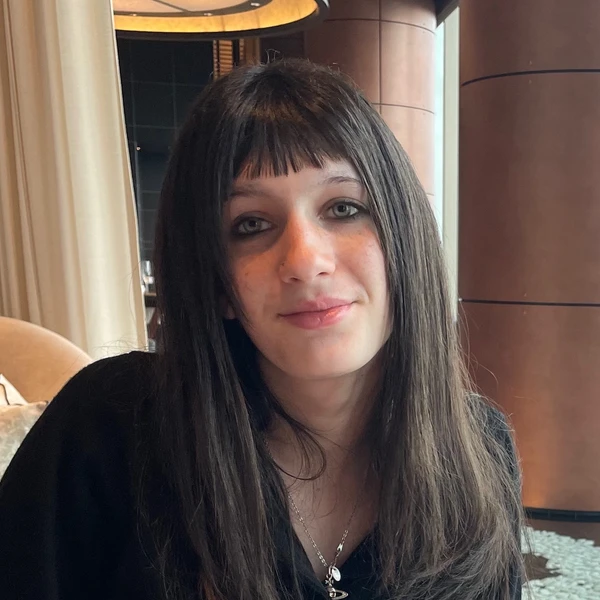
I am passionate about art, especially ceramics, and music.
Education
Staples High School
High School
2022 – 2026
Miscellaneous
Desired degree level:
Bachelor's degree program
Majors of interest:
Chemistry, Criminal Justice and Corrections, General, Fine and Studio Arts
Desired degree modality:
In-Person
Medical school interest:
No
Career
Miscellaneous
Dream career field:
Chemistry
Work experience:
0 years
Has nursing license:
No
Forever90 Scholarship
A life of service, to me, means showing up for others in both small and meaningful ways, even when no one is watching. I try to embody this through how I treat people, how I give my time, and how I use my skills to support those around me. Whether it is helping a classmate understand a difficult concept, volunteering in my community, or simply listening when someone needs to talk, I believe service begins with empathy and consistency.
In my daily life, I look for opportunities to help without being asked. I tutor younger students in science, especially chemistry, because I remember how intimidating it felt when concepts did not click right away. Seeing someone gain confidence after finally understanding a topic is incredibly rewarding. I also volunteer through school and local programs that focus on environmental cleanups and community events. These experiences have taught me that service is not always about grand gestures, but about being reliable and willing to contribute your effort.
I also express service through creativity. Art has always been a way for me to connect with others and communicate ideas. I have helped design posters and visual materials for school clubs and community events, using my artistic skills to support causes that matter. Creating something that informs or brings people together feels like a form of service because it helps amplify voices and messages that deserve to be seen.
I plan to use my education in chemistry, along with my minor in studio arts, to serve others in practical and lasting ways. Chemistry gives me the tools to understand materials, the environment, and the systems that affect everyday life. I am especially interested in sustainable materials and environmentally responsible practices. With this knowledge, I hope to work on solutions that reduce waste, improve safety, and make products more accessible and environmentally friendly.
At the same time, my background in studio arts will help me communicate complex scientific ideas in ways that are clear and engaging. Science can feel distant or intimidating to many people, and I want to help bridge that gap. Whether through educational materials, public outreach, or design focused work, I hope to make scientific information more understandable and usable for the public.
Ultimately, I see service as using what I have learned to make life better for others. My education is not just a personal achievement, but a responsibility. I plan to use it thoughtfully, combining knowledge, creativity, and compassion to contribute to my community and to work that benefits people beyond myself.
Nicholas J. Fillmore Opportunity Scholarship
am a 17 year old high school senior who is excited to begin the next chapter of my education and discover how my interests can come together in a meaningful way. If I receive this scholarship, I plan to use it for tuition, textbooks, lab fees, and basic living expenses while I am in college. These costs add up quickly, especially for a science major, and financial support would allow me to focus fully on my coursework and creative growth rather than constant financial stress.
I plan to major in chemistry with a minor in studio arts. At first, these fields may seem very different, but for me they are closely connected. I have always loved chemistry because it explains how the world works at the smallest level. I enjoy the challenge of problem solving, the precision of lab work, and the excitement of experiments that finally make sense after hours of effort. Chemistry has taught me patience, attention to detail, and how to think critically even when results do not come easily.
Studio arts has been just as important in shaping who I am. Art gives me a way to express ideas and emotions that cannot always be put into words. Whether I am drawing, painting, or working with mixed media, creating art helps me slow down and see the world differently. It has taught me creativity, observation, and confidence in my own voice. I believe that combining science and art will help me approach problems from multiple perspectives and become a more thoughtful and innovative thinker.
My goal is to pursue a career that blends chemistry with creativity, such as materials science, conservation science, or scientific illustration. I am especially interested in working on sustainable materials or products that are both functional and thoughtfully designed. I want to be part of work that improves everyday life while also being mindful of environmental impact. College will give me the foundation to explore these possibilities and refine my goals as I learn more.
Receiving this scholarship would be important to me because it would ease the financial burden on my family and allow me to take full advantage of my education. It would give me the freedom to spend extra time in the lab, enroll in studio courses, and participate in internships or research opportunities that may not always be paid. These experiences are essential for growth, but they can be difficult to pursue without financial support.
This scholarship would also mean a great deal to me on a personal level. It would represent belief in my ability to succeed and in the value of combining science and art. Knowing that others are willing to invest in my education would motivate me to work harder and stay committed to my goals, even when classes are challenging or the workload feels overwhelming.
I am eager to learn, experiment, and grow in college. With the help of this scholarship, I would be able to pursue my passion for chemistry and studio arts with focus and confidence, and work toward a future where I can contribute creativity, knowledge, and care to the world around me.
Women in Healthcare Scholarship
I have chosen to pursue a degree in healthcare because I want to make a real difference in people’s lives. Growing up, I have always been drawn to helping others, whether it was volunteering at local clinics, supporting friends and family through health challenges, or simply listening when someone needed guidance. Healthcare combines compassion with problem solving, and it gives me a way to use both my heart and my mind. I am interested in the science behind how the body works, but I am equally motivated by the human side of care. Trust, understanding, and encouragement can change how someone experiences a difficult moment, and I want to be part of that.
One of the biggest reasons I want to go into healthcare is because I want to help people feel heard and respected. Too often, patients are treated as a set of symptoms rather than as people. I want to be the kind of provider who notices the small details, asks questions carefully, and takes the time to make sure patients feel understood. I have seen how meaningful this can be, even in small gestures. Something as simple as listening closely or explaining a procedure clearly can reduce fear and anxiety. These experiences have made me realize that healthcare is not just about medicine or technology. It is about empathy and communication as much as it is about science.
As a woman in healthcare, I also want to represent the value of perspective and care in a field that still struggles with gender gaps in leadership and decision making. I hope to encourage other women to pursue careers in science and medicine and to show that being compassionate and detail-oriented is just as important as being technically skilled. I believe women in healthcare bring unique strengths, including collaboration, listening, and persistence, and I want to use those qualities to improve patient care and support colleagues in creating more inclusive and effective teams.
In the future, I hope to combine hands-on care with education and advocacy. I want to work in a way that not only treats illness but also helps people prevent it and understand their health better. This could mean supporting public health initiatives, volunteering with underserved communities, or mentoring young people interested in healthcare careers. I want to make sure the care I provide extends beyond the walls of a hospital or clinic and reaches people who might otherwise feel overlooked.
Ultimately, I see healthcare as a way to use my strengths to serve others in a meaningful and practical way. I want to bring compassion, intelligence, and attention to detail to a field where those qualities can change lives. Becoming a woman in healthcare is an opportunity to make a positive impact through understanding, advocacy, and leadership. I hope to be someone who makes patients feel seen, supported, and empowered, and who inspires others to do the same.
Raise Me Up to DO GOOD Scholarship
Growing up in a household with an open marriage has shaped how I see relationships, trust, and communication. At first, it was confusing because it is not what most people around me experience. I had friends who lived in traditional families, and sometimes I wondered if my family was different in a way that would make others judge us. Over time, I realized that what mattered most was how my parents treated each other and me with honesty, respect, and care. I learned early that love and family do not always look the way society says they should. Understanding and empathy are more important than fitting a certain mold.
Living in this type of household taught me how to communicate clearly and listen carefully. Conversations about feelings, boundaries, and expectations were normal, even when they were hard. I learned how to speak up for what I needed while also understanding the perspectives of others. These skills have stuck with me and affect how I approach friendships, school projects, and volunteer work. I notice details, ask questions, and think about how my choices affect the people around me. I also learned how to handle conflicts calmly, which has helped me in group projects and in leadership roles at school.
Being raised this way also taught me to question assumptions. Many people do not understand open marriages, and at first, I did not either. I learned that understanding comes from asking questions, listening, and thinking critically. This mindset has made me interested in chemistry, forensics, and criminal justice. These fields require careful attention to facts, context, and fairness. In forensics, even small details can change how evidence is interpreted. I want to use the skills I develop in science and justice to help people and make sure outcomes are fair, even if the work happens behind the scenes.
In the future, I hope to use my skills to make a positive impact. Whether it is through scientific research, public service, education, or community work, I want to help people who might feel overlooked or misunderstood. Growing up in a home where adults openly discussed boundaries and responsibilities taught me that honesty and fairness matter more than appearances. I want to carry these lessons into my career by using empathy and observation to solve problems and support people who need guidance or protection.
Growing up in an open marriage showed me that life is complicated but does not have to be unfair. It taught me to pay attention, communicate clearly, and care about how my actions affect others. I also learned that support comes in many forms and that creativity, compassion, and honesty are tools for making life better for the people around you. These lessons are what I plan to carry into my future studies and beyond. I want to use them to make communities more fair, kind, and understanding.
Richard Neumann Scholarship
One problem I have become increasingly aware of is how easily people can be exposed to dangerous substances without realizing it, especially with the rise of fentanyl contamination. This is not just a large scale public health issue. It is also a personal one, because it affects how safe people feel making everyday choices and how much they trust the systems meant to protect them. To address this, I created a small but meaningful solution for myself and others, and it has grown into an idea I would expand if I had the resources.
Last year, I put together a basic drug safety kit for a friend group and community space that included fentanyl test strips, clear instructions on how to use them, and a short guide explaining why testing matters. The problem I noticed was not that people did not care about safety. It was that they lacked accessible, judgment free information. Many people did not know where to get test strips, how reliable they were, or how to use them correctly. By organizing these materials in one place and explaining them in plain language, I helped reduce confusion and fear around testing. It was a small step, but it made people pause, ask questions, and make safer choices.
If I had the money and resources to expand this idea, I would create a mobile harm reduction and forensic testing initiative focused on education, prevention, and trust. The core of the project would be a community based program that combines substance testing, science education, and support services. The goal would not be to encourage drug use, but to reduce accidental overdoses and give people accurate information.
The first part of the plan would be mobile testing units equipped with reliable, legally approved drug checking technology. These units could visit schools, community centers, festivals, and neighborhoods with high overdose rates. Trained staff would offer anonymous substance testing, explain results, and provide resources for treatment and counseling. Privacy and respect would be essential to building trust.
The second part would focus on education. I would develop workshops led by students and professionals trained in chemistry, forensic science, and criminal justice. These workshops would explain how substances are identified, why contamination happens, and how laws and enforcement affect safety. Making the science transparent helps people understand risk rather than ignore it.
The final component would be data driven prevention. With proper consent and privacy protections, aggregated testing data could be shared with public health agencies to identify trends and issue early warnings. This would help communities respond before overdoses spike.
What started as a simple kit taught me that solutions do not have to be perfect to matter. With real funding and institutional support, this idea could save lives by combining science, education, and compassion. It reflects how I want to use my interests in chemistry and criminal justice to solve problems in ways that are practical, ethical, and human.
Light up a Room like Maddy Scholarship
Drugs, and especially fentanyl, have affected my family in a quiet but lasting way. It is not something we talked about openly for a long time, but the impact showed up in conversations that stopped, trust that eroded, and the constant fear that one bad decision could turn into a permanent loss. Watching someone you love struggle with substance use changes how you see safety, accountability, and the systems meant to protect people. It also makes the issue impossible to ignore or reduce to statistics.
Fentanyl feels especially frightening because of how invisible it is. A substance so small and so potent can end a life before anyone has time to help. That reality has shaped how I think about drugs and the criminal justice system. I have seen how punishment alone does not solve addiction, but I have also seen how lack of oversight, poor evidence handling, and inconsistent enforcement can make communities more dangerous. Families like mine often fall into the gap between public health and public safety, where no solution feels complete.
These experiences are why I am interested in studying criminal justice alongside my interest in chemistry and forensic science. I want to understand how laws are written, how evidence is collected, and how cases involving drugs are handled from arrest through sentencing. Too often, fentanyl cases rely on rushed testing, unclear lab procedures, or outdated methods that can lead to wrongful charges or missed opportunities for intervention. Learning how the system works is the first step toward improving it.
Through a criminal justice degree, I hope to work toward solutions that are grounded in both science and fairness. I am especially interested in the role of forensic analysis in drug related cases. Accurate identification of substances can influence charges, sentencing, and access to treatment programs. If the science is flawed, the consequences are real for individuals and families. By combining training in chemistry with criminal justice, I want to help ensure that decisions are based on reliable evidence rather than assumptions or fear.
I am also motivated to focus on prevention and harm reduction. Understanding drug trends, distribution patterns, and the realities of addiction can help communities respond earlier and more effectively. I want to work with programs that emphasize treatment, education, and accountability rather than only incarceration. Fentanyl has shown how quickly a crisis can grow when systems move too slowly or fail to communicate across disciplines.
My family’s experience taught me that drug addiction is not a distant problem or someone else’s issue. It affects ordinary people, loving families, and entire communities. Studying criminal justice is my way of turning that experience into action. I want to be part of a system that values truth, compassion, and safety, and that uses strong evidence and thoughtful policy to prevent other families from living with the same fear and uncertainty.
Operation 11 Tyler Schaeffer Memorial Scholarship
I am planning to use my degree in chemistry to work at the intersection of science, justice, and community service. I am especially interested in forensic science because it shows how careful, ethical scientific work can have a direct impact on people’s lives. For me, helping those in need does not just mean volunteering in obvious ways. It also means using specialized skills to protect people who might otherwise be overlooked, misrepresented, or unheard.
Through studying chemistry, I want to gain a strong foundation in analytical thinking, lab techniques, and data interpretation. These skills are essential in forensic work, where accuracy and integrity matter deeply. I am interested in pursuing a career in forensic analysis or a related public service field, working with crime laboratories, public defenders’ offices, or nonprofit organizations that review forensic evidence. Many people in the justice system rely on scientific evidence but do not have the resources to challenge flawed testing or outdated methods. By contributing careful, unbiased scientific analysis, I hope to help ensure that evidence is used responsibly and that outcomes are fair.
I am also motivated by the idea of prevention and education. Science can be intimidating, especially for students from underserved communities who may not see themselves represented in scientific fields. While at Skidmore, I plan to participate in outreach programs that bring science education to local schools and community centers. Tutoring, mentoring, or helping run hands on lab demonstrations are ways I can make chemistry feel more accessible and relevant. If young students can see how science connects to real world issues like public safety, health, and justice, they may feel empowered to pursue those interests themselves.
Forensic chemistry also plays a role in public health and safety beyond the courtroom. Issues such as drug contamination, environmental toxins, and unsafe materials often affect vulnerable populations first. I am interested in community based research or internships that focus on analyzing substances that pose risks to public health. By working with local agencies or nonprofits, I could help identify problems and contribute data that supports safer policies and better protections for communities.
Ultimately, I see my degree as a tool for service. Skidmore’s emphasis on interdisciplinary learning and social responsibility aligns with my goals. I do not just want to study chemistry for academic achievement or career advancement. I want to use it to stand up for accuracy, fairness, and compassion in systems that deeply affect people’s lives. Whether through forensic work, education, or public health initiatives, my goal is to use science thoughtfully and ethically to support those who need it most.
RonranGlee Literary Scholarship
Selected passage (Marcus Aurelius, Meditations, Book II, trans. George Long, 1862):
“Begin the morning by saying to thyself, I shall meet with busybody, the ungrateful, arrogant, deceitful, envious, unsocial. All these things happen to them by reason of their ignorance of what is good and evil. I can neither be harmed by any of them, for no man will involve me in wrong, nor can I be angry with my kinsman, nor hate him; for we are made for co-operation.”
Thesis: In this passage, Marcus Aurelius advances a rigorous ethical doctrine in which moral freedom is achieved not by controlling circumstances or reforming others, but by disciplining one’s judgments; wrongdoing by others is rendered powerless by redefining harm as a failure of one’s own rational integrity, while human cooperation is grounded not in sentiment but in a shared rational structure that makes hostility irrational.
At first glance, Marcus’s instruction appears pessimistic, even misanthropic. He urges himself to expect deception, arrogance, and ingratitude before the day even begins. Yet this anticipation is not a gesture of resignation. It is a preventative exercise in moral clarity. By foreseeing vice, Marcus removes its capacity to surprise him, and surprise is what typically destabilizes moral judgment. Anger and resentment often arise not from injustice alone but from the shock of unmet expectations. Marcus therefore begins by adjusting expectations downward, not to excuse wrongdoing, but to preserve the autonomy of his own ethical response.
Central to the passage is the claim that others’ vices arise from “ignorance of what is good and evil.” This reflects a Stoic commitment to moral intellectualism, the view that error in action is rooted in error in understanding. For Marcus, no one knowingly chooses evil as evil. People pursue what appears good to them, even when that appearance is distorted by false beliefs. This framing is not meant to absolve wrongdoers of responsibility. Rather, it shifts the moral focus away from personal offense and toward the conditions of rational failure. Vice ceases to be an attack on the self and becomes evidence of confusion in the other.
This reframing allows Marcus to make his most provocative claim, that he cannot be harmed by such people. He does not deny that others can cause pain, loss, or inconvenience. Instead, he narrows the meaning of harm to moral corruption. Harm is not something that happens to a person, but something that happens within a person when reason yields to passion. To be harmed is to be drawn into injustice, anger, or hatred. Since assent to these states is voluntary, their occurrence cannot be forced by external actions. In this way, Marcus relocates vulnerability entirely within the domain of judgment.
The phrase “for no man will involve me in wrong” clarifies this moral boundary. To be involved in wrong is to participate in it, whether through retaliation, cruelty, or the abandonment of rational self-command. Marcus insists that such participation is always a matter of consent. This insistence is severe, because it eliminates the moral exemptions people typically grant themselves under provocation. Even when mistreated, one remains responsible for the moral quality of one’s response. Anger becomes not a justified defense of dignity but a lapse in internal governance.
Marcus then extends this logic to human relationships. He claims that he cannot be angry with or hate his “kinsman.” This term does not refer to family affection or personal closeness. It refers to a shared rational nature. All human beings participate in the same capacity for reason, and it is this shared capacity that grounds moral obligation. To hate another human being is therefore to reject the very principle that constitutes one’s own agency. Hatred becomes not only immoral but incoherent, since it denies the rational structure that makes moral judgment possible at all.
The declaration that “we are made for co-operation” completes the argument. Cooperation is not presented as a social convenience or a moral ideal chosen among alternatives. It is described as a fact of human nature. Rational beings are structured to function together, just as organs are structured to function within a body. Language, law, and ethical norms all presuppose mutual intelligibility and shared standards of reason. When a person acts out of resentment or hostility, the problem is not that cooperation has failed, but that reason has malfunctioned.
What makes this passage especially demanding is that it removes moral drama from human conflict. There are no villains whose malice justifies hatred and no victims whose suffering licenses rage. Instead, there are rational agents operating with varying degrees of clarity. This worldview denies the emotional satisfactions of indignation. Moral superiority cannot be claimed through outrage but must be demonstrated through restraint. Virtue becomes an internal achievement rather than a public performance.
This does not imply passivity or indifference toward injustice. Marcus does not argue that wrongdoing should be tolerated or ignored. Rather, he insists that resistance to injustice must remain consistent with reason. Punishment, correction, and opposition are compatible with Stoic ethics, but they must be exercised without hatred. The ruler, like the physician, acts to restore order, not to indulge resentment. Justice is an expression of rational care, not emotional retaliation.
Ultimately, the passage presents a demanding conception of freedom. Freedom is not the ability to avoid offense or control others, nor is it withdrawal from human society. It is the capacity to preserve rational integrity amid inevitable imperfection. By redefining harm, reframing vice as ignorance, and grounding social obligation in shared rationality, Marcus constructs an ethical vision in which dignity cannot be taken and cooperation cannot be abandoned. The self remains free not because the world is just, but because reason, once properly governed, cannot be compelled to betray itself.
Joieful Connections Scholarship
The journey that has led me toward higher education has been shaped by both personal challenges and academic discovery. One of the most influential experiences in my life has been navigating mental health struggles. While these challenges were difficult, they became a powerful source of growth. They taught me resilience, self discipline, and the importance of understanding both the mind and the systems that support human well being. Rather than allowing these struggles to define my limits, I chose to use them as motivation to better understand the science behind human behavior, healing, and problem solving.
My interest in chemistry developed during high school, where I discovered how deeply it connects to the real world. Chemistry is not just equations and reactions. It explains how substances interact, how evidence is analyzed, and how scientific methods uncover truth. I was particularly drawn to laboratory work, where precision, patience, and critical thinking are essential. Chemistry showed me that small details can have significant consequences, a lesson that resonates strongly with my personal experiences and academic goals.
I plan to study chemistry in college with a strong interest in forensics. Forensic science fascinates me because it lies at the intersection of chemistry, biology, and criminal justice. It applies scientific principles to uncover facts, analyze evidence, and seek justice. The idea that chemical analysis can help solve crimes, protect the innocent, and give closure to victims’ families is deeply meaningful to me. Forensics represents a field where science directly serves society, and that sense of purpose is what excites me most about pursuing higher education.
Mental health awareness has also shaped how I view my future impact. I understand firsthand how important it is to feel supported and understood, especially in high pressure environments like academics or the justice system. In my career, I hope to contribute not only as a scientist but also as someone who advocates for compassion, ethical responsibility, and mental health awareness. Whether working in a forensic laboratory or a research setting, I want to help foster environments that value accuracy, integrity, and humanity.
Through higher education, I hope to make a meaningful impact in my community by using science as a tool for both justice and understanding. I aspire to mentor others who may be struggling academically or personally, showing them that challenges do not disqualify them from success. By combining my passion for chemistry, my interest in forensics, and my lived experience with mental health challenges, I aim to contribute to a field that seeks truth while supporting the people behind the data.
Higher education represents more than academic advancement for me. It is an opportunity to turn adversity into purpose and curiosity into contribution.
Ryan Stripling “Words Create Worlds” Scholarship for Young Writers
Writing has always been the place where my thoughts slow down enough for me to understand them. I love writing because it gives shape to ideas that would otherwise remain scattered, half-formed observations, emotions I cannot quite name, and questions I am still learning how to ask. When I write, I am not just recording what I already know. I am discovering what I think. That sense of exploration is what keeps me coming back to the page.
What I love most about writing is its flexibility. Writing can be quiet and reflective, or sharp and persuasive. It can tell a story, argue a point, or simply capture a moment before it disappears. Through essays, short stories, and personal reflections, I have learned that writing is not about sounding perfect but about being precise. It is about finding the right words to express something honestly. The challenge of revising, of cutting what does not work and strengthening what does, has taught me patience and attention to detail. Each draft becomes a conversation between my intentions and the reader’s experience.
Writing has also helped me connect with others. When I share my work, I am offering a piece of my perspective and inviting someone else to see the world through my lens, even briefly. Reading feedback and engaging in discussion has shown me that writing is not a solitary act but part of a larger exchange of ideas. It has made me more empathetic and more aware of how language can clarify, persuade, or comfort. In a world filled with constant noise, writing allows me to communicate thoughtfully and deliberately.
As I look toward college, I plan to continue writing as both a discipline and a refuge. Academically, I want to challenge myself through writing-intensive courses that demand clear thinking and strong argumentation. I see writing as a tool that will strengthen every subject I study, from analyzing complex texts to presenting original research. I also hope to seek out workshops, literary magazines, or student publications where I can collaborate with peers who care deeply about language and storytelling.
Outside the classroom, I intend to keep writing for myself. College will bring new environments, perspectives, and questions, and writing will help me process those experiences. Whether through journaling, creative projects, or personal essays, I want to document my growth and remain attentive to the small details that make each experience meaningful. Writing will be how I make sense of change and uncertainty.
Ultimately, I love writing because it is both grounding and expansive. It anchors me in my own voice while pushing me to listen to others. In college and beyond, writing will remain a constant practice, one that challenges me to think more clearly, communicate more honestly, and continue learning about myself and the world around me.
Ed and Flora Pellegri Scholarship
One of the most significant obstacles I have faced in my life has been my struggle with mental health. During my teenage years, I experienced periods of anxiety and emotional overwhelm that made it difficult to focus, stay motivated, and feel confident in myself. At times, even simple responsibilities felt exhausting, and I often questioned my abilities and self-worth. Watching others seem to move forward effortlessly while I struggled internally made me feel isolated and discouraged.
For a long time, I viewed these challenges as weaknesses. I worried that my mental health struggles would define me or limit what I could achieve. However, as I began to seek support and develop healthier coping strategies, my perspective started to change. I learned how to better understand my thoughts and emotions, recognize patterns in my behavior, and take steps to manage stress rather than letting it control me. This process required patience, honesty with myself, and resilience—qualities I continue to build every day.
Overcoming these obstacles has shaped who I am in profound ways. I have become more self-aware and emotionally intelligent, able to reflect on my experiences rather than avoid them. I am more empathetic toward others, especially those whose struggles may not be immediately visible. Most importantly, I have learned perseverance. Managing mental health is not a one-time achievement but an ongoing effort, and learning to keep going even when progress feels slow has strengthened my determination.
These experiences have directly influenced my interest in pursuing a career in forensics. My mental health journey sparked a deep curiosity about the human mind and behavior—why people think, act, and respond the way they do under different circumstances. Forensics fascinates me because it blends science, psychology, and critical thinking to uncover the truth behind complex situations. I am drawn to the careful analysis of evidence and the objective pursuit of facts, especially in cases where emotions or assumptions could lead to misunderstanding.
Additionally, my personal experiences have taught me the importance of attention to detail, patience, and ethical responsibility—skills that are essential in forensic work. Understanding how mental health can influence behavior has given me a more nuanced perspective, allowing me to approach situations with both logic and compassion. I believe this balance is crucial in a field that often deals with sensitive and high-stakes situations.
While my struggles with mental health have been challenging, they have ultimately helped shape my goals and values. They have taught me resilience, empathy, and self-discipline, and they have motivated me to pursue a future where I can apply both my analytical abilities and my understanding of human behavior. I hope to build a career in forensics where I can contribute meaningfully, seek truth responsibly, and turn personal challenges into strengths that allow me to help others.
Ella's Gift
I don’t remember the exact moment everything started feeling too heavy—I just remember the weight. It settled on my shoulders sometime during middle school, quiet at first, like a fog rolling in at night. By eighth grade, it was suffocating. I had spent years smiling through what felt like a storm inside me, forcing myself to laugh when I wanted to cry, to stay silent when I wanted to scream. Everyone saw the version of me I curated: the dependable student, the friend who cracked jokes, the person who had it together. But beneath all that, I was unraveling.
The pressure came from every direction. Teachers expected me to be perfect; friends leaned on me for advice I wasn’t sure how to give; my family believed I could handle anything. The truth was that I couldn’t. My chest felt tight most days, like I was walking around with an invisible boulder pressing down on me. At night, I would lie in bed rehearsing every mistake I made that day, punishing myself for words I shouldn’t have said or opportunities I thought I wasted. My mind never rested, and slowly, I stopped resting too.
I thought if I ignored the heaviness long enough, it would fade. Instead, it grew. I lost interest in the things I used to enjoy—music, sports, even spending time with friends. It all felt hollow. I stopped eating much, telling myself I just wasn’t hungry, when really I couldn’t find the energy to care. I wore baggy clothes to hide the changes, plastered on fake smiles, and told everyone I was fine. The word “fine” became my armor, a way to avoid questions I didn’t know how to answer.
By high school, the fog had become so thick that I could barely see myself through it. I moved through each day on autopilot, pretending to be okay while privately drowning. Sometimes, I wondered if the world would even notice if I disappeared. Those thoughts terrified me, but I didn’t share them with anyone. I didn’t want to be a burden. I told myself it was my job to carry the weight, no matter how crushing it felt.
Eventually, I hit a breaking point. One night, I sat in my room staring at a pile of unfinished homework, and the dam finally cracked. I couldn’t pretend anymore. I cried harder than I ever had, the kind of sobbing that shakes your entire body. In that moment, I realized something had to change. I couldn’t keep living inside the prison of my own silence.
Reaching out for help felt like stepping into unfamiliar territory. My voice trembled the first time I told a friend what I was going through. I expected judgment, but instead I found understanding. That conversation opened the door for me to talk to a trusted adult, who encouraged me to seek support. Slowly, I learned that admitting I was struggling didn’t make me weak—it made me human. For years, I thought vulnerability was a flaw, but I began to see it as strength.
The road forward wasn’t simple or quick. Healing didn’t arrive like a sudden sunrise; it was more like the slow return of color to a black-and-white picture. Some days, the heaviness still lingers. But I’ve learned to carry it differently. I write when my mind feels too crowded. I walk outside when the walls close in. I remind myself that reaching out doesn’t make me a burden, but instead creates connections I desperately need.
Looking back, I wish I could tell my younger self that it’s okay to fall apart sometimes. That the expectations placed on me—by others and by myself—were never worth sacrificing my peace of mind. I wish I could tell that scared eighth grader that asking for help would not disappoint the people around me, but rather show them the real version of who I was.
Now, as I stand on the other side of that suffocating fog, I carry both the scars of my struggles and the lessons they left behind. I’ve learned resilience, not the kind that means hiding pain behind a smile, but the kind that means facing hardship and choosing to keep moving forward. I’ve learned that even in the heaviest moments, light can filter through cracks you don’t expect. Most importantly, I’ve learned that I don’t have to carry the weight alone.
What began as a story of silence and struggle has become one of growth and survival. I am still learning, still navigating what it means to take care of myself, but I no longer see my vulnerability as something to be ashamed of. Instead, I see it as proof of my strength—the strength to keep going, to speak my truth, and to step out of the fog into something brighter.
Big Picture Scholarship
The movie that has had the greatest impact on my life is Lady Bird. I remember the first time I watched it was on a Friday night during my freshman year. My best friend recommended it, saying, “It’s literally us.” At first, I didn’t believe a movie could capture what it feels like to be a teenager, but within the first twenty minutes, I felt like I was watching my own life play out on the screen.
What struck me the most was the relationship between Lady Bird and her mom. It reminded me so much of the way my mom and I are—constantly arguing about little things, yet underneath it all, I know she loves me more than anything. Sometimes I feel like my mom doesn’t understand me, especially when I want more independence or when I dream about leaving our town for something bigger. Watching Lady Bird struggle with the same push-and-pull gave me comfort. It showed me that it’s okay to love someone deeply and still clash with them, and that those fights don’t erase the bond you share. In fact, they can even make it stronger.
The movie also opened my eyes to the idea that growing up doesn’t mean having everything figured out. Before, I used to think that I needed a perfect plan for the future, like choosing the exact college, career, and even the kind of person I wanted to become. But Lady Bird showed me that part of being young is exploring, making mistakes, and sometimes changing your mind. It was freeing to see that it’s normal to not know all the answers yet. Instead of panicking about the future, I’ve started focusing more on enjoying the present and learning about myself along the way.
Another part of the movie that stayed with me is how Lady Bird embraces her uniqueness, even when people don’t always understand her. She’s dramatic, emotional, and sometimes awkward, but she doesn’t stop being herself. I’ve always struggled with feeling like I had to fit in at school—wear the right clothes, talk the right way, or hang out with the right people. But after watching Lady Bird, I started to see that it’s okay to be a little different. In fact, that’s what makes people interesting. It gave me more confidence to be authentic, whether that means speaking up in class when I have an idea, wearing what I actually like instead of what’s trending, or even just admitting when I don’t know something.
Ultimately, Lady Bird impacted me because it made me feel seen. It’s rare to watch a movie that mirrors your own struggles, fears, and dreams so closely. Whenever I feel overwhelmed by school, family, or the pressure of figuring out my future, I think back to the film and remind myself that I don’t have to have it all figured out yet. I’m still learning, and that’s okay. Growing up is messy, complicated, and sometimes painful, but it’s also beautiful—and that’s the lesson Lady Bird gave me.
Patrick Roberts Scholarship for Aspiring Criminal Justice Professionals
One of the most pressing issues facing the criminal justice system today is ensuring accuracy and fairness in criminal investigations. Errors in evidence collection or analysis can lead to wrongful convictions or unsolved cases, undermining public confidence in the entire system. Every stage of the process—from securing a crime scene to presenting evidence in court—requires precision, professionalism, and a commitment to truth.
After attending the University of New Haven’s Crime Scene Investigation Academy last summer, I developed a deeper understanding of how crucial the investigative process is to achieving justice. I saw firsthand how science and technology can strengthen the system by providing objective, reliable evidence to support criminal cases. My future goal is to build on what I learned at the Academy to help reduce errors in the investigative process, making sure cases are handled with the highest possible standards of accuracy and integrity.
I want to be part of a generation of criminal justice professionals who combine technical expertise with a dedication to fairness and reform. By learning advanced investigative methods—like evidence preservation, crime scene reconstruction, and forensic analysis—we can help prevent wrongful convictions, close cold cases, and improve public trust in the system. My experience at the Crime Scene Investigation Academy showed me that strong investigative practices are the foundation of justice, and I plan to carry that lesson forward as I continue my education and pursue a career in this field.
Attending the CSI Academy at the University of New Haven was one of the most valuable experiences I have had so far in exploring a career in criminal justice. Throughout the program, I gained hands-on experience in evidence collection, fingerprint analysis, crime scene photography, and even mock crime scene investigations. Working directly with professionals in the field gave me insight into the precision and attention to detail required in real-world investigations.
One of the highlights of the Academy was participating in simulated crime scenes, where I learned how to secure a scene, gather physical evidence, and document everything properly for later analysis. These exercises taught me how every piece of evidence—no matter how small—can be critical in solving a case. I also saw how collaboration between investigators, forensic experts, and law enforcement officers is essential to building a strong, accurate case from start to finish.
Beyond technical skills, the Academy deepened my interest in the broader criminal justice system. Seeing how investigative work connects to court proceedings, victims’ rights, and community safety gave me a more complete picture of the challenges and responsibilities in this field. It also reinforced my belief that science-based investigations are key to creating a system that is both effective and fair.
Attending the CSI Academy has already had a major impact on my career goals. It confirmed my passion for criminal justice and introduced me to potential paths in forensic science, law enforcement, and criminal justice reform. The practical skills I developed—like evidence handling, analytical thinking, and problem-solving—will serve as a strong foundation for future studies and internships.
Over the next one to five years, I plan to build on this experience by pursuing additional education and training in forensic science and criminal justice. The connections I made at the University of New Haven and the confidence I gained from successfully completing the program have already opened doors to new opportunities. Ultimately, I hope to work in a role where I can combine investigative expertise with a commitment to fairness, helping to ensure that every case is handled accurately and every individual receives justice.
The Crime Scene Investigation Academy showed me what is possible when science, technology, and a passion for justice come together. It has motivated me to continue learning, growing, and contributing to a criminal justice system that values both truth and fairness at every level.
Taylor Swift Fan Scholarship
Taylor Swift’s twelfth studio album, The Life of a Showgirl, feels like a love letter to her career and the way she has lived under the spotlight for so long. To me, it captures not just her music, but her ability to survive and thrive while constantly being watched, judged, and celebrated. As someone in high school who has battled with mental health—especially anxiety and self-doubt—I see so much of myself in her journey. Out of all of her performances that connect to this album’s theme, the one that moves me the most is her performance of “All Too Well (10 Minute Version)” on Saturday Night Live in 2021. I think this performance is one of the clearest examples of what The Life of a Showgirl represents: being able to take your pain, stand on stage, and transform it into something beautiful that others can feel with you.
That performance was stripped down and raw. There weren’t backup dancers or elaborate stage effects—just Taylor, the piano, and her voice pouring out the story. Watching it, I realized that being a “showgirl” isn’t only about glitz and glamour. Sometimes it means being brave enough to share the most fragile pieces of yourself in front of millions of people. For me, that felt personal. I often struggle with showing people how much I’m hurting inside. At school, I hide behind smiles or excuses because I don’t want to be seen as weak. But when I saw Taylor let the cracks show in her voice and the tears well in her eyes, I felt like she was saying to me, “It’s okay to let people see the real you.”
The connection to The Life of a Showgirl runs even deeper, though. That album celebrates her endurance—her ability to take every era of her career, from the heartbreaks to the triumphs, and weave them into a bigger story of survival. The “All Too Well” performance is a perfect snapshot of that. It showed that even a memory that once broke her heart could be reborn as art, as something fans still talk about years later. For me, that’s a lesson in resilience. My mental health struggles sometimes make me feel like I’m defined by my low moments, like they’ll always hold me back. But Taylor’s performance showed me that even painful chapters can become part of a larger, meaningful narrative.
I also think about the confidence it must take to perform such a vulnerable song on live TV, knowing people will analyze every second. That’s the essence of being a showgirl—walking out into the spotlight, not knowing how people will react, and still daring to give them your truth. When I listen to The Life of a Showgirl now, I hear echoes of that same courage. The album doesn’t just highlight her glittering success; it honors the fact that she kept performing, kept sharing, even when it hurt.
For me, as a girl in high school still trying to find my own courage, that’s everything. The “All Too Well” performance taught me that vulnerability can be strength, and The Life of a Showgirl reminds me that our whole story—not just the polished parts—deserves to be celebrated. Taylor showed me that even in the hardest times, it’s possible to stand in the spotlight of your own life and still shine.
Sloane Stephens Doc & Glo Scholarship
Some people say “life’s a journey,” but to me, it’s always felt more like a complicated video game. Some levels are easy and beautiful, others are frustrating and you’re stuck replaying the same part over and over. And just like in a game, sometimes you get thrown curveballs you never asked for — mine have been mental health struggles and IBS.
Living with anxiety and IBS isn’t exactly something you’d choose. It’s like my mind and my body got together and decided to make even normal days into challenges. There have been mornings I’ve missed school because I couldn’t stop worrying, or afternoons I’ve skipped hanging out with friends because my stomach was in knots. I’ve had to learn to listen to my body in a way most people my age probably don’t think about yet. It’s exhausting, but I guess it’s made me tougher, too. Not in the “nothing bothers me” kind of way, but in the “I know how to get through hard days” kind of way.
Even though my brain and body sometimes slow me down, they’ve never stopped me from caring about the things I love. Chemistry is one of those things. I like that it’s both creative and logical — you can’t just “wing it,” but you also have to think outside the box. There’s something weirdly comforting about knowing the world runs on patterns, reactions, and rules that make sense, even when the rest of life feels unpredictable. It’s like chemistry doesn’t care how I’m feeling; it just is.
Art is another thing I keep coming back to, especially ceramics and painting. Clay has this satisfying, grounding quality — when I’m shaping something on the wheel, my thoughts slow down, and all I’m focused on is keeping my hands steady. Painting’s different. It’s messier, less predictable. I love that I can just put color on a canvas and let it become whatever it wants to be. Art gives me control and freedom at the same time, which is kind of ironic considering how little control I sometimes feel in other parts of my life.
When I’m having bad days physically, or when anxiety’s got me in its grip, I retreat into video games and music. Video games let me be someone else for a while — an adventurer, a builder, a hero who doesn’t get slowed down by a stomach ache or intrusive thoughts. And music… music’s like a shortcut to feelings I can’t always explain. Some songs feel like home, others like escape. There’s a track for every mood, and I’ve learned to curate my playlists like little toolkits for my brain.
I’m seventeen, which means everyone’s asking me about “the future.” Honestly, I don’t have a perfect roadmap yet. What I do know is that I want to keep building a life that balances curiosity, creativity, and care for myself. I see myself maybe in a lab, mixing chemicals and figuring out why things work the way they do — or maybe in a studio, surrounded by clay and paint, creating something tangible. Or maybe a mix of both, because I’ve learned you don’t have to choose just one thing you love.
My experiences — the struggles, the passions, the weird in-between moments — have shaped me into someone who can adapt, who knows how to slow down when needed, and who finds meaning in small, specific joys. I’m not trying to be perfect; I’m just trying to be present. And for now, that feels like enough.
Individualized Education Pathway Scholarship
Living with a learning disability and having an Individualized Education Program (IEP) has shaped much of my educational experience. When I first started school, I didn’t fully understand why certain things were harder for me than for my classmates. I was diagnosed with a learning disability that affects the way I process information, especially in reading and organizing my thoughts. This made some academic tasks, like reading lengthy texts or completing multi-step assignments, feel overwhelming and discouraging.
One of the biggest challenges I faced was dealing with the stigma surrounding learning disabilities. Many people assume that having an IEP means you’re less intelligent or not as capable, but that couldn’t be further from the truth. For me, it was about learning differently, not learning less. Unfortunately, I sometimes felt isolated because peers didn’t always understand why I needed accommodations, and teachers, even with the best intentions, sometimes lowered their expectations or didn’t provide the support I needed in the way I needed it.
Another challenge was managing the frustration that came with my own expectations. I wanted to keep up with my classmates, but I often struggled with time limits on tests or with remembering all the steps required in complicated projects. It was hard not to compare myself to others and feel like I was falling behind, even though I knew I was working harder than many. These moments tested my confidence and made me question if I could really succeed academically.
Over time, I learned that the key to overcoming these challenges was advocacy and self-awareness. I became proactive in communicating with my teachers and school counselors. I learned to explain what accommodations worked best for me—whether that was extra time on exams, receiving instructions in writing, or breaking down assignments into smaller, more manageable parts. Rather than being passive about my needs, I took ownership of them, which helped me gain more control over my education.
Additionally, I developed effective strategies to support my learning. I relied heavily on organizational tools like planners, color-coded notes, and digital reminders. Technology also became a huge help—text-to-speech software and audio recordings allowed me to engage with material in ways that suited me best. These tools didn’t erase the challenges, but they made the learning process more accessible and less stressful.
What motivates me to continue my education, despite the obstacles, is the understanding that my learning disability is not a limitation, but a part of who I am. It has taught me resilience and problem-solving skills that extend beyond academics. I’m motivated by the idea that education opens doors and creates opportunities that I want to pursue for myself and my future. Every step I take forward, no matter how small, feels like a victory.
I also find motivation in the support system around me—my family, friends, and educators who believe in my potential and encourage me to keep going. Their faith reminds me that while the journey might be harder, it’s absolutely worth it. Most importantly, I want to inspire others with learning disabilities to know that they can succeed too, that asking for help is a strength, and that perseverance can lead to achievement.
In the end, my learning disability and IEP have become less of a burden and more of a unique lens through which I view the world. They’ve helped me grow not only academically but personally, teaching me patience, empathy, and the importance of self-advocacy. These lessons motivate me every day to continue learning and striving for my goals, no matter what challenges come my way.
Charles Bowlus Memorial Scholarship
Even though I never had the chance to meet my grandmother, she has had a profound influence on who I am and who I aspire to become. She passed away before I was born, yet I feel as though I know her. Her memory has been kept alive through stories passed down by my mother—stories filled with strength, love, struggle, and resilience. In many ways, I have grown up in the shadow of her legacy, and that legacy has quietly guided my path.
My grandmother was a woman of incredible strength. She raised her children during a time of limited resources and great societal challenges, and yet she never allowed her circumstances to define her. My mother often tells me that her mother believed deeply in education, even though she herself didn’t have the opportunity to pursue it as far as she had hoped. She would say that learning was one thing no one could ever take away from you. That belief took root in me from an early age, even before I fully understood its meaning.
What I know of my grandmother paints a portrait of quiet perseverance. She worked long hours and always put others first. Despite economic challenges, she managed to create a home filled with warmth, discipline, and love. Her values—kindness, humility, and determination—have shaped my family for generations. I’ve come to understand that her sacrifices laid the groundwork for the opportunities I have today. The life I’m building is only possible because of the one she fought to give her children.
Growing up, I often found myself wishing I could ask her questions. What gave her strength during the hardest days? What dreams did she have for herself that were never realized? Would she be proud of the direction I’m taking in life? That quiet longing has given me a sense of purpose that’s hard to explain. In a way, I feel like I am living not just for myself, but also for the parts of her story that never got to unfold.
Her absence has made me more empathetic, more curious, and more grounded in the importance of legacy. It’s also made me aware of how women—especially women of color and women in low-income communities—often go unnoticed despite carrying the weight of entire families. This realization has shaped my career aspirations. I want to work in a field where I can help uplift others, particularly women and families facing the kinds of struggles my grandmother endured. Whether I go into social work, education, public health, or advocacy, I want my career to serve as a continuation of her legacy.
My grandmother’s story reminds me that success isn’t just about personal achievement—it’s about making sure the sacrifices of those who came before you weren’t made in vain. I carry her with me every time I step into a classroom, take on a new challenge, or think about the kind of woman I want to be. Though I never met her, she is a part of me. And in everything I do, I hope to make her proud.
Richard (Dunk) Matthews II Scholarship
My name is Risa, and I’m a young woman passionate about science, creativity, and community. I plan to pursue a career in forensic chemistry, where I can apply my curiosity about how things work to help solve real-world problems and bring justice through science. Forensic chemistry combines analytical precision with investigative thinking—something that has fascinated me since I first learned how trace evidence, like fibers or chemical residues, could play a key role in solving crimes.
I’ve always been drawn to the intersection of logic and creativity. While forensic chemistry satisfies my desire to ask questions and find concrete answers through science, I also have a deep-rooted passion for the arts—especially ceramics and painting. Working with clay and glaze allows me to explore the chemical transformations that happen under extreme heat in a kiln. I love experimenting with glaze recipes, observing how minerals react and colors shift—a process that, in many ways, mirrors the controlled experiments of the lab. Both art and forensic science require focus, patience, and a willingness to learn from unexpected outcomes.
To master my trade in forensic chemistry, I plan to pursue formal training in analytical techniques, instrumentation, and organic chemistry, likely through a college program or technical institute with a strong forensic science track. I am particularly interested in learning how to use tools like gas chromatography and mass spectrometry to analyze evidence. At the same time, I intend to keep honing my artistic skills, especially in ceramics, because I believe creative thinking is essential in any scientific field. Staying connected to both disciplines helps me stay grounded, imaginative, and driven.
Outside of academics, I’m proud to volunteer at the Museum of Contemporary Art in Connecticut (MoCA CT). This experience has deepened my appreciation for the role that creativity and culture play in building strong, connected communities. Whether I’m helping to set up exhibits, organize events, or assist with youth programs, I see firsthand how powerful it is when people come together to experience and create art. It has inspired me to think about how I can give back in my own way.
Once I’ve developed expertise in forensic chemistry, I hope to mentor young women—especially those who may not see themselves represented in STEM fields. I want to help demystify science and make it approachable for students from all backgrounds. At the same time, I dream of opening a community studio space one day, where people can explore both science and art through hands-on workshops in ceramics, painting, and even simple chemistry-based activities.
Music is also an important part of my life. I often work while listening to music—it helps me focus, relax, and feel inspired. Whether I’m sculpting clay, studying for an exam, or volunteering, music reminds me to stay connected to the joy in what I’m doing.
Ultimately, I want to build a life that blends scientific discovery, artistic expression, and service. By following my passion for forensic chemistry and sharing what I learn, I hope to contribute to both justice and creativity in my community. I believe that when we pursue our interests with purpose and heart, we not only build meaningful careers—we also uplift the people around us.
Somebody Cares About Science - Robert Stockwell Memorial Scholarship
My name is Risa, and I’ve always been someone who’s deeply curious about the world around me. Growing up, I was the kid who asked a lot of questions—“Why is the sky blue?” “How do plants grow?” “What happens inside our bodies when we get sick?” This natural curiosity evolved into a strong desire to understand not just how things work, but why they work the way they do. It’s this fascination with both the simple and the complex that motivates me every day. Science, in particular, gives me a framework to explore these questions, fueling my drive to seek answers that can potentially make a real difference in the world.
What I find most meaningful about science is its ability to offer clarity in the midst of uncertainty. Whether it’s observing a cell divide under a microscope or studying how climate change impacts our planet, science helps us break down the mysteries of the world and offers tangible solutions to the problems we face. I love that science doesn’t just answer questions—it also creates new ones. Every discovery opens up a new world of possibilities and pushes us to keep learning. The thrill of being a part of that process, whether it’s in the classroom or in the lab, keeps me motivated. For me, science is not just about memorizing facts; it’s about cultivating a mindset that allows me to think critically, analyze data, and make connections across different fields.
My plans for the future are rooted in a deep desire to continue exploring the vast world of science. I want to pursue a career where I can be actively involved in research and problem-solving. In particular, I’m drawn to [specific area of science you're interested in], as I believe it holds enormous potential for improving lives, from advancing healthcare to solving environmental challenges. I aim to further my education and immerse myself in hands-on learning opportunities that will allow me to grow both professionally and personally. I understand that the journey of scientific discovery is one that requires constant adaptation, so I hope to keep developing my skills, whether that’s through advanced studies, internships, or collaborating with like-minded individuals in the field.
Ultimately, my goal is to contribute to a future where science isn’t just a tool for knowledge, but a means for progress. Whether I’m contributing to innovative technologies, pushing boundaries in medical research, or helping solve global issues, I want to make a meaningful impact. Science has the power to shape the future, and I am excited to be part of that journey.
Stewart Family Legacy Scholarship
Leadership and science are essential forces that shape the future of humanity. Each plays a distinct role, but when aligned, they create powerful momentum for progress, resilience, and innovation.
Leadership is about vision, influence, and the ability to guide people through change. Leaders make critical decisions that determine how societies respond to challenges—whether economic crises, global pandemics, or environmental threats. Strong leadership provides direction, unites people around common goals, and allocates resources in ways that can uplift entire communities. Without leadership, even the most brilliant ideas and technologies can falter due to lack of coordination or support.
Science, on the other hand, provides the foundation for understanding our world and creating solutions to its most pressing problems. Scientific research expands our knowledge and fuels innovation in medicine, energy, agriculture, communication, and more. It is science that makes it possible to combat diseases, build resilient infrastructure, and explore new frontiers like space and artificial intelligence. Science answers the "how" and "why" questions, but it cannot act alone.
When leadership is informed by science, decision-making becomes smarter, faster, and more effective. For example, during the COVID-19 pandemic, scientific advancements led to the development of vaccines in record time, but it took leadership—at the global, national, and local levels—to distribute them and encourage public trust. In the fight against climate change, science offers clear evidence and technological solutions, while leadership shapes the policies, investments, and international agreements needed to implement them.
The future will be defined by how well leaders embrace and apply scientific understanding to solve complex problems. Ignoring science leads to misinformation, polarization, and poor outcomes. But when leaders champion research, innovation, and education, they help build a future that is healthier, more equitable, and better prepared for change.
In short, leadership sets the vision; science provides the roadmap. Together, they determine the direction and quality of our future.
"Most Gen Z Human Alive" Scholarship
Because I scroll TikTok at 2 a.m. to relax. I’ve cried over a stranger’s breakup, learned how to make birria tacos, and convinced myself I have ADHD—all before sunrise.
I live online. BeReal goes off? I sprint across my apartment for better lighting like it’s the Olympics. I’ve got a Notes app filled with chaotic half-thoughts like “do frogs have emotions?” and “capitalism but make it ✨aesthetic✨.”
I don’t talk—I send voice memos, memes, and oddly specific Spotify playlists. If you ask me how I’m doing, you’re getting a playlist called “girlboss breakdown but with good vibes.”
My screen time is terrifying, but in a charming way. I multitask like my life depends on it: seven tabs open, FaceTime on mute, typing in one Google Doc while doomscrolling in another. Focus? Never met her.
And somehow, in the midst of the digital chaos, I’m creating—content, connection, meaning. I’m not just surviving the internet—I’m thriving in its glitchy, unhinged glory.
Being Gen Z isn’t just about trends—it’s about finding calm in the chaos, making art out of memes, and romanticizing life while fully knowing it’s a mess. And if that doesn’t make me the most Gen Z person alive, I don’t know what does.
BRB, gotta go BeReal.
David Foster Memorial Scholarship
ooking back on my high school years, no teacher stands out more clearly—or more impactfully—than Mr. Tippy. He was my English teacher, and while I entered his class thinking it would just be about grammar rules, novels, and essays, I left his classroom with something far more valuable: a new way of thinking, writing, and approaching life itself.
Mr. Tippy was a force of quiet intensity. He wasn’t loud, flashy, or overly friendly, but the moment he stepped into the room, we knew we were expected to rise to a different level. His standards were high, but his belief in our potential was even higher. He didn’t just teach literature—he taught us how to read between the lines, how to question what we were told, and how to use our own voices to say something that mattered.
On the first day of class, Mr. Tippy told us, “Writing is not about sounding smart. It’s about telling the truth in the clearest way possible.” That line stuck with me. I had always written to get a good grade—fancy vocabulary, five-paragraph structure, a safe thesis that repeated what I thought the teacher wanted to hear. But Mr. Tippy didn’t want polished fluff. He wanted honesty. Depth. A point of view.
That demand for authenticity was a turning point for me. I remember one early assignment where I thought I had done everything right—followed the prompt, used good quotes, structured it neatly. But when I got it back, he had written just one line in red at the top: “You’re capable of more than this.” It stung. But it also challenged me in a way I hadn’t experienced before. No teacher had ever held me to that kind of personal standard—not just as a student, but as a thinker.
Over time, I started to take his feedback less personally and more seriously. Mr. Tippy didn’t grade with a red pen to criticize; he was sharpening something. He would ask questions in the margins that forced me to rethink entire paragraphs: “Is this what you really mean?” or “Why does this matter?” He made me revise again and again, not because the first version was bad, but because he believed in the version that was just out of reach—if I was willing to dig for it.
One of the most powerful things Mr. Tippy gave me was permission to take writing personally. He encouraged us to connect our own experiences with the themes we were studying—whether it was identity in The Catcher in the Rye or injustice in To Kill a Mockingbird. Suddenly, the classroom wasn’t just about books. It was about life. About finding your truth and putting it into words. And once I learned to do that, I found that I could think more clearly, speak more confidently, and reflect more deeply on who I was and what I stood for.
Because of Mr. Tippy, I stopped aiming for “correct” and started aiming for honest. That shift changed everything—not just in English class, but in how I approached the world. I learned to write like I had something to say, and to live like my voice mattered. And to this day, whenever I doubt myself, I still hear him in the back of my mind: “You’re capable of more than this.”
And I keep trying to prove him right.
Matthew E. Minor Memorial Scholarship
I come from a financially stable family and have been fortunate to grow up with access to strong educational opportunities, creative outlets, and a supportive home environment. While I recognize that this makes my situation different from many of my peers, my parents have made it clear that financial stability comes with responsibility. They’ve encouraged me to take initiative, pursue my goals with purpose, and find ways to contribute meaningfully to my community. That guidance has shaped how I think about giving back—not just through traditional service, but through my strengths in the creative arts.
I’ve always been passionate about visual storytelling and design. Over the past few years, I’ve used those skills to contribute to a variety of projects that aim to create safer and more inclusive spaces for youth, especially around bullying prevention and mental health. At school, I’ve helped lead digital and print campaigns that raise awareness about cyberbullying, self-esteem, and the importance of online kindness. I’ve designed posters for assemblies, infographics for student newsletters, and social media graphics that highlight how to recognize and report bullying—whether it’s happening in person or online.
Although I haven’t been involved in traditional volunteer organizations, I’ve supported several local art programs and youth workshops, often helping younger students feel more comfortable exploring creativity. Many of these children come from different backgrounds, and some have experienced exclusion or anxiety in school environments. Art gives them a way to express themselves without having to use words—and that’s incredibly powerful. I’ve seen how simple projects like zine-making, digital art, or journaling can help kids feel more confident, more understood, and less alone.
In terms of keeping children safe from bullying and cyberbullying, I think the most important work starts with awareness and peer leadership. I try to model respectful behavior online, speak up when I see harassment happening, and support students who may not have the confidence to advocate for themselves. I've also worked on digital guides and visual content that help students and families understand the different forms bullying can take, and how to respond constructively and compassionately. These small actions—offering kindness, checking in on someone who’s been excluded, or making space for quieter voices—are part of the culture I try to help build.
While I am fortunate that my basic college expenses can be covered, I will be responsible for many of the additional costs that come with higher education—specialized software, studio supplies, independent projects, and study abroad programs I hope to pursue. Scholarships would not only ease that financial burden but also empower me to continue using my creative skills in ways that uplift others and promote safety, empathy, and expression across the communities I’m part of.