Hobbies and interests
Community Service And Volunteering
Travel And Tourism
Counseling And Therapy
Art
Painting and Studio Art
Music
Drums
Snowboarding
Hiking And Backpacking
Exploring Nature And Being Outside
Reading
Academic
Art
Cultural
How-To
Health
Humanities
Self-Help
Spirituality
Philosophy
I read books daily
Remy Lebel
1x
Finalist
Remy Lebel
1x
FinalistBio
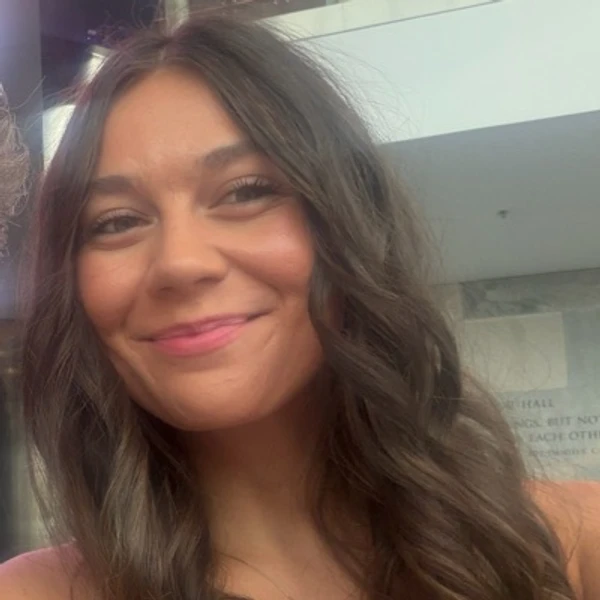
Hi! I'm Remy.
A few years ago, I was the young person searching for hope while struggling with addiction. Recovery completely changed the direction of my life, and today I have the privilege of helping other young people discover that hope for themselves.
I work for a nonprofit recovery community organization where I mentor young people and their families. My journey has come full circle—I first came looking for help, then became a volunteer, an intern, and now a staff member. Helping someone believe in themselves again is the greatest gift of my life.
I'm currently studying sociology at CU Denver and plan to earn my Master of Social Work. My dream is to help expand free recovery program organizations so that every young person and family has access to the support that can change their lives, with no financial barriers.
Outside of work, I love exploring everything Colorado has to offer, whether that's hiking, discovering small mountain towns, or finding my next adventure. I'm also a huge fan of big DIY projects! You'll usually find me remodeling a room, refinishing furniture, or taking on a project that's probably more ambitious than it should be. I have two snakes, which tends to surprise people, and I'm incredibly close with my two sisters. One is a crime scene investigator, the other is a diesel technician, and somehow I ended up working in youth recovery. We couldn't be more different, but they're my best friends.
I hope to build a life rooted in integrity, love, service, and community, and to leave every person and every place a little better than I found it.
Education
University of Colorado Denver Online
Bachelor's degree programMajors:
- Sociology
Denver East High School
High SchoolMiscellaneous
Desired degree level:
Master's degree program
Graduate schools of interest:
Transfer schools of interest:
Majors of interest:
- Social Work
Career
Dream career field:
Individual & Family Services
Dream career goals:
Substance Abuse Counselor
Senoir Staff
The FullCircle Program2025 – Present1 year90 Day Staff
The FullCircle Program2024 – 20251 yearIntern
The FullCircle Program2023 – 2023Social Media Marketing Intern
Perch staging2019 – 20201 yearSales Associate
Pacsun2021 – 2021Store Operations Manager
Peck2021 – 2021Childcare
Nanny2021 – Present5 years
Sports
Soccer
Club2004 – 201410 years
Cheerleading
Junior Varsity2014 – 20151 year
Lacrosse
Club2012 – 20153 years
Research
- Present
Arts
- Acting2010 – 2013
- Dance2008 – 2012
Public services
Volunteering
The Cornerstone Program — Support2026 – PresentVolunteering
Full Circle — Steering Committee2020 – 2022
Future Interests
Advocacy
Volunteering
Philanthropy
Entrepreneurship
Second Chance Scholarship
My college transcript and I have quite a story.
If transcripts could talk, mine would probably tell you I changed my mind too many times, disappeared for a while, and wasn't committed to college. What it wouldn't tell you was that I was struggling with addiction for 9 years of my life. It wouldn't tell you that I tried going back to school more than once because I wanted a different life, but wasn't in a place where I could build one yet. And it definitely wouldn't tell you who I am and where I am at today.
That's why I'm grateful transcripts can't tell the whole story.
The biggest difference between my first attempts at college and this one isn't that I suddenly became smarter. It's that I finally have a reason to be here and the tools and stability to do so successfully.
In 2020, I walked through the doors of FullCircle looking for help. Today, I unlock those same doors every morning as a staff member, mentoring young people and their families through the same organization that helped me rebuild my own life. There are still mornings when I pause at the front door for a second, overwhelmed by how much my life has changed and how grateful I am.
This year I celebrated four years of sobriety, but the number isn't what matters most to me. Recovery gave me a life I never thought I'd have. It gave me my two sisters, who are now my best friends, family dinners I actually look forward to, friendships built on integrity and love, and a career I'm genuinely over the moon about. Somewhere along the way, I also became the adult reminding teenagers to make good decisions. My younger self would've found that absolutely hilarious.
Now I'm pursuing my bachelor's degree in Sociology at CU Denver with plans to earn my Masters in Social Work. I'm not earning a degree just to hang it on a wall. I'm earning it because the young people I work with deserve someone who's never finished learning how to help them.
Working full-time while going to school isn't always easy. My planner is color-coded, my coffee budget is questionable, and somehow there are never enough hours in the day. But this time, when life gets hard, I don't quit. I have the tools to respond instead of react. I know how to ask for help, lean on my people, and keep moving forward.
This scholarship would certainly help me financially, but more importantly, it would be an investment in someone who has no intention of wasting her second chance.
Part 2
I don't think second chances erase the past. I think they give the past a different ending.
If someone had judged me only by my lowest moments, they would've missed everything that came afterward. The same is true of my education. My earlier attempts at college reflect a season when I was struggling, not the person I've worked hard to become.
Today, I spend my life reminding young people that one mistake doesn't get to write the rest of their story. I know that's true because I've lived it.
One day, after earning my Master of Social Work, I want to help expand free recovery community programs so that every young person has access to the kind of community that changed my life. I want the teenager who thinks they're beyond help to find out they're wrong. I want families to know healing is possible. I want more people to experience the kind of second chance that I did.
Years ago, someone looked past my failures and saw my potential. That belief changed my life.
Receiving this scholarship would be another person choosing to believe that people are worth more than the chapter they're still trying to rewrite. I plan to spend the rest of my life proving them right.
Dr. Mozell Haymon Memorial Scholarship
Bishop Mozell Haymon said, "Life begins with sobriety." For me, those aren't just words, they are my story.
If you'd met me a few years ago, you wouldn't have guessed I'd be writing a scholarship essay, attending CU Denver, or planning on getting my masters. You definitely wouldn't have guessed I'd spend my career convincing teenagers that life gets better. Honestly, I wouldn't have either!
Today, I work at a nonprofit recovery community organization that supports young people and their families. Ironically, it's the same place where I first showed up looking for help. I walked through those doors hoping someone could help me save my life. Instead, they handed me something even better, the tools to rebuild it.
Before recovery, I wasn't building a future. I was surviving one day at a time. My world had become incredibly small. Recovery didn't magically erase every challenge, but it gave me something I had never really experienced before: hope. For the first time, I started making decisions based on the life I wanted instead of the life I was trying to escape.
Recovery gave me things I never thought to dream about. It gave me family dinners I actually wanted to be at, relationships built on trust and integrity, and the ability to picture a future that felt exciting instead of impossible. It gave me the chance to become the kind of sister my two sisters deserve and the opportunity to dream about one day having a healthy family of my own. It even gave me ordinary moments I once took for granted—laughing with the people I love, exploring Colorado, and tackling DIY projects that are probably a little too ambitious. Those moments may seem ordinary, but to me, they're miracles.
Recovery also gave me the privilege of becoming the person I once needed.
Every week, I facilitate peer support meetings, mentor young people one-on-one, work with families, and help create sober events where teenagers can laugh, make friends, and realize they're not the only ones fighting hard battles. Some of the most meaningful moments aren't dramatic at all. They're watching someone smile for the first time in weeks, seeing a parent finally take a deep breath, or hearing a young person say, "I actually think I can do this."
One of life's greatest plot twists is that I somehow became the adult reminding teenagers to make good decisions. My younger self would've found that absolutely hilarious.
Recovery shaped every educational goal I have. I'm currently studying sociology at CU Denver, and after graduation I plan to earn my Master of Social Work. Every class I take gives me a deeper understanding of the young people and families I serve and prepares me to become a stronger advocate for them.
One day, I will help expand free recovery community organizations across the country. Too many young people never get the chance I did simply because support isn't available where they live or because their families can't afford it. I want to help change that.
When I think about Bishop Haymon's words today, I hear them differently than I would have years ago. Sobriety wasn't the end of my story—it was the beginning of everything: my family, my relationships, my education, my career, my purpose, and a life I genuinely love.
Bishop Haymon was right. Sobriety didn't just save my life, it finally gave me the chance to live it. My hope is that through my education and the work I'll dedicate my life to, I can help hundreds of thousands of other young people discover that theirs can begin too.
Learner Mental Health Empowerment for Health Students Scholarship
As a full-time student at CU Denver and someone who works full-time for a youth-at-risk program, I've learned that mental health isn't something you take care of when you have extra time, it's what makes everything else possible. Mental health is important to me because it's the foundation for how I learn, build relationships, and show up for the people who depend on me.
A few years ago, I walked into a recovery community looking for hope. If you had told me then that I'd one day work there, I probably would've laughed. Today, I mentor young people and their families through the same organization that helped me rebuild my own life.
People often think recovery is just about helping someone stop using drugs or alcohol. That's certainly part of it, but I've learned it's only one piece of the puzzle. Recovery isn't just about getting sober, it's about healing the parts of yourself that made staying sober feel impossible in the first place. I know that because I was once the young girl who needed someone to believe in her.
Balancing college with a full-time job means my planner is color-coded, my coffee budget is questionable, and my to-do list somehow keeps growing. For a long time, I thought taking care of myself was something I'd get around to after everything else was done. Working in this field has taught me the opposite.
I've realized that my ability to help other people depends on how well I take care of myself. If I'm exhausted, overwhelmed, or running on empty, I can't be the mentor, student, employee, sister, daughter, girlfriend, or friend I want to be. Looking after my own mental health isn't selfish, it's part of how I'm able to care for others. As a student, that has meant learning to ask for help when I need it, set healthy boundaries, and recognize that taking care of myself isn't getting in the way of my goals, it's what makes those goals possible.
I advocate for mental health every day through my work at a nonprofit recovery community organization that provides free support for young people and their families. Every week, I facilitate peer support meetings, mentor teens one-on-one, meet with families, and help organize sober events where young people can build healthy friendships and supportive communities. My goal is to create an environment where asking for help feels normal, where people know they belong, and where no one has to face life's challenges alone.
After I graduate, I plan to earn my Master of Social Work and continue expanding free recovery organizations for young people and their families. Everyone deserves access to support, regardless of where they live or what they can afford.
Outside of work and school, I'm usually exploring somewhere in Colorado, starting a DIY project that's much bigger than I originally planned, or convincing people that snakes are actually pretty great pets. Those things help me recharge and remind me that taking care of my own mental health is something I have to practice, not just encourage in other people.
Someone once gave me hope when I couldn't find it for myself. Now I get to pass a little of that hope on to someone else.
Evan T. Wissing Memorial Scholarship
remember waking up in a hospital room. Everything around me was white: the walls, the lights, the machines quietly beeping beside the bed. For a brief second I looked around and thought, What am I doing with my life? Then I realized something even harder to face. I was completely alone. Addiction had pushed everyone away. That moment didn’t change everything overnight, but it was the first time in a long time that I saw my life clearly.
I began using drugs and alcohol when I was twelve years old. What started as something I tried to fit in quickly became something I could not control. Addiction followed me through my teenage years and into early adulthood. By the time I was attending college in California, my life had become unmanageable. I had been suspended from school multiple times because of my behavior while using and was trying to complete classes online just to stay enrolled. I kept telling myself I could manage addiction and academics at the same time, but the truth was I could not manage either.
My relationships were falling apart. I had lost contact with much of my family and the friendships I had were shallow. More than anything, I felt empty and directionless.
The day my mom called and told me she was flying out to get me, something shifted. For the first time in years, I felt relief. I did not know what my future would look like or whether I would return to college. I only knew that I could not keep living the way I had been living.
Recovery did not happen overnight. There were setbacks and a lot of learning along the way. But on May 3, 2022, I found lasting sobriety. I completed an intensive outpatient program and became involved with the FullCircle Program, a nonprofit recovery community organization that supports young people and their families. Through the program that helped save my life, I found something I had been missing for years: purpose.
Over time I began volunteering with the program, then interned, and eventually moved into a staff role. Today I work directly with young people who are struggling with substance use and the same feelings of hopelessness I once experienced. I help facilitate meetings, meet with participants individually, and help create sober social spaces where young people can build friendships and community without drugs or alcohol.
One moment from this work stands out to me. I was sitting with a young girl who told me she had no hope and did not believe she could stay sober. I shared my story with her and she began to cry. Since that day we have met every week. Today she has been sober for over one hundred days and recently shared in a meeting that she never thought she could actually like her life the way she already does.
Addiction was the greatest struggle I have faced, but it is also the reason I discovered the purpose that now guides my life. I am currently returning to college to finish my degree in sociology and plan to pursue a master’s in social work. My goal is to continue helping young people and families find the same recovery and community that once helped save my life.