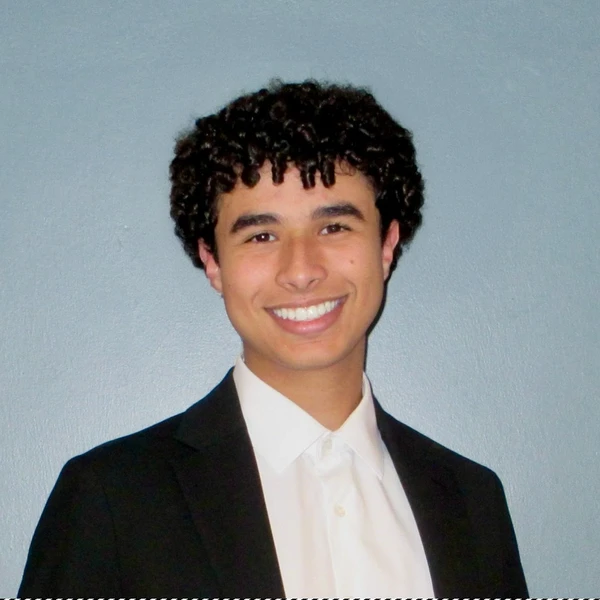
user profile avatar

Raouf Elsaadany

1x

Finalist

Bio

I am a junior at the University of Michigan, studying finance at the Ross School of Business with a minor in real estate. My goal is to become a real estate developer who builds affordable housing, and to underwrite it with the same rigor the industry usually saves for luxury. I have built that foundation through real work, from a value-add model at CMB Management that identified roughly $994,000 in value to underwriting live deals this summer at Northmarq, and I started my first business at 15 with a pressure washer and a price I made up on the spot. I cover part of my own education without loans, I coach junior tennis on weekends, and I care most about building homes that families can actually afford to live in.

Education

University of Michigan-Ann Arbor

Bachelor's degree program

2024 – 2028

Majors:
  • Business Administration, Management and Operations
  • Finance and Financial Management Services
Minors:
  • Real Estate

Miscellaneous

Desired degree level:
Master's degree program
Desired degree modality:
In-Person
Medical school interest:
No

Career

  • Commercial Investment Sales Intern

    Commercial Real Estate · Northmarq

    Jan 2026 – Present

Miscellaneous

Dream career field:
Commercial Real Estate
Work experience:
3 years
Has nursing license:
No
SIA Financial Planning Scholarship
I am a junior at the University of Michigan, studying finance at the Ross School of Business with a minor in real estate. I came to finance honestly, through work rather than through a classroom. At 15 I knocked on the first door with a pressure washer I barely knew how to use and a price I made up on the spot. Over four summers that became a real business that cleared more than $25,000. The money mattered, but the bigger thing was learning that numbers are just a way of deciding what is possible. My passion is real estate finance, and specifically affordable housing. Real estate usually points its sharpest financial tools at luxury towers. I want to point mine somewhere else. I have spent the last two years building the technical foundation for that. At CMB Management I built a value-add renovation model that identified roughly $994,000 in value creation on a multifamily asset. This summer at Northmarq I am on the investment sales side, underwriting live deals and building AI tools for the team. The more I learn about how capital actually moves, the more I believe the same rigor used to underwrite a high rise can be used to underwrite homes people can afford. Here is what I would change about the system. Right now the financial talent and the financial tools flow toward the highest returns, which usually means luxury and the coasts. The places that need good development the most often get the least sophisticated work. I do not think that is a moral failure as much as a habit. The people with the modeling skills are not pointed at the problem. So the fix is not only more subsidy. It is more skilled people who treat affordable housing as a serious financial problem worth solving well, not as charity. I want to be one of those people. My plan is to learn underwriting, valuation, and deal structuring at the highest level I can, on the investment sales and asset management side, and then carry that skill into development focused on affordable and workforce housing. I am not trying to build the most expensive thing on the block. I am trying to build the thing a family can actually live in, and to make the numbers behind it work so well that doing the right thing also makes sense as an investment. I know what it is to live with a tight margin for error. My father works overseas to support our family, and I cover part of my own education without loans. That is exactly why I care about getting the finance right. When there is no room for mistakes, the quality of the work is everything. That is the standard I want to bring to this field.
Project “Investing in the Black”: Future Community Leaders Scholarship
I want to create community impact through the actual work of my career, not beside it. My goal is to become a real estate developer who builds affordable housing, because a home is not abstract. It decides how far a kid travels to school, whether a parent can take a better job, and whether a family can stay where they are from. Real estate usually points its sharpest financial tools at luxury towers. I want to point mine somewhere else, and underwrite homes working families can afford with the same rigor used for a high rise. I am North African and the child of immigrants, and I grew up as one of very few people who looked like me in my town. I know what it is to look for yourself in a room and not find it. So I already practice impact now. I coach junior tennis on weekends and drive about an hour each way, because I love what the game does for kids who do not always feel like they fit. Growing up in Midland, nobody around me could cut curly or ethnic hair, so I taught myself and cut it for free for my brother and friends. The lesson was the same each time. You notice a specific gap that makes specific people feel overlooked, and you close it with your own hands. The disparity I want to reduce at scale is the racial wealth gap, and the lever is housing. Homeownership is the largest source of wealth for most American families, and the gap in who owns is stark. The Black homeownership rate sits around 44 percent while the white rate is around 74 percent, a gap of nearly 30 points that has barely moved in decades. Wealth follows ownership, so when a group is shut out of owning, it is shut out of the main way families build something to pass on. I do not think the gap is mostly about effort. It is about supply and access, and the financial talent that could fix it is pointed at higher margin luxury work. My strategy is to build affordable and workforce housing, and to make the underwriting good enough that capital wants to fund it. I can measure that three ways. First, units delivered, counted in doors built rather than deals closed. Second, ownership pathways, not only rentals, through mixed income and for-sale workforce homes that move families from renting to owning, because owning is where wealth actually forms. Third, cost discipline, since affordable housing often dies in the spreadsheet, so I am building the exact skills, underwriting, valuation, and deal structuring, that let a project pencil without cutting the people it is meant to serve. I am already building the evidence that I can do this. At CMB Management I built a value-add renovation model that identified roughly $994,000 in value creation on a multifamily asset, which is proof that careful underwriting finds value others miss. This summer at Northmarq I underwrite live deals and build tools that speed the team up. Those skills transfer directly to making affordable projects work financially. That is what Investing in the Black means to me. I want to point real financial skill at the communities that usually get it last, and structure the work so that doing the right thing is also a sustainable and profitable investment. I cannot close a 30 point gap by myself. I can spend a career pointing real skill at it, which is more than most of the gap has ever gotten.
Raouf Elsaadany Student Profile | Bold.org