
Hobbies and interests
Advocacy And Activism
Business And Entrepreneurship
Criminal Justice
Law
Medicine
Reading
Academic
I read books daily
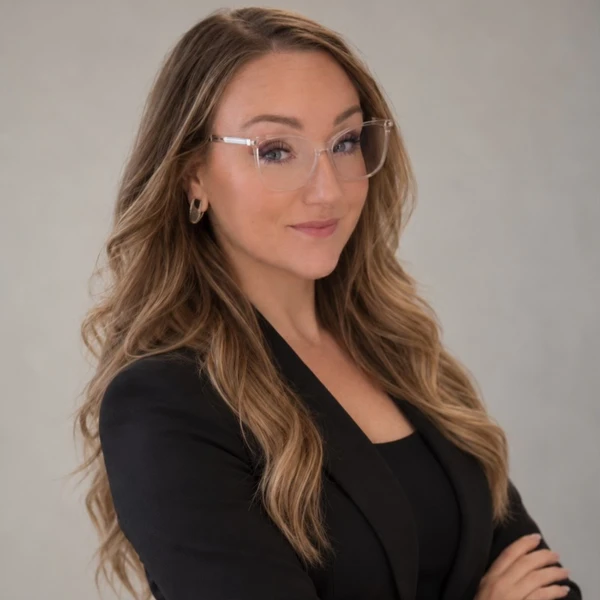
Randi Graham
2x
Finalist
Randi Graham
2x
FinalistBio
After nearly a decade of service in the U.S. Air Force, I was medically retired at 28 due to a chronic illness that abruptly reshaped my career, health, and identity. As a single mother at the time, I navigated life-altering medical challenges alongside a healthcare system that too often failed to listen, protect, or advocate for patients like me. What began as survival became purpose.
I earned my bachelor’s degree in management in 2024 and am currently pursuing dual graduate studies, an MBA and a master’s degree in management and leadership, to strengthen my ability to lead ethically, advocate effectively, and build systems rooted in equity and accountability. In Fall 2026, I will also complete a certificate in Paralegal Studies to deepen my understanding of legal frameworks impacting healthcare access, patient rights, and systemic reform.
I am the founder of The Chronically Ch(ill) Collective, an advocacy platform providing resources, education, and community for individuals living with chronic illness who are frequently dismissed or overlooked. I also lead The Graham Entrepreneurial Consulting Group, supporting mission-driven startups, including veteran-owned adaptive fitness initiatives and youth-led skilled trades ventures addressing affordable housing access.
My work centers on empathy, driven leadership, social-impact entrepreneurship, and protecting marginalized voices. I may have fallen through the cracks, but I climbed out with intention, and I am not coming alone.
Education
Webster University
Master's degree programMajors:
- Business Administration, Management and Operations
Webster University
Trade SchoolMajors:
- Legal Professions and Studies, Other
Webster University
Bachelor's degree programMajors:
- Business, Management, Marketing, and Related Support Services, Other
Miscellaneous
Desired degree level:
Doctoral degree program (PhD, MD, JD, etc.)
Graduate schools of interest:
Transfer schools of interest:
Majors of interest:
Career
Dream career field:
Management Consulting
Dream career goals:
I aim to become a high-impact CEO who creates scalable businesses, accumulates capitol, and reinvest that power into advocacy, legislation, and long-term social change.
CEO
Graham Entrepreneurial Consulting Group2025 – Present1 yearOperations Manager — Civil Engineering
United States Air Force2012 – 20219 years
Sports
Wrestling
Varsity1996 – 200913 years
Research
Business, Management, Marketing, and Related Support Services, Other
Entrepreneur2023 – Present
Public services
Advocacy
The Chronically Ch(ill) Collective — Wrote and published a symptom tracker and patient advocacy workbook2024 – 2025
Future Interests
Advocacy
Politics
Volunteering
Philanthropy
Entrepreneurship
John Acuña Memorial Scholarship
I served in the United States Air Force for nearly a decade in civil engineering operations, supporting mission readiness through planning, coordination, and execution across environments where reliability, adaptability, and accountability mattered every day.
Military service shaped the foundation of who I became as an adult.
It taught me how to lead before I felt ready, how to stay steady under pressure, and how to prioritize mission over comfort. More importantly, it taught me that meaningful work is rarely about individual achievement. It is about contributing to something larger than yourself.
Like many service members, I believed my military career would define the trajectory of my life.
Instead, at twenty-eight, I was medically retired due to chronic illness.
Leaving the military was not simply a career transition. It was an identity transition.
For years, my goals had been clear, my environment structured, and my purpose externally defined. Suddenly, I was navigating uncertainty while rebuilding my health, raising children, and trying to understand what service looked like without the uniform.
For a period of time, I viewed that experience as losing my future.
Eventually, I realized I was being asked to reimagine it.
Returning to school became part of that process.
As a first-generation student, entering higher education required learning systems that no one in my family had experience navigating. I had to build confidence in spaces that often felt unfamiliar while balancing responsibilities that many traditional students never carry simultaneously.
What surprised me most was not that education opened doors.
It was that education expanded my understanding of service.
I earned my bachelor’s degree and am now pursuing graduate education in business and leadership because I became increasingly interested in the systems that shape people’s lives. Military service taught me how systems function. Navigating chronic illness taught me what happens when systems become difficult to access. Graduate education is teaching me how to lead, redesign, and improve those systems.
My long-term goal is to work at the intersection of business, healthcare, advocacy, and organizational leadership to create structures that improve quality of life and increase access for underserved communities.
That mission is already reflected in the work I do today.
I founded The Chronically Ch(ill) Collective, an advocacy initiative designed to provide education, resources, and practical tools for individuals navigating chronic illness. I also lead work through entrepreneurship and consulting to help mission-driven ideas become sustainable organizations capable of creating long-term impact.
Alongside that work, my husband and I are building Iron Resolve Fitness, serving populations frequently overlooked in traditional wellness spaces, including adaptive athletes and individuals managing chronic conditions.
These efforts may look different from military service, but to me they are deeply connected.
The uniform taught me discipline.
Education taught me possibility.
Together, they taught me that service does not end when military service ends.
John Acuña dedicated his life to creating pathways for veterans through education and community.
I hope to honor that same spirit by continuing to build pathways of my own and proving that some of the most meaningful service happens after we come home.
Lost Dreams Awaken Scholarship
For a long time, I thought recovery meant quitting drinking.
Now I understand it meant meeting myself for the first time.
I became a mother at nineteen and joined the military shortly after. My adult life moved quickly and always demanded something from me: perform, adapt, achieve, keep moving. In the military environments I experienced, drinking was woven into the culture. It was how people celebrated, decompressed, connected, coped with stress, and sometimes avoided talking about things that felt too heavy to say out loud. Alcohol felt normal because it was normal around me.
I never stopped long enough to ask whether any of it actually felt normal to me.
For years, I became whoever the moment required. Service member. Wife. Mother. High performer. I learned how to function, but I never learned how to know myself.
In 2019, I entered therapy and started asking questions I had avoided for years. I learned healthier ways to cope, process emotions, and understand parts of myself I had spent most of my life trying to outrun.
In 2020, I stopped drinking.
Sobriety gave me clarity, but recovery gave me permission.
Permission to slow down.
Permission to choose.
Permission to imagine a future that was built intentionally instead of survived.
Today, I have been sober for five years.
Recovery did not give me my life back.
It gave me something I had never had before:
the chance to become someone I was never given the space to discover.
Jean Ramirez Scholarship
There is a moment after life-changing loss when the world keeps moving and you realize yours does not.
For me, that moment was not the phone call or the funeral.
It was sitting across from my eight-year-old daughter and realizing I needed to explain something I did not fully understand myself: why her father was not coming back.
Her father was a veteran. He was intelligent, funny, deeply loved, and carrying struggles that were far heavier than most people realized. When he died by suicide last year at thirty years old, our daughter lost more than a parent. She lost future birthdays, future conversations, and the certainty children are supposed to have that the adults who love them will stay.
As devastating as my own grief was, nothing prepared me for witnessing hers.
Children search for logic when something impossible happens. In the months that followed, her questions became quieter and harder to answer.
Did he still love me?
Was he unhappy because of me?
Could I have done something?
Watching a child carry guilt that never belonged to her was one of the most painful experiences of my life.
I remember realizing that my job was no longer to explain the unexplainable. My job was to protect her from carrying responsibility that was never hers to hold.
So we started talking.
Not once. Not perfectly. Not with all the answers.
We talked openly about emotions, mental health, and how people can be deeply loved while also carrying struggles others cannot see. We talked about the difference between leaving and not loving. We talked about how children are never responsible for the choices adults make.
We say his name.
We celebrate his birthday.
We observe Suicide Awareness Month.
We remember him as a whole person, not only through the lens of loss.
What I have learned through this experience is that healing is not forgetting and resilience is not pretending to be okay. Resilience is allowing grief to exist without allowing it to decide what comes next.
Continuing my education became part of that process for me.
Returning to school gave me something grief had taken away: belief in the future. Every class completed, every assignment submitted, and every degree pursued became evidence to my daughter and to myself that tragedy does not get the final word in our story.
Our family looks different now than it once did. My husband later adopted my daughter and stepped into her life with patience, consistency, and love. He never asked her to stop loving her father. Instead, he showed her that opening your heart again does not diminish the people we miss. It simply creates room for more love to exist beside them.
Losing her father will always be part of our story, and there will always be moments that remind us of what was lost. But I do not want grief to be the thing that defines my daughter’s life. I want her to grow up knowing that she was never responsible for someone else’s pain, that love does not disappear when someone is gone, and that asking for help is one of the bravest things a person can do. If this experience has taught me anything, it is that resilience is not found in moving on. It is found in choosing, again and again, to keep loving, keep hoping, and keep building a life that honors both the people we miss and the future we still deserve.
Marilynn Walker Memorial Scholarship
When my military career ended unexpectedly, I thought I was losing stability.
What I did not realize at the time was that I was gaining perspective.
After nearly a decade in the United States Air Force, I left service and entered a season of rebuilding that forced me to reconsider everything I believed about success, leadership, and impact. For the first time, I was not operating inside established systems. I was responsible for creating my own.
That experience is what led me to business.
Returning to school in my thirties as a first-generation graduate student was not a decision rooted in credentials. It was a decision rooted in capability. I wanted to understand how organizations grow, how resources move, how decisions shape outcomes, and how leaders create change that extends beyond individual effort.
Higher education gave structure to instincts I had developed through experience.
Studying business and leadership transformed the way I think. I learned to see businesses not as products or companies, but as systems of influence. Finance became a language of priorities. Strategy became a method for turning values into action. Organizational leadership became a framework for creating environments where people and ideas can thrive.
That shift changed my ambitions.
Today, I apply what I am learning through entrepreneurship and consulting focused on helping mission-driven ventures move from vision into execution. Across that work, I continue to see the same pattern: businesses shape far more than markets. They shape opportunity, access, employment, innovation, and ultimately the lives people are able to build.
My graduate education is preparing me not simply to participate in business, but to lead it intentionally.
Long term, my goal is to become a high-impact CEO and builder of organizations that create measurable social value alongside financial success. I want to scale ventures, invest in emerging ideas, and use business as a mechanism to influence healthcare, accessibility, economic mobility, and long-term systems change. I am especially interested in proving that growth and responsibility are not competing priorities and that ambitious businesses can also be deeply human.
As a woman in graduate business education, I also recognize the responsibility that comes with visibility. Every room I enter expands what feels possible for the women and girls who enter after me. My daughters are growing up watching leadership, education, and entrepreneurship exist not as exceptions, but as expectations.
Marilynn Walker built a life that demonstrated what becomes possible when ambition is matched with action.
I hope to honor that legacy by using higher education not as a credential to hold, but as fuel to build organizations, create opportunity, and leave systems stronger than I found them.
Future Green Leaders Scholarship
When I was medically retired from the United States Air Force at twenty-eight due to chronic illness, I expected to lose my career. What I did not expect was how much that experience would change the way I understood sustainability.
Being forced to rebuild my life made me notice something I had never questioned before: many of our systems are designed for output, not endurance. They consume people, resources, infrastructure, and communities as though replacement is unlimited. Whether in business, healthcare, or industry, success is too often measured by short-term growth instead of long-term sustainability.
That realization is why sustainability became central to how I approach business.
As a graduate student pursuing business and leadership, I believe sustainability should be a priority in my field because business is one of the most powerful drivers of environmental impact. Businesses shape how products are manufactured, how materials are sourced, how supply chains operate, how employees work, and how communities develop. Innovation matters, but business determines which innovations receive investment, which ideas scale, and which practices become standard.
For that reason, I do not view sustainability as a side initiative or corporate responsibility statement. I view it as leadership.
Sustainable business means designing organizations that create value while reducing waste, increasing efficiency, and accounting for consequences beyond the next quarter. It means asking better questions: Can this scale responsibly? Does growth create unnecessary consumption? Are we creating systems that strengthen communities over time instead of extracting from them?
That philosophy already influences the work I am doing.
Through entrepreneurship and consulting, I focus on helping build systems designed for thoughtful growth rather than expansion for its own sake. I am especially interested in business models that leverage digital infrastructure to reduce unnecessary physical consumption, improve operational efficiency, expand remote access where appropriate, and make education and services more accessible. Decisions that seem small on their own, reducing travel requirements, digitizing processes, designing flexible delivery systems, and eliminating unnecessary waste, become meaningful environmental progress when multiplied across organizations and industries.
In the future, I plan to lead and invest in organizations that treat sustainability as a foundational business principle rather than a corrective measure. I want to help create companies that evaluate success through multiple outcomes: financial performance, environmental stewardship, accessibility, and long-term community impact.
The environmental challenges ahead will not be solved by good intentions alone. They will require leaders willing to redesign systems, rethink incentives, and make sustainability practical, measurable, and scalable.
That is why I chose business.
I believe sustainability belongs in every boardroom, not because protecting the planet is optional, but because leadership should be measured not by how much we build, but by how long what we build continues to serve people, communities, and the world around us.
Susie Green Scholarship for Women Pursuing Education
The courage to return to school came from a deep understanding that I needed to break generational cycles, both for myself and for my daughters. When I was medically retired from the military as a single mother, I found myself standing at a crossroads with no clear path forward. My identity, stability, and long-term plans had all been tied to my service, and suddenly I had to rebuild a life from the ground up. But beneath the fear and uncertainty was a truth I couldn’t ignore no one in my family had ever taken the academic path I was about to choose. I would be the first woman in my entire bloodline to earn a college degree, and the first person in my family history to pursue a graduate education.
That reality became my motivation.
Growing up, I did not see women in my family earning degrees, leading organizations, or stepping into rooms where decisions were made. I saw generations of women surviving instead of thriving, giving up their dreams because opportunity felt out of reach. As a young mother, I realized that my daughters were watching me with the same eyes I once watched the women before me. I owed them more than survival. I owed them possibility.
In 2022, I made the decision to enroll in college. Returning to school in my thirties, while caring for children and managing chronic health conditions, required a level of courage I didn’t know I had. I was intimidated, unsure if I would belong in academic spaces after years away from formal education. But each class I completed made the impossible feel achievable, and each semester I finished reminded me that I was not only doing this for myself, but I was also rewriting the narrative for my entire lineage.
My daughters watched me study late into the night, complete assignments at the kitchen table, and balance school with motherhood. They saw me push through doubt, exhaustion, and fear. They saw resilience modeled in real time. The moment I walked across the stage to receive my degree, I knew I had changed something fundamental for them. I had shown them a life they never had to question whether they were allowed to dream about.
Now, as a dual master’s student pursuing graduate degrees in business and leadership, the weight and honor of breaking these generational barriers feels even more meaningful. I am the first person in my bloodline to reach this level of education, a responsibility I carry with pride. My pursuit of higher education is not only about career advancement; it is about building a legacy of possibility. It is about ensuring that my daughters grow up knowing that women like them can lead, innovate, and pursue intellectual ambition without hesitation.
The courage to return to school came from wanting a better life, but the courage to keep going came from wanting to change the trajectory for future generations. I want my daughters to grow up believing that education is not just a doorway but a path they are worthy of walking through.
Returning to school allowed me to rebuild my life, but more importantly, it allowed me to build a foundation of empowerment, resilience, and hope for my daughters, and for every generation that comes after them.
Elijah's Helping Hand Scholarship Award
Loss reshapes a family in ways that cannot be measured by words alone. When my youngest daughter’s father took his own life, it altered the trajectory of both her childhood and my own understanding of mental health. His death was not only a personal tragedy, but it was also a stark reminder of how invisible wounds can silently consume someone who is fighting battles we cannot see.
He was a veteran who struggled with PTSD, depression, and the long-term emotional aftermath of military service. To the outside world, he was strong, capable, and resilient. But inside, the weight he carried became too heavy. When he died by suicide, my daughter was just eight years old. Trying to explain to a child why a parent is suddenly gone, why they didn’t stay, why they couldn’t, is a pain I will carry with me forever.
What followed was a period of grief that was layered and complex. I had to navigate my own heartbreak while guiding my daughter through a loss no child should ever have to endure. There are no manuals for how to parent a child grieving a parent who died by suicide. There are no perfect words, no perfect timing, no perfect way to make sense of something so incomprehensible.
The questions came slowly at first, and then all at once: Why did he do it? Was it my fault? Could I have helped him? Watching my daughter wrestle with guilt she did not deserve was one of the most difficult experiences of my life. But in that pain, I realized that silence is the soil where shame grows. If we were going to heal, we had to talk openly, honestly, and often.
His death pushed me to understand mental health differently, not as a weakness, but as a human experience that deserves compassion, resources, and openness. Our family started observing Suicide Awareness Month every September. We talk about her father, say his name, honor his memory, and acknowledge the realities of the struggle he faced. We also became advocates for veteran mental health, raising awareness that trauma does not end when someone leaves the military.
Over time, healing came in unexpected forms. I eventually remarried, and my husband stepped into the role of fatherhood with a level of love and gentleness that helped my daughter feel secure again. He later adopted her, not to replace her biological father, but to give her the stability and support she deserved. Our family grew into a blended household of six, a home grounded in understanding, communication, and the belief that healing is possible, even after profound loss.
Her father’s suicide will always be a part of our story, but it is not the whole story. The impact of his death taught us resilience, empathy, and the necessity of mental health advocacy. It taught us that we can hold sorrow and joy at the same time, that grief and growth can coexist.
This experience has shaped my academic and personal path. It fuels my commitment to fostering mental health awareness, supporting trauma-informed practices, and creating spaces where people feel safe asking for help. I continue my education with the intention of giving back to communities who, like ours, have been shaped by loss but remain determined to persevere.
His life mattered. His struggle mattered. And sharing our story is one way we ensure that others know they are never alone.
Ella's Gift
Mental health struggles rarely arrive with clarity. For me, they showed up as chaos, impulsivity, emotional extremes, and a deep ache I did not yet have the tools to name. Growing up undiagnosed bipolar, my teenage years were filled with spiraling emotions, self-medication, and a numbness that felt safer than feeling anything at all. I drifted through life as if wrapped in fog, functioning on the outside while falling apart internally.
At nineteen, I became a mother for the first time, and my daughter gave me the first anchor I had ever truly felt. Wanting to provide for her, I enlisted in the military, believing structure would help me build a stable life. What I did not know then was how deeply the environments we enter shape our mental health. In the military, drinking was not just accepted, it was celebrated. It was the default method of coping with stress, trauma, and loneliness.
During this time, I entered a marriage to another service member who struggled with alcoholism. As his drinking escalated, so did the emotional volatility and abuse. I normalized it because, surrounded by a culture where heavy drinking was routine, it all felt like a blur of “this is just how things are.” Unmedicated, unconfronted, and overwhelmed, I fell deeper into my own unhealthy patterns, drinking heavily and pushing my symptoms further underground.
We had a daughter together and bringing her into the world forced me to confront what I had been avoiding for years. Watching both of my girls grow up in a home marked by instability and alcohol abuse shattered the denial I had built around myself. They were the reason I started questioning everything, my health, my marriage, my safety, and the future I could give them.
In 2019, as the world shut down during COVID, my internal world finally cracked open. I reached a breaking point and entered therapy for the first time. There, I received the bipolar diagnosis that explained the chaos of my entire life. Medication followed, and it was as if someone flipped on a light switch after decades in the dark. Suddenly, my thoughts were clearer, my reactions calmer, and my emotions no longer determined the course of my days.
In 2020, with a new clarity I had never experienced, I made the hardest and most necessary decision of my life: I left the abusive marriage. That was the last time I touched alcohol as well. Sobriety became a lifeline, not a punishment, but a promise to myself and my daughters.
Healing was not linear, but it was worth every step. In 2021, I bought my own home as a single mother of two. In 2022, I started college, determined to build a future grounded in purpose. And in the years that followed, life surprised me with a kind of love I didn’t believe existed.
I now share my life with my husband, a fellow veteran who also chose sobriety to build the life we have. Together, we are a blended family of six with pets, laughter, stability, and a home filled with gentleness instead of fear. Sobriety is a cornerstone of our marriage, and healing is something we practice openly, honestly, and continuously. He adopted my daughters, and our family is living proof that breaking cycles is possible.
Now, in 2026, I am pursuing my master’s degree. I have been sober for five years, consistently in therapy, and deeply committed to caring for my mental health. “Through it, not around it” remains my mantra, because recovery requires walking through every layer of hurt to reach what’s real and lasting.
My educational goals are rooted in advocacy. I want to use my business and leadership training to create trauma-informed, inclusive systems that support underserved communities, especially those navigating mental illness, addiction, and generational cycles of instability. My lived experience is not something I hide; it is what empowers me to help others.
My long-term recovery plan includes ongoing therapy, medication adherence, clear boundaries, open communication within my family, and maintaining a sober home where honesty comes before pride. I know my recovery is lifelong, but I also know I am not walking it alone anymore.
I am no longer the girl who survived in fog. I am a woman who fought her way into clarity for herself, her daughters, and now her entire family, and I hope to help others find their way to the same.
Dr. G. Yvette Pegues Disability Scholarship
Living with disability is not a single moment or diagnosis, it is a continuous negotiation with systems that were not built with people like me in mind. As a neurodivergent individual living with chronic illness, my educational journey has been shaped as much by perseverance as by the gaps in support I have had to learn to navigate on my own. While higher education promises opportunity, for students with disabilities it often presents additional barriers: inaccessible structures, limited accommodations, and an expectation that we should adapt quietly rather than be fully included.
Navigating academic spaces while managing disability has required constant self-advocacy. Simple tasks, attending class, meeting deadlines, managing energy and cognitive load, become significantly more complex when institutions lack adequate disability services or understanding faculty. Too often, support systems are reactive rather than proactive, placing the burden on disabled students to prove their needs, explain their conditions repeatedly, and justify accommodations that should be standard. This environment can be exhausting and isolating, and it is one of the primary reasons many students with disabilities leave higher education before completing their degrees.
My disability experience extends beyond myself. As a parent and caregiver within a family shaped by disability, mental health challenges, and neurodivergence, I have seen firsthand how deeply these gaps affect not only individuals but entire households. Disability is rarely isolated, it is communal. When systems fail one person, they often fail families, caregivers, and future generations. These lived experiences have profoundly shaped my values and my professional goals.
Rather than allowing these barriers to limit my aspirations, they have clarified my purpose. I am pursuing graduate education in business, management, and leadership so I can help redesign systems that exclude disabled and neurodivergent individuals. My goal is not merely representation, but transformation. I am committed to building inclusive organizations, educational platforms, and workplaces that prioritize accessibility from the start, not as an afterthought or accommodation.
Through my work in entrepreneurship and consulting, I actively advocate for inclusive design, trauma-informed leadership, and disability-aware policy development. I aim to create programs and environments that recognize diverse learning styles, energy levels, and communication needs, particularly in industries that have historically marginalized disabled individuals. By integrating disability justice into leadership models, I plan to help underserved communities access education, employment, and support systems that honor their full humanity.
This scholarship represents more than financial assistance; it represents recognition that disabled students belong in higher education and deserve the resources to succeed. With this support, I can continue my education without the constant strain of financial instability, allowing me to focus on advocacy-driven work that uplifts others. My lived experience, combined with my education, equips me to challenge exclusionary norms and contribute meaningfully to disability justice.
Inclusion is not charity; it is equity. I am committed to ensuring that the next generation of students with disabilities encounters systems that see their potential first, not their limitations.
James T. Godwin Memorial Scholarship
Some stories unfold in straight lines. Ours was written in circles, crossings, and quiet persistence, shaped by military orders, time, and a faith that some connections are meant to endure.
My husband and I first met in 2012 while attending Air Force technical training. We were young, driven, and committed to serving something bigger than ourselves. At the time, we were both in other relationships, so what began was a friendship built on mutual respect, shared discipline, and the unmistakable bond that forms between those learning how to wear the uniform together. When our training ended, life moved us in different directions, just as the military often does. We parted ways as friends, fully expecting that our paths had crossed only briefly.
Over the years, we each went on to build separate lives. We married other people, welcomed children into the world, he became the father of two boys, and I the mother of two girls, and followed military orders that sent us across states, countries, and continents. Every move felt final, yet somehow, the thread connecting us never fully disappeared. We would occasionally hear updates through mutual friends, always wishing the best for one another from afar.
In 2019, without knowing the other was going through the same storm, we both experienced divorces, at the exact same time. Shortly after, my own military journey came to an unexpected close when I was medically retired from active duty. In 2020, I relocated to Missouri to be closer to family and rebuild stability for my daughters. Meanwhile, he was transitioning from active duty into the Air National Guard, making the difficult decision to relocate to Illinois so he could be closer to his sons.
What neither of us realized then was how those decisions would place us right across the Mississippi River from one another.
After nearly a decade apart, we met for dinner simply to “catch up.” There were no expectations, no grand plans, just two veterans sharing stories, laughter, and reflections on how much life had changed. That dinner turned into another, and then another. What followed felt less like starting something new and more like finally arriving where we had been quietly headed all along.
Today, we are a blended family of six, four children, two dogs, and a cat, built not by accident, but by choice, patience, and shared values shaped by military life. My husband adopted my daughters, stepping fully into fatherhood with intention and love, just as he has always served with integrity. Together, we carry our Air Force experiences not just as memories, but as the foundation of how we lead our family, with commitment, resilience, and humor.
James T. Godwin loved stories, and this one is ours. It is a story of service, timing, and the belief that even when life sends you miles apart, the red strings that matter most still find their way back together.
Eden Alaine Memorial Scholarship
Loss does not come with instructions, and there is no handbook for how to help a child survive the death of a parent, especially when that loss comes through suicide. My daughter lost her biological father when she was eight years old, after he took his own life following years of military service, repeated deployments, and an unrelenting battle with PTSD. His death shattered our sense of normalcy and forever altered the course of our family’s life.
Her father was a veteran who served his country with dedication and sacrifice. Like many service members, he carried invisible wounds home with him, wounds that were difficult to name, harder to treat, and ultimately overwhelming. When he died, the grief was layered and complex. There was sorrow, confusion, anger, and an ache that words could not fully capture. For my daughter, the loss was not just of a parent, but of safety, identity, and the certainty that the adults in her life would always be there.
As her parent, I was faced with an impossible task: guiding a child through grief I was still learning to navigate myself. There is no roadmap for explaining suicide to a child, no easy way to answer questions about why a parent didn’t stay, and no clear guidance on how to hold space for grief while still creating stability. Our household was rocked to its foundation. Simple routines became fragile, milestones were bittersweet, and every stage of her growth carried echoes of what had been lost.
Over time, healing did not come from forgetting, but from remembering honestly. I later remarried, and my husband chose to adopt my daughter, stepping fully into the role of her father with love, patience, and intention. Adoption did not erase her biological father’s place in her story; instead, it expanded it. She gained another parent without losing the right to grieve the one she lost. That act of love helped rebuild trust and gave her a renewed sense of belonging.
Today, our family honors her father’s memory every year during Suicide Awareness Month. We speak openly about mental health, PTSD, and the unique struggles veterans face when they return home. Advocacy has become part of our healing. We support veteran mental health initiatives, encourage conversations that reduce stigma, and teach our children that asking for help is an act of strength, not weakness.
This loss changed me profoundly. It reshaped how I view resilience, parenting, and purpose. Continuing my education has not been easy while carrying this grief, but it has been meaningful. I pursue my goals not in spite of this loss, but because of it. My daughter’s strength, and the memory of her father, remind me why compassion, access to support, and persistence matter.
Grief does not disappear, but it can be transformed into purpose. Our family’s journey is one of loss, love, and advocacy, and it continues to shape who we are becoming.
Start Small, Dream BIG Scholarship
After nearly a decade of service in the United States Air Force, my career and life took an unexpected turn when I was medically retired due to chronic illness. What initially felt like an ending became the beginning of a new path, one defined by resilience, adaptation, and purpose. The transition from military service to civilian life forced me to reevaluate not only how I worked, but why I worked. Living with chronic illness reshaped my understanding of sustainability, leadership, and inclusion, and ultimately redirected my ambitions toward entrepreneurship and systems-level change.
Today, I am a graduate student pursuing both an MBA and a master’s degree in management and leadership. These programs are not simply academic milestones for me; they are tools I am actively applying to real businesses and real communities. Over the past year, I founded The Graham Entrepreneurial Consulting Group, where I have supported three clients through successful small business launches. My work includes market research, business plan development, branding, operational structuring, and strategic marketing. Each engagement has reinforced my belief that thoughtful planning and accessible expertise can be transformative, especially for entrepreneurs navigating systems that were not designed with them in mind.
In parallel, I work closely with my husband to grow Iron Resolve Fitness, a niche training business serving adaptive athletes, individuals with chronic illness, and pre- and postnatal clients. While he oversees daily operations and coaching, my role focuses on long-term growth and infrastructure. I am currently building the Iron Resolve Coaching Academy, an LMS-based education and certification platform designed to rival organizations such as NASM and ISSA in quality and reach, while intentionally serving populations those programs often overlook. This academy is grounded not only in evidence-based practice, but in lived experience, both as a chronically ill individual and as an entrepreneur navigating systemic barriers firsthand.
This scholarship would directly support the next and most critical phase of development for the Coaching Academy. Funding would be used to complete curriculum development, build LMS infrastructure, implement accessibility features, and develop certification assessments, essential components that are difficult to self-fund while launching from the ground up. These investments would allow the program to scale responsibly and inclusively, ensuring that future coaches are equipped to serve clients who are frequently excluded from mainstream fitness education.
The phrase “Start Small, Dream Big” reflects my journey with absolute accuracy. Iron Resolve began with one trainer meeting unmet needs in a local community. It is now evolving into a globally scalable education model with the potential to reshape how fitness professionals are trained and how marginalized populations are served. I am building this not from privilege, but from necessity, driven by the belief that inclusive, accessible education can elevate individuals, strengthen industries, and create lasting change. This scholarship would not only support my vision; it would help turn that vision into a sustainable reality.