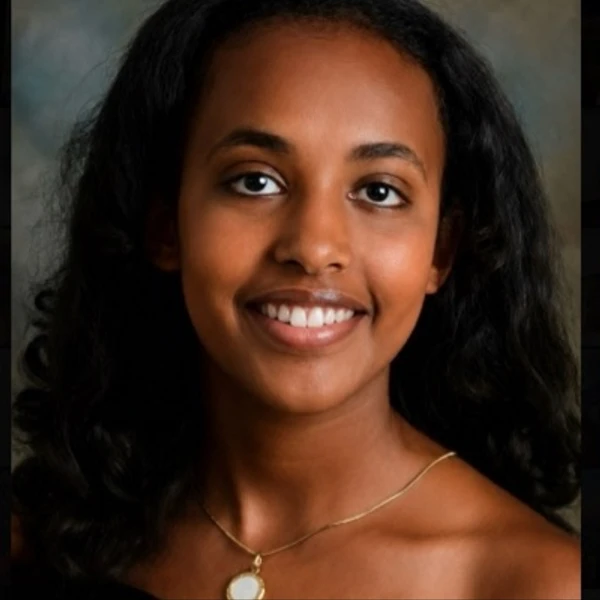
Rakeb Fanta
1x
Finalist1x
Winner
Rakeb Fanta
1x
Finalist1x
WinnerBio
My goals in life are centered around helping others, standing up for what is right, and making a positive impact in my community. I hope to become a lawyer because I want a career where I can make a real difference in people’s lives. I am especially passionate about advocating for individuals whose voices are often overlooked or ignored. Everyone deserves to be treated fairly and with respect, and I want to be someone who helps make that happen.
My interest in law comes from a genuine desire to help people. I know that navigating legal challenges can be overwhelming, and I want to be someone who can provide guidance, support, and representation when it is needed most. The idea of helping someone feel heard and protected motivates me to pursue this path.
I believe I am a strong candidate because I am hardworking, dedicated, and committed to serving others. Whether in school, extracurricular activities, or community involvement, I always strive to give my best effort. I enjoy taking on leadership roles, challenging myself, and finding ways to contribute to the people around me.
While I have many personal goals, one of the most important is using my success to help others succeed as well. I want my future career to be about more than personal achievement, I want it to be about creating opportunities, supporting those in need, and making a lasting difference in the lives of others.
Education
Hazel Green High School
High SchoolMiscellaneous
Desired degree level:
Doctoral degree program (PhD, MD, JD, etc.)
Majors of interest:
Career
Dream career field:
Law Practice
Dream career goals:
Public services
Volunteering
Camp Invention — Leadership Intern2024 – 2026
Future Interests
Advocacy
Volunteering
Philanthropy
Entrepreneurship
Hines Scholarship
When I was little, I thought America was a magical place because of bananas.
Not because Ethiopia does not have bananas. It does. But every time my parents talked about life before immigrating, they spoke about things in terms of opportunity. Better opportunities. Better schools. Better futures. In my child brain, I translated that into something simple: America must be the place where you can always have bananas.
Children have a talent for misunderstanding important things.
As I got older, I stopped measuring opportunity in grocery store produce and started noticing what my parents had actually given up. They left behind family members, familiar streets, a language everyone around them understood, and a life they already knew how to navigate. They came to a country where everything was unfamiliar and where success was never guaranteed.
The strange thing is that I rarely heard them complain.
Instead, I watched them build a life one piece at a time. I watched them learn systems that were completely new to them. I watched them work through challenges that would have overwhelmed many people. Most importantly, I watched them place an incredible amount of faith in a future they would not experience themselves.
That future was me.
That realization is both inspiring and slightly terrifying.
Sometimes I think about how absurd it is that two people crossed an ocean and completely changed the trajectory of their lives, and now I am sitting at my kitchen table stressing over college essays and scholarship applications. The pressure can feel enormous. But it also feels like a privilege.
Going to college means becoming the answer to a question my parents asked years ago when they decided to immigrate: What if there is something more for our children?
I want college to challenge me. I want to encounter ideas that make me uncomfortable, conversations that change my perspective, and opportunities that force me to grow. I want to discover who I am outside of the expectations that have followed me throughout my life.
At the same time, I carry my parents’ story with me. Their sacrifices are not a burden. They are a reminder that I come from people who were brave enough to begin again.
College is where I hope to turn their courage into action.
One day, I want to look back and know that I used the opportunities they worked so hard to create. I want my education to become something larger than myself. Whether that means helping others through my career, serving my community, or simply opening doors for the next generation, I want the story to continue.
And maybe that is what college means to me.
Not a campus. Not a degree. Not even a career.
Just proof that a leap of faith taken by two Ethiopian immigrants years ago landed somewhere worthwhile.
“I Matter” Scholarship
WinnerWhen my father was diagnosed with kidney disease, I thought helping him would be simple. I would remind him to take his medications, drive him to appointments when I could, and help around the house. What I did not expect was how much his illness would become part of my daily routine and how much it would teach me about responsibility, patience, and caring for others.
One of my most important jobs was monitoring his blood pressure. Every morning before school and every evening before bed, I wrapped the blood pressure cuff around his arm and recorded the numbers in a notebook. At first, it felt like a small task. Over time, however, I realized those numbers could reveal important changes in his health.
One evening, the monitor displayed a reading of 112/110. I stared at the screen, convinced there had to be a mistake. I checked the cuff to make sure it was positioned correctly and took the reading again. The numbers were the same. I felt worried, but I knew panicking would not help. Instead, I wrote the reading down, continued to monitor him, and made sure the information was shared with his healthcare team.
As time went on, helping my father became about much more than recording blood pressure readings. I learned how to read nutrition labels and identify foods high in sodium so we could make healthier choices. I helped prepare meals that fit his dietary needs, organized medication schedules, and kept track of important medical information. Just as importantly, I tried to be there for him emotionally during moments when he felt scared or uncertain about the future.
My family came to the United States from Ethiopia, and I was raised with the belief that family members support one another during difficult times. Caring for my father showed me that helping someone is not always about solving a problem. Sometimes it means standing beside them, offering support, and making sure they do not face challenges alone.
Balancing school, extracurricular activities, and caregiving was not always easy. There were days when I felt overwhelmed by everything I needed to do. However, those experiences taught me valuable lessons about time management, perseverance, and attention to detail. I learned that small actions can have a significant impact on another person’s life. I also learned the importance of advocacy, asking questions, gathering information, and ensuring that someone receives the care they need.
Going forward, I know that helping my father through his illness will always be one of the most meaningful experiences of my life. I cannot change the fact that he is sick, but I can make his days a little easier. Through this experience, I learned that service is often found in ordinary moments: taking a blood pressure reading, preparing a meal, keeping a notebook, or simply reminding someone that they are not alone. Those everyday acts of care taught me what it truly means to help someone in need.
CollegeXpress No-Essay Scholarship
Scorenavigator Financial Literacy Scholarship
My personal experiences with finances and financial education have been shaped largely by my family’s journey and the challenges we have faced together. I did not grow up in a wealthy household, but I was raised by parents who demonstrated resilience, determination, and an unwavering commitment to providing for our family. When my parents first immigrated to the United States from Ethiopia, they had very little to their name. Despite this, they worked tirelessly to build a stable life for me and my sister.
My father took on multiple jobs, often walking long distances from our small apartment just to make it to work at IHOP. My mother started her first job at a hotel, earning only $8 an hour. Watching them persevere through these early struggles taught me that financial stability does not come easily, but through consistent effort and sacrifice. Over time, their hard work paid off. A few years later, they were able to purchase a home, which was a significant milestone for our family and a reminder of what dedication can achieve.
However, our financial journey has not been without setbacks. Just a few months ago, my father had to undergo unexpected brain surgery. This was an incredibly stressful time for our family, not only emotionally but financially. The cost of hospital bills quickly became overwhelming, and there were moments when we worried about how we would manage to pay them. In addition to this, my father has chronic kidney disease, which requires ongoing care from specialists and results in frequent medical expenses.
After his surgery, my father was unable to return to work until December. During this time, he struggled significantly with his finances, trying to recover both physically and economically. Watching him attempt to regain stability after such a major health setback made me realize how fragile financial security can be, even for those who work hard and plan carefully. These experiences have shown me the importance of being financially prepared for unexpected situations.
Through both my family’s experiences and my own education, I have begun to understand the value of financial literacy. I have learned that managing money is not just about earning income, but also about saving, planning, and making informed decisions. In the future, I plan to apply what I have learned to build financial stability and long-term wealth for myself. One of my main goals is to establish an emergency fund so that I can have peace of mind in case unexpected situations arise, like the ones my family has experienced.
Additionally, I want to use my financial knowledge to make a positive impact on others. I believe that financial education is something that should be accessible to everyone, especially young people who may not have the opportunity to learn it at home. In the future, I hope to teach children and students about financial responsibility, helping them understand the importance of budgeting, saving, and planning for their futures.
Overall, my experiences have taught me that finances are not just about money, but about security, opportunity, and the ability to support those you care about. I am committed to using what I learn to create a stable future for myself and to help others do the same.