Hobbies and interests
Cricket
Drawing And Illustration
Community Service And Volunteering
Reading
Business
I read books multiple times per month
Rahmanullah Daadman
1x
FinalistRahmanullah Daadman
1x
FinalistBio
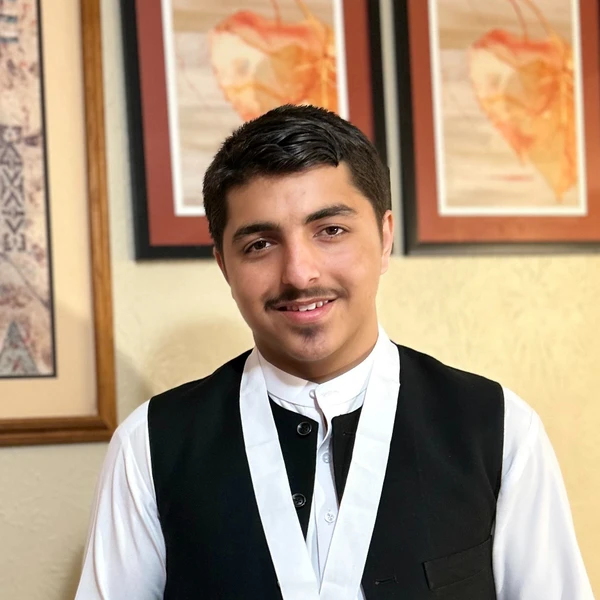
My name is Rahmanullah Daadman, and I’m originally from Afghanistan. I came to the United States seven years ago to escape war and pursue the education I couldn’t get back home, where schools were often shut down or unsafe. Since then, I’ve worked hard to make up for lost time and take every opportunity to grow.
I’m a quick learner with a strong passion for civil engineering. I plan to earn my bachelor’s degree and go straight into a master’s program so I can one day help rebuild and improve communities like the one I came from.
Coming from a family of ten children with only one income, paying for college is difficult. I’m applying for scholarships to help relieve the financial pressure on my father while continuing to follow my dream of becoming a civil engineer who makes a real difference.
Education
Texas State University
Bachelor's degree programMajors:
- Civil Engineering
Miscellaneous
Desired degree level:
Master's degree program
Graduate schools of interest:
Transfer schools of interest:
Majors of interest:
Career
Dream career field:
Civil Engineering
Dream career goals:
Sports
Cricket
Club2023 – 2023
Awards
- medal
Research
Plant Sciences
school — finding out plant species2023 – 2023
Arts
school
DrawingStaircase Drawing2021 – 2021
Public services
Volunteering
home — A teacher/Mentor2022 – 2022Volunteering
School — helping move desks for SAT exam2022 – 2022
Future Interests
Volunteering
Entrepreneurship
Jimmy Cardenas Community Leader Scholarship
Although most people think of high school as a period of growth, for me, it was a period of many obstacles that helped build who I am today. Not only has it challenged my adaptability, but overcoming obstacles like language barriers, cultural differences, and the need to protect my sister has helped shape who I am today.
The biggest obstacle I encountered in high school was language. As an Afghan immigrant, I discovered that I was in a place where English, a language I struggled to learn, was the norm. Simple tasks like understanding instructions or talking to friends seemed impossible. I mostly felt isolated, not only because I could not communicate, but also because I could not understand anyone around me. Not knowing whether they were talking to me or about me bothered me even more. Making friends also got even harder because most of the time, I would not understand the conversation, which gave me a hard time connecting with others.
Even though language looked like the biggest problem, I realized that was just the beginning. The greater challenge I faced was related to culture. Coming from a Muslim background, my family and I practiced our unfamiliar cultural norms. My sister, who wore a hijab, became the center of attention, showing our differences. I started realizing she might become a victim of bullying, rumors, and looks because of the limited cultural diversity in our school. Even though I was younger than my sister, I did not think twice about the safety of my sister and my duty as a protective brother.
This responsibility was not only a burden but a barrier to my high school experience. In my freshman year, when it came time for soccer and wrestling tryouts, I had to think whether it was a good idea to try out. Even though the experience of high school soccer was like a once-in-a-lifetime, I could not stop thinking about leaving my sister alone because of the “what if”. I thought if anything happened to her, it would be my responsibility. In the end, the protective instinct came at the cost of my self-development and was a reason I missed out on opportunities. Not only that, it made me choose between my sister’s protection and my desires.
Because of these challenges, I have grown in a very different way than I thought I would. My struggles with English pushed me to work twice as hard as my classmates, and by doing so, gave me the meaning and value of dedication. My protection for my sister gave me a sense of duty that I have to this day. It taught me the importance of standing up for others, especially those who are bonded by blood. Not only that, it has also taught me that being a protector doesn’t mean sacrificing, but rather finding the middle ground between helping others and pursuing your desires and goals. This has helped me discover ways to give back to my community, even though it might not have been my original plan.
Ultimately, these challenges have made me the person that I am right now. They have taught me adaptability, standing up for others, and pride in my culture. By losing fun and exciting school experiences, I gained valuable lessons: finding a balance between my desires and helping others. Having faced all the difficulties has turned me into the man I am today.
FIAH Scholarship
Since I was a kid, constructing and engineering have been my passion. Ever since I graduated, I have grown giddy with anticipation. Every day that passes is one step closer to fulfilling my lifelong dream to become a Chief Engineer. One day closer towards using the experience, knowledge, and leadership skills to fix the destruction and devastation in war-torn countries such as Afghanistan, Palestine, Syria, Sudan, and more. As I grew older, I realized that civil engineering is more than creatively drawing a blueprint, building with concrete, and shaping steel– it's about creating roads that lead to the future, rebuilding hope, and shaping lives.
My passion for civil engineering stems from my journey as an immigrant. I was born and raised in Afghanistan, a country that has suffered greatly from constant wars since 1979. My childhood hopes and aspirations were replaced with crumbling buildings, bullet holes in my school chalkboards, and danger looming around every corner. I know what it's like living without stable roads, clean water, or safe infrastructure. To relieve stress and process the confusion, chaos, and devastation from the war, I would draw structures from my childhood memories. Frequently, I drew houses, infrastructures, and other architecture. Many of these no longer existed or were in shambles of their former glory. Reconstructing them in my mind and on paper rejuvenated me, made me feel like I had some power in what had felt like a powerless wasteland.
Having lived in 2 countries (Afghanistan for 11 years and the United States for 7), it's easy to spot the difference between the two building structures and city layouts. These differences have taught me the importance of pursuing a higher education in civil engineering, the careful skill and thought process required, and the value of experience. They also deepened my desire to one day return and rebuild- not just the places that were destroyed, but to rebuild hope for the next generation.
This scholarship would mean a lot to me, personally and financially. Not having to constantly worry about money would give me the freedom to truly thrive. I come from a family of twelve, with only a single income to support us all. I know the pressure my father carries on his back, supporting all of us. I want to relieve him of that, not add to it. With the support of this scholarship, I could focus more on my academics, gain more hands-on experience, and fully focus on becoming a leader in my field.
Apart from financial support, this scholarship would allow me to inspire my siblings and others like me. I want to spread my knowledge to others, especially immigrants, refugees, and disadvantaged youth, to show that it's possible to have a “happily ever after”, no matter how your story starts. I want to inspire the next generation to chase growth and not just success. My goal is not simply to rise, but to lift others with me. I want to show the roads of success to the young engineers from disadvantaged backgrounds and help guide them on their path, just like I was helped along mine.
The scholarship is more than just financial aid– it's a lifeline to the future I've been building brick by brick. It represents the beliefs in my potential, in my goals, and in the power of education to improve lives. This would motivate me to continue rising, learning, and one day lead engineering projects, bringing stability, structure, and safety to places in need. This scholarship would pave the roads of my future, instill hope in my success, and help shape my life.
Eldorado Tools: The Build and Make Scholarship
Since I was a kid, constructing and engineering have been my passion. Ever since I graduated, I have grown giddy with anticipation. Every day that passes is one step closer to fulfilling my lifelong dream to become a Chief Engineer. One day closer towards using the experience, knowledge, and leadership skills to fix the destruction and devastation in war-torn countries such as Afghanistan, Palestine, Syria, Sudan, and more. As I grew older, I realized that civil engineering is more than creatively drawing a blueprint, building with concrete, and shaping steel– it's about creating roads that lead to the future, rebuilding hope, and shaping lives.
My passion for civil engineering stems from my journey as an immigrant. I was born and raised in Afghanistan, a country that has suffered greatly from constant wars since 1979. My childhood hopes and aspirations were replaced with crumbling buildings, bullet holes in my school chalkboards, and danger looming around every corner. I know what it's like living without stable roads, clean water, or safe infrastructure. To relieve stress and process the confusion, chaos, and devastation from the war, I would draw structures from my childhood memories. Frequently, I drew houses, infrastructures, and other architecture. Many of these no longer existed or were in shambles of their former glory. Reconstructing them in my mind and on paper rejuvenated me, made me feel like I had some power in what had felt like a powerless wasteland.
Having lived in 2 countries (Afghanistan for 11 years and the United States for 7), it's easy to spot the difference between the two building structures and city layouts. These differences have taught me the importance of pursuing a higher education in civil engineering, the careful skill and thought process required, and the value of experience. They also deepened my desire to one day return and rebuild- not just the places that were destroyed, but to rebuild hope for the next generation.
This scholarship would mean a lot to me, personally and financially. Not having to constantly worry about money would give me the freedom to truly thrive. I come from a family of twelve, with only a single income to support us all. I know the pressure my father carries on his back, supporting all of us. I want to relieve him of that, not add to it. With the support of this scholarship, I could focus more on my academics, gain more hands-on experience, and fully focus on becoming a leader in my field.
Apart from financial support, this scholarship would allow me to inspire my siblings and others like me. I want to spread my knowledge to others, especially immigrants, refugees, and disadvantaged youth, to show that it's possible to have a “happily ever after”, no matter how your story starts. I want to inspire the next generation to chase growth and not just success. My goal is not simply to rise, but to lift others with me. I want to show the roads of success to the young engineers from disadvantaged backgrounds and help guide them on their path, just like I was helped along mine.
The scholarship is more than just financial aid– it's a lifeline to the future I've been building brick by brick. It represents the beliefs in my potential, in my goals, and in the power of education to improve lives. This would motivate me to continue rising, learning, and one day lead engineering projects, bringing stability, structure, and safety to places in need. This scholarship would pave the roads of my future, instill hope in my success, and help shape my life.
Artense Lenell Sam Scholarship
Since I was a kid, building and engineering have been my passion. As high school graduation peaks its head around the corner, I grow giddy with anticipation. Every day that passes is one step closer to fulfilling my lifelong dream to become a Chief Engineer. One day closer towards using the experience, knowledge, and leadership skills to fix the destruction and devastation in war-torn countries such as Afghanistan, Palestine, Syria, Sudan, and more. As I grew older, I realized that civil engineering is more than creatively drawing a blueprint, building with concrete, and shaping steel– it's about creating roads that lead to the future, rebuilding hope, and shaping lives.
My passion for civil engineering stems from my journey as an immigrant. I was born and raised in Afghanistan, a country that has suffered greatly from constant wars since 1979. My childhood hopes and aspirations were replaced with crumbling buildings, bullet holes in my school chalkboards, and danger looming around every corner. I know from my own experience what it's like living without stable roads, clean water, or safe buildings. To relieve stress and process the confusion, chaos, and devastation from the war, I would draw structures from my childhood memories. Frequently, I drew houses, buildings, and other architecture. Many of these no longer existed or were in shambles of their former glory. Rebuilding them in my mind and on paper rejuvenated me, made me feel like I had some power in what had felt like a powerless wasteland.
Having lived in 2 countries (Afghanistan for 11 years and the United States for 7), it's easy to spot the difference between the two building structures and city layouts. These differences have taught me the importance of pursuing a higher education in civil engineering, the careful skill and thought process required, and the value of experience. They also deepened my desire to one day return and rebuild- not just the places that were destroyed, but to rebuild hope for the next generation.
This scholarship would mean a lot to me, personally and financially. Not having to constantly worry about money would give me the freedom to truly thrive. I come from a family of twelve, with only a single income to support us all. I know the pressure my father carries on his back, supporting all of us. I want to relieve him of that, not add to it. With the support of this scholarship, I could focus more on my academics, gain more hands-on experience, and fully focus on becoming a leader in my field.
For the past 3 years, I have been teaching and translating for new Afghan immigrants who escaped war. Every summer, I hold a session from four to six in the afternoon for Afghan immigrants to have a chance in learning conversational English, where they could get out of situations like buying groceries and more. I was once in their shoes and would have loved to have someone help me in what seemed like a new world. After every summer, I can see their progress, and it means the world to me knowing I helped ease someone's problems. All free of charge for the sake of good deeds. In the upcoming years, I want to inspire the next generation to chase growth and not just success. My goal is not simply to rise, but to lift others with me. I want to show the roads of success to the young engineers from disadvantaged backgrounds and help guide them on their path, just like I was helped along mine.
Lynch Engineering Scholarship
Growing up in Afghanistan, out of all the things I wanted to become, I wanted to be an Astronaut. But war changed that. My dreams of exploring the galaxy were dashed. They were replaced with dodging danger on the way to school, like in times of hearing gunshots outside my class windows, and drawing and designing buildings that no longer existed because of violence. At least they were in my imagination. I spent my first 11 years of life in Afghanistan, where getting an education was like winning a million-dollar lottery. There, my school chalkboard had more bullet holes than it did writing, and every day I walked into school, I did not 100% expect to walk back out of those doors.
On October 4, 2017, my life changed forever. I immigrated to the United States with my family of twelve, in search of safety and education. Here, schools had roofs that didn’t leak, libraries filled with books, and students who never had to weigh their dreams against their survival. But even in this new land, challenges followed. I didn’t speak English. I didn’t fit in. I was bullied for my accent and culture. But I refused to let these obstacles define me. I spent nights learning English word by word, using spelling bees to build confidence and a sense of belonging. Slowly, I rebuilt myself the way I once rebuilt those bombed-out buildings in my sketches.
Over time, a new dream took shape—not in the stars, but in the soil. I want to become a Chief Civil Engineer, leading infrastructure projects that rebuild what war destroys. My long-term goal is to return to countries like Afghanistan, Palestine, Syria, and Sudan—places devastated by conflict—and use my education, skills, and leadership to create stability, build homes, schools, and clean water systems, and bring hope to those who feel forgotten. I want to rebuild not just structures, but futures.
What drives me is more than ambition—it’s purpose. I’ve seen the cost of broken buildings. I’ve lived the trauma of cracked foundations and shattered roads. I’ve felt powerless watching my community fall apart, and I’ve felt the incredible strength of being given a second chance. Education gave me the tools to not only dream but to build. It gave me the belief that I can be part of the solution, not just a survivor of the problem.
My values—resilience, service, and hope—are what fuel my goals. Resilience, because I’ve had to overcome cultural, linguistic, and financial barriers just to stand where I am today. Service, because my mission is to give back to others what I was once denied: safety, stability, and opportunity. And hope, because every blueprint I draw is a promise—that what is broken can be rebuilt, that a new life can grow from rubble.
One day, I want to walk through a village I helped rebuild and see children safely learning inside classrooms, not running from them. I want to be proof that no matter where you come from—even if it’s a place the world forgot—you can rise, rebuild, and return to lift others.
This is more than a career to me. It’s a calling.
Ginger Riley Gift Scholarship
Since I was a kid, building and engineering have been my passion. Now that I graduated high school, every day that passes is one step closer to fulfilling my life-long dream of becoming a Chief Engineer. One day closer to using the experience, knowledge, and leadership skills I have gained to fix the destruction in war-torn countries like Afghanistan, Palestine, Syria, and Sudan. As I got older, I realized civil engineering is more than drawing blueprints and building with concrete—it’s about creating roads that lead to the future, rebuilding hope, and shaping lives.
My passion for civil engineering comes from my personal journey. I was born and raised in Afghanistan, a country that has suffered greatly. My childhood hopes were replaced with crumbling buildings, bullet holes in school chalkboards, and danger around every corner. I know what it’s like to live without stable roads, clean water, and safe buildings. To cope with the chaos and confusion of war, I would draw—houses, buildings, and structures I remembered from before they were destroyed. Rebuilding them on paper gave me a sense of power and peace in a place that felt powerless. Having lived in both Afghanistan for 11 years and the U.S. for 7, I’ve seen how much well-designed infrastructure can change lives. These differences taught me the value of education, experience, and the deep need for rebuilding—both places and hope—for the next generation.
Civil engineering would allow me to do just that. I want to design essential infrastructure like schools, bridges, hospitals, and water systems—all things missing from my childhood. My long-term goal is to gain experience through global engineering firms and international development projects. I want to keep learning, take on more responsibilities, and work my way toward becoming a Chief Engineer—leading teams that bring stability and hope to regions in need.
This scholarship would mean a lot to me—both personally and financially. Not having to worry about money would give me the freedom to truly focus on school. I come from a family of twelve, with only one income to support us. I see the pressure my father carries every day, and I want to relieve him of that, not add to it. With this scholarship, I could dedicate myself fully to my studies and gain the experience I need to grow as a future leader in civil engineering.
More than just financial support, this scholarship represents belief—in my goals, my potential, and in education’s power to change lives. I want to give back by mentoring others—especially immigrants, refugees, and disadvantaged youth—to show them it’s possible to succeed no matter where your story starts. I don’t want to rise alone. I want to bring others with me, just like others helped me. I want to show the path forward to young engineers who come from struggle.
In the end, I want to become a civil engineer—not just to build structures, but to build futures. Because to me, a civil engineer is exactly that—an engineer for the people.
Patricia Lindsey Jackson Foundation-Mary Louise Lindsey Service Scholarship
Back when I first came to America, I had no idea how many problems I would face. I could not speak or understand any English and was always lost in every situation. I remember being scared and embarrassed whenever I would talk to them because of my accent and my clothes. It was the toughest phase of my life and am glad to have overcome it. At that time I wished someone who had gone through the same problems I was going through had shown up in front of me and helped me out of those desperate situations. That was the wish but it never came true. I had no such individual.
A few years later, when new Afghan families began moving into my neighborhood, I saw a chance to be that person for someone else. I spent two consecutive summers volunteering to teach the Quran to newly arriving Afghani youngsters and teenagers. For two hours every day, five days a week, I welcomed them into my house. Since a lot of them also didn't speak English, I would recite the Quran for them. The way I would do it was I would translate from Arabic to English for myself, and then translate them from English to Pashto so they could understand it because they could not understand Arabic or English. But with time, they started learning and it did not feel like Quran session times but more like family and a friend's house. I also helped with simple conversational English so they could get through day-to-day activities and not worry or stress like I once did. Since I had fought with these issues, I didn't want children to experience the same difficulties as me.
That experience altered me. It showed me how helping even a little could go such a far distance. It also showed me that watching out for them could result in them being inspired and watching for others in a way starting a chain or a trend. In a way, they could see it as a trend while also allowing others to pass through difficult times. Ever since, I have found peace in helping others, and don't think I could ever stop helping others in any way, shape, or form. This is also one of the reasons why I want to become a civil engineer because I get to help people because, at the end of the day, I'm an engineer for the people, a civil engineer.
A civil engineer, in my opinion, is someone who builds things for the general public, not just roads or other structures. They build stuff that motivates the community to grow and get better. Like how I did for my Afghan friends, I want to be an engineer that helps build lives not just structures. I want to be an engineer that builds bridges over barriers. Seeing life this way has given me peace and calmness and once in a while, I start to smile knowing I helped make someone's life easier and other times knowing I will do it again to someone else's life. It shows me that kindness and community can go a long way and all it needs is one piece to start moving, the rest is a chain reaction.
Sweet Dreams Scholarship
Back when I first came to America, I had no idea how many problems I would face. I could not speak or understand any English and was always lost in every situation. I remember being scared and embarrassed whenever I would talk to them because of my accent and my clothes. It was the toughest phase of my life and am glad to have overcome it. At that time I wished someone who had gone through the same problems I was going through had shown up in front of me and helped me out of those desperate situations. That was the wish but it never came true. I had no such individual. A few years later, when new Afghan families began moving into my neighborhood, I saw a chance to be that person for someone else. I spent two consecutive summers volunteering to teach the Quran to newly arriving Afghani youngsters and teenagers. For two hours every day, five days a week, I welcomed them into my house. Since a lot of them also didn't speak English, I would recite the Quran for them. The way I would do it was I would translate from Arabic to English for myself, and then translate them from English to Pashto so they could understand it because they could not understand Arabic or English. But with time, they started learning and it did not feel like Quran session times but more like family and a friend's house. I also helped with simple conversational English so they could get through day-to-day activities and not worry or stress like I once did. Since I had fought with these issues, I didn't want children to experience the same difficulties as me.
That experience altered me. It showed me how helping even a little could go such a far distance. It also showed me that watching out for them could result in them being inspired and watching for others in a way starting a chain or a trend. In a way, they could see it as a trend while also allowing others to pass through difficult times. Ever since, I have found peace in helping others, and don't think I could ever stop helping others in any way, shape, or form. This is also one of the reasons why I want to become a civil engineer because I get to help people because, at the end of the day, I'm an engineer for the people, a civil engineer. A civil engineer, in my opinion, is someone who builds things for the general public, not just roads or other structures. They build stuff that motivates the community to grow and get better. Like how I did for my Afghan friends, I want to be an engineer that helps build lives not just structures. I want to be an engineer that builds bridges over barriers. Seeing life this way has given me peace and calmness and once in a while, I start to smile knowing I helped make someone's life easier and other times knowing I will do it again to someone else's life. It shows me that kindness and community can go a long way and all it needs is one piece to start moving, the rest is a chain reaction.