Hobbies and interests
Swimming
Cooking
Sewing
Hiking And Backpacking
Running
Bible Study
Studying
Research
Mentoring
Baking
Reading
Academic
Adventure
Biography
Book Club
Family
Folk Tales
Leadership
Sports and Games
I read books daily
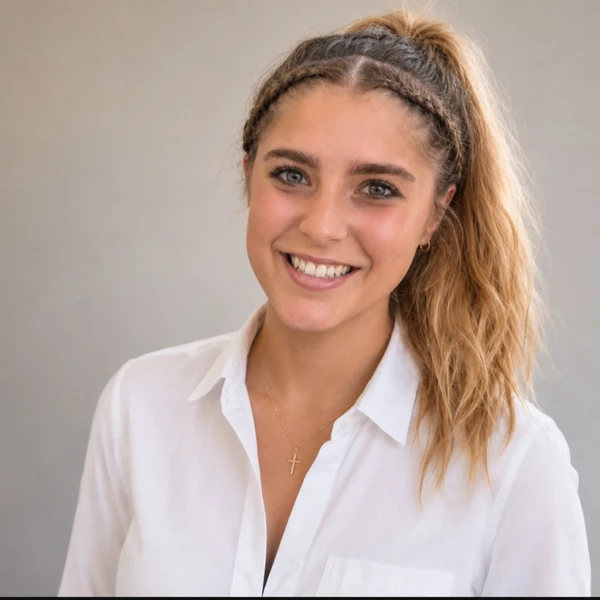
Raechel Serafimov
1x
Finalist
Raechel Serafimov
1x
FinalistBio
Raechel Serafimov is a biochemistry student at Ashland University whose professional goals center on becoming a physician-scientist in pediatric orthopedics. She is especially interested in musculoskeletal biology, growth plate development, translational research, and clinical outcomes that can improve surgical care for children. Through pediatric orthopedic research at Akron Children’s Hospital, she has developed a strong interest in studying operative efficiency, radiation exposure, and treatment strategies that lead to safer and more effective care. She plans to pursue MD-PhD training so that she can combine rigorous scientific investigation with meaningful clinical relationships and direct patient care. Her long-term goal is to lead collaborative research that answers practical questions faced by surgeons while advancing the biological understanding of pediatric musculoskeletal disease. She hopes to build a career defined by intellectual curiosity, compassionate care, strong mentorship, and research that produces measurable improvements in children’s lives.
Education
Ashland University
Bachelor's degree programMajors:
- Biochemistry, Biophysics and Molecular Biology
Miscellaneous
Desired degree level:
Doctoral degree program (PhD, MD, JD, etc.)
Graduate schools of interest:
- Johns Hopkins University
- Case Western Reserve University
- Yale University
- Harvard College
Transfer schools of interest:
Majors of interest:
Career
Dream career field:
- Medicine
Dream career goals:
Patient Care Assistant
Akron Children's Hospital2025 – Present1 year
Sports
Swimming
Varsity2024 – Present2 years
Research
Medicine
Akron Children's Hospital — Primary Researcher2026 – Present
Arts
N/a
Design2011 – Present
Public services
Volunteering
University Hospitals — Greeter2024 – Present
RonranGlee Literary Scholarship
“For if I tell you that to do as you say would be a disobedience to the God, and therefore that I cannot hold my tongue, you will not believe that I am serious; and if I say again that daily to discourse about virtue, and of those other things about which you hear me examining myself and others, is the greatest good of man, and that the unexamined life is not worth living, you are still less likely to believe me. Yet I say what is true, although a thing of which it is hard for me to persuade you.”
Socrates’ famous declaration that “the unexamined life is not worth living” is often isolated from the paragraph surrounding it and treated as a general encouragement to think deeply. Read closely, however, the passage is far more demanding. Socrates is not simply praising reflection. He is defending an entire way of life: one governed by obedience to what he believes is true, sustained through continual conversation about virtue, and tested through the examination of both himself and others. The passage suggests that a worthwhile life is not defined merely by success, comfort, or even survival. It is defined by whether a person has seriously examined what is good and then has the courage to live accordingly.
The paragraph begins with an act of refusal: “to do as you say would be a disobedience to the God.” Socrates is addressing men who have the power to determine whether he lives or dies, yet he places another authority above theirs. This can be read religiously. Socrates believes that his philosophical activity is a divine obligation, and therefore silence would constitute disobedience. But the sentence also raises a broader philosophical question about conscience. What happens when what society demands conflicts with what an individual believes to be morally necessary?
One interpretation is that Socrates represents admirable integrity. He refuses to abandon his convictions simply because obedience would be safer. Another interpretation is less comfortable. A person who believes his own convictions outrank the judgment of everyone around him could easily become arrogant or dangerous. Close reading therefore requires more than celebrating Socrates’ courage. It requires asking what distinguishes principled conviction from stubborn certainty.
The remainder of the paragraph offers part of the answer. Socrates does not describe himself as someone who simply possesses the truth. He describes himself as someone who examines.
The next phrase, “I cannot hold my tongue,” initially sounds almost humorous. Socrates presents speaking as something nearly inseparable from who he is. Yet his refusal to remain silent is not merely a personality trait. Speech is the method through which examination occurs. Socratic philosophy happens in conversation. He asks questions, receives answers, exposes contradictions, and continues asking. For Socrates, truth is not something safely possessed in isolation; it must withstand dialogue.
That matters because speaking and listening are inseparable in genuine conversation. “I cannot hold my tongue” could be interpreted as evidence of Socrates’ stubbornness, but the larger context suggests something more complex. His speech is valuable because it provokes examination, including examination of himself. The philosopher is not merely a lecturer telling everyone else what to believe.
Socrates then says that “daily to discourse about virtue” is “the greatest good of man.” The word “daily” is especially important. Examination is not a dramatic event that occurs once, after which a person can declare his life understood. It is habitual. Socrates suggests that the good life requires repeatedly returning to questions about virtue.
This raises another tension. One could argue that endless questioning can become paralyzing. At some point, human beings must act. A physician cannot contemplate every possible definition of justice while a patient requires immediate treatment. A leader cannot indefinitely analyze every moral possibility while refusing to make a decision. If Socratic examination means perpetual hesitation, it would be difficult to call it “the greatest good.”
But I do not think Socrates is recommending indecision. He is recommending that action remain accountable to examination. The question is not whether we act, but whether we are willing to question why we act, whether our reasons are sound, and whether new evidence should change our judgment.
Even the object of his discussion matters: “virtue.” Socrates is not primarily describing conversation about wealth, reputation, or achievement. He is concerned with what kind of person someone ought to become. That distinction is important because accomplishment can easily masquerade as goodness. A person can collect honors, degrees, leadership positions, and professional success without ever seriously asking what those accomplishments are for.
Socrates then expands his description: “those other things about which you hear me examining myself and others.” The ordering is significant. He does not say that he examines others while exempting himself. He places “myself” first.
That may be the most difficult demand in the entire paragraph.
It is easy to analyze someone else’s inconsistency. It is harder to recognize our own. Examination becomes morally meaningful only when the person asking questions is also willing to become the object of those questions. Socrates therefore presents philosophy as both outward and inward. We learn through encountering other people, but those encounters should force us to reconsider ourselves.
There is also something deeply communal in the words “myself and others.” An examined life cannot be completely solitary. Other people reveal assumptions we may never notice on our own. Someone from another political tradition, religion, socioeconomic background, profession, or culture may interpret a question differently. Conversation does not guarantee agreement, but it can expose the limits of one’s own perspective.
Only after establishing all of this does Socrates make the claim for which the passage is remembered: “the unexamined life is not worth living.”
Taken literally, the sentence sounds severe. Surely a person can live a loving, generous, meaningful life without engaging in formal philosophical inquiry. Socrates could even appear elitist if “examination” were understood to require the education or leisure necessary to study philosophy.
But I do not think formal scholarship is what gives the sentence its force. Examination can occur anywhere a person seriously asks whether his beliefs, choices, and actions align. A parent can live an examined life. A laborer can live an examined life. A scientist can live an examined life. The essential distinction is not between intellectuals and everyone else. It is between living deliberately and simply moving through life without asking why.
That interpretation has profoundly shaped how I understand my own education.
I am a biochemistry major preparing for a career in medicine. Much of my undergraduate work involves science: understanding molecular mechanisms, conducting research, analyzing data, and learning how evidence can be used to improve human health. Yet I also chose to study political science in a program centered on close reading of foundational texts. I have spent hours reading Plato and Aristotle, Frederick Douglass, Tocqueville’s Democracy in America, and works from the American political tradition.
At first glance, that education may seem unrelated to medicine.
For me, it has become inseparable from it.
Science has taught me to examine evidence. Political philosophy has taught me to examine assumptions.
In a laboratory, I cannot accept a conclusion simply because it fits what I expected to find. I must ask what was measured, what variables were controlled, what alternative explanations exist, and whether the evidence actually supports the claim. Reading Plato demands a similar discipline. Why does an author choose a particular word? Why is an argument placed where it is? Who is speaking? What assumptions are hidden beneath an apparently simple claim?
The habit of close reading has therefore changed how I think about medicine. A patient will never be merely a collection of laboratory values. Patients bring different histories, beliefs, fears, families, and ways of interpreting suffering. To care for them well, I will need to do more than know the science. I will need to listen carefully enough to understand what another person is actually saying rather than what I assume they mean.
Socrates’ emphasis on examining “myself and others” also gives me a standard against which to evaluate my own ambitions.
My life is busy. I maintain a 4.0, conduct research, work in patient care, mentor students, serve as a resident assistant, participate in athletics, volunteer, lead student organizations, prepare for medical school, and try to remain present for my younger siblings. A life filled with commitments can easily look like a meaningful life from the outside.
Socrates forces me to ask a more uncomfortable question: Why am I doing any of it?
If the answer were simply achievement, the list would not satisfy me.
I was given a second chance at life through emergency lung surgery as a child. I grew up understanding, long before I understood medicine itself, that another person’s knowledge could give someone the opportunity to continue living and pursuing a future. As I have grown older, studied science, worked with patients, and prayed about my vocation, I have become increasingly certain that medicine is where I am called to serve.
That calling requires examination.
It requires asking whether I am pursuing medicine because the title is impressive or because I am willing to accept the responsibilities attached to caring for another person. It requires asking whether my research is merely producing results or addressing questions that could improve care. It requires asking whether leadership means accumulating positions or becoming more useful to the people who depend on me.
It also requires allowing other people to examine me.
That may be one of the greatest gifts of studying texts and ideas outside my scientific discipline. Reading authors separated from me by centuries, political systems, and assumptions forces me to encounter arguments I would never have constructed myself. Sometimes I agree. Sometimes I disagree strongly. But before reaching either conclusion, I have to understand.
I hope to carry that habit into medicine.
A future patient may believe something I do not understand. A colleague may interpret evidence differently. A community may distrust a medical institution for reasons I have never personally experienced. Socratic examination asks me not merely to speak, but to remain in the conversation long enough to discover what I may have failed to see.
The final sentence of the passage is therefore important: “Yet I say what is true, although a thing of which it is hard for me to persuade you.”
Socrates recognizes that examination cannot be forced. He can argue for his way of life, but he cannot compel his audience to value it. There is humility hidden inside his defiance. He believes his claim is true, yet he acknowledges the distance between believing something and persuading another person of it.
That distinction matters in medicine, science, and ordinary human relationships. Evidence matters, but communication matters too. Being correct is not identical to being understood. If I hope to serve patients and communities well, I will need not only knowledge but the ability to explain, listen, and recognize why another person may remain unconvinced.
For me, then, the examined life is not a life spent endlessly thinking instead of acting. It is a life in which action and examination continually correct one another.
I want to ask whether my ambitions serve anyone beyond myself. I want to question the assumptions behind the research I conduct. I want to listen closely enough to patients that their experiences can challenge what I think I know. I want to examine my own convictions with the same seriousness with which I examine evidence.
Socrates’ statement does not make life simpler. It makes life more demanding.
But perhaps that is precisely his point.
A worthwhile life is not one in which every answer is certain. It is one in which we continue asking what is true, what is good, what we owe to others, and whether our choices reflect the answers we claim to believe.
That is the kind of life I hope to build.
Kalia D. Davis Memorial Scholarship
When I was a child, I needed emergency lung surgery. I remember little about the medicine, but I remember what it felt like to be scared, to depend completely on other people, and to have physicians step into that fear with knowledge and compassion. At that age, I did not fully understand what it meant to be a doctor. I simply knew that someday I wanted to give other children the chance to chase their dreams just as my doctors gave me the chance to chase mine.
Years later, that childhood dream has become something much deeper. Through prayer and opportunities I never could have planned for myself, I have become increasingly certain that medicine is where I am called to serve. I believe Jesus is Lord, and I believe the talents I have been given come with a responsibility: to use them fully and for the good of others.
That belief shapes my life. After graduating as my high school valedictorian, I entered college determined to pursue excellence while investing in the people around me. I now maintain a 4.0 as a biochemistry major. I am a collegiate swimmer, resident assistant, peer mentor, Honors student, and leader of three faith and science organizations. I conduct chemical and forensic research at my university and pediatric orthopedic research at my local children's hospital, volunteer in children's ministry and with Crisis Text Line, and work night shifts in patient care. I am also studying for the MCAT and trying to be present for four younger siblings who matter deeply to me.
My schedule is often full, but I do not see these commitments as boxes to check. Instead, I ask myself: How can I make the most of what I have been given?
Sometimes that means staying awake through a night shift to care for patients. Sometimes it means helping a younger student navigate college as an RA or mentor. Sometimes it is getting to the lab early and spending hours on research because I believe better evidence can lead to better care. Sometimes it is comforting a sobbing child at Sunday school after their parent leaves or responding to someone in crisis late at night. Other times, it means showing up for my siblings or challenging myself during practice. Some of these moments let me serve others directly; others strengthen the discipline and perseverance I will need to serve others well in the future.
I was especially moved reading about Kalia because I recognized many of the values her life reflected: faith, hard work, service, ambition, and joy. Her accomplishments are remarkable, but I was struck by the description of someone who encouraged her peers and brought laughter to those around her. That is the kind of excellence I hope to pursue: not achievement simply for its own sake, but using what I have been given to positively influence the lives of others.
I am entirely responsible for funding my education, so working throughout college has been both a privilege and a necessity, with the goal of graduating debt-free before taking on the cost of medical school. This scholarship would lessen that burden and allow more of what I earn to go toward medical school applications.
It would be an honor to carry a small part of Kalia D. Davis's legacy forward. I hope to spend my life living, loving, laughing, learning, serving others, and doing my very best with every opportunity God places before me.
Ethel Hayes Destigmatization of Mental Health Scholarship
For a long time, I believed that if I stayed productive enough, no one would notice I was struggling, including me.
In college, I learned how easy it is for mental health challenges to hide behind achievement. I maintained excellent grades, competed as a collegiate athlete, conducted research, worked night shifts in a children’s hospital, led student organizations, and served as a resident assistant. From the outside, my life looked full and successful. Internally, I often felt anxious, emotionally exhausted, and profoundly alone.
As the first person in my family pursuing higher education and the only one preparing for a career in medicine, I entered college without a roadmap. I did not have relatives who could explain how to navigate research, professional expectations, financial aid, or medical training. I felt as though everyone else had received instructions for adulthood that I had somehow missed.
That isolation became more intense while I was working as a resident assistant to help pay for housing. I lived alone while carrying responsibility for an entire community of students. My days moved from classes to research, practice, meetings, work, and helping other people through their own difficulties. I became very good at functioning. Eventually, I realized that functioning is not the same as being well.
Depression has also affected my family, and I grew up seeing how easily people can organize their lives around emotional pain without ever naming it. I learned to remain dependable, complete the next task, and avoid becoming a burden. When I began experiencing persistent sadness, anxiety, and exhaustion, I treated them as personal failures. I told myself that I needed to be more disciplined, more grateful, or more efficient.
Achievement became both my strength and my hiding place.
My experience changed when I began to understand that resilience is not silent endurance. A student can earn a 4.0 GPA and still feel overwhelmed. A leader can support everyone around her and still need support herself. A person can appear exceptionally capable while privately feeling as though she is barely keeping pace with her own life.
This realization changed my relationships. I became more willing to speak honestly with people I trusted instead of waiting until I had solved everything alone. I learned that no single person needed to understand every part of my experience in order to offer meaningful support. Connection could be built through small moments of honesty, consistency, and care.
It also changed the way I treated others. As a resident assistant, peer mentor, tutor, and student leader, I began paying closer attention to people who seemed withdrawn, exhausted, or disconnected. I learned not to assume that someone was fine simply because they continued showing up. Sometimes I connected students with campus resources. Other times, I sat with them, listened, and reminded them that they did not have to wait for a crisis before asking for help.
As president of my university’s American Medical Student Association chapter, I try to challenge the idea that exhaustion proves commitment. Students pursuing healthcare careers often glorify sleeplessness, anxiety, and self-neglect as evidence that they care enough. I believe the opposite. Learning to recognize limits, seek support, and care for one’s mental health is part of becoming a responsible healthcare professional.
My experience has also shaped my goals in medicine. I hope to become a pediatric physician-scientist, and I now understand that excellent care requires attention to what cannot be seen on a scan or measured in a laboratory result. Patients and families may be carrying fear, shame, loneliness, or grief while still appearing composed. I want to become a physician who notices when accomplishment, humor, or silence is masking pain.
Mental health has changed my understanding of the world by teaching me that strength and struggle can exist in the same person. It has taught me that support should not be reserved for people who can no longer function and that suffering does not become legitimate only after it becomes visible.
I still value ambition, discipline, and perseverance. I simply no longer believe they require silence. My goal is to help create communities where people can pursue extraordinary things without believing they must suffer alone to prove they deserve them.
Learner Math Lover Scholarship
I fell in love with math when I learned long division.
Once I understood the process, I began creating enormous division problems for myself. I would write a long chain of numbers, choose a divisor, and work through the problem until I reached the answer. Sometimes one sheet of paper was not enough, so I taped multiple pages together and kept going. When I finished, I used a calculator to check my work. Most of the fun was not simply getting the answer. It was proving that I could follow a logical process from beginning to end and arrive somewhere certain.
That certainty is still what I love most about math. Many parts of life are complicated, subjective, or unpredictable. Math offers structure. A problem may be difficult, but it can be broken into steps. Each step must make sense, and the final answer must withstand examination. That way of thinking has shaped how I approach science, research, and medicine.
I am now studying biochemistry and hope to pursue MD-PhD training focused on musculoskeletal science and pediatric orthopedics. In the operating room, math is everywhere. Surgeons evaluate bone alignment, measure acceptable angulation, determine implant size, and consider the angle and depth of a drill. Small numerical differences can affect healing, mobility, and long-term function.
Math is equally important in research. My work in pediatric orthopedics examines radiation exposure during operative fixation of femur fractures. To understand which surgical choices may reduce exposure, we must compare variables, identify patterns, and determine whether relationships are meaningful rather than accidental.
What began as taped-together sheets of long division has become a way of understanding the world. I love math because it turns complexity into something that can be examined, tested, and improved. In my future career, I hope to use that same precision to make orthopedic care safer and give children better outcomes.
Christian Fitness Association General Scholarship
The accomplishments I am most proud of are not the ones that came with medals, titles, or perfect grades. They are the moments when someone trusted me enough to let me help.
For more than six years, my church has been one of the most important places where I have learned how to serve. I have taught children in second through fifth grade, cared for infants, welcomed families as a greeter, volunteered in middle school ministry, led my own group of seventh-grade girls, mentored students individually, and participated in young adult ministry. Each role has required something different from me. Teaching younger children required patience and creativity. Greeting required me to notice the person standing alone. Mentoring middle school students required listening carefully, building trust, and showing up often enough for them to believe that I meant what I said.
My seventh-grade girls taught me that leadership is not simply giving advice. It is becoming dependable. It means remembering what someone shared the week before, noticing when she is quieter than usual, and creating a space where questions can be asked without judgment. Those experiences shaped how I now approach every form of leadership. I do not want to be known only as someone who organized programs or earned impressive results. I want to be someone who made people feel seen.
That same commitment has shaped my academic and professional path. I am a biochemistry student with a 4.0 GPA, and I am on track to graduate as valedictorian of my college after graduating as valedictorian of my high school. I have balanced demanding science courses with collegiate swimming, research, student leadership, extensive volunteering, and night shifts as a patient care assistant at a children’s hospital.
Working nights while attending school has taught me how much discipline is required to pursue an education when finances cannot be ignored. I have left twelve-hour hospital shifts and gone directly to class. I have studied around practices, leadership responsibilities, research deadlines, and work schedules. I have learned how to prepare in advance, use small periods of time productively, and continue performing at a high level even when I am exhausted.
Financial limitations have shaped nearly every major educational decision I have made. I was accepted to my dream college, but I had to decline because I could not afford to attend. My family income made significant need-based aid difficult to obtain, yet the support assumed by that system was not available to me. That experience was painful because I had spent years believing that admission would be the greatest obstacle. I had earned the opportunity, but I could not access it.
I chose a university I could afford and decided that disappointment would not diminish my effort. Instead, I committed myself to making the most of every opportunity available to me. I became involved in chemical research, pediatric clinical research, student organizations, athletics, and healthcare. I worked to build the kind of education I once believed could only exist at one particular institution.
My research has strengthened my goal of becoming a pediatric physician-scientist. In pediatric orthopedics, I study radiation exposure during operative fixation of femur fractures and examine how treatment variables may influence patient safety. This work has shown me how carefully asked questions can lead to practical improvements in care. I am drawn to research because it allows me to help the patient in front of me while also improving care for those who come next.
My hospital work has made that goal even more personal. As a patient care assistant, I have supported children and families during some of the most frightening moments of their lives. I have learned that excellent healthcare depends not only on technical knowledge, but also on dignity, patience, and the ability to notice what a person needs before they know how to ask for it. Those lessons are not very different from what I first learned through church service. Whether I am mentoring a seventh-grade student or caring for a hospitalized child, the foundation is the same: listen carefully, remain dependable, and treat the person in front of you as though their concerns matter.
I have also tried to create opportunities for others to serve. At my university, I organized students across residence halls to write holiday letters to nursing home residents. We contacted every nursing home within approximately fifty miles of campus and wrote more than 1,000 letters for Thanksgiving, Christmas, Valentine’s Day, and Easter. This year, I plan to expand the project to hospitals, especially children’s hospitals. Through my work, I have seen how much a small act of encouragement can mean to a child who feels isolated or to a family whose life has been interrupted by illness.
I should be considered for this scholarship because I have demonstrated what I do with opportunity. I work hard academically, but I also use what I learn to serve others. I pursue leadership, but I measure its value by whether someone else feels more supported because I was there. I have faced financial barriers, injuries, exhaustion, and unexpected changes in direction, yet I have continued building toward a career in medicine.
This scholarship would relieve part of the financial pressure surrounding my education, but it would also invest in a future centered on service. I plan to become a pediatric physician-scientist, continue mentoring students, remain involved in my church and community, and conduct research that makes children’s care safer and more effective.
My record shows ambition, but the purpose behind that ambition matters more. I do not want to succeed simply so that I can say I did. I want to use every opportunity I receive to become someone capable of giving more back.
Barbara Cain Literary Scholarship
The book that first showed me my future arrived while I was lying in a hospital bed, unsure whether I would have one.
I was eleven years old and recovering from a severe illness that had left one lung unable to function while the other began filling with fluid. A pediatric surgeon had performed the operation that saved my life. During that recovery, my grandmother brought me a book about Benjamin Carson, a surgeon who had overcome poverty, academic struggles, and circumstances that could easily have narrowed his future.
What stayed with me was not simply that he became successful. It was that he turned adversity into ability and then used that ability to give other people a chance at lives they might not otherwise have had. For the first time, I understood medicine as more than treatment. I saw it as a way to protect possibility.
That idea became the foundation of my own goals.
The path Carson described mattered to me because my own ambitions have often required me to keep moving after the future I imagined changed. I earned admission to the college I had dreamed of attending, only to realize that acceptance did not make it financially possible. Turning it down felt like losing proof that all of my work had led somewhere. Eventually, I learned that the name of a school would not determine the value of my education. What mattered was what I chose to build with the opportunity I could afford.
Injuries also forced me to reconsider the future I had planned. I once expected pole vaulting to be part of my college experience, but repeated concussions made continuing too dangerous. Another concussion from a car accident kept me out of classes for weeks and left me with lingering difficulties involving speech, memory, and balance. Walking away from pole vaulting was painful, but it taught me that perseverance does not always mean refusing to change direction. Sometimes it means protecting the larger dream and finding another way forward.
I became a collegiate swimmer, maintained a 4.0 GPA as a biochemistry major, and am on track to graduate as valedictorian of my college after graduating as valedictorian of my high school. I have balanced research, athletics, leadership, service, and night shifts as a patient care assistant in a children’s hospital. Each challenge has brought me back to the lesson I first encountered in that hospital room: difficult circumstances may shape a life, but they do not have to decide its limits.
Books have taught me that the most powerful stories are not about people who never struggle. They are about people who decide what their struggles will produce. Reading about Carson helped me imagine a future beyond my own illness. It showed me what disciplined ambition could become when directed toward service.
I now hope to become a pediatric physician-scientist, particularly in orthopedic medicine. I want to care for children whose injuries or illnesses threaten their mobility, independence, or dreams while conducting research that makes their treatment safer and more effective.
A book once gave me language for the future I wanted before I was old enough to fully understand it. I hope to use my education the same way Carson used his, not simply to succeed, but to return possibility to children who fear that illness or injury has taken it from them.
Sloane Stephens Doc & Glo Scholarship
The impact I hope to make can be described simply: I want children to leave the hospital with more than a treatment plan. I want them to leave with their futures still open.
When I was eleven years old, I became seriously ill. One lung stopped functioning, and the other began filling with fluid. After several medical visits, I was rushed to Akron Children’s Hospital, where a pediatric surgeon performed the operation that saved my life. Her care gave me more than recovery. It gave me the chance to grow up, pursue an education, and discover what I might contribute to the world.
That experience inspired my goal of becoming a pediatric physician-scientist. I am studying biochemistry while conducting clinical research in pediatric orthopedics and working night shifts as a patient care assistant in a children’s hospital. These roles have shown me that healthcare can change a child’s future in two important ways. Compassionate care can transform one patient’s experience, while research can improve treatment for every patient who follows.
My current research examines radiation exposure during operative fixation of pediatric femur fractures. I am interested in identifying surgical and treatment variables that may reduce unnecessary exposure without compromising care. Questions like these may appear technical, but their purpose is deeply human. Every data point represents a child whose safety, recovery, and future matter. Through my education, I hope to develop the scientific knowledge and clinical judgment necessary to ask practical questions and translate the answers into safer care.
The people who most inspire me are those who have quietly created opportunities for others. My grandparents opened their home to me when my own home became unsafe. They gave me stability without making me feel like a burden. Now that my grandmother is undergoing chemotherapy and radiation, I spend my lunch breaks accompanying her and my grandfather to appointments. Their example has taught me that giving back is not always dramatic. Sometimes it means offering someone a place to stay, bringing lunch, listening carefully, or consistently returning when life becomes difficult.
I try to extend that same spirit into my community. I have volunteered extensively through my church, tutored younger students and college teammates, and organized a project that produced more than 1,000 holiday letters for nursing home residents. I am now expanding the project to hospitals, particularly children’s hospitals, because I have seen how meaningful small acts of connection can be for patients who feel isolated.
My long-term vision is to combine pediatric patient care, musculoskeletal research, mentorship, and service. I want to help children recover from injuries and illnesses that threaten their mobility, independence, or ability to pursue their dreams. I also want to mentor students who enter medicine without family connections or a clear roadmap, especially women interested in traditionally male-dominated specialties such as orthopedics.
Education will give me the tools to understand disease, improve treatment, and serve patients well. However, the people who shaped me have taught me what those tools are for. They are meant to create possibilities for others.
Medicine once protected my future. I hope to spend my career protecting the futures of children and building a community in which more young people feel supported, capable, and free to become who they were meant to be.
J&Y Law Yahouda Yahoudai Service Scholarship
The first letter was written to a stranger.
The student who wrote it did not know which nursing home resident would receive it, what that person had lost, or how long it had been since someone outside the facility had thought of them. She only knew that somewhere nearby, someone might need a reminder that they had not been forgotten.
That simple idea became one of the most meaningful service projects I have organized at my university. I coordinated students from different residence halls to write holiday letters to nursing home residents throughout the surrounding community. We wrote for Thanksgiving, Christmas, Valentine’s Day, and Easter and contacted every nursing home within approximately fifty miles of campus. By the end of the year, students had created more than 1,000 letters.
I wanted the project to be easy for anyone to join. Students did not need transportation, money, or previous volunteer experience. They only needed a few minutes, a piece of paper, and the willingness to write something kind. I contacted facilities, coordinated participation across residence halls, collected the letters, and organized their delivery. When I dropped them off, I also brought desserts for the staff members who spent their days caring for residents.
A handwritten letter cannot erase illness, grief, or loneliness. However, it can remind someone that they still matter to the world outside their room. The project also affected the students who participated. Many began by seeing it as a small campus activity, but they left understanding that compassion does not need to be complicated to be meaningful.
This year, I plan to expand the project to hospitals, with particular attention to children’s hospitals. I work night shifts as a patient care assistant in a pediatric hospital, where I see how deeply hospitalization can isolate a child and disrupt an entire family. Children may spend long periods separated from school, friends, siblings, and familiar routines. Some are wards of the state and may have limited family support at the bedside. A message from someone in the community cannot change their diagnosis, but it can interrupt the loneliness of hospitalization and remind them that someone is hoping for their recovery.
My commitment to service has also grown through long-term involvement in my church and through tutoring. Over the past six years, I have volunteered extensively through my church and spent hundreds of hours tutoring younger students, classmates, and teammates. I have learned that people are often most willing to accept help when it is offered with patience rather than judgment. Whether someone needs encouragement, academic support, or simply a person who will listen, the most important part of service is often consistency.
These experiences have changed how I understand community. Strong communities are not built only through large organizations or dramatic projects. They are built when people pay attention, follow through, and make room for others. Leadership matters because it can turn one person’s concern into an opportunity for many people to help.
My long-term goal is to become a pediatric physician-scientist. I hope to improve children’s lives through direct patient care and medical research, but I also want to continue building communities around patients and families. Medicine can treat disease. Community helps people endure everything surrounding it.
The first letter was written to a stranger, but it carried a message that applies to every community: you are seen, you matter, and someone is willing to show up.
Michael Rudometkin Memorial Scholarship
Selflessness is rarely dramatic. More often, it looks like noticing what someone needs and quietly making room for it in your own life.
My grandmother is currently receiving chemotherapy and radiation treatments every weekday. She and my grandfather drive from the suburbs into the city for each appointment, carrying the physical and emotional weight of cancer with them. My grandmother does not want every conversation to revolve around her illness. My grandfather, on the other hand, is consumed by it. He researches treatments, clinical trials, supplements, and every possible cure he can find. He is terrified of losing her, but he tries not to place that fear on her.
Each weekday, I use my lunch break from my clinical research internship to meet them at the radiation center. On the way, I stop to buy my grandfather a sandwich because when he becomes absorbed in researching treatment options, he often forgets to eat. It is a small act, but it is one way I can care for the person who is spending all of his energy caring for someone else.
While we wait for the nurses to call my grandmother back, we usually avoid discussing cancer. Instead, we talk about family stories. She tells me which of her children cried the most, who was easiest to raise, and who caused the most trouble. We laugh about relatives and memories from long before her diagnosis. During those conversations, she is not only a cancer patient. She is a mother, grandmother, storyteller, and the center of a family history that illness cannot erase.
After she leaves for treatment, my grandfather finally begins talking. He shares the therapies he has found, the questions he wants to ask, and the fears he has been trying to hide. I listen, ask questions, and help him organize his thoughts. Often, he does not need me to solve the problem. He needs someone willing to hear how frightened he is.
Showing up for my grandparents is especially meaningful because they once showed up for me. Nearly a decade ago, when violence in my home made life unsafe, they opened their house to me. They gave me stability during a time when I needed it most. Caring for them now feels less like repayment and more like continuing the kind of love they taught me.
My commitment to helping others also extends beyond my family. I have completed hundreds of hours of volunteer service through my church, tutored younger students in mathematics, supported college teammates academically, and organized more than 1,000 holiday letters for nursing home residents. In my work as a patient care assistant at a children’s hospital, I have learned that people often remember the quiet moments of care as much as the major medical decisions.
I do not believe selflessness means ignoring your own needs or trying to save everyone. It means being dependable, paying attention, and choosing to be present when someone else’s burden is heavy. My grandmother may not need me to cure her cancer. My grandfather may not need me to have every answer. They need me to bring lunch, listen, make them laugh, and return the next day.
Those acts may seem small, but they are the kind of person and healthcare professional I hope to become. I want others to feel less alone because I was willing to show up.
Champions Of A New Path Scholarship
“Tysdeelyshutazm,” my father would mutter before explaining why the answer was no.
In Russian, it means, “You will do it yourself.” As a child, I understood the translation. It took me years to understand that it would become the guiding principle of my education.
My father, Vladimir, immigrated to the United States as the Soviet Union was collapsing. He arrived as a teenager with his parents, his brother, a backpack, and almost nothing else. His family did not speak English, and his parents worked multiple jobs while attending school and trying to build a stable life. My father learned early that survival required independence, persistence, and hard work. When he became a parent, those same values shaped the way he raised me. He believed that if I wanted something, I would find a way to earn it.
That belief became real when I applied to my dream college. I had done everything I thought was required. I earned excellent grades, became valedictorian of my high school, pursued leadership positions, competed in athletics, and built a record strong enough to gain admission to a highly selective institution. I thought getting accepted would be the difficult part.
It was not.
The difficult part was realizing that I could not afford to attend. My parents’ income prevented me from receiving significant need-based aid, but their financial support was not available to me. Asking them to cosign a loan was not a realistic conversation. I had earned a place at my dream school, but I could not purchase the opportunity to take it.
Turning down that acceptance was devastating. For years, I had imagined that institution as the place where I would gain the resources, mentorship, and education necessary to become an innovative physician. The acceptance had felt like confirmation that someone believed I was capable of working among the best. Declining it forced me to separate the value of my future from the name of the school printed on my diploma.
I enrolled at a university I could afford and decided that losing one opportunity would not give me permission to waste another.
That decision is what gives me an advantage.
I know how to create momentum without waiting for ideal circumstances. During my final two years of high school, I worked full time while taking college courses in the mornings and evenings. Before I could drive, I biked to my first job. I paid for my car, application expenses, and portions of my education while trying to understand a college financing system that assumes family income and family support are the same thing.
In college, I have maintained a 4.0 GPA while majoring in biochemistry. With one semester remaining, I am on track to graduate as valedictorian and potentially become the first student at my university to complete the biochemistry major with a 4.0. I have competed as a collegiate athlete, conducted chemical and clinical research, led student organizations, volunteered extensively, and worked night shifts as a patient care assistant at a children’s hospital to help afford school.
My schedule has often pulled me in more directions than I thought possible. I have left twelve-hour hospital shifts and gone directly to class. I have studied around practices, research deadlines, leadership obligations, and work. I have sacrificed sleep, social events, and the comfort of knowing that someone else would catch me if my financial plan failed.
Yet these responsibilities have also given me experiences I might never have pursued if my path had been easier. Working in a children’s hospital confirmed that I cannot imagine a future outside medicine. Clinical research introduced me to pediatric orthopedics and showed me how physicians can improve both an individual child’s care and the systems that affect future patients. Leadership taught me to create opportunities rather than simply wait to be invited into them.
My goal is to become a pediatric physician-scientist. When I was a child, a surgeon saved my life after a severe illness left one lung unable to function and the other beginning to fill with fluid. Medicine gave me the chance to grow up and pursue dreams that I once feared I would never reach. I now want to give children that same chance through compassionate care and research that makes treatment safer and more effective.
I do not believe hardship automatically makes someone more deserving than another applicant. My advantage is not that I have struggled. It is that I have consistently transformed limitations into measurable results.
I was unable to attend the school I once believed would determine my future, so I built a future where I was. I entered college without a family roadmap into higher education or medicine, so I found mentors, asked questions, and created my own. I needed to help finance my education, so I worked in the very environment that strengthened my calling.
The best evidence of what I will do with this scholarship is what I have already done with every opportunity before it. I have not waited for the perfect circumstances, and I have never treated an opportunity casually. I will bring the same determination to medical school, research, and a career caring for children.
“You will do it yourself” once sounded like a refusal. Over time, I turned it into a promise.
Henry Respert Alzheimer's and Dementia Awareness Scholarship
Every five minutes, my great-grandmother tells me the same story as though she has never told it before.
We call her GG. Her Alzheimer’s disease and dementia have progressed to the point that she cannot safely be left alone. She may forget where she is, what she was doing, or why someone has entered the room. Yet she often speaks with complete certainty, repeating the same thought with the same conviction each time. Caring for her has taught me that memory can disappear gradually while personality, emotion, and the need to be treated with dignity remain.
My family believes that when someone turns eighteen, that person begins contributing as an adult member of the household. Sometimes that means bringing a side dish to dinner or helping purchase a family gift. In GG’s case, it means sharing responsibility for the days when she needs supervision. I am responsible for approximately forty days of her care each year.
Forty days may not sound extraordinary when spread across a calendar, but caregiving does not exist separately from the rest of life. I am a full-time biochemistry student who takes academics, clinical research, collegiate athletics, and leadership responsibilities seriously. I also work night shifts as a patient care assistant to help afford college, and I must maintain my grades to keep the scholarships that make attendance possible. During the summers, I pursue research internships that prepare me for a future in medicine. I also try to remain present for my younger siblings and, occasionally, make room for the ordinary experiences of being a college student.
GG’s needs do not pause during exams, research deadlines, practices, or overnight shifts. Alzheimer’s does not respect schedules.
There have been times when balancing her care with school has felt nearly impossible. I have studied beside her while answering the same question repeatedly. I have reorganized assignments, practices, and work obligations around days when she could not be alone. I have learned to prepare in advance because I cannot depend on uninterrupted time while caring for her. Maintaining a 4.0 GPA under those circumstances has required more than academic ability. It has required discipline, planning, and an acceptance that responsibility sometimes means giving up rest or personal time.
The most difficult lesson has been learning not to correct every repeated statement. At first, I wanted to explain that she had already told me something or remind her of the facts she had forgotten. I eventually realized that being factually correct was less important than helping her feel safe. If a story brings her comfort, I listen again. If she asks the same question, I answer again. She may not remember my response five minutes later, but she can still experience reassurance in the moment.
Alzheimer’s has also shown me how deeply dementia affects an entire family. The illness belongs medically to one person, but its consequences spread across generations. Family members become caregivers, schedules become shared responsibilities, and grief begins long before a person is physically gone. We continue loving someone who is still present while mourning the parts of her that are slowly becoming inaccessible.
As a future physician-scientist, I hope to contribute to medical research that improves the lives of patients and families affected by serious illness. GG has shown me why research matters. Families need treatments that preserve function, delay decline, and reduce the burden of disease. They also need healthcare professionals who understand that caregiving is exhausting, complicated, and often invisible.
I have learned that care is not always dramatic. Sometimes it is repeating an answer without showing frustration. Sometimes it is giving forty days of your year when you already feel there are not enough hours. GG may not remember every day we spend together, but those days have changed me. They have taught me patience, sacrifice, and the importance of protecting dignity even when memory is fading.
From TBI Resilience to STEM Success Scholarship
I had spent years building my identity around what my brain could do. Then, after being struck by a truck, I could not even return to class.
I have sustained four concussions, two from pole vaulting and two from car accidents. Each injury affected me differently, but together they changed how I understood achievement, recovery, and the future I was working toward. I graduated as valedictorian of my high school, and I am currently on track to graduate as valedictorian of my college. Academics are not simply something I take seriously. Learning has always been central to who I am, which made being kept out of classes for weeks after my worst car accident especially frightening.
Returning to school did not mean that I was fully recovered. I continued experiencing difficulties with speech, memory, balance, and concentration. These challenges were frustrating because they were often invisible. Other people could see that I was back in the classroom, but they could not see how much harder I had to work to recall information, find the right words, or remain focused. I adapted by giving myself more time, changing how I studied, and refusing to allow temporary limitations to determine what I could ultimately accomplish.
My concussions also changed my athletic future. Before college, I believed pole vaulting would be part of my path. I had reached heights that could have opened opportunities at some of my dream schools. During practice, however, I attempted a new drill, experienced severe whiplash, and sustained another concussion. Continuing to vault would have meant risking further injury to the brain I hoped to rely on as a future physician. Walking away felt like losing a future I had spent years imagining, but resilience required me to choose the dream that mattered most.
I eventually committed more fully to swimming. What had once been my third athletic option became an important lesson in adaptability. I learned that determination does not always mean forcing yourself down the same path. Sometimes it means protecting your future, accepting change, and finding another way forward.
My experiences with traumatic brain injury gained even greater meaning through my work as a patient care assistant at a children’s hospital. One patient who remains with me was a boy who sustained a devastating brain injury in an ATV accident. His brain would never completely heal, and he remained hospitalized for approximately nine months. I was fortunate to be one of the people who cared for him as he gradually regained significant function.
His recovery occurred through small, repeated victories that might have looked ordinary to someone else. Helping him regain abilities reminded me how much patience, consistency, and encouragement matter after a brain injury. His trauma was far more severe than mine, but I understood the frustration of having your mind and body no longer respond as expected. It was deeply meaningful to help someone else move forward in the way others had once helped me.
I am pursuing a biochemistry degree and plan to become a pediatric physician-scientist. I hope to conduct research that improves treatment, rehabilitation, and long-term outcomes for children with traumatic brain injuries. My concussions ended one version of my future, but they did not diminish my ambition. They taught me to value the brain’s vulnerability, respect the complexity of recovery, and use my own experience to help children rebuild futures that injury tried to take from them.
Annie Pringle Memorial Scholarship
Breast health education became personal to me when the surgeon mentoring my entrance into orthopedic medicine was diagnosed with breast cancer.
She had already shown me what it means to lead in a field where women remain underrepresented. Through her mentorship, I saw the intelligence, precision, and determination required to become an orthopedic surgeon. Her diagnosis revealed another part of that career that receives far less attention: the potential health risks faced by the professionals who devote their lives to caring for others.
Orthopedic surgeons often rely on fluoroscopy, a form of real-time X-ray imaging, to guide procedures and confirm that bones, implants, and instruments are positioned correctly. This technology can make surgery safer and more precise for patients, but it also exposes operating room personnel to repeated low doses of ionizing radiation. Research has reported a significantly elevated prevalence of breast cancer among women orthopedic surgeons compared with women in the general population. Although the exact causes and degree of risk require further study, the findings raise questions that the medical community cannot afford to ignore.
My mentor’s experience made those statistics impossible for me to view as abstract numbers. They represent women who entered medicine to protect their patients but may not have received adequate education about protecting themselves. They also represent a broader problem in women’s health: education, equipment, and workplace standards have not always been designed with women’s bodies and risks in mind.
My own clinical research examines radiation exposure during operative fixation of pediatric femur fractures. I study how variables such as surgical procedure, equipment, operative time, and treatment choices may influence the radiation a child receives. Through this work, I have begun to understand how carefully gathered data can expose preventable risks and lead to practical changes. I now want to extend that same attention to the women standing beside the operating table.
Breast health education is important because awareness can shape behavior long before a diagnosis occurs. Women entering radiation-intensive specialties should understand cumulative occupational exposure, proper positioning in relation to the radiation source, appropriate use of dosimeters, and the importance of well-fitted protective equipment. Traditional lead aprons may leave portions of breast tissue inadequately covered, especially when the equipment was not designed for the wearer’s body. Education should also empower healthcare professionals to discuss their occupational history with their physicians and make informed decisions about individualized screening.
However, education cannot place the full burden on individual women. Hospitals, training programs, and professional organizations must also examine whether appropriate protective equipment is readily available, whether radiation safety training reflects sex-specific concerns, and whether exposure is consistently monitored. Women should not have to choose between pursuing a surgical specialty and protecting their long-term health.
My interest in breast health is rooted in both mentorship and responsibility. My mentor helped me imagine myself in orthopedic medicine. Her diagnosis has challenged me to consider how I might make that path safer for the women who enter it after us. I hope to become a pediatric physician-scientist who cares for children, studies radiation exposure, and advocates for stronger occupational protections and breast health education for women in medicine.
Breast health education is not simply about teaching someone to recognize a symptom. It is about giving people the knowledge to understand their risks, ask better questions, seek timely care, and demand safer systems. The women who dedicate their careers to healing others deserve a healthcare system that is equally committed to protecting them.
STLF Memorial Pay It Forward Scholarship
Leadership through service begins with noticing who might feel forgotten and deciding to do something about it.
Over the past six years, I have completed more than 700 hours of volunteer service through my church and approximately 450 hours of tutoring. In high school, I tutored middle school students in mathematics, and in college, I have continued helping classmates and teammates understand difficult material. None of these hours were required. I volunteered because I believe service should meet people where they are, whether they need academic encouragement, practical support, or simply a reminder that someone is thinking of them.
One of the most meaningful projects I organized began in the residence halls at my university. I coordinated students from different dorms to write holiday letters for residents of nursing homes throughout the surrounding community. We wrote letters for Thanksgiving, Christmas, Valentine’s Day, and Easter, contacting every nursing home within approximately fifty miles of the college. By the end of the year, students had created more than 1,000 letters.
The project was simple by design. Students did not need money, transportation, or specialized skills to participate. They only needed a few minutes, a piece of paper, and a willingness to write something kind. Organizing the project required contacting facilities, coordinating residence halls, collecting letters, planning delivery, and encouraging students to understand why their words mattered. The letters could not eliminate illness, grief, or loneliness, but they could interrupt those experiences with a moment of connection.
This year, I plan to expand the project to hospitals, with special attention to children’s hospitals. I work in a pediatric hospital, so I see the effect that small gestures can have on both children and their families. Some patients spend long periods away from school, friends, and familiar routines. Others are wards of the state and may have limited family support at the bedside. A handwritten message cannot solve the medical or social circumstances surrounding a child’s hospitalization, but it can remind that child that someone outside the hospital is rooting for them.
When I deliver the letters, I also bring desserts for hospital or facility staff. Healthcare workers and caregivers often spend their days supporting others while receiving little recognition themselves. Including them in the project reflects an important lesson I have learned through service: care should extend to the entire community surrounding a person in need.
Leadership through service is important because it transforms concern into organized action. A leader does not need to be the person doing every task. A leader creates a way for many people to contribute, helps them understand the purpose of the work, and ensures that their combined effort reaches those who need it. Through the letter project, I learned that a small action becomes much more powerful when a community participates together.
My long-term goal is to become a pediatric physician-scientist. I hope to serve children through direct patient care and research, but I also want to continue creating opportunities for others to serve alongside me. Leadership is most meaningful when it is not centered on recognition. It is centered on making sure fewer people feel unseen, unsupported, or alone.
Learner Calculus Scholarship
Calculus is important in STEM because science rarely studies things that remain still. Bodies change, medications move through the bloodstream, diseases progress, forces act on structures, and data shift over time. Calculus gives scientists a way to describe, measure, and predict those changes.
As a biochemistry student preparing for a career in medicine and research, I have learned that many of the most important scientific questions are not simply about what something is, but how quickly it is changing and what will happen next. In chemistry, calculus helps explain reaction rates, energy changes, and how the concentration of a substance varies over time. In biology, it can be used to model population growth, enzyme activity, blood flow, and the spread of disease. These applications make calculus more than an abstract mathematical requirement. It becomes a language for understanding living systems.
Calculus is especially important in medicine because the human body is dynamic. A physician may need to understand how quickly a drug is absorbed, how its concentration rises and falls, or when another dose can be given safely. Researchers use mathematical models to study tumor growth, changes in vital signs, and the progression of chronic illnesses. Even when physicians are not calculating derivatives at a patient’s bedside, many of the technologies, medications, and clinical guidelines they rely on were developed using calculus.
My own clinical research in pediatric orthopedics has made this connection more meaningful. I study radiation exposure during operative fixation of pediatric femur fractures and examine how factors such as procedure type, operative time, equipment, and treatment choices may affect exposure. The project requires us to think about relationships between variables and how one quantity changes in response to another. Calculus provides the foundation for many of the statistical and computational methods researchers use to identify patterns, test models, and improve patient care.
Calculus also matters because it teaches a disciplined way of thinking. A difficult problem cannot always be solved by memorizing one formula. Students must identify what is changing, determine what information is relevant, break a complicated process into smaller parts, and evaluate whether the final answer is reasonable. Those habits are essential throughout STEM. Scientists and healthcare professionals regularly face problems with incomplete information, multiple variables, and no obvious solution.
I once viewed calculus primarily as another difficult course required for a STEM degree. I now see it as a tool that connects theory to reality. It helps engineers design safer structures, chemists understand reactions, biologists model complex systems, and medical researchers translate data into better treatments.
My long-term goal is to become a pediatric physician-scientist who combines patient care with research that makes treatment safer and more effective. Calculus will not be the only skill required to reach that goal, but the reasoning it develops will remain important throughout my education and career. STEM is built on understanding change, and calculus gives us the ability not only to observe change, but also to measure it, anticipate it, and use that knowledge to improve the world.
Stephan L. Wolley Memorial Scholarship
For most of my life, swimming was my third choice.
First, I imagined myself as a runner. After breaking my feet during three consecutive seasons, I turned to pole vaulting. I reached heights that could have opened doors at some of my dream colleges, but repeated concussions eventually made continuing too dangerous. I began struggling to think clearly, and I knew that protecting my long-term health had to matter more than preserving the athletic future I had imagined. My dream to be a physician required me to protect the mind I would one day use to care for patients. With two athletic paths behind me, I returned to swimming.
What began as my third option became one of the most formative parts of my college experience. Swimming taught me that changing direction is not the same as giving up. In the pool, progress is built through thousands of quiet repetitions that no one applauds. I learned to arrive early, accept correction, and continue working when improvement was measured in fractions of a second. Those lessons now shape the way I approach academics, research, work, and my future in medicine.
My education has followed a similarly unexpected path. I attended public kindergarten but came home crying nearly every day because I was bored and did not feel challenged. My mother found a homeschool cooperative where I attended classes twice each week and completed teacher-designed lessons at home during the remaining days. When I entered first grade, I could barely write my letters and could not yet read, while many of my classmates were already learning cursive. I felt painfully behind.
My mother refused to let that beginning determine my future. She sat beside me, taught me patiently, and continued believing in my ability long before I had evidence to believe in it myself. I remained in the cooperative through eighth grade, but eventually returned to public school because both of my parents needed to work to support me and my four younger siblings. My family has no established background in higher education, so my parents could not hand me a roadmap for college. What they gave me instead was sacrifice, persistence, faith, and the expectation that I use every opportunity fully.
I graduated from high school as valedictorian. I am now studying biochemistry and, with one semester remaining, am on track to graduate with a 4.0 GPA and potentially become the first student at my university to complete the biochemistry major with that distinction. I have balanced collegiate swimming with clinical research, leadership, and night shifts as a patient care assistant at a children’s hospital. None of these accomplishments erase how far behind I once felt. Instead, they remind me how much can change when someone receives patient support and refuses to stop learning.
My future goal is to become a pediatric physician-scientist, with a particular interest in orthopedic medicine. I will care for children whose illnesses or injuries threaten the futures they imagined while conducting research that betters their treatment. My own athletic setbacks taught me how frightening it can be when the body changes your plans. Medicine can help children adapt, recover, and continue pursuing dreams that may take a different form than expected.
My story has never followed the path I planned. I was the struggling reader who became valedictorian, the injured runner and pole vaulter who became a collegiate swimmer, and the first-generation college student now preparing for medicine. I have learned that a third choice can become a calling, and an unexpected path can still lead exactly where you are meant to go.
Robert F. Lawson Fund for Careers that Care
I have learned that helping someone does not always mean changing the entire world at once. Sometimes it means helping a frightened child feel safe during a long night in the hospital. Sometimes it means asking a research question that could make surgery safer for future patients. Through my career, I hope to do both.
I am a biochemistry student preparing for a career as a pediatric physician-scientist, with a particular interest in orthopedic medicine. My path toward healthcare began when I was eleven years old and developed a severe illness that left one lung unable to function and the other beginning to fill with fluid. After several medical visits, I was rushed to Akron Children’s Hospital, where Dr. McDaniels performed the surgery that saved my life. She did more than help me recover. She gave me the opportunity to grow up, pursue an education, and discover what I could contribute to the lives of others.
My commitment to medicine has deepened through direct patient care. For the past two years, I have worked night shifts as a patient care assistant in a children’s hospital while completing my undergraduate degree. I have cared for children and families during moments of fear, exhaustion, pain, and uncertainty. This experience has taught me that meaningful care is not limited to dramatic procedures or major medical decisions. It is also found in protecting a patient’s dignity, responding compassionately to discomfort, noticing subtle changes, and helping families feel less alone.
Working while attending college has also required significant sacrifice. As a student from a family without an established path into higher education or medicine, I have had to navigate applications, financial decisions, and professional opportunities largely on my own. I was accepted to my dream college but had to decline the opportunity because my family could not afford it. Instead of allowing that disappointment to end my ambitions, I committed myself to building the strongest education possible where I could attend. I have balanced demanding science courses with research, leadership, collegiate athletics, and overnight hospital shifts because I understand both the cost and the privilege of pursuing my goals.
My clinical research in pediatric orthopedics has shown me another way that I can help others. I currently study radiation exposure during operative fixation of pediatric femur fractures, examining whether surgical and treatment variables may reduce unnecessary exposure. Research allows me to look beyond the care of one patient and ask how the medical system can improve for every child who comes afterward.
I hope to become a pediatric physician-scientist who treats children while conducting research that makes their care safer, more effective, and more compassionate. Illness and injury can interrupt childhood, limit independence, and place dreams on hold. I want my career to help restore those possibilities.
Medicine once gave me the chance to pursue my own future. I now hope to spend my life giving that same chance to children and families who need someone to believe that their futures are still worth protecting.
Maxwell Tuan Nguyen Memorial Scholarship
At eleven years old, I believed I was going to die.
For weeks, I had been lying on the couch in my family’s living room, growing weaker while everyone around me hoped I would improve. On my birthday, as my father cooked, yeeyeeshnitza, my favorite Russian breakfast and my younger siblings moved noisily through the kitchen, I focused on taking one shallow breath at a time. I remember telling my mother that I was not getting better. What frightened me most was not only death itself, but the thought that my life might end before I had done anything meaningful with it.
After several medical visits, my mother brought me to the doctor one more time. One of my lungs was no longer functioning, and the other had begun filling with fluid. I was rushed to Akron Children’s Hospital, where Dr. McDaniels performed the surgery that saved my life. Her work gave me far more than physical recovery. She gave me the opportunity to grow up, discover my purpose, and pursue a future I had once feared I would never have.
That experience first inspired me to become a pediatric physician. However, the years since then have transformed that childhood inspiration into a deliberate commitment. For the past two years, I have worked night shifts as a patient care assistant in a children’s hospital. I have cared for patients when they were frightened, exhausted, uncomfortable, or far from home. I have learned that medicine is not only found in major diagnoses or lifesaving procedures. It is also found in protecting a patient’s dignity, noticing when something is wrong, helping a family feel less alone, and treating every child as a person whose future matters.
I have also begun conducting clinical research within a pediatric orthopedic department. My current work examines radiation exposure during operative fixation of pediatric femur fractures and the treatment variables that may help reduce unnecessary exposure. This research has shown me that improving medicine requires both compassion and careful investigation. A physician may change one child’s life at the bedside, while research can improve the care of countless children who come afterward.
I now plan to pursue a career as a pediatric physician-scientist, with a particular interest in orthopedics. I hope to care for children with musculoskeletal injuries and conditions while conducting research that makes their treatment safer, more effective, and more thoughtful. I want to study the practical questions that arise in operating rooms and clinics, then translate those findings into measurable improvements in patient care.
Medicine gave me the chance to chase my own dreams, and I cannot picture myself doing anything other than helping children chase theirs. A child in a hospital bed is not only a patient. That child may be a future athlete, scientist, parent, artist, or physician. Through my career, I hope to give children more than treatment. I want to give them time, possibility, and the opportunity to become who they were meant to be, just as Dr. McDaniels once did for me.
Elizabeth Schalk Memorial Scholarship
Loneliness does not always look like being physically alone. Sometimes it looks like sitting in a classroom surrounded by people while feeling as though no one understands the life you are trying to build. As the first person in my family pursuing higher education and the only one working toward a career in medicine, I entered college without a roadmap, professional connections, or anyone at home who could explain how to navigate the path ahead.
To help pay for college, I became a resident assistant. The position provided housing, but it also meant living alone in a room while carrying responsibility for an entire community of students. My days were filled with classes, research, collegiate athletics, leadership responsibilities, and work. From the outside, I appeared productive and successful. Privately, however, I had never felt more isolated.
There were long periods when my life seemed to consist only of meeting the next obligation. I would move from class to practice, from practice to work, and from work back to studying. I sacrificed rest, social time, and many of the ordinary experiences that allow students to feel connected to campus. The pressure contributed to persistent sadness, anxiety, and emotional exhaustion. Even when I was accomplishing goals I had once dreamed about, it became difficult to feel proud of them because I was often too overwhelmed to process anything beyond what needed to be done next.
Depression has also affected my family, which shaped how I initially responded to my own struggles. I understood that mental illness was real, but I also learned how easy it can be for families to continue functioning around pain without directly discussing it. I did not want to burden anyone, so I often convinced myself that I simply needed to work harder, become more organized, or be more grateful. Eventually, I realized that resilience is not the same as silence. Continuing to succeed while suffering did not mean the suffering was insignificant.
I began to understand that support does not have to come from a single person who completely understands every part of my experience. It can be built through small acts of connection. I became more willing to speak honestly, seek mentorship, stay connected with people I trusted, and make space for rest without viewing it as a failure. I also learned to notice others who seemed isolated. My experience as a resident assistant became more meaningful when I began using it not only to enforce policies or organize events, but also to create the sense of belonging I had needed myself.
Today, I am a biochemistry student pursuing a future in medicine and research. I hope to become a physician-scientist focused on improving care for children, but mental illness has taught me that excellent care requires more than treating what is visible. People can be high-achieving, dependable, and deeply committed while still struggling internally.
Depression and loneliness have affected my family and my own college experience, but they have also shaped the kind of physician and leader I hope to become. I want to be someone who notices when accomplishment is masking pain, who takes emotional suffering seriously, and who reminds others that needing support does not make them weak. No one should have to earn the right to be cared for by first proving how much they can endure.
STEAM Generator Scholarship
When I opened the acceptance letter from my dream school, I thought years of work had finally led me to the future I had imagined. Then I saw the cost. I had earned admission, but I could not afford to attend. Turning down that opportunity taught me one of the most difficult realities of higher education: being qualified to enter a space does not always mean having the resources or knowledge needed to access it.
My father immigrated to the United States from the Soviet Union with very little. He had to learn a new country, culture, and system while building a life from the ground up. My mother grew up in a household affected by alcoholism, where stability and educational planning were not guaranteed. Both of their experiences taught me resilience, but they also meant that I entered the college process without generations of family knowledge to guide me. There was no established roadmap for choosing schools, comparing financial aid, understanding application requirements, or identifying the opportunities that would best prepare me for my goals.
My greatest concern about entering higher education was not whether I could succeed academically. It was whether I would understand the system well enough to reach the opportunities I had worked for. Applications, scholarships, financial aid forms, and program requirements often felt like a language I was expected to already know. I learned by researching independently, asking questions, contacting mentors, and seeking guidance wherever I could find it. Each step required me to become comfortable admitting what I did not know and persistent enough to find the answer.
Finances have continued to shape my educational journey. After giving up my dream school, I chose a university where I could pursue my education more affordably and committed myself fully to the opportunities available there. I have maintained a 4.0 GPA while studying biochemistry, conducting research, participating in collegiate athletics, leading student organizations, and working night shifts as a patient care assistant. I have learned that an altered path does not have to become a diminished one. Although I could not attend the institution I once imagined, I have built an education that reflects the same ambition.
I now hope to pursue medical school and eventually become a physician-scientist focused on pediatric orthopedics. That goal brings new excitement and new financial concerns. Medical school applications alone require significant expenses, followed by the greater cost of attendance. I sometimes fear that finances will again determine which opportunities I can accept, regardless of how hard I have worked to earn them.
Still, my background has made me more resourceful, not less hopeful. My father’s decision to begin again in an unfamiliar country showed me that progress is possible without certainty or privilege. My mother’s history taught me that a difficult beginning does not have to define the future. I hope to become the person in my family who creates a new roadmap, one that makes higher education and professional opportunity easier to navigate for those who follow. Pursuing medicine is not only the fulfillment of my own goal. It is a chance to transform sacrifice into service and create possibilities that once felt financially out of reach.
Working Student Scholarship
At 7:00 a.m., when many students are waking up for class, I am often walking out of the hospital after a twelve-hour night shift. I work as a patient care assistant while pursuing my biochemistry degree full time. Balancing these responsibilities is demanding, but the experience has strengthened my commitment to medicine and taught me how to remain disciplined when my time and energy are limited.
As a patient care assistant, I provide direct support to patients and clinical teams throughout the hospital. My responsibilities require attentiveness, compassion, physical stamina, and the ability to respond calmly when patients are frightened, uncomfortable, or critically ill. Working in healthcare has shown me that even tasks that appear small can shape a patient’s experience. Helping someone feel clean, safe, heard, or less alone has reinforced my desire to become a physician who combines scientific knowledge with thoughtful, compassionate care.
Working while attending college full time also helps me contribute to the cost of my education and daily expenses. However, employment adds a layer of responsibility that does not disappear during exam weeks, research deadlines, or particularly demanding parts of the semester. While other students may use evenings to study, rest, or spend time with friends, I often prepare for a shift, work overnight, and return to campus the following morning.
One of the most challenging periods occurred when I worked overnight before morning classes. After spending the night caring for patients, I would leave the hospital physically exhausted and drive back to campus for lectures, laboratory courses, meetings, and assignments. There were mornings when staying focused required nearly as much determination as completing the shift itself. I knew that neither my patients nor my professors should receive less effort simply because I was tired.
I overcame this challenge by becoming highly intentional with my time. I planned assignments in advance, studied in shorter periods between classes and responsibilities, and avoided waiting until deadlines approached to begin major projects. I prepared meals, clothing, and school materials before shifts so that fatigue would not create unnecessary problems the next morning. I also learned to protect the limited time I had available for sleep and to recognize when I needed to ask for guidance rather than allowing responsibilities to accumulate.
This balance has required sacrifice. I have missed social events, studied while exhausted, and learned that motivation alone is not enough without organization and consistency. Still, I would not remove this experience from my education. Working in the hospital has allowed me to learn from patients, nurses, physicians, and other healthcare professionals while developing a clearer understanding of the career I hope to pursue.
My goal is to become a physician-scientist focused on improving care for children, particularly through pediatric orthopedic medicine and research. Working my way through college has prepared me for that future by teaching me responsibility, endurance, and respect for every role within a healthcare team. The nights have been difficult, but they have also made my purpose clearer. Each shift reminds me not only what I am working to afford, but also what I am working toward.
Nadia Ansari Design Award
I was standing beside a research poster about reducing radiation exposure during operative fixation of pediatric femur fractures when several groups of men approached me and made crude comments. I had spent the summer studying how surgical decisions could make care safer for children, yet in that moment, my work was treated as secondary to the fact that I was a young woman in a field still dominated by men. I continued presenting, answering questions, and discussing my research, but I left the conference with a question that has stayed with me: Why should women have to endure disrespect simply to participate in the work they are qualified and determined to do?
I refuse to accept that women entering medicine, especially surgical specialties, should feel isolated, unwelcome, or reduced to something other than their ideas and abilities. This problem matters because exclusion does not only affect individual physicians. It also affects which questions are asked, which patients are represented, and who feels empowered to lead change in healthcare. When talented women are discouraged from entering or remaining in fields such as orthopedic surgery, medicine loses their perspectives, their leadership, and their potential contributions to patient care.
After the conference, I began looking for communities that could help me understand the problem and respond to it constructively. I joined women’s orthopedic organizations, mentorship programs, and professional support networks. These groups showed me that my experience was not isolated, but they also showed me that progress is possible when women are given access to mentorship, sponsorship, and a community that takes their goals seriously. I learned that support should not begin after someone has already been pushed to the margins. It should begin early, while students are still deciding whether they belong.
As president of my university’s American Medical Student Association chapter, I have started using my position to create that support for others. I have spoken openly about my experience and helped connect students interested in orthopedics with the organizations, mentorship opportunities, and professional programs that helped me. I want younger women to see surgical specialties as places where they can contribute, lead, and thrive, not as spaces they must simply learn to tolerate.
In the future, I hope to build stronger mentorship pathways for women entering medicine, particularly those interested in traditionally male-dominated specialties. I want to connect students with female physicians and researchers, expand access to orthopedic shadowing and research, and create spaces where inappropriate behavior can be discussed without fear of being dismissed or labeled as overly sensitive. My goal is not simply to help women withstand difficult environments. It is to help change those environments.
I still plan to pursue a career in pediatric orthopedics and physician-scientist training. That conference did not make me question whether I belonged. It made me more certain that I want to help shape the field I enter. I refuse to accept that disrespect is an inevitable part of becoming a woman in surgery, and I intend to build a future in which the women who follow me are valued for their intelligence, skill, and ability to improve patients’ lives.