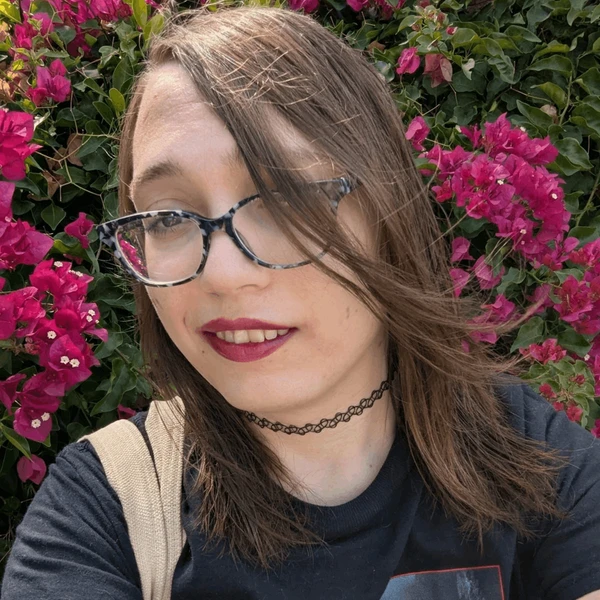
user profile avatar

Tucker Trout

1x

Finalist

General information

Hobbies & Interests

  • Music
  • Music Composition
  • Music Production
  • Music Theory
  • Business And Entrepreneurship
  • French
  • Electric Guitar
  • Bass
  • Singing
  • Advocacy And Activism
  • Accounting
  • Advertising
  • Coding And Computer Science
  • Social Justice
  • Social Media
  • Sociology
  • Computer Science
  • DJing
  • Economics
  • Finance
  • Guitar
  • Rapping
  • Research

Reading

  • Academic
  • Biography
  • Business
  • Economics
  • Music

I read books daily.

Bio

Seeking scholarships for trans, autistic/disabled students applicable to LA County, California, USA pursuing an Associates Degree. Currently pursuing an A.S. in Music Business from Musicians Institute: College of Contemporary Music. 18-year independent music career spanning origins founding a Green Day cover band in 2008 as the frontman, singer, and guitarist, started music production and DJing in 2010, and now label ownership. Founder and CEO of Electro Grunge Records. Coined the genre term "Electro Grunge" - distorted, human-made bass music fusing 90s punk/riot-grrrl energy with midtempo bass production. Currently completing a Science of Music Business degree at Musicians Institute Hollywood.

Education

Musicians Institute

Associate's degree program

2025 – 2027

Majors:
  • Business, Management, Marketing, and Related Support Services, Other
  • Music

Miscellaneous

Desired degree level:
Bachelor's degree program
Majors of interest:
Music, Business, Management, Marketing, and Related Support Services, Other
Desired degree modality:
In-Person
Medical school interest:
No

Career

Miscellaneous

Dream career field:
Music, Management Consulting, Investment Management, Entertainment
Work experience:
10+ years
Has nursing license:
No

Future Interests

  • Advocacy
  • Philanthropy
  • Entrepreneurship
Ethel Hayes Destigmatization of Mental Health Scholarship
Myself and the Misconceptions Around Mental Illness I'll start by naming something this prompt itself illustrates: autism is not a mental illness. It's a neurodevelopmental difference, not a psychiatric condition, but that distinction gets collapsed constantly by institutions, employers, and even THIS VERY SCHOLARSHIP PLATFORM that lump "disabled" and "mentally ill" into a single checkbox. That conflation isn't just semantically wrong - it has real consequences for how autistic people get treated, and I've lived those consequences my entire life. Growing up autistic in my household meant being parented by people who didn't understand what they were dealing with and, in many cases, didn't try to. My autism was treated less like a difference to accommodate and more like a behavioral failure to correct, which shaped an abusive dynamic at home. I was punished for traits that were neurological, not chosen - sensory reactions, communication differences, difficulty with things neurotypical people find automatic. That framing, that my brain itself was the problem to be disciplined out of me, is a direct product of the same misconception this scholarship prompt encodes: that being autistic is something adjacent to mental illness, something wrong with you, rather than simply a different way of being wired. That early experience set the pattern for what I'd encounter as an adult. Autistic adults face significant employment discrimination, often not because we can't do the work, but because interviews and workplace social expectations are built entirely around neurotypical norms, and deviation from those norms gets read as incompetence or instability rather than difference. I've experienced this directly - being underestimated, misjudged, or quietly filtered out of opportunities because the way I communicate or process didn't match what an employer expected, regardless of my actual capability. Layered on top of housing instability, this discrimination compounds: it's difficult to secure stable housing when employment access is already undermined by misunderstanding of a disability that has nothing to do with mental illness in the first place. Despite that, I've built an eighteen-year career in music - as a musician, producer, DJ, and now label founder and CEO - largely by creating structures I control myself rather than relying on institutions that weren't built to accommodate how I operate. Founding Electro Grunge Records wasn't just an artistic choice; it was, in part, a practical response to knowing that traditional employment paths would likely keep running into the same discrimination I'd already faced elsewhere. When you can't fully trust that a workplace will accommodate you fairly, building your own becomes not just ambition but self-protection. What I want people, and institutions like this one, to understand, is that autism is not a diagnosis of brokenness, and treating it as interchangeable with mental illness does real harm - it shapes how families parent autistic children, how employers screen candidates, and how systems allocate support. My path hasn't been made harder by autism itself. It's been made harder by a world that consistently misunderstands what autism actually is, and punishes the difference instead of accommodating it. Finishing my education and continuing to build my label is how I keep proving that the misunderstanding was never the accurate read on my capability. See my profile for my other essay about my multiple friends in the transgender community who've committed suicide and how that inspires my resilience not to do so.
Joe Gilroy "Plan Your Work, Work Your Plan" Scholarship
My Goals and My Plan to Reach Them My goal is to successfully release my sophomore album, No Fixed Address, and use it to relaunch Electro Grunge Records with the visibility and financial footing to sustain the label long-term. The plan to get there is built entirely around resourcefulness, because right now, resourcefulness is the only capital I actually have. I have almost no money for even basic essentials like deodorant and food, so I am using guerilla marketing primarily. Leaving business cards on cars around the Hollywood neighborhood and pasting flyers and leaving autographed cards in card protectors with QR codes attached all around the tourist area in order to promote the album. The total promotional budget is less than $500, allocated extremely carefully. Because I cannot afford to misallocate a single dime when I am barely stretching food stamps across a month. Conversely, the promotional budget for my first album was $5,000, and I bought META ads, contacted a publicist, and used many other industry-standard practices. The money burned fast. That was before I lost everything to the burglary and ended up homeless during the winter of 2025/2026 - which is precisely what this album, No Fixed Address, is about. I was writing and producing this music from my MacBook in a burned-out building in Koreatown, just like Skrillex did in 2009. That contrast - a $5,000 industry-standard rollout versus a sub-$500 guerilla campaign - isn't just a budget detail. It's the actual structure of the plan, because it reflects two different eras of my life and two entirely different sets of available resources. I'm not waiting for the $5,000 version to come back before I act. I'm executing the version available to me right now, with the same discipline I'd apply to a much larger budget: every dollar assigned a specific purpose, every guerilla placement chosen deliberately for foot traffic and visibility rather than randomly, every QR code tracked so I know which placements are actually converting to streams or follows. The resources this plan requires beyond the $500 are mostly non-monetary: my time, my existing audience built over eighteen years in the industry, and the physical labor of distributing materials by hand across Hollywood. Those are resources I have even when cash isn't available, and I'm using them fully rather than waiting until I have more money to act. The path for success has two tracks running simultaneously. Track one is the guerilla campaign driving direct, local awareness and QR-code conversions in the near term. Track two is finishing my Science of Music Business degree at Musicians Institute, so that once No Fixed Address generates real revenue, I have the financial and contractual literacy to reinvest it properly into the label instead of losing it to the kind of predatory industry structures I've spent years learning to protect other artists from. This scholarship would let me close some of the gap between the $500 I have and the $5,000 campaign I know actually works, without pulling further from money I need for food and stability. That's not a hypothetical budget line. It's the exact difference between the two albums I've now released, and the exact reason this plan has to work with what I have, not what I wish I had.
Bright Lights Scholarship
Overcoming Barriers to My Education I moved to Los Angeles to attend Icon Collective, a school I chose specifically for its reputation in music production. That decision fell apart through no fault of my own: the U.S. State Department halted visa interviews for international students, which devastated Icon's projected enrollment so severely that the school made the decision to permanently close, effective May 29 2025. My plane landed in LA for the first time on May 28. I hadn't just chosen a program - I'd relocated my entire life for it, and it disappeared out from under me because of a federal policy shift that had nothing to do with my performance as a student. That closure didn't happen in isolation. Icon set me up with a roommate as part of my housing arrangement there, and during the winter of 2025/2026, that roommate broke into my room and robbed me of nearly everything I owned - probably because of a pattern of behaviour related to his transphobic beliefs. I lost possessions, financial stability, and any remaining safety net almost simultaneously with losing my school. That combination - institutional collapse and personal violation, back to back - is what pushed me into homelessness that winter. I wasn't housing insecure because of poor planning. I was housing insecure because two systems I trusted, an accredited institution and a living situation it arranged, both failed me at the same time. I didn't have the option to simply give up and go home. So I did the only thing available to me: I found a path forward. Musicians Institute agreed to accept transfer credits and teach-outs for former Icon students, and I enrolled there to continue my education rather than let a federal policy decision and a roommate's crime end something I'd already invested years of my life and career into. Rebuilding while homeless, while starting over at a new institution, while trying to recover financially from being robbed of nearly everything I owned, is not a small feat. I did it anyway. That resilience isn't new for me. I've spent eighteen years building an independent career in music - as a musician, producer, DJ, and now founder and CEO of my own label, Electro Grunge Records - almost entirely without institutional safety nets. When Icon closed, I didn't have family wealth or a fallback plan waiting for me. I had the same thing I've always had: the ability to absorb a setback and keep building anyway, because stopping was never actually an option I considered. My plans for the future haven't changed because of what happened at Icon - if anything, they've sharpened. I'm completing a Science of Music Business degree at Musicians Institute specifically because I understand, now more than ever, how much institutional and financial precarity can upend a person's life without warning. That understanding will directly shape how I run Electro Grunge Records: with contingency, transparency, and protection for the artists who trust me with their careers, the same way I wished someone had protected me when Icon's closure and my roommate's theft hit within the same season. This scholarship would help me keep closing the financial gap that homelessness and theft created, so I can finish this degree without those losses continuing to follow me. I've already proven I can survive institutional collapse and personal loss without abandoning my education. What I need now is the resources to finish what I started, on my own terms, at the institution that took me in when the one I chose disappeared.
Humanize LLC Gives In Honor of Shirley Kelley Scholarship
Raised by My Grandparents, Shaped by My Culture My mother became a single parent after my father walked out on Christmas Day, 2000. To keep my sister and me afloat, she often worked up to three jobs at once, especially during the peak of the 2008 financial crisis, which meant she was rarely physically present during the week. In that gap, my grandparents raised us. They weren't a backup plan - they were the primary constant of my childhood, and the people who shaped who I became far more than any single institution did. Being raised largely by my grandparents wasn't just a childcare arrangement; it was how I came to understand my identity as Kazakhstani-American. My grandparents didn't just supervise my sister and me while my mother worked - they actively taught us who we were. They told us about our Kazakh culture, our language, our traditions, and they didn't shy away from the harder history behind it: how the Soviet Union systematically dismantled our homeland, erasing and suppressing Kazakh identity for generations. That history wasn't presented to me as a distant textbook fact. It came from people who carried it directly, which meant I absorbed it as something personal and urgent rather than abstract. That upbringing gave me two things at once: a deep sense of cultural identity, and an early, practical understanding of what it means to survive systems that weren't built to support you. My mother working herself to exhaustion during an economic collapse, my grandparents stepping in without hesitation, and an inherited history of a homeland actively destroyed by an occupying power - all of that taught me, well before adulthood, that stability isn't something you're guaranteed. It's something people build for each other, deliberately, often at real personal cost. That lesson has shaped everything I've done since, including the eighteen years I've spent building an independent career in music and, eventually, founding my own label, Electro Grunge Records. I didn't come from institutional wealth or industry connections. I came from a family that pieced together stability through sheer will - my mother through labor, my grandparents through presence and cultural continuity - and I carry that same instinct into how I build my company: no safety net, so build the structure yourself. My future goals are a direct extension of that upbringing. I'm completing a Science of Music Business degree at Musicians Institute Hollywood so I can run my label with the kind of structural knowledge nobody in my family had access to when they were the ones holding things together. I want Electro Grunge Records to be a place where artists from underrepresented backgrounds - much like the one I came from - don't have to survive an industry the way my family had to survive economic and political systems stacked against them. I want the label to reflect what my grandparents taught me: that culture, identity, and history are worth protecting deliberately, not left to chance. Being raised by my grandparents didn't just give me a childhood. It gave me a framework for how to build something lasting out of instability - a lesson I'm still applying today, degree by degree, release by release.
Learner Mental Health Empowerment for Health Students Scholarship
Myself and the Misconceptions Around Mental Illness I'll start by naming something this prompt itself illustrates: autism is not a mental illness. It's a neurodevelopmental difference, not a psychiatric condition, but that distinction gets collapsed constantly by institutions, employers, and even THIS VERY SCHOLARSHIP PLATFORM that lump "disabled" and "mentally ill" into a single checkbox. That conflation isn't just semantically wrong - it has real consequences for how autistic people get treated, and I've lived those consequences my entire life. Growing up autistic in my household meant being parented by people who didn't understand what they were dealing with and, in many cases, didn't try to. My autism was treated less like a difference to accommodate and more like a behavioral failure to correct, which shaped an abusive dynamic at home. I was punished for traits that were neurological, not chosen - sensory reactions, communication differences, difficulty with things neurotypical people find automatic. That framing, that my brain itself was the problem to be disciplined out of me, is a direct product of the same misconception this scholarship prompt encodes: that being autistic is something adjacent to mental illness, something wrong with you, rather than simply a different way of being wired. That early experience set the pattern for what I'd encounter as an adult. Autistic adults face significant employment discrimination, often not because we can't do the work, but because interviews and workplace social expectations are built entirely around neurotypical norms, and deviation from those norms gets read as incompetence or instability rather than difference. I've experienced this directly - being underestimated, misjudged, or quietly filtered out of opportunities because the way I communicate or process didn't match what an employer expected, regardless of my actual capability. Layered on top of housing instability, this discrimination compounds: it's difficult to secure stable housing when employment access is already undermined by misunderstanding of a disability that has nothing to do with mental illness in the first place. Despite that, I've built an eighteen-year career in music - as a musician, producer, DJ, and now label founder and CEO - largely by creating structures I control myself rather than relying on institutions that weren't built to accommodate how I operate. Founding Electro Grunge Records wasn't just an artistic choice; it was, in part, a practical response to knowing that traditional employment paths would likely keep running into the same discrimination I'd already faced elsewhere. When you can't fully trust that a workplace will accommodate you fairly, building your own becomes not just ambition but self-protection. What I want people, and institutions like this one, to understand is that autism is not a diagnosis of brokenness, and treating it as interchangeable with mental illness does real harm - it shapes how families parent autistic children, how employers screen candidates, and how systems allocate support. My path hasn't been made harder by autism itself. It's been made harder by a world that consistently misunderstands what autism actually is, and punishes the difference instead of accommodating it. Finishing my education and continuing to build my label is how I keep proving that the misunderstanding was never the accurate read on my capability.
Hines Scholarship
What College Means to Me I'm Kazakhstani-American, and I'm completing my degree with a 3.8 GPA - a number I'm proud of given everything else I've been building and surviving at the same time. College, for me, isn't a traditional first step into adulthood. I'm 30, and I've already spent eighteen years building an independent career in music before enrolling in a degree program at all - starting as the frontman of a band in 2008, moving into production and DJing by 2010, and eventually founding my own label, Electro Grunge Records. So when I think about what going to college means to me, it isn't about discovering a direction. It's about formalizing one I already committed to years ago, and giving myself tools I had to go without for most of my career. I'm pursuing a Science of Music Business degree at Musicians Institute Hollywood specifically because I've watched, firsthand and for years, what happens to artists who don't have business literacy: predatory contracts, exploitative royalty structures, and creative labor quietly converted into long-term debt through mechanisms like Controlled Composition Clauses and Cross-Collateralization. I didn't need a professor to tell me these problems existed - I needed formal education to understand them precisely enough to build a company that avoids inflicting them on anyone else. That's what I hope to accomplish: not just a diploma, but the structural knowledge to run Electro Grunge Records as a genuine alternative to how this industry usually treats artists, particularly artists from marginalized communities - queer, disabled, BIPOC musicians who built dance music culture in the first place but rarely get to keep what they build. My label already exists. My degree is what turns it from something run on instinct into something run on real financial and legal literacy. Getting here hasn't been simple. I've navigated housing instability, employment discrimination connected to being transgender and autistic, and the ordinary difficulty of returning to formal education as an adult with an already-demanding career. Maintaining a 3.8 GPA through all of that isn't incidental to my story - it's evidence of how seriously I take this opportunity. I'm not in school because it was expected of me. I'm here because I chose it, deliberately, at a point in my life where I already understood exactly what I needed it for. As a Kazakhstani-American navigating an industry and an education system that wasn't built with someone like me in mind, I don't take access to higher education for granted. Completing this degree means I'll be equipped to run my company on terms that protect the artists who trust me, instead of extracting from them the way I've watched so many labels do. College, to me, is the difference between running a label on good intentions and running one with the actual knowledge to make those intentions durable. That's what I'm here to accomplish - not a credential for its own sake, but the tools to make Electro Grunge Records the kind of company this industry needs more of.
Elizabeth Schalk Memorial Scholarship
Myself and the Misconceptions Around Mental Illness I'll start by naming something this prompt itself illustrates: autism is not a mental illness. It's a neurodevelopmental difference, not a psychiatric condition, but that distinction gets collapsed constantly by institutions, employers, and even THIS VERY SCHOLARSHIP PLATFORM that lump "disabled" and "mentally ill" into a single checkbox. That conflation isn't just semantically wrong - it has real consequences for how autistic people get treated, and I've lived those consequences my entire life. Growing up autistic in my household meant being parented by people who didn't understand what they were dealing with and, in many cases, didn't try to. My autism was treated less like a difference to accommodate and more like a behavioral failure to correct, which shaped an abusive dynamic at home. I was punished for traits that were neurological, not chosen - sensory reactions, communication differences, difficulty with things neurotypical people find automatic. That framing, that my brain itself was the problem to be disciplined out of me, is a direct product of the same misconception this scholarship prompt encodes: that being autistic is something adjacent to mental illness, something wrong with you, rather than simply a different way of being wired. That early experience set the pattern for what I'd encounter as an adult. Autistic adults face significant employment discrimination, often not because we can't do the work, but because interviews and workplace social expectations are built entirely around neurotypical norms, and deviation from those norms gets read as incompetence or instability rather than difference. I've experienced this directly - being underestimated, misjudged, or quietly filtered out of opportunities because the way I communicate or process didn't match what an employer expected, regardless of my actual capability. Layered on top of housing instability, this discrimination compounds: it's difficult to secure stable housing when employment access is already undermined by misunderstanding of a disability that has nothing to do with mental illness in the first place. Despite that, I've built an eighteen-year career in music - as a musician, producer, DJ, and now label founder and CEO - largely by creating structures I control myself rather than relying on institutions that weren't built to accommodate how I operate. Founding Electro Grunge Records wasn't just an artistic choice; it was, in part, a practical response to knowing that traditional employment paths would likely keep running into the same discrimination I'd already faced elsewhere. When you can't fully trust that a workplace will accommodate you fairly, building your own becomes not just ambition but self-protection. What I want people, and institutions like this one, to understand is that autism is not a diagnosis of brokenness, and treating it as interchangeable with mental illness does real harm - it shapes how families parent autistic children, how employers screen candidates, and how systems allocate support. My path hasn't been made harder by autism itself. It's been made harder by a world that consistently misunderstands what autism actually is, and punishes the difference instead of accommodating it. Finishing my education and continuing to build my label is how I keep proving that the misunderstanding was never the accurate read on my capability.
Elijah's Helping Hand Scholarship Award
How I've Been Impacted by LGBTQIA+ Experience and Suicide I've had multiple friends commit suicide - more than I could list within this small essay. Being transgender means that 41% of my brothers and sisters under the T in LGBT will commit suicide. Period. Not because being trans inherently means that we're suicidal, but because the society around us treats us so horribly, so abusively, that many snap and can no longer stand it. I've personally experienced housing, employment, and face-to-face daily discrimination. In Los Angeles, the LA LGBT Center estimates that 61% of its trans-identifying patients are unemployed, and cites discrimination as the primary reason. Not a lack of qualifications, not a lack of ambition or education - just blatant illegal behavior by employers who view hiring transgender people as an "optics issue." I carry those numbers differently than most people who cite them, because they aren't statistics to me. They're friends. They're people I knew by name, by voice, by the way they laughed, who are gone now because the world made survival unbearable for them. Every one of those losses reshaped how I move through my own life - with more urgency, and with a refusal to let my own story end the same way. That refusal is part of why I've built my career the way I have. I founded Electro Grunge Records specifically as a space where disenfranchised artists - queer, disabled, BIPOC - could exist without having to fight for basic legitimacy on top of making their art. I know firsthand what it costs to be denied opportunity not for lack of skill but because of who you are. I've faced housing instability directly connected to my identity, and I understand the unemployment statistic from the LA LGBT Center not as an abstraction but as a real risk I've had to actively work against in my own life. Being transgender in this industry, and in this country, means constantly proving that you deserve a seat at a table that assumes you don't belong there before you've said a word. It means watching people you love lose that fight entirely. It has made me both more guarded and more determined - guarded because the discrimination is real and constant, determined because I refuse to become another number in either statistic I cited above. This is also why I care so much about building something durable: a label, a degree, a career that outlasts the discrimination trying to push people like me out of every room. Every time I finish something - a release, a semester, a goal - it's a quiet rebuttal to every force that assumed I wouldn't. I don't do this only for myself anymore. I do it because I've buried too many people who didn't get the chance to keep going, and I intend to keep going loudly enough for both of us. For ALL of us.
Lost Dreams Awaken Scholarship
What Does Sobriety Mean to Me? Sobriety means the difference between surviving my life and actually living it. I'm nearly twelve years clean from an opiate and heroin addiction that once had me convinced I'd never make it out of the dance music scene I loved without it eventually killing me. Getting sober in 2015 didn't just save my life - it gave me a life worth building. Everything I've done since, finishing my music career, founding a record label, going back to school, has been possible because sobriety gave me a stable foundation to stand on. Before that, I wasn't building anything. I was just trying to survive the next day. Sobriety also means responsibility to others now, not just to myself. I stayed inside the same industry and culture that fueled my addiction, and I've made it my purpose to be visibly, consistently sober within it - proof to other people in recovery that you don't have to leave the life you love behind to save your own life. That's what recovery means to me: not just staying clean, but staying present enough to help someone else find their way there too.
Bulkthreads.com's "Let's Aim Higher" Scholarship
What I Want to Build What I want to build is a music company that protects the people who make it possible instead of quietly extracting from them - a label where talent isn't a vulnerability to be exploited, but the thing being actively defended. That company is Electro Grunge Records, and it's the central project of my career. I've spent eighteen years in this industry, starting as the frontman of a Green Day cover band in 2008, moving into production and DJing by 2010, and eventually founding my own label. Along the way, I coined the term "Electro Grunge" to describe the sound I make - distorted, human-made bass music fusing 90s punk and riot-grrrl energy with midtempo production. But the label itself is the bigger build. It's meant to be a home for artists the mainstream industry treats as disposable: queer, disabled, and BIPOC musicians who built dance music culture in the first place but rarely get to keep what they build. Concretely, that means constructing a label around artist-first contracts - plain-language terms instead of the buried clauses (Controlled Composition, Cross-Collateralization, Interest-Bearing Advances) that quietly convert an artist's creative labor into long-term debt. I'm building this knowledge base right now through a Science of Music Business degree at Musicians Institute Hollywood, so what I offer artists isn't just good intentions but real structural protection I actually understand well enough to implement. This build matters to me personally because I've lived on the wrong side of information gaps before - financially, medically, and otherwise - and I know how much damage happens when someone doesn't have access to the knowledge that would've protected them. Building a label that closes that gap for other artists is, in a real sense, building the thing I needed and didn't have. The impact I want this to have on my community is direct: fewer artists losing years of income to predatory deals, more visibility for musicians the industry sidelines, and a working example that inclusivity and profitability aren't opposing forces. I want Electro Grunge Records to function as "EDM's Island of Misfit Toys" in practice, not just in slogan - a place where artists historically shut out of the mainstream industry's version of success can build careers on their own terms. Long term, I want this label to outlast me - to become infrastructure other independent artists can rely on, not just a project tied to my own name. That's the future I'm building toward: not just a company, but a durable, protective home for the people this industry has spent decades trying to extract from instead of support.
Redefining Victory Scholarship
Sloane Stephens Doc & Glo Scholarship
The Impact I Want to Make My vision is simple to state and hard to execute: I want to build a record label where disenfranchised artists - queer, disabled, BIPOC, and otherwise pushed to the margins of the mainstream music industry - can build a career without being quietly exploited along the way. I founded Electro Grunge Records as a direct response to what I've watched happen, repeatedly, over eighteen years in independent music. Talented artists get signed, get excited, and then get slowly extracted from through mechanisms most of them never learn to read - Controlled Composition Clauses, Cross-Collateralization, Interest-Bearing Advances - provisions that function less like standard business terms and more like structured debt traps for people without a business background. The artists most likely to get caught in that trap are usually the ones with the least institutional access to begin with: the same communities who built dance music culture in the first place. Rave culture didn't originate in corporate boardrooms. It came out of Black, Latino, and queer warehouse spaces in Chicago and Detroit, created by people who weren't welcome in the mainstream clubs of their era. I've built my career, and now my label, inside that lineage, and I take it seriously as a debt I owe forward, not just a piece of history I reference. I'm currently completing a Science of Music Business degree at Musicians Institute Hollywood specifically to convert my label from something run on instinct into something run on structural protection. Understanding contracts, royalties, and financial systems at an institutional level means I can build artist agreements that are transparent by design rather than exploitative by default - plain-language terms, fair royalty structures, and deal-making that doesn't require an artist to have a law degree just to avoid getting quietly cheated. The people who inspire this vision aren't abstract. They're the artists I've watched get chewed up by this industry over nearly two decades - talented, capable people who lost years of income and creative control because nobody explained the fine print to them before they signed. They're also the queer musicians throughout dance music history - Frankie Knuckles among them - who built and shaped this culture while navigating discrimination, illness, and a lack of institutional support that mainstream artists never had to think about. I don't want the next generation of disenfranchised artists to have to learn these lessons the same expensive way I did. My concrete goal is to grow Electro Grunge Records into a label that other independent labels look to as a working model - proof that a company can be commercially sustainable while actively protecting the artists it represents, rather than treating artist protection and profitability as opposing goals. That means artist-first contract structures, real financial literacy support built into how the label operates, and a deliberate focus on signing artists the mainstream industry has historically deprioritized. Finishing my degree is the mechanism, not the goal. The goal is a label - and eventually, hopefully, an industry norm - where being disenfranchised doesn't mean being disposable. I've spent eighteen years inside this industry watching what happens without that protection. My education is how I finally build the infrastructure to change it.
Champions Of A New Path Scholarship
Why I Deserve This Scholarship I'll answer this directly: I deserve this scholarship because I've already spent eighteen years doing, on my own dime and my own initiative, the exact work most scholarship applicants are still theorizing about. I'm not applying with potential. I'm applying with a track record. Start with the résumé most people my age don't have. In 2008, I founded a Green Day cover band as frontman, singer, and guitarist - not a garage hobby that fizzled, but the first rung of what became an actual career. By 2010 I'd moved into music production and DJing, learning the technical side of electronic music from the ground up. Today I'm the founder and CEO of my own label, Electro Grunge Records, and I coined an entire genre term - "Electro Grunge" - to describe the sound I built: distorted, human-made bass music fusing 90s punk and riot-grrrl energy with midtempo production. Most people entering a music business program are trying to break into an industry. I'm already in it, running a company inside it, and going back to school specifically to sharpen the tools I use every day. That's advantage number one: I'm not a hypothetical business owner. I'm a sitting CEO enrolled in a Science of Music Business degree at Musicians Institute Hollywood, applying what I learn in real time to a company that already exists, has already released music, and already has to make payroll-adjacent decisions about contracts, royalties, and structure. When I write about Controlled Composition Clauses or Cross-Collateralization or Interest-Bearing Advances, I'm not repeating a textbook definition - I'm describing terms I've had to negotiate around or explain to artists I actually work with. Scholarship committees are usually betting on potential. With me, you're not betting. You're funding someone already mid-execution. Advantage number two is what I've survived to get here, which is not a small list. I am transgender and autistic, and I've navigated an industry and a society that isn't built with either of those identities in mind - while still building a functioning label and finishing a degree. I grew up in a low-income, single-parent household after my father left on Christmas Day, 2000, so I didn't inherit capital, industry contacts, or a financial cushion; everything I've built, I built without a safety net. I'm eleven, almost twelve years sober from an opiate and heroin addiction that could have ended my life instead of just derailing it for years - and I didn't just quietly recover, I turned that recovery into public advocacy for sober raving in a scene notorious for the opposite. I've experienced repeated homelessness, including recently, and in May 2026 I was assaulted by a stranger on the street in LA while actively working to continue my education anyway. None of that is a sympathy pitch. It's evidence of a pattern: every time circumstances gave me a legitimate reason to stop, I didn't. That's not a personality trait I'm claiming - it's a track record you can check against dates. Advantage number three is that my goals aren't self-interested in the way a lot of business-degree goals are. I'm not pursuing this education to maximize my own margin. I'm pursuing it because I watched, for nearly two decades, what happens to talented people in this industry who don't understand the paperwork - how predatory contract structures quietly convert creative labor into long-term debt, and how the people most likely to get caught in that trap are the ones without a business background, often BIPOC, disabled, or queer artists who were never handed the map. Electro Grunge Records exists specifically as a counter to that - I've described it as "EDM's Island of Misfit Toys," a label built to be inclusive, uncompromising, and unstoppable, where the artists I sign don't get quietly extracted from. Finishing this degree isn't just about my company's survival. It's about being able to structurally protect other people the way nobody structurally protected me for a long time. Advantage number four, and I'll say this plainly: I already know how to be resourceful with limited materials, because I've had to be for eighteen years. Independent music is not an industry with abundant institutional support, especially not for someone entering it as a queer, disabled, low-income kid with a self-taught band instead of a conservatory pedigree. I've built a career, a genre, and a label essentially from nothing, iterating in public, absorbing failures, and continuing anyway. That's the exact skill set that turns a scholarship into leverage rather than just relief - I don't waste resources, because I've never had the luxury of wasting them. So when you ask what gives me an advantage over everyone else competing for this: it's that I'm not asking you to imagine what I might do with this degree. I'm asking you to fund the next stage of something you can already observe - a company that exists, a genre that has a name, a sobriety record over a decade long, and a body of work spanning nearly two decades that didn't stop even when circumstances gave me every reason to let it. Most applicants are pitching a future self. I'm asking you to invest in a present one who's already shown up, day after day, year after year, and has the receipts to prove it. Give this scholarship to someone who will actually use it to keep doing what they've already been doing - not start something new, but finish equipping something real. That's the case for me, and it isn't speculative. It's eighteen years long.
Trudgers Fund
My Path Through Addiction and Into Advocacy I am now eleven, almost twelve years sober from an addiction to opiate painkillers and heroin. That sentence takes seconds to write and represents nearly a decade of my life spent in active addiction before it. I don't say that for shock value - I say it because sobriety is the single fact that made everything else in my life possible, including this application. My addiction took root during my years coming up in music - first as a teenager fronting a band, later as I moved into production and DJing starting in 2010. The dance music and rave scenes I loved, and still love, have a well-documented relationship with substance use, and for years I was fully inside that pattern. Opiates and eventually heroin didn't just derail my career during that stretch - they nearly ended my life. I lost time, relationships, and stability that I'm still, in some ways, rebuilding. I got sober in 2015. That date is a hard line in my life: everything before it was survival, and everything after it has been building something. In the years since, I've stayed sober while remaining fully embedded in the same industry and culture that once nearly killed me - which means I've had to find out whether sobriety and dance music culture can actually coexist, not just in theory but in practice, night after night, at the venues and festivals where the temptation never fully disappears. The answer is yes, but only because a growing community made it possible. I've become an outspoken advocate for sober raving and sobriety within the EDM community and the broader music industry. That advocacy isn't abstract - it's showing up sober at shows, being visible about it, and being someone other people in recovery can point to and say, "he's still in this scene, and he's fine." For a long time, sobriety and rave culture were treated as mutually exclusive. I've spent years trying to prove that's false, because I needed that proof myself when I was newly sober, and I didn't always have it. I'm now pursuing a Science of Music Business degree at Musicians Institute Hollywood, and I intend to use it to build something more permanent than personal advocacy. As founder and CEO of my own label, Electro Grunge Records, I have the structural ability to build sober-friendly spaces into the culture itself - not as an afterthought, but as a deliberate part of how the label operates, from event structuring to artist support. A formal business education gives me the tools to make that sustainable rather than symbolic: understanding budgets, contracts, and operations well enough to actually build sober-inclusive infrastructure into a functioning company, not just a personal mission statement. My goal is for the next generation of artists and fans coming into this culture to have what I didn't have early on - visible proof that you can be fully part of dance music and fully sober at the same time. Finishing my degree is how I turn eleven years of staying alive into something structural enough to help keep other people alive too. That's the whole reason I'm doing this.
Manuela Calles Scholarship for Women
My Values and How They Shape My Future Work My values were formed early, out of necessity. I grew up in a low-income, single-parent household after my father left when I was a child. I've also experienced homelessness as an adult, and I was assaulted on the street in Los Angeles in 2026 while working to continue my education. These experiences didn't just happen to me - they built the value system I now bring into my business work: honesty about power imbalances, insistence on fair terms, and a refusal to let vulnerability become something other people profit from. I've spent eighteen years in independent music - starting a band in 2008, moving into production and DJing in 2010, and eventually founding my own label, Electro Grunge Records, where I serve as CEO. Running a label means sitting on both sides of a negotiating table: sometimes as the person offering a deal, sometimes as the person who has to protect artists from deals that would quietly exploit them. My core value in that work is simple - a business relationship should not require one party to not fully understand what they signed. I've made it a principle to explain terms plainly to the artists I work with, especially mechanisms like Controlled Composition Clauses, Cross-Collateralization, and Interest-Bearing Advances, which function less like standard business terms and more like structured traps for people without a business background. That value - transparency as a form of respect - comes directly from my own life. I know what it's like to be on the wrong end of an information gap, whether that's a predatory contract or a system that assumes you'll never ask questions. I don't want to build a company that replicates that dynamic on anyone else, even when opacity would be more profitable in the short term. My education at Musicians Institute, pursuing a Science of Music Business degree, is where I'm formalizing this. I'm learning the actual mechanics of contracts, royalties, and financial structuring - not to use that knowledge defensively for myself alone, but so I can translate it for artists who don't have access to a business education. That's the second value driving my future work: knowledge shouldn't stay concentrated. If I understand something that protects someone from financial harm, withholding it just because I can monetize the gap isn't a value I'm willing to operate by. Going forward, these values will shape Electro Grunge Records at a structural level, not just a rhetorical one. I intend to build contract templates that are plain-language before they're legal-language, to prioritize artist financial literacy as part of how the label operates, and to treat sustainability - for the artist, not just the company - as a business metric worth protecting. A label that burns through artists to stay profitable isn't a label I consider successful, regardless of its balance sheet. Ultimately, my future work is about proving that a business can be both financially sound and honest about where its money comes from and who it's meant to protect. That's not a soft value tacked onto a business plan - it's the actual model I'm building, informed by every point in my life where I needed someone to operate that way toward me and they didn't. I intend to be that person for the artists who come through my label next.
Diversity in Music Education Scholarship
Tucker Trout Student Profile | Bold.org