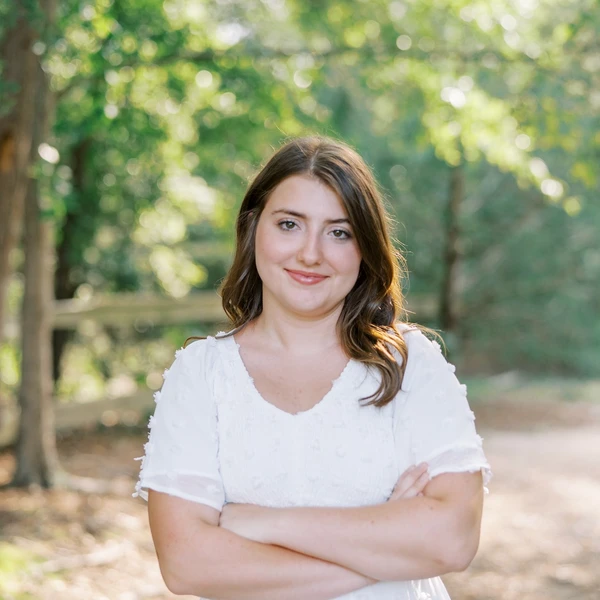
Hobbies and interests
Reading
Travel And Tourism
Exploring Nature And Being Outside
Bible Study
Reading
Adult Fiction
Historical
Biography
Romance
Christian Fiction
Christianity
Classics
Literary Fiction
History
Mystery
Religion
Spirituality
True Story
Young Adult
Suspense
I read books daily
Rachel Dan
1x
FinalistRachel Dan
1x
FinalistBio
I am a psychology major with a minor in American Sign Language. My experiences growing up with selective mutism have shaped my passion for supporting others through communication and mental health challenges. I hope to pursue graduate school in speech-language pathology so I can help children find confidence in their voices—spoken or unspoken.
Education
North Greenville University
Bachelor's degree programMajors:
- Psychology, General
Minors:
- American Sign Language
Palmetto Homeschool Association
High SchoolMiscellaneous
Desired degree level:
Bachelor's degree program
Majors of interest:
- Psychology, General
- Communication Disorders Sciences and Services
- Human Biology
- Physiology, Pathology and Related Sciences
Career
Dream career field:
Communication Disorders
Dream career goals:
To help people who have Selective Mutism
Personal Assistant/ Executive Assistant
SBFC2025 – 2025
Sports
Cross-Country Running
Junior Varsity2020 – Present6 years
Awards
- Dig Deep Award
Arts
Piedmont Music Academy
MusicChristmas Concert, Spring concert2016 – Present
Public services
Volunteering
samaratian's purse — packed the shoeboxes, went through packed boxes, packaged the boxes and shipped them.2018 – Present
Future Interests
Volunteering
Let Your Light Shine Scholarship
The legacy I hope to create is one rooted in giving people a voice—especially those who feel overlooked, unheard, or misunderstood. My future is centered around becoming a speech-language pathologist, but beyond that, I want to build something lasting: a space where communication is not seen as a limitation, but as a bridge to confidence, connection, and opportunity.
One day, I hope to open my own speech therapy practice that serves children, families, and individuals with diverse communication needs. While i do hope to work with all kinds of needs, i do hope to specialize as well and work with children and adults who have Selective Mutism. What will make my practice different is its intentional focus on both accessibility and understanding. With my background in psychology and my training in American Sign Language, I want to create an environment where clients are met with patience, empathy, and multiple ways to communicate. Whether a child is navigating speech delays, someone is experiencing anxiety-related communication challenges, or a Deaf or hard-of-hearing individual needs support, my goal is to ensure that no one feels left out of the conversation.
My legacy is not just about the business I built, but about the impact it leaves behind. I want families to walk away feeling supported, children to gain confidence in themselves, and individuals to realize that their voice—no matter how it comes out—is valuable. In the long term, I hope to expand my work beyond a single practice by mentoring others, advocating for communication accessibility, and contributing to a broader shift in how people understand communication disorders.
I believe I have already shone my light in quieter, but meaningful ways. Living with my own challenges in communication has taught me empathy, patience, and resilience. I bring those qualities into my daily interactions—whether it’s encouraging someone who feels unsure, showing kindness in situations where others may not understand, or simply choosing to keep showing up even when things feel difficult. My light is not always loud, but it is steady. It shows in my determination to grow, my willingness to support others, and my commitment to turning my personal challenges into something that can help someone else.
Creating a legacy does not happen all at once; it is built through consistent actions, small moments, and the decision to use your experiences for something greater than yourself. Through my education, my future career, and the business I hope to create, I plan to build a legacy that reflects compassion, purpose, and the belief that every person deserves to be heard.
Dan Leahy Scholarship Fund
One of the people I admire most is my mom, whose unwavering support and belief in me shaped both my confidence and my desire to pursue further education. Growing up with selective mutism, I often struggled to express myself in academic and social settings. While others sometimes mistook my silence for disengagement, my mom understood that my quietness was rooted in anxiety, not a lack of ability. Her patience and advocacy became the foundation that allowed me to grow.
My mom consistently reminded me that my voice mattered, even when it was difficult for me to use it. She worked closely with teachers, encouraged alternative ways for me to participate, and celebrated my efforts rather than just outcomes. Instead of allowing selective mutism to define my limits, she reframed it as something I could learn to navigate. Watching her advocate for me inspired my belief in the power of education and the importance of supportive environments that meet students where they are.
Her example directly influenced my decision to pursue higher education. I wanted to better understand communication, anxiety, and learning so that I could support others who face similar challenges. Education became more than a personal goal; it became a way to turn my experiences into meaningful impact. My mom’s emphasis on perseverance and self-advocacy pushed me to challenge myself academically and personally, even when it felt uncomfortable.
That mindset led me to participate in speech and debate and mock trial—activities that once seemed completely out of reach. Public speaking had long been one of my greatest fears, and structured argumentation or courtroom simulations felt overwhelming. However, I recognized that avoiding these challenges would only reinforce my anxiety. With my mom’s encouragement, I chose to step into spaces that demanded growth rather than comfort.
Speech and debate and mock trial provided structured, supportive environments where preparation and practice made communication feel manageable. Through these experiences, I learned how to organize my thoughts, defend ideas, and speak with confidence, even under pressure. Each opportunity to participate strengthened my resilience and reinforced that my voice had value.
My mom’s belief in me, combined with the confidence I gained through these activities, solidified my motivation to continue my education in a field centered on communication and advocacy. What began as fear evolved into purpose. Through education, I hope to reflect the same encouragement my mom gave me by helping others find their voices and recognize their own potential.
Lippey Family Scholarship
One of the most defining challenges in my life has been growing up with selective mutism. For much of my childhood and adolescence, there were environments—especially classrooms—where my voice felt inaccessible, even though my thoughts were not. I knew what I wanted to say, I understood the material, and I wanted to connect with others, but anxiety created a barrier between my intentions and my ability to speak. This challenge shaped how others perceived me, but more importantly, it shaped how I learned to understand myself.
For a long time, selective mutism felt like a limitation that set me apart in uncomfortable ways. Group discussions, presentations, and even simple interactions with peers became sources of stress. I often worried that my silence would be mistaken for a lack of interest or ability. However, navigating these experiences forced me to develop strengths that I might not have otherwise discovered. I became an attentive listener, highly observant, and deeply empathetic to those who struggle to express themselves. When speaking was difficult, I learned to communicate through preparation, written expression, and nonverbal cues, skills that continue to serve me today.
As I grew older, I began to see selective mutism not only as a challenge but also as a source of purpose. Learning about psychology and communication helped me put language to my experiences and understand that my struggle was not a personal failure, but a real and valid condition. This realization was empowering. Instead of trying to hide my anxiety, I began working through it—gradually pushing myself outside of my comfort zone by participating in class, mentoring younger students, and taking on leadership roles that once would have felt impossible.
One of the most meaningful moments of growth came when I stepped into a mentoring role for first-year college students. Supporting others as they adjusted to a new academic and social environment required communication, encouragement, and presence. Although this challenged my comfort zone, it also affirmed how far I had come. I was no longer defined by my silence; instead, I was using my experiences to make others feel seen, supported, and understood.
Selective mutism taught me resilience, patience, and compassion. It shaped my desire to pursue a career focused on communication and advocacy, where I can help others find their voices in ways that work for them. What once felt like an obstacle has become a foundation for growth, motivation, and purpose. This challenge did not limit my potential—it clarified it, pushing me to grow into someone who values understanding, persistence, and the power of being heard.
Kalia D. Davis Memorial Scholarship
My plans are rooted in a lifelong desire to give others what I often needed myself: patience, understanding, and a safe space to communicate without fear. I am currently pursuing a degree in psychology with a minor in American Sign Language, and my goal is to continue into graduate school to become a speech-language pathologist. I hope to specialize in working with children who struggle with communication-based anxiety disorders, especially selective mutism—something I know intimately from my own childhood.
Growing up with selective mutism meant that even when I had thoughts, ideas, and questions, I couldn’t always express them. I remember sitting in classrooms with answers in my head and a voice that refused to come out. Teachers sometimes interpreted my silence as defiance or shyness, when in reality, it was fear. Over time, the few professionals who truly understood selective mutism made all the difference. Their patience taught me what compassionate care looks like, and their belief in me helped me find confidence in my voice, both spoken and unspoken. Those experiences are the foundation of my career goals today.
I want to be the kind of speech-language pathologist who sees the child behind the silence—someone who recognizes that behavior is communication and that every child deserves to feel safe enough to express themselves. My career vision includes working in schools, private clinics, or early-intervention settings, and eventually advocating for greater awareness of selective mutism and other anxiety-related communication challenges. I also hope to incorporate ASL into my work to serve children who benefit from alternative or supplementary communication methods. My goal is not just to help children speak, but to help them feel understood.
However, achieving this dream comes with financial challenges. As a first-generation college student from an immigrant family that fled communist Romania with nothing, I grew up with a deep appreciation for education and a clear understanding of the financial sacrifices required. My parents worked tirelessly to rebuild their lives in the United States, and their perseverance is a constant motivator for me. Even with financial aid, scholarships, and working part-time, I still face significant educational expenses. Every semester includes tuition payments that are not fully covered, along with required materials, transportation, and the cost of clinical preparation as I move closer to graduate school.
This scholarship would greatly reduce the financial pressure that often weighs on my academic progress. With support from this award, I would be able to devote more time to my studies, research experiences, and hands-on opportunities that will prepare me for graduate school. It would also reduce the number of hours I need to work during the semester, allowing me to stay focused and fully engaged in my coursework. Most importantly, it would help ensure that financial barriers do not limit my ability to pursue a career that has personal and meaningful purpose.
Ultimately, this scholarship is not just funding—it is an investment in the children and families I hope to serve. It brings me one step closer to becoming a professional who empowers others to find their voice, just as I once needed someone to help me find mine.
Bright Lights Scholarship
My plans are rooted in a lifelong desire to give others what I often needed myself: patience, understanding, and a safe space to communicate without fear. I am currently pursuing a degree in psychology with a minor in American Sign Language, and my goal is to continue into graduate school to become a speech-language pathologist. I hope to specialize in working with children who struggle with communication-based anxiety disorders, especially selective mutism—something I know intimately from my own childhood.
Growing up with selective mutism meant that even when I had thoughts, ideas, and questions, I couldn’t always express them. I remember sitting in classrooms with answers in my head and a voice that refused to come out. Teachers sometimes interpreted my silence as defiance or shyness, when in reality, it was fear. Over time, the few professionals who truly understood selective mutism made all the difference. Their patience taught me what compassionate care looks like, and their belief in me helped me find confidence in my voice, both spoken and unspoken. Those experiences are the foundation of my career goals today.
I want to be the kind of speech-language pathologist who sees the child behind the silence—someone who recognizes that behavior is communication and that every child deserves to feel safe enough to express themselves. My career vision includes working in schools, private clinics, or early-intervention settings, and eventually advocating for greater awareness of selective mutism and other anxiety-related communication challenges. I also hope to incorporate ASL into my work to serve children who benefit from alternative or supplementary communication methods. My goal is not just to help children speak, but to help them feel understood.
However, achieving this dream comes with financial challenges. As a first-generation college student from an immigrant family that fled communist Romania with nothing, I grew up with a deep appreciation for education but also an understanding of the financial sacrifices required, and I worked tirelessly to rebuild my life in the United States. Their perseverance is a source of inspiration for me. Even with financial aid, scholarships, and working part-time, I still face significant educational expenses. Every semester includes tuition payments that are not fully covered, along with required materials, transportation, and the cost of clinical preparation as I move closer to graduate school.
This scholarship would greatly reduce the financial pressure that often weighs on my academic progress. With support from this award, I would be able to devote more time to my studies, research experiences, and hands-on opportunities that will prepare me for graduate school. It would also reduce the number of hours I need to work during the semester, allowing me to stay focused and fully engaged in my coursework. Most importantly, it would help ensure that financial barriers do not limit my ability to pursue a career that has personal and meaningful purpose.
Ultimately, this scholarship is not just funding—it is an investment in the children and families I hope to serve. It brings me one step closer to becoming a professional who empowers others to find their voice, just as I once needed someone to help me find mine.
Leading Through Humanity & Heart Scholarship
1.
I grew up as the daughter of Romanian refugees who fled communism to build a safer life in the United States. Their resilience shaped my understanding of strength, sacrifice, and the importance of caring for others. Alongside this, I navigated my own challenge—selective mutism—which made everyday communication overwhelming. While many children spoke freely, my anxiety often kept me silent. Overcoming this experience required patience, compassion, and support from people who understood me beyond my silence.
These experiences sparked my passion for human health and wellness, especially in the areas of communication, mental health, and childhood development. I am now a psychology major with an ASL minor, working toward becoming a speech-language pathologist. I want to help children who feel misunderstood, anxious, or unheard—children who remind me of myself at that age.
My values are rooted in empathy, perseverance, and cultural awareness. I believe in meeting people where they are, honoring all communication styles, and ensuring that care is accessible to those who need it most. My journey—from growing up in a refugee family to finding my own voice—has inspired my commitment to supporting others on their path toward confidence, health, and connection.
2.
To me, empathy means fully seeing another person—understanding their emotions, honoring their lived experiences, and responding with compassion rather than judgment. It is more than feeling for someone; it is making the effort to feel with them. Empathy requires slowing down, listening intentionally, and creating space for people to express themselves in ways that feel safe and authentic. It is a commitment to connection, clarity, and care.
Empathy is especially essential in the field of speech-language pathology, the career I hope to pursue. Many children who struggle with communication also struggle with confidence, anxiety, or fear of being misunderstood. Growing up with selective mutism taught me firsthand how overwhelming and isolating communication challenges can be. A therapist’s tone, patience, and understanding can either build trust or shut down progress. Empathy is what allows a clinician to look beyond outward behavior—like silence, withdrawal, or frustration—and recognize the fear or vulnerability underneath.
As a future speech-language pathologist, empathy will guide the way I build relationships with clients and their families. I want each child to know that their voice, spoken or unspoken, matters. I want families to feel supported, educated, and understood, not rushed or dismissed. My own journey showed me that empathy is what transforms therapy from a series of tasks into a safe and empowering experience.
To ensure my work remains human-centered, I plan to approach every client as an individual with unique strengths, cultural backgrounds, and communication styles. This means using culturally responsive practices, incorporating a family’s linguistic and cultural preferences, and adapting treatment goals to each child’s pace and comfort level. It also means collaborating with families as equal partners and advocating for accessible, inclusive services—especially for children from marginalized or underserved communities.
A human-centered approach also requires humility: being open to learning, acknowledging my clients as experts in their own experiences, and adjusting my methods based on their needs. I believe the best care happens when a therapist listens closely and respects the person in front of them—not just their diagnosis.
Empathy is the foundation of meaningful, ethical, and effective care. It shapes how I hope to show up as a clinician, a community advocate, and a human being. My goal is to ensure that every child I work with feels seen, valued, and supported—just as I once needed someone to see me.
The F.O.O. Scholarship
My dreams have always been shaped by two things: growing up with selective mutism and being raised by parents who fled communist Romania as refugees. Even though I was born in the United States, my family’s story meant I grew up understanding struggle, sacrifice, and what it means to rebuild a life from nothing. Their resilience shaped my own. When speaking felt impossible, and anxiety made even simple conversations overwhelming, I remembered what my parents overcame—and it pushed me to keep trying.
Today, I’m a psychology major with an ASL minor, working toward my dream of becoming a speech-language pathologist. I want to help children who feel trapped in silence, misunderstood, or anxious—kids like I once was. My current journey involves gaining experience through volunteer opportunities, mentorship programs, and being engaged on campus whenever possible. I love giving back, whether through helping younger students, supporting mental health awareness, or being involved in communities that uplift children with communication differences.
Even though my family has always faced financial challenges as first-generation immigrants, we’ve always valued education. Still, balancing school costs with living expenses hasn’t been easy. I’ve worked hard, taken responsibility for my own goals, and learned to navigate obstacles with creativity and determination.
This scholarship would be more than financial support—it would be a bridge between where I am and the future I’m building. It would allow me to focus more on my studies, gain the clinical and community experience I need, and continue working toward a career centered on compassion, communication, and advocacy. Personally, it would honor the sacrifices my family made. Professionally, it would move me closer to becoming the therapist who helps children find their voices, just like others once helped me find mine.
This is who I am—determined, grateful, and committed to turning challenges into purpose.
Immigrant Daughters in STEM Scholarship
One of the most significant struggles I have faced is growing up with selective mutism, a condition that made speaking in certain situations feel almost impossible. While many children express themselves freely in classrooms or social settings, I often felt frozen—wanting to participate but unable to push the words out when anxiety became overwhelming. This struggle affected every part of my daily life, from answering questions in school to making friends. It often felt isolating, especially when people misunderstood my silence as disinterest or stubbornness.
To overcome this challenge, I had to develop a level of resourcefulness and responsibility that most children my age never had to think about. I became intentional about advocating for myself, whether that meant communicating through writing when speaking felt too difficult or working closely with teachers to create small, manageable goals. In therapy, I learned practical strategies—gradual exposure, breathing techniques, and self-monitoring—that helped me gain confidence one step at a time. I made the responsibility of my progress my own, practicing skills outside of sessions, pushing myself to attempt new situations, and celebrating small victories even when no one else noticed.
My family background also strengthened my determination. My parents came to the United States as refugees after fleeing communist Romania, hoping to build a life free from oppression and fear. Growing up hearing their stories, I learned early on what resilience looks like—how courage often happens quietly, through persistence and the willingness to keep trying even when circumstances feel heavy. Though I was born in the U.S., the sacrifices my parents made shaped my understanding of responsibility. I felt a deep desire to honor their journey by working hard, staying focused in school, and confronting my own challenges instead of avoiding them. Their experiences remind me that courage is not always loud; sometimes it sounds like a whisper, or in my case, a voice slowly learning to come out.
This combination of personal and family resilience has shaped who I am as a student. I approach challenges with patience and problem-solving, knowing that progress is possible even when it is slow. I am not afraid to use available resources, advocate for my needs, or find creative ways to communicate. These qualities have made me a motivated and self-aware learner.
As a future professional, these experiences form the foundation of the work I hope to do. Overcoming selective mutism—and growing up in a family that rebuilt their lives from nothing—has inspired me to study psychology, minor in ASL, and pursue a career in speech-language pathology. I want to support children who face communication barriers, anxiety, or misunderstanding, and to be the person who sees the bravery behind their efforts. My journey has taught me resilience, compassion, and the importance of accessible care—qualities I will carry into my education and my career.
In every way, overcoming selective mutism and being raised in an immigrant refugee family have shaped my identity. Together, they have taught me that strength is learned, responsibility is chosen, and that even the quietest voices deserve the chance to be heard.
Ethel Hayes Destigmatization of Mental Health Scholarship
Living with selective mutism has shaped nearly every part of my life—my beliefs, my relationships, and the future I am working hard to build. What began as a confusing and isolating struggle in childhood has grown into a source of strength, self-awareness, and purpose. My journey with mental health has not only taught me persistence but has also inspired the career path I hope to pursue in psychology, American Sign Language, and eventually speech-language pathology.
Selective mutism often made simple interactions feel overwhelming. I grew up believing that my silence made me difficult or different, and it took years to understand that my struggle was not a lack of desire to speak, but an anxiety response I couldn’t control. Through therapy, support, and personal growth, I learned to challenge my fears, advocate for myself, and celebrate small victories—like speaking up in class or introducing myself to new people. These moments, once unimaginable, began to reshape my beliefs about what I am capable of. I no longer see myself as someone limited by anxiety, but as someone strengthened by resilience.
My relationships have also been deeply influenced by my mental health journey. Selective mutism made forming friendships difficult, and I often worried that my quietness would be misunderstood. Over time, I learned the value of honest communication and surrounding myself with people who were patient, understanding, and willing to listen in ways beyond spoken words. This has taught me to be empathetic and observant, to pay attention to unspoken emotions, and to appreciate every form of connection—qualities that I now carry into all my relationships.
Most importantly, my experiences have shaped my aspirations. Having once felt unheard, I want to help others find their voice—literally and emotionally. That is why I am pursuing psychology with a minor in ASL, and why I aim to attend graduate school for speech-language pathology. I want to work with children who struggle with anxiety, communication disorders, or selective mutism, so they feel seen, supported, and capable of growth. I hope to be the person I needed when I was younger: someone who understands that communication takes many forms and that progress looks different for everyone.
My journey with mental health has taught me that challenges can become purpose. What once felt like a barrier has become my motivation to make a meaningful difference in my community. I want to use my education to advocate for children, support families, and help create an environment where all voices—spoken or unspoken—are valued.
This is not just my story of mental health; it is the foundation for the future I am determined to build.
Mikey Taylor Memorial Scholarship
Living with selective mutism has shaped nearly every part of my life—my beliefs, my relationships, and the future I am working hard to build. What began as a confusing and isolating struggle in childhood has grown into a source of strength, self-awareness, and purpose. My journey with mental health has not only taught me persistence but has also inspired the career path I hope to pursue in psychology, American Sign Language, and eventually speech-language pathology.
Selective mutism often made simple interactions feel overwhelming. I grew up believing that my silence made me difficult or different, and it took years to understand that my struggle was not a lack of desire to speak, but an anxiety response I couldn’t control. Through therapy, support, and personal growth, I learned to challenge my fears, advocate for myself, and celebrate small victories—like speaking up in class or introducing myself to new people. These moments, once unimaginable, began to reshape my beliefs about what I am capable of. I no longer see myself as someone limited by anxiety, but as someone strengthened by resilience.
My relationships have also been deeply influenced by my mental health journey. Selective mutism made forming friendships difficult, and I often worried that my quietness would be misunderstood. Over time, I learned the value of honest communication and surrounding myself with people who were patient, understanding, and willing to listen in ways beyond spoken words. This has taught me to be empathetic and observant, to pay attention to unspoken emotions, and to appreciate every form of connection—qualities that I now carry into all my relationships.
Most importantly, my experiences have shaped my aspirations. Having once felt unheard, I want to help others find their voice—literally and emotionally. That is why I am pursuing psychology with a minor in ASL, and why I aim to attend graduate school for speech-language pathology. I want to work with children who struggle with anxiety, communication disorders, or selective mutism, so they feel seen, supported, and capable of growth. I hope to be the person I needed when I was younger: someone who understands that communication takes many forms and that progress looks different for everyone.
My journey with mental health has taught me that challenges can become purpose. What once felt like a barrier has become my motivation to make a meaningful difference in my community. I want to use my education to advocate for children, support families, and help create an environment where all voices—spoken or unspoken—are valued.
This is not just my story of mental health; it is the foundation for the future I am determined to build.
Mental Health Profession Scholarship
Overcoming selective mutism has been one of the most defining challenges of my life. For years, I felt trapped behind an invisible wall—wanting to speak, connect, and participate, yet feeling unable to force the words out when anxiety took over. My journey toward overcoming this challenge has been slow, intentional, and full of small victories that most people never see. With the support of a patient therapist, a compassionate family, and my own determination, I learned to understand my anxiety rather than fight it. Exposure-based strategies, coping skills, and gradual confidence-building helped me take steps that once felt impossible: answering a question in class, introducing myself, or advocating for my needs. I still have moments where anxiety makes communication difficult, but I am no longer defined by those moments. Instead, I see them as reminders of how far I’ve come and how much strength I’ve built.
My progress with selective mutism has also shaped the way I want to support others. I know what it feels like to be misunderstood, to be told to “just talk,” and to feel unheard even though I had so much to say. That experience fuels my passion for becoming a mental health and communication professional. As I work toward becoming a speech-language pathologist with a background in psychology and ASL, I hope to create safe, affirming spaces for children who feel overwhelmed by anxiety or communication barriers. I want them to know that silence does not mean weakness and that progress can look different for everyone.
Beyond my future career, I am committed to advocating for mental health awareness in my community. Many people still do not understand conditions like selective mutism, and that misunderstanding can prevent children from receiving the support they need. I plan to use my lived experience to educate parents, teachers, peers, and future colleagues about the realities of anxiety disorders, early intervention, and the importance of compassion. Whether through mentorship, community outreach, or creating resources for families, I hope to make mental health support more accessible and less stigmatized.
Moving forward, I want to be a voice for those who cannot yet use theirs comfortably. My journey taught me resilience, empathy, and the power of patient, understanding care. By sharing my story and dedicating my career to helping others, I hope to play a role in building a world where mental health challenges are met with support rather than judgment, and where every individual feels safe enough to grow into the fullest version of themselves.
Elizabeth Schalk Memorial Scholarship
Growing up with selective mutism has shaped nearly every part of my life and identity. For years, I struggled with the disconnect between what I wanted to say and what my anxiety allowed me to express. I often understood everything happening around me, but when the pressure to speak appeared, my voice felt frozen. This experience didn’t just affect my confidence—it shaped how I saw myself, how I connected with others, and how I imagined my future. Over time, I learned that my silence was not stubbornness or shyness, but a real mental health condition that required patience, understanding, and support. Recognizing this changed the way I viewed my own struggles and helped me embrace a kinder, more compassionate view of myself.
Mental illness did not just affect me personally; it also shaped my family in meaningful ways. Selective mutism can be confusing for those who have never seen it before, and my family had to learn how to support me when communication felt nearly impossible. They became advocates, researchers, and patient listeners. At times, the condition added stress—misunderstandings, concerns from teachers, and fears about my social development were all part of our daily lives. But it also brought us closer. My family learned to celebrate small victories, to recognize nonverbal communication, and to approach mental health with empathy and openness. Their support taught me the value of a strong, understanding community—something I hope to recreate for others one day.
As I grew older, I didn't do any therapy. But my mom saw me not as someone who “wouldn’t” speak, but someone who “couldn’t” yet. That difference changed everything. With time, I gained confidence in my ability to communicate and learned strategies to manage the anxiety that held me back. Slowly, my world expanded: I began speaking more in school, meeting new people, and participating in ways that once felt impossible. These experiences helped me understand how transformative compassionate mental health care can be, especially when delivered by someone who truly listens.
Because of this, mental illness has not only shaped my personal growth—it has shaped my aspirations. My lived experiences inspired me to major in psychology, minor in American Sign Language, and pursue a future in speech-language pathology. I want to support children who feel trapped in their own silence, anxious in social settings, or misunderstood by those around them. I want to be the kind of provider who recognizes the courage it takes to try, who celebrates progress even when it’s small, and who understands that healing is not a straight line. My journey gives me a natural sense of empathy and patience, and it motivates me to create safe, inclusive spaces for the children I hope to serve.
Mental illness has left a deep imprint on my life, but it has also given me strength, purpose, and direction. It taught me resilience, shaped my relationships, and opened my eyes to the importance of accessible, compassionate care. Most importantly, it helped me discover the career path I feel called to pursue. My past does not define me, but it fuels my desire to make a meaningful difference in the lives of others who are navigating journeys similar to mine.
Therapist Impact Fund: NextGen Scholarship
My lived experience with selective mutism has shaped not only my decision to pursue a career in mental health, but also the type of therapist I hope to become. For much of my early life, communication felt like a barrier I could not cross. I understood everything happening around me, yet when anxiety took hold, my voice felt locked in place. Overcoming this challenge required patience, support, and a therapist who saw me as more than my silence. Those experiences taught me that healing is not linear, trust is built slowly, and progress often looks different for each person. Because of this, I hope to become a therapist who meets clients exactly where they are, who honors all forms of communication, and who creates a space where individuals—especially children—feel safe enough to grow at their own pace. My journey inspired me to pursue psychology, a minor in ASL, and aim for graduate school in speech-language pathology, where I can help others find confidence in their voices—spoken or unspoken.
If I could change one thing about the mental healthcare system to create greater access, equity, and inclusion, I would expand early-intervention services that are both affordable and culturally responsive. Too many families wait months or even years for evaluations and therapy because of cost, long waitlists, or a lack of providers who understand their cultural or linguistic background. For conditions like selective mutism and other communication-based anxiety disorders, early support can completely change a child’s developmental path. Accessible early-intervention programs would prevent children from falling behind academically, socially, and emotionally simply because they could not access care soon enough. Making this change would reduce long-term disparities, empower families with tools and education, and ensure that mental health support reaches children before struggles become crises.
Teletherapy has opened new possibilities for mental health care by allowing people to connect with providers from wherever they feel most comfortable. One of its greatest benefits is increased access—clients who live in rural areas, have transportation barriers, or feel overwhelmed by in-person sessions can still receive consistent care. Teletherapy has also made specialized services, such as anxiety treatment or communication-based therapies, available to people who may not have local providers outside of major cities. However, teletherapy comes with challenges. Not every client has reliable internet, privacy, or a quiet environment. Children who struggle with attention or anxiety may find virtual sessions harder to engage in, and some therapeutic techniques lose effectiveness without in-person interaction. To better serve diverse communities, innovation must focus on flexibility: hybrid models that blend in-person and virtual sessions, platforms with built-in accessibility features, interpreter integration for multilingual families, and community centers that offer private telehealth rooms for those lacking safe spaces at home.
My experiences have taught me that mental health care should never be “one size fits all.” The future of the field depends on providers who understand different communication styles, cultural backgrounds, and individual needs. I hope to be one of those providers—someone who uses empathy, lived experience, and clinical training to help children feel heard, supported, and capable of growth. My journey has shown me the power of compassionate, accessible care, and it is the future I am committed to building.
Aserina Hill Memorial Scholarship
My name is Rachel Dan. I am a second-generation immigrant, also known as a first-generation American. I am the oldest in my family and have struggled with Selective Mutism.
I am a senior in High School. I am homeschooled, and love to travel, read, spend time with my family, and be outdoors. I am been out of the country many times as well as traveling within the US a number of times.
I am part of a homeschool Choir, Band, and Cross Country Team.
I also volunteer at local community needs.
I am involved in my local church as a part of the children's ministry (Sunday School and Nursury), in the Adult Choir, Youth Choir, and Girls Choir, as well as the Church Band. I volunteer for different events that my church puts on including VBS, Baby Showers, Bridal Showers, Shoe Box Packing Party for Samaritans Purse, and so much more.
I plan on pursuing a Psychology, Biology, or Communication Disorder career and then going on into the medical field as a Selective Mutism Therapist/counselor. I have struggled with Selective Mutism and overcome a lot of obstacles with it. This led me to see that others are going through the same things I have, for example, growing up in a household where English isn't the first language (a common cause of Selective Mutism), being the firstborn (more common for Selective Mutism), it is also more commonly found in girls than in boys (another thing I relate to). I want to be able to help people who have Selective Mutism.
I want to use as many of the study abroad options as I can because, coming from a background where I speak multiple languages, I want to pursue a career that allows me to travel or work abroad. With my degree, I want to move abroad to start a practice in other countries for Selective Mutism, as well as awareness. The United States isn't the only place where people experience this, and I don't want families to have to struggle to make ends meet to send their children over to the US to get treatment and therapy to overcome a lot of the anxiety that comes with Selective Mutism.
This might not seem like I am making an impact on the world, but small actions may lead to so much more. Think of it like the butterfly effect. A small change in the world can lead to a whole lot of change in the future. And so these are just a few ways that I see myself making a positive impact on the world around me through my college education and the experiences I have had in my life thus far and will have as a college student.