user profile avatar

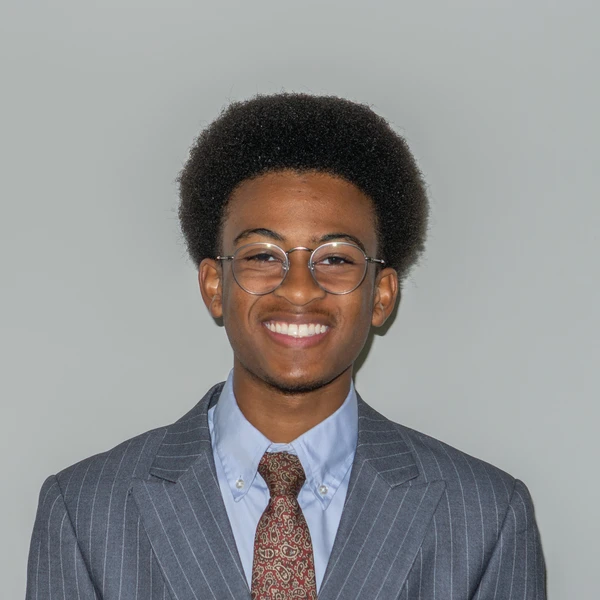
Quincy Robinson

1x

Finalist

1x

Winner

Bio

Driven by a passion for economic empowerment, I am dedicated to fostering financial literacy and business success within the Black community. With a 4.02 GPA and leadership roles in several extracurricular activities and community initiatives, I merge academic excellence with hands-on impact. My 200+ service hours include leading a book drive surpassing its goal by 300% and supporting activist-led campaigns for social change. My future lies in business and entertainment management—ensuring Black artists secure financial independence and generational wealth. Through education and strategic mentorship, I aim to transform creative influence into economic power. A scholarship would not only support my academic journey but also fuel my mission to uplift and empower others.

Education

Hampton University

Bachelor's degree program
2025 - 2026
  • Majors:
    • Business Administration, Management and Operations
  • Minors:
    • Accounting and Related Services

Paul Duke STEM High School

High School
2022 - 2025

Miscellaneous

  • Desired degree level:

    Bachelor's degree program

  • Graduate schools of interest:

  • Transfer schools of interest:

  • Majors of interest:

    • Business, Management, Marketing, and Related Support Services, Other
  • Not planning to go to medical school
  • Career

    • Dream career field:

      Marketing and Advertising

    • Dream career goals:

      Building a creative conglomerate that supports Black artists.

    • Tutor

      Mathnasium
      2022 – 20231 year

    Research

    • Environmental/Environmental Health Engineering

      OTIS Elevator Company — Student Competitor
      2023 – 2024

    Arts

    • Paul Duke STEM

      Graphic Art
      2022 – 2025
    • Paul Duke STEM Television

      Videography
      PDS-TV BHM Show (Produced by me, https://youtu.be/BHAcKWe1QxE?si=qbXaDqUU5ulgUruj), PDS-TV April Show https://youtu.be/oCKI4duVcNo?si=mZ1Itpwr_c394zxh, PDS-TV March Show https://youtu.be/_X6mf-0Q1ls?si=ZfqiWmmVwYR1rZOS, PDS-TV January Show https://youtu.be/CIEaq4M_Zho?si=LRcl9zXF6eGMhKzG, PDS-TV December Show https://youtu.be/4VOhQWzwULo?si=4llz0LO_GVczfkSZ, PDS-TV November Show https://youtu.be/IaBjw28x_IQ?si=T-7xk81sgCPHCSpp, PDS-TV Halloween Show https://youtu.be/ooRP5uBI9pA?si=tAHzIAjqYvIWe1ft, PDS-TV October Show https://youtu.be/Q7QYP_CKyUI?si=GeuU9MkxsyznYOHx, PDS-TV September Show https://youtu.be/76e2V1KLIOo?si=YWNUlzNng7x0hRhJ, PDS-TV August Show https://youtu.be/q-knzbDCvfw?si=8qzFqsquBJsDjCL3
      2024 – Present

    Public services

    • Public Service (Politics)

      Jayden for Stockbridge — Campaign Intern
      2024 – Present

    Future Interests

    Advocacy

    Volunteering

    Philanthropy

    Entrepreneurship

    SCFU Scholarship for HBCU Business Students
    Sometime in the mid-1960s, El-Hajj Malik El-Shabazz (f.k.a. Malcolm X), was quoted as saying, "We are not outnumbered, we are out-organized." This quote applies to far more than grassroots social advocacy or even revolutionary warfare. It speaks to the heart and soul of America, the very foundation that established a perpetual cycle of exploitation. A basic understanding of the system we live in and serve is required for any sort of economic freedom. Beyond understanding, a multi-layered, disruptive, and, most importantly, layman-friendly plan is needed to actually reach such freedom. Consider the layman, the average worker, or student. Once in a blue moon, he may “outsmart” his matrix, but then comes into question his load-bearing traits. Has his intellect or his luck allowed him to trespass? Or simply his luck? Furthermore, how well can he explain what took him there? A single mogul in the capitalistic landscape is no one-man army; he is a soldier, no greater than the financially disadvantaged. He is unreliable. His investments, however, are valuable beyond his own growth. Shawn Carter, since the start of his musical career, has amassed vast capital. However, music, clothes, and shoveling more money into the recycling bin of Wall Street is, of course, no sustainable model for community wellness (yet). Oftentimes, students with a knack for STEM fields are pulled towards a medical or engineering route, with intentions of working for high-profile hospitals or defense contractors. Their motivation is survival; everyone has to eat. But if existing affluent Black figures ensured they were taken care of, those hard decisions wouldn’t be as prevalent. Investments into our brightest STEM students allow academic freedom, from which they can construct a new foundation, a replacement of the current dependency on technology managed by White America.  Black America generates billions for the entertainment industry yearly. We have our hands tied to enough capital to generate a “head start”. However, much like an athlete, it’s not just about having strength, it’s about knowing where and how to apply it… organization. Education is the yellow brick road to liberation. The bountiful tree of STEM education still bears fruit. Beyond agriculture, there is still room to expand into industries without near-monopolies (i.e., computers). Consumables, however, such as toilet paper, towels, and cleaning supplies, can be replaced. Generics, or plain healthier alternatives (surely an attractive force given recent concerns surrounding microplastics and pollution), can be developed by Black students, again diverting another portion of the Black dollar. The idea is to shift the dollar towards the affected minority community without explicit mention of ethnic barriers. The layman is not concerned with the complexities of ethnic politics. The layman’s politics are food, water, and shelter. Thus, giving the layman such materials allows a clearer path for socioeconomic education and a growing culture-wide concern for investing.  How does this connect to my career path? Currently, I attend Hampton University, majoring in the 5-Year Master’s of Business Administration program. Admittedly, business isn’t necessarily my passion; it’s a tool of service. Besides service, my real passion is art, filmmaking specifically. With my degree, I plan to establish a production company and creative conglomerate. I seek to not only inspire fellow Black creatives to pursue their passion but also understand the value of their work, demand it, and manage it efficiently. After I graduate from Hampton, I plan to attend law school, where I will likely focus on defamation and contractual litigation in the entertainment industry. With the funds acquired from my exploits, I want to follow a path of investing in my community that seeks to organize my people towards economic liberation.
    Sweet Dreams Scholarship
    Hope, to me, isn’t a distant ideal—it’s something you build. Brick by brick, act by act, moment by moment. I didn’t always understand that. In fact, I used to think hope was something you either had or didn’t. But that changed when I became part of a community that gave me the space to lead, learn, and love out loud. When I moved from Illinois to Georgia at the end of my freshman year, I was starting over—again. I’d already moved once from Mississippi, and I knew what it felt like to be the new face in unfamiliar halls. The transition was stressful, but I was determined to show up fully this time. I didn’t just want to blend in—I wanted to give back. My sophomore year, I joined the Black Culture Association (BCA), a student organization focused on celebrating identity and empowering Black students on campus. At the time, it was struggling with low participation and morale. I saw the potential immediately—and instead of waiting for someone else to act, I stepped up. Eventually, I became its President. Under my leadership, we transformed the organization from an under-attended group into a force on campus. We organized a Black History Month celebration that included a career fair, workshops, and a 50th anniversary tribute to hip-hop culture. These events weren’t just entertaining—they were informative, affirming, and community-building. For many of us, it was the first time we saw ourselves represented in the programming and messaging of our school. One of the most impactful parts of this experience was watching the ripple effect of kindness and shared pride. Students who had previously been disengaged started showing up. Younger students found mentors. We built something together—something that said, “You belong here. You matter.” It didn’t stop there. I took those lessons and carried them into my work as Student Council President, where I helped foster collaboration across student organizations, created more inclusive events, and pushed for more accessible volunteer opportunities. I also led a book drive that surpassed its goal by 300%, inspired by research into the connection between low literacy rates and juvenile incarceration. That campaign reminded me that service, when rooted in empathy, can restore hope where it’s been lost. All of these experiences shaped how I view the future—not just my own, but the one we’re all stepping into. Being part of a community taught me that resilience isn’t about going it alone—it’s about trusting people to walk beside you. It taught me that kindness is a chain reaction. And it taught me that connection doesn’t weaken your power—it amplifies it. This fall, I’ll be attending NYU Shanghai to study Business and Marketing. My long-term goal is to launch a business that mentors young Black artists, protects their creativity, and teaches them to turn talent into sustainable opportunity. But that mission didn’t begin with a business idea. It began with community. It began with hope. If I’ve learned anything, it’s that you don’t find hope—you build it. And the best way to build it is together.
    FLIK Hospitality Group’s Entrepreneurial Council Scholarship
    Creating a positive environmental impact isn’t limited to planting trees or recycling. It also means changing the cultural and economic environments we live in—removing toxins not only from the air but from the systems that hold people back. As someone who will study Business and Marketing at NYU Shanghai, I plan to use my skills in marketing and finance to transform both the local and global environments around me—economically, socially, and culturally. Over the next five years, I will focus on building a business model that empowers underrepresented communities through creative entrepreneurship. I want to work with young Black artists—those who influence global culture through music, fashion, and digital media—but who are too often left out of the financial ecosystems that profit from their work. This is where finance and marketing meet environmental justice: by disrupting exploitative economic patterns and replacing them with models based on education, transparency, and empowerment, I can foster more sustainable communities. Locally, I’ll begin by launching mentorship and consulting initiatives—programs that teach creatives how to build their brands, understand contracts, and monetize their work ethically. These will not just be about career success, but about long-term sustainability and community reinvestment. The more empowered a community is economically, the more it can afford to take care of its physical environment—investing in green spaces, local agriculture, and cleaner infrastructure. Globally, I will use my platform as a marketer to promote sustainable, community-based models. Whether it’s highlighting eco-conscious artists, collaborating with green startups, or leveraging social campaigns to draw attention to issues like environmental racism, my marketing will always have a message. I believe that powerful storytelling can influence habits and policies—whether in a neighborhood or across nations. My time at NYU Shanghai will also allow me to learn from global markets and cultures. I plan to study how other countries approach sustainability—financially and environmentally—and adapt those models to support communities back home. The environmental crisis is a global issue, but the solutions must be local, tailored, and accessible. My role is to act as a bridge: absorbing international knowledge and using it to improve the local conditions for people who often don’t have a seat at the table. I’ve already laid the groundwork for this future. In high school, I led a book drive that promoted literacy to reduce youth incarceration, contributed to my school’s $22,500 STEM competition wins, and organized voter registration drives and charity events. These experiences taught me how to lead with purpose, and how to build systems that lift others up. The next five years are about expansion—taking what I’ve learned and building a framework that connects wellness, finance, and marketing to environmental equity. Through ethical storytelling, creative innovation, and financial empowerment, I will work to change not just how communities look, but how they live.
    Mark Green Memorial Scholarship
    My name is Quincy Nasir Robinson, and I am a business-minded creative committed to building a future where Black communities don’t just survive—they thrive. Throughout high school, I’ve merged leadership, service, and scholarship to pursue a goal bigger than myself: fostering long-term economic empowerment for the Black community by equipping creatives and youth with the tools to succeed. I’ve maintained a 4.02 GPA, earned leadership roles such as Student Council President and Class President, and completed over 200 hours of community service. My service has ranged from cleaning parts of the Chattahoochee River to organizing school-wide events focused on cultural awareness and equity. One of my proudest achievements was leading a book drive inspired by the connection between literacy and youth incarceration. The drive surpassed its goal by 300%, helping bring educational resources to underserved students. Beyond school walls, I’ve worked alongside activist Jayden Williams, former President of the Georgia NAACP Youth Division, to support his campaign to become the youngest mayor of Stockbridge, Georgia. We’ve participated in charity efforts like Thanksgiving turkey drives and events like Bridgefest, bringing the community together through civic engagement. This fall, I will attend NYU Shanghai to study Business and Marketing. Studying internationally will give me a global perspective on how markets, policy, and culture intersect. I plan to bring that knowledge back to support creatives—particularly Black artists—by launching a business that provides mentorship, marketing support, and guidance on intellectual property rights and contract negotiation. My focus is the entertainment industry because it’s one of Black America’s most visible contributions to the world, yet also one of the most exploited. However, my long-term goal is broader than entertainment. I aim to build a platform that offers online certifications, scholarships, and economic resources to young people in underserved communities—helping them understand not just how the economy works, but how to own their place in it. I want to teach students that financial literacy, business strategy, and creative freedom are all interconnected—and that they have a right to all three. This scholarship would provide me with the support that I need to focus on this mission without being overwhelmed by financial stress. My journey is about more than just personal success—it's about building infrastructure that ensures the next generation doesn't have to fight the same battles I did just to be seen, heard, or valued. I’m not chasing wealth—I’m chasing impact. And I’m ready to begin.
    Charlene K. Howard Chogo Scholarship
    My name is Quincy Nasir Robinson, and I am a business-minded creative committed to building a future where Black communities don’t just survive—they thrive. Throughout high school, I’ve merged leadership, service, and scholarship to pursue a goal bigger than myself: fostering long-term economic empowerment for the Black community by equipping creatives and youth with the tools to succeed. I’ve maintained a 4.02 GPA, earned leadership roles such as Student Council President and Class President, and completed over 200 hours of community service. My service has ranged from cleaning parts of the Chattahoochee River to organizing school-wide events focused on cultural awareness and equity. One of my proudest achievements was leading a book drive inspired by the connection between literacy and youth incarceration. The drive surpassed its goal by 300%, helping bring educational resources to underserved students. Beyond school walls, I’ve worked alongside activist Jayden Williams, former President of the Georgia NAACP Youth Division, to support his campaign to become the youngest mayor of Stockbridge, Georgia. We’ve participated in charity efforts like Thanksgiving turkey drives and events like Bridgefest, bringing the community together through civic engagement. This fall, I will attend NYU Shanghai to study Business and Marketing. Studying internationally will give me a global perspective on how markets, policy, and culture intersect. I plan to bring that knowledge back to support creatives—particularly Black artists—by launching a business that provides mentorship, marketing support, and guidance on intellectual property rights and contract negotiation. My focus is the entertainment industry because it’s one of Black America’s most visible contributions to the world, yet also one of the most exploited. However, my long-term goal is broader than entertainment. I aim to build a platform that offers online certifications, scholarships, and economic resources to young people in underserved communities—helping them understand not just how the economy works, but how to own their place in it. I want to teach students that financial literacy, business strategy, and creative freedom are all interconnected—and that they have a right to all three. This scholarship would provide me with the support that I need to focus on this mission without being overwhelmed by financial stress. My journey is about more than just personal success—it's about building infrastructure that ensures the next generation doesn't have to fight the same battles I did just to be seen, heard, or valued. I’m not chasing wealth—I’m chasing impact. And I’m ready to begin.
    Sewing Seeds: Lena B. Davis Memorial Scholarship
    One of the most significant experiences of my life was being underestimated by my middle school principal—a person in power who chose not to see me, listen to me, or advocate for me. Despite my academic excellence and respectful demeanor, I was treated as a problem, not a student. When I was bullied and excluded, my principal offered no support. Instead, they blamed me and ignored the context that others, including teachers, recognized. That kind of treatment—subtle, sustained, and dismissive—left lasting scars. But from that experience, I didn’t walk away with bitterness. I walked away with resolve. During that time, I learned how deeply damaging it can be when people in leadership abandon their duty to protect and empower. I built emotional walls and struggled with anxiety. But I also began to develop a sense of self rooted in something stronger than someone else’s assumptions. In hindsight, I’m grateful for that pain—it gave me clarity, purpose, and an unshakable sense of justice. As I wrote in my letter years later: “Thank you, for the inconvenience.” That inconvenience is part of what shaped my long-term goal: to build a business that uplifts and protects Black creatives through mentorship, education, and strategic guidance. I’ve seen what happens when people are devalued by systems meant to support them—whether that’s in school or in the business world. I want to create structures where people don’t have to ask for their dignity to be recognized—it’s built into the foundation. Since then, I’ve leaned into leadership and service with the same energy I once used to guard myself. I’ve become Student Council President, helped organize school-wide initiatives for cultural awareness, led a 300% over-goal book drive to address youth literacy, and supported the campaign of a young Black activist for mayor. Each action is a response to that early betrayal—but more importantly, each one is a commitment to do better for others. As I prepare to study Business and Marketing at NYU Shanghai, I carry that experience with me not as a wound, but as a charge. I will honor what I learned by ensuring the people I work with—especially Black youth and creatives—are seen, heard, and supported in ways I never was. I plan to build a business that isn’t just profitable, but principled. One that challenges exploitation and replaces it with education, opportunity, and ownership. The principal who doubted me unintentionally helped reveal my purpose. I’ve turned that rejection into redirection. And through my future endeavors, I’ll make sure others don’t have to learn the hard way that they are worthy.
    Mark A. Jefferson Teaching Scholarship
    My name is Quincy Nasir Robinson, and I am an aspiring educator—not just in title, but in calling. I’ve come to understand that education is not only a tool for personal growth, but a powerful force for social transformation. I want to use education to empower students, dismantle systems of injustice, and inspire a generation of young people—especially those who, like me, have often been left out of the narrative. As a young Black man who grew up navigating predominantly white school systems in Mississippi and Illinois, I’ve seen what a lack of representation in education can do. I’ve been the only Black student in honors classes. I’ve dealt with subtle and overt forms of racial alienation. I’ve watched peers disengage because they never saw themselves reflected in the curriculum—or in the teachers at the front of the room. These experiences weren’t just difficult—they were defining. They’ve shown me the urgency of building classrooms where Black students see themselves, not just as students, but as scholars, creators, and leaders. Though I’m pursuing a Business and Marketing degree at NYU Shanghai, my ultimate goal is to educate beyond the four walls of a classroom. I aim to become a culturally responsive educator and mentor, dedicated to teaching economic empowerment to underserved communities. I want to lead programs that teach students—especially Black youth—how to navigate markets, protect their creative work, build businesses, and understand the value of ownership. I believe teaching is not about memorizing facts, but instilling skills that will last a lifetime. Throughout high school, I’ve worked hard to embody that belief. I’ve served as Student Council President, organized community events like voter registration drives and career fairs, and led a 300% over-goal book drive addressing juvenile literacy rates. I’ve also worked alongside political organizers, advocated for equity, and spoken publicly about the need for education that doesn’t erase voices, but amplifies them. Representation in education is critical—and right now, our system is lacking. Black male educators make up only 2% of the teaching force. That number isn’t just a statistic; it’s a call to action. I want to be part of a movement that brings more Black men into the realm of education—not only to teach, but to inspire, to mentor, and to lead. The Mark A. Jefferson Teaching Scholarship would be more than financial support; it would be a sign that my story and my mission matter. With your support, I will continue to pursue education with intention, purpose, and the unwavering belief that knowledge—when shared equitably—can heal, transform, and uplift entire generations.
    S.O.P.H.I.E Scholarship
    Winner
    Community is not just where we live—it’s where we grow, heal, and build. That belief has driven everything I’ve done over the past four years. I’ve dedicated my high school career to service, leadership, and uplifting others. Like Sophie, I believe in instilling hope where it’s most needed, and I carry that belief into every organization I lead and every project I pursue. Since moving to Georgia at the end of my freshman year, I’ve earned over 200 service hours, each one tied to a vision of a better, more unified community. I’ve planted trees and cleaned the Chattahoochee River to improve the local environment. I’ve led charity efforts like Thanksgiving turkey drives, organized student voter registration campaigns, and partnered with political activist Jayden Williams—former President of the Georgia NAACP Youth and College Division—during his campaign to become the youngest mayor of Stockbridge. I was proud to be part of a campaign grounded in integrity, community engagement, and service to others. One of my most meaningful projects began after attending the Anti-Defamation League’s summer “Equity Academy,” a program for socially conscious youth. Inspired by what I learned, I led a school-wide book drive aimed at reducing youth recidivism. After learning that low literacy is a common thread among incarcerated youth, I knew we had to take action. The drive exceeded its original goal by 300% and sparked a new level of peer engagement in community advocacy. As Student Council President and a former Black Culture Association President, I’ve used my leadership positions to strengthen collaboration across school organizations. Under my leadership, our Beta Club and Black Culture Association saw increased participation, morale, and impact. I organized volunteer initiatives, resolved inter-club conflicts, and helped foster a more unified school community. One of our most successful events combined a Black History Month celebration with a career fair and cultural showcase, highlighting Black excellence and providing resources for students to envision their futures. My passion for service extends into my future. This fall, I will attend NYU Shanghai to study Business and Marketing. My long-term goal is to support the economic vitality of the Black community by building a business that mentors and markets young Black creatives. I’ve seen how talented artists are often exploited due to a lack of business knowledge, and I aim to provide the education, tools, and infrastructure to help them succeed on their own terms. This vision starts with artists, but it will expand into scholarships, online certifications, and resources for underserved youth—ensuring the next generation is equipped to navigate and shape the global economy. Just as Sophie uplifted others with love and wisdom, I plan to do the same through opportunity and education. I believe service is more than an act—it’s a lifestyle. Whether I’m leading a campaign, mentoring a peer, or organizing a school event, I carry the same mission: to leave every space more united, more informed, and more hopeful than I found it. With the support of this scholarship, I can continue that mission through college and far beyond. Like Sophie, I want to be remembered not just for what I achieved, but for how I made people feel: seen, empowered, and capable of making change.
    Julius Quentin Jackson Scholarship
    My story is shaped by a mix of personal trials, financial hardship, and a commitment to rising above both. The path I’ve walked hasn’t been easy, but it’s taught me how to lead with empathy, adapt in uncertainty, and work relentlessly toward a future defined not by limitations—but by purpose. Growing up, I faced early challenges that affected both my mental health and sense of identity. Living in Mississippi and attending majority-white schools, I struggled with racial anxiety, feeling alienated and hyper-aware of how I was perceived. Those experiences instilled a quiet heaviness, a constant need to self-monitor, to be perfect, and to defend who I was. Things became even harder during my sophomore year, when I lost my grandfather—one of the few people who made me feel unconditionally safe and understood. His passing during a legal battle over his estate put a financial and emotional strain on my family that we still feel today. These personal challenges were compounded by financial ones. My father has struggled to find steady employment, and the legal fees surrounding my grandfather’s estate have significantly drained our household savings. At the same time, my mother—who was once balancing multiple jobs—had to leave one due to serious mental health challenges. The result is a family doing all we can to hold on, to rebuild, and to support one another through uncertainty. Despite it all, I’ve never allowed these circumstances to define me—only to drive me. I’ve maintained a 4.02 GPA, served in multiple leadership positions including Student Council President and Class President, and earned accolades in business and STEM competitions. I’ve also dedicated over 200 service hours to projects that build up my community, including voter registration efforts, environmental cleanups, and a literacy-driven book drive that exceeded its goal by 300%. All of these experiences come together in my long-term goal: to support economic vitality in the Black community by building a business that mentors, protects, and elevates young Black artists. This fall, I’ll be attending NYU Shanghai to study Business and Marketing. My decision to study internationally was intentional—I want a global perspective on economics and markets that I can bring home to create real, transformative impact. But that decision comes with significant costs, and my family is not in a position to fully support them at this time. This scholarship would mean more than financial support. It would represent belief—not only in my future, but in the futures I intend to help shape. It would allow me to focus on my education instead of how I’ll afford it. And most importantly, it would be a tangible step toward fulfilling the purpose I’ve been working toward all my life: creating change rooted in dignity, equity, and opportunity for all.
    Camille Donaldson Memorial Scholarship
    Mental health is rarely discussed where I come from. For much of my life, I carried a quiet weight—unseen, unspoken, but deeply felt. Growing up in Mississippi, I attended majority-white schools where I often felt like the only representative of my culture in a room. Even when I succeeded academically or socially, I couldn’t shake the anxiety that came with constantly having to explain myself, defend myself, or feel “othered.” The microaggressions, the casual ignorance, and the isolation took a toll I didn’t know how to name at the time. That anxiety followed me through every move—first to Illinois, then to Georgia—where the constant shifting of environments compounded the struggle. I learned to build walls to protect myself. I became overly cautious, second-guessing my tone, my presence, my hair, and even the clothes I wore. It was mentally exhausting. I was surviving, but not thriving. The breaking point came during my sophomore year, when I lost my grandfather. He was the quiet wisdom in my life—the person who always made me feel like I didn’t have to prove anything to be worthy of love or respect. His death hit harder than I expected. I found myself struggling to focus, disconnected from the world around me, and overwhelmed by emotions I’d never fully processed. The combination of racial anxiety and grief created a storm inside me that I could no longer ignore. Healing wasn’t instant. But it began with honesty. I started opening up to trusted peers and mentors. I engaged more deeply with school organizations like the Black Culture Association, where I finally found community, representation, and understanding. Surrounding myself with people who embraced all of me—unfiltered and unapologetic—was transformative. I also began practicing mindfulness and journaling as a way to sort through my emotions and separate fact from fear. One of the most important lessons I’ve learned is not to meet ignorance with hostility, but with compassion and education. I’ve come to understand that many people carry flawed perspectives because they’ve never had the chance—or courage—to examine them. Rather than allowing their ignorance to isolate me, I now see those moments as opportunities to build bridges. I also learned the importance of creating and maintaining a community of support—one that reminds me who I am when I start to doubt myself. Today, as a future business leader preparing to study at NYU Shanghai, I understand that my mental health journey is part of what grounds my mission: to empower others, especially Black creatives, to own their identities and their worth. I know that the battles I’ve faced make me more compassionate, more resilient, and more committed to creating spaces where others no longer feel like the “only one.” Mental health isn’t just a personal journey—it’s a communal one. And I’m proud to say I’m learning how to heal out loud.
    Dark and Light Scholarship
    My name is Quincy Nasir Robinson, and my journey is defined by purpose. I’m a student, a servant leader, and a future business professional committed to restoring economic power in the Black community. I’ve always believed that education should not only elevate the individual but also empower them to lift others—and that belief has guided everything I’ve done so far. After graduating high school with a 4.02 GPA, leadership positions in Student Council and DECA, and over 200 service hours, I’ve been accepted into NYU Shanghai, where I’ll study Business and Marketing for the next four years. Choosing to study overseas is no accident. I wanted a global lens—an understanding of international economics, cross-cultural communication, and market systems that I can bring back to my community with nuance and vision. What sets my path apart is that my goals are not rooted in personal wealth. I plan to use my degree to launch a business that supports young Black artists through consulting, mentorship, and contract negotiation. As someone who is passionate about both creativity and entrepreneurship, I’ve seen the harm that comes from artists not understanding the industries they’re stepping into. Too often, Black creatives—despite shaping American culture—are subject to exploitation and underpayment. This is not just a business issue; it’s a dignity issue. My “square one” is the entertainment industry, where I want to offer guidance on branding, financial literacy, and ownership. But this is only the beginning. Over time, I aim to develop a larger business platform that provides education, scholarships, and certification programs for Black youth in marketing and business. This work is about building the infrastructure that allows creative brilliance to become long-term stability and generational wealth. The leadership I’ve demonstrated in high school reflects the foundation I’ve already laid for this mission. I’ve coordinated volunteer efforts and school-wide events, including voter registration drives and multicultural celebrations. I’ve worked on political campaigns, organized charity events, and led successful community initiatives like a book drive inspired by my research into juvenile literacy rates—it exceeded its goal by 300%. I also helped my school earn $22,500 in prize funding through the OTIS International STEM competition over two consecutive years. These experiences helped me develop the organization, communication, and problem-solving skills that I’ll continue refining in college. Beyond career plans, what drives me is the belief that progress should be a collective experience. I want to be the kind of business leader who uplifts others, opens doors, and makes access to opportunity the norm—not the exception. I believe NYU Shanghai will challenge me, shape me, and sharpen me into someone capable of creating real change. Scholarship support would allow me to focus on what matters most: learning, growing, and developing the tools I need to fulfill this mission. I’m committed to using my education to create sustainable impact—not just for myself, but for the many who will follow.
    Chris Ford Scholarship
    Everything I’ve done in high school builds towards my life goal of supporting economic vitality in the Black community. Achieving such a large goal requires an ambitious vision, well-rounded excellence, and a commitment to service. Academically, I have maintained a strong record, currently holding a 4.02 GPA. My academic success has opened many doors, including my selection for my school’s team in the OTIS Elevator Company’s International STEM Competition, where we collectively earned $22,500 for our school over two years. I have also been recognized with my principal’s scholarship, student of the month honors, and accolades from competitive organizations. However, I view academic excellence as only one part of my broader mission. My commitment to service extends beyond personal efforts to rallying my peers in making a difference. Since moving from Illinois to Georgia at the end of my freshman year, I have earned over 200 personal service hours in initiatives ranging from environmental stewardship to local charity projects. One of my most impactful projects stemmed from attending an Anti-Defamation League summer program for socially conscious youth, which directly inspired me to lead a book drive that surpassed its goal by 300%. This effort was motivated by my research into the low literacy rates among juvenile convicts. Additionally, I have assisted the campaign efforts of activist Jayden Williams, former President of the Youth and College Division of the Georgia NAACP, in his bid to become the youngest mayor of Stockbridge, Georgia. Through this work, I have helped organize community events such as Thanksgiving turkey drives and the local Stockbridge festival, Bridgefest. As President of my school’s Student Council, I have strengthened inter-organizational relationships by coordinating volunteer efforts, resolving conflicts, and fostering a more engaged student leadership body. This has directly contributed to increased membership and participation in organizations such as our Beta Club and Black Culture Association, where I have also served as an officer. My future impact will begin in the entertainment industry, managing and marketing Black artists to help them navigate the business world effectively. The arts have always been a passion of mine, and the entertainment industry is one of Black America’s largest exports. Unfortunately, many Black artists face economic exploitation due to a lack of business education, predatory contracts, and financial mismanagement. Addressing this issue is crucial because the influence of Black artists extends far beyond entertainment—they shape culture, inspire youth, and can serve as powerful economic engines. By equipping artists with the business acumen to protect their work and build generational wealth, I can take a critical step toward the broader economic liberation of the Black community. This scholarship would provide the financial support necessary to focus on my education and professional development without the burden of financial strain. An investment in my education would extend far beyond me; it would contribute to a long-term vision of economic empowerment within the Black community. As activist Kwame Ture once said, “When you come to serve a people, you must know as much as you can. The more you know, the better you are to serve a people.” With this philosophy in mind, I plan to leverage my education, leadership skills, and entrepreneurial drive to create lasting change.