Hobbies and interests
Driving
Cooking
Writing
Baking
Tennis
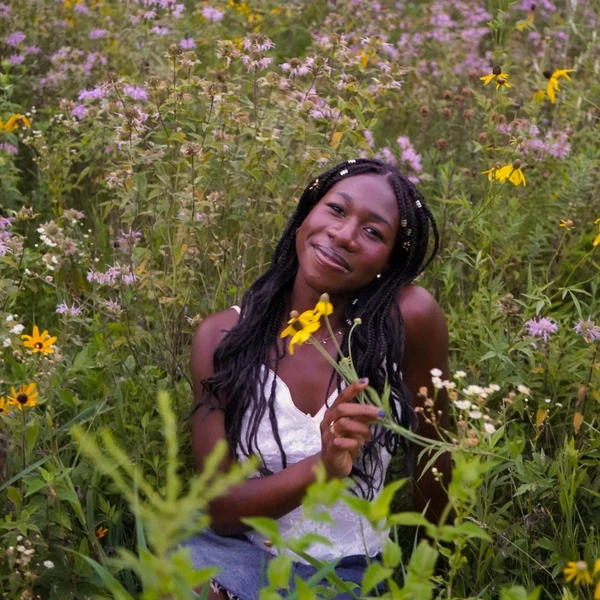
Precious Oyebanji
1x
Finalist
Precious Oyebanji
1x
FinalistBio
I think I gained consciousness when I was 8, the year my family moved to the United States from Nigeria. I saw how much my parents struggled with working multiple jobs, while balancing their education, and taking care of their 3 children. I knew then that I had no room for failure in my life. I have to succeed in everything that I do, because I never want myself and my family to struggle in the same way again. Because of this, I persevere in Cross Country and Track, being the fastest individual on my XC team and my Distance team. Because of this, I put myself out there, talking to Athletic Directors and teachers at my school to open up more opportunities. Because of this, I maintain leadership positions in my sport and within my school and church. Because of this, I pursue a postsecondary education to study social work. I promised myself that I would do everything in my power to have a future full of success, and I intend to keep that promise.
Education
Mundelein Cons High School
High SchoolMiscellaneous
Desired degree level:
Master's degree program
Majors of interest:
- Psychology, Other
- Social Work
- Clinical, Counseling and Applied Psychology
Career
Dream career field:
Mental Health Care
Dream career goals:
Therapist
Sports
Track & Field
Varsity2023 – Present3 years
Cross-Country Running
Varsity2023 – 20252 years
Arts
Orchestra
Music2018 – 2022
Public services
Volunteering
Long Grove Community church — teacher2021 – Present
Future Interests
Advocacy
Volunteering
Philanthropy
Ava Wood Stupendous Love Scholarship
"Kindness in Action"
Kindness, to me, begins with awareness—the decision to notice others and respond with compassion. During track season, I noticed that one of my teammates seemed unusually withdrawn while we were warming up for practice. Although we were not very close at the time, I could sense that something was wrong. Instead of assuming it was none of my business, I chose to reach out. I started small, talking with her, joking around, and trying to make her laugh. Eventually, I asked her if she was okay.
That question opened the door to a deeper conversation. She shared that she was struggling after a breakup and that it had taken a serious toll on her mental health. From that moment forward, I made a conscious effort to be there for her. I became someone she could talk to freely, whether she needed advice, encouragement, or simply company to clear her head. I wanted her to feel supported and reminded that she still mattered, even during a season of pain.
As the weeks passed, our connection grew. I saw her regain pieces of herself, and I realized how powerful consistent kindness can be. At the end of the track season, she pulled me aside and told me that I had been a light in her life during one of her darkest moments. She shared that my support gave her hope and helped her keep going when things felt unbearable. Hearing that left a lasting impact on me.
This experience reshaped my understanding of kindness and leadership. It showed me that meaningful change does not always come from grand actions, but from choosing empathy, showing up, and caring even when it is not expected. I carry that lesson with me, knowing that even the smallest acts of kindness can leave a lasting imprint on someone’s life.
“Boldly, Unapologetically Me”
Being boldly myself has meant choosing love and integrity, even when it would have been easier to stay silent. Last year, just a junior in high school, I experienced a moment that reshaped how I understand courage. I learned that a coach I deeply admired was not the supportive leader we believed her to be. Behind our backs, she spoke negatively about us and consistently misrepresented the truth. Discovering this was heartbreaking. I loved my coach, my team, and the sport—but I also knew something was wrong.
There was an unspoken expectation to keep my head down. As a student-athlete, I felt the pressure to conform, to accept discomfort as normal, and to protect authority rather than people. But love does not stay quiet when harm is present. I believed my teammates deserved an adult who uplifted them, believed in them, and created a safe, respectful environment. Remaining silent would have meant betraying both my values and my team.
Choosing to be unapologetically myself, I spoke up. I reached out to other coaches and eventually advocated to our athletic director, not out of anger, but out of care. I was scared, but I was also certain. Speaking out was an act of love—for my teammates, for the integrity of our team, and for myself.
That experience taught me that courage rooted in love is powerful. Being bold does not always mean standing alone; it means standing for others. I carry that lesson with me, knowing that real love requires honesty, accountability, and the bravery to protect what matters most.
Majestic Bison for Wellness Scholarship
My first heartbreak was not because of a boy. It was because of a girl. My best friend of almost four years decided she no longer wanted to be friends. At thirteen, I didn’t have the language to describe what I was feeling. I just knew something inside me felt swollen and heavy, and I had no clue what to do with that pain. Back then, I did not understand how deeply friendship loss could hurt. I only knew that the person who had been my companion and safe place was suddenly gone.
Growing up in Nigeria in a deeply religious household, I was taught directly and indirectly that mental health struggles weren’t real. Feeling sad, overwhelmed, or anxious was not something you talked about. You prayed, you stayed quiet, and you kept moving. Emotions were seen as something to be controlled, not understood. Because of that, I learned to bottle everything up. So when my friendship ended, I assumed the only choice I had was to stay silent and push through it.
Trying to deal with everything alone affected me in ways I did not expect. I withdrew from people, lost my appetite, and carried stress that I could not explain. I felt anxious and isolated but did not have the words or the confidence to ask for help. Looking back now, I realize how many young people, especially those from immigrant and religious communities, experience the same quiet struggle. The message that emotions should be hidden is powerful, and it can keep people from receiving help for years.
When the people around me noticed that I was not myself anymore, they encouraged me to see a therapist. I remember walking into my first session feeling unsure of how I was supposed to act. I did not know if it was okay to cry or if speaking openly about my feelings went against the way I was raised. But my therapist, patient and gentle, let me speak slowly, take my time, and open up at my own pace. Over time, therapy became a space where I learned that vulnerability is not weakness and that understanding your emotions is a form of strength.
Now, as a senior in high school, I can clearly see how much therapy has shaped me. I am healthier, more grounded, and aware of how to care for myself. My experience also opened my eyes to the mental health field and inspired my desire to become a social worker. I want to be for others, someone who listens without judgment, someone who helps untangle feelings that feel too big, someone who makes people feel seen. I have realized that having even one supportive person can change the direction of someone’s life, and I want to be that person for members of my community who feel unheard or misunderstood, especially those who come from cultural backgrounds where mental health is rarely acknowledged.
I already see these qualities developing in my life. My loved ones often come to me when they need support or clarity. It means so much to me when they say that I make them feel safe and understood. It reassures me that social work is where I belong.
As I move toward my future career, I hope to address the stigma surrounding mental health, especially in immigrant and religious communities. I want to help create spaces where young people do not feel ashamed for struggling, where their feelings are taken seriously, and where resources are accessible to everyone regardless of culture or background. I want to help others feel lighter, stronger, and understood.
Hines Scholarship
Growing up in Nigeria, I was not the child anyone expected to succeed. I was the student who wore out textbooks, misplaced school supplies, and regularly received punishments for unfinished homework or low grades. I started school at the age of three, and because I spoke well for my age, I was placed in a class with older children. While that might sound like a compliment, it only made school more difficult. I struggled to keep up, I was always ranked close to last place, and I was never one of my teachers’ favorites. At times, it felt like no one believed in me. One of my teachers even told me, “You are so dumb. You’re never going to succeed in life. You’ll be working in the gutters forever.” I was six years old, and those words carved themselves into my memory.
When I moved to the United States at eight years old, everything shifted. For the first time, I had teachers who were patient, encouraging, and impressed that I already knew long division in fourth grade. That contrast opened my eyes. I realized that my ability to succeed depended not on what others believed about me, but on what I chose to believe about myself. From that point on, I decided I would work harder than anyone expected.
I began taking school seriously. I rushed home every day to finish my homework before anything else. I wouldn’t eat, watch TV, or even rest. I could never relax knowing work was still waiting for me. That habit followed me through middle school and into high school. As a freshman, I enrolled in my school’s AVID program, a college-preparatory class designed to help students build organization, discipline, and readiness for higher education. I stayed committed to AVID through senior year because I knew I needed the skills it gave me: using my planner daily, staying organized, and maintaining high academic standards. I have pushed myself to uphold a 4.0 GPA not because anyone asked me to, but because I felt I had something to prove.
College, to me, is not just the next step after high school. It is proof to the little girl who was told she would never succeed that she was always capable. It is my way of rewriting the story that others tried to write for me. I used to believe that teacher’s words defined me, but now I know they only pushed me to define myself.
What I want to accomplish in college goes beyond earning a degree. I want to study social work so I can support individuals who feel unseen, underestimated, or discouraged; people like the younger version of myself. I want to help others find confidence in their abilities and understand that life will not always be easy. People will not always be kind, but perseverance can break cycles of doubt, and compassion can change someone’s entire future.
Going to college means stepping fully into the person I’ve worked so hard to become: disciplined, resilient, and determined. It means proving to myself, not to the teacher who hurt me, that I am intelligent, capable, and worthy of success. I have fought for my education from the moment someone told me I wouldn’t make it, and I will continue fighting every day.
College is my chance to grow, to serve, and to show myself that I can rise above every expectation placed on me. I am ready.