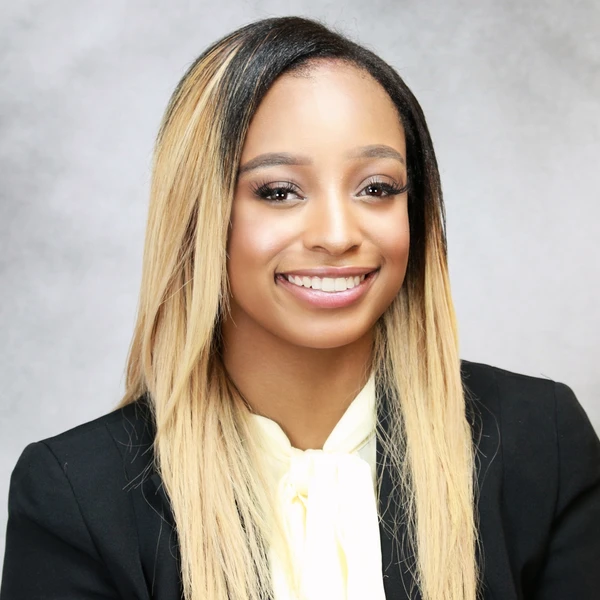
Atlanta, GA
Gender
Female
Ethnicity
Black/African
Religion
Christian
Church
Baptist
Hobbies and interests
Pilates
Yoga
Mental Health
US CITIZENSHIP
US Citizen
LOW INCOME STUDENT
Yes
FIRST GENERATION STUDENT
Yes
piper harper
1x
Finalist1x
Winnerpiper harper
1x
Finalist1x
WinnerBio
Hi! My name is Piper Harper, and I’m a third-year medical student at Morehouse School of Medicine with a passion for dermatology, health equity, and community engagement. As a student leader and researcher, I strive to bridge gaps in care for underserved populations—especially in skin of color. I’ve trained at institutions like UMass Chan Medical School Dermatology, where I explored inflammatory and pigmentary skin disorders, and I’m currently involved in research on autoimmune encephalitis and melanoma.
Outside of academics, I serve in student council, volunteer with Good Skin Knowledge and the HEAL Clinic, and mentor local elementary students on skin health and mental wellness. My journey is driven by faith, family, and a commitment to representation in medicine. Through every opportunity, I aim to combine clinical excellence, advocacy, and creativity to make dermatology more inclusive and impactful for all communities.
Education
Morehouse School of Medicine
Doctoral degree program (PhD, MD, JD, etc.)Majors:
- Medicine
GPA:
3.5
University of Georgia
Bachelor's degree programMajors:
- Public Health
GPA:
3.8
Miscellaneous
Desired degree level:
Doctoral degree program (PhD, MD, JD, etc.)
Graduate schools of interest:
Transfer schools of interest:
Majors of interest:
Career
Dream career field:
Medicine
Dream career goals:
Dermatology or Psychiatry
Intern
Foothills AHEC Pathway to Medical School2021 – 2021Intern
Clay Community Care Clinic, Piedmont Athens Regional Hospital2023 – 2023Student Intern
Department of Dermatology at UMass Chan Medical School2024 – 2024
Sports
Cheerleading
Varsity2017 – 20192 years
Research
Medicine
Emory Univerity School of Medicine — Research Interviewer2024 – 2024Community Organization and Advocacy
Sheltering Arms Educare, Dunbar Elementary School — Student Researcher2023 – 2024Medicine
UMass Chan Medical School — Student Researcher2024 – Present
Public services
Volunteering
Extra Special People, Inc. — Volunteer2021 – 2022Volunteering
Morehouse School of Medicine First Look — Student Volunteer2023 – PresentVolunteering
Morehouse School of Medicine H.E.A.L. Clinic — Student Volunteer2023 – PresentVolunteering
Dunbar Mental Health Project Organization — Member2025 – PresentVolunteering
Sheltering Arms Educare at Dunbar Elementary — Medical Student Volunteer2023 – 2024
Future Interests
Advocacy
Volunteering
Philanthropy
Entrepreneurship
Priscilla Shireen Luke Scholarship
Service has never felt optional in my life—it has felt necessary. I give back because I understand what it means to need support, guidance, and hope during uncertain seasons. My commitment to service is rooted in the belief that improving the world begins with showing up consistently for others, especially in spaces where resources, representation, and advocacy are limited.
Currently, I give back through a combination of medical training, community outreach, and mentorship. As a medical student at Morehouse School of Medicine, service is woven into my education. I volunteer in community-based health initiatives focused on education, prevention, and access, particularly in underserved populations. Through programs centered on skin health, mental wellness, and early health literacy, I work directly with children and families to make medical knowledge approachable and empowering. These experiences remind me that care does not begin in clinics—it begins with trust, education, and presence.
Mentorship is another way I actively give back. I support students from underrepresented backgrounds who are navigating academic pathways similar to my own, offering guidance, encouragement, and transparency about the realities of higher education and medicine. Representation matters deeply, and I believe that visibility paired with honesty can change what students believe is possible for themselves. Simply being accessible—answering questions, sharing experiences, and affirming their goals—is a form of service I take seriously.
My clinical experiences, particularly during my psychiatry rotation, further shaped how I understand service. I learned that listening is one of the most powerful tools we have. Sitting with patients, validating their experiences, and creating space for their voices—especially for children carrying significant trauma—reinforced my belief that service is not always loud or dramatic. Often, it is quiet, consistent, and rooted in empathy.
Looking ahead, I plan to positively impact the world by integrating service into every facet of my medical career. Whether I ultimately pursue psychiatry or dermatology, my work will focus on advancing equity, access, and representation in healthcare. I hope to contribute to research that improves outcomes for marginalized communities, engage in community education that promotes early intervention, and practice medicine in a way that centers dignity and understanding.
Beyond direct patient care, I envision expanding my service through mentorship and outreach initiatives that support students and families long before they enter healthcare systems. I want to help build pathways that make medicine feel attainable, not distant. Service, to me, is about sustainability—creating systems and relationships that continue to uplift others long after I am no longer present.
Priscilla Shireen Luke’s legacy of spreading hope through selfless service resonates deeply with me. I strive to embody those same values by using my education, time, and compassion to leave spaces better than I found them. My goal is not simply to succeed, but to ensure that my success creates opportunity, healing, and hope for others. Through service grounded in empathy and action, I hope to contribute to a world that is more just, more caring, and more connected for generations to come.
Dr. Jade Education Scholarship
When I imagine myself living the life of my dreams, I see a life shaped by education, service, and intention. For me, education has never been just a personal achievement—it has been a pathway to freedom, stability, and generational impact. As a Black woman pursuing a graduate degree while working throughout my educational journey, I have learned that growth does not happen in isolation; it is built through persistence, discipline, and a commitment to lifelong learning.
At the center of that dream is my role as a physician dedicated to advancing medicine in the Black community. I am currently a third-year medical student at Morehouse School of Medicine, and even at this stage of my training, I am already contributing to representation in spaces where it has historically been lacking. Simply existing in clinical, academic, and research environments as a Black woman in medicine carries weight. It challenges assumptions, opens doors for those coming behind me, and reinforces for patients that they deserve to see themselves reflected in their providers.
I am particularly drawn to psychiatry and dermatology—fields where stigma, underdiagnosis, and lack of representation continue to affect Black patients. In psychiatry, I envision helping dismantle the silence surrounding mental health and normalizing care in communities where emotional suffering has often been ignored or minimized. In dermatology, I see the urgent need for improved education, research, and early detection for skin conditions in darker skin tones. Through my training, outreach, and academic work, I am already engaging in conversations about equity, access, and culturally informed care—laying the foundation for the physician I aim to become.
Another essential part of the life I dream of is giving back to the people who supported me through every stage of my journey. I want to create financial freedom and comfort for my mother and my brother, who sacrificed and endured instability so that I could pursue my education. Being able to care for them, relieve financial stress, and provide long-term security is deeply intertwined with my definition of success. Education gave me the vision; perseverance will allow me to build the reality.
Beyond career and family, my dream life is rooted in faith and wholeness. I envision a loving husband, children, and a home grounded in God, purpose, and balance. My faith reminds me that learning never ends—that growth is continuous and that success is most meaningful when it aligns with service and integrity. Lifelong learning, to me, means remaining curious, humble, and open to evolving as both a physician and a woman.
I believe I can have it all—not because the path is easy, but because I am committed to doing the work. I am already living pieces of the life I dream of through my education, service, and presence in medicine. The future I envision is one where knowledge creates freedom, representation creates trust, and perseverance creates legacy. That belief is what drives me forward, and it is why I continue to pursue excellence with purpose and gratitude.
Lotus Scholarship
Growing up in a single-parent, low-income household taught me that perseverance is often quiet and continuous. After my father passed away, my mother was forced to take disability retirement, which significantly altered our family’s financial stability. We moved frequently, and I learned early how economic insecurity can shape opportunity, health, and peace of mind. From my teenage years onward, working while in school was a necessity, not a choice.
I have supported myself throughout my education, relying on student loans to finance both my undergraduate and medical training. Carrying that financial responsibility has made every step of this journey deeply intentional. I understand the weight of debt and the pressure it places on decision-making, stress levels, and long-term planning—realities many patients face when navigating healthcare costs. These experiences have given me an appreciation for how financial strain affects health outcomes, adherence to care, and access to preventative services.
Now, as a medical student at Morehouse School of Medicine, I am actively working toward my goals through rigorous clinical training, research, and community engagement focused on health equity. I approach medicine with a systems-level understanding shaped by lived experience—recognizing that treatment plans must be realistic, culturally informed, and financially accessible to be effective.
I plan to use my medical education to serve underserved communities, advocate for preventative care, and practice with empathy rooted in understanding. My background has prepared me to see patients not just through a clinical lens, but as individuals shaped by circumstance. Perseverance brought me here, and medicine is how I intend to give that perseverance purpose.
Kayla Nicole Monk Memorial Scholarship
I chose to further my education in the STEAM field because I’ve always been drawn to the intersection of science, creativity, and human connection. From an early age, I was fascinated not just by how the body works, but by how knowledge can be used to help people. That curiosity grew into purpose as I continued my education, leading me to pursue medicine at Morehouse School of Medicine, where I’m now a third-year medical student. To me, STEAM isn’t only about technical knowledge—it’s about innovation, empathy, and the creative problem-solving needed to improve lives.
My passion for science began to take shape in high school, when I attended the University of Georgia’s College of Public Health Summer Program. That experience opened my eyes to how scientific thinking and creative design can work together to address real-world problems like health disparities and access to care. I learned that research can be a form of storytelling—translating complex data into solutions that communities can understand and use. From that moment, I knew I wanted a career that blended evidence-based science with empathy, communication, and advocacy.
I went on to earn my Bachelor of Science in Health Promotion from the University of Georgia, where I studied behavioral medicine and community health. During that time, I saw how the “A” in STEAM—the arts—plays a vital role in healthcare. Whether designing public health campaigns, developing educational materials, or engaging communities, creativity drives how effectively information reaches people. My education taught me that the most impactful innovations in health don’t just come from laboratories—they come from human-centered design and the ability to translate science into accessible action.
Now, as a medical student, I’m carrying those lessons forward in my pursuit of dermatology and public health. Dermatology embodies STEAM perfectly—it’s a field where observation, visual interpretation, and creativity meet science. Diagnosing skin conditions requires both analytical reasoning and an artistic eye. Beyond the clinical side, my research focuses on improving representation in dermatology education, ensuring that medical imagery and training materials reflect diverse skin tones. This work allows me to merge scientific rigor with creativity to promote equity in patient care.
The financial challenges of medical education have not been easy to navigate. I’ve balanced coursework, research, and community service while managing educational expenses and professional development costs. This scholarship would allow me to focus more fully on the work that truly drives me—expanding early skin-health education through outreach programs, mentoring underrepresented students in STEAM, and developing tools that make dermatologic care more inclusive.
What I love about STEAM is that it values both logic and imagination. It reminds me that problem-solving in medicine requires compassion, innovation, and adaptability. Whether it’s conducting research, presenting at conferences, or creating health materials for children, I approach every project with both scientific precision and creative thought.
This scholarship would not only help me continue that work but also amplify my reach. It would represent an investment in a future physician who believes that science is most powerful when it is accessible, inclusive, and creative. With your support, I can continue to bridge the gap between science and humanity—using STEAM to make medicine more equitable, innovative, and deeply human.
Champions Of A New Path Scholarship
I believe I deserve this scholarship not simply because of what I’ve achieved, but because of what I’ve overcome—and how I’ve used every challenge as motivation to create meaningful change. My path through medicine has been shaped by persistence, resilience, and a commitment to serving others, especially those who have historically been underrepresented or underserved in healthcare.
As a third-year medical student at Morehouse School of Medicine, I’ve learned that excellence is not just measured by grades or accolades—it’s measured by how you show up when things are difficult. From navigating financial strain to balancing demanding rotations, research, and leadership, I’ve had to build my own version of success one step at a time. I’ve worked part-time while maintaining honors-level performance, budgeted carefully to afford exam and travel fees, and continued volunteering even when it meant giving up personal time. These experiences have grounded me and shaped a strong work ethic that I bring into everything I do.
What gives me an advantage is my ability to translate challenges into impact. My research experiences reflect that drive. At UMass Chan Medical School, I conducted a case report on autoimmune encephalitis and melanoma that explored how systemic disease can first present through the skin. That project wasn’t just an academic exercise—it was an example of how curiosity and persistence can bridge fields to improve patient care. At the community level, I’ve worked with the Dunbar Mental Health Project and Good Skin Knowledge programs to teach elementary students about skin health and mental wellness. Those sessions reminded me that medicine isn’t just about curing—it’s about connecting.
Leadership is another area where I believe I stand out. Serving as Student Council Secretary and leading events like the Rosa L. Burney Park Community Health Day taught me how to collaborate, organize, and advocate effectively. Whether planning screenings and health education workshops or coordinating with mentors across departments, I’ve learned that leadership means service first. I approach every opportunity with humility and purpose—focusing on what I can give, not what I can gain.
What also sets me apart is my dual perspective: I approach medicine not only as a clinician-in-training, but also as someone deeply interested in public health and representation. My academic background in Health Promotion from the University of Georgia taught me to see patients as part of broader systems shaped by inequity, environment, and access. That awareness drives my passion for dermatology, a specialty where representation still lags behind need. My goal is to advance equitable care for patients of color, contribute to inclusive dermatologic research, and mentor students who will carry that mission forward.
Beyond academics, I strive to bring authenticity and compassion into everything I do. Through social media and mentorship, I’ve shared my medical school journey to make medicine feel more accessible and human—especially for students who may doubt if they belong. My willingness to be transparent about both my successes and struggles has allowed me to encourage others to persist with confidence.
I deserve this scholarship because I represent both potential and purpose. I’ve shown that I can excel academically, lead with integrity, and serve with empathy, even in the face of adversity. I don’t just want to become a doctor—I want to redefine what it means to be one: compassionate, community-centered, and unafraid to challenge barriers.
What gives me an advantage is that I’m not competing to be better than anyone else—I’m competing to be better than who I was yesterday. Every obstacle has refined my resilience, and every opportunity has strengthened my commitment to give back. This scholarship would not only ease my financial burden but also allow me to continue pursuing medicine with the same drive, dedication, and heart that brought me here.
Manny and Sylvia Weiner Medical Scholarship
I’ve always known I wanted to become a doctor, but my understanding of what that truly means has evolved over time. In middle school, I saw medicine as a way to help people. In college, I began to see it as a way to create change. And now, as a third-year medical student, I understand it as both—a lifelong commitment to serving others while constantly growing as a healer, advocate, and human being.
My journey toward medicine began after losing my father at a young age. His passing changed the trajectory of my life in every way imaginable. It introduced me to grief and uncertainty, but also to the power of empathy and connection. Watching my family navigate healthcare systems during that time showed me how isolating it can feel to be on the other side of medicine—confused, vulnerable, and afraid. I decided I wanted to become the kind of doctor who not only understands disease but also understands people—their fears, their stories, and their strength.
That conviction deepened when I attended the University of Georgia’s College of Public Health Summer Program before my senior year of high school. For the first time, I learned that medicine extends beyond treating symptoms; it also means addressing inequities, access, and prevention. That experience sparked my interest in public health and made me realize that healing the body often begins with healing the systems that fail to protect it.
Still, the road to medical school wasn’t easy. Financing my education has been one of the most difficult challenges I’ve faced. Even with scholarships and part-time work, I’ve often had to make tough choices—balancing study hours with the need to earn income, budgeting every expense, and learning to live simply while pursuing an extraordinary goal. Medical school comes with a constant awareness of financial strain: exam fees, travel for rotations, and professional expenses that add up quickly. But these challenges have strengthened my sense of discipline and gratitude. They’ve also given me a firsthand understanding of how socioeconomic barriers can affect opportunity, health, and mental well-being.
These experiences have shaped not only how I see medicine but also how I want to practice it. I aspire to become a dermatologist who integrates clinical care with advocacy—particularly in communities that face disparities in access, representation, and education. I want to use my training to improve how skin conditions are diagnosed and treated in patients of color, and to ensure that no one feels unseen in their own healthcare journey. My financial challenges have made me more compassionate toward patients who struggle to afford medications or follow-up visits. I understand that compliance isn’t just about willpower—it’s often about circumstance.
Beyond clinical care, I hope to continue mentoring students who come from similar backgrounds—those who may question if they belong in medicine because of financial or personal challenges. I want to show them that resilience is not a weakness; it’s a strength that builds deeper empathy and authenticity in patient care.
Becoming a doctor, for me, has always been about more than a title—it’s about purpose. The obstacles I’ve faced have grounded me in humility and perseverance. They’ve taught me to approach each patient and each challenge with perspective, patience, and gratitude. I’ve learned that the best doctors don’t just heal—they relate, they listen, and they advocate. Those are the qualities I hope to carry with me throughout my career, transforming difficulty into compassion and purpose into lifelong service.
A Man Helping Women Helping Women Scholarship
My name is Piper Harper, and I’m a third-year medical student at Morehouse School of Medicine pursuing a career in dermatology and public health. I’m passionate about medicine not only because it allows me to heal, but because it allows me to connect—bridging science with empathy, and knowledge with advocacy. My journey to medicine has been shaped by loss, resilience, and a deep desire to serve communities that have been historically underrepresented in healthcare.
Growing up, I always loved science, but I didn’t see many physicians who looked like me. After losing my father in middle school, I became even more determined to create meaning from my experiences and to build a life that honored his values of perseverance, education, and compassion. In high school, I attended the University of Georgia’s College of Public Health Summer Program, where I learned that medicine is about more than treating illness—it’s about addressing inequities, empowering patients, and preventing disease before it starts. That program changed the way I viewed healthcare. I realized I didn’t just want to practice medicine—I wanted to make it more inclusive, accessible, and humane.
Now, as a medical student at Morehouse, I’m building on that foundation. My clinical and research interests have evolved into a focus on dermatology—particularly in skin of color and inflammatory skin diseases like hidradenitis suppurativa. I’ve been fortunate to study under mentors at UMass Chan Medical School, where I conducted research exploring the link between autoimmune disease and melanoma. That work deepened my understanding of how complex, systemic processes can manifest through the skin and how racial and ethnic differences often shape patient experiences and outcomes. Through this, I’ve learned that representation in dermatology isn’t just about diversity—it’s about accuracy, empathy, and equity in care.
But my impact extends beyond research and academics. I believe one of the most meaningful ways to create change is through mentorship and visibility. I volunteer with the Good Skin Knowledge program and the Dunbar Mental Health Project, teaching elementary students about skin health, mental wellness, and self-confidence. Watching young students light up when they see someone who looks like them teaching science reminds me why representation matters so deeply.
In the future, I hope to combine clinical dermatology with community-based research and advocacy. I want to open a practice that not only provides exceptional dermatologic care but also prioritizes patient education and outreach in underserved areas. I envision collaborating with schools, churches, and local organizations to promote early skin health awareness and preventive care. Beyond the clinic, I want to mentor students, conduct research that expands inclusivity in dermatologic education, and contribute to national initiatives advancing skin-of-color representation in medical curricula.
What drives me most is the idea that medicine can heal far beyond the physical body—it can restore confidence, dignity, and equality. Through my career, I plan to use my voice, knowledge, and platform to amplify awareness and ensure that everyone, regardless of background or skin tone, receives the care they deserve.
I want to make a positive impact by redefining what it means to be a physician—not just as a healer, but as a bridge between communities and the healthcare system. My goal is to leave every patient, mentee, and space I enter better than I found it. And if I can inspire even one student to see themselves in medicine the way I once dreamed to, then I’ll know I’ve made an impact that lasts far beyond my white coat.
MJ Strength in Care Scholarship
My journey toward medicine began long before I ever stepped into a classroom with a stethoscope. It began the moment I lost my father in 2014. I was in middle school, and I remember feeling like the world stopped spinning. He was the person who encouraged my curiosity about how the body works, who reminded me that I could be anything I wanted to be. When he passed, that confidence vanished, and I felt like I had to rebuild myself from the ground up.
For a long time, grief felt like a shadow I couldn’t escape. I threw myself into academics because school became the one thing I could control. But it wasn’t until high school that I began to rediscover purpose through learning—not just as an escape, but as a way to make sense of life again. The summer before my senior year, I attended the University of Georgia’s College of Public Health Summer Program, which completely changed my perspective on healthcare. Until then, I saw medicine as something that happened inside hospitals—diagnosing, treating, and curing. But that summer, I learned that medicine is also about advocacy, education, and equity. It’s about fighting for those whose stories often go unheard.
That realization became the foundation for my career path. I went on to major in Health Promotion at the University of Georgia, where I studied behavioral medicine and community health. Those years gave me a language for what I had always felt: that healing isn’t just about the body—it’s about environment, opportunity, and representation. My professors and mentors pushed me to think critically about the social determinants of health and the ways structural inequities shape outcomes. They helped me see that becoming a physician wasn’t just about mastering science—it was about using it to create change.
When I started medical school at Morehouse School of Medicine, that mission deepened. MSMs commitment to health equity aligned perfectly with the reason I chose this path in the first place. I found myself drawn to dermatology, a field where the lack of representation and research for skin of color continues to affect diagnosis and care. Through my summer research at UMass Chan Medical School, I witnessed how the skin reflects systemic disease—and how important it is for physicians to recognize those nuances across different skin tones. That experience reaffirmed that I want to become not just a clinician, but an advocate for patients who have historically been overlooked.
Throughout my journey, the people who have shaped me most are those who believed in me when I couldn’t. Mentors who took time to teach me how to analyze data, classmates who studied with me through long nights, and community members who reminded me that compassion is just as powerful as competence. They taught me that medicine is as much about humanity as it is about knowledge.
But while medicine gives me purpose, I’ve learned that balance is essential. Outside of school, I find joy in creativity, movement, and connection. I love Pilates and hot yoga—not just for the physical challenge, but for the mental stillness they bring. They remind me to breathe, to pause, and to find peace amid the constant motion of medical training. Traveling also grounds me. I love exploring new cultures, whether it’s walking through local markets or journaling from a café in a city I’ve never been to. Those moments remind me of how wide and interconnected the world is, and how health is universal—something that unites us all.
Outside of medicine, I’m fueled by community, creativity, and curiosity. Whether it’s spending time with my family, mentoring students, or finding new ways to care for myself, I’ve learned that the best physicians are those who nurture their own humanity. My path to medicine hasn’t been linear—it’s been shaped by loss, resilience, and love. And through it all, I’ve learned that the greatest healing often begins long before the prescription pad—it begins with connection.
Boatswain’s Mate Third Class Antonie Bernard Thomas Memorial Scholarship
WinnerLeadership, resilience, selflessness, determination, and a strong work ethic are the five traits that guide me daily as I work toward becoming a physician who serves with purpose and compassion. These values are not just ideals I admire—they are habits I’ve built through my journey in medicine, research, and community engagement.
Strong leadership and communication skills have shaped how I approach every opportunity at Morehouse School of Medicine. As a former Student Council Secretary, I learned to communicate effectively between administration and classmates, ensuring that student concerns were heard and acted on. Leading community events like the Rosa L. Burney Park Community Health Day required organization, delegation, and empathy—skills that extend beyond titles. To me, leadership means listening first and creating spaces where everyone’s voice matters. It’s about building bridges between people, ideas, and action.
Resilience has been central to my journey. Balancing demanding coursework, clinical responsibilities, and research while managing personal challenges has required adaptability and mental strength. During my time conducting research at UMass Chan Medical School, I faced steep learning curves in manuscript preparation and data analysis. Instead of being discouraged, I leaned into mentorship, sought feedback, and used every challenge as an opportunity to grow. My resilience doesn’t come from being unaffected by obstacles, but from my ability to recover, refocus, and continue moving forward with intention.
Being unselfish is the foundation of how I serve others. I volunteer with the student-led H.E.A.L. Clinic, providing care for uninsured patients in Atlanta, and work with the Dunbar Mental Health Project and Good Skin Knowledge program to teach elementary students about skin health and wellness. These experiences remind me that medicine extends beyond the hospital—it’s about using knowledge to empower communities. My unselfishness shows up in my willingness to give time, energy, and attention where it’s needed most, whether that means staying late to help a classmate understand a concept or organizing mentorship sessions for future medical students.
My focus and determination have carried me through the most demanding parts of medical school. I approach each day with structure—balancing rotations, studying, and self-care while staying aligned with my long-term goals. From earning my Bachelor of Science in Health Promotion at the University of Georgia to pursuing dermatology research at UMass, I’ve remained disciplined and goal-oriented. My focus isn’t driven by competition, but by a commitment to impact—to ensure that my work in dermatology and public health improves representation and access for underserved populations.
Lastly, my strong work ethic is reflected in everything from research to service. Whether collecting clinical data at Emory’s Anesthesiology Department, developing a community wellness intervention at Dunbar Elementary, or presenting research at conferences, I’ve learned that excellence is built on consistency. I take pride in showing up prepared, following through, and leading by example.
My future goal is to become a dermatologist and public health advocate dedicated to advancing health equity. I hope to merge clinical care, research, and education to improve outcomes for patients of color and inspire future generations of minority students to pursue STEM.
To me, leadership means creating opportunities for others to rise with you. It’s the ability to transform challenges into growth, to serve without expectation, and to inspire through authenticity. These five traits define who I am now—and who I am becoming: a determined, compassionate, and service-driven leader in medicine.