
Hobbies and interests
Coding And Computer Science
Writing
Journalism
Trivia
Travel And Tourism
Engineering
Reading
Historical
Academic
Science Fiction
I read books multiple times per month
Philipos Alebachew
1x
Finalist
Philipos Alebachew
1x
FinalistBio
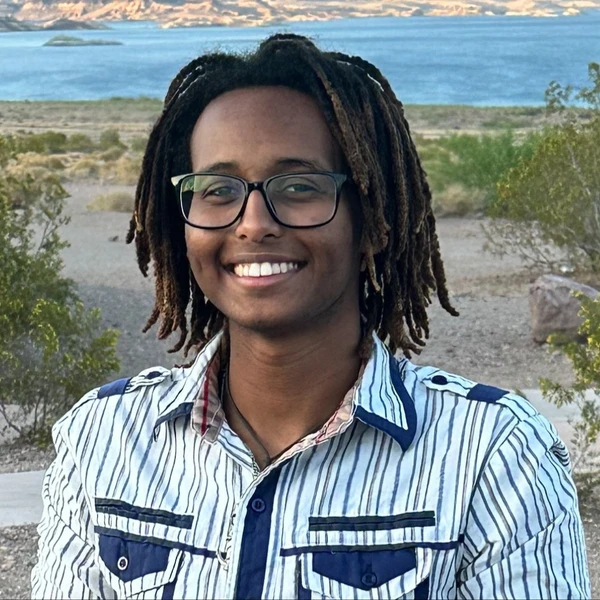
Hello! I'm Philipos, an incoming second-year at Harvard University, planning to study Electrical Engineering and Philosophy. At school, I am part of many organizations such as the Society for Black Scientists and Engineers, as well as the Ethiopian and Eritrean Students Association. In my free time, I enjoy journalistic writing as I did for my high school's newspaper and for a Harvard publication, learning fun facts so I am prepared when I get recruited to play Jeopardy, and hiking scenic trails.
Education
Harvard College
Bachelor's degree programMajors:
- Electrical and Computer Engineering
Minors:
- Philosophy
Miscellaneous
Desired degree level:
Master's degree program
Graduate schools of interest:
- Massachusetts Institute of Technology
- California Institute of Technology
- Stanford University
Transfer schools of interest:
Majors of interest:
- Electrical, Electronics, and Communications Engineering
- Energy Systems Engineering
- Environmental/Environmental Health Engineering
- Computational Science
- Philosophy
Career
Dream career field:
- Electrical/Electronic Manufacturing
Dream career goals:
Start my own engineering firm to benefit communities underserved by technology
Barista
Scooter's Coffee2024 – 20251 year
Sports
Taekwondo
Club2017 – 20225 years
Public services
Volunteering
Windmill Library — Teen Advisory Volunteer2024 – 2025
Future Interests
Advocacy
Politics
Volunteering
Philanthropy
Entrepreneurship
Hazel Joy Memorial Scholarship
"Why is my mom getting so fat?" This crude and naive question was bouncing around my 5 year old head as my mother entered the later stages of her pregnancy. While this was business as usual for my older brother, I had never experienced anything like this before.
I am going to have a little sister, Hermela.
I couldn't stop imagining the person she would be and the things we would do together. I could tell her about my imaginary friend (a seven foot tall hairy green monster with a heart of gold), we could make poorly edited iMovie short films on my worn out iPad, stay up past our bedtime watching cartoons, and one day I could teach her everything I knew about the world, the way my older brother did.
None of it ever happened. My mother was in a car accident while pregnant, and Hermela never made it. When she was born, she was already gone. I didn't cry. I didn't know what to feel. I was five years old and the concept of death wasn't something my young mind understood. All my plans, all my hopes for me and my little sister, would never be more than that. Hopes.
I ended up with two little brothers, who I wouldn't trade for the world. But I have never forgotten who Hermela could have been. Every time I drive past the graveyard where her tiny tombstone lays, I think about that other world, the one where my mom isn't the only girl in a house full of five guys, the one where I got to be the older brother she deserved. I think about the conversations we never had, the inside jokes that never formed, the person I would have grown into with her around.
What losing Hermela taught me, slowly, over years of thinking about it without always having the words for it, is that absence has its own kind of presence. She has never left our family. My mother still says her name. There is still a small marker in the ground that belongs to her. And I still carry around the version of her I invented in my head when I was five, curious and full of possibility, someone who deserved to grow up.
I don't think grief over someone you never got to know is less real than any other kind. In some ways it's harder, because there are no memories to hold onto, only the imagination of what might have been. What I've been left with is a deep awareness of how quickly something can be taken away before it even fully arrives, and how important it is to show up fully for the people who are still here. That's part of why I try to spend so much of my time in service of others, mentoring younger students, organizing events for high schoolers, showing up for people who need someone in their corner. I can't give Hermela the older brother I wanted to be for her. But I can be that for someone else.
She would have been in high school by now. I like to think she would have been brilliant.
RonranGlee Literary Scholarship
As the water shapes itself to the vessel that contains it, so a wise man adapts himself to circumstances." This line is taken from Confucius's Analects, a collection of his teachings compiled by his students. The entire comparison rests on one specific choice of wording.
Confucius doesn't say water is shaped by its container, he says water shapes itself. That distinction is the whole argument compressed into a single verb. It means water isn't a passive substance getting pushed into a form by something stronger than it. It's actively responding to whatever container it ends up in, doing the work of conforming rather than having that work done to it. The same goes for the wise man on the other side of the comparison. He doesn't get bent into shape by his circumstances the way a twig gets bent by wind. He adapts himself, on his own terms, even while the circumstances around him stay completely outside of his control.
This distinction matters because it changes what the whole comparison is actually about. If water were simply shaped by its container, the lesson would be about powerlessness, about being molded by forces bigger than yourself. But that's not what's being described here. The vessel sets the conditions, the size, the shape, the constraints, but water still has to do the work of conforming to it. The wise man is in the same position. His circumstances might not be ones he chose or wanted, but how he responds to them is still his own act, not something done to him.
Once that's clear, the next question is what's actually being preserved underneath all that shape shifting. Water is a specific thing for a reason here. It could have been sand, which also takes the shape of whatever holds it, but sand has no real identity of its own, it's just loose material with nothing connecting one grain to the next. Water isn't like that. Pour it into a bowl, a cup, a crack in a rock, and it changes shape every time, but it never stops being water. The boundary moves, the volume moves, but what it actually is stays exactly the same. That's the real point being made. Identity doesn't live in the outer shape. It lives somewhere underneath it, somewhere that adapting to new situations doesn't actually touch.
This is where the idea starts to push back against something most people assume without thinking about it, that staying consistent on the outside is the same thing as having integrity. Under that assumption, the wise man's flexibility would look almost dishonest, a person who changes depending on who's in the room, who has no fixed self because his behavior keeps shifting. But the water comparison doesn't accept that framing at all. It's suggesting that integrity isn't about behaving the same way every time. It's about staying the same underneath, no matter how many times the outside has to change. Someone who refuses to adjust their behavior in any situation, who insists on being identical everywhere, might think they're protecting their identity, but really they're just protecting their current shape. Confucius is pointing at something steadier than that, something that doesn't need defending because it was never at risk in the first place.
It's worth sitting with why Confucius reached for an image instead of stating this directly as a rule. He could have simply said something like, stay true to your values while adjusting your behavior to fit each situation. That would have been clear enough, but it would have left out something the metaphor captures almost by accident, which is that this kind of adaptability is not effortful in the way we usually imagine self-discipline to be. Water doesn't strain to take the shape of a new container. It doesn't deliberate, hesitate, or resist before conforming. The adaptation is instant and complete, which suggests that for the wise man, the same should eventually be true. The goal isn't to develop the willpower to force yourself into uncomfortable new shapes every time life demands it. The goal is to become the kind of person for whom that adjustment requires no force at all, because your sense of self was never tied to the shape in the first place. That's a much higher bar than simple flexibility. It's closer to a kind of inner stability so complete that the outer world can do whatever it wants without ever threatening it.
There's also something quietly difficult buried in this idea, something the line doesn't spell out directly but implies anyway. To take the shape of a new container, you have to actually see that container for what it is. Water doesn't argue with the shape it's poured into or pretend the container should be something else. It registers what's actually there and conforms to it immediately, without resistance. People aren't like that by default. We tend to walk into new situations with an idea of what we expect to find, and a lot of the time, we shape our behavior to match the expectation instead of the reality. Doing what water does, actually perceiving the container before responding to it, takes a kind of humility that's easy to talk about and hard to practice. It means setting aside your assumptions about a person or a situation long enough to let them show you what they actually are, instead of what you already decided they'd be.
I try to live by this, imperfectly, but as consistently as I can manage. I try to walk into every interaction assuming there's something in the other person worth understanding, on the theory that the people I least expect to teach me something are often exactly the ones who do. A few nights ago I was at a Cafe with a bar when a man who had clearly had a few drinks asked if he could talk to me for a minute. An earlier version of myself might have given a polite excuse and found a reason to leave. Instead I stayed, and what followed was one of the more genuinely interesting conversations I've had in months, an unfiltered, meandering account of a life I never would have come across if I'd assumed going in that it had nothing to offer me. Nothing about that conversation changed what I believe. But it changed my shape for the length of an evening, the way water changes shape without changing what it is, and I left with something I didn't walk in with.
That, I think, is what this line is actually describing. Not a person with no self, bending endlessly to please whoever's in front of them, but someone secure enough in their own substance that they can afford to take whatever shape the moment asks for. The vessels keep changing, one after another, for as long as anyone's alive.
Carla M. Champagne Memorial Scholarship
I was walking around the room, chatting with the other kids and teens at one of our weekly events, when I noticed a small boy out of the corner of my eye, hovering shyly at the edge of the room. He wasn't coming in, just watching from the doorway like he wasn't sure he was allowed to. I walked over and told him he could come join us. His eyes lit up almost instantly. I handed him a notebook and some markers, and within minutes he was a completely different kid, writing little messages, drawing landscapes, talking my ear off about everything he was making. By the end of the session he thanked me, genuinely, and I remember thinking that I had made that kid smile, even if only for a couple of hours. This was a journaling activity, one of many that I would help put together at my local library, and that feeling is what got me hooked on service.
That library became something of a second home for me throughout high school. Every week, I'd show up to organize events for younger patrons, journaling activities, reading hours, whatever I thought might get a shy kid in the corner to come find a reason to smile. What I learned from those afternoons wasn't anything complicated. It was that showing up consistently, week after week, matters more than any single grand gesture. Kids notice when an adult, or in my case a teenager who probably felt barely older than them, keeps showing up. That consistency builds a kind of trust that a one time event never can.
That lesson followed me to college, just in a different form. I now hold a leadership role with Take on College, a nonprofit that mentors first generation and underrepresented students through the college admissions process, the same process I had to navigate myself not long ago without much guidance. The stakes are different than a Thursday afternoon journaling session, but I carry with me the same wisdom I learned then. To be of service is to show up, be present, and help someone feel like they belong in a room they might otherwise hesitate to walk into. I think often about that boy at the library doorway, and how much of service is simply telling someone, in whatever form that takes, that they're welcome to come in.
I've tried to carry that same principle into my other work. Through the Harvard Society of Black Scientists and Engineers, I help organize events for local high schoolers, many of whom are encountering engineering and STEM as a real possibility for the first time, not just a school subject. I see versions of that same shy kid in the doorway, except now the question isn't whether they can join a journaling table, it's whether they can imagine themselves at a college like the one I attend, or in a field like the one I'm pursuing. The answer I want them to hear is the same one I gave that boy years ago: yes, come in, this is for you too.
Looking forward, I want to keep living by those principles, starting with younger kids who just need someone to notice them, then guiding high schoolers toward fields they might not have considered accessible, then mentoring college bound students through a process that can feel unfairly confusing. Service, to me, has never been about one big project. It's been about consistently showing up for people at whatever stage they're in, and making sure they know there's a place for them in the room.
Charles B. Brazelton Memorial Scholarship
My hair has always had something to say, and I have always listened.
I started growing my locs during sophomore year because I wanted something that was entirely my own. There's a particular freedom in locs, the way they grow on their own timeline, gathering length and experience the same way I've always wanted to move through the world, freely and fully on my own terms. My hair was a statement of identity and something I took genuine pride in maintaining, and when they reached a certain length at my predominantly non-black high school, they had become the most interesting thing in the room to a lot of people. Not in a hostile way most of the time, just in that particular way where you become aware that you are being perceived. Someone once asked me, with genuine curiosity, if I wash my hair. I didn't know whether to laugh or take their question seriously, so I did a little of both.
My 'other-ness' didn't stop when I cut my locs and bleached my hair during college either. Durags and bonnets, the completely ordinary tools of Black hair care that I use to protect and maintain something I care deeply about, somehow managed to draw the same attention walking by the dorms.
The majority of my time was spent in spaces, AP classrooms, study groups, college seminars, where I was often the only Black person in the room. And then I’d go home, or to a BSU meeting, and be completely myself, no code-switch required. The two worlds weren't in conflict, they were just separate, and I was one of the few people moving between them every single day.
What that position gave me became clear in a college seminar on economics and lived experience. I sat in a room full of bright, engaged students who had genuinely never had to think about what ordinary life looks like from a Black perspective, not because they were indifferent, but because nothing had ever required them to. I had spent years as the only Black student in the room, watching how differently the same systems land depending on who you are, and that seminar was the first time I realized the in-between place I'd always occupied wasn't a burden but an opportunity--one to give these bright students a chance to think about the world from the other side just as I have had to for so long.
I led my high school's Black Student Union as president, and the thing I kept coming back to was how much of that work was helping people understand experiences that weren't their own, building bridges between communities that lived side by side without really seeing each other. My hair, my locs, my durag, all the things that made me the most interesting thing in the room, turned out to be part of what made me good at that.
Stephan L. Daniels Lift As We Climb Scholarship
I was always good at math.
In elementary school, I was the kid who finished the worksheet early and got handed another one. In high school, I was the one whom other students asked for help before tests, the one who could explain why the formula worked, not just how to use it. People told me I should do something with numbers, something with science, something with engineering, and for a long time, that was enough. Being good at something felt like a reason to keep doing it.
But somewhere along the way, I started to notice that being good at something isn’t the same as having a reason to dedicate your life to it. Talent tells you what you can do, not what you should do or who it’s for. I could easily imagine a version of myself who became a competent engineer, solved interesting problems, and never once asked who those problems belonged to in the first place, content with that as the whole story. Fine isn’t a why.
I found my “why” slowly, mostly through the parts of my education that weren’t strictly technical. Studying philosophy alongside engineering forced me to sit with questions I couldn’t answer with a formula, questions about who gets listened to, who gets left out of decisions that affect them, and what responsibility someone with technical skill has toward people who don't have it. Those questions started showing up everywhere. Through Tech for Social Good, a subsidiary of the Harvard Computing Society focused on the ethics and social impact of technology, I helped put together a briefing on Indigenous data sovereignty for an organization that monitors rainforests using acoustic sensors and AI, and the experience made clear how quickly a technical question about building a system that listens to the forest becomes a question about who owns what that system hears and under whose laws.
I started looking for more chances to put that into practice. At a hackathon, I helped build a real time electric grid monitoring tool that pulled live data and translated it into dashboards for two very different audiences, grid operators and legislators, because the people who make decisions about energy infrastructure are often working with less information than the engineers who build it, and that gap has real consequences for the communities living near power plants and transmission lines.
That's also why I'm drawn to engineering in the energy sector long term, whether that's nuclear or elsewhere. It’s a field where the science is often outpaced by fear, and where communities, often the same communities I come from, have historically been sited near energy infrastructure without much say in the matter. I want to be the kind of engineer who can do the technical work and also sit in a room with the people affected by it and actually listen.
None of this is separate from where I started. Through Take on College, I mentor first-generation students navigating the same maze I had to figure out myself. Through the Harvard Society of Black Scientists and Engineers, I help run programming for our members, both academic and professional, and also organize events for local high schoolers, because I want them to see someone who looks like them and think that could be me, not as an exception, but as something normal.
I was always good at math. That’s not why I'm doing this anymore, but it's part of how I got here, and I'm grateful it gave me the tools to find a “why” worth keeping.