
Hobbies and interests
Band
Track and Field
Art
Reading
Reading
Mystery
I read books multiple times per month
Peyton Putnam
1x
Finalist
Peyton Putnam
1x
FinalistBio
I am a neuroscience and Spanish double major. After my undergraduate studies, I want to get my master's in psychology. My career goal is to be a children's neuropsychologist that is also able to work with Spanish-speaking families. I am very involved in college; I play rugby and I am also a member of our track & field team. During this time, I have received many awards (listed below) and also gained many valuable life lessons and relationships. I play clarinet in our symphonic band as well, as I believe that being well rounded is extremely important and music is very grounding for me. As a division III athlete I do not get financial assistance for sports, so I am looking for other ways to help support my education and my dreams.
Education
Baldwin Wallace University
Bachelor's degree programMajors:
- Foreign Languages, Literatures, and Linguistics, Other
- Neurobiology and Neurosciences
Shelby High School
High SchoolMiscellaneous
Desired degree level:
Master's degree program
Graduate schools of interest:
Transfer schools of interest:
Majors of interest:
- Neurobiology and Neurosciences
- Psychology, General
Career
Dream career field:
Mental Health Care
Dream career goals:
Sports Psychologist/Neuropsychologist
Tour guide
Westmeister Farm2024 – 20251 yearWaitress, Cook, Drive-through worker, Dishwasher
Paul's Drive In2025 – Present1 year
Sports
Soccer
Varsity2020 – 20222 years
Awards
- The Outstanding Leadership Award
Track & Field
Varsity2024 – Present2 years
Awards
- All OAC Athlete Women’s Pole Vault School Record All Great Lakes Regional Honors All Ohio Champion
Rugby
Club2024 – Present2 years
Awards
- All American Scholar Athlete
Track & Field
Varsity2020 – Present6 years
Awards
- Team Captain
Arts
Baldwin Wallace University
Music2024 – PresentShelby Whippet Theater
TheatreNo2022 – 2024Shelby Whippet Marching Band, Shelby Symphonic Band
MusicNo2017 – 2024
Public services
Volunteering
Teen Advisory Council — Member2019 – 2020
Future Interests
Entrepreneurship
Sloane Stephens Doc & Glo Scholarship
As a collegiate athlete in two sports, I know how difficult it can be to balance school, sports, a job, and relationships. My journey in college sports so far has been full of incredible learning experiences. I am a successful college pole vaulter, long jumper, and sprinter on our track team, and a wing on our rugby team. I am going into my junior year now, and so far have broken my own school record in pole vault 10 times, earned All-Conference honors 3 separate times, and been the All-Ohio Champion of the vault. In rugby, I have earned Scholastic All-American. Even with all of these achievements, one thing I notice myself struggling with from time to time is my mentality during, before, or after competitions. Sometimes the mental load is overwhelming, or maybe I had a bad exam, an argument with a friend, or a bad work shift. I found myself feeling a bit alone in this, even though I know there are other athletes on both of my teams experiencing similar challenges. For a while, I was not eating and sleeping enough just to stay on top of my work and school schedule while fitting in practices and early lifts. I would often go from track practice to rugby practice with only an hour in between, which is when I did homework. The mental strain was so significant that it was also causing physical strain. One day in the trainers office, while doing rehab for an ankle injury I overheard my athletic trainer talking to another student athlete about seeing a sports psychologist for their mental block. This was the first I had heard about this profession. I always knew that my calling resided in the mental health field, but a sports psychologist was never something I had considered. After hearing of this, I asked my trainer about the kinds of things a sports psychologist would do with their clients. This one conversation changed the whole plan I had set for my future. As a current neuroscience major, I started looking into switching to psychology and grad schools that offer sports psychology. I had gone through various different potential careers, but this one just felt right. There was not really a sense of uncertainty in whether I would enjoy it as a career. As an athlete who has struggled with my own mental health and mental load, I know first hand the things that can help other struggling athletes. I now have tools to help me balance my time and recovery and it has made all of the difference for me. These are things I would share with other struggling athletes. When I was little and people would ask me what I wanted to be when I grew up, I said a lot of different things but they all had one common theme: a helper. When I started getting older, instead of “what do I want to be”, I asked myself, “what problems do I want to solve?” I know that helping the world through mental health is my true calling. In being a sports psychologist, I want to make sure that every athlete knows it is okay to struggle and it is okay to feel overwhelmed. Most importantly, they will never be alone. Through my experiences, as I continue to grow, I will build a stronger foundation to further help others.
Henry Respert Alzheimer's and Dementia Awareness Scholarship
I can still remember the scent of the nursing home. It was filled with the strong kind of perfume that old ladies use, and that scent is now a constant reminder of my great grandma’s memory before she was tragically stolen from us by Alzheimer’s Disease (AD). As most AD cases go, she was not taken suddenly. She was taken piece by piece until all that was left was her body with an empty mind and blank stare. She could talk to us very easily, and it was always as if she was looking right through us. I will not forget the day I greeted her and she did not remember who I was. I was young, and I could not comprehend why someone I had known my whole life and had seen rather frequently did not recognize her own great grandchild. My family knew then that it was only a matter of time before the small fragments of what was left of her mind were gone too. My family would go and visit when we could, and we would always worry that a visit could be our last and we would not realize. We dreaded that every phone call from my grandma, her care taker, could be “the one”. The one that would tell us she was actually gone. My grandma, her daughter, would visit every day and sit with her in the nursing home. She played a vital role in making sure my great grandma got her medications, got to her appointments, and received proper care while she was there. This role drained my grandma because she also knew that we were fighting a losing battle against time. Her love for her mother helped her through these times, as well as the memories of when her mind was still present. We all helplessly watched while our great grandma slipped away slowly. I never truly understood when I was a child why my great grandma did not know who I was, or why she would become suddenly angry or scared. The whole experience, as traumatic and painful as it was, sparked an interest in me. A want to understand. I wanted to know how it could be prevented, stopped, treated, and most importantly, how I could help struggling families like mine cope with seeing their loved ones like this. My dad used to say that his grandma died long before the actual death of my great grandma. He said this because while she was physically here, her mind was gone and she was a whole different person. I know first hand how difficult it is to watch this happen to someone you love and care about. This is part of what has sparked my interest in the field of neuroscience and psychology. I feel that it is important for families to know they do not have to endure this alone. There are people out there going through the same or similar scenarios with their own loved ones. While there is no current cure for AD, there has been a significant amount of research in this field. I hope to contribute to the treatment and eventual cure for this so that nobody has to go through it or watch someone go through it this way again.
Kalia D. Davis Memorial Scholarship
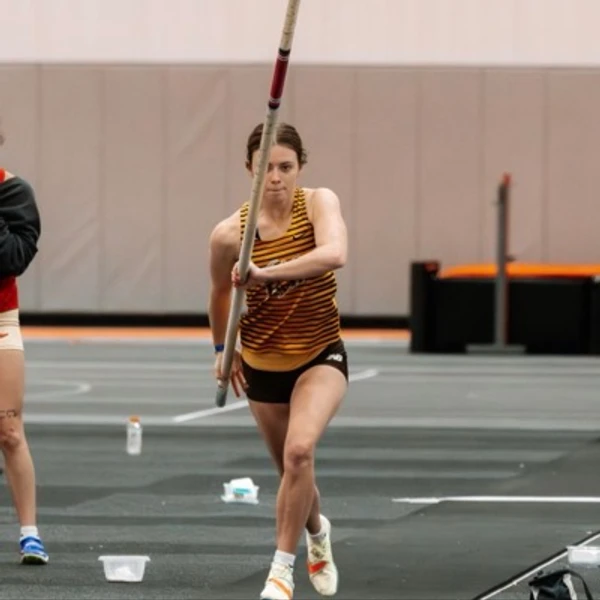
This is the story of how I went from doing pole vault without a coach for one year in high school to becoming the school record holder at my university. I am an upcoming junior in college at Baldwin Wallace University (BW). Since I was in the seventh grade, I have been a member of the track and field team. I started as a sprinter/hurdler, and I added in pole vault my senior year of high school. My mom stepped in as our "coach", just so we were able to pole vault. She was more of a supervisor than a coach, but we were just happy to be able to vault. I decided to continue my track career in college. I was not a standout athlete when I joined the BW team and from the moment I walked into our gym, I knew that was going to change. Instead of continuing my best event, the 300-meter hurdles, I went over to my worst event. Pole vault. It was the area I had the most room for growth in, and I had every intention of doing just that. I came into my freshman year of college only jumping eight feet. It was my high school personal best, and I had only jumped it one time. Practicing with these girls who had been jumping since they started track, I felt out of place and behind. I found myself comparing myself to these girls and wishing I could jump like they did. After a few weeks of practice, I started meditating and journaling. This helped me put my thoughts and worries out into the world rather than keeping them bottled up in my head in a sort of private sense. At first, I thought journaling was a silly thing to do. After just a week of doing it, I started comparing myself to the other girls less and I found something within me. I determined that the only way I was going to look and feel like I belonged was if I made that my reality. For months I worked tirelessly. I continued journaling, and I started noticing improvements in my form. It was so rewarding to see my extra time spent outside of practice doing drills paying off. This made me fall in love with the process of getting better. After a few meets and many practices of the indoor season, I had taken myself from barely an eight foot jumper to an almost eleven foot jumper. By the end of my freshman seasons of college (indoor and outdoor), I had broken our school record three times. That summer, I used the same work ethic and came back to BW stronger and faster. I ended by sophomore year with seven indoor records in pole vault broken and three outdoor pole vault records broken. I am now, after only three years of pole vault (two with a proper coach), a Division III All-Ohio Champion in pole vault, a two time All-OAC vaulter, and a 12 '4.75 jumper. If there is anything that this journey taught me, it is that one should never be afraid to dream bigger than even they think they can achieve. I never thought I would be where I am today, but if I never dreamt of it, I know I would not be. While reading about Kalia, I was reminded that we never truly know how long we have, and that every day is a gift that should be cherished. Every day offers endless possibilities, so if we dream big, work hard, and never give up, anything is possible.
Jake Thomas Williams Memorial Scholarship
The way I first found out about what suicide actually was was when my cousin took his own life. Unbeknownst to the rest of the family, he had been struggling with some kind of brain issues. Nobody had any idea until one day, we got the text that he had taken his own life. I do not remember his exact age, but he was no more than twenty years old at the time. My parents used this as an opportunity to tell me and my siblings that suicide is never a solution to any of our problems, no matter how scary they might be. They encouraged us to always talk to them or to anybody. They just wanted us to understand that this was an irreversible decision, and it had cost our cousin his life. A few years later, we learned that my sister had been harming herself. She was getting the help that she needed and has been on a positive recovery since then. I will never forget finding out that she was doing this, especially having lost my cousin to suicide a few years prior. I help helpless. I felt like I had done something wrong in allowing her to harm herself and never realizing. I felt like I had let her down. I could not understand how she could want to harm her beautiful self. From that day forward, I knew that my future career would reside in the mental health field. I cannot sit by and watch people I care about think that their problems are so big that the world would be better off without them. In being a psychologist, I will provide every client with a safe space to heal, to cry, to talk, or anything that they may need. Nobody deserves to feel like they are alone, or that they cannot talk to anybody about their feelings. No feeling is deep or too big, and every feeling deserves validation. I know I can make a difference in preventing suicide by simply listening. Through listening, I can provide clients with solutions to problems they may face, or I can simply provide them with someone who cares about their existence. Through the growing mental health issues in society, it is important to have meaningful relationships with those that we care about. You never truly know what anyone is going through in their personal life, and it is absolutely vital to treat everyone with kindness and respect. Nobody is alone, and nobody should feel like they have to suffer.
Deanna Ellis Memorial Scholarship
Growing up, I had never seen or experienced substance abuse in any way. When my parents divorced and one of them remarried, they married into a family of people who liked to drink heavily and often. I had never seen a drunk person before, and at a very young age I witnessed adults I should have been able to trust lose their minds to alcohol. This influenced my relationship with that side of my family. We grew distant because I, being an eight year old child, was afraid to be around them when they were drinking because they were not the same people as when they were sober. One night when I was 12 years old, I went to have a sleepover with my younger cousin. We were hanging out at her house in her bedroom while her parents and one of their friends were drinking downstairs. We were supposed to be asleep, but we were awake, talking and goofing around. Suddenly, we heard a loud thud and shouting from downstairs. I knew I needed to protect my cousin from whatever was going on, because I was the older one, and all three of the adults in the room where too drunk to realize what was happening. My uncle had punched the male friend in the face over a misunderstanding. I saw the blood on the floor, the broken glasses, and my aunt and uncle screaming at each other. My cousin began crying, and we both went into her room and shut the door and locked it. My dad and my grandma were together back at my house, so I called them. They came out and took me and my cousin to my house to get us safely away from the brutal scene we had encountered. On the way home, we saw the wrecked car on the side of the road of the person who had been punched. Luckily, we later found out that he was okay, but at the time we were so young and afraid that we just thought that he was dead. For a long time, I was terrified of being around alcohol at all. Even if it was someone I knew I could trust and they were only going to drink a small amount. It was a traumatic trigger, and I shut down even at the mention. I had seen the things it could do to people. I had seen how it turned my own family that I knew well into someone I did not even recognize. This has inspired me to go into a mental health field. I did not have anybody to turn to to fully talk about this story, because I was afraid of how they would see my uncle or the other person involved in the matter. I want to be a safe space for people who struggle with their own traumatic experiences. I want them to know that they are not alone and that their feelings are valid. I kept this story bottled up for years before I finally broke down one day and explained to my mom why I hated being around alcohol so much. Now, I can freely talk about it and I have been able to process and move through the trauma. Everyone’s voice deserves to be heard, and everyone deserves to feel safe. Nobody should have to live with a burden like that, and I will make the world a better place by offering a safe space to every person I encounter. You never truly know what someone has been through.
Bulkthreads.com's "Let's Aim Higher" Scholarship
As a collegiate athlete myself, I know the importance of mental health in performance. Going into college, I knew I wanted to work in the mental health field. I began in music therapy, switched to neuroscience, and now am wanting to pursue a career in sports psychology. I feel that people who are not athletes do not understand the impact that injuries or mental blocks can have on returning to the sport. In being a sports psychologist, I would want to start my own practice to work with athletes who are mentally struggling. I want to build a brand that athletes are able to trust and to go to without feeling “weak”. A lot of athletes I am friends with who are referred to sports psychologists do not go simply because they do not want to appear weak. I want to offer athletes a space where they are not feeling judged, but heard and understood. Being an athlete myself, I will be able to offer first hand experiences and connect with my clients on a deeper level. Not only will I assist them with overcoming their mental blocks, I also hope to educate them. I can help provide them with tools to assist them on their journey outside of athletics, or even ways to help their friends do the same things. By offering help outside of athletics, I hope to build a genuine connections with clients. This will help them with making true growth in their journeys because they have a relationship built on trust with their psychologist. Without trust, I would not be able to get through to clients as easily. From a young age, I have always asked myself, “what problem do I want to solve?” After discovering the field of sports psychology, I can confidently say that I have found my calling and I know that I can better the world one athlete at a time.
Ethel Hayes Destigmatization of Mental Health Scholarship
I am the second oldest child of eight other siblings. Growing up, I was always a care taker, especially since my only older sister was never around. One of my younger sisters started harming herself because of mental health struggles. My parents knew, and she was sent to therapy so she could get the help that she needed. During the times that we were still seeking help for her, I felt helpless. I felt like I was letting my sister down and like I was not doing enough for her. I was inspired to be the person that people who are mentally struggling could turn to. Too many people are not getting the help that they need because they are afraid to reach out. I want to be a psychologist, but on a deeper level, I want to be a safe space for people and children to be able to go to when they need help. No person or child should have to feel alone or like they need to harm themselves to be seen or to matter. Everyone comes from different backgrounds and it is important to be sensitive to any kind of trauma they may have weighing them down. In being a psychologist, I will make sure every client feels safe, heard, and that they can trust me. Trust is vital in order for any kind of healing process with my clients. I see the increasing mental health struggles in not only the people close to me, but also just people I have class with or pass in the hallways. I do not want to be a helpless bystander. I believe that my purpose is to help people with their silent battles, and to make sure they do not feel like they have to face them alone.
Charles B. Brazelton Memorial Scholarship
I have done sports my whole life. Something a little awkward is that I have also done music my whole life - I play clarinet. In high school, I was at the top of the band. I was a section leader, first chair, and the recipient of the Most Inspirational Bandsman Award. Band was my thing, and I went to college to major in music therapy; but I was also a member of the women's track and rugby teams. Being a conservatory major as well as an athlete was unheard of, and I was the first that the track team or my department head had heard of. Eventually, I learned that music therapy was not the best major choice for me and I switched to neuroscience and Spanish instead. With this new choice of major, I can still work in mental health, and most importantly to me, I was able to still play in our university symphonic band. Playing clarinet is something that I value greatly. I have played it for 9 years now, and it helps keep me grounded when my life as a STEM double major and athlete with a very busy schedule. When I first started on the track and field team here, I was nothing special. I was just another athlete adding to the numbers of the roster on this team. In only one year, I went and broke our pole vault school record multiple times. I am also on our A team relay, and I won our All-Ohio state championship in pole vault this spring. Many people do not know about my participation in the symphonic band. I try to invite them all to the concerts, as it is not a big thing that I try to keep secret. So far, some of my closer friends who are teammates have come, along with my sprinting coach. Sharing this side of the university with people who would normally never see it is special to me, and I am glad to be able to show it to them. Being a member of the symphonic band is just a little fun fact about me that most people do not know! I think that most people think you cannot be good at music and good at sports, but I am here to change the way that they think. I do not think that "band kids" should be made fun of by athletes, and vice versa. I hope to continue with my athletic career after college, and I hope to bring this idea with me and share it with the world.
Ernest Lee McLean Jr. : World Life Memorial Scholarship
I consider myself to be a people person. Not because I am extroverted, but because I understand people. I am often able to tell what people are feeling before they are able to put it into words. I like to think of it as my "superpower". When I was trying to decide what I wanted to do for my career, instead of asking myself, "what do I want to be when I grow up?", I considered "what problems do I want to solve?", and that is how I knew I wanted to work in the mental health field. All around me, I see people fighting heavy mental battles. Many of them are people close to me, and I feel helpless. I want to help them but there are things blocking that from happening. One of these blockers is the fact that many people struggling mentally are afraid to ask for help. They may think it makes them appear weak, or they may not be ready to face the reality/severity of their situations. In being a neuropsychologist, I will give people a safe and judgement free space to heal and cope. Having been to a therapist myself, I acknowledge that therapists may get a bad reputation because they just listen to your problems and nod along. This was my experience with two different therapists. I felt like I was not truly being helped, I was just talking at someone I did not know. When I am a neuropsychologist, I will make it absolutely certain that this is not the experience my clients have. I want their time with me to be something they can look forward to attending and eventually reflect on positively. When people dread going to their appointments, they get much less out of them than they do when they are excited about them. I specifically want to work with children because their mental health foundation in early childhood helps set the tone for the rest of their lives. It is important to help make them aware of their situations and give them ways to work through them, so they do not result in childhood trauma. I have noticed that childhood trauma has become a more wide-spread issue with the increasing usage of technology as well as teen parents. With the rising mental health crisis, I know that my rightful place in the world resides in this field and that I can make a difference.
Lieba’s Legacy Scholarship
Growing up in two blended families with eight total siblings has helped me realize that working with children is the best way for me to contribute to society. My siblings currently range from ages two to twenty-one. Among all of these siblings, I have seen some of them experience things that they should not have to because they are seen by society as "different". In being a children's neuropsychologist, I will give children with similar circumstances a safe place to be themselves while also helping them build the confidence to be freely themselves. My sister is someone who has a very bubbly and sparkly personality. She also has some neurodivergence that causes her to miss social cues, which contributes to her social anxiety. I watched her go from a girl who loved unicorns, slime, and glitter to a girl who liked nothing, and it made me sad. I could tell that she was emotionally struggling, and I felt helpless. While growing up with her, I noticed that if she was caught in a good mood in public, she went from being socially awkward and introverted to the most extroverted person in the room. With further reflection, I realized that this must mean that her nervous system felt safe. When she was socially and emotionally able to connect with people, she was better able to express herself and express her true needs. She was no longer hiding behind a mask of her true personality. This is one of many examples of things that have inspired me to work in the mental health field, particularly with children. When special children, or any child, is given a safe space to grow up, they are much more likely to have an adulthood where they are able to be themselves. It is becoming too common for children to grow up in unfit or unsafe homes, and this leads to childhood trauma that is very difficult to overcome. My sister has been working with her own mental health specialist to overcome some of the trauma that made her feel like she had to hide her true self and has been making slow progress. Most people just do not realize that trauma is not just something you can forget. It sticks with you and is triggered by certain things in everyday life. With my clients, I will provide them with a space where they do not have to hold back anything in order to meet their social-emotional needs.
DAC Rugby Scholarship
I have been a member of the Baldwin Wallace Women's Rugby team for two seasons now. I play in the fall for the 15's season. I did not play at all in high school- my mom played when she was in college and I wanted to try it. I am, and have always been, a smaller person. I weigh roughly 125 pounds, and my whole life people have called me "small", "fragile", and "weak". When I told my family I was playing rugby they all told me it was a bad idea, except for my mom. My mom told me to believe in myself and give it a shot, and she helped me to not let other people get to me. I am very lucky to have had such a welcoming group of girls as my team that made me feel right at home from the very first practice. When we first started tackling, I was scared. All of the girls were so much bigger and stronger than me, and I got tossed around. It was difficult to not let this discourage me. I felt like everyone who told me I could not do it was right, and that I should just quit. After a few more practices, I knew that I had to keep working. I wanted to be a part of this team with these amazing girls. I started lifting and focusing on eating enough to gain more muscle mass. I am a collegiate sprinter/pole vaulter as well, so it is important for me to maintain a leaner physique. We are a division III school, so I do not get scholarships for sports. After the first game I played, I could tell that I had gotten stronger, but I knew I still had a lot of work to do. After my first year of college, over the summer, I took my lifting and conditioning very seriously. Going into the fall season (2025), I was confident. There was no more second guessing my tackles or my game-time choices. As a wing, I better understood my role on the team and I was able to push through contact without being tackled, but more importantly, without being scared. Rugby taught me a sense of confidence in myself that I would have never thought possible. With this new confidence, I scored 5 tries in a single match, and I had never scored in my first season. I could see the growth that I had experienced, and I could visually see my hard work paying off. Rugby taught me that hard work truly does pay off. That is a phrase that as an athlete my whole life, I have heard a lot. I have always just gone through the motions and put effort into practice as I was in the moment. This was the first time I put in work outside of the season, and it is something I carry with me in track as well. It is the work you do outside of the pitch, the practices, and the season that will get you the farthest. I am so grateful to have had the opportunity to learn these valuable life lessons, and I will use them in my future sports and career. I am proud to say that I am a member of this team, and I would not change the turf burn scars and bruises for anything.
Anderson Women's Rugby Scholarship
When I first came to college, I had never even touched a rugby ball, but I knew I wanted to play. My mom played rugby when she was in college and I wanted to try it out to prove that I was not weak, and that I could handle it. I was instantly welcomed to the team by a group of girls who I was originally intimidated by. It was out of my comfort zone to approach them and tell them I was interested in joining the team because I am generally a small person. People told me I did not have "the body" for rugby when I told them I wanted to play. This team did not even think about that. They took me in and developed me into a strong, fast, and determined rugby player. My roommate joined the rugby team with me, and she is my now best friend. We share so many memories from playing rugby, and we will hold them close to our hearts for the rest of our lives. Unfortunately, I am unable to play in the spring 7s season because I am also a track athlete, but it has not stopped me from watching as many matches as I can. I watched them qualify for nationals (again) and ran out on the field with them to congratulate my family. They have also attended my track meets to support me off of the pitch, and it always means a lot to me to have them there. I grew up with eight siblings, and the rugby team here is like having 15 more sisters.
We do a lot of team bonding events that have brought us closer as a team. Every year we have a Halloween practice where we dress up, and then afterward we have a fire in the backyard of the rugby house. This close culture is very important to have for a team that functions well because you are tackling each other in practices, and you have to know that the other person is not necessarily trying to hurt you. We are just all trying to get better, and as a closer team we understand that. I truly believe that this team family culture is what has helped us qualify to nationals two years in a row, and even place runner up last spring. We are all here for each other and it keeps us going on the hard days. I would not trade my rugby sisters for anything in the world. They have all truly changed my life, and I am beyond grateful for each of them.
I feel it is important to note that we are a NCAA division III school, so I do not get any type of scholarship for participating.