Hobbies and interests
Volunteering
Reading
Leadership
I read books multiple times per month
Perla Mendoza Morfin
1x
Finalist
Perla Mendoza Morfin
1x
FinalistBio
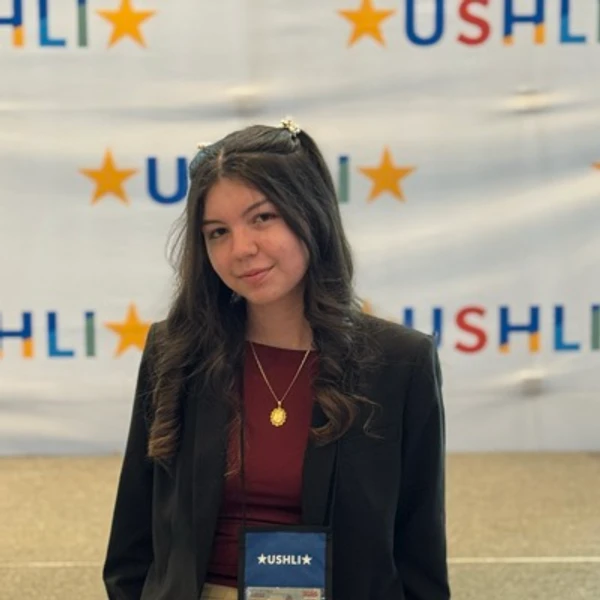
I am a first-generation college student and incoming freshman at Oregon State University, majoring in Public Policy in the honors college. I have a passion for civic engagement and advocacy. I graduated from high school as salutatorian, with over 59 college credits, and earned my Seal of Biliteracy in English and Spanish.
Throughout high school, I pursued opportunities that strengthened my leadership and commitment to public service. I was selected as a fellow in the NW Oregon Legislative Fellowship, where I gained firsthand experience with policymaking, civic engagement, and community advocacy. Within the school, I was committed to providing a positive, accessible, inclusive school environment through the Associated Student Body, where I served for 3 years.
My passion for advocacy has extended into my community, where I have organized students around local issues, including helping mobilize students to speak at a City Council meeting and organizing a safe and clear student walkout. Through these experiences, I have learned the importance of using my voice while creating opportunities for others to be heard.
Education
Oregon State University
Bachelor's degree programMajors:
- Public Policy Analysis
Mcminnville High School
High SchoolMiscellaneous
Desired degree level:
Bachelor's degree program
Graduate schools of interest:
Transfer schools of interest:
Majors of interest:
- Political Science and Government
- Public Policy Analysis
Career
Dream career field:
- Political Organization
Dream career goals:
State Legislator
- Altum Aesthetics2025 – Present1 year
Arts
McMinnville High School
Performance Art2022 – Present
Public services
Volunteering
Mission Mac High — Contestant/Fundriaser2024 – 2025Public Service (Politics)
Northwest Oregon Legislation Fellowship — Fellow2024 – PresentAdvocacy
McMinnville High School — Student Representative2023 – Present
Future Interests
Advocacy
Politics
Volunteering
Philanthropy
Carlos F. Garcia Muentes Scholarship
I’ve always seen myself in the monarch butterfly. There’s something about the chrysalis stage, where change is happening silently, invisibly, that reminds me of the personal transformation I’ve undergone. I’m still growing, still finding my wings, but I’ve made it through some of the hardest parts of that cocoon. Monarchs are also migrants, flying between Mexico and the U.S., a path that mirrors my family’s journey. My parents came here so their children could grow and thrive. Like the monarchs, they made that trip not for themselves, but for their future.
Growing up in Lafayette, Oregon, I quickly learned what it means to live with limited resources. I didn’t bring up field trips or camps because I knew my parents couldn’t afford them. I avoided certain advanced classes because I knew the required calculator was out of reach, and I didn’t want to add stress to my parents. I stayed quiet about what I needed, because survival came before asking for more.
Then came my lupus.
I was hospitalized for weeks in middle school and diagnosed with a complication that carries a high fatality rate. My mom stayed with me overnight. My dad drove 50 miles back and forth every day to bring us food. It was the middle of COVID. I was scared, in pain, and felt completely disconnected from the world I had been trying so hard to succeed in, all in hopes of making my parents proud. My confidence collapsed. My health became another system I had to learn how to navigate, and it wasn’t made for someone like me, who’s used to bottling stuff up. I had to learn to advocate for myself, to speak in medical terms, to demand to be seen not as a teenage girl rambling about symptoms, but as someone who knew her own body.
That hospitalization was a turning point. I realized I couldn’t just sit back and wait for things to improve, whether for myself or others. I began to use my voice: starting Latinx Sin Fronteras, fundraising for Doernbecher Children’s Hospital, and joining the Northwest Oregon Legislative Fellowship to see how policy could change lives. Each was a flap of my wings, a choice to keep moving forward, even when the wind forcefully pushed back. My experiences have made me more resilient, compassionate, and committed to creating positive change in my community and beyond. I was able to graduate from high school with an honors diploma, as salutatorian, with a seal of biliteracy, and as a commencement speaker. Those nights when I barely had any sleep were finally worth it on the night of graduation because I got to see my parents see that every event and volunteer opportunity they drove me to was worth it.
I see myself in public advocacy, using the same voice that once had to fight to be heard to uplift others who feel overlooked by the system. I want to be a leader who represents marginalized communities and builds bridges between people and policymakers. This scholarship would allow me to keep transforming: keep moving, keep growing, and eventually, keep giving back to the people and places that shaped me.
Like the monarch, I’ve learned that migration is not weakness; it’s survival. And the journey, even when long and full of struggle, is also full of purpose, hope, and the promise of new beginnings.
Begin Again Foundation Scholarship
We need to go to the hospital, were words I never thought I would hear. For over a month, I endured pain while going from doctor to doctor, hoping someone could tell me what was wrong. Every week, another possibility was ruled out. One thought: growing pains. Others had different explanations. But deep down, I knew something was wrong.
I had severe joint pain, back pain, fevers, and aches that felt like a sick and twisted game of Head, Shoulders, Knees, and Toes. As time went on, I even began questioning myself. If every doctor said nothing was wrong, was I somehow imagining the pain?
When I finally decided to go to the emergency room in May 2022, I remember one sentence that validated everything I had been feeling: She's not going home tonight. Yes. It was terrifying. But it also meant someone finally saw there was something wrong.
My heart rate was nearly 150 beats per minute, and I was transferred by ambulance to the children's hospital in Portland. There, doctors activated the sepsis protocol, gave me IV fluids and antibiotics, and monitored me closely because I was at risk of organ failure. I was just an eighth grader trying to go to school, volunteer, and spend time with friends, all while my body was fighting something no one knew about. I remember being wheeled into the room and seeing a bunch of nurses and doctors filling the room, ready to do everything in their power to help.
I spent 29 days in the hospital as specialists worked to find out what caused this flare. Morphine, oxycodone, Tylenol, and ibuprofen became part of my daily routine, yet even the strongest medications wouldn’t help my pain. After weeks of testing, I was diagnosed with systemic lupus erythematosus complicated by macrophage activation syndrome(MAS), a life-threatening complication. Just when I thought I was improving enough to attend my eighth-grade promotion and return to normal, I took another turn for the worse. My doctors tried one final medication, telling my mom, "This is either going to help, or it isn't." And, it did.
Although I was discharged a week after my promotion, my recovery was not over. After spending nearly a month confined to a hospital bed, I had to relearn how to walk through physical and occupational therapy while also learning how to live with a chronic illness.
My experience with sepsis and MAS changed the way I see life. It taught me to trust my body, advocate for myself, and never be afraid to ask for help. For weeks, I questioned whether my pain was real because I didn't have answers. But now, looking back, I realize that using your voice can literally save your life.
If I hadn’t chosen to call an end to that pain by seeking help that day, I truly don't believe I would be here today. Four years later, I graduated as Salutatorian, earned the Oregon State Seal of Biliteracy, and will attend Oregon State University to study Public Policy. Surviving that hospital experience gave me a greater purpose. It inspires me to use my voice to advocate for others who are still finding theirs and reminds me every day never to take an opportunity for granted.
Cooper Congress Scholarship
The first time I heard the phrase “Follow your heart,” it sounded like a simple cliché. But I’ve learned that following your heart isn’t about chasing every (im)pulse. It’s about listening to the quiet fire inside you that refuses to die out, even when life tries pouring a bucket of water on it.
As a first-generation Mexican American, I have witnessed resilience firsthand: from my parents immigrating to build a better future to their unwavering support for my chronic illness. Their sacrifices inspire me to give back to the Hispanic community that has shaped me. I used to think strength meant doing everything on my own. I would take on too much, hold in too many feelings, and push through pain with a smile. Living with lupus taught me otherwise. True strength is getting up when it would be easier to give up. It is having the courage to rest without guilt while still believing you can make an impact, even when you move more slowly than the rest of the world.
When I was hospitalized, I had no choice but to slow down. In that silence, I heard myself for the first time, not the version that tried to please everyone, but the version that believed deeply in doing something that mattered. That experience transformed my understanding of resilience. I realized that hardship only strengthened my desire to advocate for others through clubs and school groups like ASB.
Over the past few years, I have organized a student walkout to support immigrant families in my district, mobilized peers to speak at City Council meetings urging councilors to declare a state of emergency, and asked questions at town halls. Over the course of a week, I did all that. All of this led to me being on the cover of the local newspaper with a megaphone in hand. Someone once approached me, saying they had followed my journey and had seen me consistently stand up for others. That moment stood out to me because it reminded me that even small actions can make people feel represented and supported.
My activism continues through volunteering with Unidos Bridging Community, a local nonprofit, where I help create social media content addressing immigration issues. To me, advocacy is an ongoing responsibility to ensure my community feels protected, represented, and heard. These achievements may not seem like traditional awards, but to me, they are personal accomplishments that reflect how I have grown into the person I am today. My freshman-year self would have never imagined doing these things.
My sense of justice has always burned quietly beneath the surface. I see it in how I stand up for others, in how I listen before I speak, and in how I try to leave every space better than I found it. Leadership is not about being the loudest person in the room; it is about being authentic and compassionate. I was once a shy freshman who relied on others, but now I can let others rely on me because I know what it feels like not to have a voice. When I stand with a megaphone or sit in front of a microphone, my voice may still waver, but I stand tall knowing all the obstacles I have overcome and how much I have grown.
Each setback I’ve faced has given me more reason to act.
ASB 10-12th grade (August 2023-June 2025)
Contact lbertolo@msd.k12.or.us (503)565-5627
Unidos Bridging Community (November 2025-Present)
Contact ximena@unidosyamhillcounty.org (503)857-5377
Northwest Oregon Legislative Fellowship (August-October 2024)
Contact willfororegon@gmail.com
Selected for an 11-week program hosted by Oregon Majority Leader Rep. Ben Bowman.
Williams Foundation Trailblazer Scholarship
The first time I heard the phrase “Follow your heart,” it sounded like a simple cliché. But I’ve learned that following your heart isn’t about chasing every (im)pulse. It’s about listening to the quiet fire inside you that refuses to die out, even when life tries pouring a bucket of water on it.
As a first-generation Mexican American, I have witnessed resilience firsthand: from my parents immigrating to build a better future to their unwavering support for my chronic illness. Their sacrifices inspire me to give back to the Hispanic community that has shaped me. I used to think strength meant doing everything on my own. I would take on too much, hold in too many feelings, and push through pain with a smile. Living with lupus taught me otherwise. True strength is getting up when it would be easier to give up. It is having the courage to rest without guilt while still believing you can make an impact, even when you move more slowly than the rest of the world.
When I was hospitalized, I had no choice but to slow down. In that silence, I heard myself for the first time, not the version that tried to please everyone, but the version that believed deeply in doing something that mattered. That experience transformed my understanding of resilience. I realized that hardship only strengthened my desire to advocate for others.
Over the past few years, I have organized a student walkout to support immigrant families in my district, mobilized peers to speak at City Council meetings urging councilors to declare a state of emergency, and asked questions at town halls. Over the course of a week, I did all that. All of this led to me being on the cover of the local newspaper with a megaphone in hand. Someone once approached me, saying they had followed my journey and had seen me consistently stand up for others. That moment stood out to me because it reminded me that even small actions can make people feel represented and supported.
My activism continues through volunteering with Unidos, a local nonprofit, where I help create social media content addressing immigration issues. To me, advocacy is an ongoing responsibility to ensure my community feels protected, represented, and heard. These achievements may not seem like traditional awards, but to me, they are personal accomplishments that reflect how I have grown into the person I am today. My freshman-year self would have never imagined doing these things.
My sense of justice has always burned quietly beneath the surface. I see it in how I stand up for others, in how I listen before I speak, and in how I try to leave every space better than I found it. Leadership is not about being the loudest person in the room; it is about being authentic and compassionate. I was once a shy freshman who relied on others, but now I can let others rely on me because I know what it feels like not to have a voice. When I stand with a megaphone or sit in front of a microphone, my voice may still waver, but I stand tall knowing all the obstacles I have overcome and how much I have grown.
Each setback I’ve faced has given me more reason to act. When I identify problems, I want to solve them not for recognition, but for the community I serve. My fire within is anything but fragile; it is a compass guiding me toward the world I am meant to build.
Douglass M. Hamilton Memorial Scholarship
“Are you tired of being unable to do regular activities due to unbearable pain? Try the brand new arthritis cream today!”
I was five the first time I heard the word arthritis. It came from the TV, a commercial hidden between my cartoons, spoken through an overly cheery voice that promised relief in a bottle. All I knew about that word was that it was for old people. People with silver hair and aching bones. Something that was not me. Little did I know that silly word I first heard in a commercial would come back to not just haunt me but to live in me.
I was fourteen when the pain started. At first, it was just a limp. Then the pain began to spread. Knees. Ankles. Wrists. It felt like each of my joints was falling, one by one, like soldiers in battle. Although the only thing my body grew to know was pain, I kept volunteering. I limped through hallways, and I worked those school events, not for me but for my community. I was hurting at the end of the day, but I never stopped being me.
Explaining the pain to doctors had started feeling like I was playing a sick and twisted game of head, shoulders, knees, and toes. I’d point to a spot. Then another. And another. Yet the doctors didn’t believe me.
It’s just growing pains,” they’d repeat.
I could see it in their eyes, I was too smiley and too active to have arthritis. But they didn’t see the sleepless nights I’d spend icing and elevating my knees. They didn’t see me wincing in pain when I would climb up stairs or when I would grip pencils.
These encounters taught me not to give up asking for help. Consistency is key, I’d tell myself. I ended up going to the doctors once a week, hoping each time they would finally take me seriously and give an answer to my pain. They never did. One day, my body broke down. That night I went to the ER. There, they were able to put together the puzzle pieces. That ER visit turned into a month-long hospital stay. There, I finally had a diagnosis to explain my pain. Lupus with arthritic pain.
I live in a body that slowly betrays me every step I take. I try not to always talk about my condition because it is not who I am at all. But it’s there. Every day. In every step and choice I make.
Now, when I hear those commercials with an overly cheery voice saying, “Are you tired of being restricted…”, I want to laugh because I am tired. But I keep going, not letting anything stand in my way of reaching my dreams.
That hospital stay changed more than my diagnosis; it changed my understanding of resilience. While learning how to live in a body that constantly fought itself, I witnessed the unwavering support of my parents. My mom never left my side, even when the medications left me unconscious, and my dad quietly made sure I had everything I needed. Their sacrifices reminded me that perseverance was never mine alone.
College is my chance to grow beyond my comfort zone and use my education to give back to my community. Living with lupus has taught me empathy and the importance of using the voice I learned to use for others. At Oregon State, I hope to continue building bridges in my community, advocate for those who feel unheard, and honor the sacrifices my parents made so I could keep moving forward.
Rompe Las Fronteras Scholarship
I’ve always seen myself in the monarch butterfly. There’s something about the chrysalis stage, where change is happening silently, invisibly, that reminds me of the personal transformation I’ve undergone. I’m still growing, still finding my wings, but I’ve made it through some of the hardest parts of that cocoon. Monarchs are also migrants, flying between Mexico and the U.S., a path that mirrors my family’s journey. My parents came here so their children could grow and thrive. Like the monarchs, they made that trip not for themselves, but for their future.
Growing up in Lafayette, Oregon, I quickly learned what it means to live with limited resources. I didn’t bring up field trips or camps because I knew my parents couldn’t afford them. I avoided certain advanced classes because I knew the required calculator was out of reach, and I didn’t want to add stress to my parents. I stayed quiet about what I needed, because survival came before asking for more.
Then came my lupus.
I was hospitalized for weeks in middle school and diagnosed with a complication that carries a high fatality rate. My mom stayed with me overnight. My dad drove 50 miles back and forth every day to bring us food. It was the middle of COVID. I was scared, in pain, and felt completely disconnected from the world I had been trying so hard to succeed in, all in hopes of making my parents proud. My confidence collapsed. My health became another system I had to learn how to navigate, and it wasn’t made for someone like me, who’s used to bottling stuff up. I had to learn to advocate for myself, to speak in medical terms, to demand to be seen not as a teenage girl rambling about symptoms, but as someone who knew her own body.
That hospitalization was a turning point. I realized I couldn’t just sit back and wait for things to improve, whether for myself or others. I began to use my voice: starting Latinx Sin Fronteras, fundraising for Doernbecher Children’s Hospital, and joining the Northwest Oregon Legislative Fellowship to see how policy could change lives. Each was a flap of my wings, a choice to keep moving forward, even when the wind forcefully pushed back. My experiences have made me more resilient, compassionate, and committed to creating positive change in my community and beyond.
Ten years from now, I see myself in public advocacy, using the same voice that once had to fight to be heard to uplift others who feel overlooked by the system. I want to be a leader who represents marginalized communities and builds bridges between people and policymakers. This scholarship would allow me to keep transforming: keep moving, keep growing, and eventually, keep giving back to the people and places that shaped me.
Like the monarch, I’ve learned that migration is not weakness; it’s survival. And the journey, even when long and full of struggle, is also full of purpose, hope, and the promise of new beginnings.
Dr. Tien Vo Federal Agents To-Be and Public Service Scholarship
Sat in a circle of desks, fingers fidgeting with the charm on my necklace, I listened as classmates answered the icebreaker question:
“What’s one word to describe yourself?”
“Creative.” “Loyal.” “Funny.”
As the voices moved around the room, I collected their words like cards. When it was my turn, I stitched together a safe answer that didn’t feel like me. That’s how I existed, carefully copying others to blend in. Like an NPC, I was there, but not truly living. At that point in my life, I didn’t really have a voice; I was just a parrot. But once I was diagnosed with lupus, my life did a complete 180, and I had to learn how to use my voice. The thing that helped me be able to discover the voice within me was the strong sense of justice. I am constantly driven by it, and when I see a challenge within my school, I always try to find a solution. What makes me unique is that I use my connections within student leadership to ensure everyone’s voice is heard. This commitment is something I owe to the students I represent as a student leader.
Through student leadership, I’ve discovered my passion for representing my community. That is why I want to continue giving back by becoming a public servant and representing my community through the legislature. I’ve known what it’s like to go without a voice, and through learning to use mine, I’ve learned the process, and I don’t want the time I spent finding my voice to go to waste. My perspective as a first-generation Mexican-American with a chronic illness has shaped, and will continue to shape, how I approach the future. Being Mexican-American, I have often become the voice for my parents, translating for them. Having lupus has taught me to advocate for myself and ensure that doctors listen.
Last year, I had the opportunity to be part of the Northwest Oregon Legislative Fellowship, led by Majority Leader Ben Bowman. I experienced firsthand what it’s like to run for office and what the job involves. Through that fellowship, my passion for serving my community grew stronger, especially as someone bilingual. Speaking more than one language opens doors not only for me but also for those around me, helping them communicate freely and feel understood. I met with the legislators' constituents while canvassing, learning about their perspectives and noticing the language barriers that exist. I also think it’s important to recognize that despite these language barriers, we still represent them because they live where the representatives and senators are responsible for creating policies that reflect their values, since we’re all contributing to the same society.
If I were to receive this scholarship, I would be able to worry a little less about being first to pursue higher education, allowing me to focus on giving back to my community and serving others.