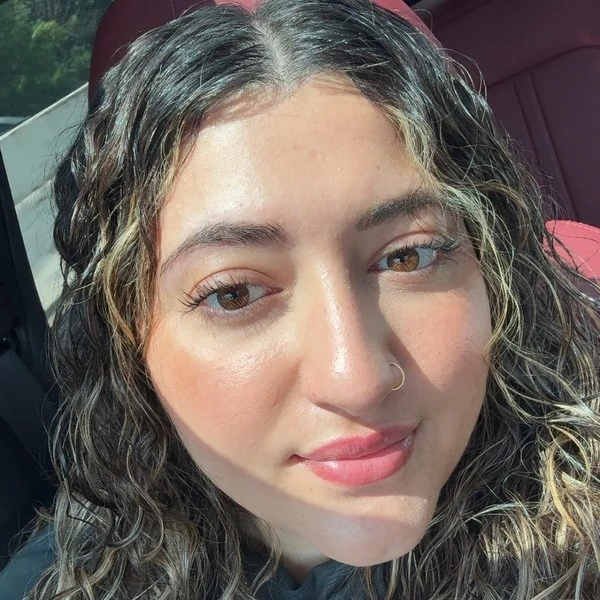
Wilson County, TN
Gender
Female
Ethnicity
Middle Eastern
Religion
Muslim
Hobbies and interests
Hiking And Backpacking
Camping
Travel And Tourism
Cooking
Community Service And Volunteering
Painting and Studio Art
Crafting
Fishing
Baking
Reading
Academic
I read books daily
FIRST GENERATION STUDENT
Yes
Perjin Burhan
1x
FinalistPerjin Burhan
1x
FinalistBio
My name is Perjin, and I am a dedicated nursing student with a strong passion for helping others. I value the time I spend with my family and friends, as they keep me grounded and motivated. Serving my community is important to me, and I strive to make a positive impact wherever I can. With a career in nursing, I hope to continue caring for others and uplifting those around me.
Education
Galen College of Nursing
Associate's degree programMajors:
- Registered Nursing, Nursing Administration, Nursing Research and Clinical Nursing
Minors:
- Registered Nursing, Nursing Administration, Nursing Research and Clinical Nursing
GPA:
3.6
Miscellaneous
Desired degree level:
Master's degree program
Graduate schools of interest:
Transfer schools of interest:
Majors of interest:
- Alternative and Complementary Medicine and Medical Systems, General
Career
Dream career field:
Hospital & Health Care
Dream career goals:
Nurse Practitioner
Er Patient Care Tech
HCA2021 – Present5 years
Sports
Volleyball
Intramural2017 – 20203 years
Research
Biology, General
Middle Tennessee State University (MTSU) — Undergraduate Research Assistant2025 – 2025
Arts
n/a
Painting2013 – Present
Public services
Volunteering
St. Jude — Volunteer2025 – 2025
Future Interests
Advocacy
Volunteering
Entrepreneurship
Raise Me Up to DO GOOD Scholarship
Being raised by immigrant parents from Kurdistan has profoundly shaped my character, values, and future aspirations. My parents came to the United States with very little. They did not have financial security, established connections, or full fluency in English. What they did have was determination, faith, and a deep belief that their sacrifices would create better opportunities for their children. In 2005, they opened their own restaurant, building it from the ground up through relentless hard work and resilience. Watching them turn uncertainty into stability and vision into reality has been one of the most formative influences in my life.
Growing up in our family’s restaurant exposed me to the true meaning of dedication. I watched my parents work long hours, often sacrificing rest and comfort to ensure the business succeeded. There were moments of financial stress and exhaustion, yet they remained consistent and hopeful. They approached every challenge with the mindset that obstacles were temporary and perseverance was permanent. Their work ethic taught me that success is not immediate, and it is rarely easy, but it is possible with discipline and patience.
Beyond hard work, I learned the value of service. Our restaurant was more than a source of income. It became a place where people gathered, celebrated milestones, and built community. I observed my parents greet customers warmly, remember their stories, and treat everyone with respect regardless of background. They modeled generosity and humility in action. Through them, I understood that serving others is not simply about providing a product or service. It is about creating an environment where people feel welcomed, valued, and cared for.
Today, as a nursing student, I carry those lessons with me into the classroom and clinical settings. Nursing school has challenged me academically and personally. The rigor of the coursework, the responsibility of patient care, and the emotional weight of clinical experiences require resilience and compassion. In many ways, I see reflections of my parents’ journey in my own. Just as they built something meaningful through sacrifice and persistence, I am building my future through discipline and purpose. Their example reminds me to remain steady in difficult moments and to approach every opportunity with gratitude.
Being the daughter of immigrants has also given me a deep sense of responsibility. I recognize that my education is not just a personal achievement. It is the continuation of my parents’ sacrifices. They worked tirelessly so that I could focus on learning and pursuing a profession centered on helping others. That awareness motivates me to give my best effort, knowing that my success represents more than myself.
In the future, I plan to use my nursing degree to serve diverse communities with empathy, cultural awareness, and integrity. I want to advocate for patients who may feel unheard, especially those navigating language barriers or unfamiliar healthcare systems. I hope to contribute to environments where compassion and competence go hand in hand. Ultimately, my goal is not only to provide safe and effective care, but to make patients feel respected and supported during vulnerable moments.
My parents built opportunity from nothing. Because of them, I have the privilege to pursue a meaningful career in nursing. I am committed to honoring their sacrifices by using my education and talents to uplift others and create lasting, positive impact within the communities I serve.
Pay It Forward Scholarship
I chose to pursue nursing because I believe that some of the most powerful moments in healthcare are not just about treatment, but about presence. Throughout my academic journey as a biology student, I have been fascinated by the complexity of the human body and the intricate systems that allow it to function. Studying physiology strengthened my appreciation for the science behind healing, but it also made me realize that knowledge alone is not enough. I did not want to simply understand disease; I wanted to be directly involved in caring for the person experiencing it.
Nursing stood out to me because it represents both intellect and heart. Nurses are often the steady presence in a room filled with uncertainty. They are the ones who notice subtle changes, who sit beside patients when fear feels overwhelming, and who advocate when someone feels unheard. That combination of clinical responsibility and emotional awareness deeply resonates with me. I am drawn to the trust patients place in nurses and the impact that compassionate care can have on a person’s experience during vulnerable moments.
My academic path has not always been easy. Balancing rigorous science courses while managing stress has taught me resilience, discipline, and the importance of mental strength. Those challenges have strengthened my desire to serve in a field where perseverance and empathy are equally valued. Nursing requires critical thinking under pressure, strong communication skills, and the ability to remain calm in high stakes situations. These are qualities I am actively developing and refining through my education.
In the future, I hope to use my nursing degree to work in a high acuity setting such as critical care or emergency nursing, where quick decision making and teamwork can directly impact patient outcomes. I am motivated by environments that challenge me to grow and think critically, while still allowing me to connect meaningfully with patients and families. I want to be the kind of nurse who not only administers medications and monitors vital signs, but who also reassures a frightened patient, explains procedures clearly, and provides comfort during moments of uncertainty.
Beyond clinical practice, I hope to continue advancing my education and expanding my impact within healthcare. Whether that means pursuing advanced practice nursing or contributing to community health initiatives, my ultimate goal is to serve with competence, integrity, and compassion. I want my patients to feel safe, respected, and heard in my care.
For me, nursing is more than a career choice. It is a commitment to service, growth, and humanity. It is the opportunity to combine scientific understanding with genuine compassion, and to make a meaningful difference in the lives of others during some of their most vulnerable moments. That responsibility is one I am honored and determined to carry forward.
Skin, Bones, Hearts & Private Parts Scholarship for Nurse Practitioners, Physician Assistants, and Registered Nurse Students
My motivation for pursuing advanced education in nursing comes from the desire to care for people during some of the most vulnerable and overwhelming moments of their lives. Nursing is a unique profession because it requires both scientific knowledge and emotional intelligence. Nurses are present for the details that others sometimes overlook. They advocate for patients, ease their fear, and help families understand what is happening when everything feels confusing. I want to be that kind of support for others.
Growing up Kurdish and Muslim in the United States, I saw family members struggle to navigate healthcare due to language differences, cultural expectations, and a lack of representation. Sometimes appointments felt intimidating, and it often fell on younger family members to translate, ask questions, and make sure nothing important was missed. Those experiences stayed with me and made me realize how important it is for patients to feel understood, respected, and safe. Nursing allows me to combine my interest in medicine with my dedication to serving communities that deserve better access to compassionate care.
I am also motivated by the ability to continue growing throughout my career. Nursing offers endless opportunities for specialization, leadership, research, and advanced practice. I see nursing not just as a job, but as a lifelong commitment to learning, service, and advocacy. Along the way, I hope to be a role model for younger Kurdish and Muslim students who may feel unsure about entering fields where they rarely see people who look like them.
This scholarship would benefit me by easing the financial burden of nursing school. The cost of tuition, uniforms, clinical supplies, textbooks, and testing fees can add up quickly. Receiving this support would allow me to focus more fully on my education instead of worrying about how to cover expenses. It would also make it easier for me to participate in clinical experiences, volunteering, and other opportunities that strengthen my preparation to become a nurse. Nursing school is demanding, and financial assistance provides the freedom to give the program the time, energy, and attention it requires.
This scholarship would not only support my academic journey, but also help me move closer to my long term goal of serving patients and communities with compassion, cultural sensitivity, and respect. I believe nursing has the power to change lives, and I am grateful for every step that brings me closer to becoming part of that change.
Zedikiah Randolph Memorial Scholarship
My name is Perjin Burhan, and I am Kurdish and Muslim. Growing up as part of a community that is culturally rich yet underrepresented in the United States shaped the way I see the world and the kind of future I want to be part of. Being Kurdish taught me resilience, and being Muslim taught me compassion and a commitment to service. Those values guided my decision to pursue a degree in healthcare.
I chose my degree program because I wanted a career that combines science with humanity. Healthcare allows me to care for people during their most vulnerable moments and to advocate for those who do not always feel like they have a voice. I have watched family members navigate the medical system while dealing with language differences, cultural misunderstandings, and a lack of familiarity with how things worked. I often translated, asked questions, and offered emotional support. Through that experience I saw how healing is not only physical, but emotional and cultural. That is when I realized that I wanted to become a healthcare provider who could make that process easier and less intimidating for someone else.
I hope to make an impact on my community by becoming a trusted resource for people who are often overlooked. As a Kurdish Muslim woman in healthcare, I carry experiences that help me understand the importance of cultural sensitivity and representation. My community values family, dignity, modesty, and privacy, and those values directly affect how people approach healthcare decisions. I want patients from minority backgrounds to feel respected and understood rather than judged or dismissed.
Representation matters, and that is part of what motivates me. Kurdish and Muslim individuals are extremely underrepresented in healthcare in the United States. While there is no exact national statistic, it is clear that we make up a very small fraction of medical and nursing students. In many programs, it would not surprise me if we represent fewer than one percent. Being one of the few is not discouraging to me. It reminds me that someone has to be among the first in order to make room for others.
I want to inspire the next generation by showing that it is possible to enter fields where our communities have not historically been visible. Sometimes young people do not pursue certain careers simply because they have never seen anyone who looks like them or shares their background succeed in that space. By pursuing my degree, I hope to become proof that they belong too. I want to mentor, encourage, and support future Kurdish and Muslim students who dream of careers in healthcare.
My goal is not only to build a career for myself, but to open doors for those who come after me. If I can do that, then I will have already made a difference.
Sabrina Carpenter Superfan Scholarship
I became a fan of Sabrina Carpenter long before I ever knew she would become a pop star. I first watched her on television, and what made me love her was how natural she seemed on screen. She was funny, expressive, and had a spark that made her stand out even as a young actress. Watching her on shows became something special that I shared with my sister. We would sit together and follow the episodes every week, quoting lines, laughing at the funny moments, and arguing playfully about which character was our favorite. It became our little ritual, and Sabrina was at the center of it without ever knowing it. Those memories are still some of my favorites because they felt simple and comforting, and they brought me and my sister closer.
As Sabrina’s career grew, I found myself growing with her. She shifted from television into music, and seeing her evolve felt inspiring. She went from someone we watched on screen to someone who wrote her own songs, told her own stories, and created her own identity as an artist. There is something powerful about watching someone fight to be taken seriously while also staying true to who they are. It made me think about how people are allowed to grow and reinvent themselves, even if others expect them to stay the same.
Her career impacted me by showing that talent can have many forms and that you do not have to choose one version of yourself forever. She went from acting to singing to performing on massive stages, and that reminded me that dreams are not limited to just one path. It also reminded me of how important it is to do what makes you happy, even when people underestimate you.
Being a fan has always been about more than just the music or the shows. For me, it is about the memories attached to them and the feeling of watching someone evolve over time. Sabrina brought joy into my home without knowing it and gave me and my sister something to bond over. That is why I am a fan, and that is why her career has mattered to me.
Taylor Swift Fan Scholarship
The performance that moved me the most was Taylor singing “All Too Well (10 Minute Version)” during the Eras Tour. I had heard the song countless times before, but hearing it live made it feel completely new. It was no longer just a story about heartbreak. It became a story about growing up, surviving disappointment, and finding your voice again. I did not expect a song to make me reflect on my own life, yet it did.
There was no glittering choreography or bright distractions during that performance. It was just Taylor, a guitar, and a crowd of people who all seemed to be remembering someone or something. I felt like I was part of a massive diary entry, and somehow everyone understood the same page. The stadium was loud, but at the same time it felt strangely intimate. I remember looking around and seeing people crying, laughing, and holding hands. That moment reminded me that heartbreak is universal, but healing can be shared too.
What made the performance personal for me was the way she delivered it. She did not sing it with bitterness. She sang it with acceptance. There was a kind of peace in her voice. It made me think of all the times I tried to make sense of things that hurt me, whether it was the loss of someone I loved or the feeling of being misunderstood. Hearing her sing that song with so much clarity made me realize how much strength it takes to look back without breaking. It showed me that pain does not have to define you. It can shape you instead.
To me, that performance captures what “The Life of A Showgirl” means. It is not just about fame or spotlight. It is about turning memories into art and allowing others to feel less alone because of it. Taylor has a way of taking her own past and giving it back to people in a way that helps them heal. That night, I felt like she was singing to thousands of strangers and somehow all of us felt understood.
MastoKids.org Educational Scholarship
Mast cell related conditions change life in ways most people never think about. They rearrange priorities, friendships, and routines. They make the body feel unpredictable and they make the future feel uncertain. My cousin has a mast cell condition, and watching what she has gone through opened a world I never would have seen without her illness. For a long time, I focused on the difficulty of it all, but the question of gratitude made me think differently.
What I am most grateful for is the way her condition brought honesty into our lives. Before she got sick, I never realized how often people hide discomfort to make others feel better. My cousin did not have that luxury. Her body told the truth whether she wanted it to or not, and being around that kind of vulnerability changed me. It made our family slower to judge, quicker to listen, and more willing to ask real questions instead of pretending everything was fine. Without her condition, I do not think I would have learned how important honesty is when it comes to health, emotions, and relationships.
I am also grateful for the community it introduced us to. The world of rare and chronic illness is full of people who have learned how to survive things they never asked for. They understand fear, uncertainty, and frustration in ways others cannot. They celebrate victories most people would overlook, like a day without symptoms or a meal that does not cause a reaction. Seeing the strength and humor inside that community taught me that resilience does not always look loud or heroic. Sometimes it looks like adapting quietly and refusing to give up.
Another thing I am grateful for is the softness it created in my cousin and in those who care for her. Being sick made her more patient with others, more forgiving, and more aware of how fragile life can be. It also made our family gentler. We learned how to support someone without trying to fix them, how to make space for their needs, and how to love people in whatever form they wake up in that day.
Finally, I am grateful for the way her condition changed the way I view healthcare and my future. It made me want to advocate for patients who are misunderstood, dismissed, or told their symptoms are imagined. Without mast cell disease, I do not think I would have found that purpose.
I would never claim that illness is a blessing, but I can say that it made me grateful for the kind of connection and understanding that only comes from going through something hard. Those are things I would not have known without my cousin’s mast cell disease, and they shaped both who I am and who I want to become.
Eden Alaine Memorial Scholarship
Loss has a way of changing the rhythm of life. When I lost my uncle to gun violence and my cousin to ovarian cancer, my understanding of grief, safety, and health shifted in ways I did not expect. These were not distant tragedies. They were sudden absences that left my family quieter, more protective, and more aware of how fragile life is.
Losing my uncle to gun violence introduced me to a type of loss that felt senseless. There was no medical explanation to make sense of it. There was only shock, anger, and unanswered questions. Watching my family carry that grief showed me how trauma can ripple through generations. It taught me that violence affects more than the person who dies. It affects children, parents, siblings, and entire communities who must relearn how to feel safe. It made me more aware of how important emotional support and community resources are when families face unexpected tragedy.
Losing my cousin to ovarian cancer was a different kind of heartbreak. Her illness was slow and filled with hope, appointments, treatments, and constant searching for more time. This loss taught me how illness steals energy, independence, and identity long before it takes life. It also taught me how strong the human spirit can be. My cousin was young, with dreams she still wanted to chase. Even while sick, she cared more about how others were feeling than about herself. Her kindness during a time of suffering left a lasting impression on me.
Both losses shaped my life by teaching me empathy at an age when most people are not thinking about mortality. They taught me to pay attention to how people carry pain, because not all pain is obvious and not all wounds are physical. These experiences also influenced my decision to pursue a career in healthcare. I saw how much of the world revolves around staying healthy, and how deeply it hurts when health is taken away or when safety cannot be guaranteed. I want to make a difference for families who are facing fear, uncertainty, or grief. I want to be someone who listens, explains, and helps people feel less alone.
Losing my uncle and cousin taught me that life is fragile but also meaningful. Their absence pushed me toward compassion, purpose, and a desire to help others through their hardest moments. I carry them with me in every goal I set and every step I take toward my future.
RELEVANCE Scholarship
My decision to pursue a career in medicine did not come from a single moment, but from a series of personal challenges that shaped the way I understand struggle, resilience, and healing. Growing up in an immigrant community, I watched people I cared about navigate life with both strength and silence. Emotional pain was often handled privately, and physical illness was sometimes approached with hesitation, fear, or mistrust. These challenges taught me that health is not only biological. It is cultural, emotional, and deeply personal. That realization is what first made medicine feel meaningful to me.
One of the hardest challenges I faced was learning to advocate for my family in medical settings. Translating at doctor visits or helping relatives understand diagnoses showed me how easily confusion and vulnerability can take over when someone feels different or out of place. I witnessed how language barriers, cultural misunderstandings, and limited knowledge about the American healthcare system could make a clinic or hospital feel intimidating. Those experiences built a quiet sense of responsibility in me. I wanted to make healthcare feel more human and less frightening, especially for people who feel unseen.
Another challenge was learning to manage expectations in a community that values hard work but rarely talks about mental health. Stress, anxiety, and burnout were treated like temporary inconveniences rather than emotional wounds. Going through my own periods of self doubt and pressure made me realize that mental health deserves the same attention as physical health. It also taught me that compassion is not optional in medicine. It is the foundation of trust between a patient and a provider.
These experiences are the reason I want to enter the medical field. They influence not only what I want to do, but how I want to do it. I want to provide care that respects cultural identity, language, and belief systems. I want to be a provider who listens to the unspoken concerns beneath symptoms: the fear of missing work, the financial stress of medication, the embarrassment of not understanding terminology, or the emotional weight of being chronically ill. Medicine is not just about extending life. It is about improving the quality of the life someone has.
My personal challenges will help me make a positive impact in healthcare because they taught me empathy, patience, and persistence. They taught me how to sit with discomfort and how to move forward even when things feel heavy. They also taught me that people come to healthcare not only with bodies, but with stories. I want those stories to matter. My goal is to create space for patients who have been overlooked and to bring dignity to the moments when they feel the most vulnerable.
My experiences have shaped me into someone who wants to heal, advocate, and understand. That is the type of provider I hope to become.
Sammy Hason, Sr. Memorial Scholarship
I plan to improve the lives of others through a career in healthcare by combining clinical knowledge with compassion, cultural sensitivity, and patient advocacy. I believe healing involves the mind just as much as the body and that patients do best when they feel respected, understood, and informed. My goal is to become a provider who collaborates with patients rather than simply treating them, because people deserve to participate in their care and not feel like bystanders in their own medical journey.
I am especially drawn to caring for patients with lung disease and rare medical conditions. Lung disease affects one of the most essential functions of human life: breathing. When breathing becomes difficult, everything else becomes more difficult. Physical activity, sleep, independence, and confidence are all impacted. It can also create fear and emotional distress, because struggling for air is both physically uncomfortable and psychologically overwhelming. Treatment for respiratory illnesses often requires long term management, which can exhaust and discourage patients. My aim is to provide care that addresses both the physical treatment and the emotional weight that comes with chronic illness.
Rare medical conditions bring a different set of challenges. Many patients wait years for a diagnosis because their symptoms do not match common patterns. They may see multiple providers and undergo numerous tests, only to feel more confused than when they began. Once diagnosed, they may discover that treatment options are limited or that few specialists fully understand their condition. Patients often become their own researchers, educators, and advocates simply to receive appropriate care. That level of responsibility can be isolating and exhausting.
In my future career, I hope to support these patients in three important ways. The first is education. When patients understand what is happening in their bodies, what their medications do, and what to expect in the future, they gain a sense of control. Education reduces anxiety, improves adherence to treatment, and helps patients ask better questions. It transforms fear into understanding.
The second is advocacy. Many patients with rare or chronic conditions struggle to be taken seriously. With rare disease, the lack of awareness is often the barrier. With lung disease, stigma is sometimes the barrier, especially when others make assumptions about lifestyle or behavior. I want to be a provider who fights for my patients, helps them navigate complex systems, and ensures their concerns are not dismissed.
The third is compassion. Healthcare can be fast paced and task oriented, but compassion gives patients dignity. Sometimes there is no instant cure, but there is always room for comfort, validation, and human connection. Listening without rushing, acknowledging frustration, or celebrating small improvements can significantly change a patient’s experience.
My pie in the sky dream is to produce care that honors the resilience of patients with rare and chronic conditions. Through healthcare, I hope to give people more breath, more clarity, and more hope.
Harvest Scholarship for Women Dreamers
My “pie in the sky” dream is to become a healthcare provider who builds bridges between cultures and communities that often feel forgotten. I want to work in medicine in a way that is not only clinical but deeply human, focusing on patients who are underserved or overlooked because of language, identity, or socioeconomic barriers. I want to serve people who hesitate to seek care because they feel misunderstood, disrespected, or unseen. My dream is to become the kind of provider who makes others feel safe enough to tell the truth about their bodies and their lives, because that is where real healing begins.
This dream feels both inspiring and slightly out of reach because it requires more than academic success. It requires emotional intelligence, courage, and the ability to carry other people’s pain without losing yourself. It requires years of training, resilience through failure, and the patience to gain trust from communities that have learned not to trust easily. It also requires breaking barriers for myself as someone who did not grow up seeing healthcare providers who looked like me, spoke like me, or understood the cultural nuances I carry. The idea of becoming that person for others is what makes the dream worth chasing, even when it scares me.
The spark for this dream came from caregiving long before I realized it was caregiving. Translating for family members at medical appointments, advocating for relatives who felt dismissed, and watching the confusion that comes from cultural misunderstandings showed me how much health is influenced by communication. Later, working and studying in the medical field confirmed that the body does not exist separately from culture, fear, or identity. I saw how small moments of kindness could change a patient’s entire experience, and how a lack of cultural sensitivity could do the opposite. Those observations were simple, but they were powerful enough to shape my future.
The steps to reach this dream are demanding but possible. First, I need to continue my education and clinical training with an open mind. I must strengthen my medical knowledge, communication skills, and ability to navigate high stress environments. I also need to expand my cultural competence by listening intentionally to the experiences of patients and providers from different backgrounds. That includes learning how to recognize my own biases and blind spots, because medicine requires humility as much as intelligence.
Second, I must seek experiences that stretch me. That means volunteering in clinics, working with underserved populations, shadowing providers I admire, and placing myself in environments that challenge my comfort. Growth rarely happens in familiar places.
Finally, I need to preserve my empathy. Burnout, discouragement, and self doubt can all make a dream feel far away, but they are also part of the process. I believe the dream stays alive by remembering who I want to serve and why.
My pie in the sky dream is not simply to work in medicine, but to change how people experience it. Even if it feels out of reach now, I am committed to moving toward it one step and one patient at a time.
Audra Dominguez "Be Brave" Scholarship
Adversity has been one of the most consistent teachers in my life, especially as I work toward a career in the medical field. I realized early that ambition on its own is never enough. You need consistency, patience, emotional strength, and the willingness to adapt when life becomes heavy. When I faced setbacks, whether academic or personal, I learned to respond by breaking my challenges into steps I could actually control.
During periods of stress and overwhelm, I taught myself to pause before reacting. I made a habit of writing down my goals and asking myself why they mattered in the first place. Returning to my purpose helped me move through moments when I doubted myself or questioned whether I belonged. When I struggled academically, I created new study routines, asked more questions in class, sought tutoring, and communicated more directly with instructors instead of isolating myself or pretending I did not need help. When personal and family responsibilities challenged my focus, I adjusted my schedule, leaned on my faith, journaled, and allowed myself to ask for support from people I trusted. I learned that resilience does not always look powerful or dramatic. Sometimes it looks like showing up to class tired, studying in the car during a short break, or completing applications at midnight because there was no other time available.
Mental and emotional adversity took even more work to acknowledge. Stress, grief, and anxiety can make long term goals feel distant and unrealistic. To protect my aspirations, I started prioritizing mental health in the same way I prioritized academics. I gave myself permission to rest and to recover. I learned how to set boundaries, how to pace myself, and how to talk openly about what I was feeling rather than pretending I was unaffected. Ironically, the decision to slow down at times made me faster and stronger in the long run.
My career aspiration is to work in healthcare where patients depend on providers who can remain composed while still showing empathy. The adversity I have faced has prepared me for that environment. It taught me how to think clearly when things go wrong, how to manage stress, and how to remain compassionate even when I am under pressure. It also taught me the importance of emotional intelligence, cultural sensitivity, and patience, all of which are essential for working with diverse patients and families.
Most importantly, adversity taught me that success is rarely a straight line. Achievement is a collection of setbacks, adjustments, and small victories that slowly build into something meaningful. Every challenge I have faced has strengthened my motivation to continue moving forward. Adversity did not push me off my career path. It made me more prepared for the work I hope to do in the future.
ADHDAdvisor Scholarship for Health Students
Supporting mental health has been a meaningful part of my life long before I realized it could be part of my future career. I grew up in a community where emotional struggles were rarely spoken about openly. Friends and family often carried their stress, anxiety, or trauma quietly, which taught me how important it is to have at least one person who listens without judgment. Over time, I became that person for many around me. Whether it was a friend dealing with family conflict, a younger cousin struggling in school, or a coworker overwhelmed with life changes, I learned how to hold space for people, validate their feelings, and help them reflect without trying to fix them too quickly. Sometimes support looked like gentle advice or grounding reminders. Other times it meant just being physically present, checking in regularly, or helping someone access resources they did not know existed.
Being there for others has shaped my view of mental health as something that exists in everyday interactions, not only in clinical settings. Many people never reach a therapist or crisis line, but they do reach the people in their lives. That realization has influenced how I want to approach my education and career. I plan to enter the medical field because I believe healthcare is not only physical but emotional. Patients often make decisions based on fear, stress, cultural expectations, or past experiences. A compassionate provider can make the difference between someone seeking treatment or avoiding it entirely.
Through my studies, I aim to build the skills and knowledge to support mental and emotional well-being in a more structured and informed way. I want to help reduce stigma, especially within immigrant and minority communities where mental health is still misunderstood or minimized. In my future career, I hope to practice culturally sensitive care that recognizes how background, identity, and family dynamics shape mental health. I want my patients and peers to feel seen, respected, and safe, whether they are dealing with stress, grief, burnout, or trauma.
Ultimately, I hope to combine empathy with education. I want to keep listening, supporting, and advocating for mental health in clinical settings and in everyday life so more people feel less alone and more empowered to heal.
Love Island Fan Scholarship
Challenge Title:
“The Rumor Relay”
Concept / Vibe:
A twisty, chaotic communication challenge designed to test how well couples trust each other, how quickly misinformation spreads, and who can keep their cool when emotions get stirred. It mixes whisper-style “telephone,” strategic decision-making, and juicy reveals to maximize villa drama while still being lighthearted and fun.
Setup:
• Islanders are divided into mixed-gender pairs (not necessarily couples).
• A long obstacle-style course is built outside with stations.
• At the start, each pair is given a short sealed card with a statement about the villa, like:
“Someone said their head could turn.”
“One islander wants to recouple.”
“A boy said he’s not sure about his couple.”
“A girl says sparks are missing.”
(Statements are real or fake, chosen by producers to test reactions.)
• Only one partner in each pair can read the statement.
Gameplay:
Phase 1: Whisper & Run
The partner who reads the card whispers the statement to their teammate (NO repeats allowed).
The teammate must sprint through an obstacle course (tires, inflatable barriers, water cannons, etc.) to reach the next station.
Phase 2: Memory Pass
At station two, the teammate must repeat the rumor as close as possible to the original wording to a new islander from a different pair.
That islander now carries the rumor to the next station, continuing the relay.
Phase 3: Final Drop
Once the rumor reaches the end of the line, the final islander must write down the statement exactly as they heard it.
Statements are compared to the original.
Scoring:
Points are awarded for:
✔ Accuracy (how close to original wording)
✔ Speed (time through the course)
✔ Minimal distortion of meaning
Bonus points for pairs who maintain composure and don’t argue during the course (judged by narrator/host).
The Spice Twist:
After all teams finish, the host announces which statements were fake gossip and which were real things overheard in the villa earlier that week (caught from convos at the kitchen, firepit, dressing room, etc.).
This creates:
• Drama
• Defensive explanations
• Flirty denials
• Confessions
• Shock reactions
The Reveal Ceremony:
Each couple is called up and the “rumor chain” is read out loud:
• Original statement → each distorted version → final written rumor
Examples:
Original: “A boy said he isn’t 100% closed off.”
Final: “A guy wants to leave his girl.”
Chaos ensues.
Prize / Stakes:
Couple with best accuracy + speed wins:
• Night in the Hideaway OR
• A compatibility vote advantage (like sending one couple on a date or saving a pair later)
Lowest-scoring pair must:
• Do a “Truth Box” where they pull cards and answer spicy questions from producers OR
• Assign another couple to do it — adding strategy.
Kim Moon Bae Underrepresented Students Scholarship
My identity as a Kurdish woman living in the United States has shaped the way I see my place in the world and the possibilities available to me. Kurds make up one of the largest stateless ethnic groups in the world, yet our history, culture, and struggles are often overlooked. Growing up in America, I lived in two worlds at the same time: the Kurdish world I came from and the American world I navigated daily. That duality became one of my strongest sources of motivation and resilience. It taught me how to adapt, how to communicate across differences, and how to challenge expectations placed on me as a member of an underrepresented minority.
Being Kurdish means being part of a community that has survived displacement, suppression of language, and political instability. My parents carried those experiences with them, even after arriving in the United States. Our home was filled with Kurdish music, food, and stories about where we came from, but outside our house I rarely encountered recognition of our identity. Most people didn’t know who Kurds were or assumed we did not exist. As a child, this created a sense of invisibility. I saw how easy it was for an entire culture to be erased simply because others did not know to look for it.
That invisibility pushed me to speak up, not just for myself but for the generations before me who did not have the chance. It also informed my understanding of underrepresentation. Minority status is not only about numbers; it is about the power to be seen, heard, and understood. For Kurds, that power has been historically limited. By growing up in the United States, I learned the value of occupying spaces we were never invited into and insisting our stories belong there too.
As I grew older, I realized my Kurdish identity connected directly to the way I approach education and my future goals. My parents sacrificed stability so their children could have opportunities they never had. Watching them rebuild their lives taught me to never take education for granted. It also taught me the responsibility that comes with opportunity. Pursuing higher education is not only a personal achievement—it represents a step forward for my family and community.
Living in America also exposed me to the privilege of access: access to healthcare, education, safety, and resources that many Kurds around the world are still fighting for. That awareness motivates me toward a career where I can support others who are overlooked or underserved. Underrepresentation in healthcare, particularly among ethnic and immigrant populations, reinforces health disparities and cultural barriers. As someone who has translated for family members at medical appointments, I understand how language and trust shape patient outcomes. These experiences have pushed me toward working in the medical field, where I hope to advocate for better cultural competency and more inclusive care.
My Kurdish identity has shaped my path by grounding me in resilience, empathy, and representation. It has also shaped how I view my future. I want to continue becoming a bridge between cultures—someone who helps people who feel unseen or misunderstood gain access to the support they deserve. I carry the history of my people with me, and although we remain underrepresented, I believe visibility begins with individuals who refuse to disappear.
I may be only one Kurdish student pursuing my goals in America, but I hope my journey opens doors for others. My identity is not an obstacle; it is my drive, my responsibility, and the foundation for what I plan to accomplish.
MJ Strength in Care Scholarship
My journey into nursing began with loss, healing, and the compassion of one person who chose to listen. I was deeply affected when my cousin, who was like a sister to me, passed away from ovarian and stomach cancer. Watching someone I loved so dearly suffer and feeling helpless during her final months changed me. I saw the power of compassionate care—the nurses who not only treated her pain but also treated her with dignity, love, and presence. That experience planted the first seed of my calling to nursing.
Later in life, I faced my own medical illness that was overlooked for years, largely because of my age. Many professionals dismissed my symptoms or brushed them aside, leaving me frustrated and feeling unheard. It wasn’t until one dedicated nurse practitioner took the time to truly listen, investigate, and advocate for me that I finally received answers. That moment shaped everything for me. It showed me how powerful empathy and persistence can be in healthcare. Her dedication not only changed my health but gave me a sense of direction—I wanted to be that person for someone else.
Working as a Patient Care Technician in the emergency department has only strengthened that desire. Every shift is unpredictable, but it’s also full of purpose. I see firsthand the difference that patience, teamwork, and compassion make in moments of crisis. Whether I’m holding someone’s hand during a panic attack or assisting during a trauma, I’m reminded that nursing is more than a profession—it’s a privilege. It’s the honor of meeting people at their most vulnerable and providing care that restores not just the body, but the spirit.
My values—compassion, dedication, and service—are rooted in my family. My parents and grandparents have always taught me that caring for others is one of the purest forms of strength. Visiting my grandparents brings me peace and perspective. They remind me to slow down, appreciate small moments, and never lose sight of who I am beyond my scrubs. Spending time with family grounds me and gives me the emotional balance I need to stay steady in a demanding field.
Outside of nursing, one of my greatest passions is being outdoors. Hiking and exploring waterfalls across Tennessee have become my therapy. There’s something incredibly freeing about disconnecting from the noise of everyday life and immersing myself in nature. The sound of rushing water, the challenge of the trail, and the quiet solitude all help me recharge. Hiking has taught me patience and endurance—qualities that mirror nursing itself. Both require persistence, balance, and appreciation for the journey, even when the path is steep.
I’m also passionate about volunteering. Giving back to the community allows me to connect with people outside of a clinical setting and to contribute to something bigger than myself. Whether it’s health fairs, charity events, or community outreach, I believe small acts of kindness ripple outward in powerful ways. Volunteering reminds me why I chose this path—to make an impact, even in simple, human ways.
Ultimately, my inspiration to pursue nursing comes from a combination of loss, hope, and gratitude. I want to be the kind of nurse who listens when others overlook, who advocates when others give up, and who cares deeply even when the outcome isn’t perfect. My cousin’s memory and that nurse practitioner’s compassion live at the core of my purpose.
Nursing is more than a career for me—it’s a calling built on empathy, resilience, and the belief that every life deserves care that goes beyond the surface. Outside of the hospital, my passions for family, nature, and service keep me balanced and remind me that healing happens in many forms. I strive to live a life that reflects compassion both in and out of my scrubs—to bring hope to others the same way hope was once brought to me.
College Connect Resilience Award
To me, resilience means the ability to keep moving forward despite challenges, to adapt when life doesn’t go as planned, and to find strength in moments of weakness. Living with ADHD and rheumatoid arthritis (RA) has taught me that resilience isn’t about being unaffected by obstacles—it’s about learning to rise each time they appear. These conditions have tested my patience and focus, but they’ve also given me purpose, discipline, and a deeper sense of empathy for others.
Balancing college life, a chronic illness, and working as a Patient Care Technician in the emergency department hasn’t been easy. ADHD affects my ability to focus, stay organized, and manage time efficiently, while rheumatoid arthritis brings unpredictable physical pain and fatigue. Some mornings, the stiffness in my joints makes it hard to even get out of bed, yet I remind myself why I’m doing this—to help others who are struggling, both physically and emotionally. Living with these challenges has forced me to develop strong habits, like planning ahead, breaking tasks into smaller goals, and giving myself grace when things don’t go perfectly.
In school, resilience means pushing through the mental fog and the self-doubt that ADHD often brings. It means finding creative strategies to learn, like using visual aids, setting reminders, and taking breaks to stay focused. It also means advocating for myself and not being afraid to ask for support when I need it. Having RA has taught me patience—there are days I have to slow down and take care of my body, even when my mind wants to move faster. Instead of viewing that as weakness, I’ve learned to see it as balance. My conditions have helped me become more self-aware, more disciplined, and more compassionate toward myself and others.
Working in the ER has shown me what true resilience looks like in action. I’ve seen patients fight through pain and fear, and it reminds me that strength isn’t about perfection—it’s about persistence. When I’m caring for someone in crisis, I draw from my own experiences with discomfort and uncertainty. It allows me to connect on a human level, to be more patient and understanding. There’s a certain kind of empathy that comes from knowing what it’s like to struggle, and that perspective makes me a better caregiver and a more determined student.
Resilience, to me, means not giving up when your body or mind tells you to slow down—it means listening, adjusting, and continuing forward anyway. As a college student with ADHD and rheumatoid arthritis, I’ve learned that progress doesn’t always look the same for everyone. Some days it’s about acing an exam or excelling at work; other days it’s simply about showing up and doing my best. My goal is to use my journey to inspire others with chronic conditions to keep going—to know that they are capable of great things, even when the odds seem stacked against them. Resilience isn’t about avoiding struggle; it’s about using it to build strength, compassion, and purpose.
Johnna's Legacy Memorial Scholarship
Living with a chronic medical condition—whether directly or indirectly—has changed the way I view life, strength, and purpose. It has tested my patience, shaped my empathy, and motivated me to turn hardship into hope for others. While I won’t disclose the specific diagnosis, I can say that its challenges have had a profound impact on who I am today and the direction of my goals in healthcare.
The experience taught me that strength isn’t always about physical ability; it’s about mental and emotional endurance. There were moments when the weight of uncertainty felt overwhelming—times when I had to learn to adapt, to accept what I couldn’t control, and to focus on what I could. Instead of letting it hold me back, I chose to see it as a lesson in resilience. I learned how to slow down, listen to my body, and develop patience not only with myself but with others facing invisible battles. These experiences gave me a deeper understanding of compassion and the importance of treating every patient as more than their condition.
What inspires me to excel despite these limitations is the reminder that every obstacle I face can become someone else’s source of encouragement. I’ve seen how compassion and understanding can change a person’s outlook. Whether through my work in the emergency room or in everyday interactions, I strive to be a reminder that strength comes from perseverance. My motivation comes from knowing that I can use my experience to connect with others on a level beyond medicine—emotionally and spiritually. It’s what drives me to push through exhaustion, to study harder, and to show up for patients with empathy and purpose.
Living through this experience has also shaped my career goals. It’s one of the reasons I chose to pursue nursing. I want to be the person who understands what it feels like to sit on both sides of the hospital bed—the one offering care, but also the one who has needed it. My journey has given me a unique perspective on the power of small gestures: a reassuring voice, a patient explanation, or a comforting presence. I want to carry that forward into my work as an emergency or flight nurse, where every moment counts and compassion is just as vital as clinical skill.
Ultimately, I want to use my story to empower others to see that their challenges don’t define them—they refine them. I hope to show people that even with limitations, they can lead meaningful, impactful lives. My goal is to create an environment—both in healthcare and beyond—where people feel seen, supported, and inspired to keep going. Living with or alongside a chronic condition has not made me weaker; it has made me more human, more determined, and more committed to helping others find strength in their own stories.
Boatswain’s Mate Third Class Antonie Bernard Thomas Memorial Scholarship
Working as a Patient Care Technician in the Emergency Room in Nashville has strengthened my ability to lead, stay resilient, and care for others in high-stress situations. The ER is fast-paced and unpredictable, requiring focus, teamwork, and empathy. Through this experience, I’ve developed five key traits that guide my work each day: leadership and communication, resilience, unselfishness, focus, and a strong work ethic. These qualities not only define how I care for patients but also how I move toward my goal of becoming an emergency or flight nurse.
Strong leadership and communication skills
Leadership in the ER means staying calm and organized while helping others do the same. I take initiative during critical situations by anticipating the nurses’ needs, preparing supplies, and communicating clearly with the team. I also make it a priority to speak reassuringly to patients, especially those in pain or fear. Good communication builds trust and keeps patient care flowing smoothly. To me, leadership isn’t about control—it’s about creating unity, promoting safety, and setting a positive example for others.
Resilient
The ER can be emotionally and physically draining. Some days are filled with trauma cases and heartbreaking losses, but I’ve learned how to remain composed and move forward. Resilience means staying strong for the next patient, no matter what just happened. I’ve developed the ability to adapt quickly, manage stress, and stay positive under pressure. My resilience pushes me to keep learning and growing, even when the job gets tough.
Unselfish
Being unselfish is one of the most important parts of healthcare. I constantly put others’ needs before my own, whether that means helping a coworker finish tasks, cleaning rooms so the next patient can be seen faster, or comforting someone who has no family at their bedside. I’ve learned that even small acts of kindness can make a big difference. When the ER is busy, I don’t think twice about stepping in where I’m needed most. Unselfishness builds teamwork and trust, both of which are essential in patient care.
Focused and determined
In emergency medicine, focus and determination are critical. I give my full attention to every task, from drawing labs to assisting in trauma cases. My determination extends beyond work—I’m driven to advance my career and become a nurse who can handle critical care situations with confidence and skill. My goal is to become a flight nurse, combining my emergency experience with advanced training to care for patients in life-threatening conditions. This dream keeps me motivated and focused every day.
Strong work ethic
I pride myself on my reliability and consistency. I arrive early, stay late if needed, and never cut corners. My team knows they can depend on me, whether it’s during a routine task or an emergency. A strong work ethic means doing every job with integrity, no matter how small, because every detail matters in patient care.
Future goals and meaning of leadership
My goal is to become an emergency or flight nurse who provides calm, skilled care in chaotic situations. I’m pursuing my degree to expand my knowledge, strengthen my clinical judgment, and make a greater impact on patients’ lives. To me, leadership means using compassion, teamwork, and strength to guide others. It’s about being dependable, encouraging growth, and staying composed under pressure. I strive to be a nurse who leads with integrity, inspires others, and delivers care that truly makes a difference.
Liz & Wayne Matson Jr. Caregiver Scholarship
Working as a Patient Care Technician in the emergency room has been one of the most transformative experiences of my life, shaping my goals, my journey, and my identity. Every day, I encounter patients facing a wide range of medical challenges—from minor injuries to life-threatening emergencies. This environment has taught me that healthcare is not just about administering treatments; it is about understanding people, building trust, and advocating for those who may not have a voice.
As a first-generation college student and the child of immigrants, I have always been aware of the barriers that can prevent people from accessing care. Growing up, I watched my parents work tirelessly to provide for our family, often navigating the healthcare system without full understanding of language or procedures. These experiences instilled in me a deep empathy for those who feel overlooked or misunderstood. In the ER, I often care for patients who are homeless, non-English speaking, or otherwise vulnerable, and I find great purpose in being someone who notices them, listens to them, and ensures they are treated with dignity. Whether it’s explaining a procedure, holding a hand, or simply making sure a patient is comfortable, I have seen how small acts of care can provide hope and reassurance in moments of fear and uncertainty.
My caregiving experience has also profoundly influenced my professional goals. Working in a fast-paced, unpredictable environment has shown me the importance of teamwork, adaptability, and critical thinking. It has reinforced my desire to become a nurse, where I can expand my knowledge and skills to provide comprehensive care, educate patients, and advocate for marginalized communities. I am especially motivated to work with populations who face systemic barriers, ensuring they receive equitable treatment and access to health resources.
These experiences have also shaped my identity. I have learned resilience, patience, and the importance of human connection. I have grown more aware of social disparities and the unique challenges faced by underserved populations. Being a caregiver has strengthened my commitment to empathy and advocacy, both in my professional and personal life. It has reinforced the values I learned from my family: compassion, community, and the responsibility to help others whenever possible.
Ultimately, my time as a PCT has confirmed that nursing is not just a career for me—it is a calling. It allows me to combine my love for science with my dedication to service, turning empathy into action and knowledge into meaningful care. It has shaped the way I see the world, the way I see others, and the kind of nurse and person I aspire to be: one who lifts up the underserved, honors the dignity of every patient, and makes a lasting impact in both individual lives and the broader community.
Equity Elevate Scholarship
My life experiences have greatly influenced my decision to pursue nursing as a career. As a first-generation college student and the child of immigrants, I grew up witnessing firsthand the challenges my family faced in accessing healthcare. My parents worked tirelessly to provide for our family, but language barriers, financial limitations, and unfamiliarity with the healthcare system often made medical appointments stressful and intimidating. From a young age, I found myself stepping in to help—translating, asking questions on their behalf, and offering comfort when they were worried or unsure. These experiences opened my eyes to the profound impact that a caring and knowledgeable healthcare professional can have on a person’s life, and they inspired me to pursue a path where I could provide that same support for others.
Growing up in a close-knit family also instilled in me a strong sense of empathy and compassion. I witnessed how small gestures—listening attentively, offering encouragement, or simply being present during difficult moments—could bring comfort and reassurance. I realized that healing is not only about treating a condition but about supporting the whole person emotionally and physically. Nursing embodies this combination of skill, science, and human connection, which is why it feels like a natural and fulfilling career path for me.
My experiences within my community have further shaped my desire to become a nurse. Volunteering, helping neighbors, and supporting friends in times of need taught me that service and care extend beyond family, reaching everyone who may need support. These experiences strengthened my commitment to helping others and demonstrated the meaningful difference one person can make when they show compassion, patience, and understanding.
Additionally, being part of an immigrant family has given me a unique perspective on the importance of culturally sensitive care. I want to be a nurse who not only treats patients’ medical needs but also ensures they feel understood, respected, and heard, regardless of their background. I hope to bridge gaps in healthcare access, especially for underserved communities, while providing comfort and guidance in times of uncertainty.
Ultimately, my life experiences—supporting my family, witnessing the power of empathy, and serving my community—have inspired me to pursue nursing. This profession allows me to transform compassion into action, science into meaningful care, and personal experience into advocacy for others. Nursing is not just a career for me; it is a way to make a lasting impact on individuals, families, and communities.
Rose Browne Memorial Scholarship for Nursing
My life experiences have greatly influenced my decision to pursue nursing as a career. As a first-generation college student and the child of immigrants, I grew up witnessing firsthand the challenges my family faced in accessing healthcare. My parents worked tirelessly to provide for our family, but language barriers, financial limitations, and unfamiliarity with the healthcare system often made medical appointments stressful and intimidating. From a young age, I found myself stepping in to help—translating, asking questions on their behalf, and offering comfort when they were worried or unsure. These experiences opened my eyes to the profound impact that a caring and knowledgeable healthcare professional can have on a person’s life, and they inspired me to pursue a path where I could provide that same support for others.
Growing up in a close-knit family also instilled in me a strong sense of empathy and compassion. I witnessed how small gestures—listening attentively, offering encouragement, or simply being present during difficult moments—could bring comfort and reassurance. I realized that healing is not only about treating a condition but about supporting the whole person emotionally and physically. Nursing embodies this combination of skill, science, and human connection, which is why it feels like a natural and fulfilling career path for me.
My experiences within my community have further shaped my desire to become a nurse. Volunteering, helping neighbors, and supporting friends in times of need taught me that service and care extend beyond family, reaching everyone who may need support. These experiences strengthened my commitment to helping others and demonstrated the meaningful difference one person can make when they show compassion, patience, and understanding.
Additionally, being part of an immigrant family has given me a unique perspective on the importance of culturally sensitive care. I want to be a nurse who not only treats patients’ medical needs but also ensures they feel understood, respected, and heard, regardless of their background. I hope to bridge gaps in healthcare access, especially for underserved communities, while providing comfort and guidance in times of uncertainty.
Ultimately, my life experiences—supporting my family, witnessing the power of empathy, and serving my community—have inspired me to pursue nursing. This profession allows me to transform compassion into action, science into meaningful care, and personal experience into advocacy for others. Nursing is not just a career for me; it is a way to make a lasting impact on individuals, families, and communities.
Community Health Ambassador Scholarship for Nursing Students
want to pursue a degree in nursing because I believe that caring for others is not just something I do—it is an essential part of who I am. As a first-generation college student and the child of immigrants, I grew up watching my parents work incredibly hard while often facing barriers to healthcare due to language, finances, or fear of not being understood. I remember accompanying them to medical appointments, wishing I could translate every word or advocate when they weren’t sure what questions to ask. Those early experiences opened my eyes to the importance of compassionate and culturally sensitive care.
Nursing is the perfect blend of science, empathy, and advocacy. It allows me to use knowledge to heal while using kindness to comfort. What inspires me most about nursing is that it’s not just about treating an illness—it’s about caring for the whole person. Nurses meet people in their most vulnerable moments, and their presence can make the difference between a frightening experience and a hopeful one. I want to be that steady, reassuring presence for my patients, the person they feel safe with when everything else feels uncertain.
As a nurse, I hope to contribute to my community in several ways. First, I want to serve those who are often overlooked—immigrants, low-income families, and individuals who struggle to navigate the healthcare system. Having grown up in a multicultural environment, I understand the importance of communication, patience, and cultural awareness. I hope to use my bilingual abilities and personal background to bridge gaps in care and make healthcare feel more accessible and inclusive.
Beyond direct patient care, I also want to be involved in community outreach and health education. I believe prevention is just as important as treatment, and many health concerns can be avoided when people are given the right tools and knowledge. Whether it's organizing local health screenings, educating families about nutrition and chronic illness management, or guiding patients through their treatment plans, I want to empower others to take control of their health.
In the long term, I envision myself mentoring future nursing students, especially those from first-generation or immigrant backgrounds like mine. Representation matters, and I want others to see that their background is not a barrier—it is a strength.
Ultimately, I am pursuing nursing because I want to turn my gratitude into service. I want to take the love and perseverance that built my life and give it back to others. By becoming a nurse, I hope not only to heal but to inspire, uplift, and advocate for every patient I meet. My goal is simple: to leave people better than I found them—physically, emotionally, and with the hope that someone truly cared.
Losinger Nursing Scholarship
1. Please discuss your personal inspiration for pursuing a career in nursing.
My decision to pursue nursing comes from a combination of personal experience, cultural values, and a deep desire to make people feel seen and cared for. As the first-generation daughter of immigrants, I grew up watching my parents work tirelessly to provide for our family. They didn't always have access to quality healthcare, and language or financial barriers often made medical situations stressful. I remember wishing I could help them advocate for themselves-translate, explain, or simply comfort them. Those experiences made me realize how powerful it is to have someone on your side in a vulnerable moment. Over time, I noticed how naturally I fell into that role for others. Whether helping friends through tough times or supporting relatives with medical appointments, I found myself drawn to caring for people. Nursing allows me to combine that instinct with science, skill, and purpose. I love that nurses don't just treat symptoms-they build trust, provide reassurance, and make others feel safe. I'm pursuing nursing because I want to be that steady, compassionate presence for someone else's family-especially those who may feel overlooked or misunderstood. I want to bring comfort into chaos, clarity into confusion, and dignity into moments that may feel overwhelming. Nursing isn't just a career to me-it's a calling rooted in empathy, resilience, and the belief that kindness is just as important as medicine.
2. What does the phrase "human touch" mean to you? Explain how "human touch" can impact patient care.
To me, the phrase “human touch” represents the emotional connection between people—especially in moments of vulnerability. While it can be expressed through physical gestures like holding a hand or offering a gentle touch on the shoulder, its true meaning goes far beyond physical contact. Human touch is about presence, empathy, and genuine care. It is the difference between treating a condition and caring for a person.
In healthcare, human touch can be as powerful as any medicine. A patient may forget the name of a medication, but they will never forget the nurse who looked them in the eye and said, “You’re not alone. I’m here with you.” It is the calm tone used when delivering difficult news, the patience shown when answering repeated questions, or the small act of fixing someone’s blanket when they’re too weak to do it themselves. These gestures may seem simple, but to someone in pain, scared, or lonely, they can mean everything.
Human touch also restores dignity. Hospitals can make patients feel like they’ve lost control of their lives and bodies. Machines beep, vital signs are monitored, and treatments are administered with precision—but without compassion, care can start to feel mechanical. When healthcare providers take an extra moment to listen, learn someone’s story, or simply ask how they are feeling beyond their symptoms, it reminds patients that they are still seen as human, not just a diagnosis.
As a future nurse, I believe human touch should be the foundation of all patient care. I want to make sure every person I care for feels valued, respected, and understood. Even when I am busy, I hope to never rush past someone’s emotions. Whether it’s comforting a patient who is afraid of a procedure or reassuring a family member in the waiting room, I want my presence to bring peace.
Medicine may heal the body, but human touch heals the spirit. In nursing, both are necessary. My goal is to bring both science and compassion into every room I walk into. Because at the end of the day, people may not remember every word I said or every task I performed—but they will remember how I made them feel. That is the true power of human touch.
Women in STEM Scholarship
My name is Perjin, and I am a proud first-generation college student, child of immigrants, and future nurse dedicated to serving my community. My parents came to this country in search of opportunity, carrying dreams far greater than their circumstances. They did not have access to higher education, but they worked tirelessly so that I could. Their sacrifices instilled in me a deep sense of responsibility—not just to succeed for myself, but to honor the path they paved with unwavering strength. Every time I walk into a classroom, I carry their resilience with me.
Choosing nursing was not just a career decision—it was a calling. I have always been drawn to comforting and supporting others, whether helping family, encouraging friends, or showing up for my community. Nursing allows me to transform empathy into practice. It is a profession grounded in science but led by compassion, and that balance is what inspires me most. I want to be the person who stands beside others during their hardest moments, offering not just care, but dignity and understanding.
Being a woman in STEM, especially as the daughter of immigrants, means stepping into spaces where my presence itself is meaningful. I am proud to represent those who are often underseen in healthcare and academia. I know that visibility matters—when young girls see someone like them in a lab coat or caring for patients, they begin to believe they can be there too. My goal is not only to work in healthcare but to encourage others from similar backgrounds to pursue careers in science and medicine. Knowledge is powerful, but it becomes even more powerful when shared.
Scholarships like this one are essential in helping first-generation students like me continue our education without the constant stress of financial barriers. Instead of worrying about tuition, I will be able to focus fully on my studies, clinical training, and community involvement. I want to give back not only through professional healthcare but through mentorship, outreach, and advocacy.
Outside of school, I stay grounded by spending time with family and friends. They remind me why I chose a life of service—to care deeply, to lead with heart, and to always lift others up along the way. Community is not something I merely belong to—it is something I actively contribute to.
With the support of this scholarship, I will continue my journey as a woman in STEM—driven by curiosity, strengthened by my roots, and committed to healing, leading, and inspiring others every step of the way.