
Hobbies and interests
Reading
Writing
Cooking
Fashion
Global Health
Public Health
Badminton
Reading
Novels
Academic
I read books multiple times per month
US CITIZENSHIP
US Citizen
LOW INCOME STUDENT
Yes
FIRST GENERATION STUDENT
Yes
Penda Niang
1x
Finalist
Penda Niang
1x
FinalistBio
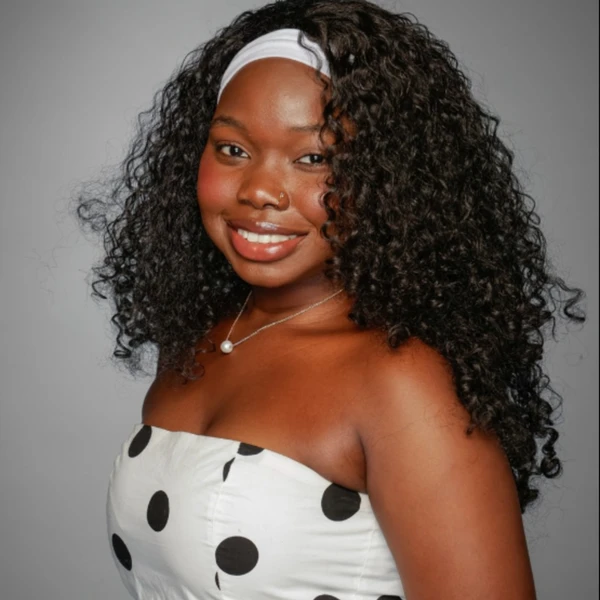
I was born in New York City, raised in Dakar, Senegal, and returned to the US at thirteen, not speaking English. Within a year, I was fluent. I am a first-generation college student, the eldest of four children, and the daughter of a single mother who has given everything so I could have this chance. My life goal is to become a Certified Registered Nurse Anesthetist, serve underserved communities like Harlem, where I grew up, and one day build hospitals in West Africa and install water systems in villages where clean water is still a daily struggle. I lost my aunt to childbirth complications in Senegal and that loss lives with me every single day as a reminder of why this work matters. I am the President of my school's African Student Association, a Big Sibling mentor, a Horatio Alger State Scholar, and a community volunteer with 80+ hours of service. I am a great candidate because I am not chasing a degree for its own sake. I am chasing a future where I can walk back into communities like mine and say things are going to be different now because I am here. Every scholarship I receive brings that future one step closer.
Education
University of Pittsburgh-Greensburg
Bachelor's degree programMajors:
- Registered Nursing, Nursing Administration, Nursing Research and Clinical Nursing
Beacon High School
High SchoolMiscellaneous
Desired degree level:
Bachelor's degree program
Graduate schools of interest:
Transfer schools of interest:
Majors of interest:
- Registered Nursing, Nursing Administration, Nursing Research and Clinical Nursing
- Biological and Biomedical Sciences, Other
Career
Dream career field:
- Medical Practice
Dream career goals:
CRNA
Research
History
Beacon High School — Writer and Researcher2023 – 2024
Public services
Volunteering
Broadway Community Soup Kitchen — Volunteer, preparing and serving meals to community members in need. Completed 80+ hours of service and received the Beacon High School Community Service Honors Award for dedication and outstanding commitment to service.2023 – 2024
Gladys Ruth Legacy “Service“ Memorial Scholarship
I have always been different. I just did not always know it was a gift.
I was born in New York City but raised in Dakar, Senegal, in a village of grandmothers and aunties who taught me that love is loud and community is everything. I came back to the United States at thirteen, not speaking English, with a name that made people stumble, an accent that made people laugh, and a way of seeing the world that did not quite fit the city I had returned to. For a long time, I tried to shrink those differences. I smiled through the confusion and practiced blending in.
Then I stopped.
I stopped because I realized that everything that made me different was also everything that made me useful. My name, Mame Penda, means wisdom and love in Senegalese culture. I did not choose it, but I have grown into it. My experience of displacement taught me empathy in a way that no classroom ever could. Growing up between two cultures, two languages, and two worlds gave me the ability to see people that others overlook. To notice the ones who are struggling quietly. To cross distances that most people do not even try to cross.
Two years ago, I was riding the 3 train to school when I noticed a woman in her fifties with her head down and tears she was trying so hard not to release. Nobody else on that train seemed to notice her. Or maybe they noticed and looked away. I took out my hot pink Sharpie and my last loose-leaf paper and wrote her a note telling her she was beautiful and strong and that I was proud of her, even though we had never met. I folded a fresh tissue inside and handed it to her as I stepped off the train.
Four months later, she found me on that same train. She had lost her niece the day I saw her. She told me that people like me bring meaning to life.
I had no idea she was watching me that day. I had no idea she would remember me four months later. I was just being myself, someone who notices people, someone who refuses to look away, someone whose difference taught her that the distance between strangers is smaller than we think.
That is how I leverage my uniqueness. Not through grand gestures or titles but through presence. Through noticing. Through showing up for people the way my grandmothers in Senegal showed up for everyone around them, quietly, consistently, and without waiting to be asked.
I am the President of my school's African Student Association. I am a Big Sibling mentor. I have volunteered over 175 hours in my community. I am a first-generation college student heading to the University of Pittsburgh to become a nurse and one day a Certified Registered Nurse Anesthetist serving communities that have been failed by a system not built for them.
Everything I am building starts from the same place. A girl who was told her name was too hard, her story too complicated, her differences too much. Who decided instead that her name means love, her story means something, and her differences are exactly the point.
I am unapologetically myself. And I have no idea who is watching.
Scorenavigator Financial Literacy Scholarship
Most people learn about money from their parents. I learned about money from necessity.
Growing up in Harlem as the eldest of four children raised by a single mother who immigrated from Senegal, financial conversations in our home were not lessons. They were realities. I watched my mother stretch every dollar further than it should go, make impossible choices between competing needs, and never once complain about the weight of it. I absorbed everything she modeled without either of us realizing I was being educated.
But the most intense financial education of my life happened this past year when I navigated the college admissions and financial aid process completely on my own with no family blueprint to follow. Nobody in my family had ever done this before. There was no parent who could explain what a Student Aid Index was, what the difference between subsidized and unsubsidized loans meant, or how to calculate the true net cost of attendance after grants and scholarships. I had to figure all of it out myself.
And I did. I compared financial aid packages from six different universities. I learned what aid displacement means and how outside scholarships can sometimes reduce institutional aid by the same amount, essentially canceling out the benefit. I calculated net costs, wrote financial aid appeals, and ultimately secured a nearly fully funded path to a nursing degree at the University of Pittsburgh on a household income of under $20,000 a year. I also learned the difference between a routing number and an account number, how direct deposit works, and why a savings account protects money better than a checking account when you are trying not to spend what you need for tuition.
None of this was taught to me. I taught it to myself because the stakes were too high not to.
What I learned through this process goes far beyond college admissions. I learned that financial literacy is not just about managing money. It is about understanding the systems that govern how money moves, who benefits, and who gets left behind. I learned that the difference between a student who thrives in college and one who struggles is often not intelligence or work ethic but access to information. Information that wealthy families take for granted, and that first-generation low-income students have to hunt for on their own.
I plan to use everything I have learned to build a future that is financially stable and purposeful. I am pursuing nursing at the University of Pittsburgh to become a Certified Registered Nurse Anesthetist, one of the highest-paid professions in healthcare. But earning a good salary is only part of my plan. I want to be intentional about building wealth in a way that creates opportunity for my family and my community. I want to pay off my student loans quickly, build an emergency fund, invest early, and one day use my financial stability to fund the hospitals and water systems I dream of building in West Africa.
Financial literacy gave me the tools to get here. I plan to spend the rest of my life making sure the people around me have access to those same tools.
First Generation Scholarship For Underprivileged Students
I did not have a parent who had done this before me. No one in my family had ever applied to college in the United States, compared financial aid packages, written scholarship appeals, or navigated the unspoken rules of competitive admissions. I figured it all out alone, late at night, between caring for my younger siblings and managing a household, teaching myself a process that most of my peers had parents guiding them through step by step.
I am Mame Penda Niang, a first-generation college student from Harlem, New York, the eldest of four children raised by a single mother who immigrated from Senegal. I am heading to the University of Pittsburgh this fall to pursue a Bachelor of Science in Nursing with the goal of becoming a Certified Registered Nurse Anesthetist. I got here through stubbornness, research, and a refusal to let what I did not know stop me from figuring it out.
The process was not easy. I compared financial aid letters from six different universities. I wrote appeals to scholarship committees. I calculated net costs, learned what an SAI was, discovered what aid displacement meant, and taught myself the difference between subsidized and unsubsidized loans, all while no one in my home had any frame of reference for what I was going through. There were moments I felt completely alone in it. But I kept going because I understood that the only person who could build this path was me.
That experience is exactly why inspiring other first-generation students matters so deeply to me. I already do it every Friday as a Big Sibling at Beacon High School, sitting with incoming freshmen who are feeling lost and overwhelmed and reminding them that they belong here. I tell them what nobody told me. Not knowing the rules does not mean you cannot learn them. That asking for help is not a weakness, it is a strategy. The fact that nobody in your family has done this before does not mean you cannot be the first.
When I get to college, I plan to seek out mentorship programs and first-generation student organizations where I can continue showing up for students who are navigating this journey without a map. And one day, as a CRNA, I plan to go back to communities like Harlem and be visible, because representation matters and young people need to see someone who looks like them and comes from where they come from, standing in a place they were told was not for them.
I want first-generation students to know that the absence of a blueprint is not a disadvantage. It is an invitation to build something that did not exist before. That is what I did. And I will spend the rest of my life making sure others know they can do it too.
Gregory Flowers Memorial Scholarship
When I was thirteen years old, I stepped off a plane in New York City, the city where I was born, and felt like a complete stranger.
I had spent my entire childhood in Dakar, Senegal, raised by a village of grandmothers, aunties, and neighbors who poured love into me in Wolof and French. I knew how to navigate the streets of HLM 6, how to cook thieboudienne, how to make every person in a room feel seen and welcomed. What I did not know was English. And in New York City, that felt like having no voice at all.
The first weeks were a particular kind of loneliness that I do not have full words for even now. I sat in classrooms and absorbed without understanding. I smiled at jokes I could not follow. I nodded along in conversations that left me completely behind. I went home every day to an apartment where my mother was working as hard as she possibly could to hold our family of five together, and I did not want to add my struggle to hers. So I kept it inside, and I got to work.
Every night I practiced. I watched television with the subtitles on and repeated phrases out loud until they stopped feeling foreign in my mouth. I read anything I could find, cereal boxes, street signs, whatever was in front of me. I wrote sentences in notebooks and corrected myself over and over. I had no tutor, no special program, no one sitting beside me showing me the way. I had stubbornness and the deep knowledge that giving up was simply not something I was built for.
Within one year, I was fluent. Not just functional but genuinely, confidently fluent. Writing papers. Making friends. Finding my voice in a language that had once felt completely locked to me.
That achievement changed everything about how I understand myself. It taught me that I am someone who does not wait for conditions to improve before moving forward. It taught me that the most powerful resources I have are not external; they are internal. Discipline. Persistence. The refusal to accept that a barrier is permanent just because it is in front of me right now.
It also gave me something I did not expect. Empathy. I now tutor five family members in English every week because I know exactly what it feels like to reach for a word and not find it. I know the exhaustion of existing in a language that does not yet feel like yours. And I show up for them the way I wish someone had shown up for me.
Learning English in one year as a thirteen-year-old girl who was already carrying the weight of being far from home, far from the grandmothers who raised her, and far from the language that made her feel whole, that is the achievement I am most proud of. Not because it was impressive. But because it taught me who I am when things are hard, and no one is watching.
It taught me that I do not break. I build.
And everything I have built since, the college acceptances, the scholarships, the dream of becoming a nurse anesthetist, and building hospitals in West Africa, started in that quiet bedroom in Harlem where a thirteen-year-old girl decided she was not done yet.
Maureen C. Pace Memorial Nursing Scholarship
I did not choose nursing from a textbook or a career quiz. I chose it from life.
My family has shown me what it means to need care and not always receive it. One of my aunts survived cancer, but only after undergoing a full hysterectomy, sacrificing her ability to ever have children in order to survive. Another aunt died from childbirth complications in Senegal, where access to proper medical care was simply not available. These were not statistics to me. These were the women who helped raise me, who braided my hair, who fed me and loved me and shaped who I am. Their experiences made one thing clear. The quality of care a person receives should never depend on where they were born or how much money they have. And I decided early that I would spend my life trying to change that.
I am an incoming nursing student at the University of Pittsburgh, where I plan to earn my Bachelor of Science in Nursing and ultimately become a Certified Registered Nurse Anesthetist. I chose this specialty because it places me at the most critical and intimate moment of a patient's experience. The moment they surrender complete trust to someone else. I want to be worthy of that trust. I want to be the person in the room who sees the full human being on that table, not just a procedure to complete.
My goal is to serve communities like Harlem, where I grew up, and where healthcare has always been unequally distributed. I have watched neighbors delay care because they could not afford it. I have watched people navigate a system that was not built with them in mind. As a CRNA, I want to bring the highest level of clinical expertise to the people who need it most and have historically received the least.
But my vision extends beyond the United States. I dream of returning to West Africa to build hospitals in communities where my second aunt might have survived if only the resources had been there. I dream of a world where no woman dies in childbirth because her community lacks the tools to save her. That dream is not abstract to me. It is personal. It is a promise I made to myself standing at the intersection of grief and purpose.
Reading about Maureen C. Pace moved me deeply. She did not just practice nursing. She transformed it. She rose from Head Nurse to Chief Operating Officer, brought innovative technology to nursing professionals, and still found time to drive cancer patients to their appointments and sit with them as a compassionate human being. My aunt survived cancer, but the journey was devastating. I think about what it would have meant to have someone like Maureen beside her, not just as a clinician but as a person who genuinely cared. That is the kind of nurse I am determined to become.
Maureen believed in raising standards, improving patient care, and showing up for her community with both expertise and heart. I carry those same values. I am not entering nursing for a title or a salary. I am entering it because I have seen what happens when care is absent, and I refuse to be absent for the people who need me.
I will carry Maureen's legacy forward in every patient I treat, every community I serve, and every hospital I one day build.
Community Health Ambassador Scholarship for Nursing Students
I did not choose nursing. Nursing chose me long before I had a name for it.
I grew up in Harlem, New York, the eldest of four children raised by a single mother who immigrated from Senegal. Healthcare in our community was never something we took for granted. Getting a same-day doctor's appointment felt like a luxury reserved for people in different zip codes. Preventive care was an afterthought. And the consequences of that neglect were real and personal. I lost my aunt in Senegal to childbirth complications, a tragedy that should never happen but happens every day in communities where proper medical care is out of reach. That loss lives with me. It is part of why I cannot imagine doing anything other than this.
I want to pursue nursing because I have always been someone who pours into people. I see it in the small moments. Two years ago, I was riding the 3 train to school when I noticed a woman in her fifties with her head down and tears she was trying so hard not to release. I took out my hot pink Sharpie and wrote her a note telling her she was beautiful and strong. Four months later, she found me on that same train and told me she had lost her niece the day I saw her. She said people like me bring meaning to life. I think about her all the time because that moment captured everything I want to do as a nurse. Show up for people at their most vulnerable. Make them feel seen. Make them feel like they matter.
As a future Certified Registered Nurse Anesthetist, I plan to work in underserved communities like Harlem, where people like my family have been failed by a system not built for them. I want to be the person in the room who looks like the patients I serve, who understands where they come from, and who fights for them when the system tries to look away. CRNA specifically draws me because it demands the highest level of scientific mastery while placing you at the most intimate and critical moment of a patient's life. That combination of precision and humanity feels exactly like where I belong.
My contribution to the community will not stop at the bedside. I dream of returning to West Africa to build hospitals in communities where medical care is almost nonexistent and to install water systems in villages where clean water remains a daily struggle. I want to be living proof that a girl from Harlem with no generational wealth and no connections can change lives on two continents.
I am a first-generation college student heading to the University of Pittsburgh this fall to begin my BSN. I have navigated this entire journey on my own, comparing financial aid packages, writing appeals, and securing a nearly fully funded path to my degree. I did all of this while caring for three younger siblings and managing responsibilities at home that most of my peers never had to think about.
Nursing is not just a career to me. It is a calling. It is the most direct path I know to changing the reality for communities like mine. And I intend to follow it all the way.
First Generation College, First Generation Immigrant Scholarship
Growing up, I learned early what it means to move between worlds. I was born in the United States, but raised in Senegal from the age of two, surrounded by family, language, and culture that shaped my identity. When I returned to the U.S. years later, I had to relearn everything, from how to express myself in English to how to find my place in unfamiliar spaces. As a first-generation college student raised in an immigrant household, that transition was not just academic, but deeply personal.
Those experiences taught me resilience, adaptability, and empathy. I understand what it feels like to navigate systems that were not designed with you in mind, and that awareness has shaped how I move through the world. Whether I am tutoring my family members in English, leading as president of my school’s African Student Association, or participating in programs that support underserved communities, I am driven by a desire to uplift others who are finding their voice just as I once was.
My purpose is rooted in impact. I want to create spaces where people feel seen, supported, and empowered to succeed, especially those from backgrounds like mine. Higher education is not just a personal milestone for me, but a step toward breaking barriers and building opportunities for others. I carry not only my own ambitions, but the hopes of my family and community, and that responsibility fuels my determination to succeed and give back.